Week 2 - Converging diverging nozzle
Objective:
Consider the converging-diverging nozzle below with the dimensions.
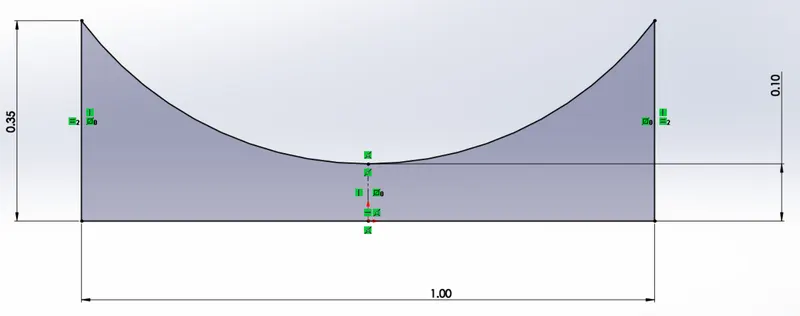
For the following boundary conditions,
- At Inlet, Pressure = 1atm and Temperature = 300K. The outlet pressure= 0.027 atm.
- In the operating conditions, consider the reference pressure to be zero.
Plot:
- The pressure, velocity and temperature variations across the domain
- The variation of Mach number across the domain and at what distance from the inlet does the flow become supersonic.
From the above derived variation ,explain the variation of change in area on mach number on the given geometry in a few words.
Answer:
To perform converging - diverging simlation in nozzle, 2D model was designed & developed in SpaceClaim as per the input received.
Dimensions:
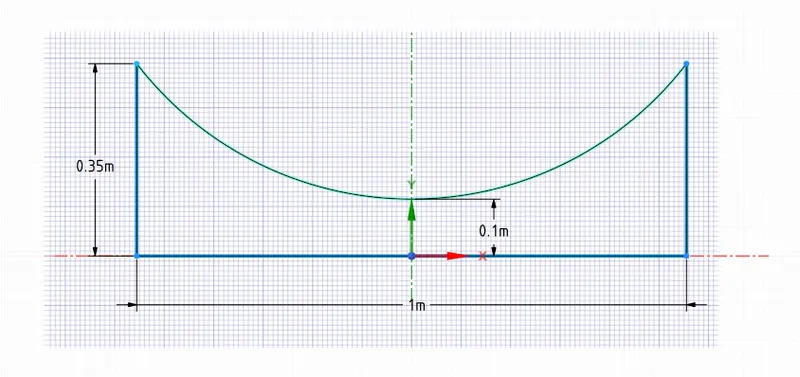
2D Model:
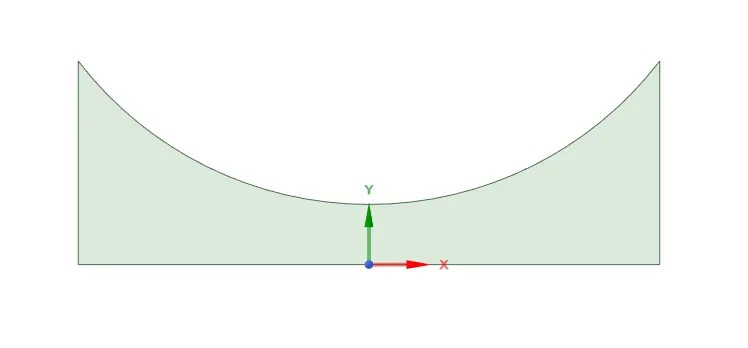
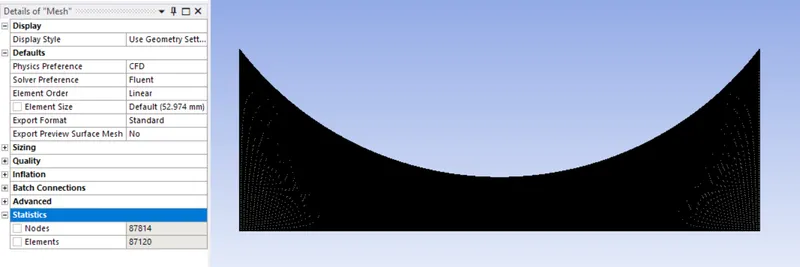
To discretize the model, the Ansys meshing was used.
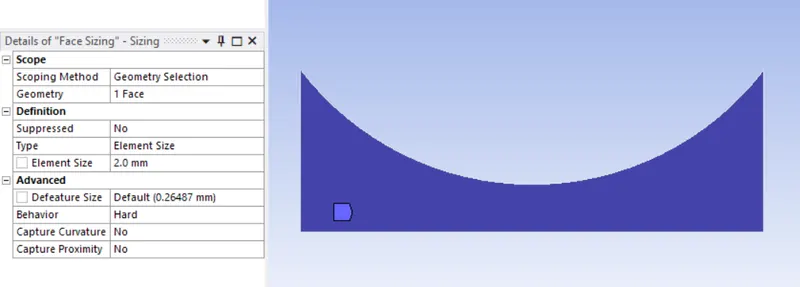
The face meshing & face sizing methods used to create structured mesh.
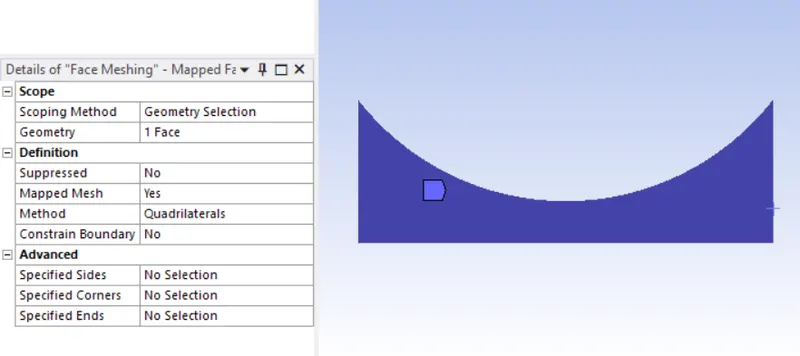
Final mesh
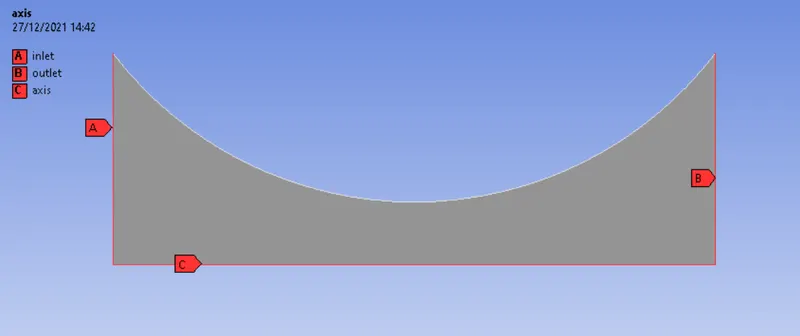
To identify inlet, outlet & axis for setting up boundary conditions, the named has been assigned.
Following options has been selected for initial setup conditions:
Solver - Density based (Flow is compressible)
Type - Axisymmetric
Steady state simulation
2D space
Energy = ON (Need to calculate Temperature)
Viscous model = k-omega SST
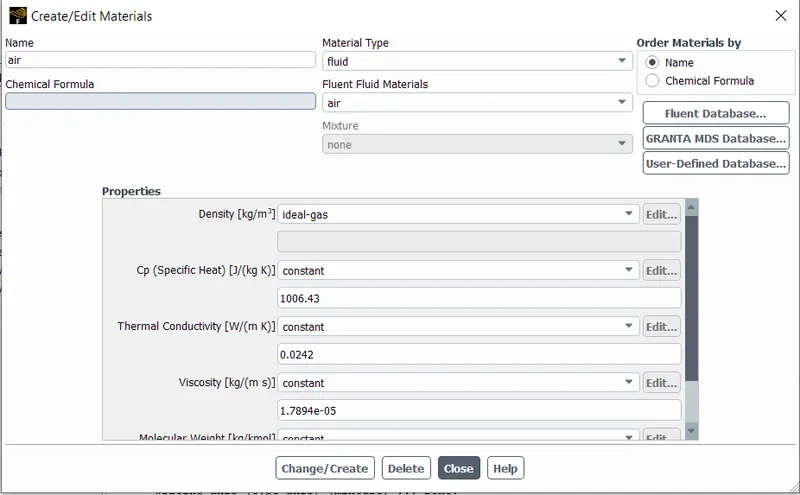
Air has been used as fluid for this simulation. As the speed will vary between two ends & especially speed of air will reach supersonic speed at the throatle area, the density of the air has been changed from constant to ideal gas. The incompressible ideal gas law, when pressure variations are small enough that the flow is fully incompressible but if the user wants to use the ideal gas law to express the realtionship between temperature & density.
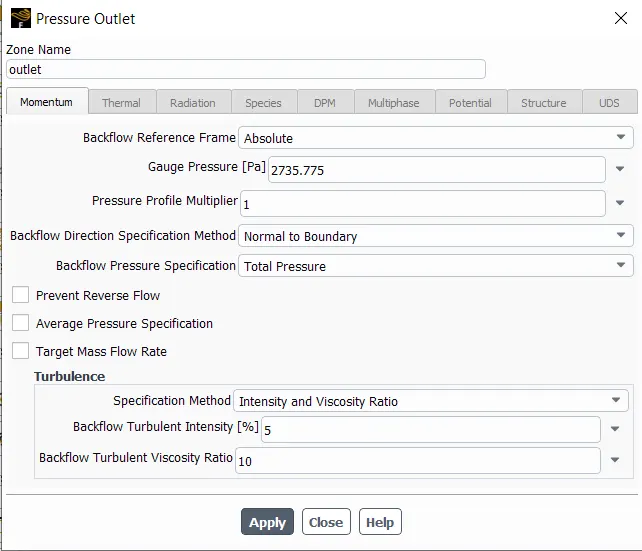
The inlet & outlet boundary conditions has been assigned as pressure inlet & pressure outlet respectively.
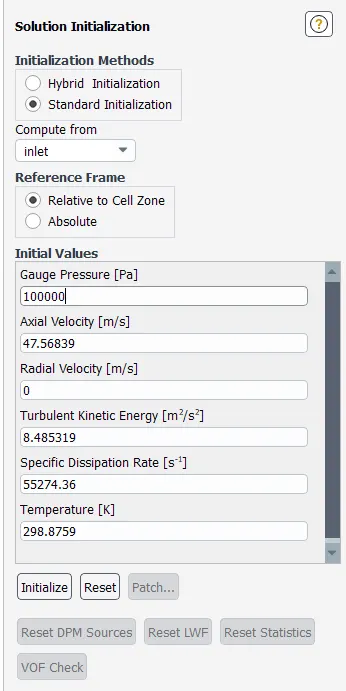
In pressure inlet dialoguw box, the Gauge Total Pressure has been assigned as 101325 Pa. While simulating using this condition, the solver will start solving the problem from the initial gauge pressure. The initial gauge pressure by default is 0 Pa which means the solver will increase the gauge pressure from 0 Pa to 101325 Pa to solve the problem which will take lot of time & computer resources. Because of that the initial gauge pressure has been set as 100000 Pa, so the solver will start from this value & keep iterating for another 1325 Pa values.
1 atm = 101325 Pa.
Temp = 300K
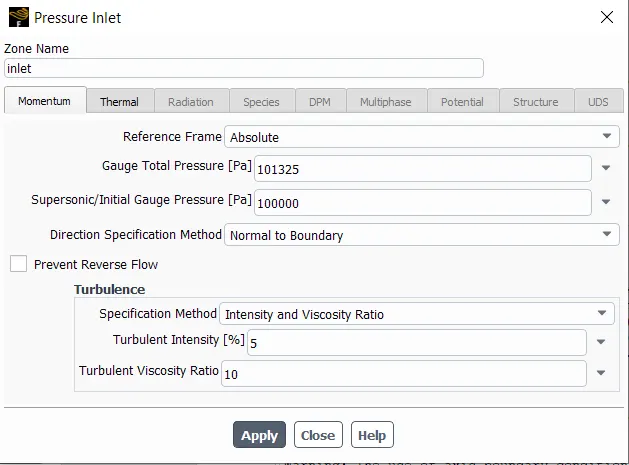
0.027 atm = 2735.775 Pa
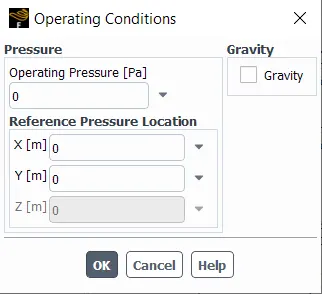
In the Operating conditions option, the operating pressure has been set as 0 Pa.
Standard initialization has been implemented. The initial gauge pressure can be observed into the below dialogue box which is 100000 Pa.
Results:
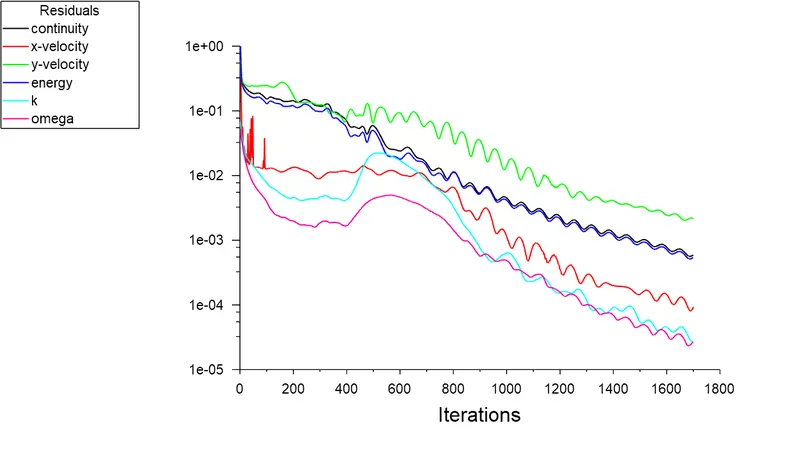
The simulation has been run for 1700 iterations. The residual plot is as follows. The parameters are keep falling without any major fluctuations which shows that it is converged.
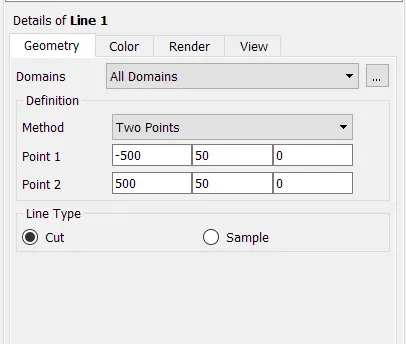
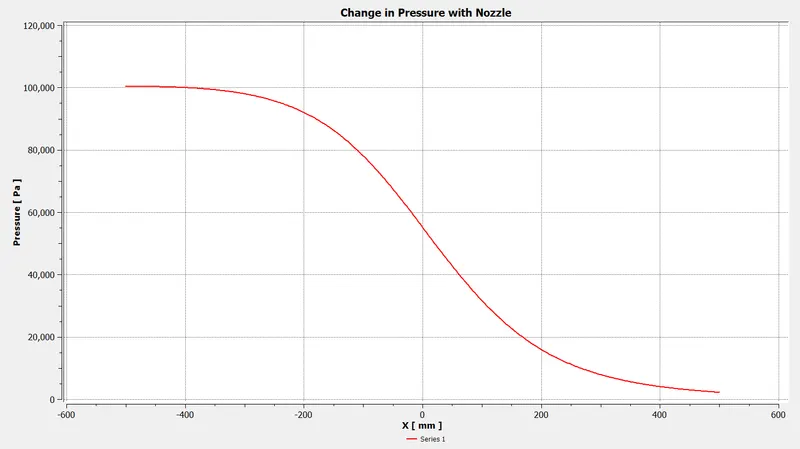
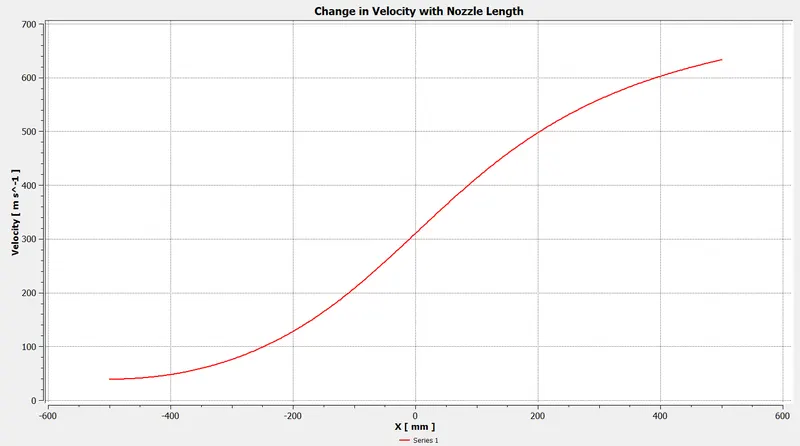
For post processing, CFD-Post has been used. To plot the graph, Line has bee created in CFD-Post using following dimensions. Using the data associated with the line, different plots will be plotted using chart option.
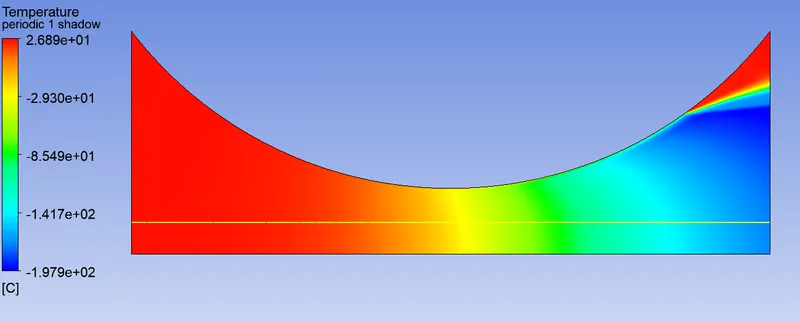
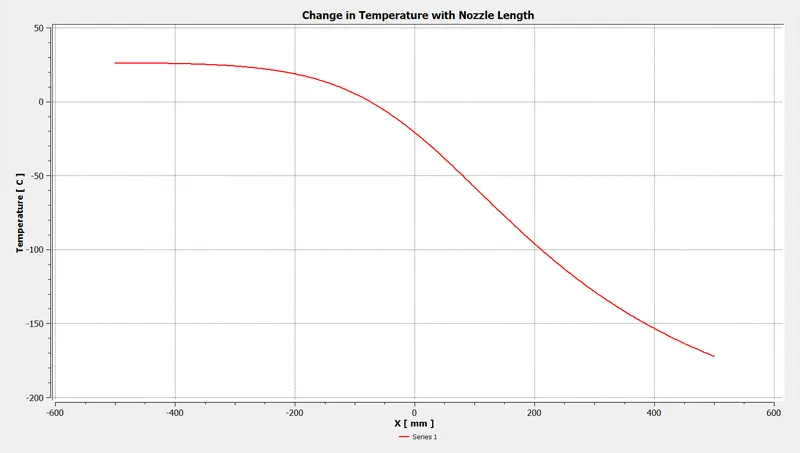
Temperature:
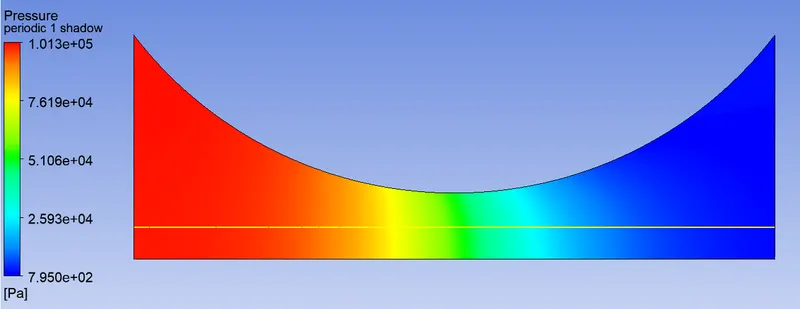
Pressure:
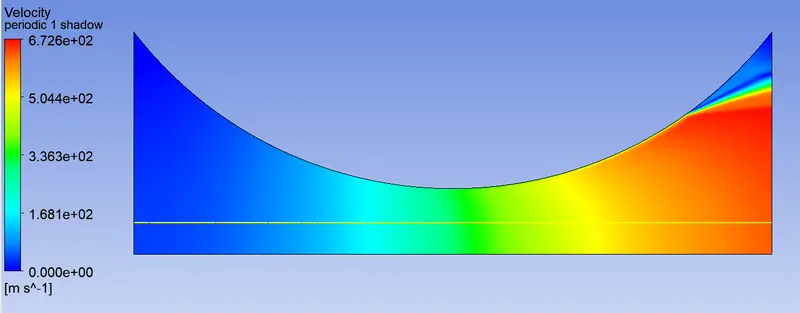
Velocity:
Mach Number:
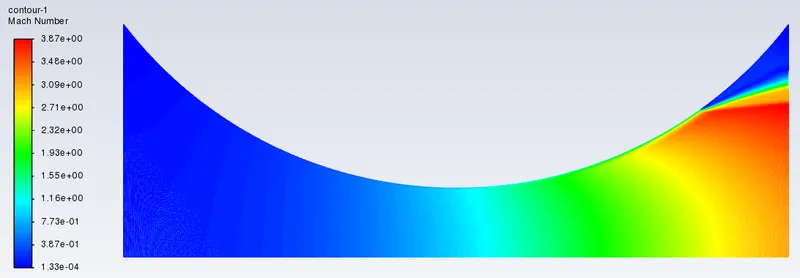
The supersonic speed in m/s is approximately 343.2 m/s & in terms of Mach number, it will be defined between 1.2 - 1.5. This speed is achieved at the throat section. This can be conformed using the velocity contour graph Mach number countour graph & also velocity variation graph shown very next to velocity contour graph.
Analytical method:
Following is the representation of the nozzle to analyze converging diverging condition.
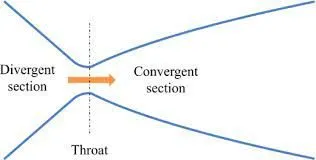
The nozzle will be divided into three section, one will be divergent section, second convergent & third throat section.
Now dA/dV represents the following condition:
`(dA)/(dV) = (A_2 - A_1)/(V_2- V_1)`
In above equation, A1 & V1 represents inlet cross section while A2 & V2 represents the outlet section in divergent & convergent cross section.
- Lets first consider divergent section.
For divergent A2- A1 will be negative as the area of inlet is larger than the outlet, but velocity will be higher at outlet compare to inlet which is equal to V1<V2.
That's why, dA/dV < 0 & M <1 which means flow will be in subsonic speed.
- For convergent section.
In this section, as A1<A2 & V1>V2
Thats why, dA/dV > 0 & M > 1 which means the speed of the flow is supersonic.
-For Throat region.
In this region & area remains constant & because of that velocity will also remain constant.
dA/dV = 0 & M = 1 which means speed will be transonic.