Week 2 Challenge : Surface meshing on a Pressure valve
Aim: Surface meshing of pressure valve with different target length.
- Target length = 1mm, 3 mm and 5 mm (i.e. 3 cases)
- Element type = Tria
Procedure
- Topo-Cleanup:
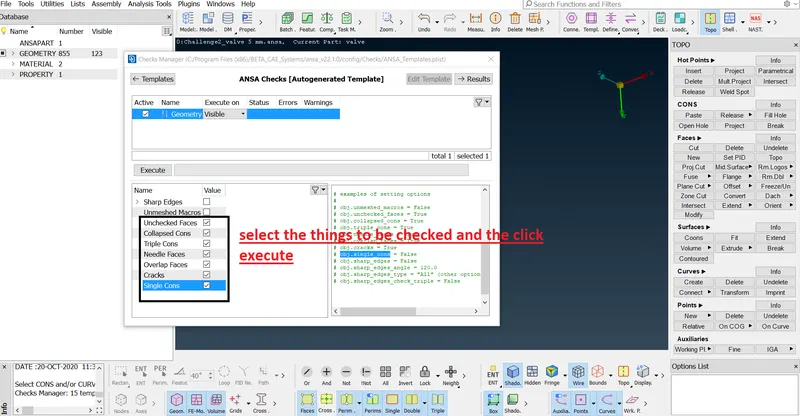
- The first thing need to be done is to check for single cons and triple cons in the model. Sinle cons are cons that are shared with one surface only which indicates open surface. Such open surfaces are not expected in a closed geometry so that need to be resolved. Triple cons are formed due to con shared with three surfaces and that also need to be resolved on the basis of weather it is desired on that place or not. Triple cons are not always errors but that shows the local volume may form due to those faces. These single and triple cons are identified using Geometric checks.
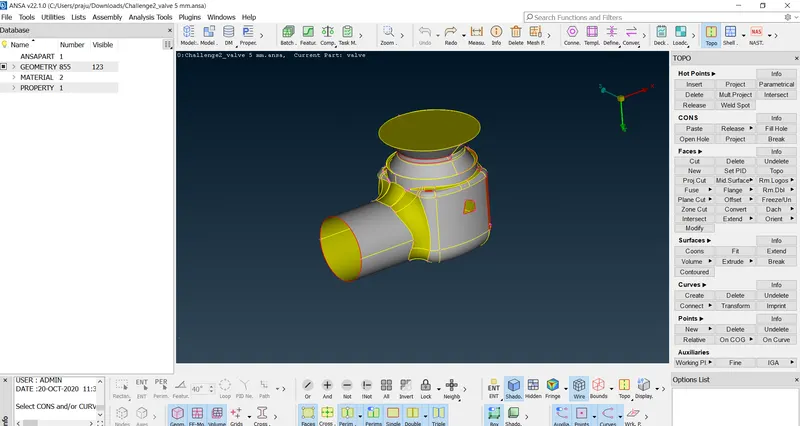
steps"- importing the geometry into work space
geometrical check up
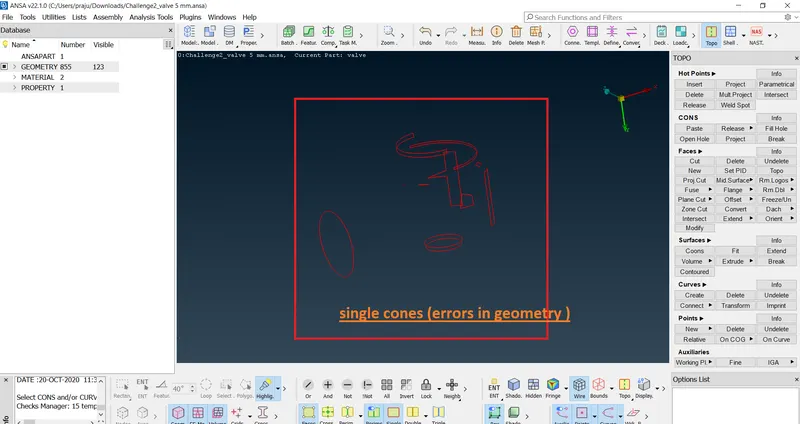
we need to correct the geometry by clearing out the single cones by creating the missing faces
in this step we have used faces option , in that new face we need select the existing surface for create the missing surface and choosen loops tool to select the mulitiple lines at in go
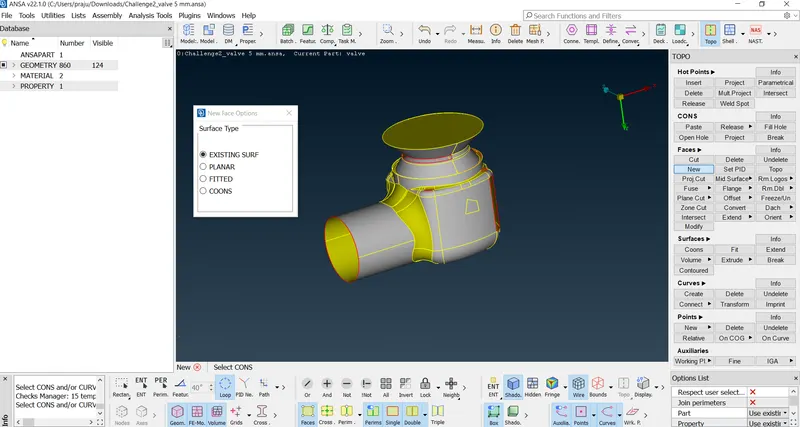
and used fitted option to create the surface but in this we have seleted single lines at a time my keeping it in entity (ENT) mode
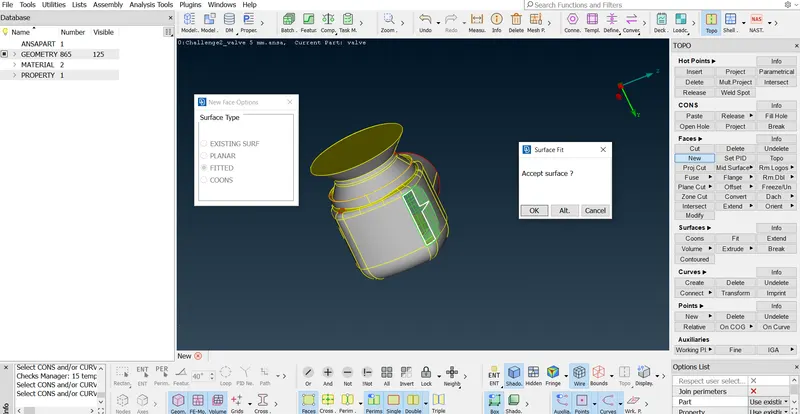
created a missing small surface on the geometry using fitted face in loop mode
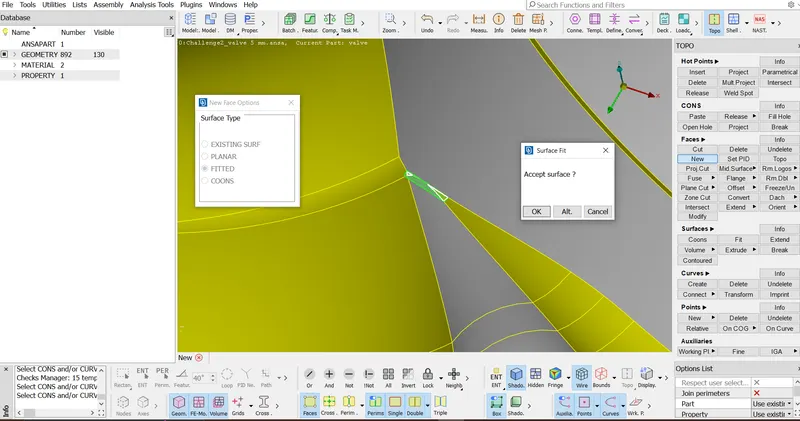
to create the face in this bottom area we have used coons with perimeter option
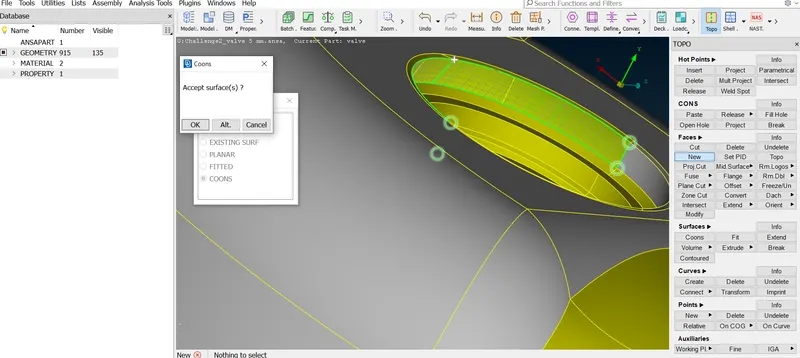
after clearing the
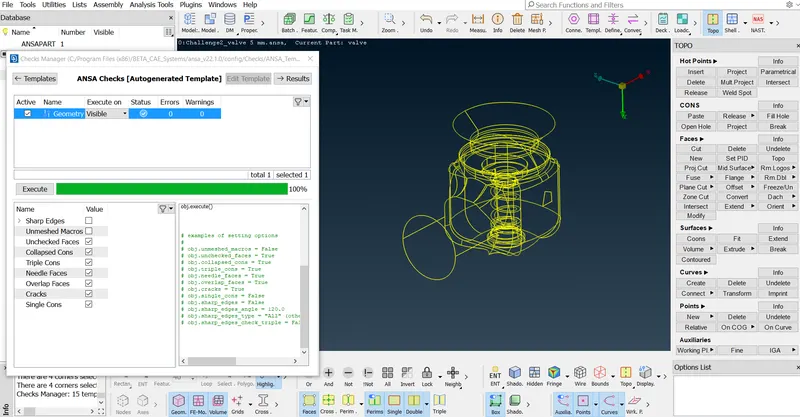
cutting of the small surfaces from the geometry to avoild meshing problem
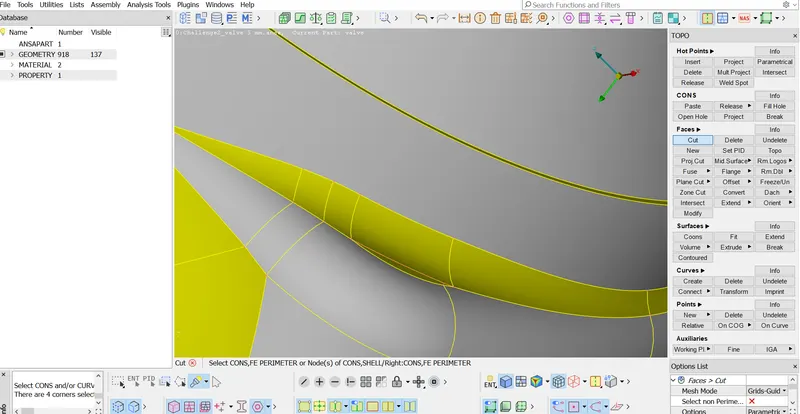
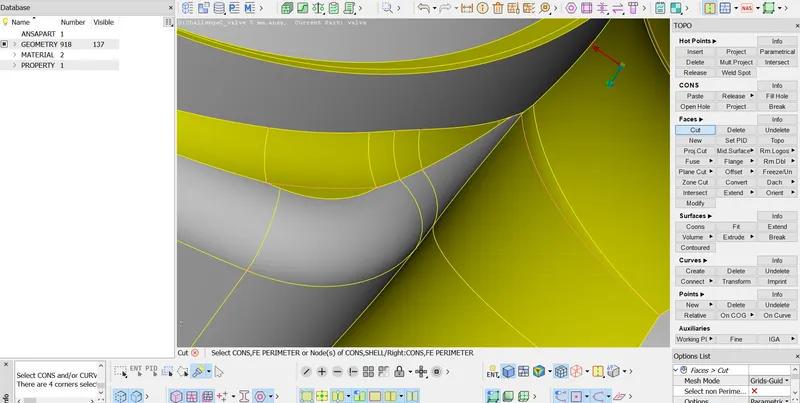
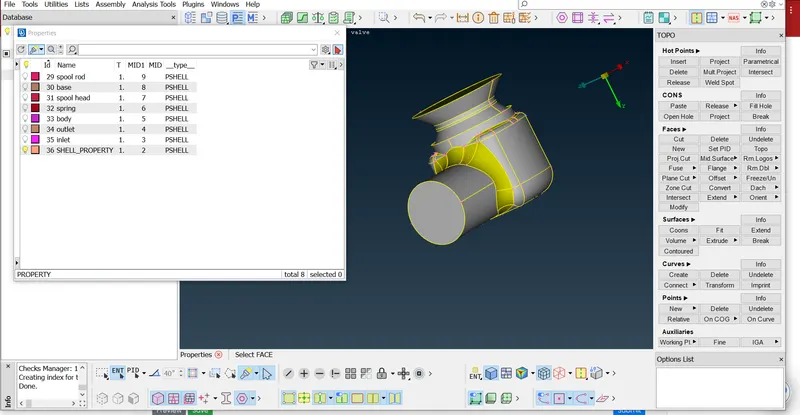
after deleting the small unwanted lines next step is to create pshell for the different parts
next step is to meshing the geometry
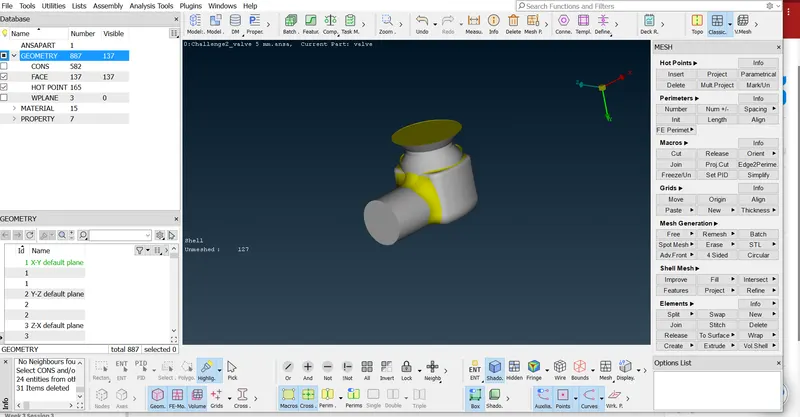
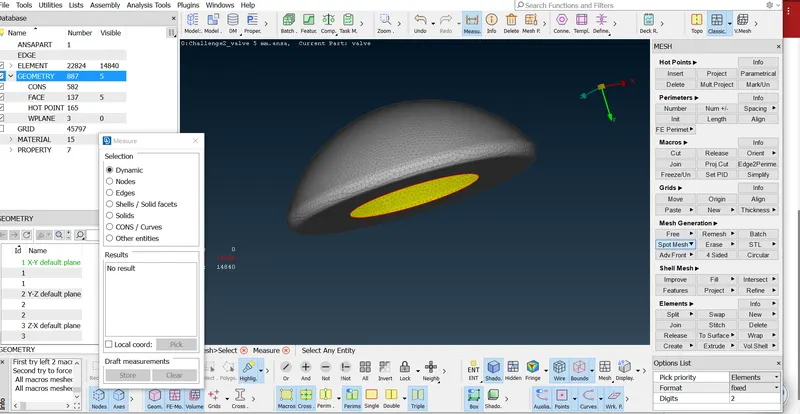
In meshing region in perimeter length is set to 5mm and macro is set to 5mm
and length needs to be set in mesh quality as maximum as 7 and minimum as 3mm . with tria elements
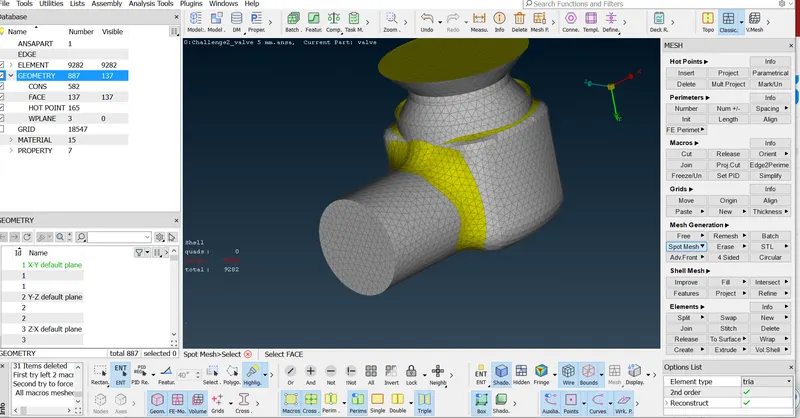
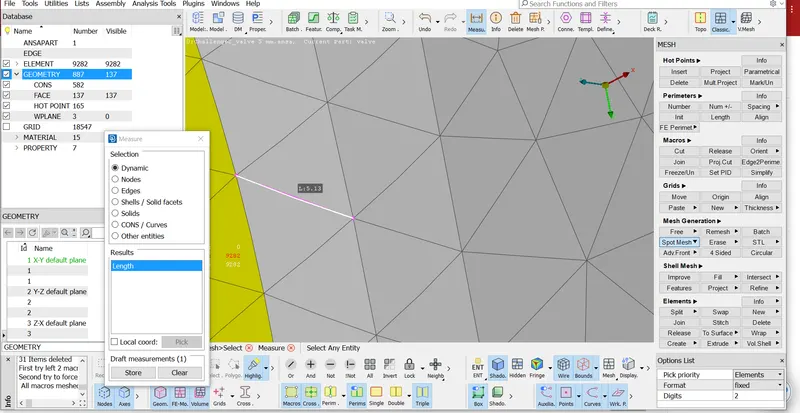
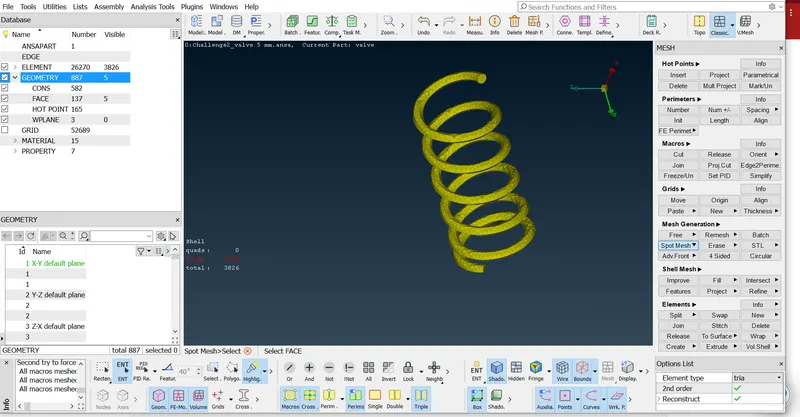
mesh quality for the spring and spool head is to large due to this mesh generated is not perfect
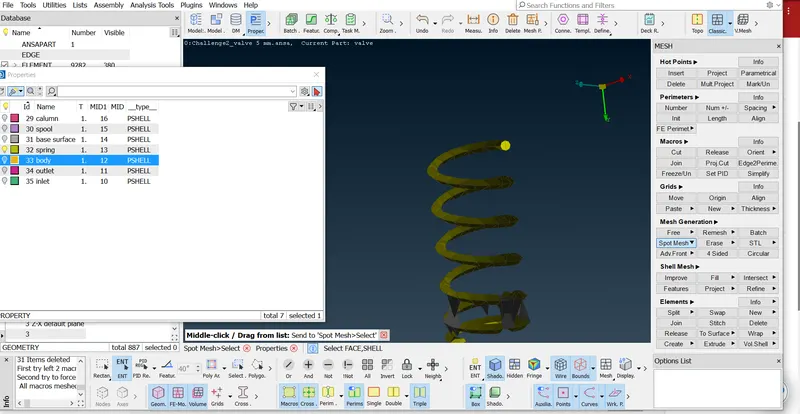
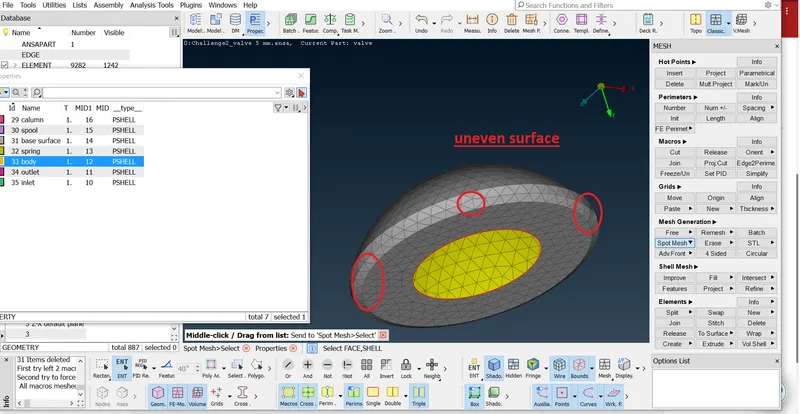
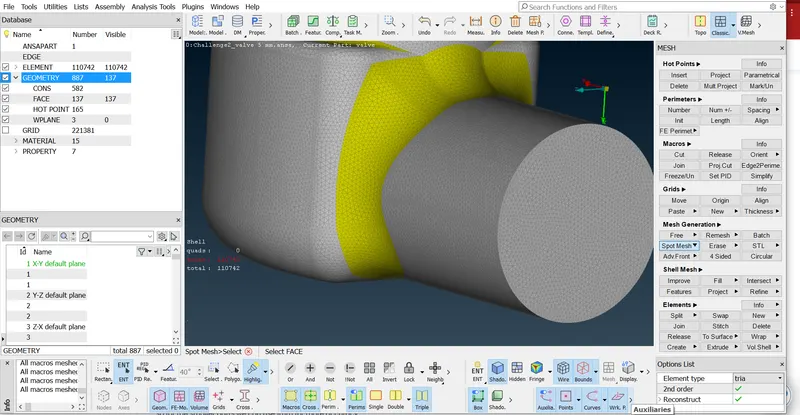
after reducing the mesh size to 1mm the mesh sise refined and the surface of the spool is much more finer
conclustion
- With fine mesh size the accuracy increases but the time for calculation also increases
- We can make two different target length according to the size of parts and required accuracy, in this case the outer casing mesh size can be 3mm which is not so large and not that fine earthier for good and accurate result
- For the smaller parts like the spring and the column head the mesh length can be 1mm so the accuracy for smaller parts increases too
https://drive.google.com/file/d/1HfR2nXSOF3zLHklOwiSydj6JJS5fhQk5/view?usp=sharing