Week 2:- BiW Fixture Basics Challenge
1 - WHAT IS THE PROCESS OF PROJECT EXECUTION ACTIVITY ?
ANS -
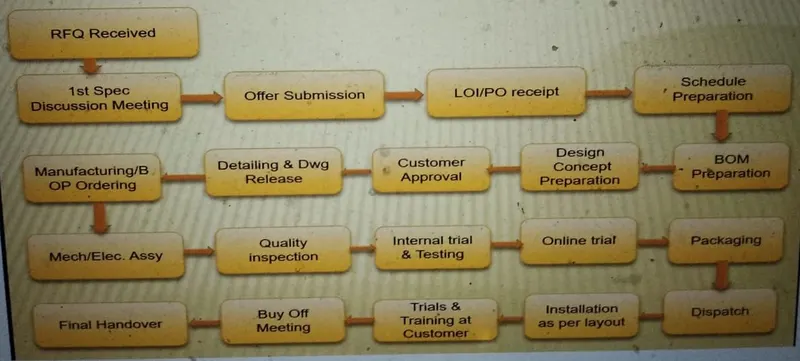
Project activities is the various steps included from the start to the end of project . there are many steps included below is their explanation -
- RFQ - it is request for quotation . the customer gives its requirement , specification ,date for receiving the project , etc in form of document or data .
- 1st Spec discussion meeting - In this stage , the customers requirement , specification is discussed and the timeline of the project is decided . the cost that will be involved is also discussed .
- Offer submission - In this stage , all the discussions that were done in earline stage is made into the document and this offer is submitted to the customer .
- LOI/PO receipt - it stands for letter of intent or purchase order , in this stage customer will review the offer send by us, customer will compare our offer with other vendor, and whoesever offer is more suitable the customer will go for that .
- Schedule preparation - After receiving the LOI , we will begin with the project , the schedule preparation is planned from the 1st meeting itself to avoid delays in project .
- BOM preparation - It includes all the parts that we will need to complete the project like motor , oneumatic valves , nut bolts , raw material etc
- Design concept preparation - In this stage a concept model of the project will be made , various cae , analysis tests will be carried on to this model , and then we will finalise a design .
- Customer approval - This finalised design will be sent to the customer for its approval , if the customer approves further process will start .
- Detailing and drawing release - several detailed drawing sheets of assembly , subassembly and every single part of the assembly will be prepared . this sheets will include proper dimensioning , installation method , quantity of materials etc.
- Manufacturing and BOP ordering - After dwg release , the parts which will be needed is ordered by the sales department . other parts which have tighter tolerances can be made inhouse .
- Mechanical/electrical assembly - once the parts are received they under quality inspection after which mechanicla and electrical parts are assembled according to the drawing .
- Quality inspection - After the parts have been assembled together , they again go for quality check to see if the parts are assembled within tolerance limit . this checking can be done by CMM machine.
- Internal trial testing - After quality check teams approval , internal testing of the fixture begins , we will check whether the fixture clamps , unclamps the part , whether the welding or other operation takes place correctly .
- Online trial - After manual trial test the fixture will be fully automated or semi automated , operation such as clamp , unclamp , weld etc will be performed by sensors , motor , actuator .
- Packaging - The fixture will be disassembled and packed and it will be sent to customers facility . the parts should be packed properly such that it will not damage the parts .
- Dispatch - The packed parts will be sent to customers facility via roadways , airways or shipway .
- Installation as per layout - All the parts will be unpacked and the installation team will install the parts following the installation sheet .
- Trial and training at customer site - The trial of the fixture will be done in customers facility get customers validation on the working of the fixture . training will be provided to staff , engineers , operator regarding the operation and working of the fixture .
- Buyoff meeting -A buyoff meeting will be conducted between customer and project management , here they will discuss that all the criteria that were needed by the customer is fulfilled , if the customer needs some additional things, it will be taken into consideration .
- Final handover - Once customers every demand is fulfilled, all the manuals , technical data etc will be handed to the customer . and the project will come to an end .
2 - WHAT ARE THE TYPES OF JOINING PROCESS ?
ANS - Joining process is the joining of small individual parts into larger part . the types of joining process is given below -
a ) Metallurgical joining - In this process two or more metals joined together by application of heat and pressure and in some cases addition of filler metals . it is further subdivided below -
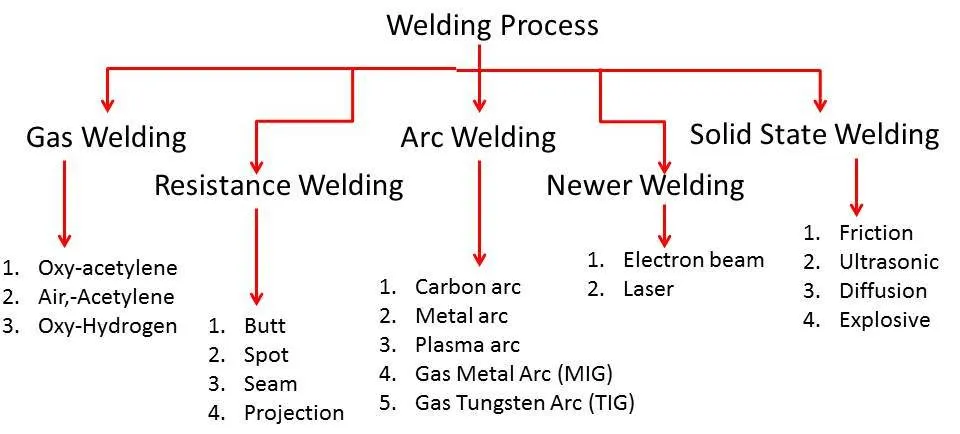
- Welding - It is the process of joining metal to metal or a metal to a non metal by application heat and pressure . there are different types of welding processes . welding is a permanent joint .
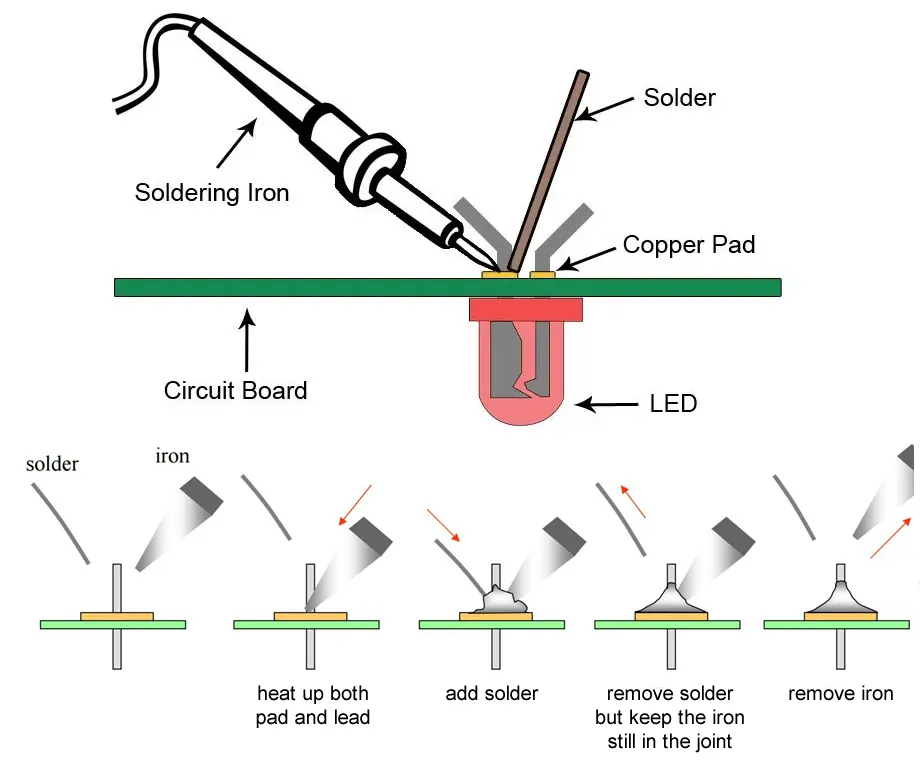
- Soldering - In this process different material are joined together with filler metal called as solder .soldering provides permanent joint but the joint can be removed by application of heat . soldering is mostly used in electrical systems .
- Brazing - Brazing is a process where two or more metals are joined together by melting and flowing a filler metal into the joint . to achieve a good joint the filler metal material and the parent material should be metallurgical compactible .
b) Mechanical joining - Mechanical joining process is joining of parts with mechanical methods or use of mechanical tools .following are types of mechanical joining process -
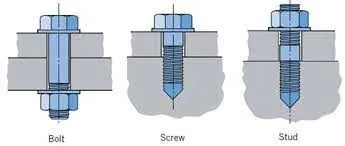
- Mechanical fastening - In this two or more parts are joined together by screws , bolts etc . this type of joining is not permanent , it is mostly preferred for parts which have to be disassembled for maintenance .
- Riveting - Riveting is a permanent mechanical fastening method . a rivet has a head on one side and shaft on other side. in this process the rivet is placed in the hole and a gun is used to apply pressure to form the joint .
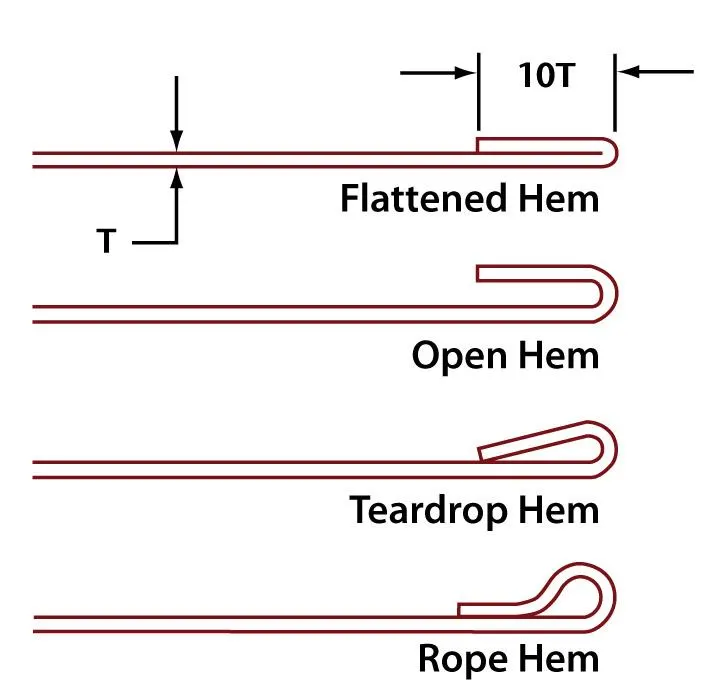
- Hemming - It is a sheet metal joining process where the outer edge is rolled over onto the other edge .hemming is generally used to reinforce the edge , remove burrs , and improve apperance .there are two types of hem , closed hem and opened hem .
- Adhesive bonding - It is process of joining components together using adhesives . the adhesive can be glue epoxy or other materials . adhesive bonding is the most basic joining process . the application of adhesive bonding is of wide range from automobile , vehicles to phones, personal care products etc .
3 - WHAT IS RESISTANCE WELDING AND ITS APPLICATION IN AUTOMOTIVE SECTOR ?
ANS -
Resistance welding is type of welding where two metal is joined together by application of pressure and passing current through the metal area which is to be joined . this type of welding is widely used in manufacturing industry . the main advantage of resistance welding is that additional filler material is not needed for welding so this saves a lot of cost compared to other welding techniques . resistance welding is of following types -
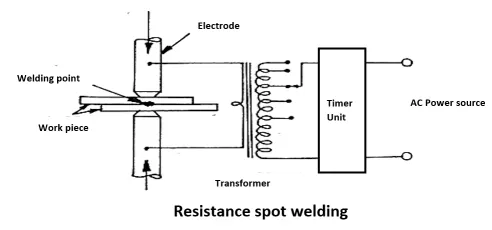
- Spot welding - Spot welding is type of resistance welding where the heat is developed between the two sheets , causing the material being welded to melt and form molten pool , forming the weld nugget . the molten pool is contained by pressure applied by the electrode tip and the surrounding solid metal .
advantage - short weld time and hence high speed weld , strength of weld is strong and highly durable , it is highly adaptable to automation and robotic techniques .
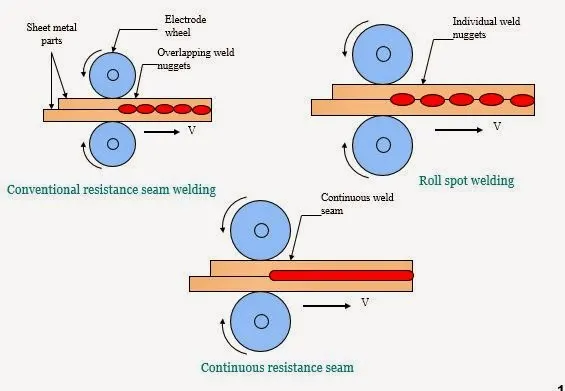
- Seam welding - Resistance seam welding is a process where two metal sheets are joined in a continous pattern , by application of force and current through the two wheels . this type of welding is often leak tight . the current and the heat generated is localized by the wheels periphery . seam welding is mostly used in manufacture of cointainers , radiators , heat exchangers , etc .
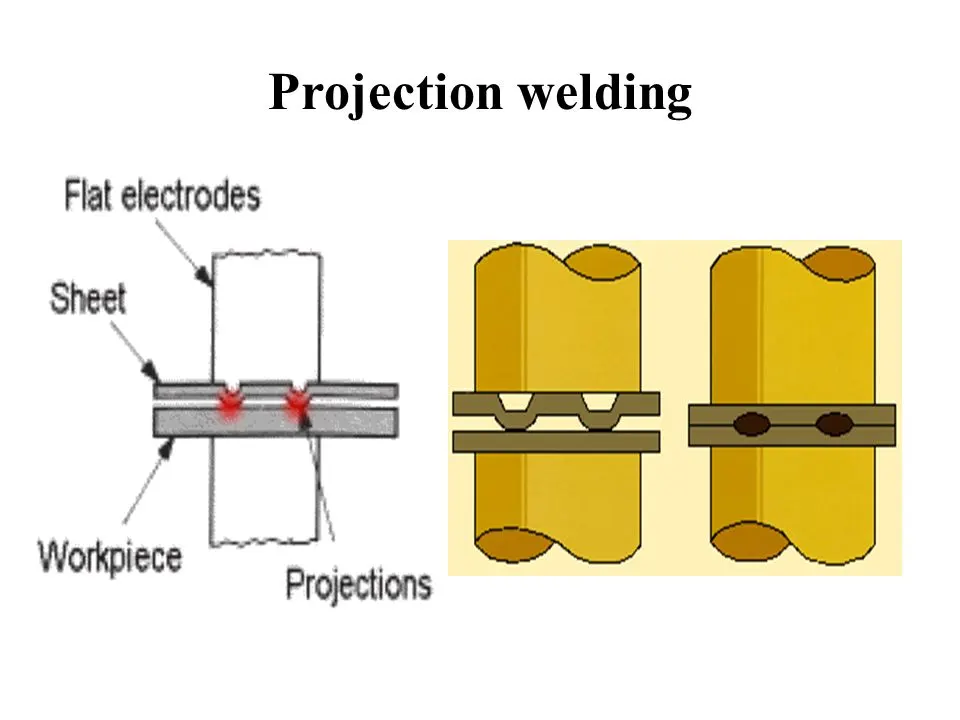
- Projection welding - projection welding uses the heat generated by the current as well as the force to push the two workpieces togrther . projection welding localises the weld at a predetermined point by use of projection or embossment . this projection or embossment will focus heat generation at point of contact , once the current generates sufficient resistance , the projection or embossment collapses to form weld nugget .
4 - WHAT IS FUSION WELDING AND TYPES OF FUSION WELDING WITH ITS APPLICATION IN AUTOMOTIVE SECTOR ?
ANS - Fusion welding is a process which fuses two or more material together , by heating them to the melting point . this process may or may not require filler material . unlike resistance welding , fusion welding does not require a external pressure for joining . below is the types of fusion welding -
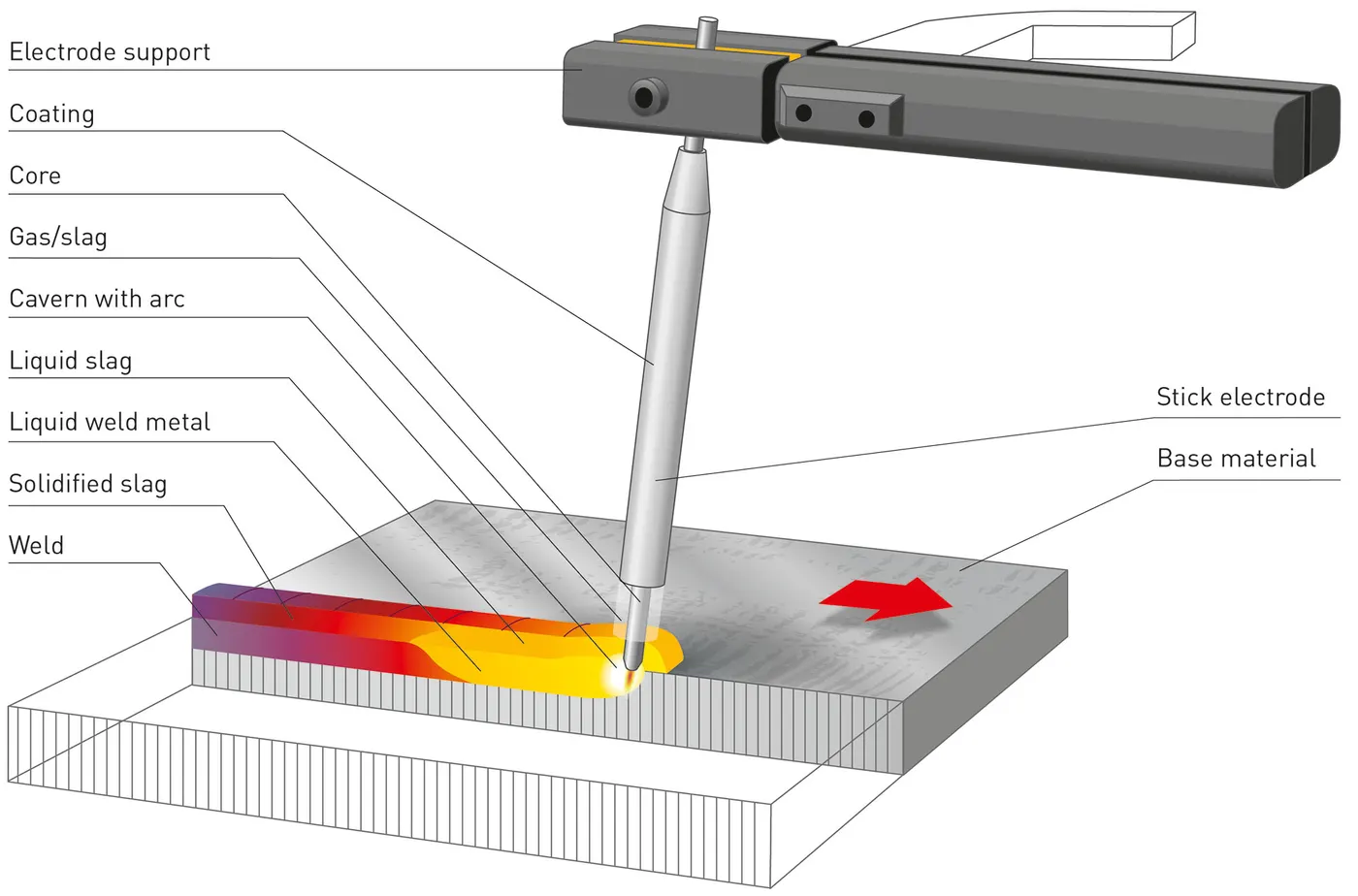
- Manual metal arc welding - It is a fusion welding process which is used to join two or more materials together by application of heat and electric current . it is also known as shielded metal arc welding or stick welding . it is the process where the arc is struck between the flux coated electrode and the workpiece . both the rod and the welding surface melt to create weld .
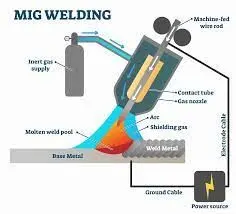
- Gas shielded metal arc welding ( GMAW)- It is a welding process where two or more workpieces are joined together by application of heat and consumable electrode is also used . it is also known as metal inert gas welding or MiG welding . this process of welding uses a shielded gas to protect the weld area from outside contaminants which may cause defect in the weld . the process of mig welding can be automatic or semi automatic .
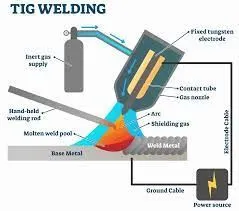
- Gas shielded tungsten arc welding (TIG) - This process is used to join two or more materials together by application of heat and current , it uses a non consumable ttungsten electrode to create an arc between electrode and the base plate .this process is also called as tungsten inert gas welding or TIG welding . tig welding is mostly used for welding thin sections of stainless steel and non ferrous material like aluminium .
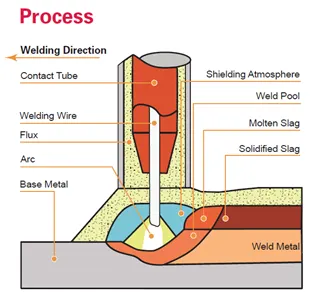
- Submerged arc welding (SAW) - This welding process uses a continously fed consumable electrode and a blanket of flux which becomes conductive when molten , and it provides a current path between the workpiece and the electrode . this flux also provides a protective gas which does not allow the outside contaminant to mix with the weld and cause defective weld .
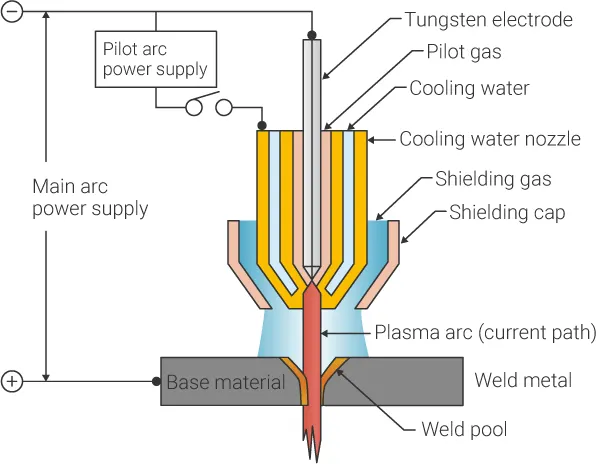
- Plasma arc welding - It is a type of welding process which uses electric arc created between the electrode and the torch nozzle . the electric arc ionises the gas (argon gas) in the chamber creating plasma , It is then forced out through a fine bore copper nozzle that constricts the arc and directs it to the workpiece , allowing the plasma arc to be separated from shielded gas .
Application of arc welding in automotive sector -
- Arc welding is used to weld the chassis part of the automobile .
- TIG welding is used to join thin stainless steel parts and various piping parts like exhaust in automotive industry .
- MIG welding is used for the repair work in the automobile industry .etc .
5 - WHAT IS 3-2-1 PRINCIPLE ?
ANS - In fixture design , the workpiece must be correctly located and clamped . for this all 12 degree of freedom of the workpiece must be restricted to ensure proper fixing of workpiece . for this the 3-2-1 principle is used . 3-2-1 principle is the best and the most cost effective method of part location .
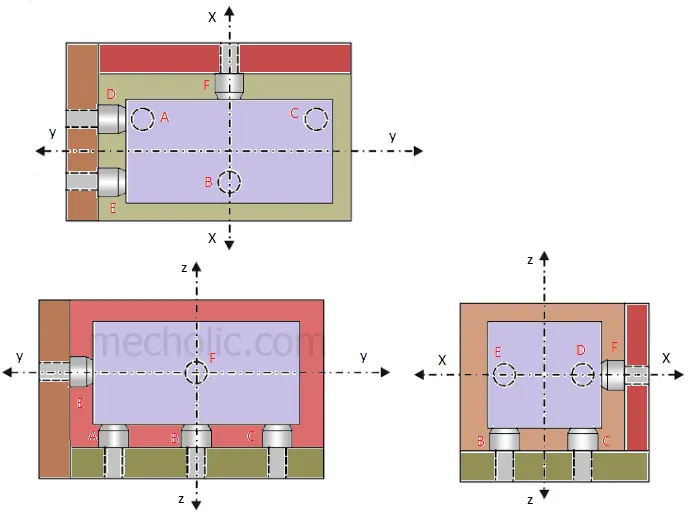
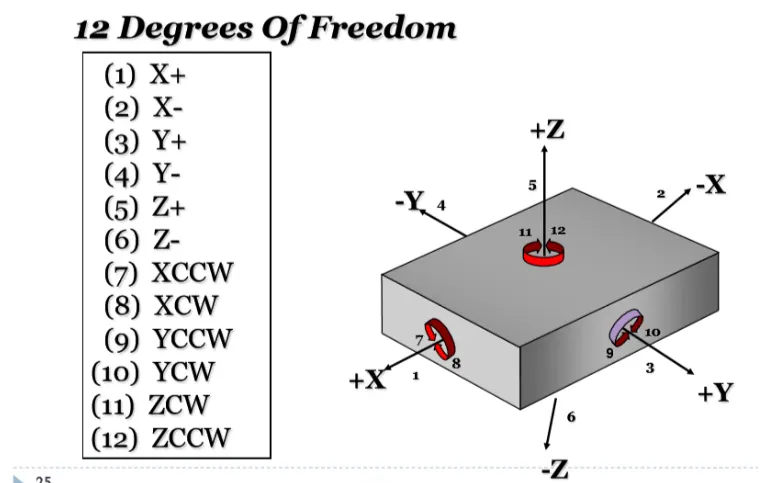
ex - {3} - Minimum 3 locator block to establish part plane , 3 locators or support are place dunder workpiece , it is placed on primary locating surface . this restrict one axial movement downward and 4 radial movement . together it restricts 6 d.o.f .
{2} - Round locating pin in round hole that defines location in 4 directions , it restricts 4 axial moment .
{1} - Round locating pin in slot defines two direction of other pin .this will restrict 2 axial moment .
6 - DEFINE BODY COORDINATE SYSTEM ?
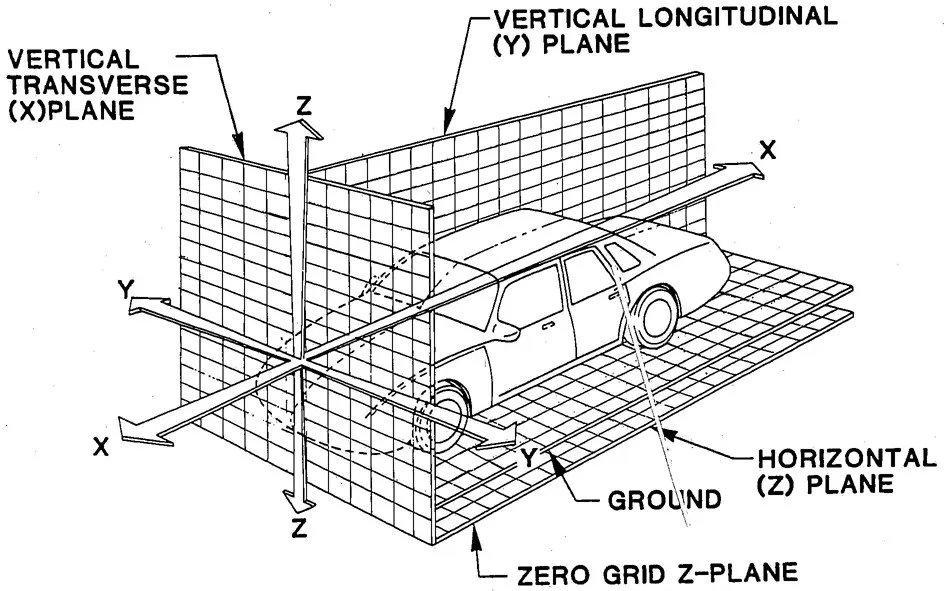
ANS - A coordinate sysytem is a reference system consisting of set of points , line or surface used to define the position of point in space in either 2 or 3 dimensions . in general BCS is also called as car line or body line . all the body parts of the car will be designed according to this body coordinate system . sometimes the origin of the body coordinate system can be forward or in the centre . this depends on the car manufacturer . the orientation of the X,Y,z axis will be same for every body coordinate system .
7 - ELABORATE BODY PLANE SYSTEM AND ITS ESSENTIALS ?
ANS - Body planes are 3 imaginary perpendicular planes . it is the reference plane , using this planes as reference all other body parts will be made .
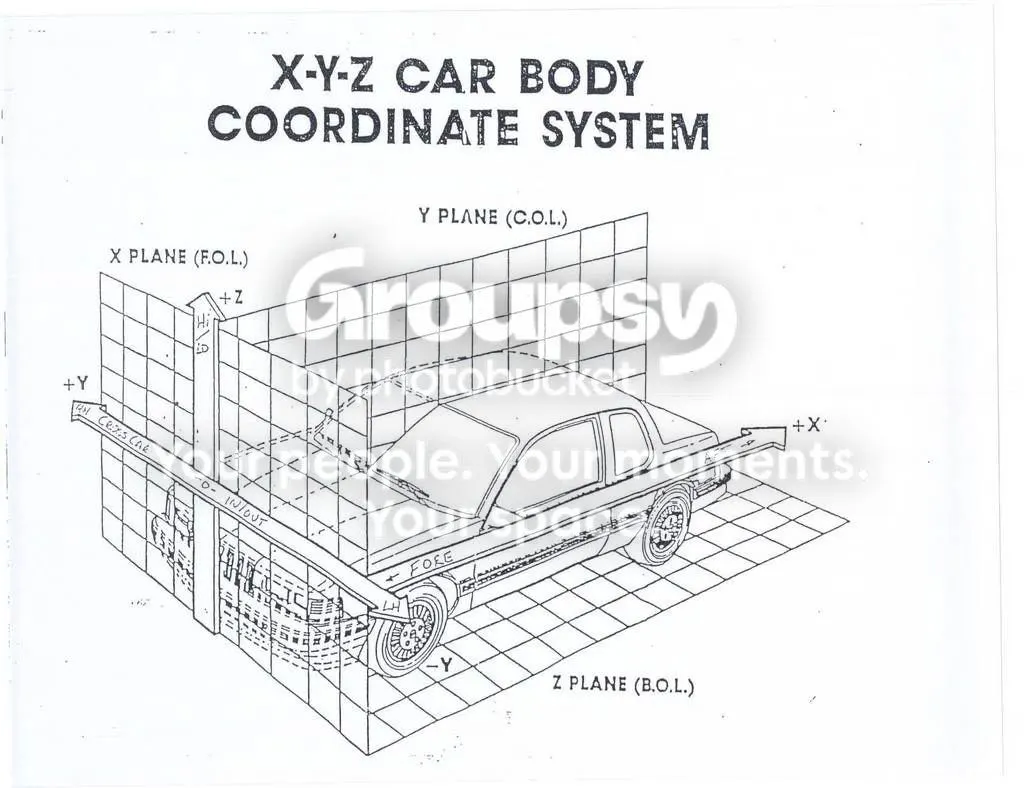
Body line dimensions are essential for foll reasons -
- It defines exact position of each product with respect to fixed origin .
- It ensures flawless design of assembly .
- While designing lines , all design are carried out relative to bodyline viz, fixture , turntable etc .
- It assist in easy location of different part of vehicle .
- It aims in creating a standerized system .
- It assist in quality check .