Week 2 Bevel Gear Challenge
GRID DEPENDENCY TEST IN BEVEL GEAR
OBJECTIVES
1) Carry out a static structural analysis to find out Equivalent stress, Total deformation and Stress intensity.
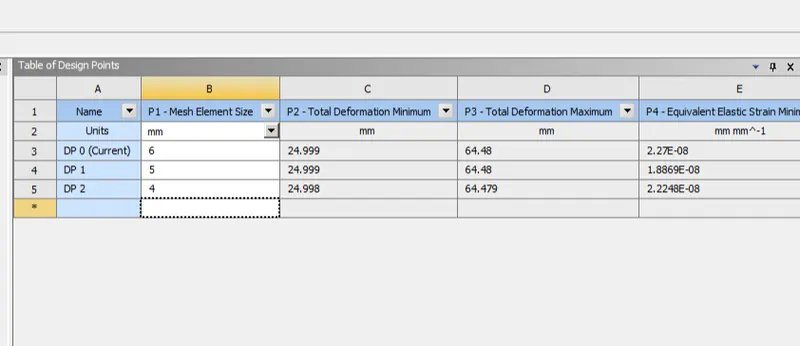
2) Using three different sizes of mesh 4, 5 and 6 to perform grid dependency test.
3) Comparing the three results on the basis of solution.
GRID DEPENDENCY TEST
This is Grid dependency test, where, analysis begins with a coarse mesh and it is refined to finer mesh for each run until the results do not change significantly and depend of the grid size anymore. i.e mesh is the significant parameter to produce the accurate results higher the density of mesh higher the accuracy of the solution but it will consume lot of computational time, hence this test used to find the mesh size that gives us an appropriate result to the accurate result. Initially it will start with coarse mesh to finer mesh.
PROCEDURE
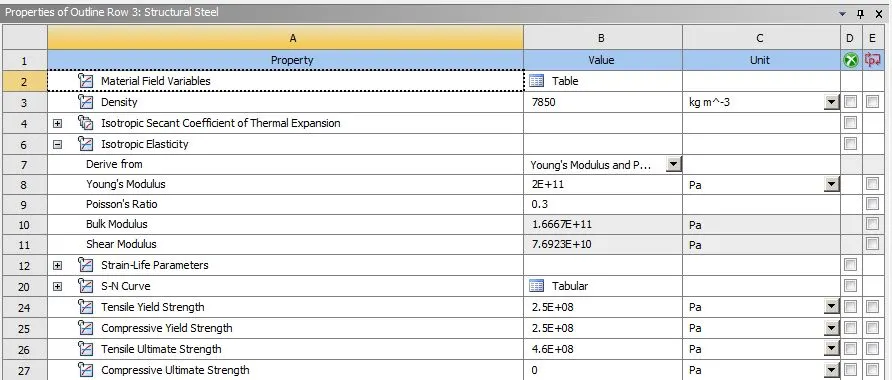
- Input the required material into our stimulation using engineering data or create them.
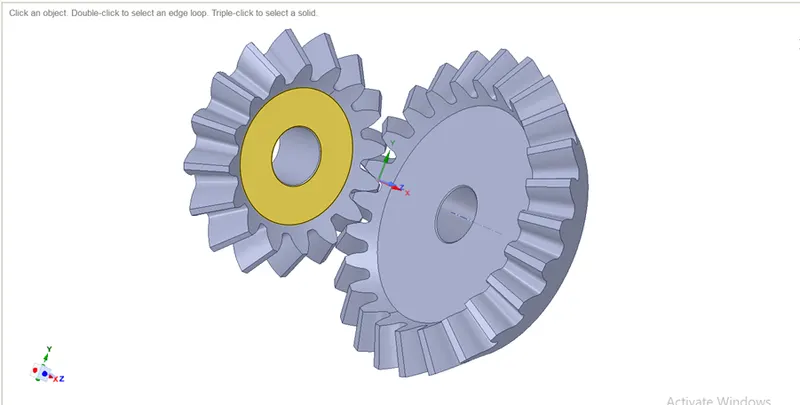
- Then open the model in space claim and remove the unwanted surface for this stimulation because it will increase our solving time.
Geometry
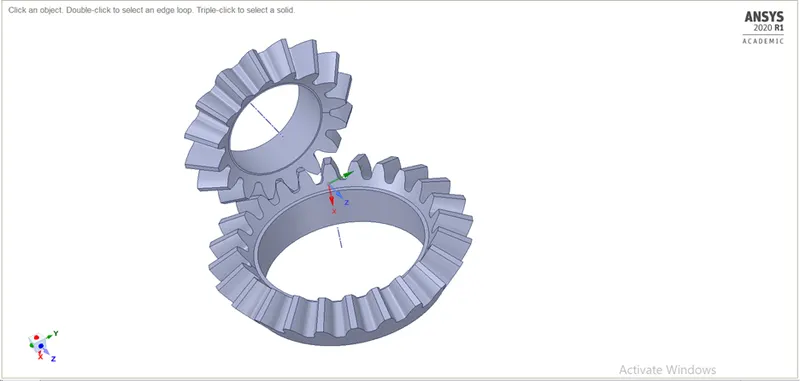
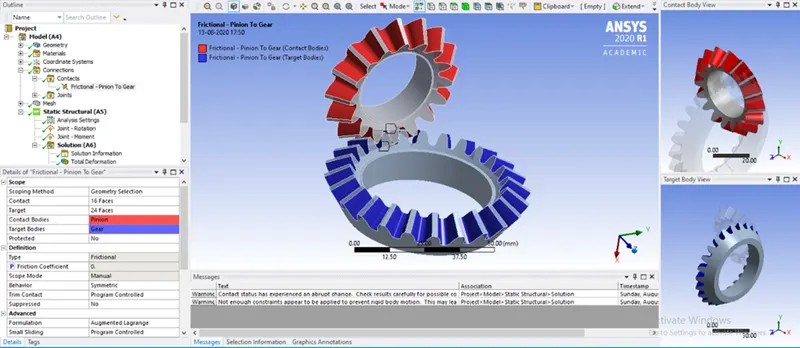
- Create contact between two bevel gear define pinion gear as contact and big gear as target.
- Define the contact as frictional with ‘0’ frictional coefficient.
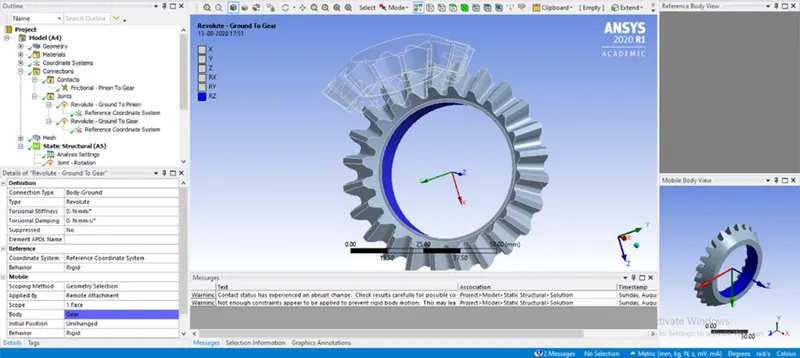
- Then define joints for the gears. The pinion has rotation joints and the big gear has moment.
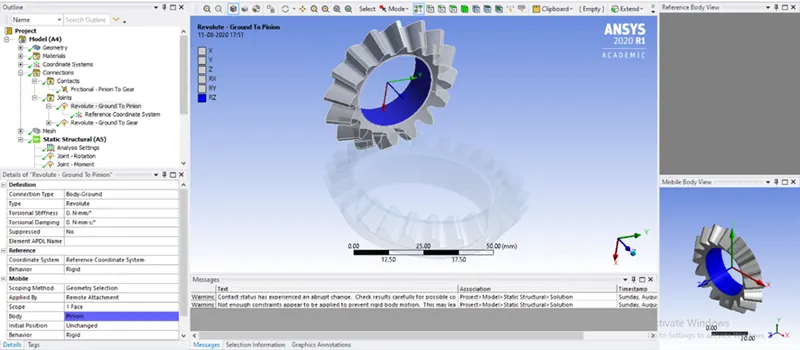
- Then define joints for the gears. The pinion has rotation joints and the big gear has moment.
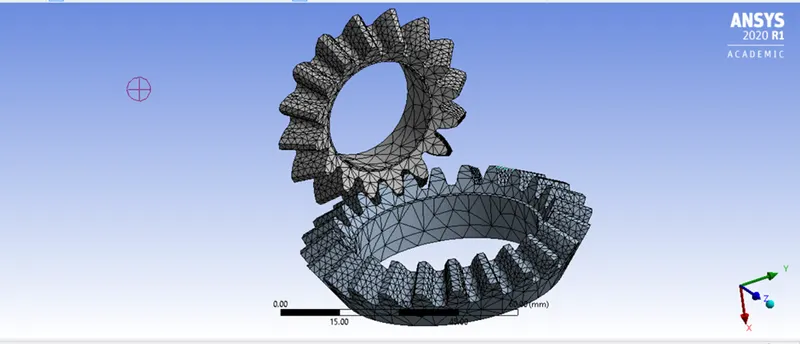
- Then mesh the component as size number 6 and give finer mesh of 1.75 on the teeth faces to give accurate results.
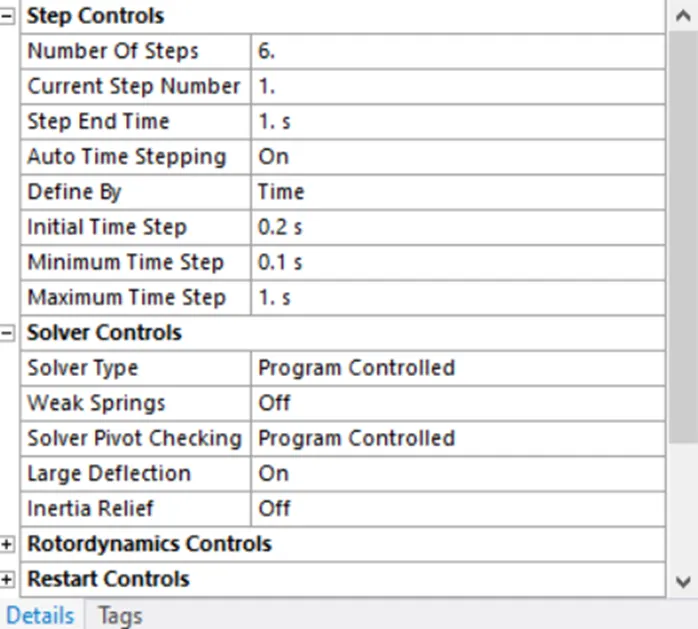
- Then define the analysis setting by giving initial, max and min time step value.
- Then define joint load pinion as rotational and big gear as 100N moment.
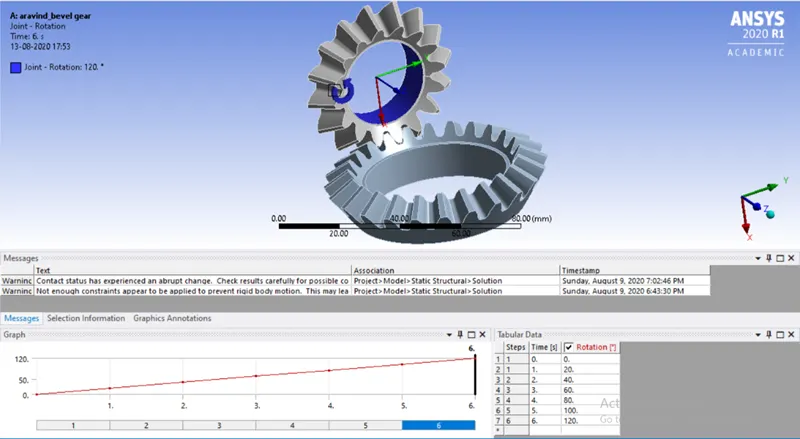
- Then finally give the parameters which will going to perform grid dependency test.
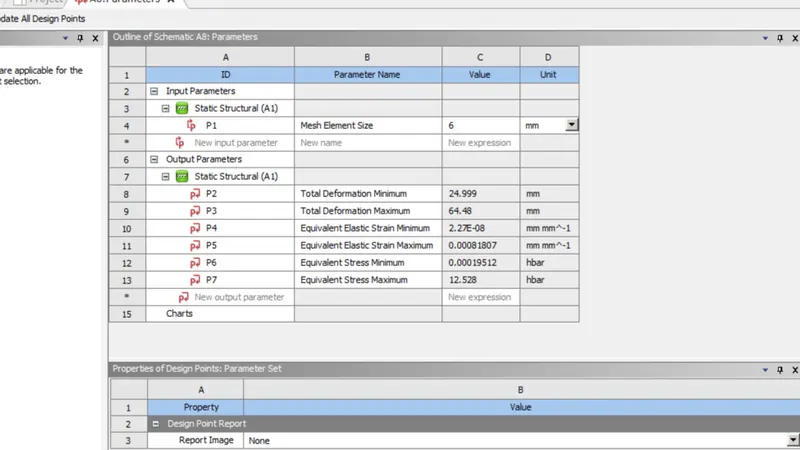
RESULTS
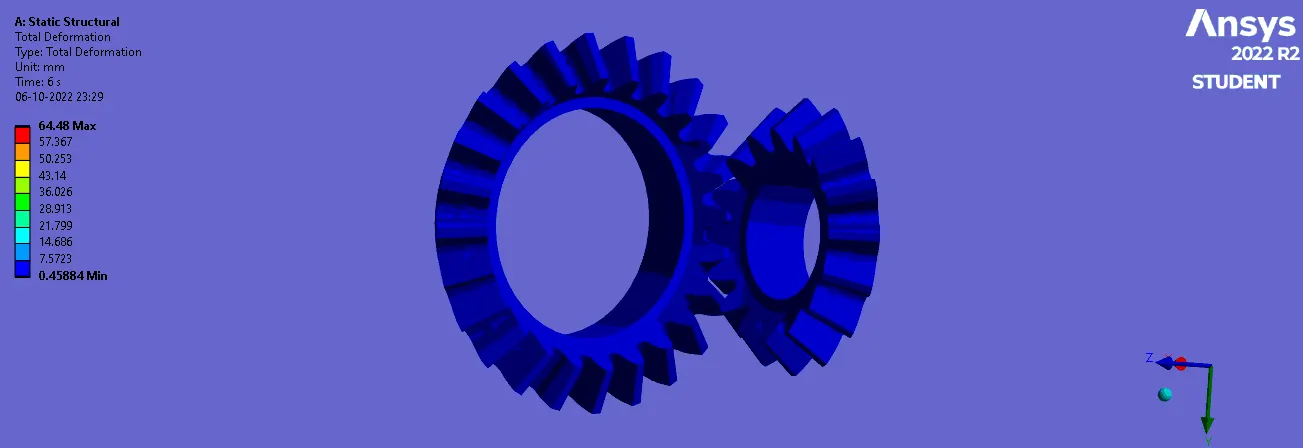
TOTAL DEFORMATION
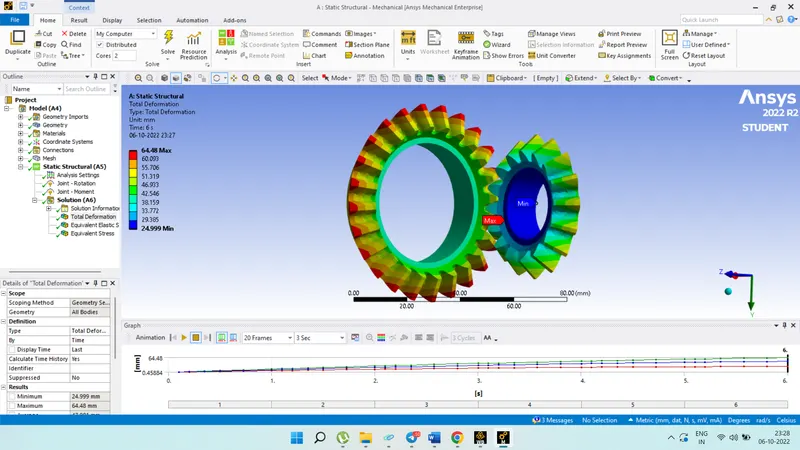
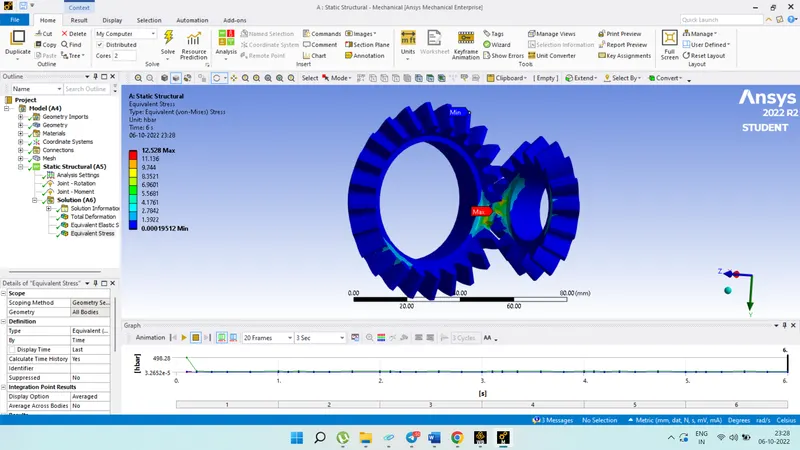
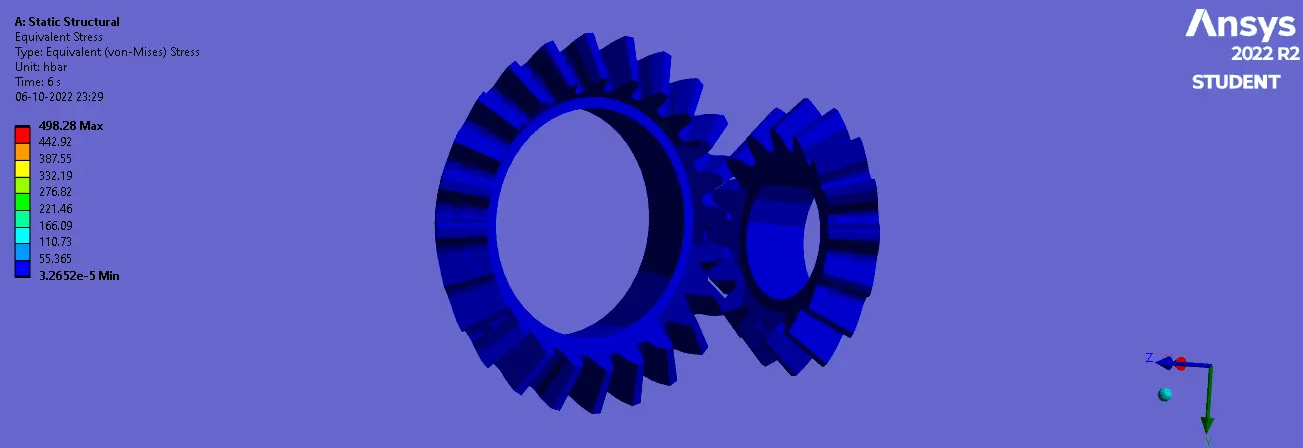
EQUIVALENT STRESS
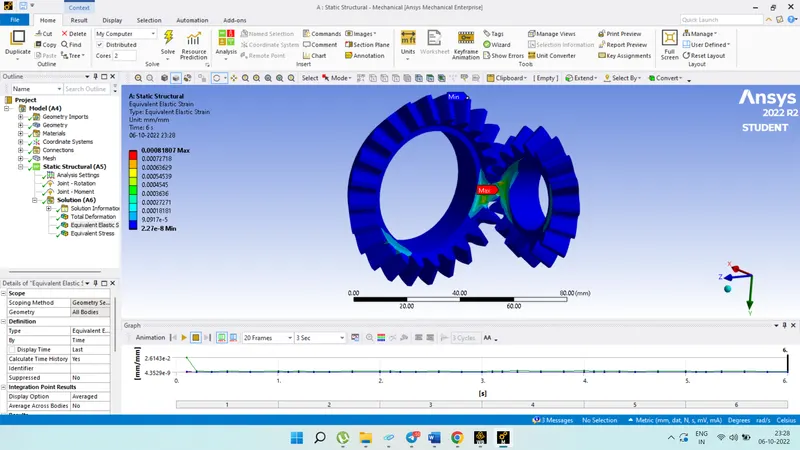
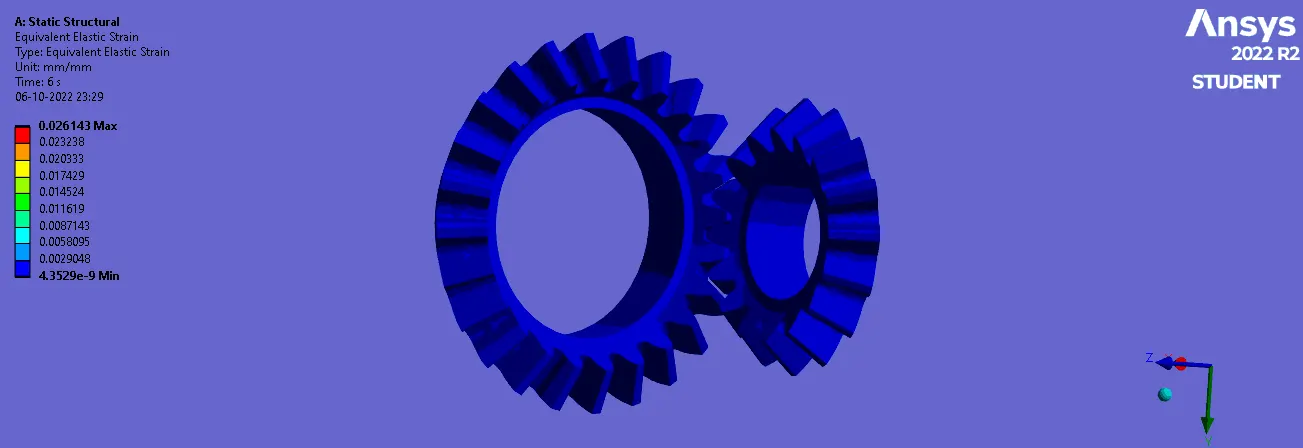
EQUIVALENT STRAIN
Animation
Deformation
Stress
Strain
conclusion
The above table shows the results of the grid dependency test for three mesh size 6,5 and 4. the total deformation for all the mesh size is same but whene the mesh goes finer size 4
the maximum stress and strain gives more accurate results but if we reduce the mesh more finer it will increase the computational time.
1) Grid dependency test was performed successfully using three mesh size by incrementing 1mm for each iteration.
2) We get accurate results using 4 mm mesh size whereas 5 mm and 6 mm dont give better expected results.
3) We got to learn that finer the mesh size more accurate the solution will be, at the cost of computational time.