Week -2
Make a Simulink model of Doorbell using solenoid block with the following details:
Create a situation where the switch is closed for 2 seconds and then released. Observe the physical movement of the plunger.
Assume remaining parameters. 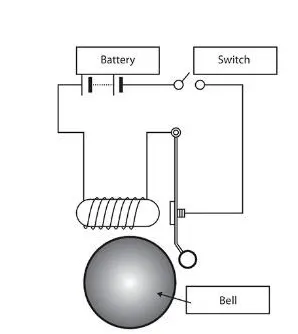
- The door bell consists of a electromagnet, battery, a switch & a bell. When the switch is closed the electromagnet receives electrical power from the battery and pulls the metal arm to hit the bell producing sound.
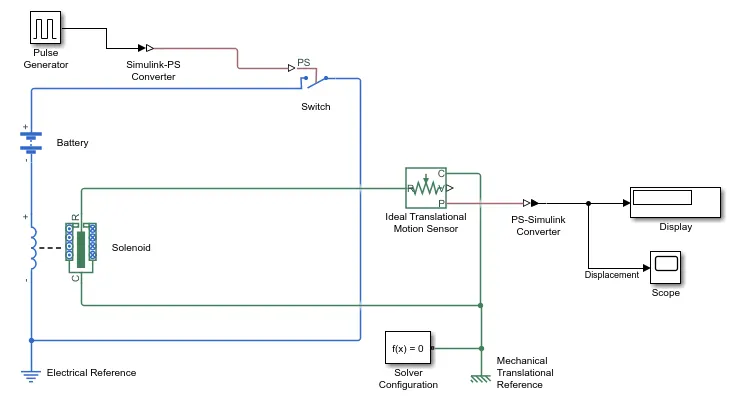
- The simulink model of the bell using a solenoid block is show below.
- When the switch is closed the circuit is complete and electric current flows through the circuit.
- When the electric currents flows through the electromagnet it gets charged and behaves like a magnet due to which it attracts the metallic plunger towards it.
- As the plunger moves towards the electomagnet it hits the bell and creates sound.
Simulink model of door bell.
Working
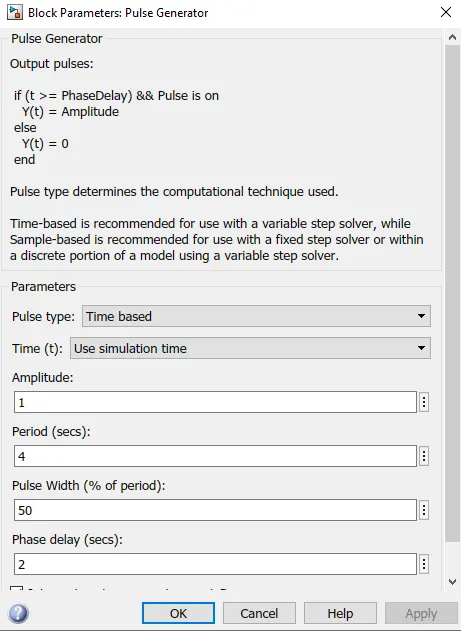
- A pulse generator is used for the input signal. The input signal is passed to the switch. To pass the signal from simulink block to the simscape block, a simulink to PS converter block is used.
- When the pulse generator provides an ON signal the switch is closed and completes the circuit and when OFF signal is generated the switch is open.
- A battery is connected to the solenoid to generate magentic feild for movement of the plunger and to the switch with an electrical reference as ground.
- To track the position of the plunger a translational motion sensor is used. The output of the solenoid block from connecter R is given to the motion sensor as input. The motion sensor than outputs the position which is then observed in the scope block.
- Translational reference block is used for fixed point or frame. The solver configuration block is provided to solve the model with simscape block.
Inputs:
Output:
Conclusion:
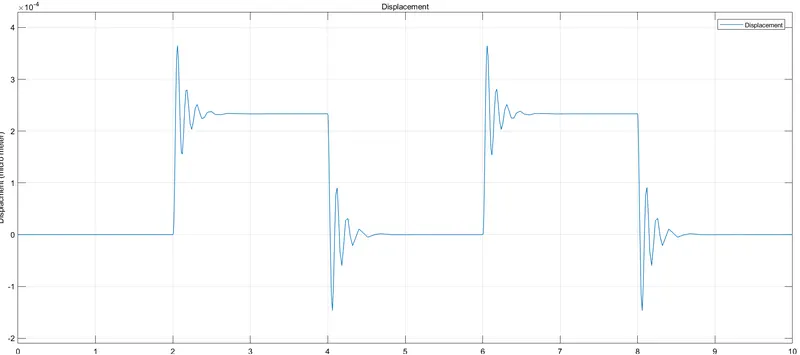
The simulink model is run for 10 seconds. From the graph it can been seen that due to the delay of 2 seconds at initial stage, the switch is at OFF position. The solenoid is not energized and the pluger is at rest. But after 2 seconds, the switch will be in ON position, the solenoid will be energized and the plunger will move. Again for the next 2 sec, the swtich will be at OFF position, the solenoid will be denergized and the plunger will come to its initial condition of rest. This process will continue for 10 seconds according to the simulation time provided.
----------------------------------------------------------------------------------------------------------------------------------------------------------------------------------------------------------------------------
Use a thermistor to sense the temperature of a heater & turn on or turn off the fan as per the below conditions:
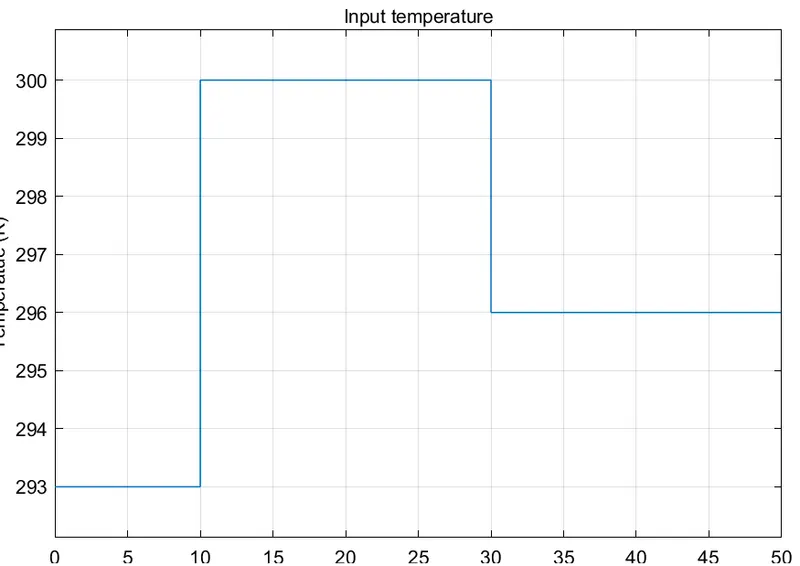
Temperature source: 20 °C from 0 to 10 seconds, 27 °C from 10 to 30 seconds, 23 °C from 30 to 50 seconds
Fan conditions: ON if the temperature above 25 °C, OFF otherwise
Thermistor
A thermistor is a resistance thermometer, or a resistor whose resistance is dependent on temperature. The term is a combination of “thermal” and “resistor”.
There are two types of thermistors: Negative Temperature Coefficient (NTC) and Positive Temperature Coefficient (PTC). With an NTC thermistor, when the temperature increases, resistance decreases. Conversely, when temperature decreases, resistance increases. This type of thermistor is used the most.
A PTC thermistor works a little differently. When temperature increases, the resistance increases, and when temperature decreases, resistance decreases. This type of thermistor is generally used as a fuse.
Simulink model
Working:
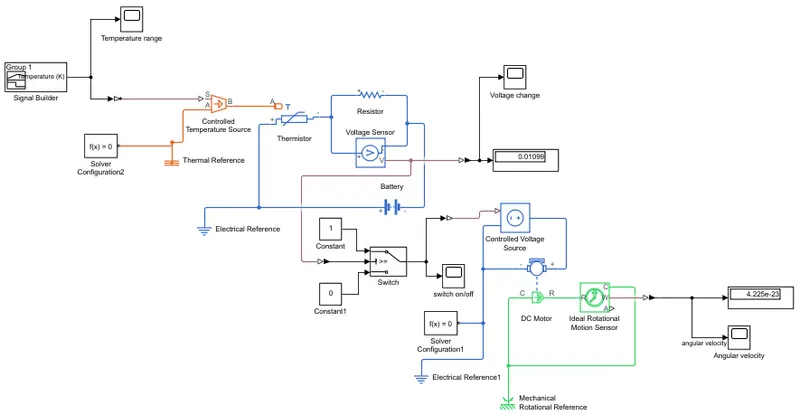
- Here NTC thermistor is used as a temperature sensor to sense the temperatue range and turn ON or turn OFF the fan.
- To input given temperature and time conditions a signal builder is used. As the signal builder is a simulink block, a simulink to PS converter block is used to convert and provide the physical signal to the thermistor through a temperature source.
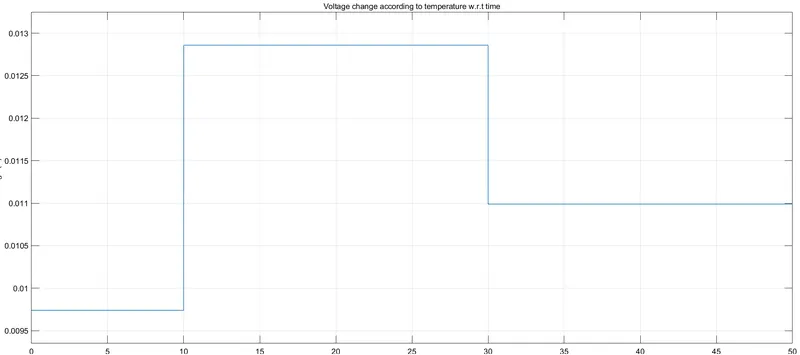
- First the constant output of the voltage sensor for the temperature of `298^oK` (`25 ^o C`) is measured which is the threshold value given to the switch as an if condition for the fan to turn ON or OFF. Here the input temperatures we have designed will compare their respective values with the standard value for greater than equal to or less than equal to the value of `298^oK` and activate the switch accordingly. Here constant threshold value for `298^oK` is noted as 0.01189V. So when the temperature signal provided to the thermistor is greater than `298^oK` its resistance decreases and the voltage will increase above 0.01189V and vise-versa.
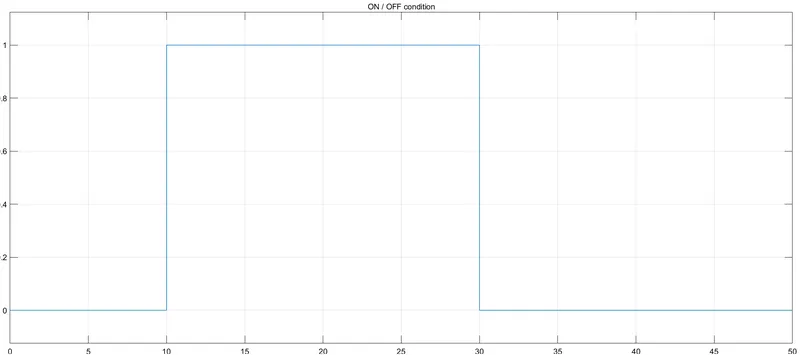
- The switch has 3 inputs. The above threshold value is provided to the middle port. Two constant blocks with values 1 and 0 are connected to turn a switch On and OFF respectively. If the switch condition is satisfied then the signal will pass to the DC motor with switch ON using constant block with value 1 otherwise switch will remain OFF using a constant block with a value of 0.
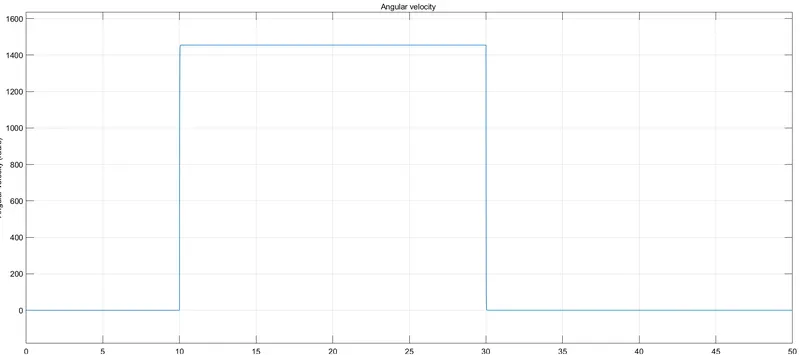
- When the condition of ON is satisfied, the signal will pass through the controlled voltage source to the DC motor, it will turn with some angular velocity that can be observed through the scope block.
- Different reference blocks for a fixed reference point and solver configuration blocks to solve the simscape model are provided wherever necessary.
Input
Output
Conclusion:
- From the above graphs, it can be seen that the fan shows zero angular velocity for the first 10 seconds which is because the temperature is `293^oK` i.e., for `20^oC`.
- For the thermistor model, from the angular velocity graph we can conclude that the fan is in motion only when the thermistor will sense the temperature greater than `25^oC` which satisfies the required condition.