Week -2
AIM : make a simulink model of doorbell by using solenoid block.
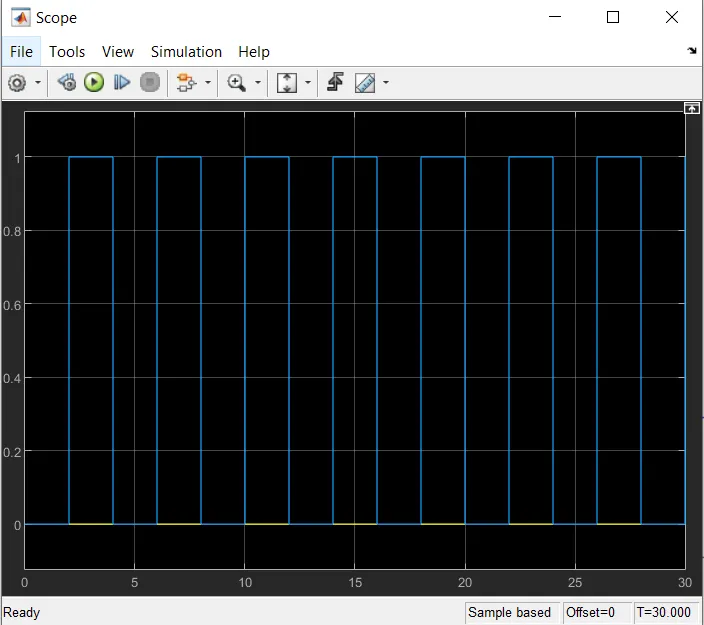
condtion: Create a situation where the switch is closed for 2 seconds and then released. Observe the physical movement of the plunger.
MECHANISM OF DOORBELL:
The heart of a doorbell is an electromagnet. When you press a doorbell button, you complete an electrical circuit that allows household electricity to flow through the doorbell's internal electromagnet. The magnetic field generated by the electromagnet is then used to power a mechanism that creates the doorbell sound.
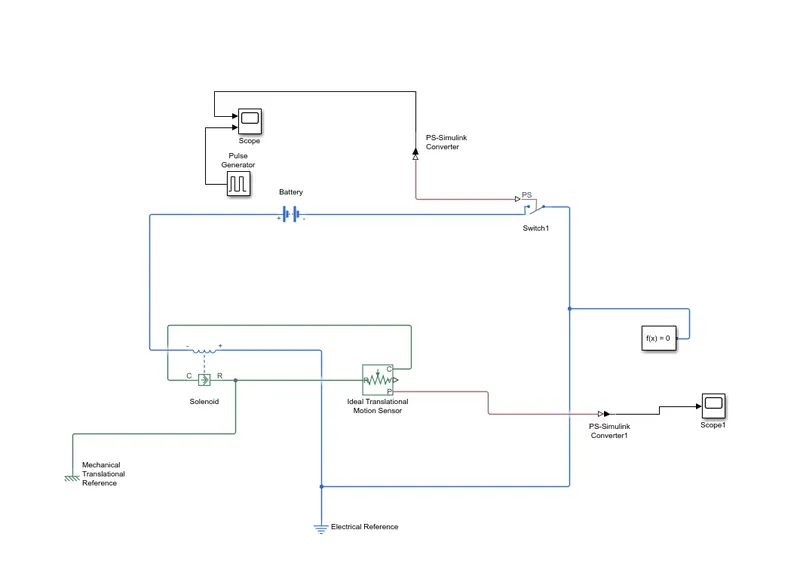
BLOCKS THAT ARE USED IN DOOR BELL
pluse generator: this block is used to create square waven pulses at regular intervals.the parameters of this block are
pluse type= time based
amplitude=1, period (sec)=120, pulse width=100/6, phase delay=0
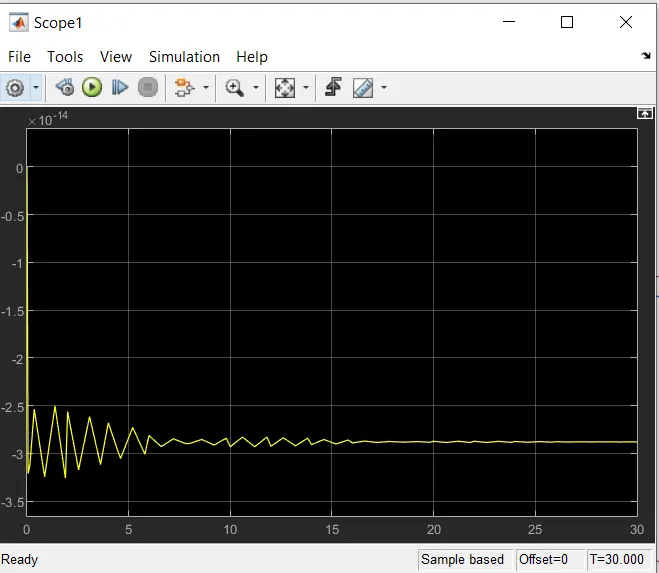
solenoid block: this device converts electrical energy into mechanical work and this mechanical workis then used to produce sound in the door bell
battery source=provides voltage across the circuit
ideal translational motion sensor
ps-simulink conveter=it converts physical signal to simulink signal
mechanical translational refrence=a refrence used to hold the solenoid block
electrical refrence= this block holds the electrical components like battery or any other device
SWITCH BLOCK=The block represents a switch controlled by an external physical signal. If the external physical signal PS is greater than the threshold, then the switch is closed, otherwise the switch is open.
scope
solver configuration
RESULTS
results of this model is shown in the figure below
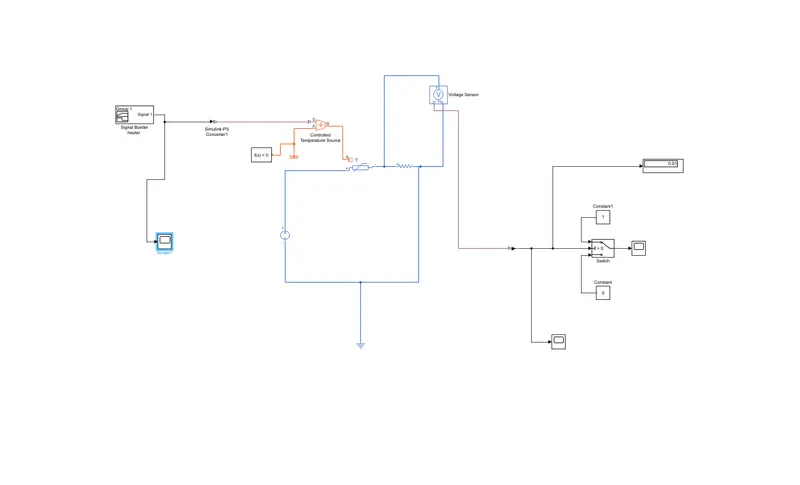
Module 2: Use a thermistor to sense the temperature of a heater & turn on or turn off the fan
condtions are as follows
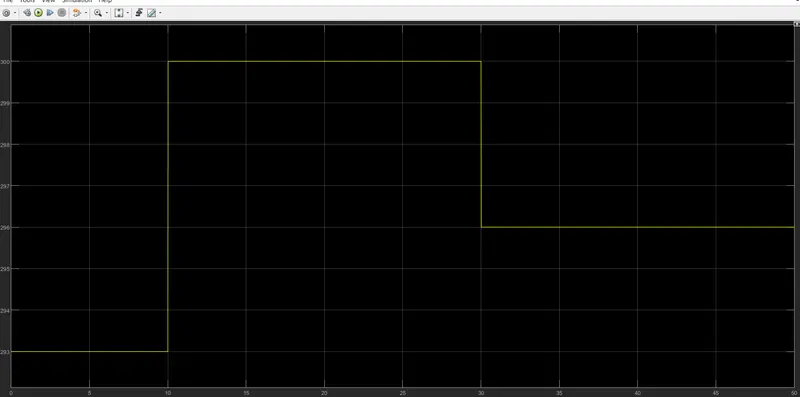
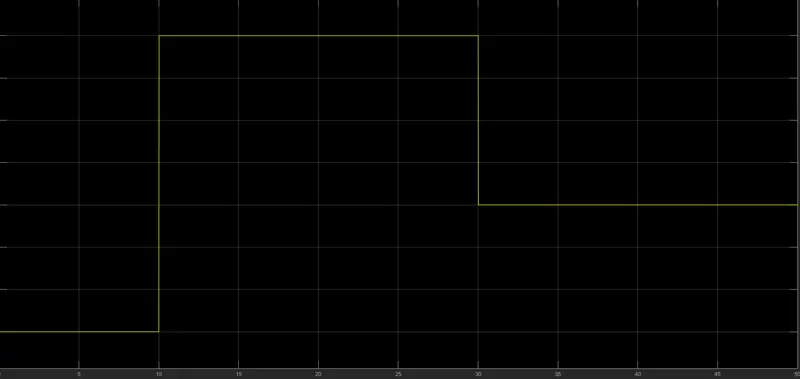
Temperature source: 20 °C (293k) from 0 to 10 seconds, 27 °C(300k) from 10 to 30 seconds, 23 °C(296k) from 30 to 50 seconds
Fan conditions: ON if the temperature above 25 °C(298k), else off
THERMISTOR:
A thermistor is a thermally sensitive resistor that exhibits a precise and predictable change in resistance proportional to small changes in body temperature. How much its resistance will change is dependent upon its unique composition. Thermistors are part of a larger group of passive components. And unlike their active component counterparts, passive devices are incapable of providing power gain, or amplification to a circuit.
THERMISTOR TYPES:
There are two types of thermistors. NTC or Negative Temperature Coefficient thermistors, and PTC or Positive Temperature Coefficient thermistors. The difference is that NTC thermistors exhibit a DECREASE in resistance as body temperature increases, while PTC thermistors exhibit an INCREASE in resistance as body temperature increases.
APPLICATION OF THERMISTOR
- Temperature Compensation
- Temperature Measurement
- Temperature Control
blocks that are used in this model
signal builder
dc voltage source
voltage sensor
resistor
controlled temperature source
switch
scope
constant
display
RESULTS : THE results of this model will be shown in figure below