Week -2
Doorbell using solenoid block
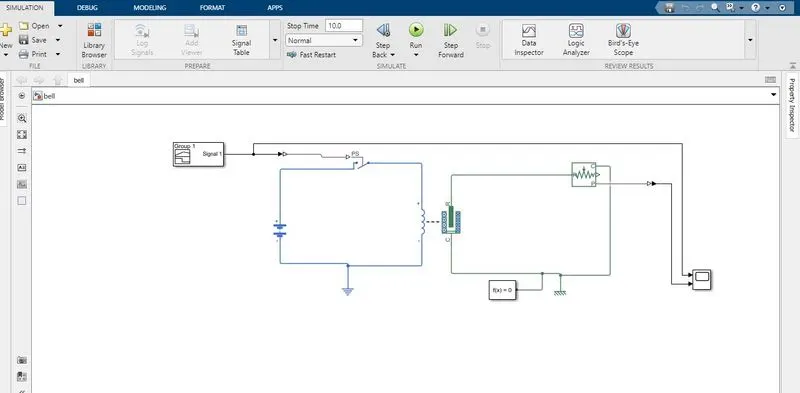
In the simulink model we have used the below parameters-
*signal builder
* simulink-ps converter
* switch
* solenoid valve
* solver configuration
* mechanical reference
* ideal traslational motion sensor
* scope
* ps-simulink converter
* The signal builder is set to generate a 2 sec pulse with amptitude 1v and its is connected to a switch, the switch closes the path when the pulse is given and the solenoid valve gets magnetized.
* The scope is connected to ideal translational motion sensor to see the output.
* when the solenoid valve gets magnetized the plunger hits the bell.
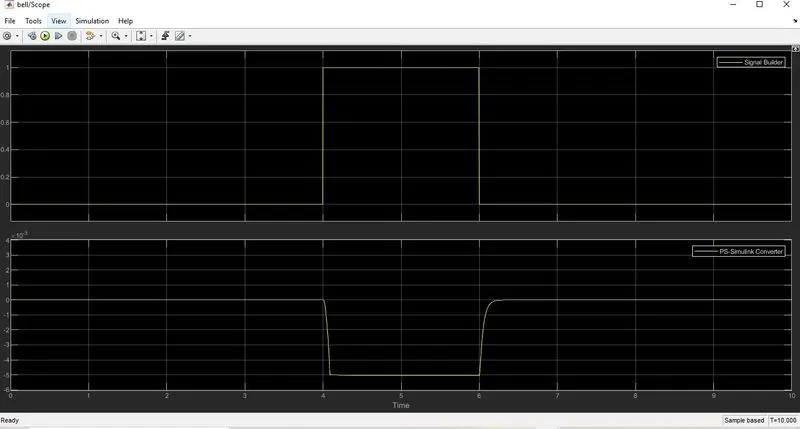
Result
The above image shows the output of door bell when a 2 secs pulse is given, the bell rings for 2 secs and stops again and this is observed by ideal translational motion sensor and the physical movement is converted into simulink signal using ps-simulink converter and observed in scope.
Thermistor to sense the temperature of a heater & turn on or turn off the fan
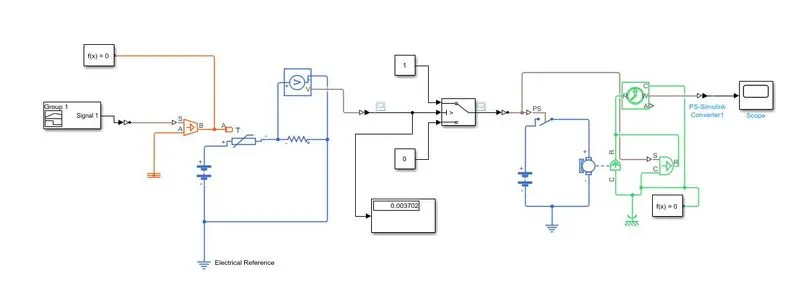
The fan controller section is same as the door bell operation, only thing is the input signal is given through thermistor controller and it can be designed using the below block details
* Controlled temperature source
* thermister
* Resistor
* battery source
* Voltage sensor
* Electrical Reference
* solver configuration etc..,
The signal builder is connected to controlled temperature source and it is connected to thermister and the voltage sensor is connected parallel to the Resistor with a valve of 10 ohms, the output of voltage sensor is connected to a display and switch through the ps-simulink converter, the switch is connected with 0 & 1 with respect to thershold valve.
The display shows the thershold valve as 0.003702 which has to be feeded to the switch theshold, to get drop down or to get cut-off the fan due to the conditions and its gets turned on when it reaches the thershold value.
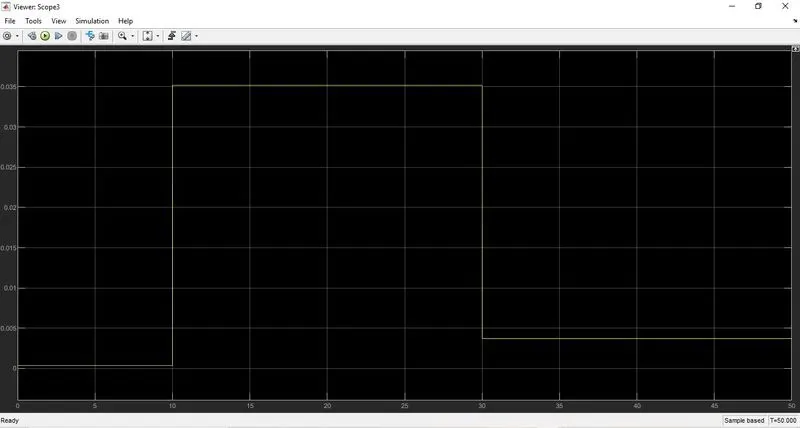
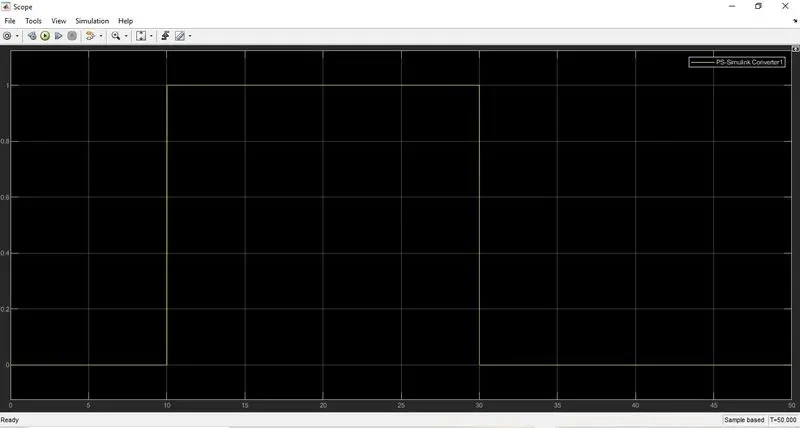
0 °C from 0 to 10 seconds, 27 °C from 10 to 30 seconds, 23 °C from 30 to 50 seconds
Fan conditions: ON if the temperature above 25 °C, OFF otherwise.
Result
The fan gets turned ON or OFF according to the condition, and its has been proven the above graph because its shows that when the temperature goes above 250 k the fan gets turn on and gets off after 30 secs due to temperature drop.