Week -2
1. Make a Simulink model of the Doorbell using a solenoid block with the following details.
Door Bell:
Generally, an Electromagnetic device uses the solenoid(Electromagnetism).
Principle:
Door Bell works on the principle of working electromagnetism. A metallic core wounded by the current-carrying coil gets magnetized and attracts the iron particle as a magnet.
Working:
In this circuit, a metallic core is wounded by the coil carrying current. Due to the Electromagnetic nature core gets energized and pulls the metallic strip. The Strip end is connected to the hammer which hits the metallic bell to generates the sound. But to continues, the action core must de-energized to do that there is a contactor connected to the strip that makes and breaks the circuit. By this the core gets de-energized, this helps the contractor to make the circuit. Due to the primary switch held to ON state, that's strip continuously oscillates. Hence, the hammer makes the sound continuously.
Modeling and Simulation:
As given in the requirement Bell need to in ON state for 2 sec and OFF state for 2 sec periodically which was generated by the Control signal which drives the primary switch to makes and brakes the circuit.
To Drive the bell we need the supply which will feed by the battery and control the primary switch.
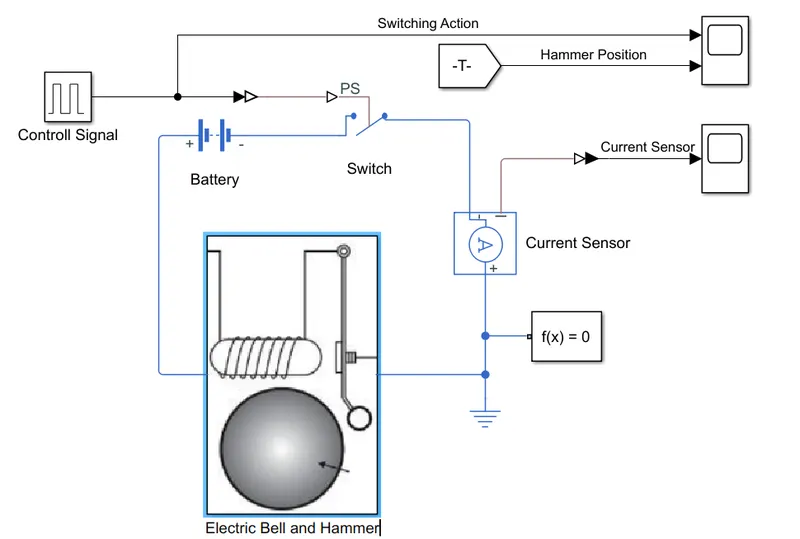
As mentioned in the working Solenoid core attracts the strip and the oscillation action all was built inside the Electric Bell and hammer Block as shown below.
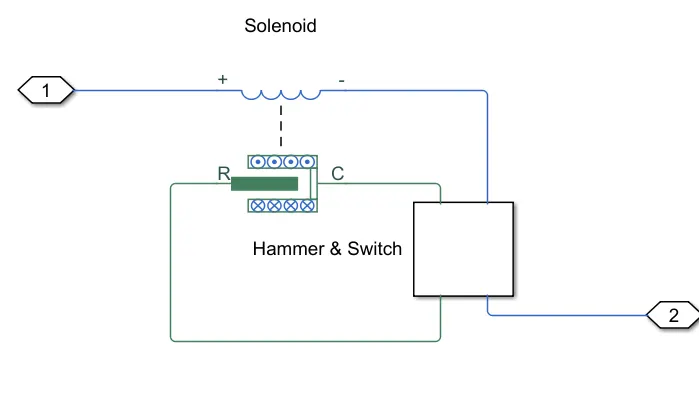
To generate the action for the oscillation of the strip that makes and breaks the circuit that was built inside the Hammer and switch block as shown below.
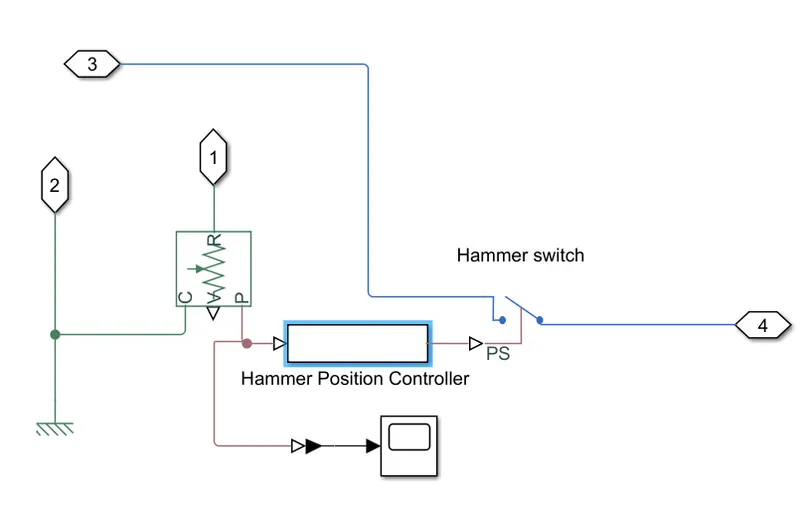
But to create the Switching action we need to control the switch using the position sensor output which helps us to define the contactor position too. So to define that signal we need to take the switch case such that the contractor will make and break the circuit that was handelled by the hammer position controller.
Result:
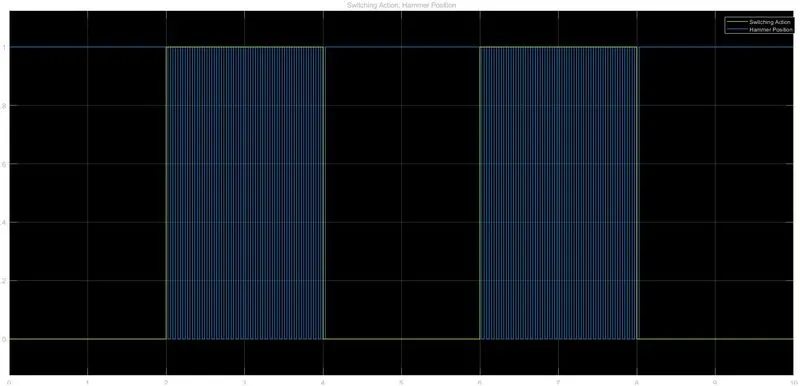
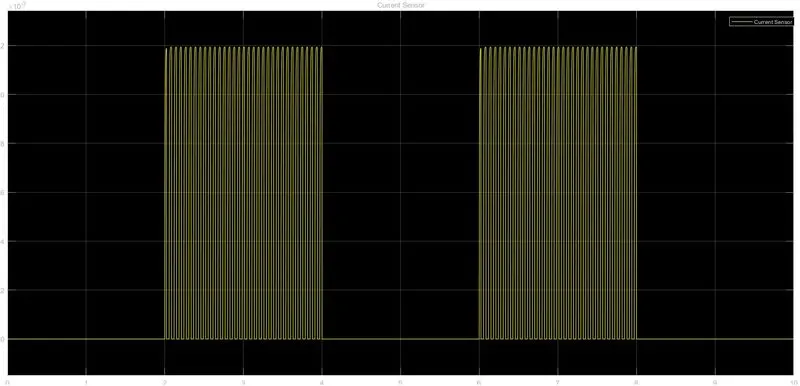
From the Above scope, we can say that the given control signal primary switch can able to initiate the bell and due to the contactor switch we can make the bell ring. The final current sensor shows the result that the operation of the hammer in the given period which makes the bell ring.
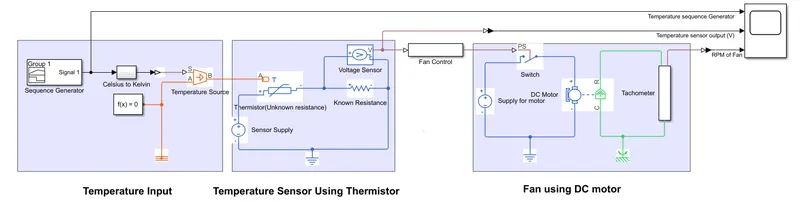
2. Use a thermistor to sense the temperature of a heater & turn on or turn off the fan as per below conditions:
Thermistor:
An Electrical resistor which varies the resistance value as the temperature of the surrounding of the device.
Temperature sensor:
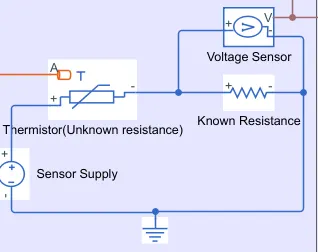
Temperature sensor using the thermistor desgin
As we know that the thermistor can vary its resistance as the temperature changes. So defining the resistance and temperature relative bit difficult. Hence using voltage divide rule we can find the ratio of voltage distribution using known resistance. By this we can directly relate to the the unknown resistance(thermistor) and also the we can find temperature around the thermistor.
Fan Control:
Output given by the voltage sensor we cannot directly fed to control fan. Signal need to be modified according to the required state of the fan for those period. i.e for this system Fan conditions: ON if the temperature above 25 °C, OFF otherwise.
System Condition :(Temperature input)
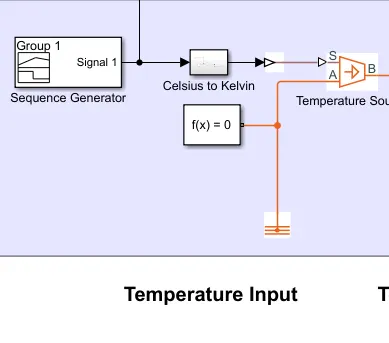
20 °C from 0 to 10 seconds, 27 °C from 10 to 30 seconds, 23 °C from 30 to 50 seconds
Using Signal Builder we define such condition as below
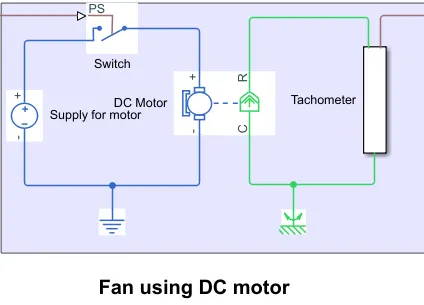
Motor and Fan Connection
DC supply given for the DC motor with some damping factor ---> Fan
The above system constructed and rpm of the fan sensed.
Result:
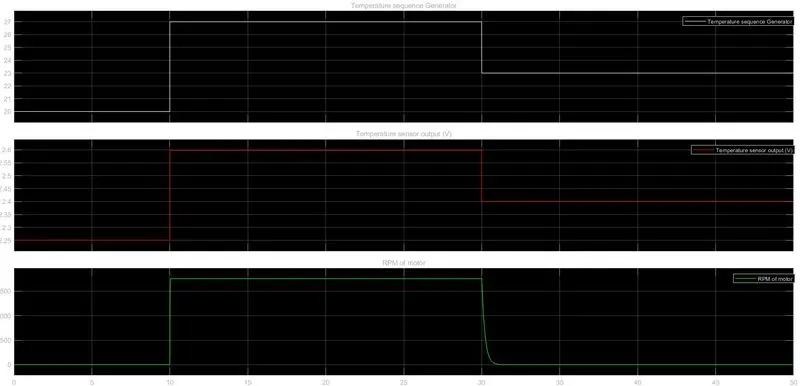
From the above scope output we can able generate given temperature sequence and also able sense the output of voltage sensor. Finally the fan run between 10 sec to 30 sec .