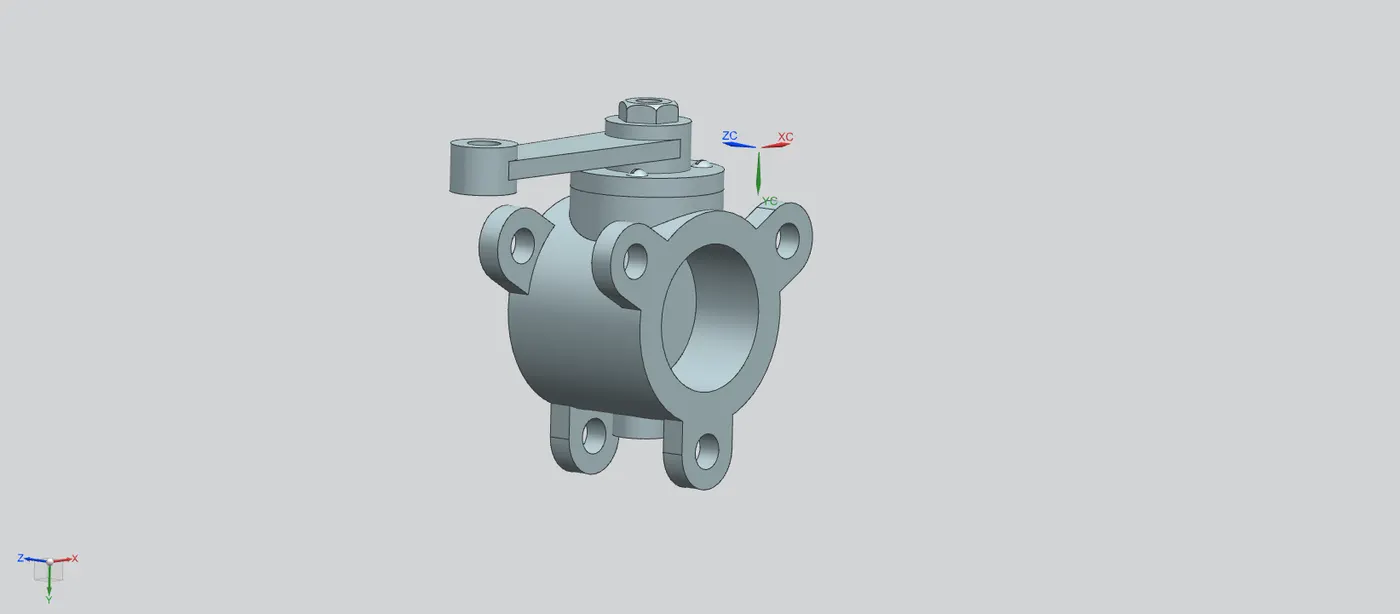
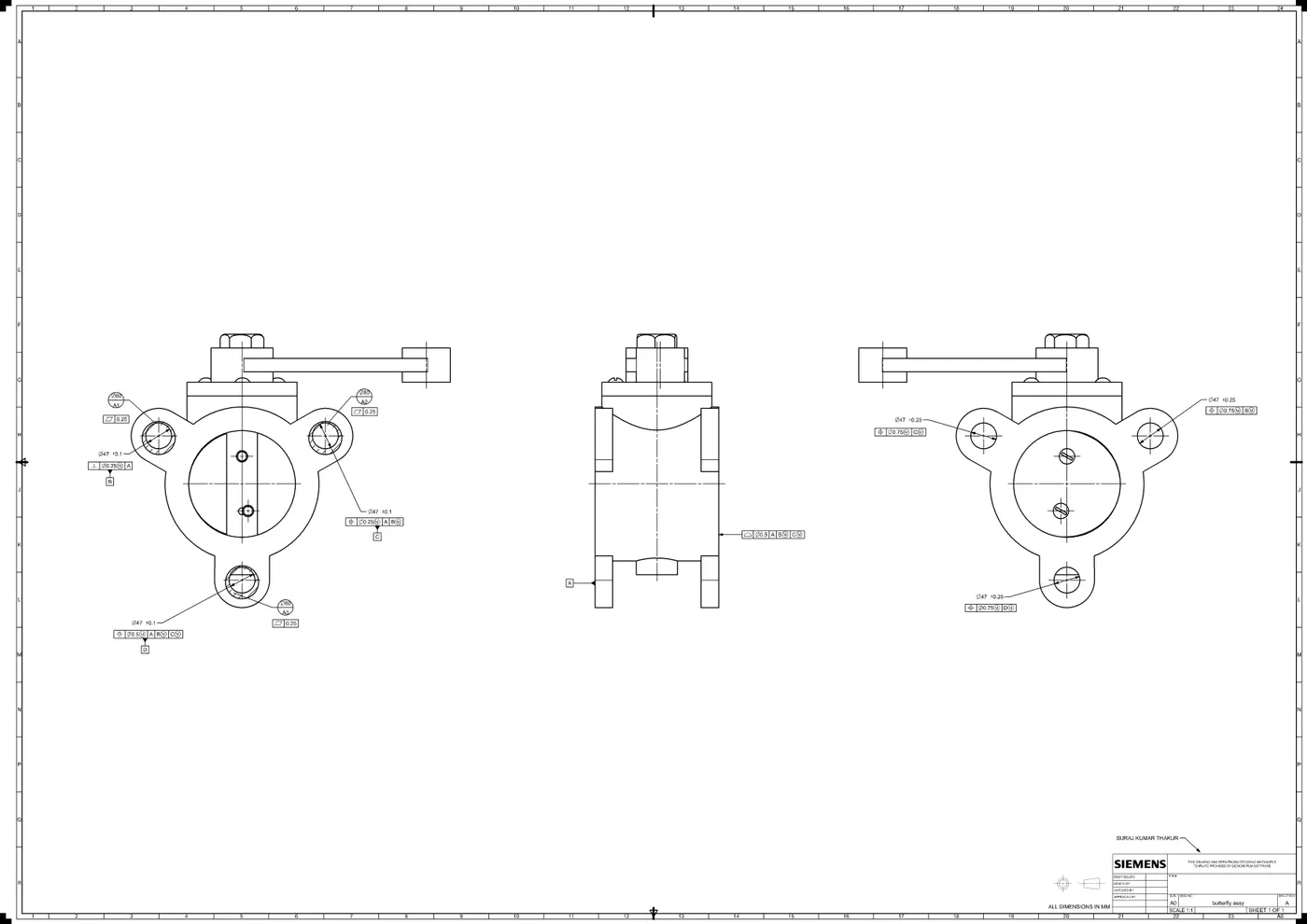
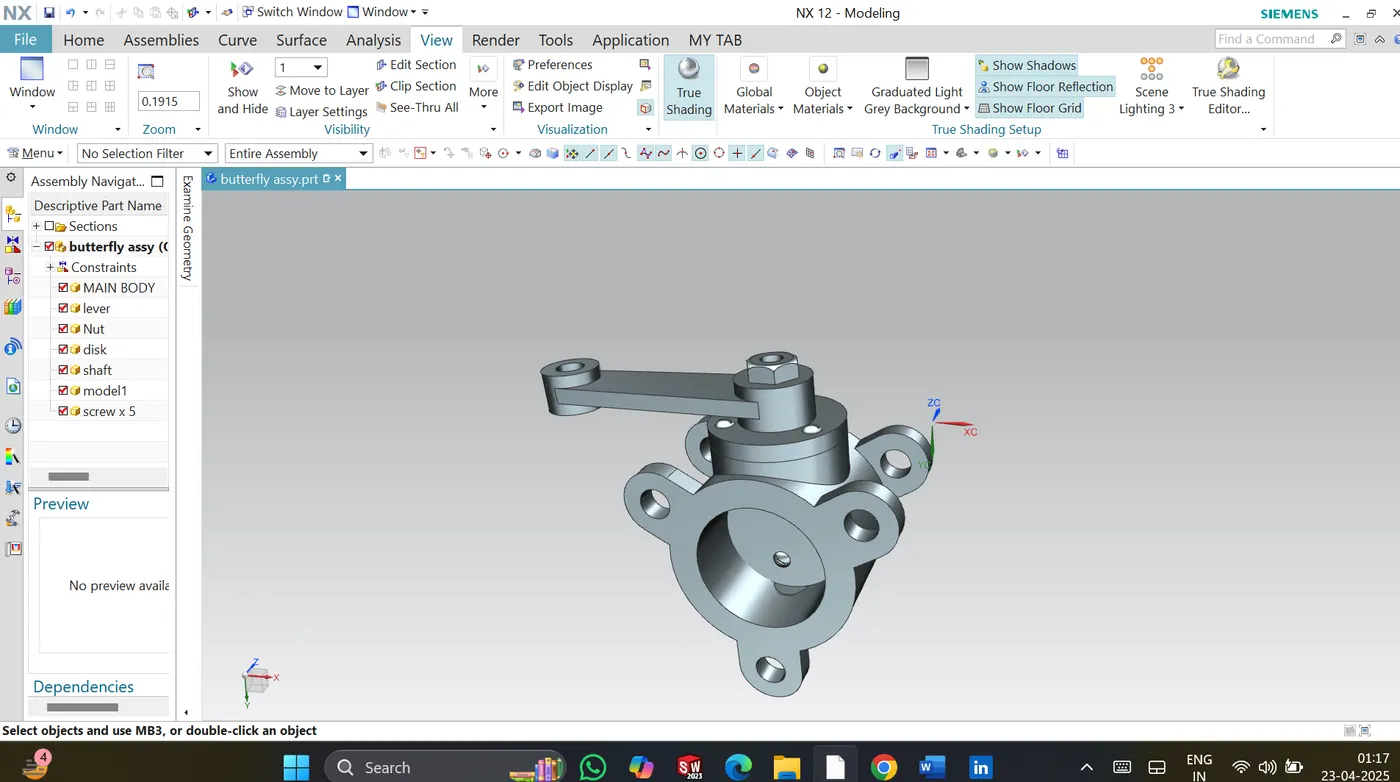
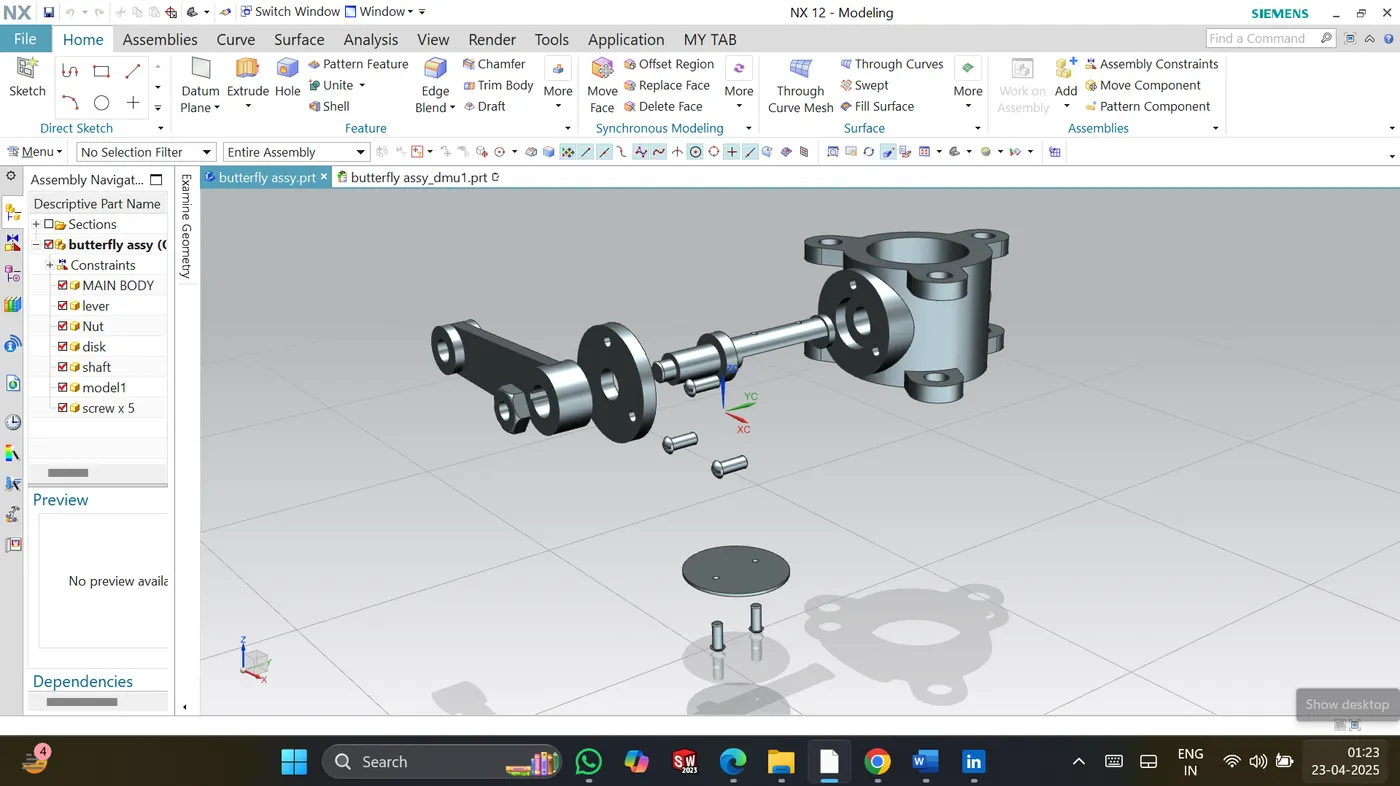
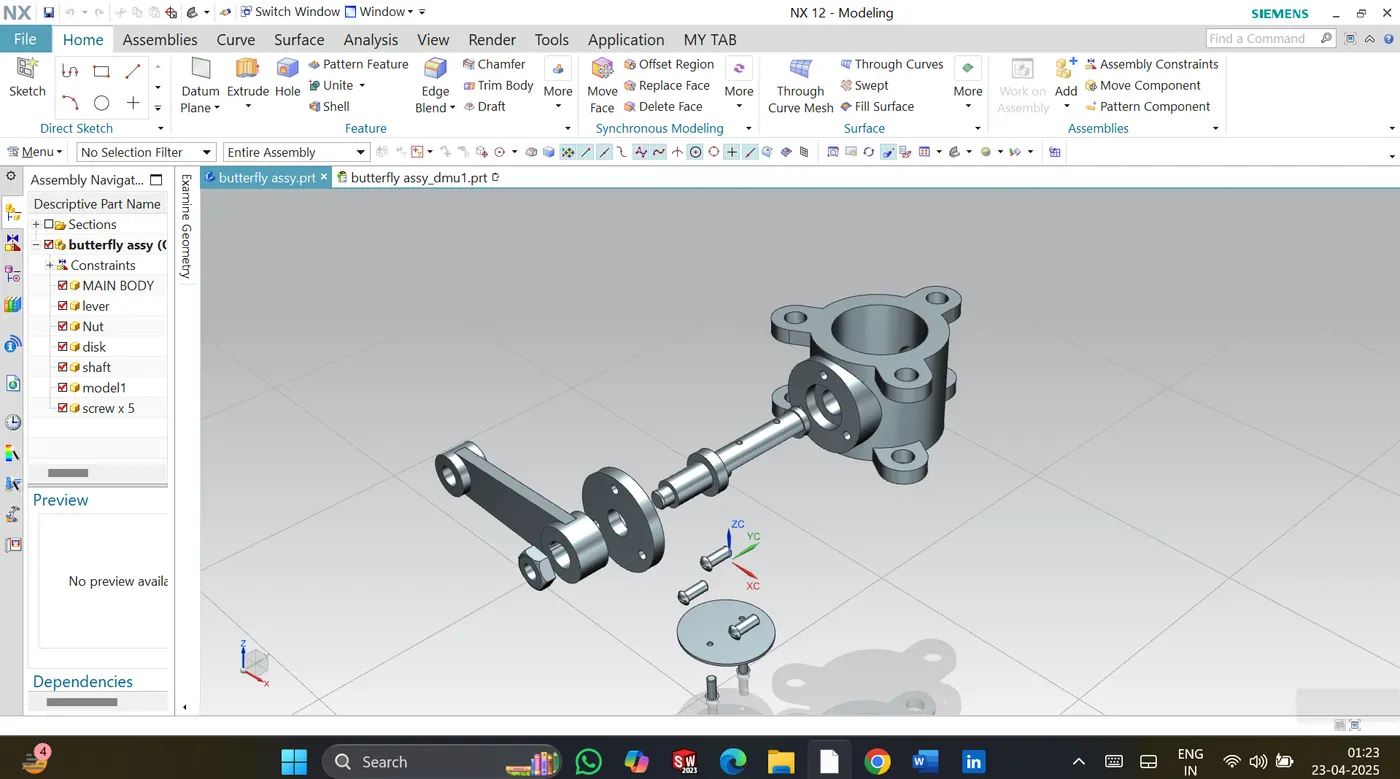
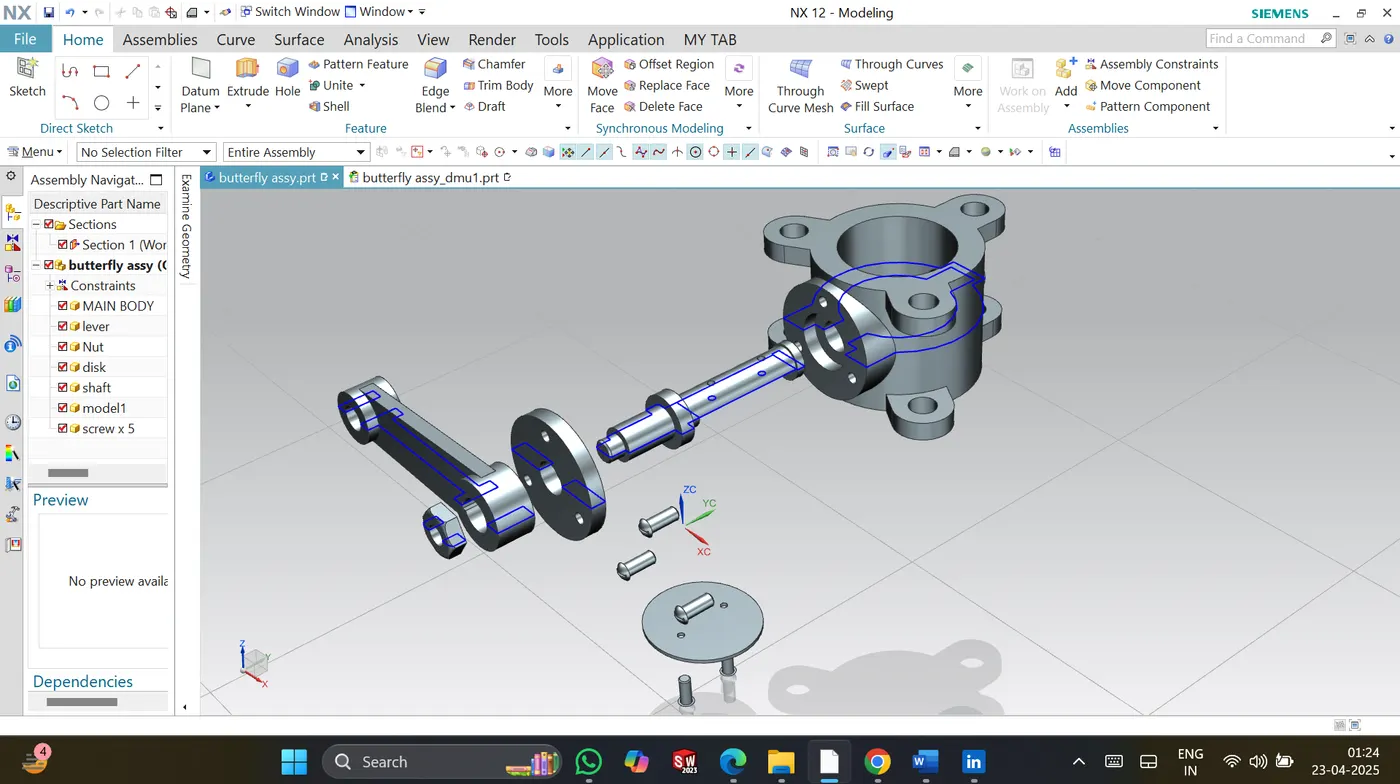
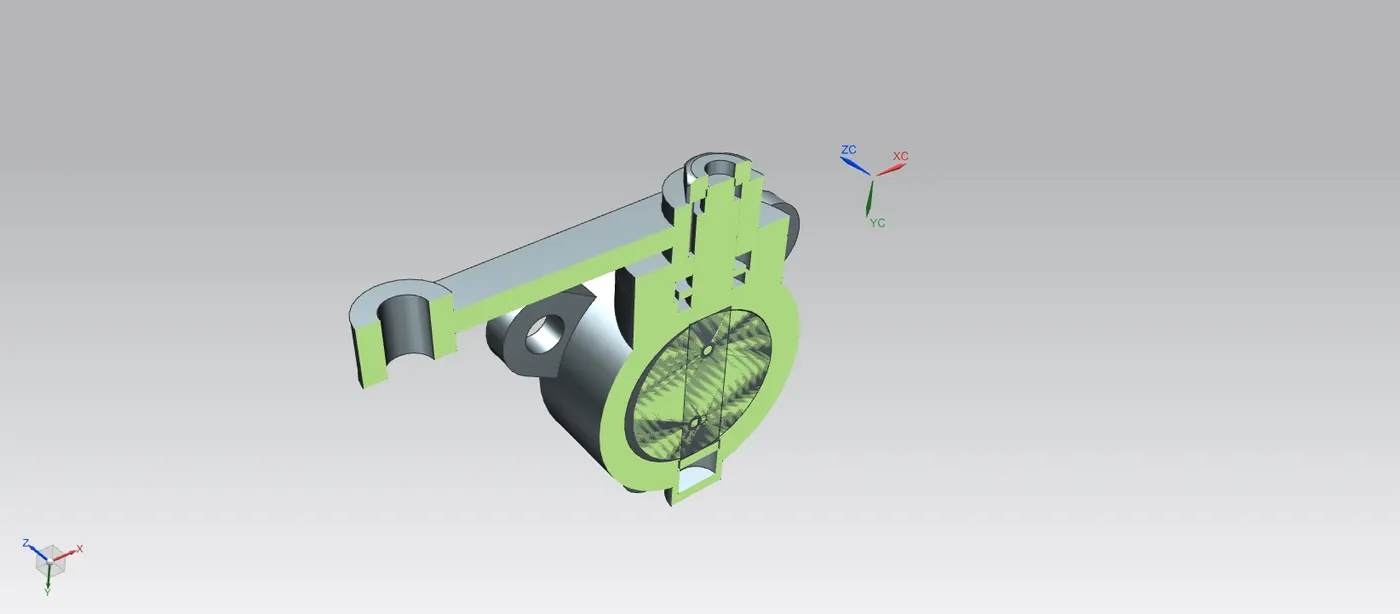
BUTTERFLY VALVE ASSEMBLY
🦋 Butterfly Valve – Full Details
🔧 What is a Butterfly Valve?
A butterfly valve is a quarter-turn rotational motion valve used to regulate or isolate the flow of a fluid (liquid or gas). It uses a disc as the closing mechanism which rotates to open or close the flow path.
⚙️ Basic Working Principle:
-
The disc is mounted on a rotating shaft.
-
When the valve is fully closed, the disc blocks the flow path.
-
When the valve is fully open, the disc is rotated a quarter turn to allow flow.
-
Intermediate positions allow for throttling.
🧩 Main Components:
-
Body – Housed between two pipe flanges.
-
Disc – The flow-controlling element.
-
Seat – Seals between the disc and the body to prevent leakage.
-
Stem/Shaft – Connects the actuator or handle to the disc.
-
Actuator – Manual (lever), electric, pneumatic, or hydraulic operation.
📦 Types of Butterfly Valves:
<button><svg viewBox="0 0 24 24" fill="none" xmlns="http://www.w3.org/2000/svg">
| Type | Description | Use Case |
|---|---|---|
| Concentric | Disc and stem centered in the seat | Low pressure, general purpose |
| Double Offset (High Performance) | Stem is offset from disc and body | Higher pressure and temperature |
| Triple Offset | Stem and disc are offset with a cone profile | Tight shut-off, high-performance industries |
🛠 Materials Used:
-
Body: Cast Iron, Stainless Steel, PVC
-
Disc: Stainless Steel, Aluminum Bronze, Nylon-coated
-
Seat: EPDM, PTFE, Viton, Nitrile
🌍 Applications:
-
Water supply and treatment
-
Chemical and food processing
-
Fire protection systems
-
HVAC (Heating, Ventilation, and Air Conditioning)
-
Oil & Gas
-
Marine systems
✅ Advantages:
-
Compact and lightweight
-
Fast operation (90° turn)
-
Cost-effective
-
Low maintenance
-
Suitable for large diameter pipes
-
Throttling capabilities (some designs)
❌ Limitations:
-
Not suitable for high-pressure drops
-
Potential for pressure loss and turbulence
-
Throttling can cause disc vibration at certain flow rates