Week 14 challenge
Design and Assembly of Butterfly Valve by applying GD&T using NX-Cad
Objective
The objective of this project is to model a butterfly valve and apply GD&T to the different parts then assemble all parts together by applying required constraints.
Introduction
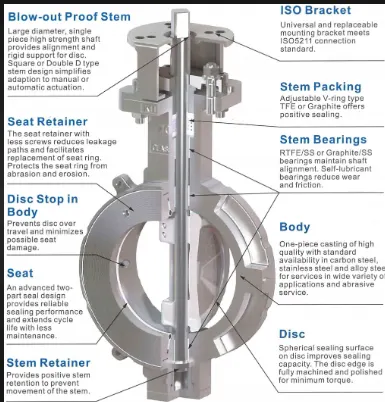
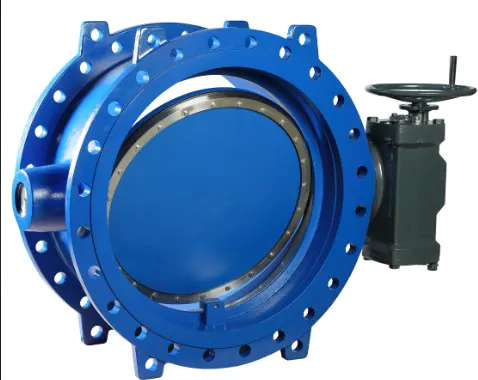
A butterfly valve is a quarter-turn rotational motion valve. In operation, the valve is fully open or closed when the disc is rotated a quarter turn. The "butterfly" is a metal disc mounted on a rod. When the valve is closed, the disc is turned so that it completely blocks off the passageway. When the valve is fully open, the disc is rotated a quarter turn so that it allows an almost unrestricted passage of the fluid. The valve may also be opened incrementally to throttle flow.
Butterfly Valve Working Principle
It is based on the quick shut off principle. The disc of the valve is placed in the center of the pipe which allows a rod to go through it to an actuator, on the outer side of the valve. The disc remains parallel or perpendicular to the flow. A pressure drop is introduced by the disc upon the flow even when open.
It open or closed when the disc is rotated a quarter turn and hence it is also known as a quarter-turn valve. There is a metal disc on the rod and when the valve is closed it blocks the passageway by giving it a quarter turn. This metal disc is known as a butterfly. It is the most important component of the valve.
Butterfly valve classification
Butterfly valves are quick to open type valves used to stop, regulate and start the flow of the fluid. A gearbox type actuator is attached with large butterfly valves and a hand wheel is connected to the stem of the valve via a gearbox. The butterfly valve is classified into four types.
-
Centric Butterfly valves: Centric butterfly valves are also known as soft seated valves. They are used for low- pressure and non- critical applications in gate and ball valves. They are very cost-efficient and easy to install. Centric butterfly valves are also very lightweight.
-
Motorized butterfly valve: Motorized butterfly valves are used to control the media flowing through the pipelines of the system. By changing the position of a round disc within a pipeline, it starts operating. They are available in many different sizes and they can be fit into any type of specifications.
-
`Pre-insulated butterfly valves: Pre-insulated butterfly valves avoid the cost as well as manpower for insulating the valve after installation. They are made up of very fine quality materials. They are of very simple design and enhance durability. Pre-insulated valves have a long service life and they are crack resistance.
-
Wafer type butterfly valve: wafer type butterfly valve is very easy to install into the system but it does not work as an isolation valve. It is placed between pipe flanges and the flange bolts encircle the valve body
Applications of Butterfly valves
Butterfly valves can be used in many different fluid services and they perform well in large volume water applications and slurry applications. The following are some typical applications of Butterfly valves
- Cooling water, air, gases, fire protection etc.
- Slurry and similar services
- Vacuum service
- High-pressure and high-temperature water and steam services
- Compressed Air or Gas Applications
Advantages of Butterfly Valves
- Available in very large sizes.
- Light in weight.
- Quick operation requires less time to open or close.
- Low pressure drops and high-pressure recovery.
Disadvantages of Butterfly Valves
- Disc movement is unguided and affected by flow turbulence.
- Cavitation and choked flow are two potential concerns.
- Throttling service is limited to differential pressure.
Butterfly valves design
The butterfly valve comes into two designs, centric and eccentric. The only difference between these two designs is, in centric butterfly valve stem is placed in the center of the disc and disc is placed in the center of the bore. Whereas in eccentric butterfly valves, there can be more than one stem placed offset from the center.
Components of Butterfly Valve
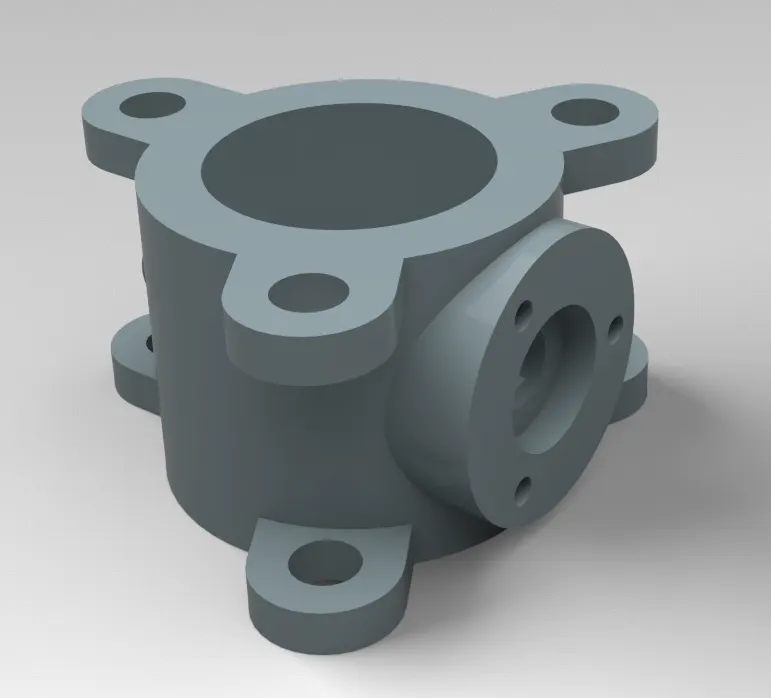
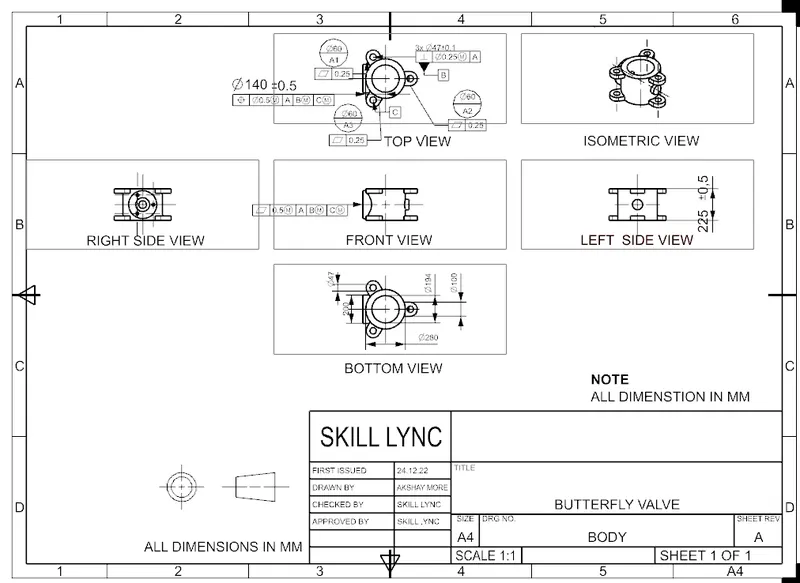
1.Body
Butterfly valves generally have bodies that fit between two pipe flanges. The most body designs are lug and wafer.
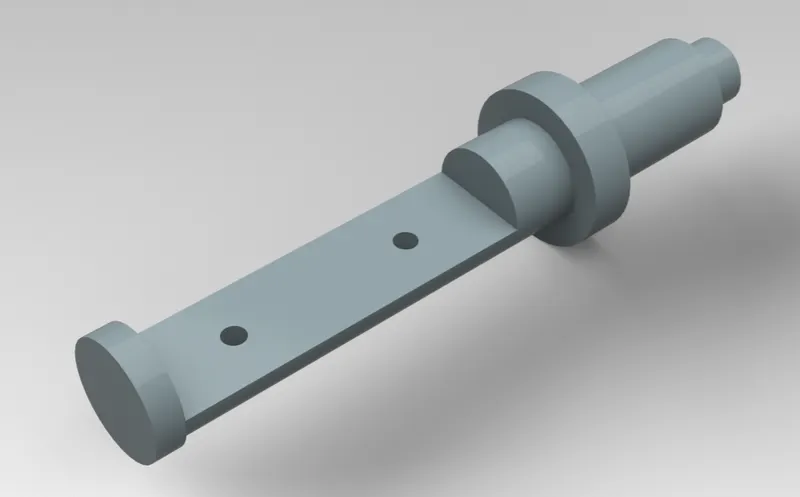
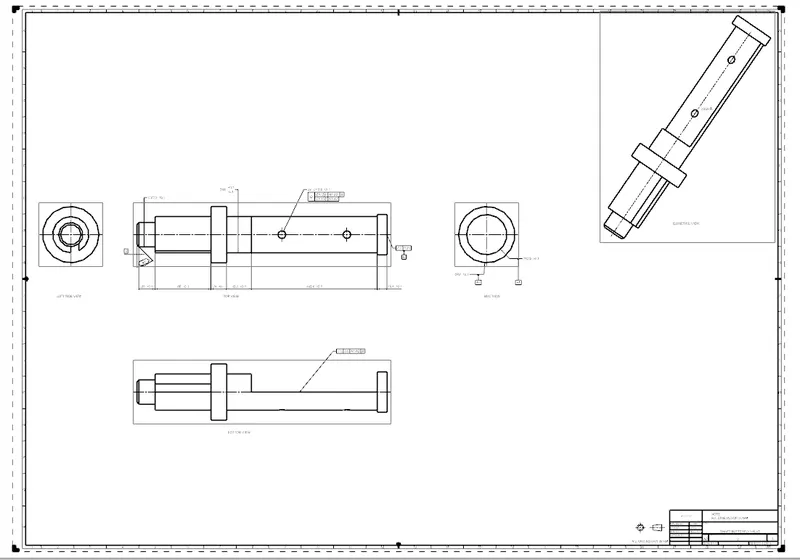
2.Stem
In butterfly valve it may be a one-piece shaft or a two-piece (split-stem) design.
3.Retainer
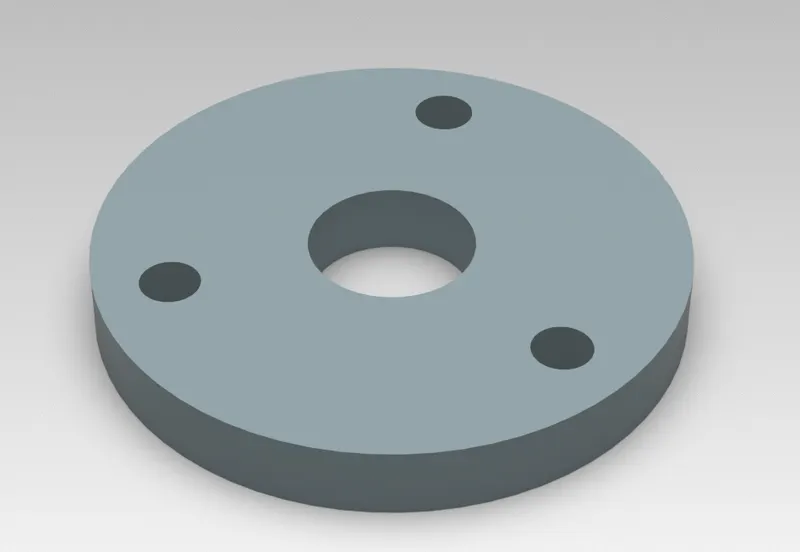
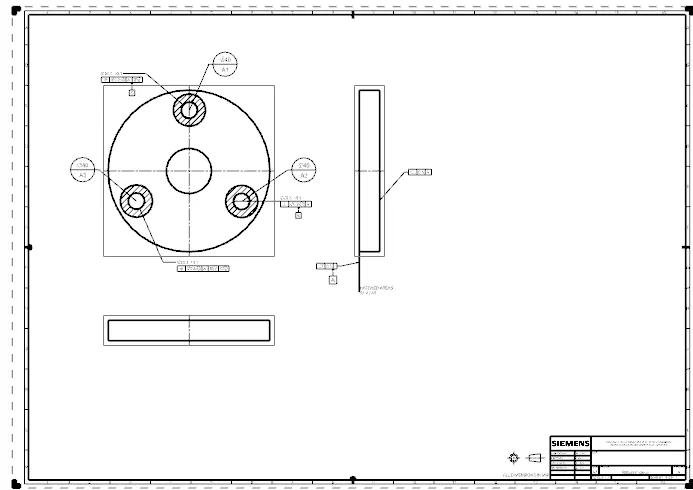
It is a specially shaped washer that fits over the top of the valve spring. The keepers, or locks, fit into valve stem grooves, holding the retainer and spring in place.
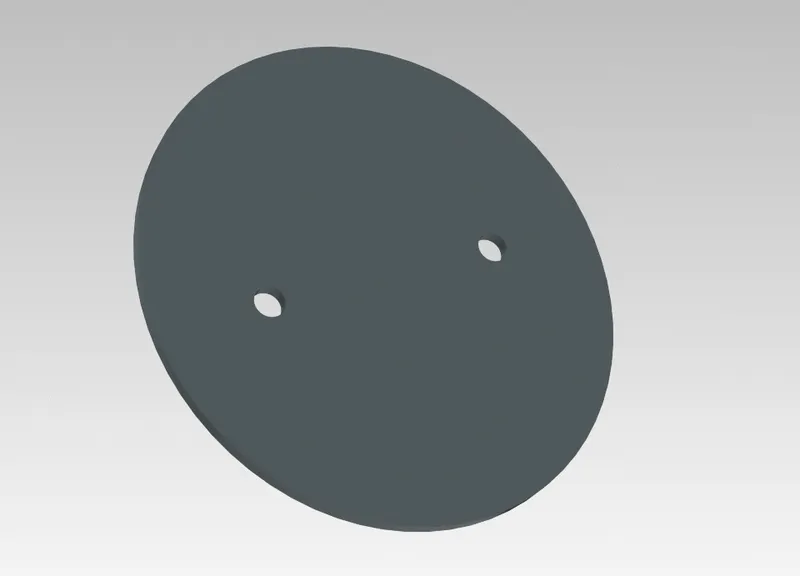
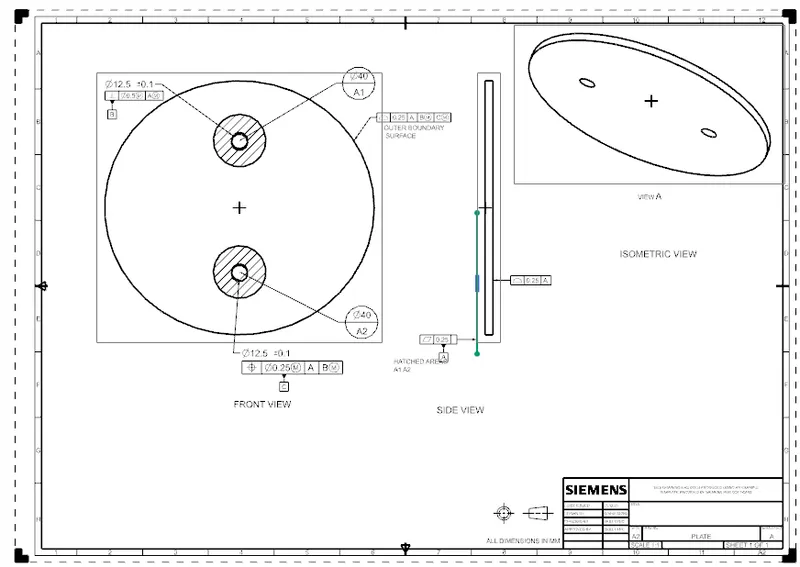
4.Disc
It is a flow closure member of a butterfly valve in this assembly. The disk is equivalent of a plug in a plug valve, gate in a gate valve or a ball in a ball valve. Rotating the disk one-quarter turn on 90 Degrees opens and closes the butterfly valve.
5.Lever
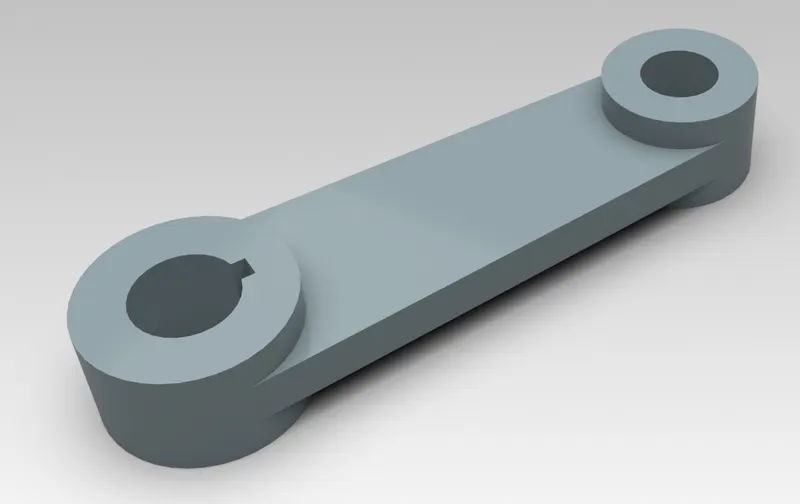
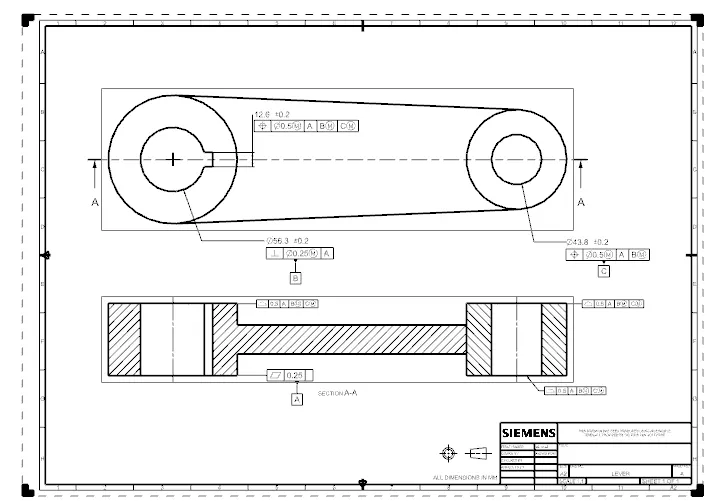
The hand lever is commonly used for small butterfly valves and is used to open and closing the valve. It has capability of being locked into a position of partially open or closed
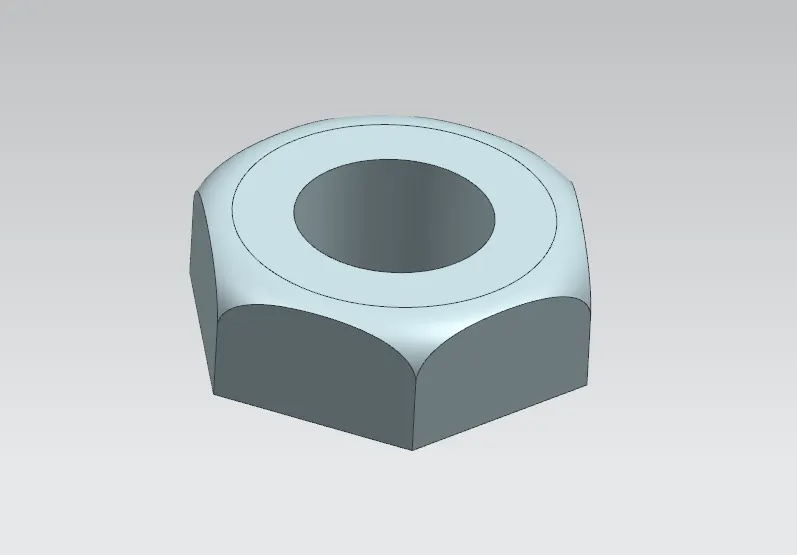
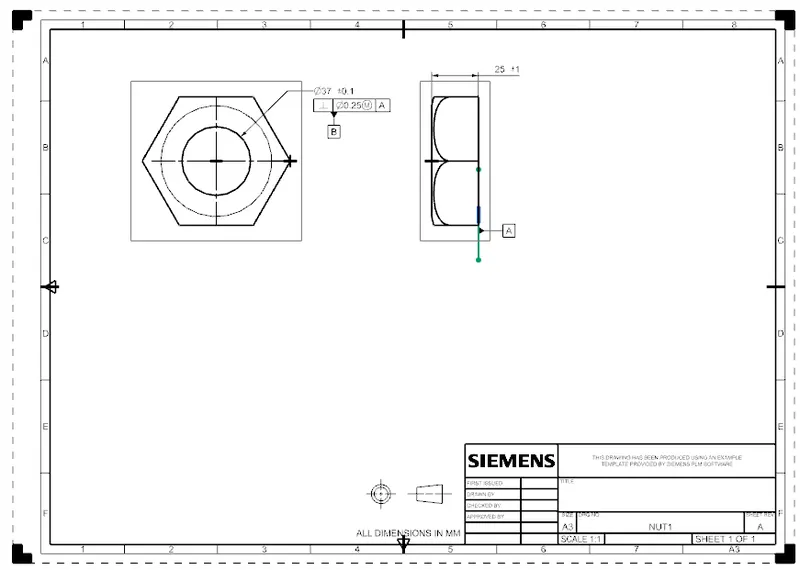
6.Nut
Nuts are always used mostly in conjunction with a mating bolt to fasten multiple parts together. The two parts are assembled together by a combination of their thread’s friction.
Final Assembly
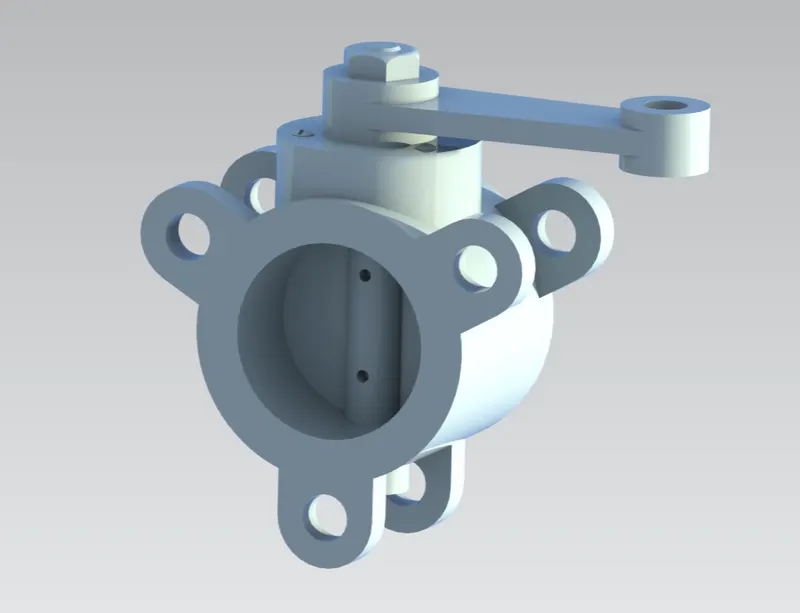
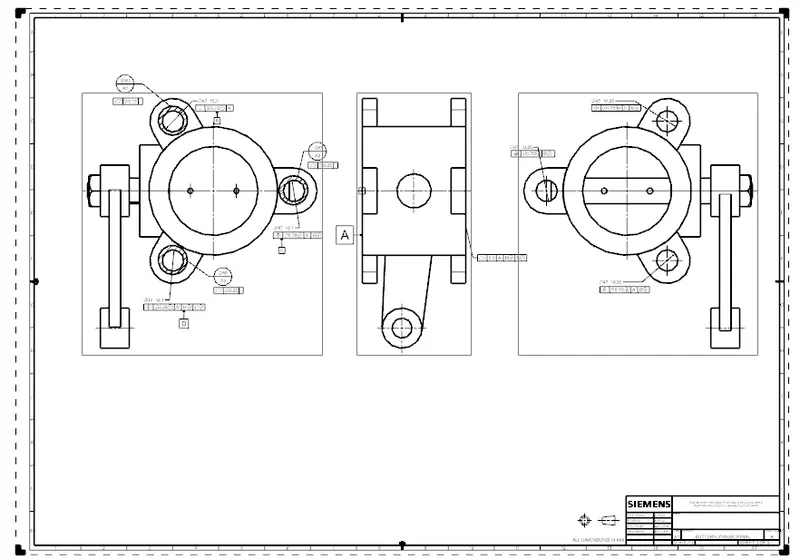
After designing of individual parts then all parts are assembled together by applying required constraints using assembly in workbench of NX.
Conclusion
Thus, the Butterfly valve is created successfully and applied GD&T to all the different parts further by creating drafting file to individual component and assembly.