Week 12- Final project
DOOR TRIM PANEL
Introduction
The car door trim is an integral part of the vehicle’s interior design, contributing to both functionality and aesthetic appeal. It consists of various plastic components that provide support, comfort, and storage solutions for the driver and passengers. This report focuses on key plastic components of a typical car door trim, including the door armrest, main substrate, bottle holder, and door upper substrate.
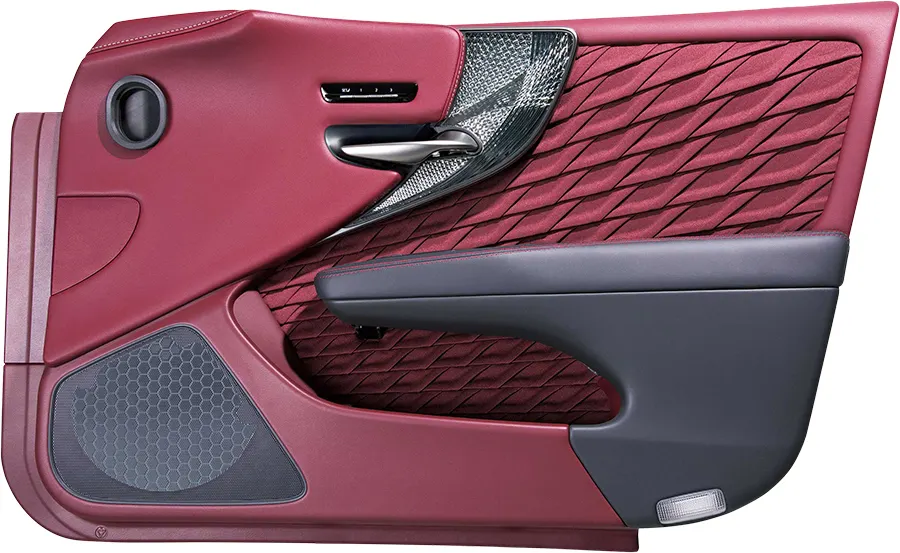
Key Components
Door Armrest
The door armrest is designed to provide comfort to the passengers while resting their arms during driving or while the vehicle is stationary. Typically made from a combination of soft-touch plastic materials and foam padding, it serves both ergonomic and aesthetic purposes.
- Materials: Thermoplastic elastomers (TPE), polyurethane foam, and sometimes a soft-touch vinyl or leather wrap for a premium feel.
- Functions:
- Provides arm support and comfort.
- Enhances the overall tactile experience of the door trim.
- May house controls for windows, mirrors, and other features.
- Manufacturing Process: Injection molding for the main structural part, followed by foam molding for padding. Soft-touch materials are typically applied through a molding or adhesive process.
- Challenges: Ensuring durability and maintaining a consistent soft feel across varying temperatures and humidity levels. Quality control is crucial to avoid warping and ensure comfort.
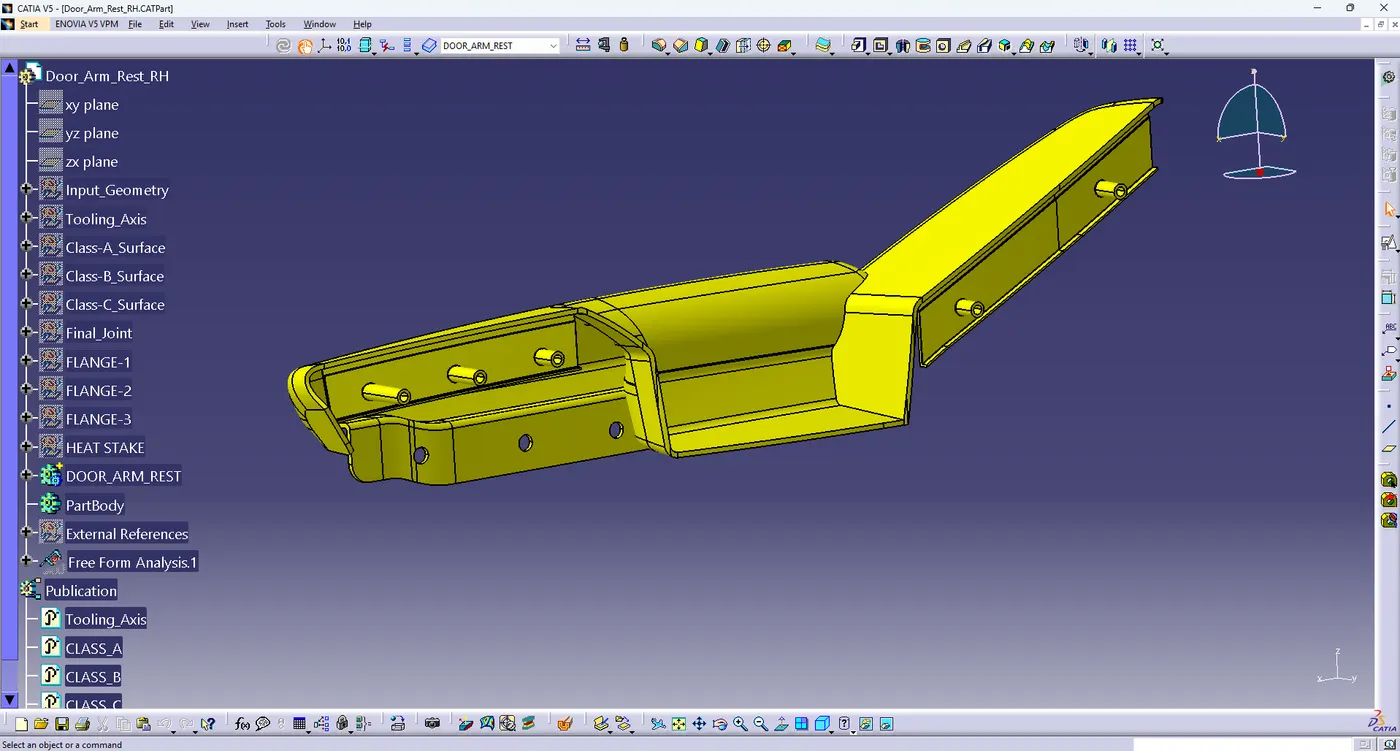
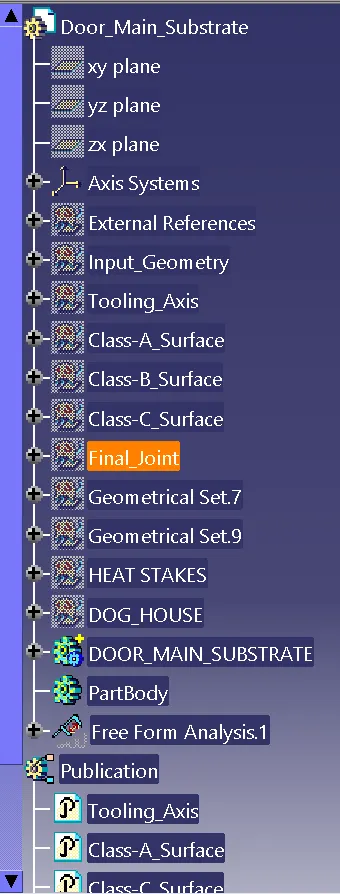
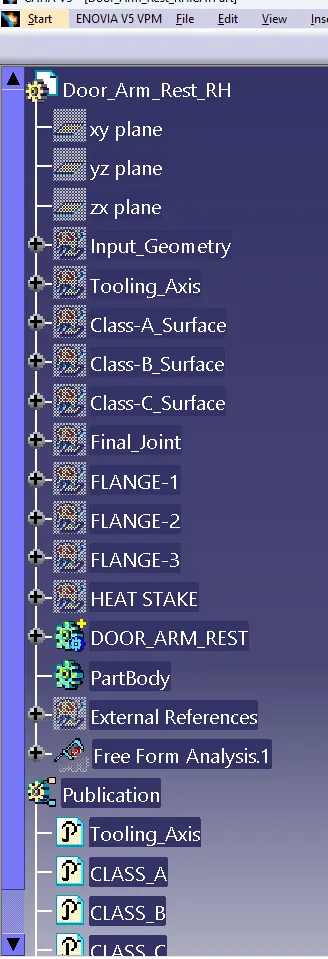 TREE STRUCTURE
 Main Substrate
The main substrate is the primary structural component of the car door trim. It provides the foundation for other parts, such as the armrest, bottle holder, and upholstery.
- Materials: Typically made from high-density polyethylene (HDPE), polypropylene (PP), or a combination of thermoplastics and composites for lightweight yet durable performance.
- Functions:
- Supports the mounting of other components.
- Acts as the base for attaching fasteners, wiring harnesses, and insulation materials.
- Manufacturing Process: Injection molding or thermoforming, followed by secondary processes such as trimming and hole-punching for component integration.
- Challenges: Balancing strength with weight is key. The substrate must be rigid enough to support other components while being lightweight to reduce vehicle weight for improved fuel efficiency and performance.
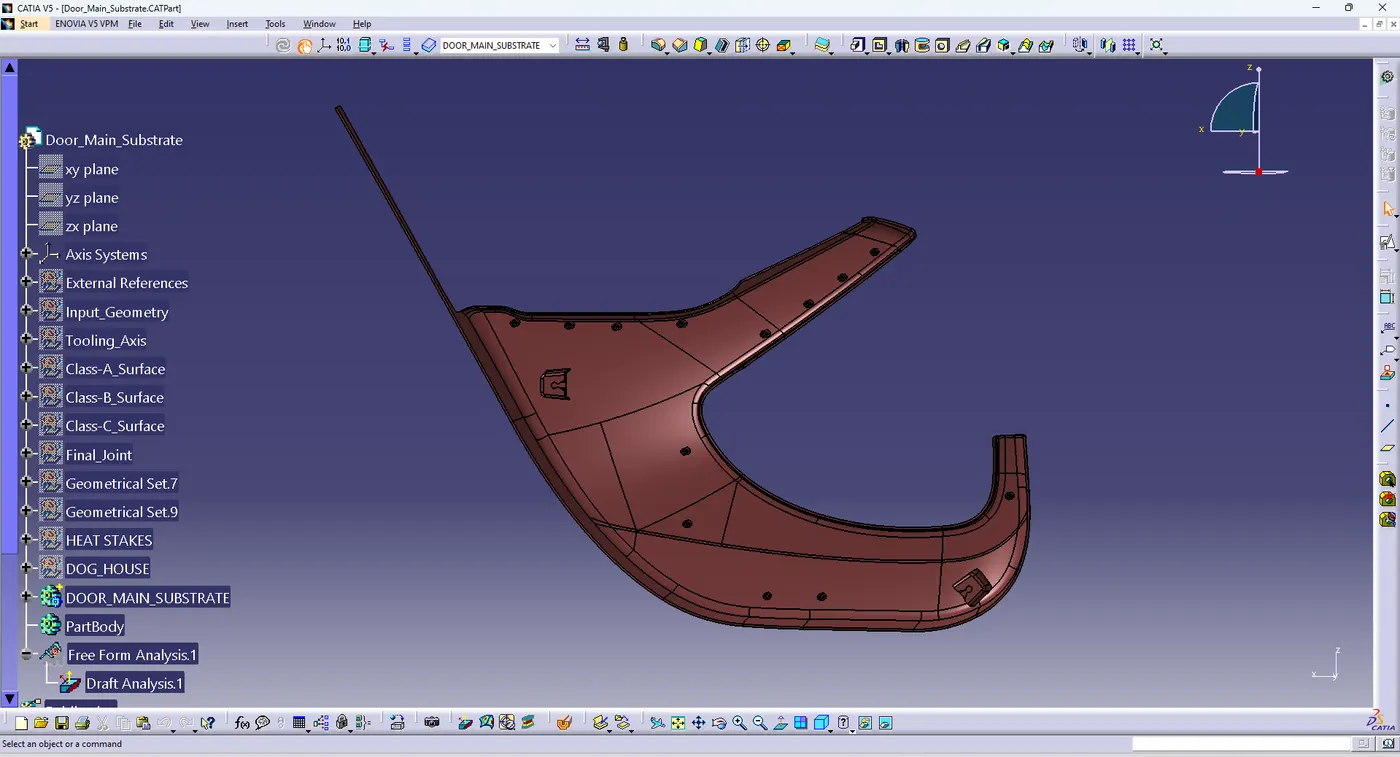
 TREE STRUCTURE
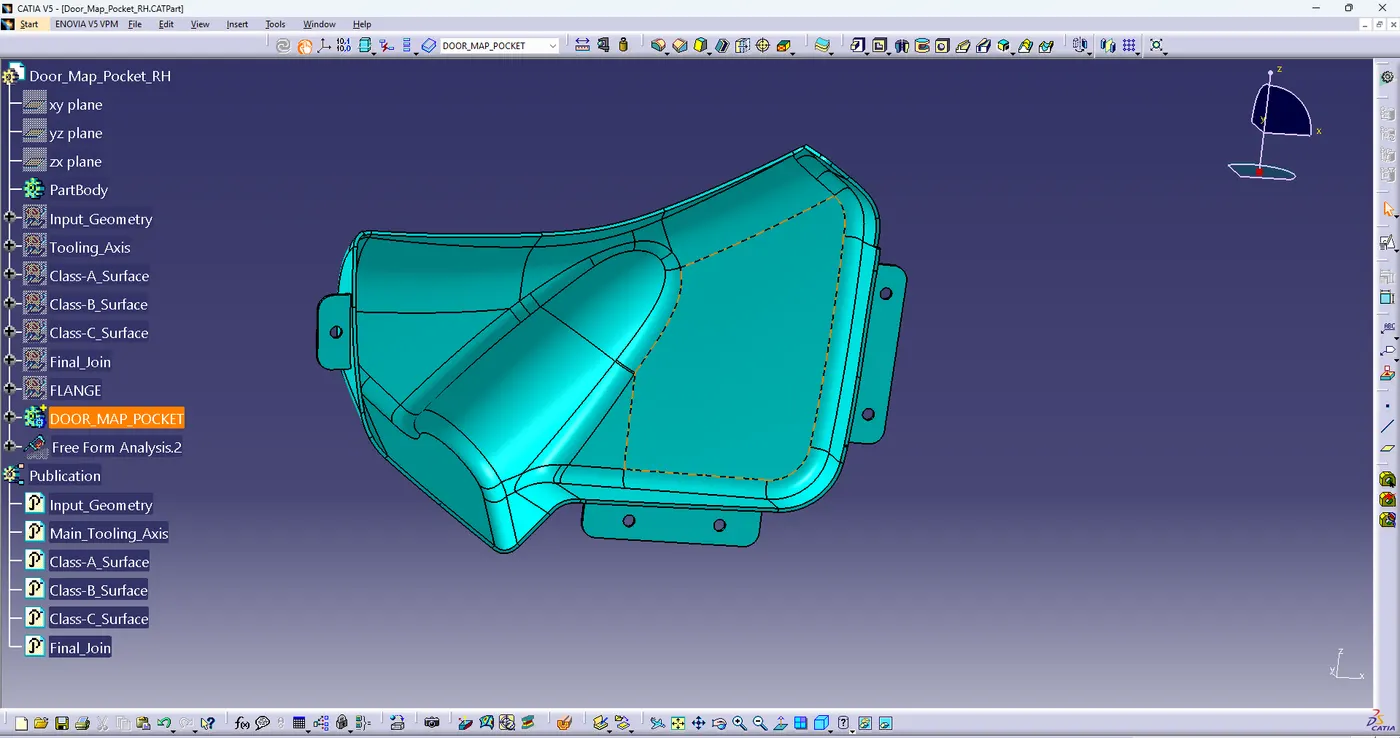
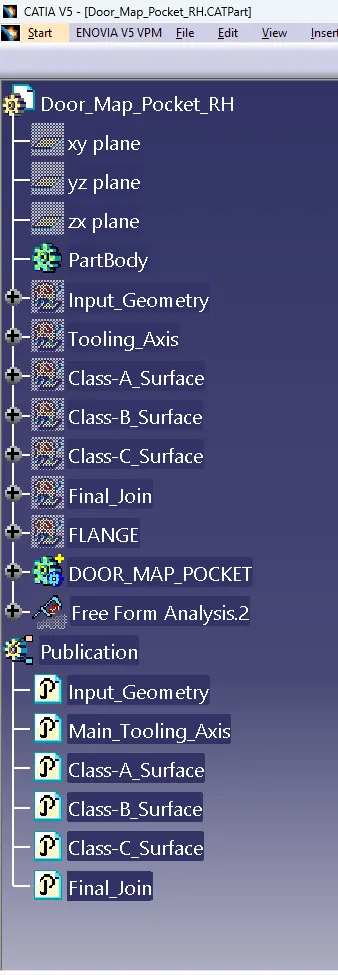
3. BOTTLE HOLDER/ MAP POCKET
The bottle holder is a key feature of the door trim, providing a convenient storage space for beverages. This component is commonly located in the lower portion of the door trim, positioned for easy access by the driver or passengers.
- Materials: Typically made from reinforced polypropylene (PP) or a similar lightweight, durable plastic.
- Functions:
- Provides a storage compartment for bottles, cups, and other small items.
- In some designs, it may incorporate rubberized or textured inserts to keep bottles securely in place.
- Manufacturing Process: Injection molding, followed by finishing processes like trimming and surface coating to enhance grip and appearance.
- Challenges: Ensuring that the bottle holder is both functional (i.e., capable of holding different bottle sizes securely) and aesthetically integrated into the overall door trim design.
 TREE STRUCTURE
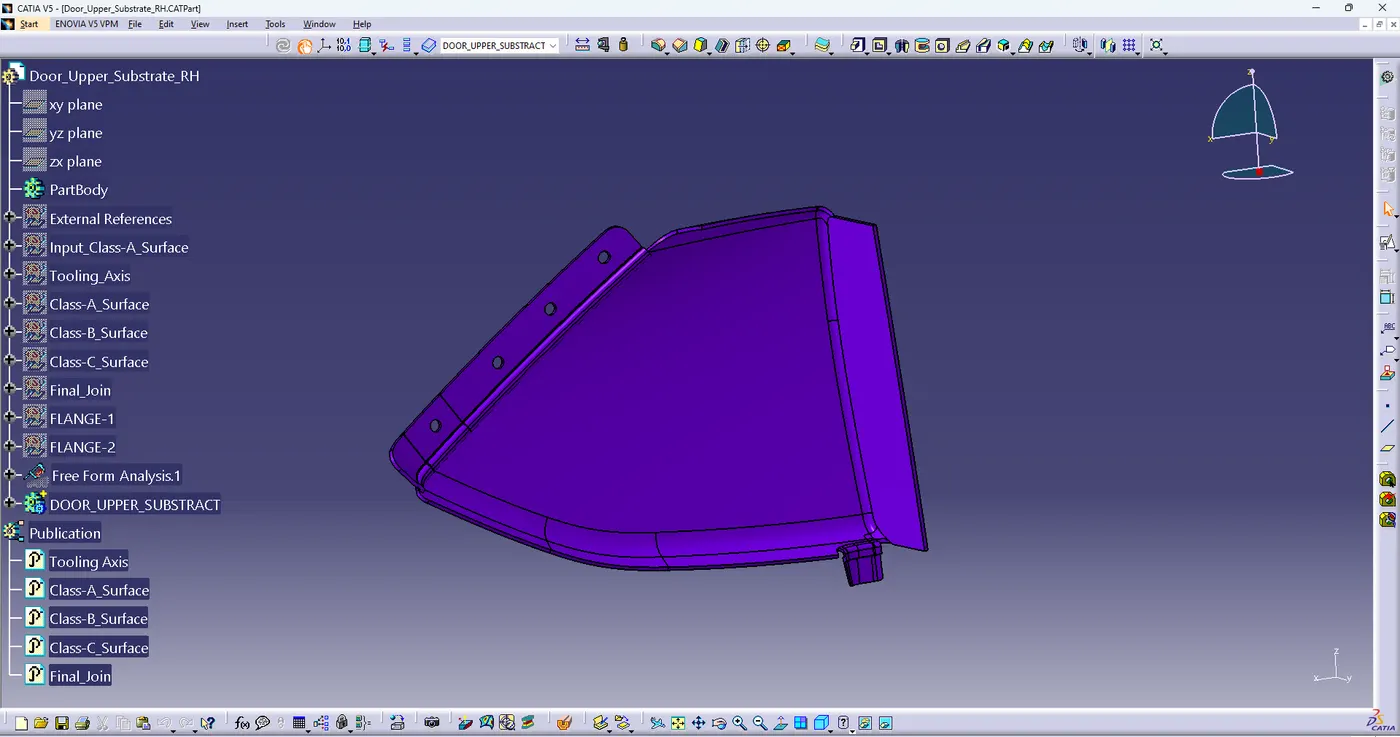
Door Upper Substrate
The door upper substrate refers to the upper portion of the door trim that typically houses decorative or functional elements such as speaker grills, window control panels, or storage compartments. It provides a smooth, finished appearance while offering structural support for upper door components.
- Materials: A mix of rigid plastics such as ABS (Acrylonitrile Butadiene Styrene) or polycarbonate (PC), often finished with soft-touch materials or decorative overlays for aesthetic purposes.
- Functions:
- Provides a smooth and stable surface for attachment of functional components like window switches or speaker grills.
- Contributes to the overall visual appeal of the door trim, often matching the rest of the car interior.
- Manufacturing Process: Injection molding for the base substrate, followed by secondary finishing processes like surface coating, texturing, and adding cosmetic elements like chrome accents.
- Challenges: Ensuring precise integration of functional elements like switches and speakers, as well as achieving the desired aesthetic look while maintaining durability.
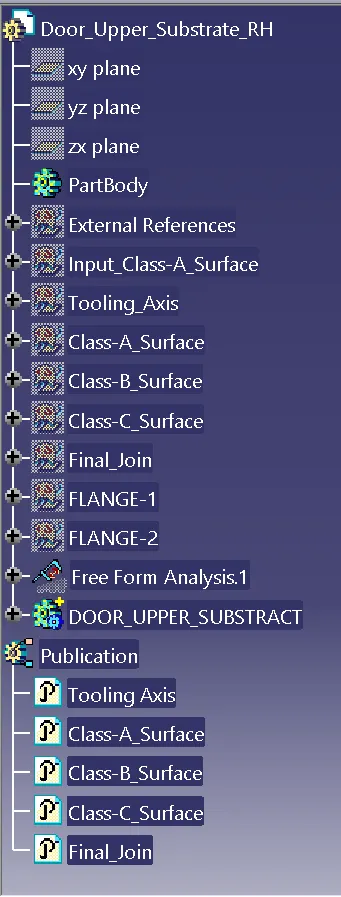 TREE STRUCTURE
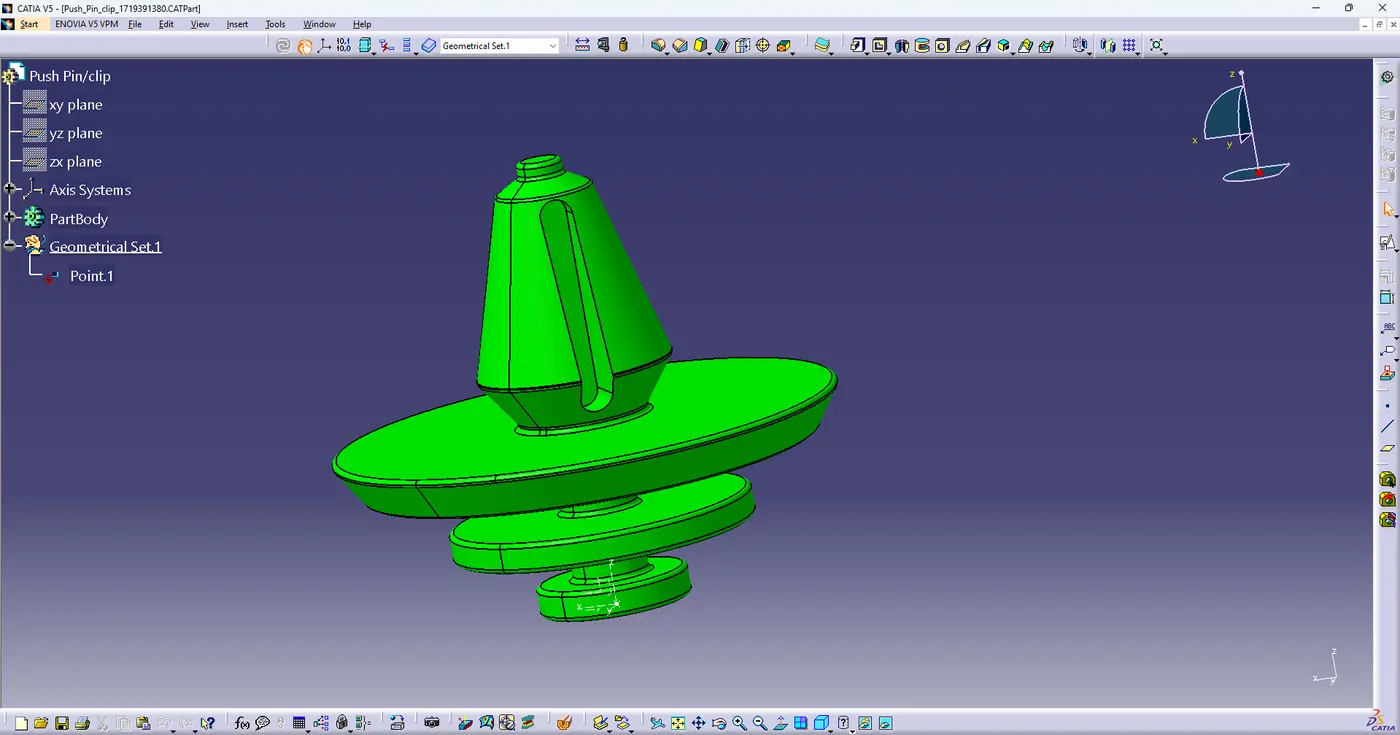
PUSH PIN :-
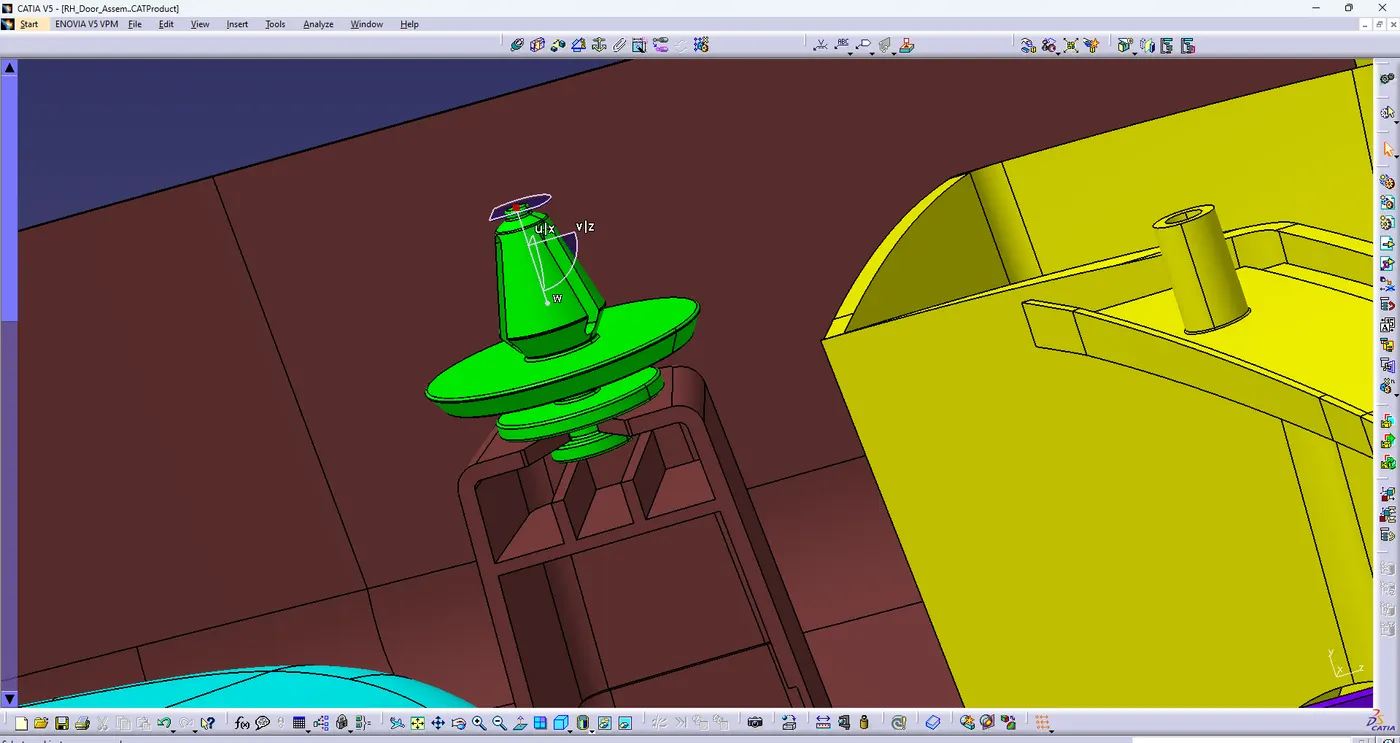
GIVEN DATA /STEP FILE:-
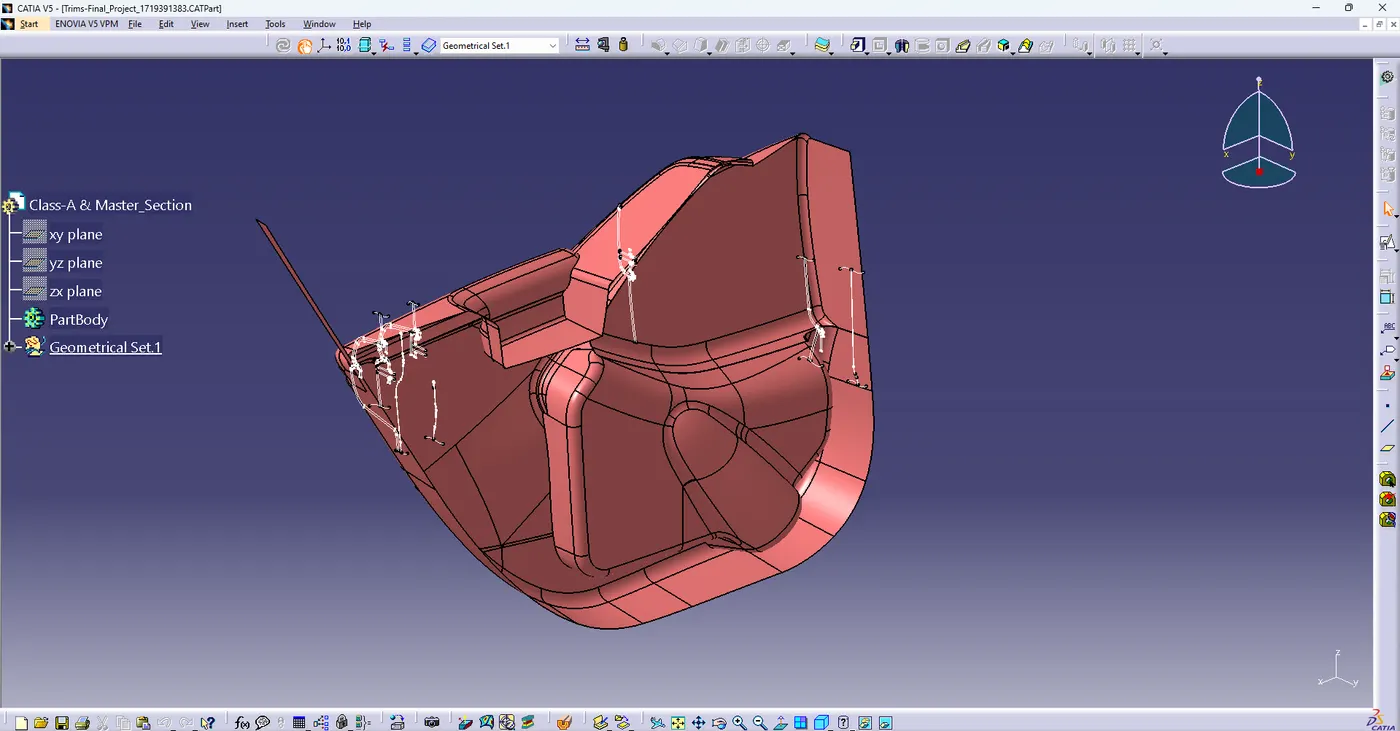
COMPLETE ASSEMBLY OF DOOR TRIM PANEL :-
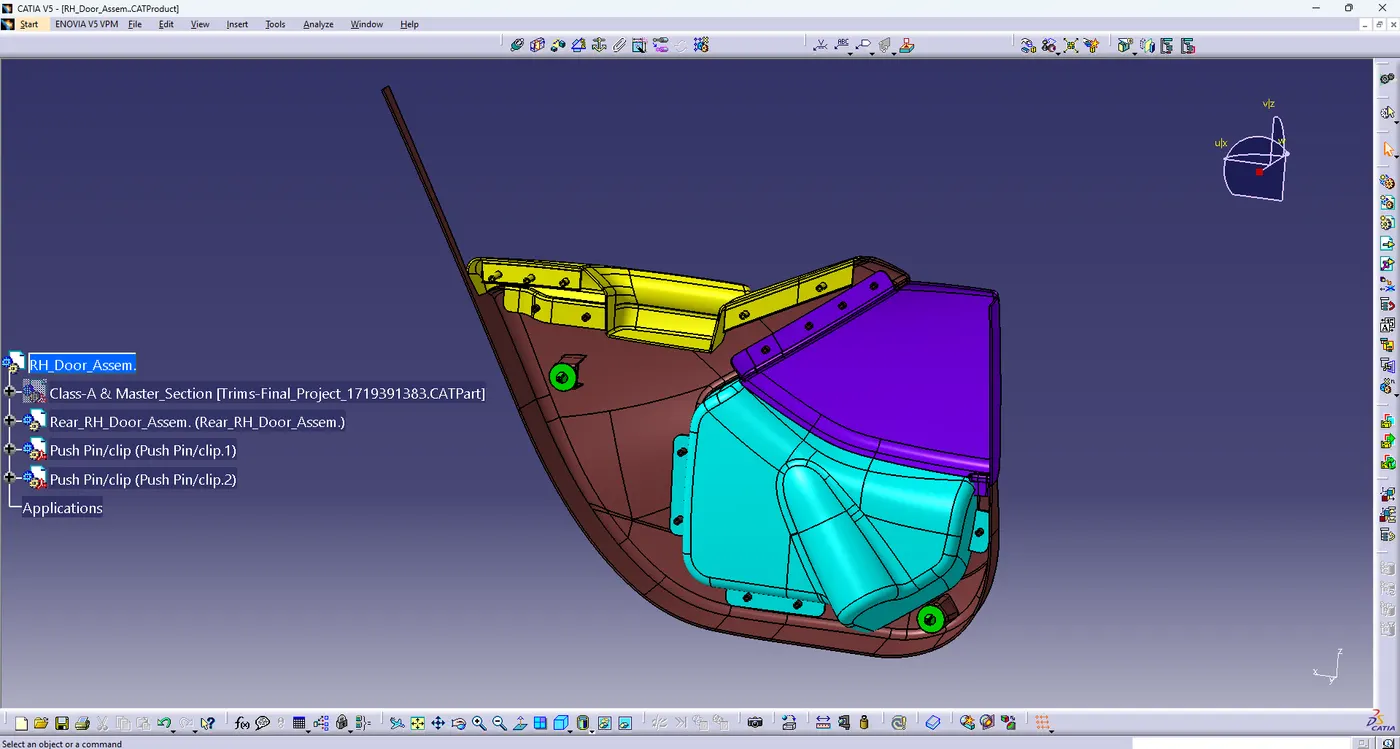
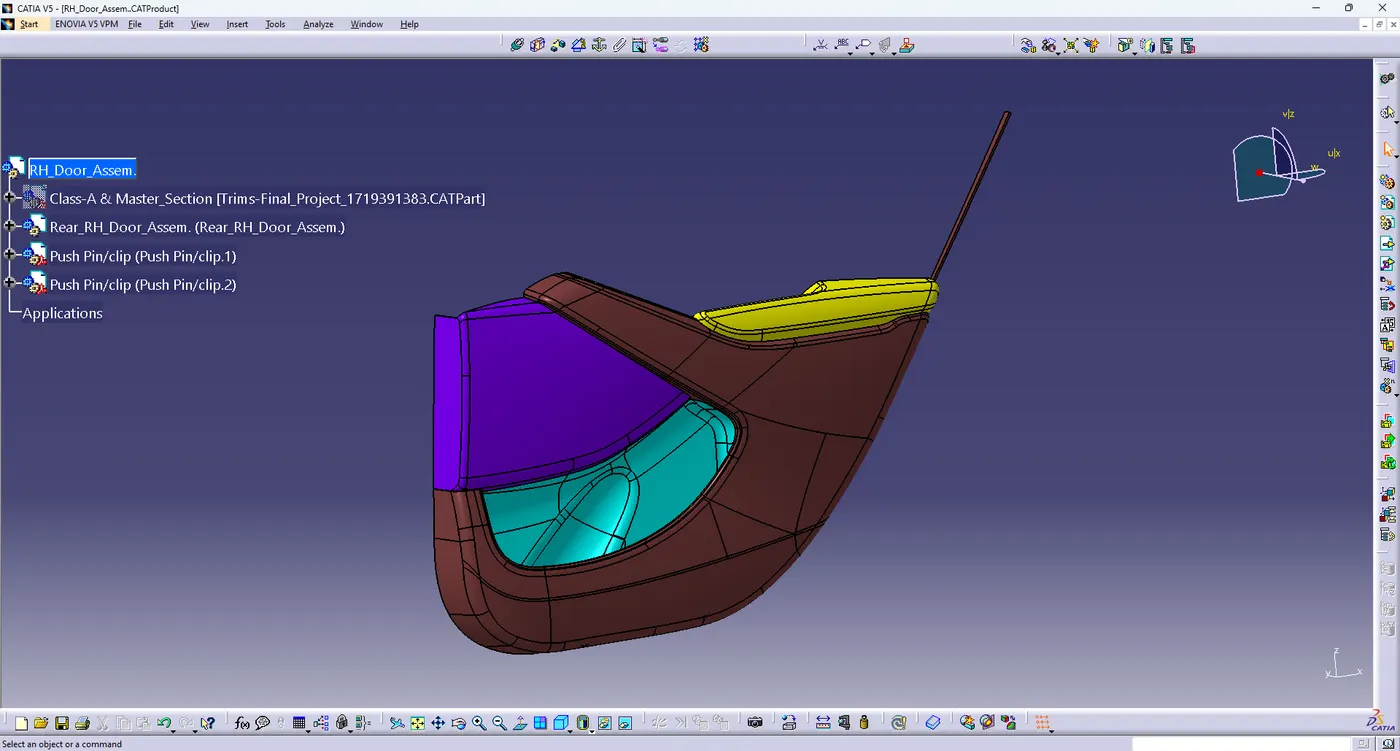
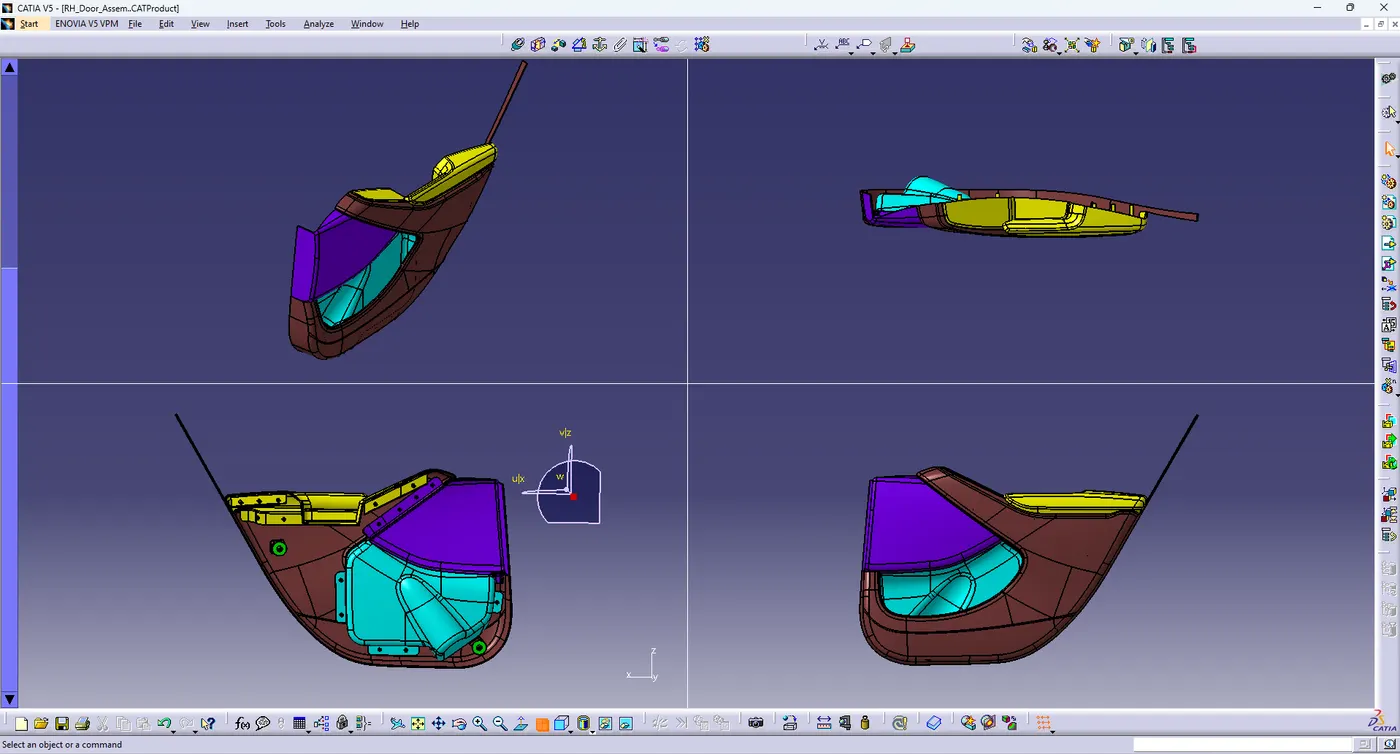
Material Selection Considerations
The choice of materials for car door trim components is influenced by several factors:
- Durability: Materials must be resistant to wear, scratching, and fading from exposure to UV light.
- Weight: Lightweight plastics are preferred to reduce the overall weight of the vehicle, improving fuel efficiency and performance.
- Cost-effectiveness: Material costs must be balanced with the desired quality, performance, and durability.
- Aesthetic appeal: The materials used should align with the vehicle's interior design and provide a premium feel where required.
- Environmental impact: As automakers increasingly focus on sustainability, the use of recyclable and eco-friendly materials is becoming a key consideration.
Conclusion
The car door trim and its plastic components play a critical role in vehicle interior design, providing functionality, comfort, and visual appeal. The door armrest, main substrate, bottle holder, and door upper substrate are essential to the overall design and performance of the door trim system. Careful material selection, innovative manufacturing processes, and attention to ergonomic and aesthetic considerations are vital to the success of these components. As automotive design continues to evolve, we can expect further advancements in materials and manufacturing techniques to enhance the performance and sustainability of car door trims.