Week 12- Final project
DOOR TRIM PANEL
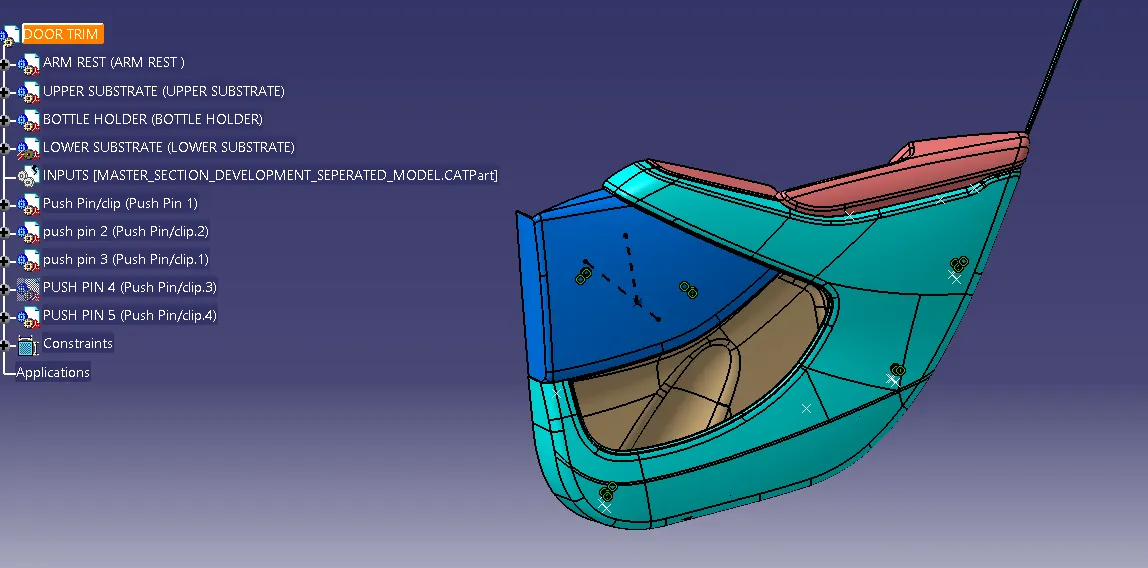
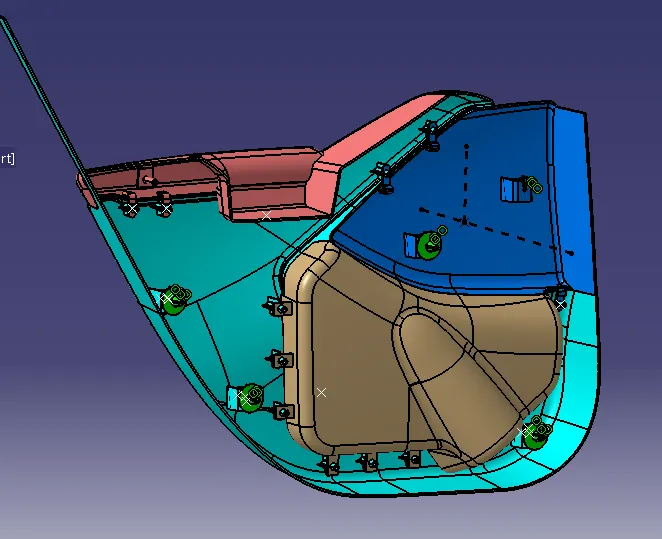
Aim- To create a CAD model for door trim panel's parts by considering the given inputs of class A surface along with master section by following the design rules followed in OEM and tier1 companies.
Input Data -
- Class A surface of the door arm rest, bottle holder, upper substrate and lower substrate.
- Master section for the attachment feature.
- Push clips for the assembly
Door Panel-

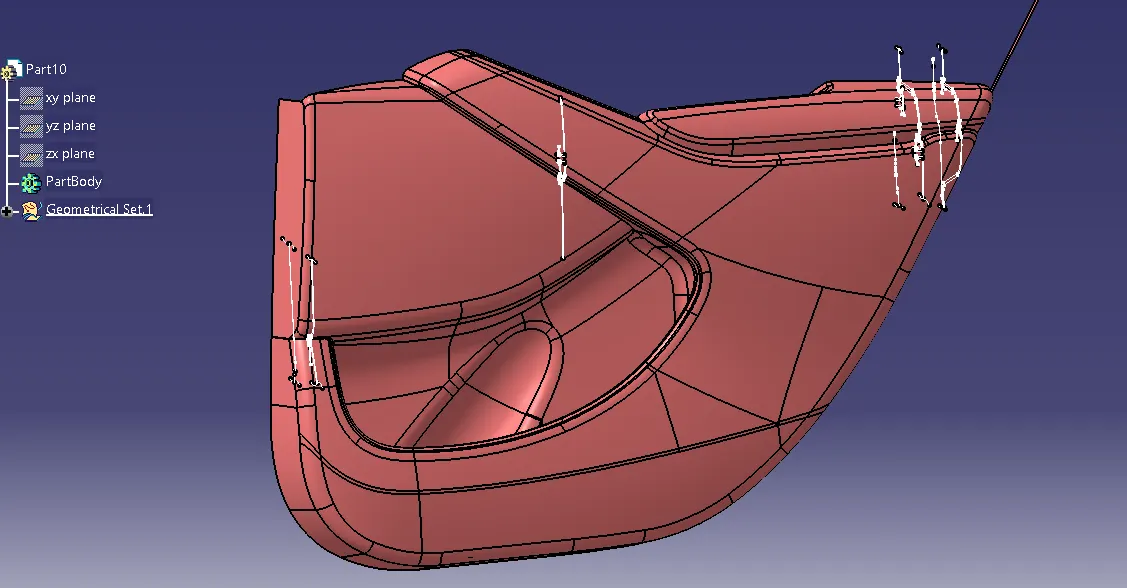
Input Class A Surface
- In Automotive design, a class A surface is any of set of freeform surfaces of high efficiency and quality. Although, strictly, it is notthing more than saying the surfaces have curvature and tangency alignment to ideal aesthetical reflection quality, many people interpret class A surfaces to have G2 curvature continuity to one another.
- Class A Surfacing is done using computer aided industrial design applications. Class A surface modellers develop their design styling through the A- Surface modellers are also called digital sculptors in the industry. Industrial designer develop their design styling through the A surface.
-
- Door Panel serve as an interface between the interior of the car and the inner workings of the door, and between vehicle occupants and the door.
- They are expected to meet a variety of design specifications regarding safety, aesthetics, and functionality. In addition, they are expected to continue the material theme of the dashboard and pillars while concealing intricate electrical and mechanical components for operating locks, windows, and other features.
- The door panel has evolved from a simple two-part system of latch and simple winding mechanism to a more sophisticated enclosure. Doors currently have an inner full-width panel consisting of electronic windows, central locking system, and speakers.
- These panels typically consist of a foamed core covered with either textiles or plastics.
- Plastics is the core and soul of the door trim interior, one must have knowlege about the plastic being used and its cost associated with the molding and manufacturing.
Sub-parts of Doors
a. Arm Rest-
1. Class A Surface
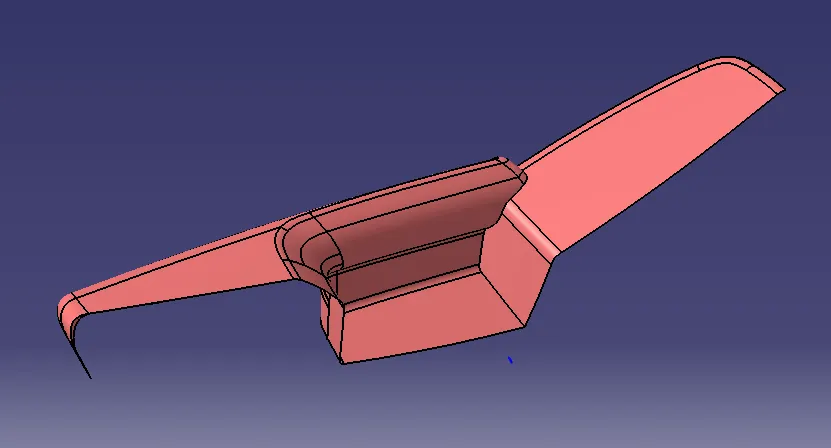
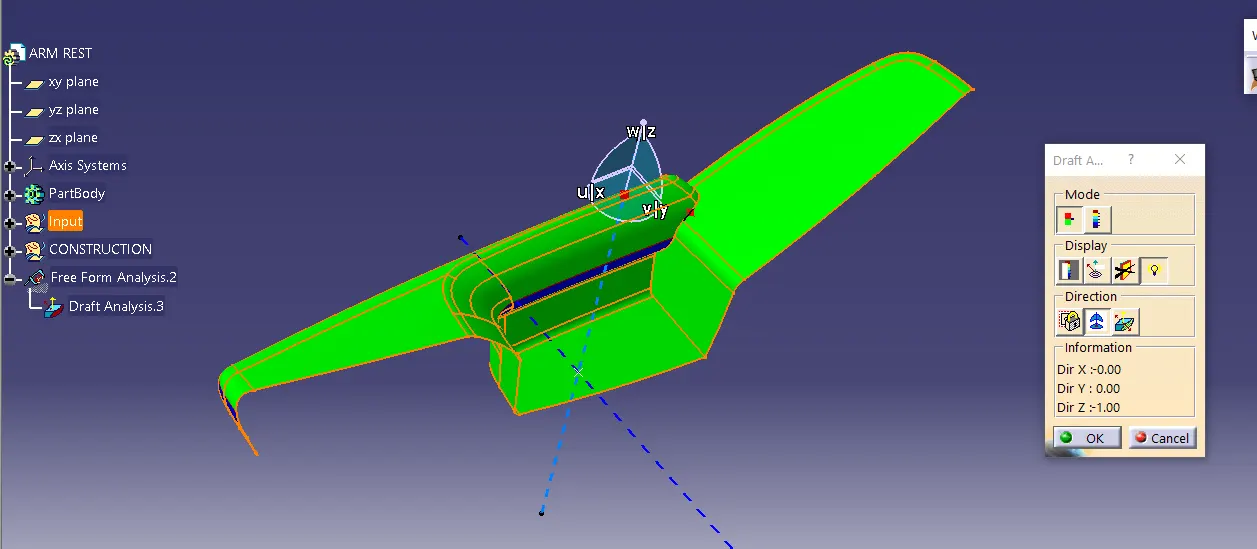
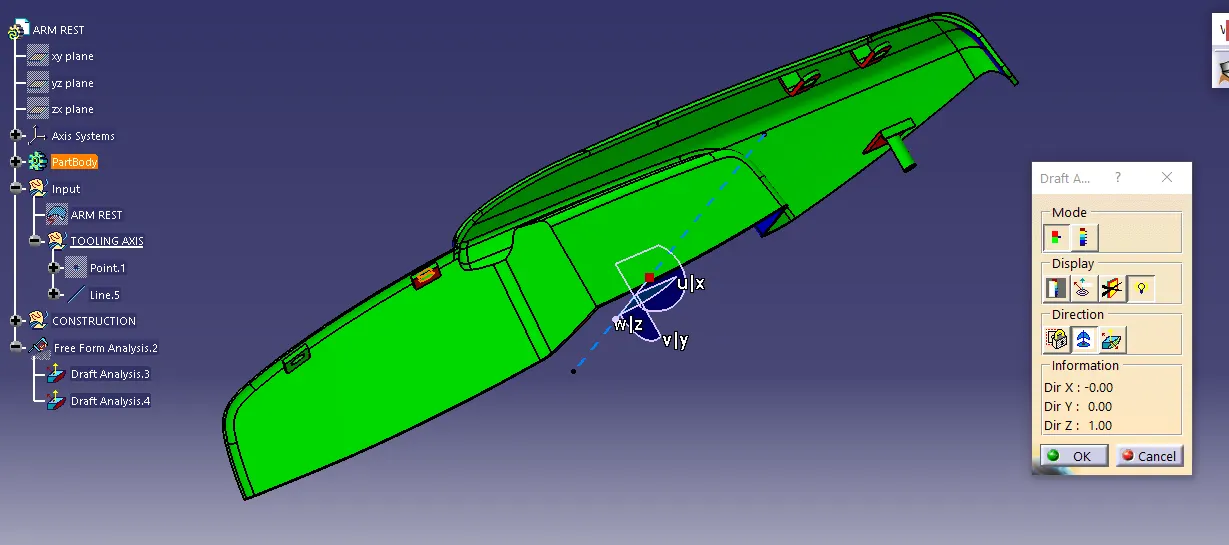
2. Class A Draft Analysis -
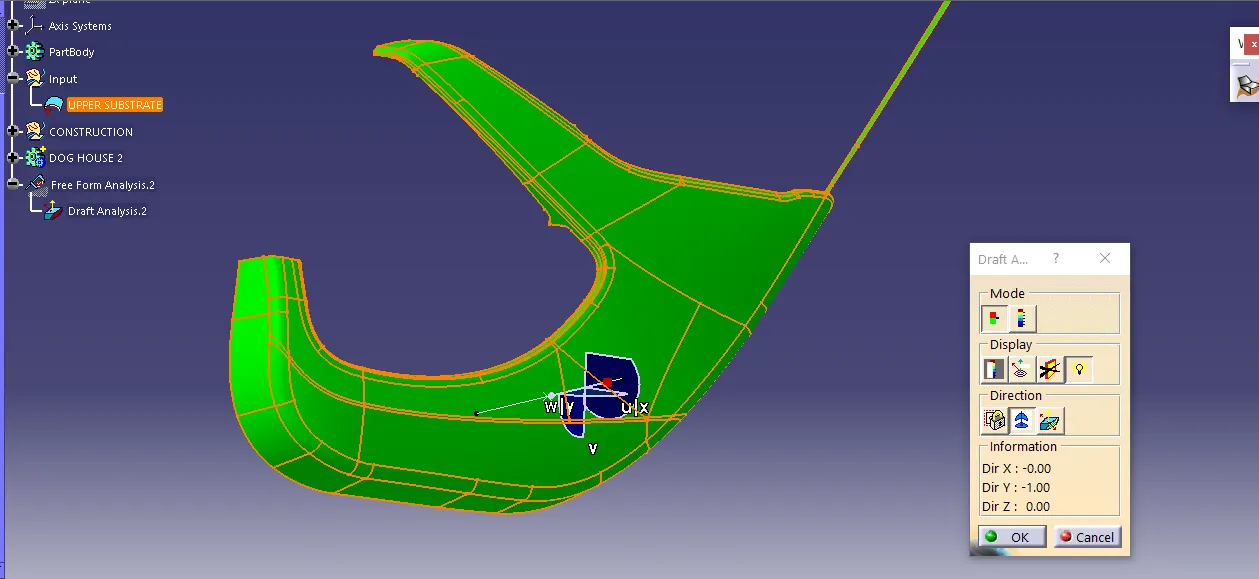
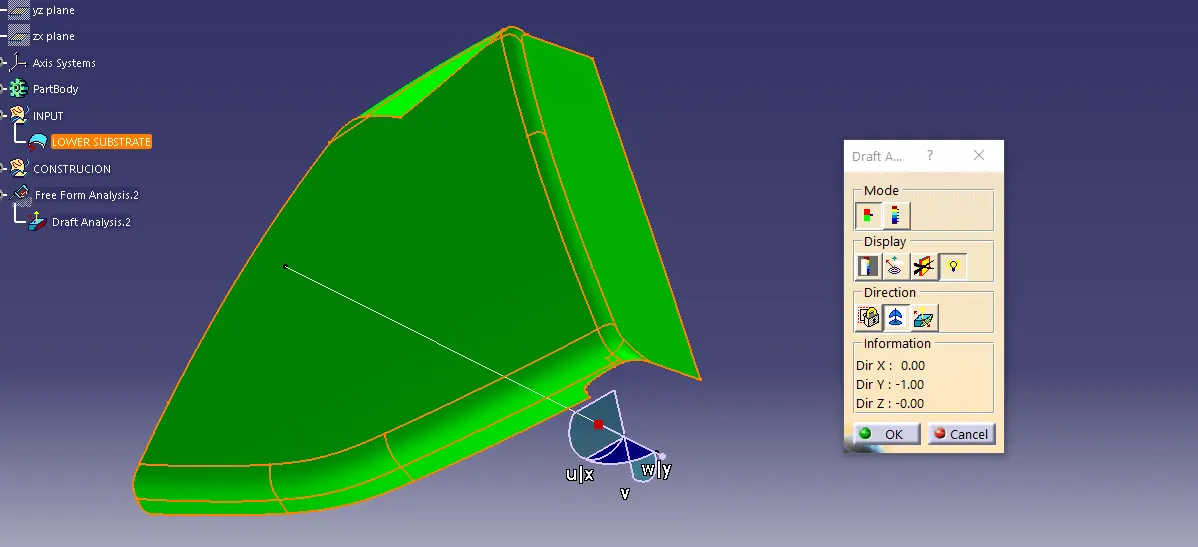
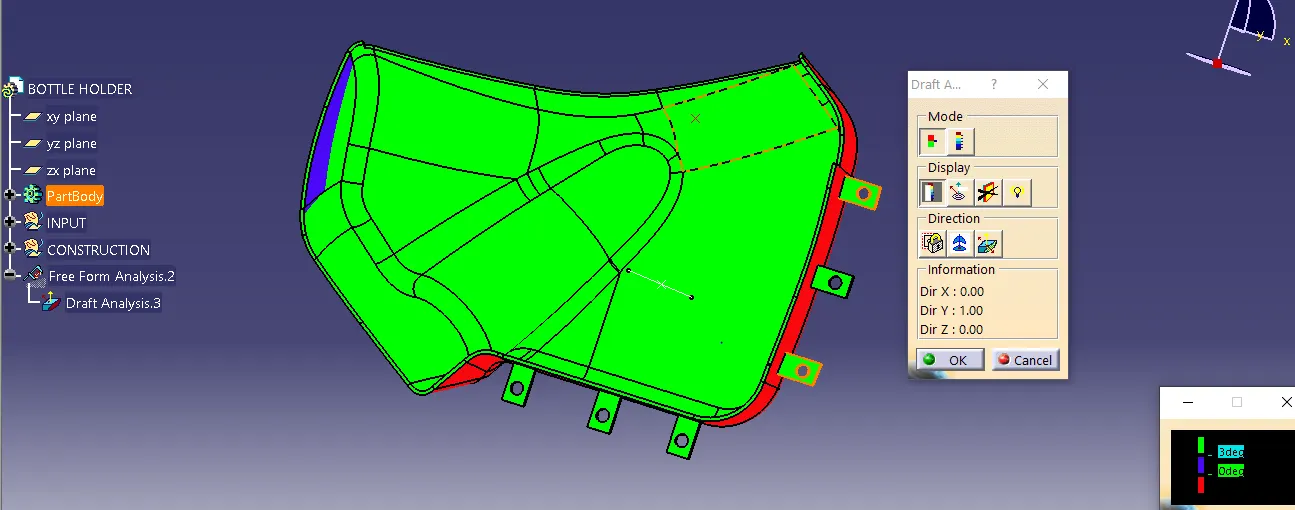
Draft angle provided on the plastic engineerng componenet is 3 degrees.
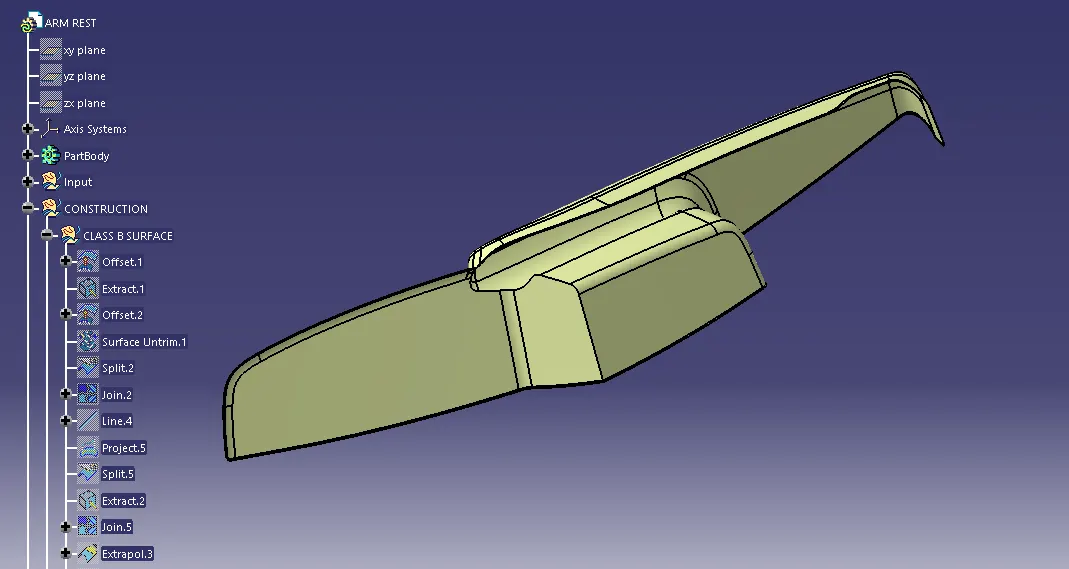
3. Class B Surface-
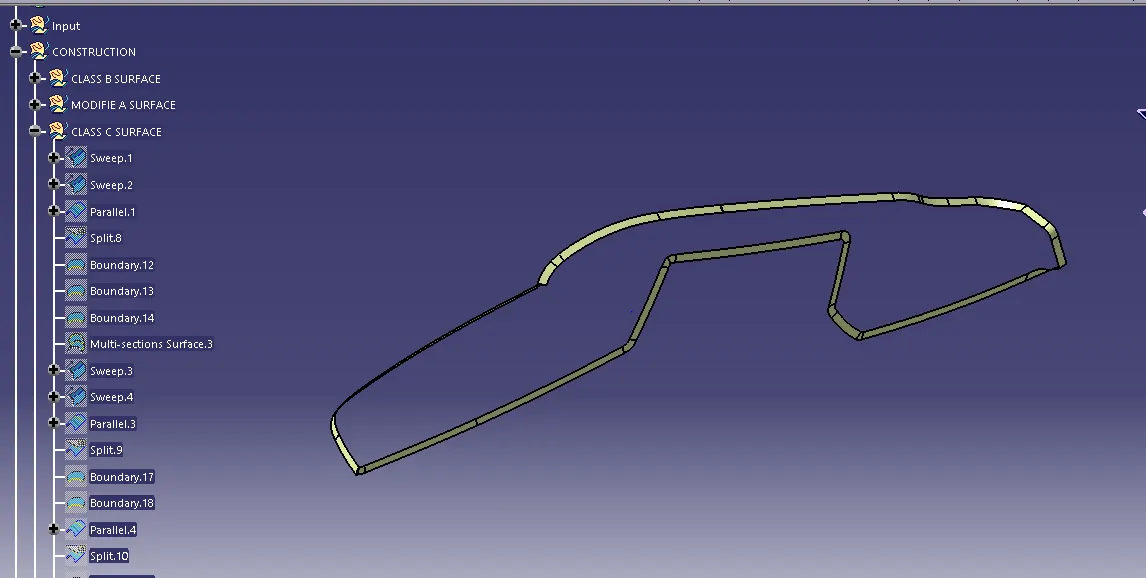
4. Class C Surface-
5. Final Trim-
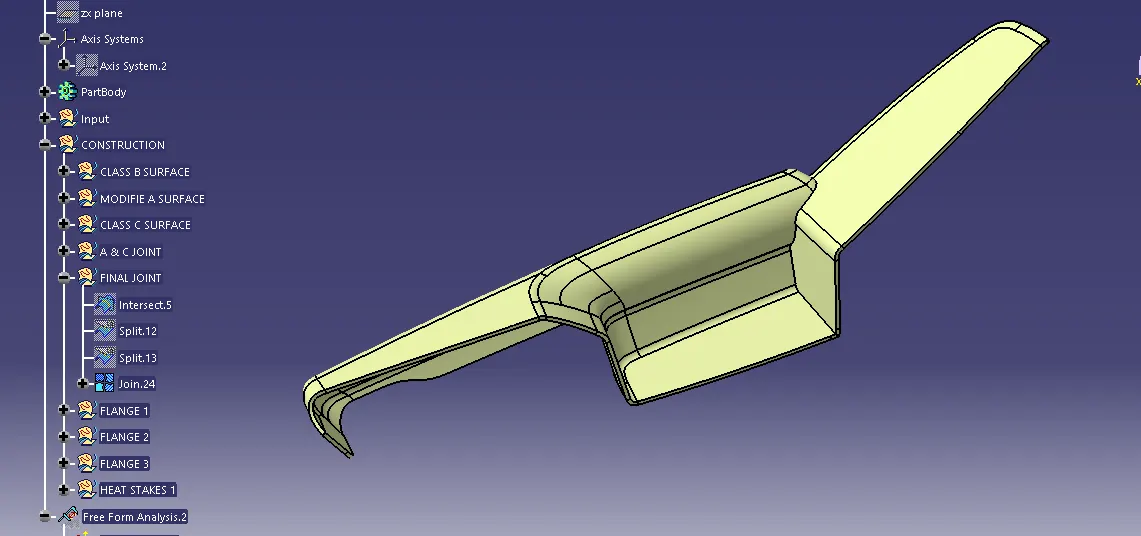
6. Heat Stack and Flange Design -
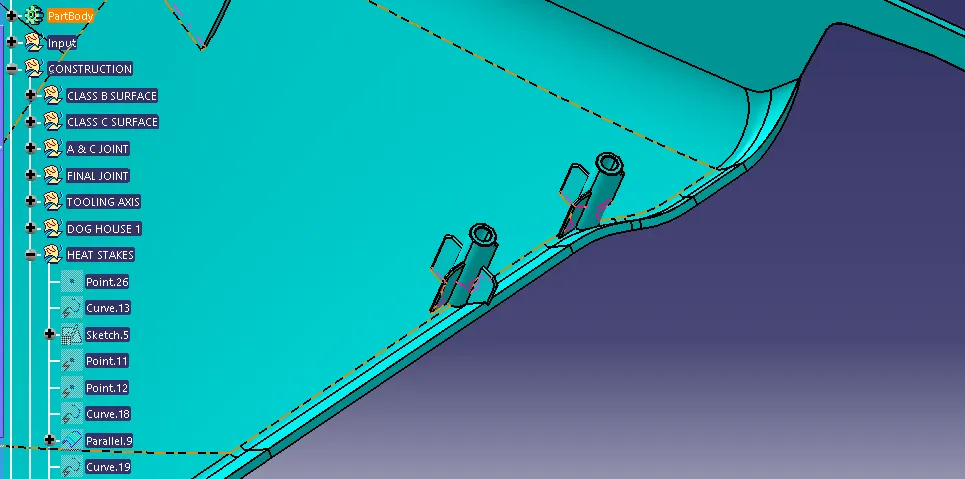
Heat Staking is a pulsed-heat process to join two or more parts out of which one at least is made of plastic. The process is to deform the plastic the plastic material using heat and force at a set process time. The bond is made by partially de-forming de-forming the plastic part in order to fix the other.
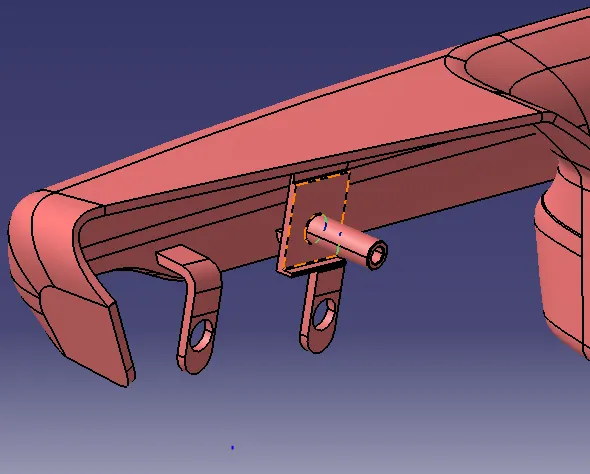
7. Final Part-
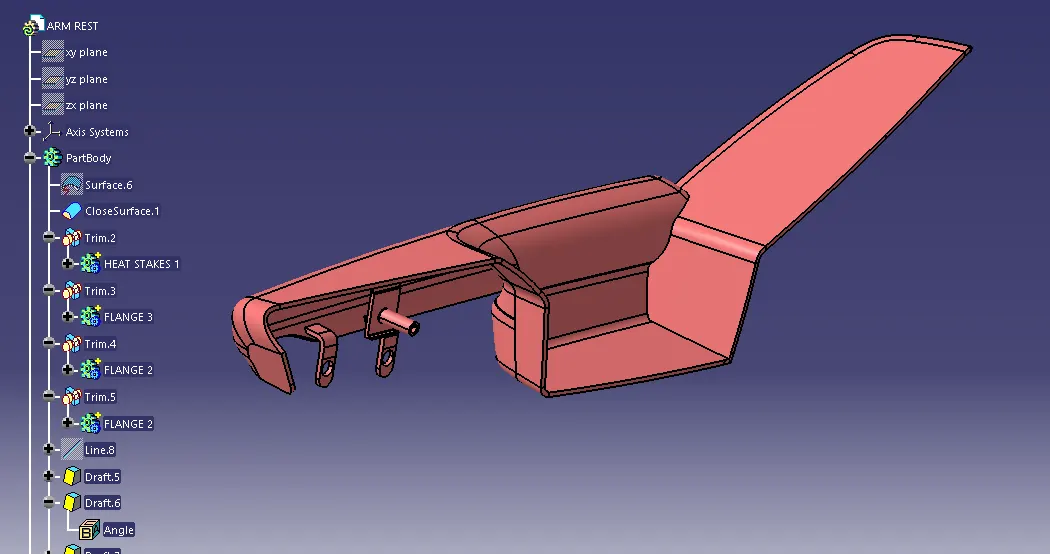
8. Final draft analysis-
b. Upper Substrate-
1. Class A Surface-
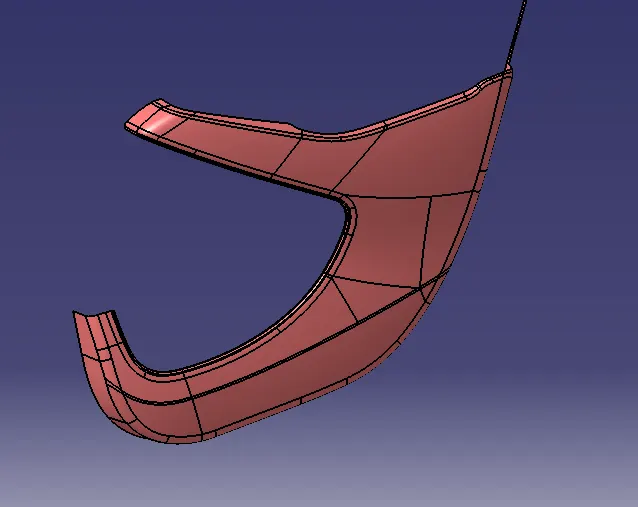
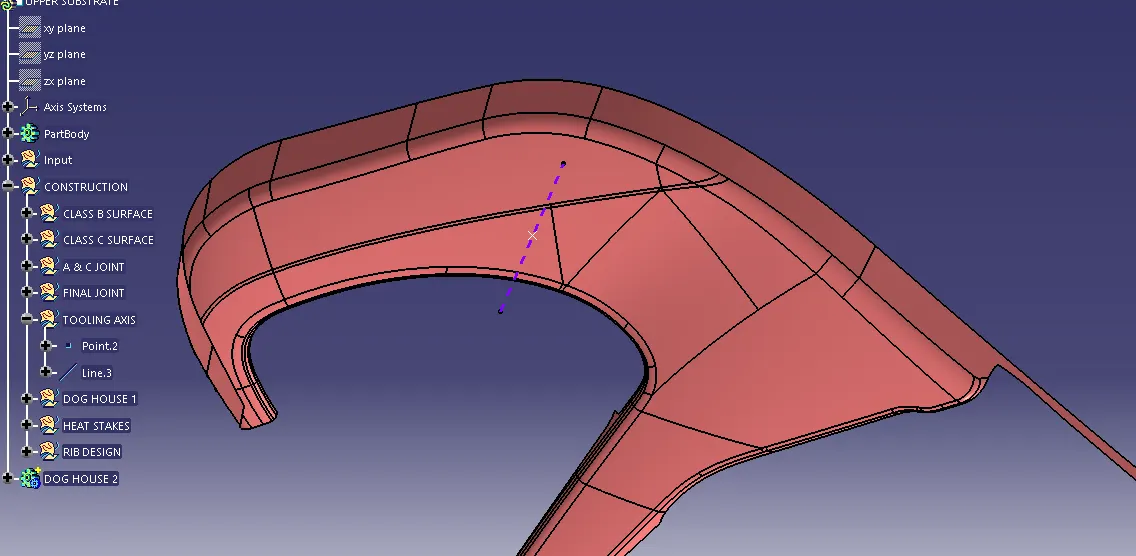
2. Tooling Axis
3. Class A Draft Analysis-
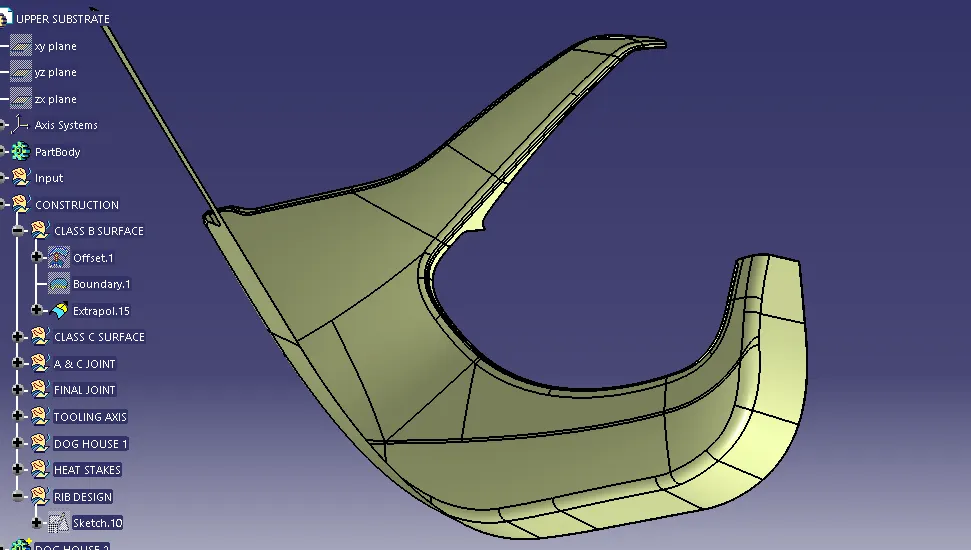
4. Class B Surface-
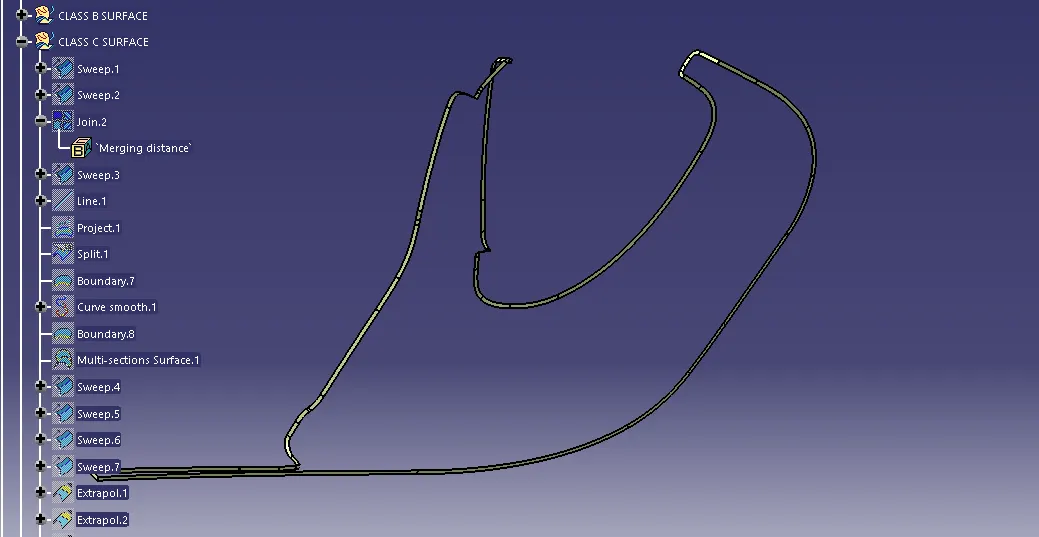
5. Class C Surface-
6. Final Trim-
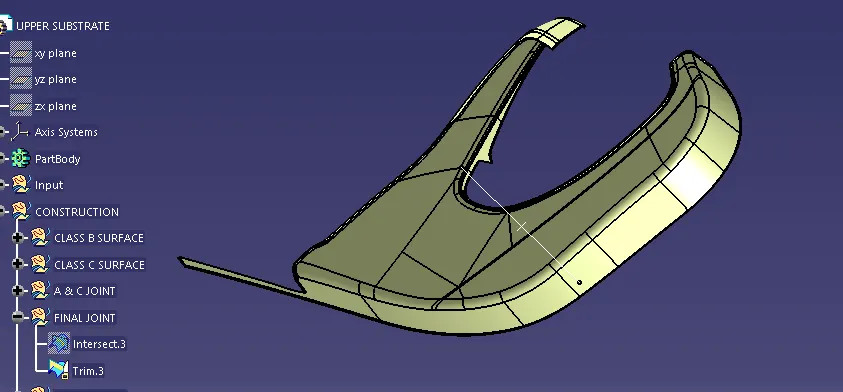
Feature Creation-
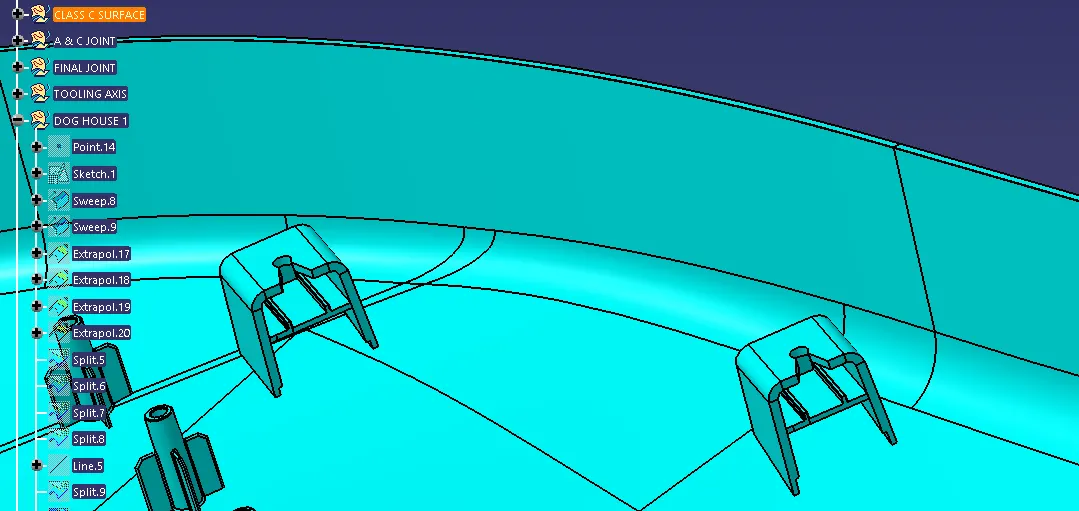
7. Dog House-
8. Heat Stack-
9. Final trim-
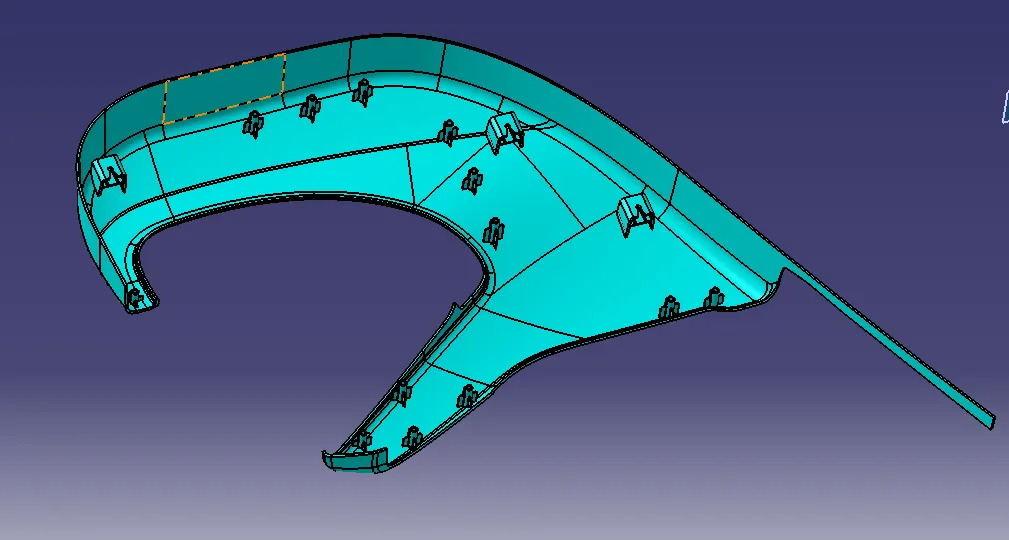
10. Final draft analysis-
C. Lower Substrate-
1. Class A Surface-
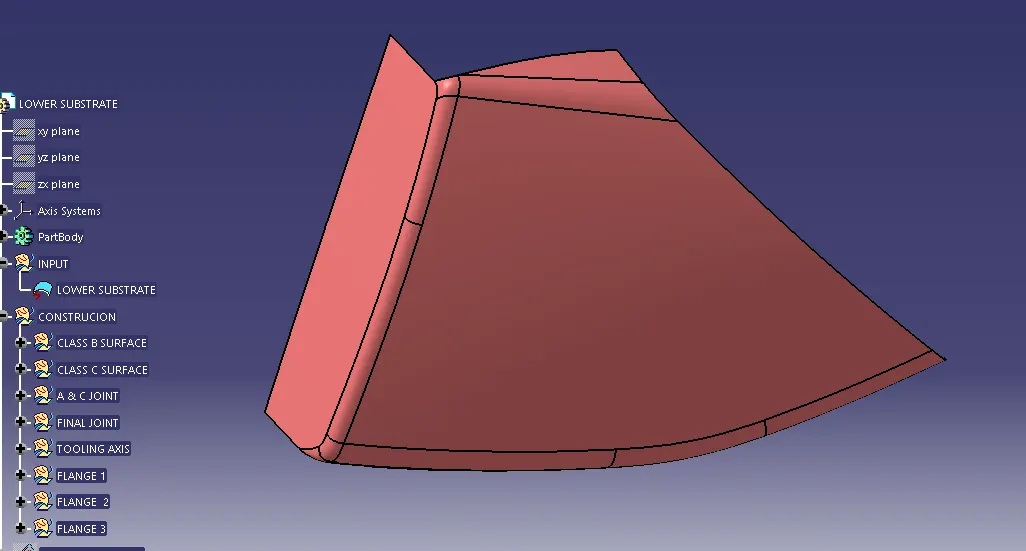
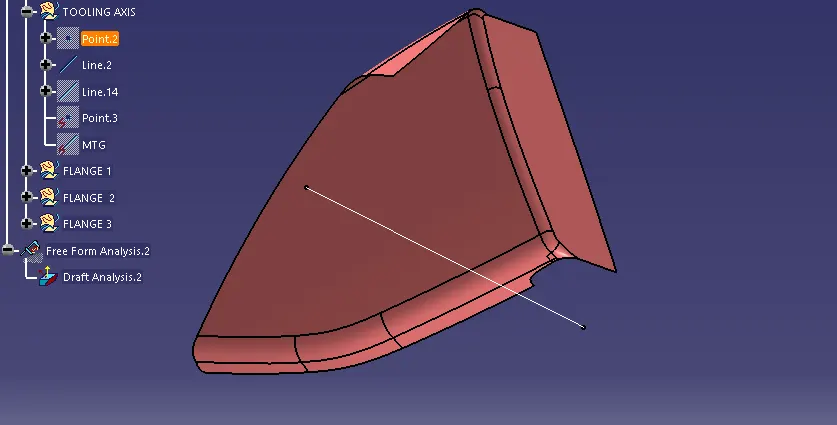
2. Tooling axis-
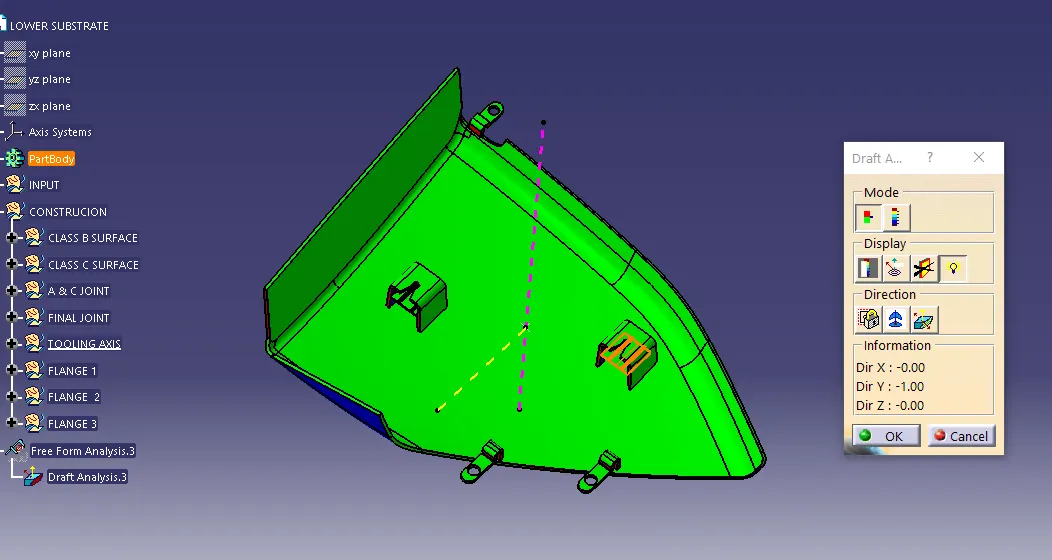
3. Class A Draft Analysis-
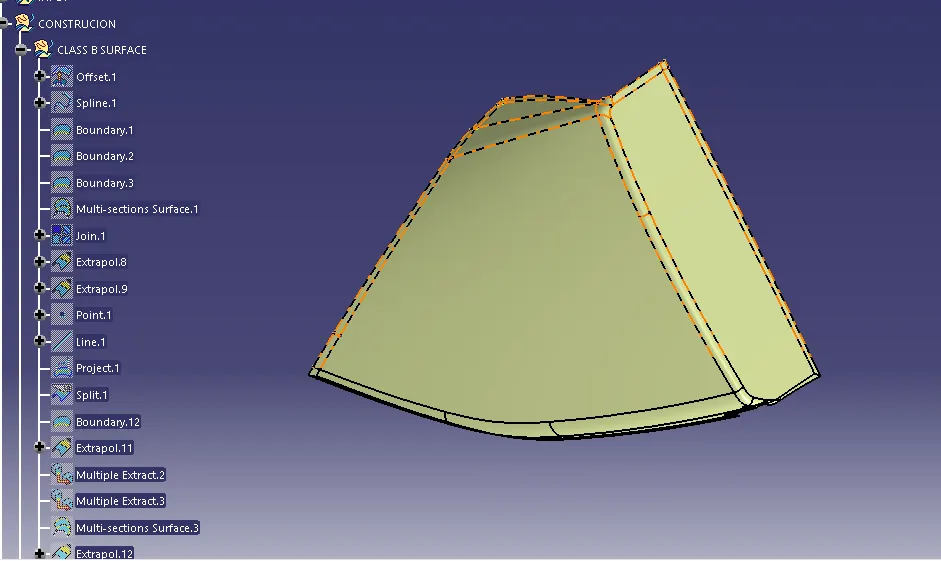
4. Class B Surface-
5. Class C Surface-
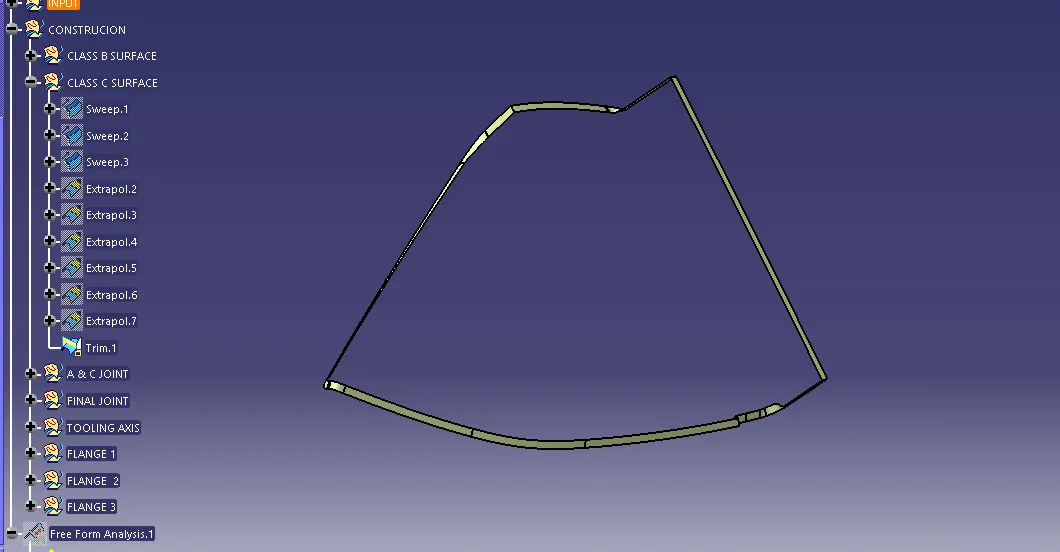
6. Final Trim-
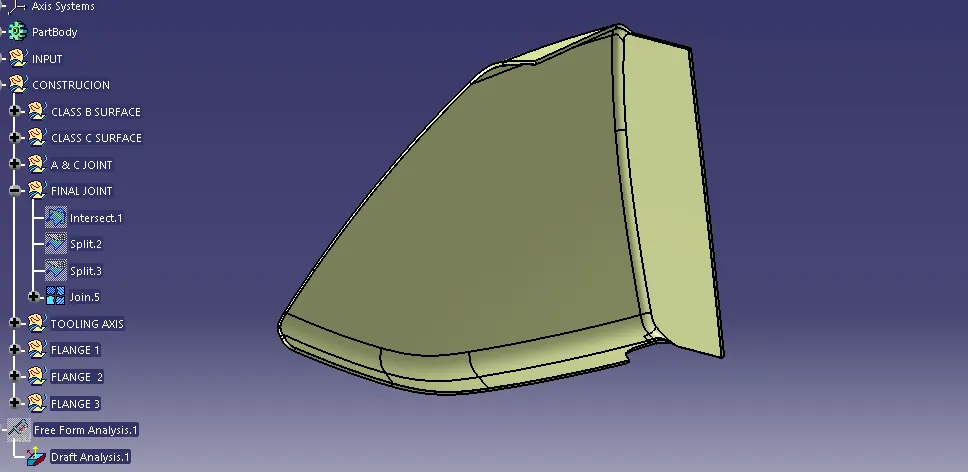
Attachment Feature
7. Dog House-
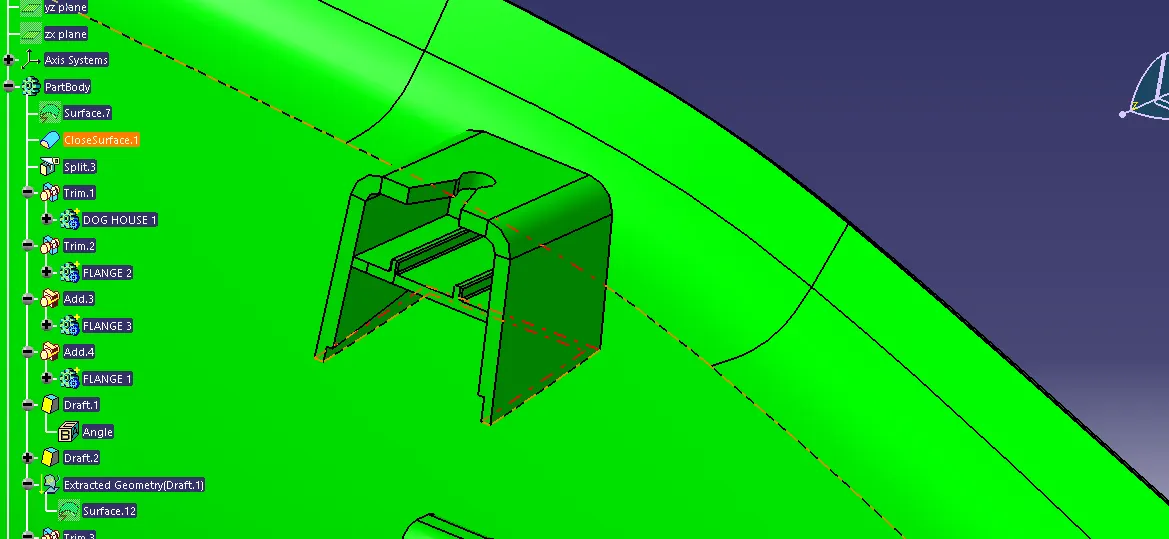
8. Flange Design-
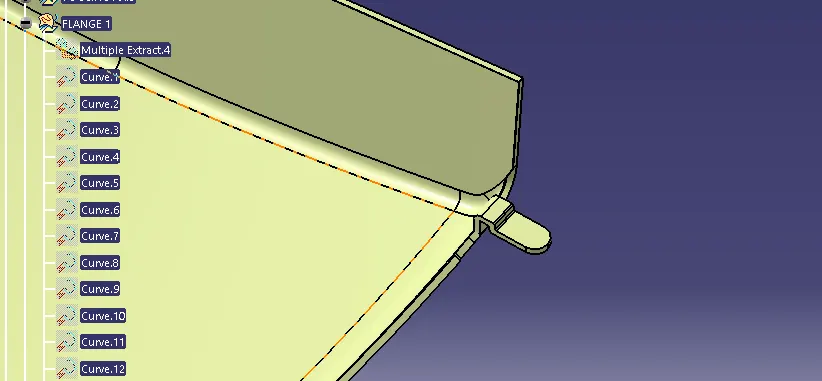
9. Final Part -
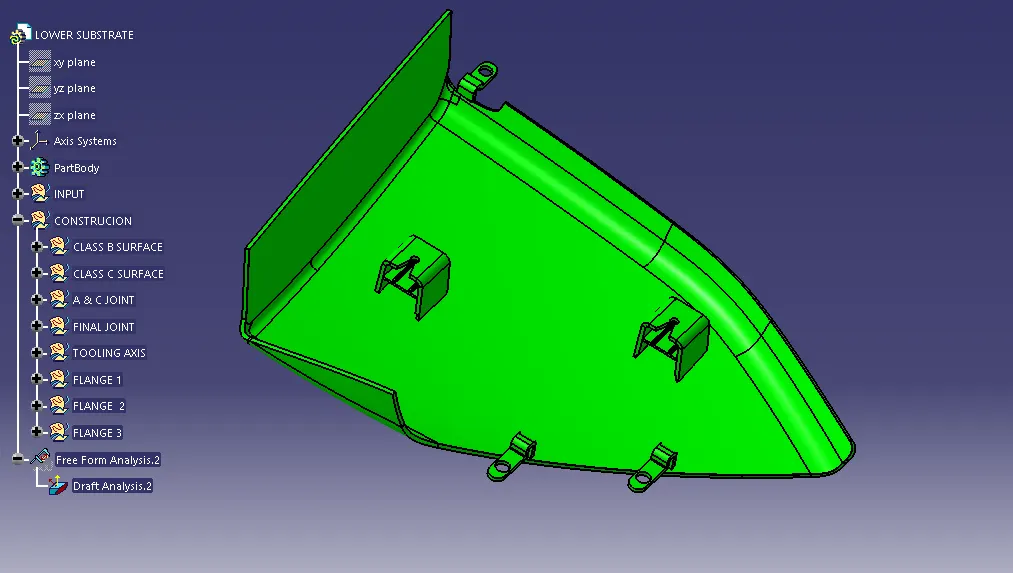
10. Final Draft Analysis-
d. Bottle Holder-
1. Class A Surface-
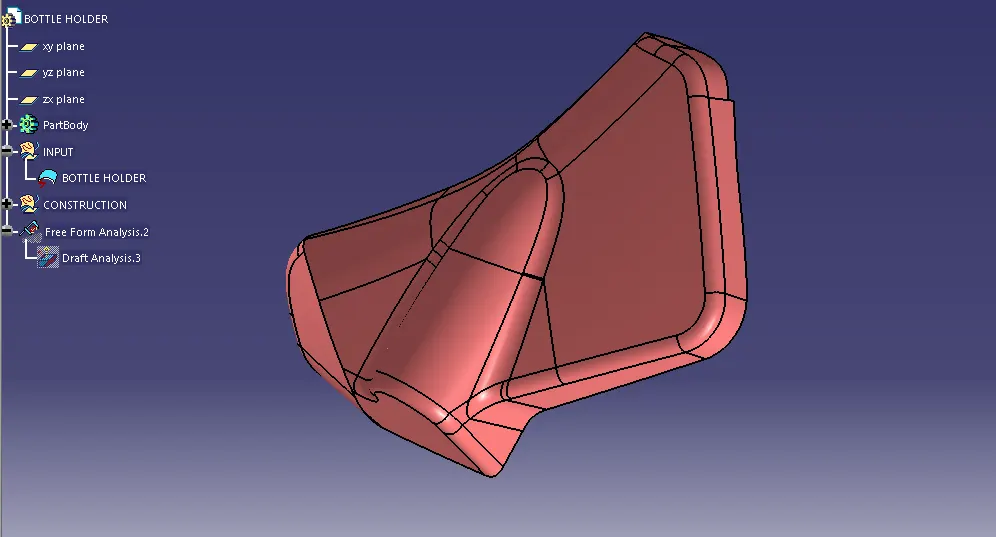
2. Class A Draft Analysis-
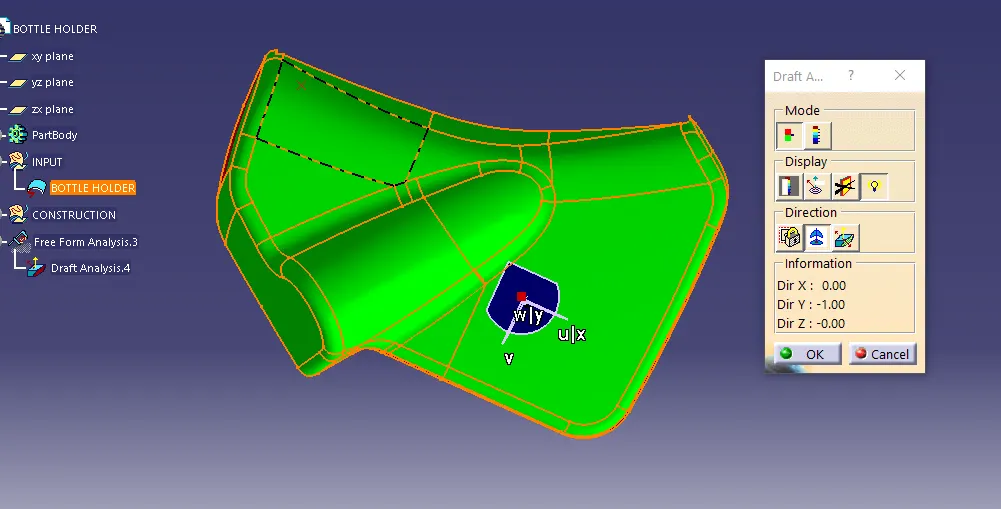
3. Class B Surface-
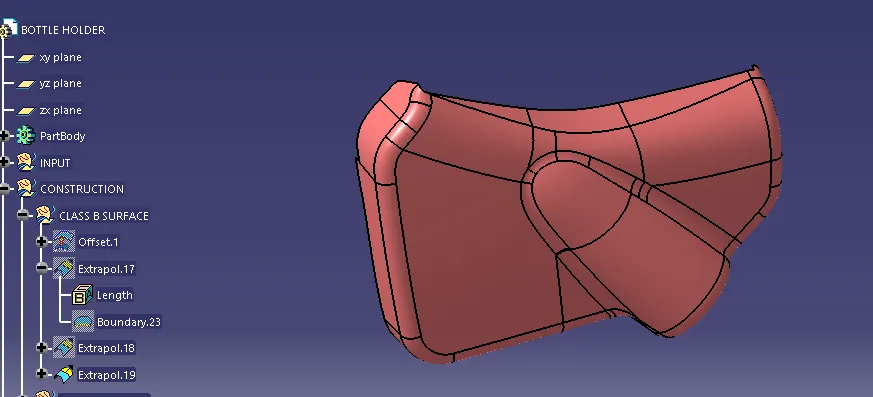
4. Class C Surface-
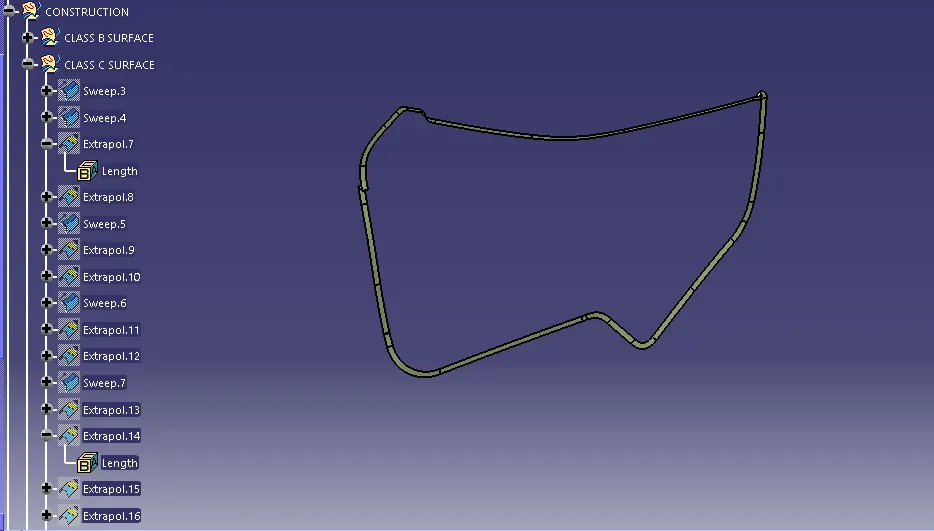
5. Final Trim-
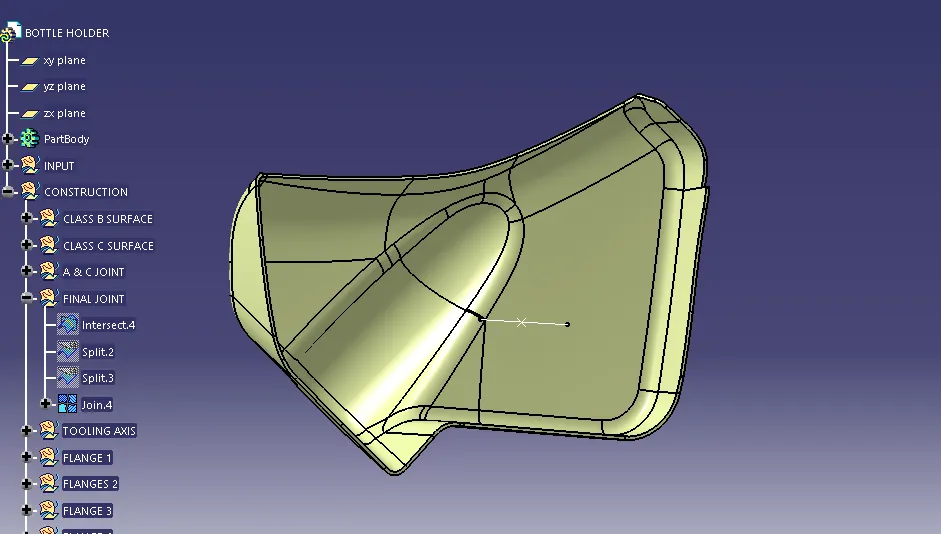
6. Flange Design-
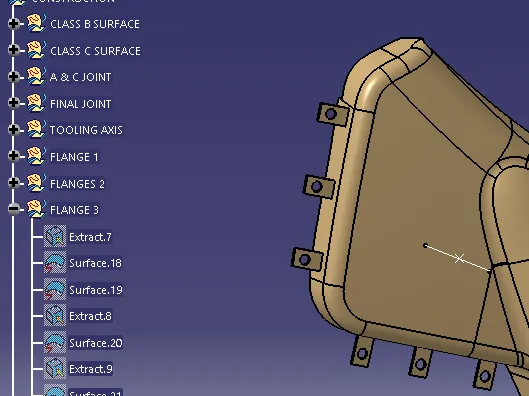
7.Final Part-
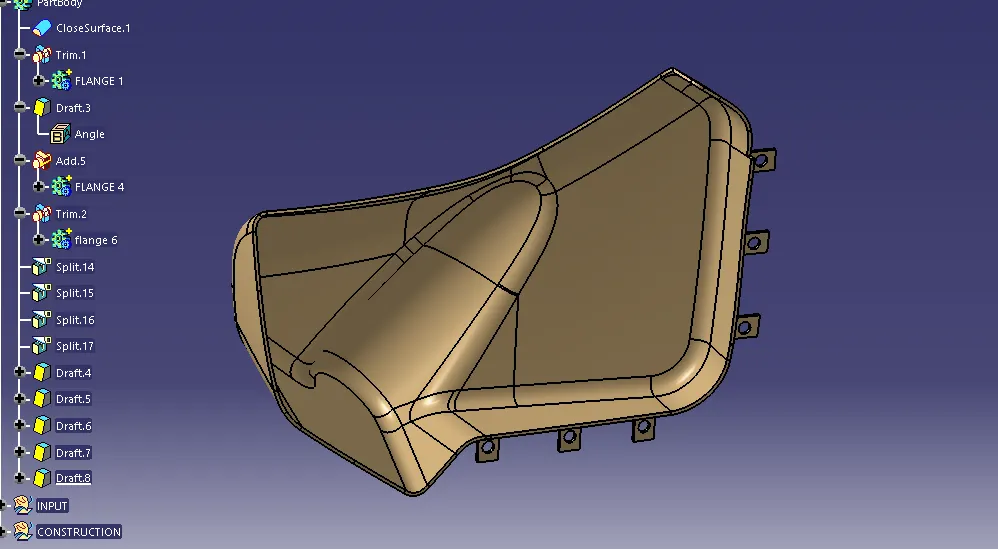
8. Final Draft Analysis-
Final Assembly Of Door Trim