Week 11 - Project - A pillar Design with Master Section
Objective:
The aim of this endeavor is to forge a closed body via the utilization of Class A surface and a master section, encompassing the full spectrum of design parameters. Subsequently, a meticulous draft analysis using tooling axis is to be conducted.
Goals:
- Undertake an in-depth draft analysis of the Class A surface, meticulously examining its properties and characteristics.
- Generate Class B surface elements through the utilization of the established Class A surface as a foundation.
- Deftly construct a tooling axis employing the master section, aligning with the complex design specifications.
- Carve out a coherent closed body using specialized surface manipulation techniques.
- Craft a sophisticated DOG HOUSE configuration leveraging the provided master section.
- Execute a comprehensive draft analysis to validate the manufacturability of the resultant part.
MASTER SECTION:
Master sections, serving as the guiding beacons of design prerequisites, wield the power to delineate component packaging subsequent to the nuanced technical surface evaluation.
DRAFT ANALYSIS:
The Essence of Draft Analysis:
In the realm of design, draft analysis emerges as an indispensable technique, empowering us to fathom the manufacturability quotient of our Catia V5 part models. The crux lies in ensuring the effortless extraction of the molded part.
Beyond the 90-Degree Paradigm:
It is an immutable truth that components flaunting an orthogonal 90-degree profile vis-à-vis their base surface remain obstinate in ejection from the tool. The antidote lies in the deliberate infusion of subtle draft angles throughout the component's expanse, a precondition for seamless tool separation.
Navigating the Ejection Course:
The cornerstone of our approach hinges upon ascribing a predefined ejection direction to facilitate the effortless liberation of components. The preliminary step involves scrutinizing the uninterrupted continuity of the bequeathed Class A surface.
Mapping the Axis Odyssey:
Embarking upon the voyage of tooling axis creation necessitates an astute comprehension of the opening dynamics and cavity orientation.
The Nexus of Design and Engineering:
Envision a point of origin at the heart of the base surface, giving birth to an axis system that reverberates with intent. Engendering an intersection line along the ZX plane, nestled upon the bedrock of the Class A surface, invokes the next step.
Crafting Lines, Crafting Axes:
Crafting an inclining line along the YZ plane, entwining its fate with the intersection of the Class A surface, establishes a tapestry of geometry.
Lines Converge, Axes Emerge:
Convergence takes center stage as we meticulously bisect both lines, culminating in the emergence of the coveted center point—a beacon of symmetry and balance.
Drafting the Axis of Transformation:
The axis germinates, extending beyond boundaries, it encapsulates the aspiration of mold creation. The axis, a silent sentinel of intent, ignites the next phase—the draft analysis—where surfaces are scrutinized against draft angles, their journey assessed against the lines etched in the realm of geometry.
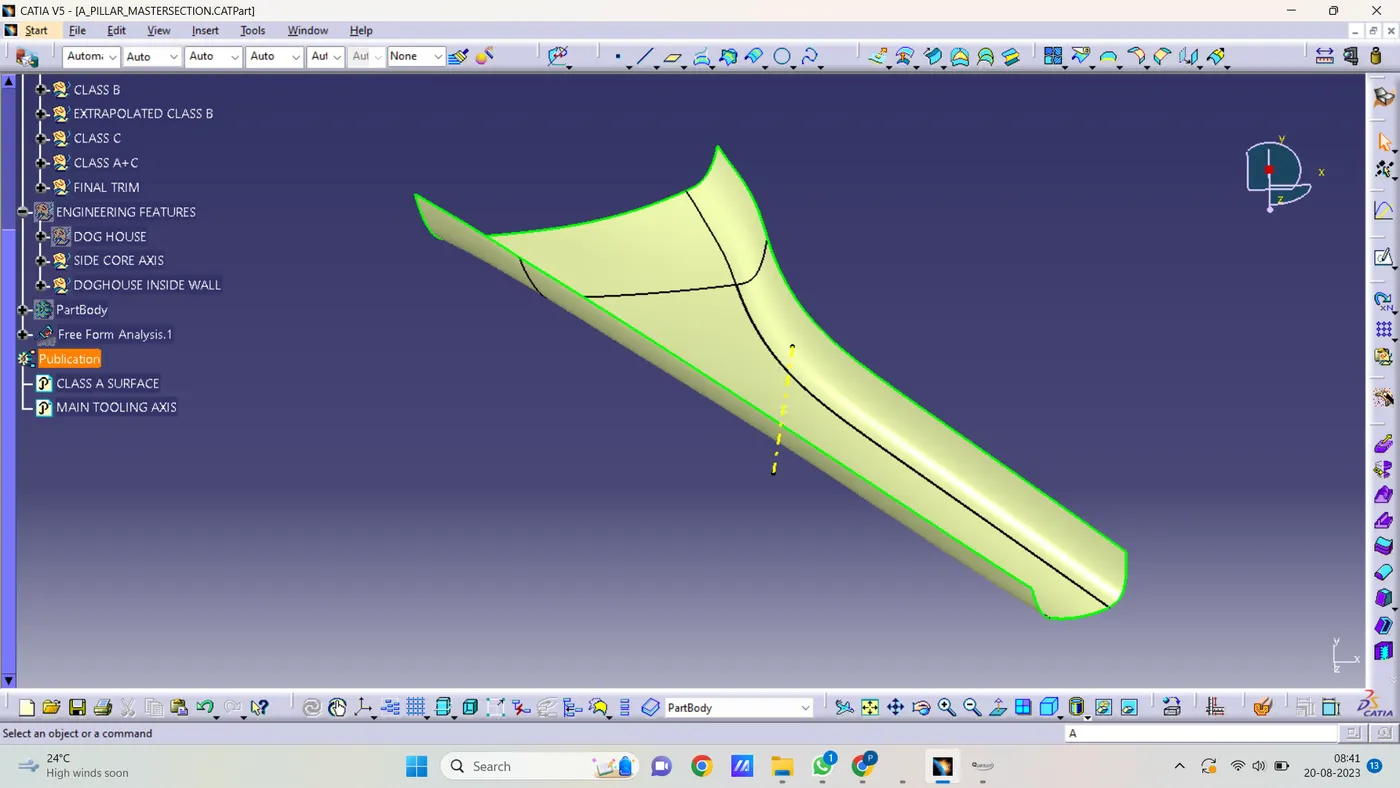
Class A surface:-
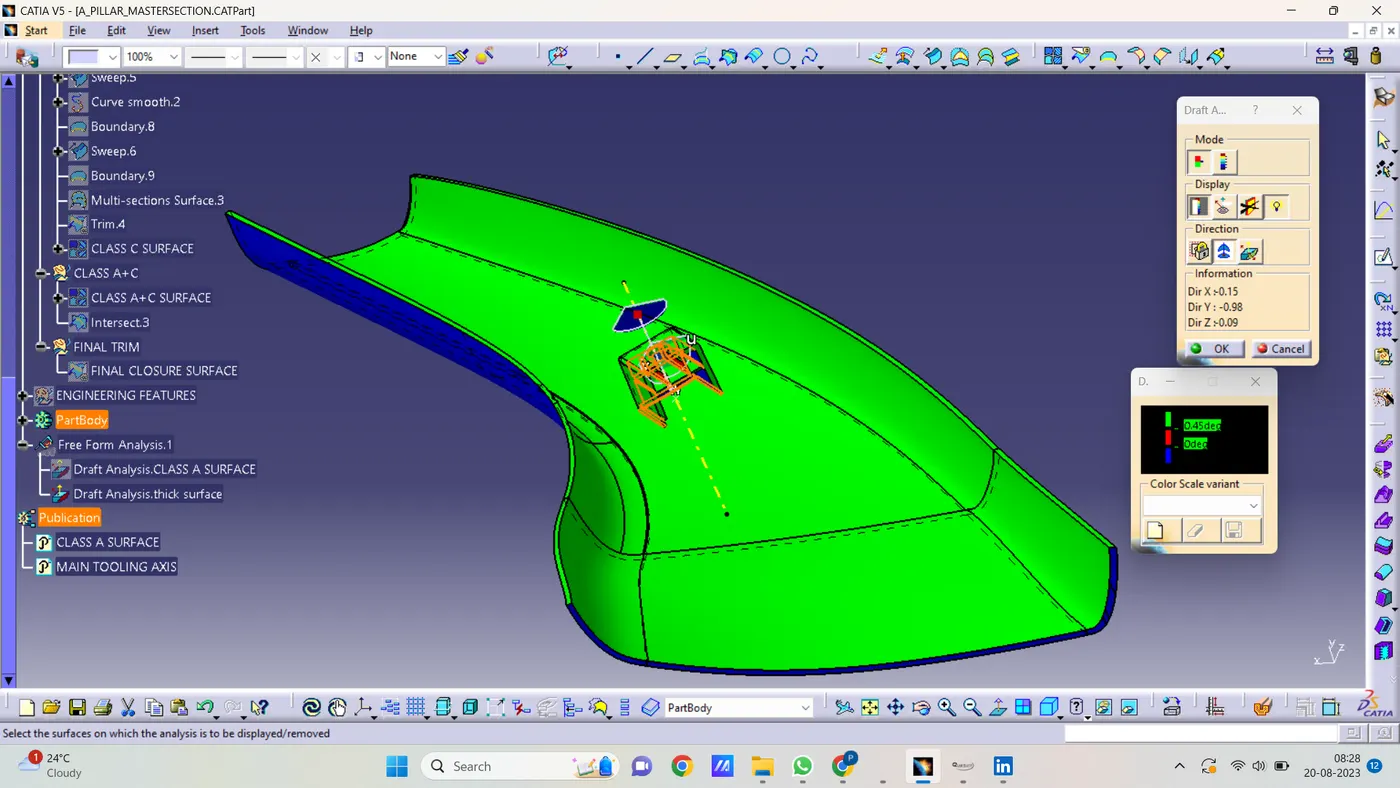
Class A surface Draft analysis:-
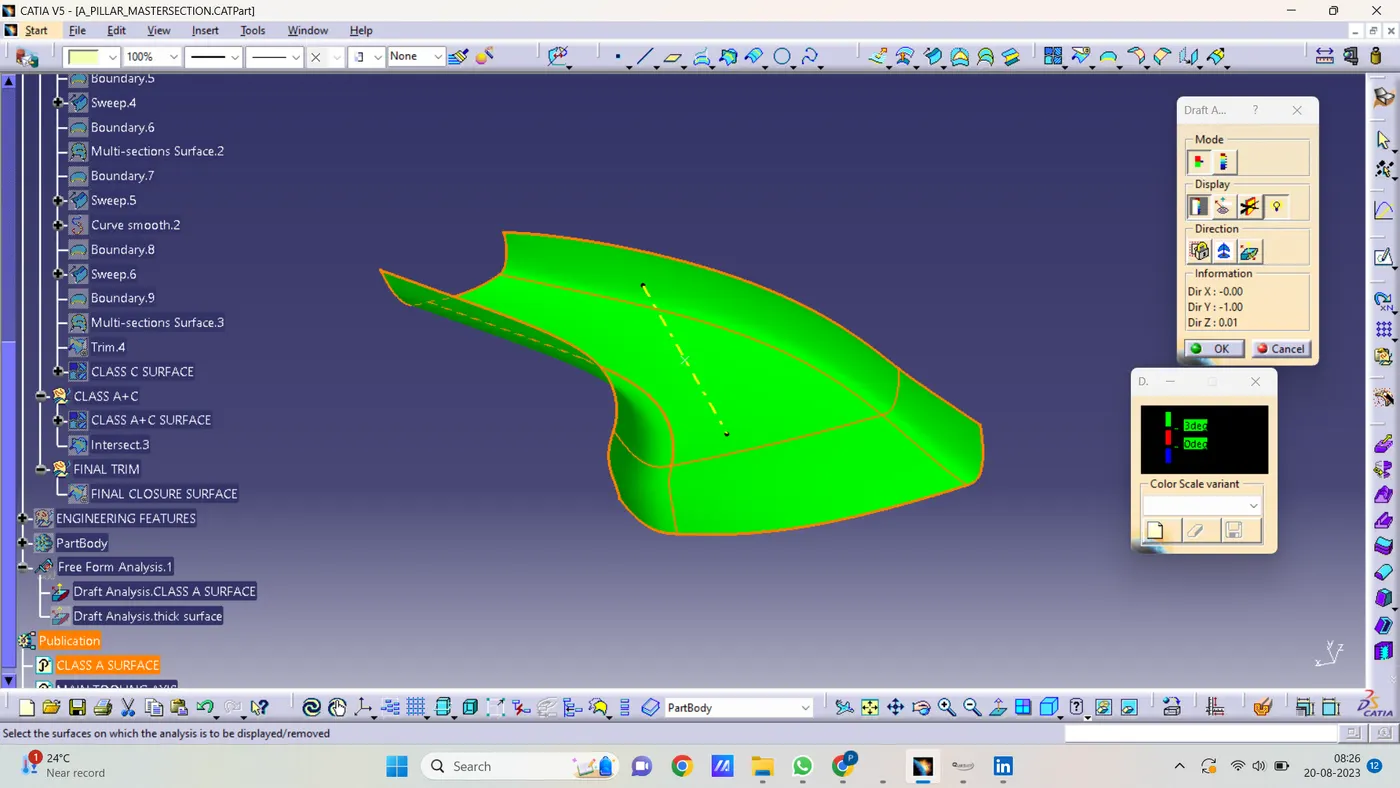
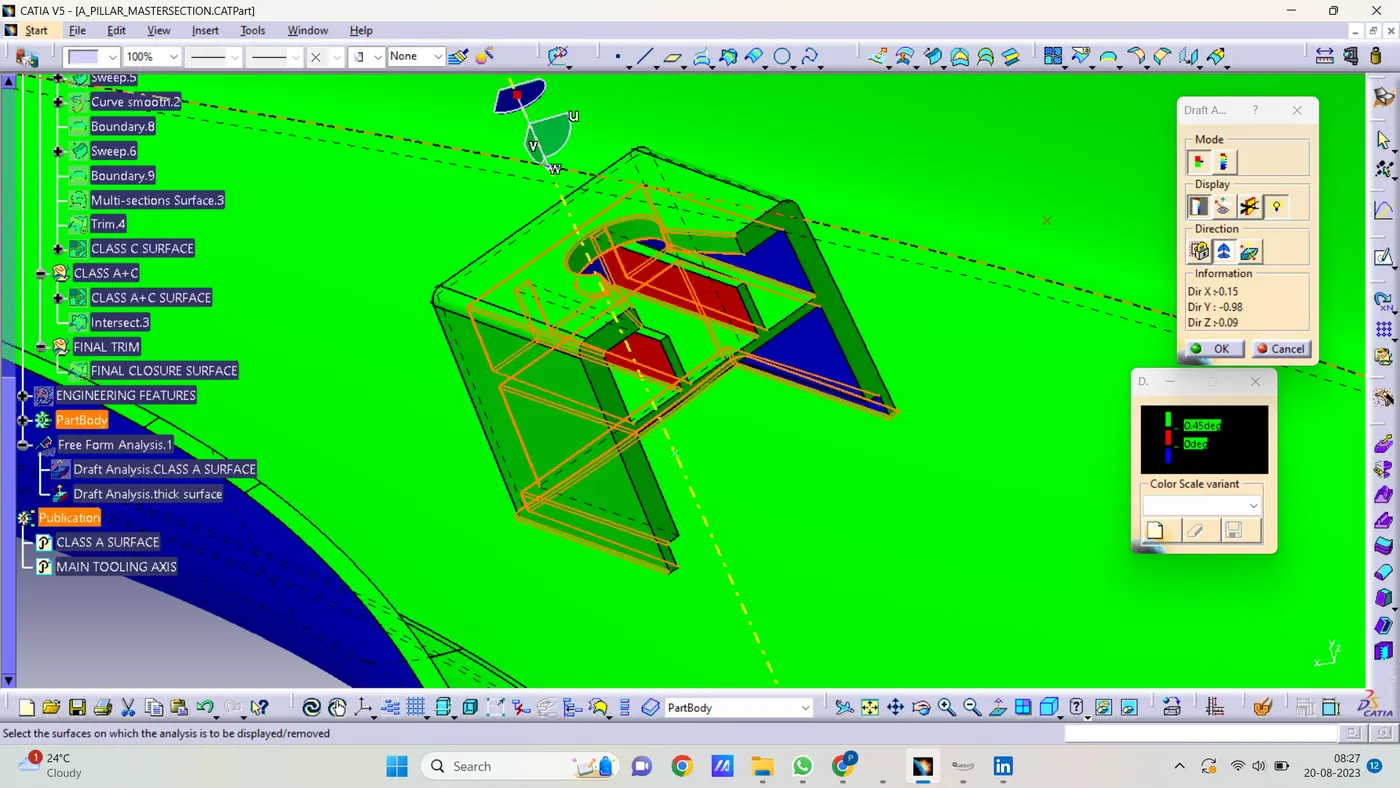
From the draft analysis we cant get a proper Class A surface some portion have zero degree draft so we got class A surface is slightly improper.
When the draft analysis we used tooling axis created by using bisecting method as per given master section.
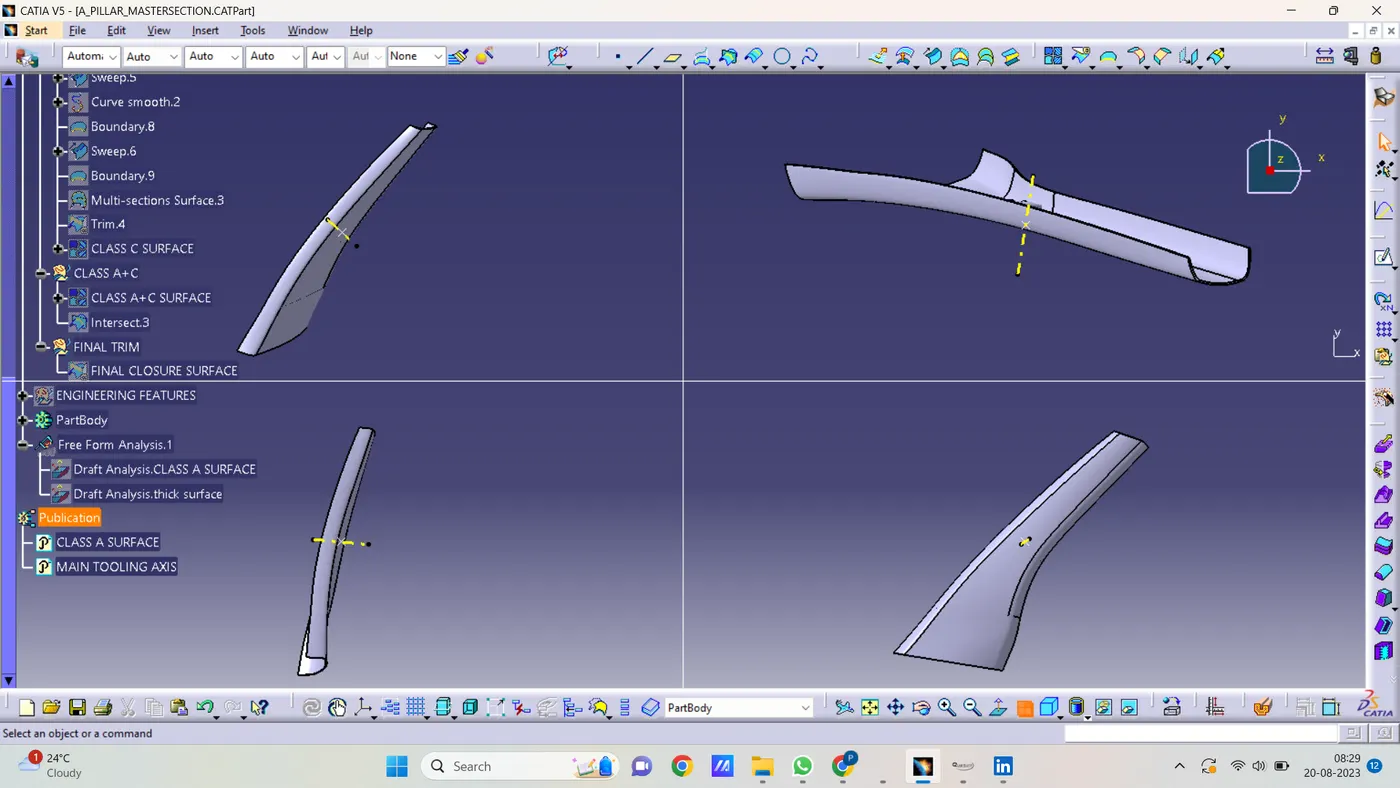
All view:-
Draft analysis of Close body:-
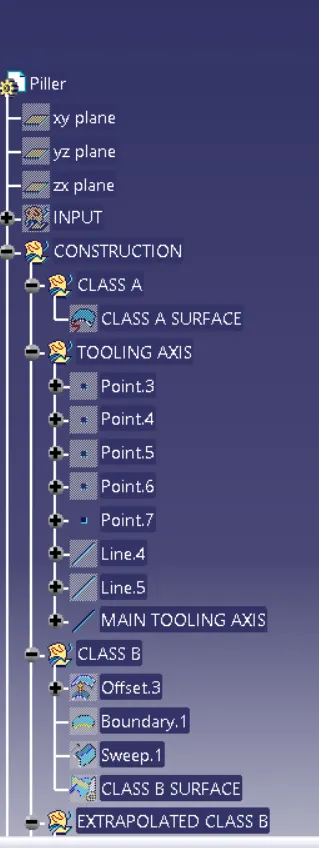
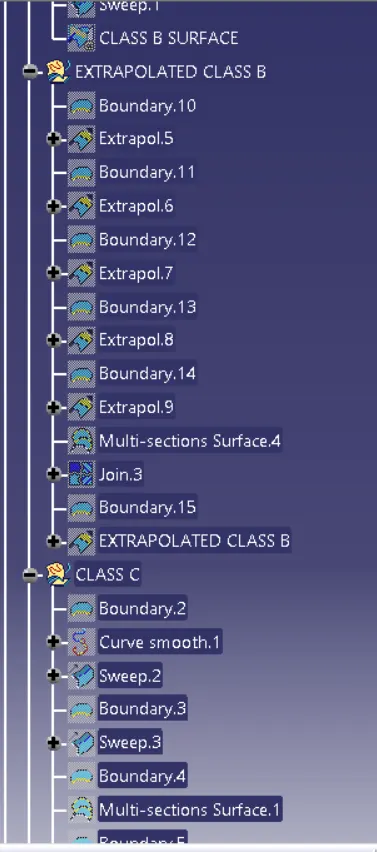
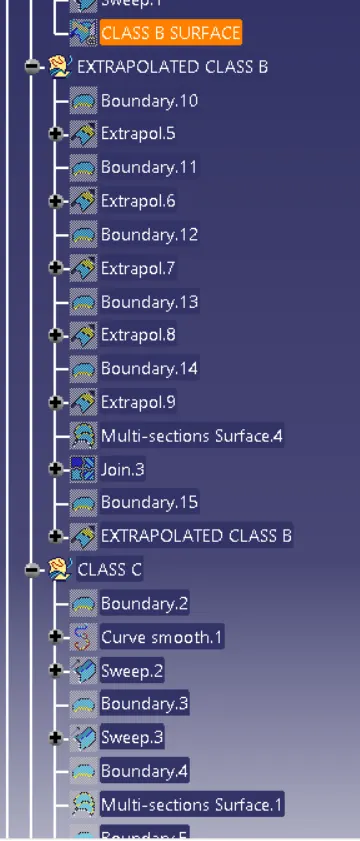
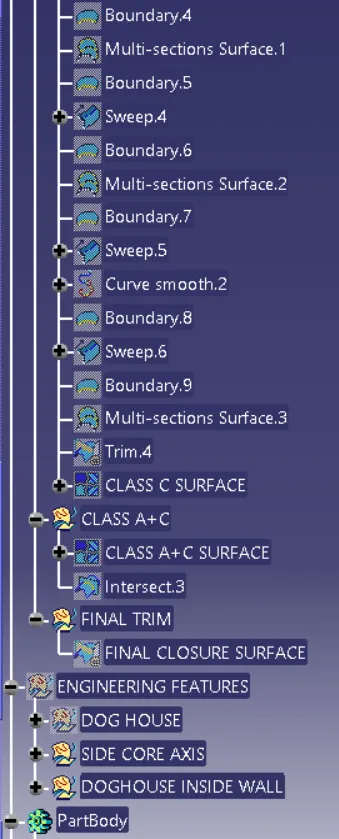
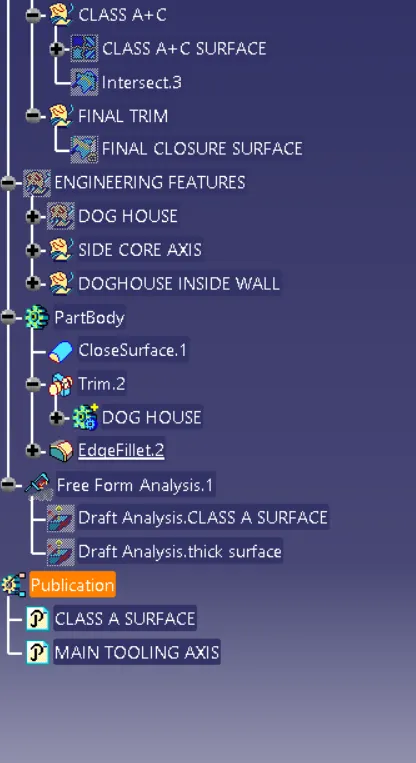
Tree structure:-