Week 11 - Final project
Aim:-
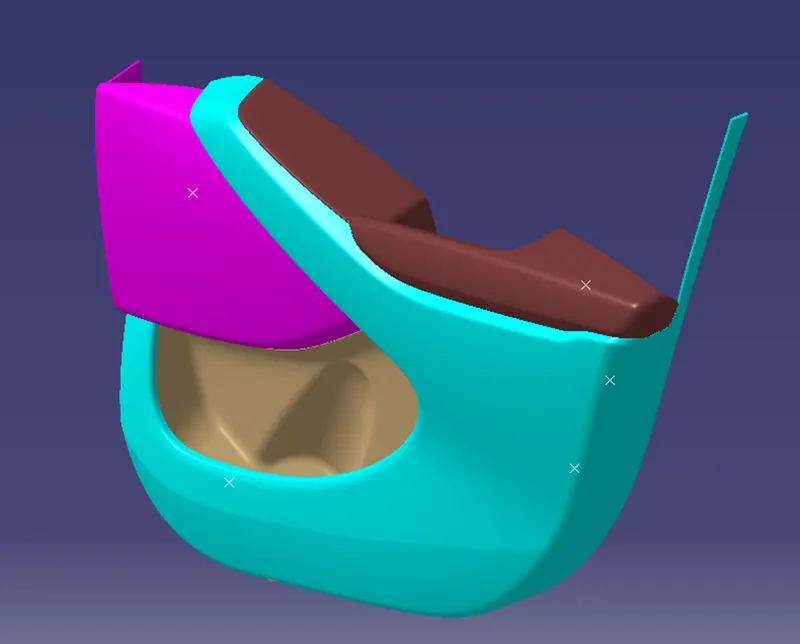
To create a Door trim panel from given class A surface and master section along with door panel attachment by following the design guidelines.
Introduction:-
Door trim panel is an interior component (plastic component) attached to the inner side (sheet metal component) of the door. Plastic has revolutionized the design of car interiors, especially the doors and consoles. Acrylonitrile-butadiene-styrene (ABS), polypropylene and Styrene-maleic anhydride (SMA) plastics shape lightweight, durable and complicated shapes for consoles. Consoles include armrests, cup holders, and storage spaces. They would be difficult to reproduce as efficiently and with the same performance results using any other family of materials. Plastics help reduce noise, vibration, and harshness in the vehicle interior.
Input:-
- Class A surface of Door trim panel (Armrest, Lower substrate, Map pockets, Bottle holder)
- Master section.
Procedure:-
1.Map pockets:-
Tooling Axis creation
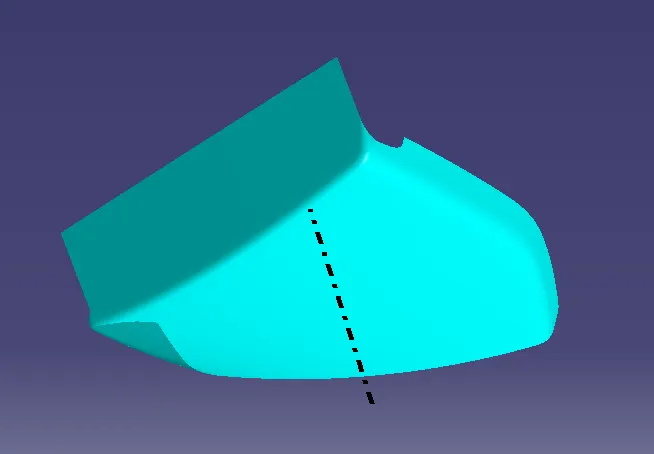
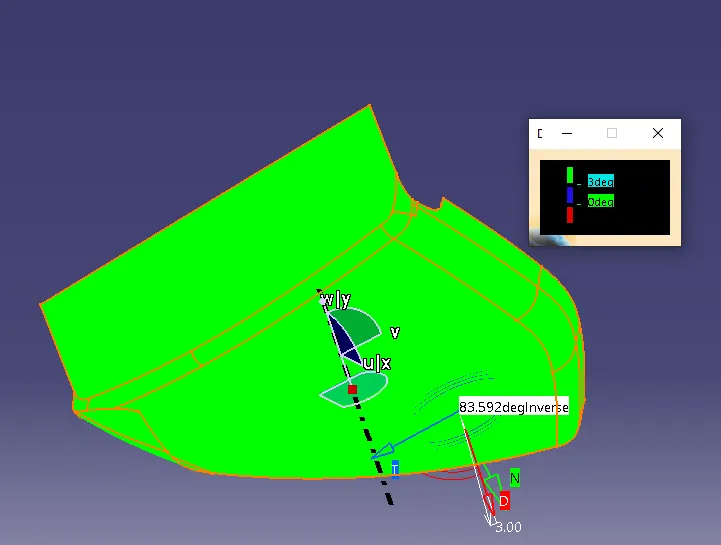
Draft anaylsis of class A surface
Creation of Class B surface
From the Given class A , Class B surface is c reated by offset the surface to thickness of the component (2.5mm)
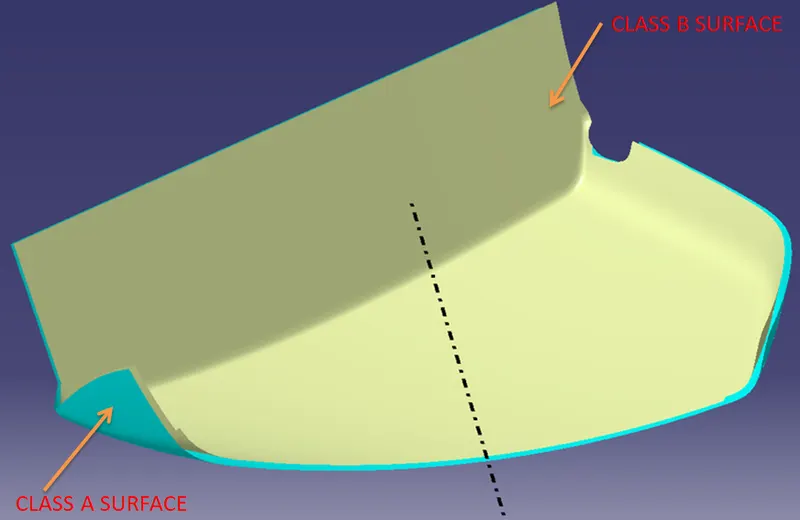
Creation of Class C surface
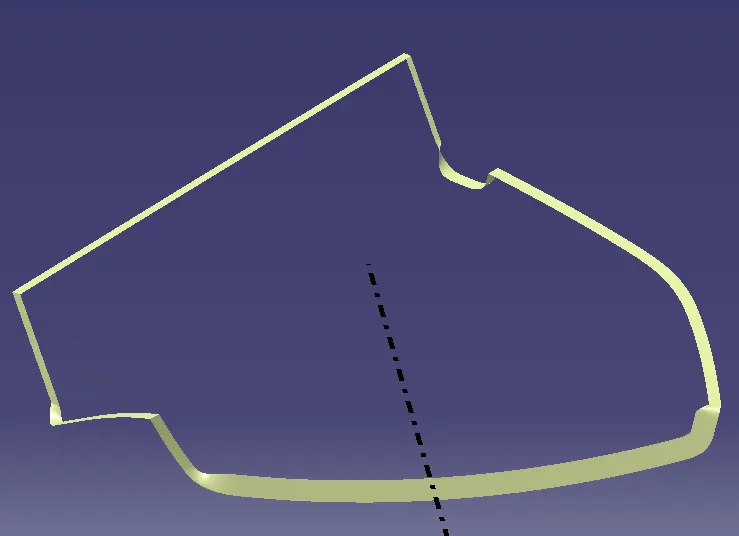
Creation of solid component
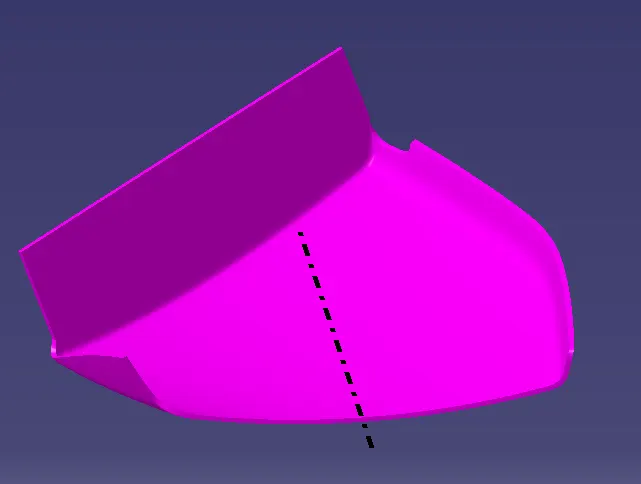
2.Bottle holder
Tooling Axis creation
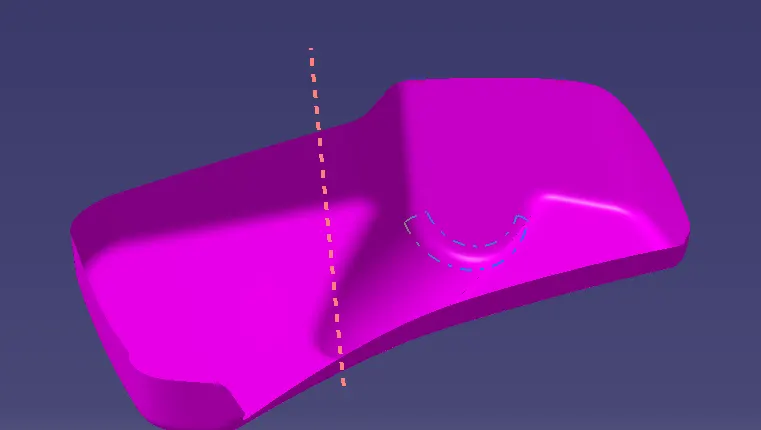
Draft anaylsis of class A surface
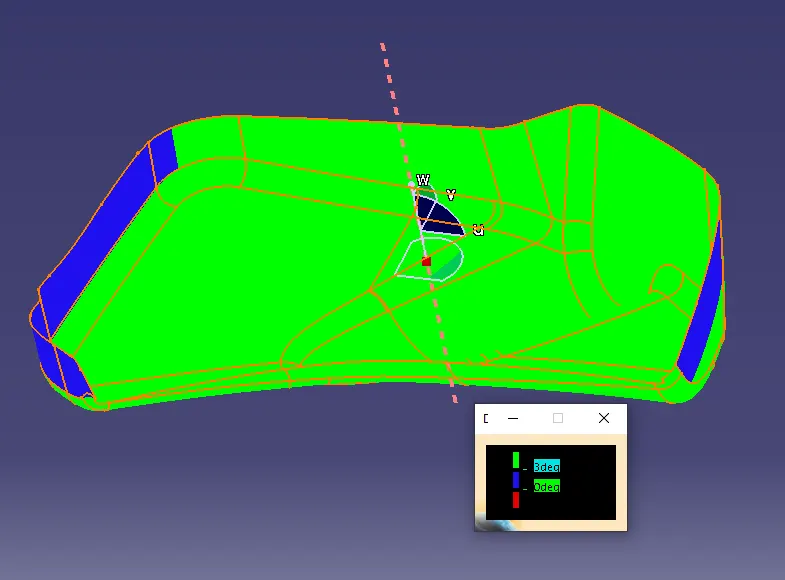
Creation of Class B surface
From the Given class A , Class B surface is c reated by offset the surface to thickness of the component (2.5mm)
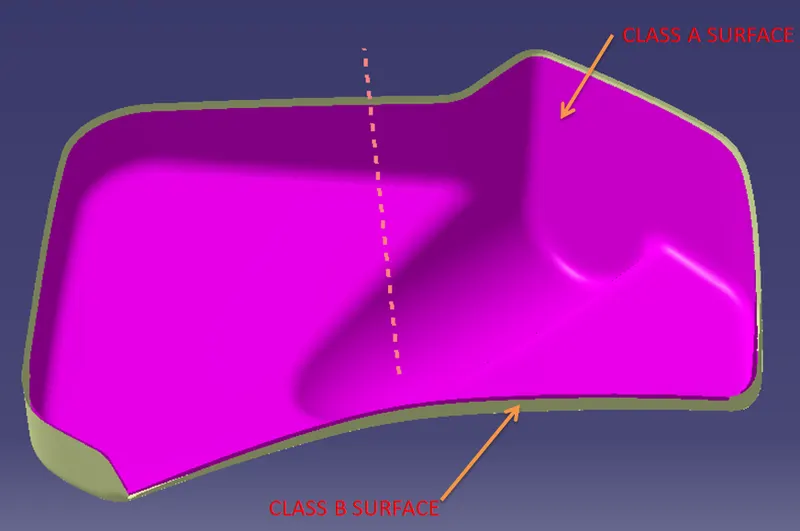
Creation of Class C surface
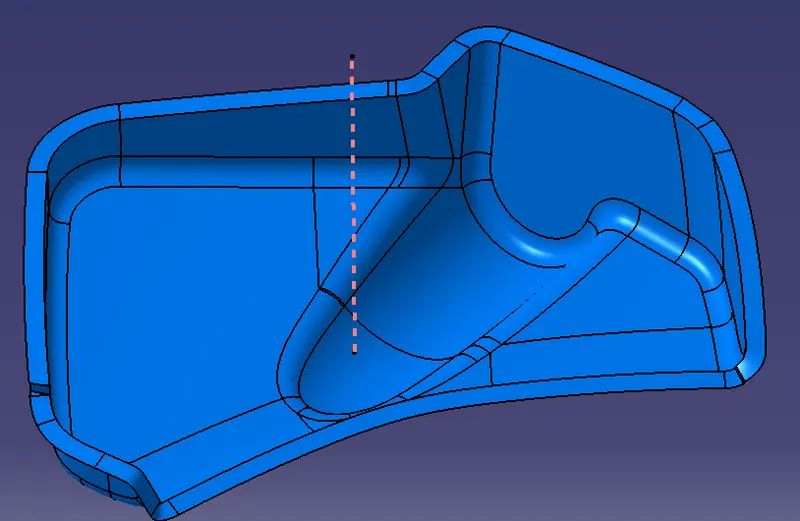
Creation of solid component
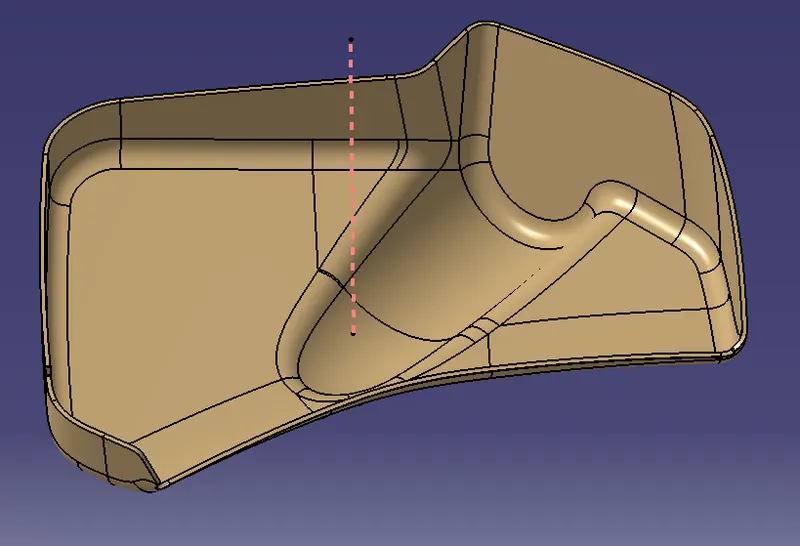
3.Lower substrate
Tooling Axis creation
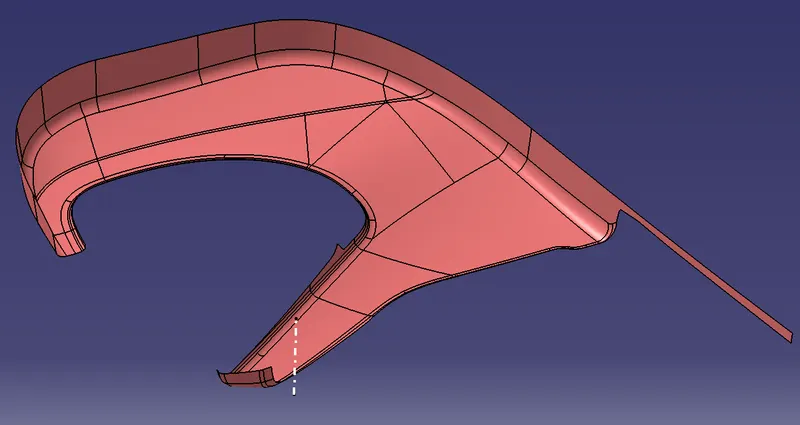
Draft anaylsis of class A surface
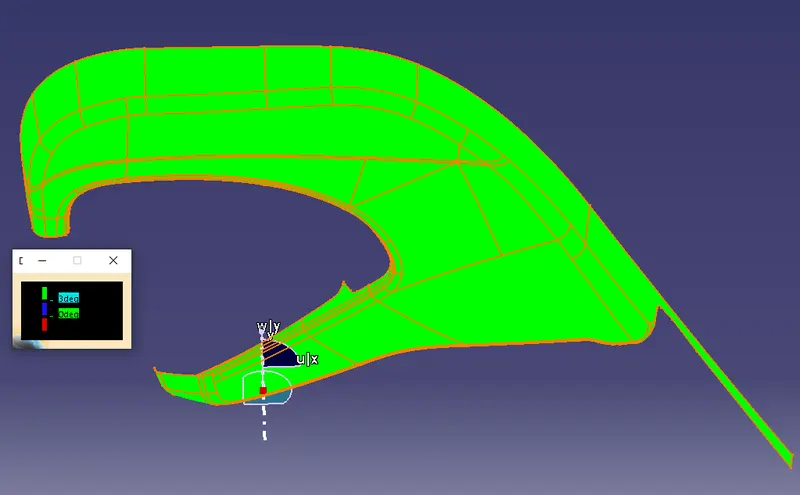
Creation of Class B surface
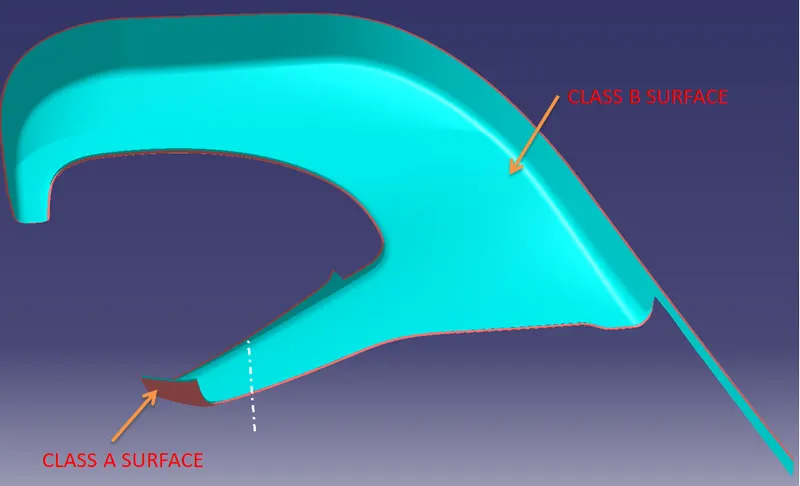
Creation of Class C surface
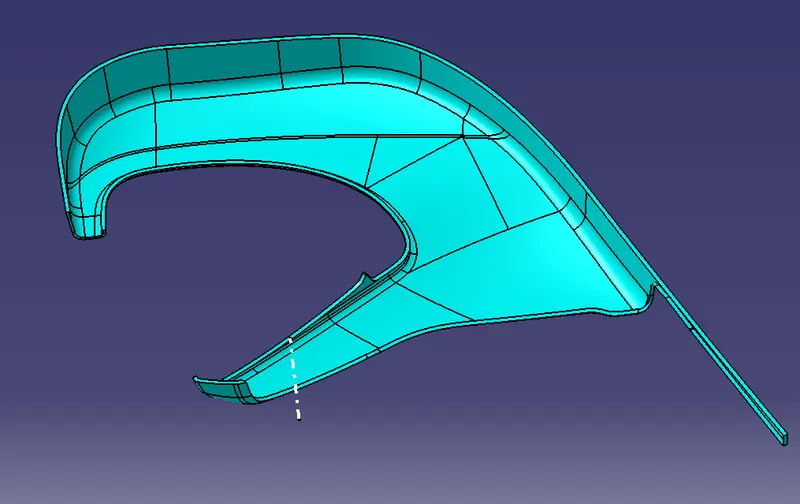
Creation of solid component
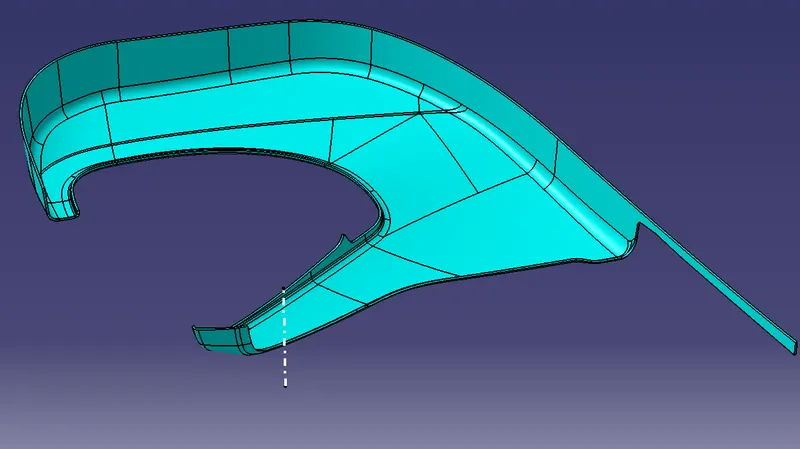
4.Lower substrate
Tooling Axis creation
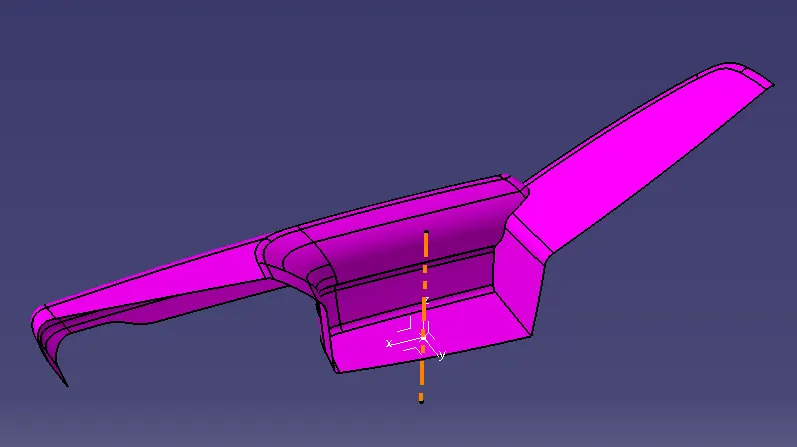
Draft anaylsis of class A surface
Since the part have some undercuts , we need another tooling axis along Y-axis
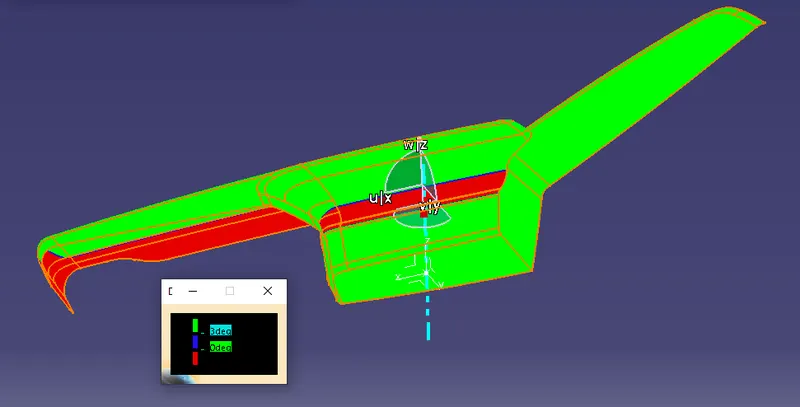
Tooling along Y-axis
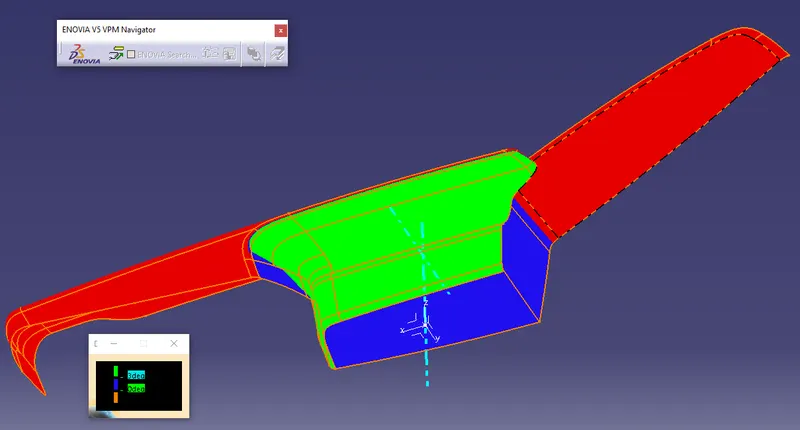
Creation of Class B surface
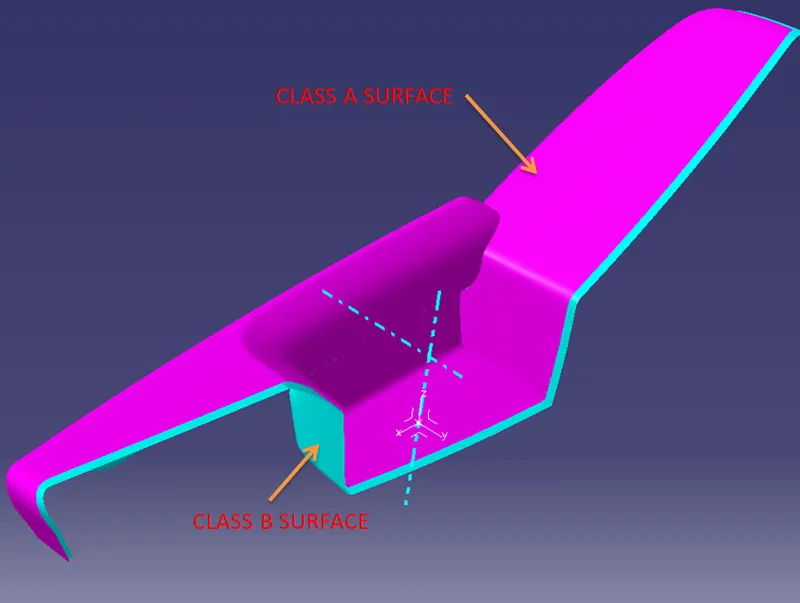
Creation of Class C surface
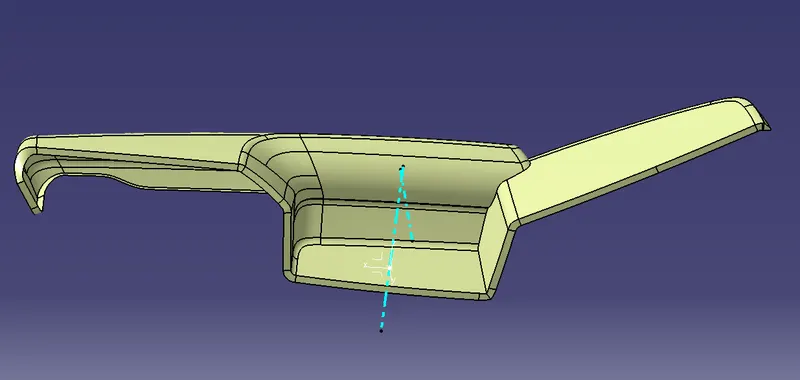
Creation of solid component
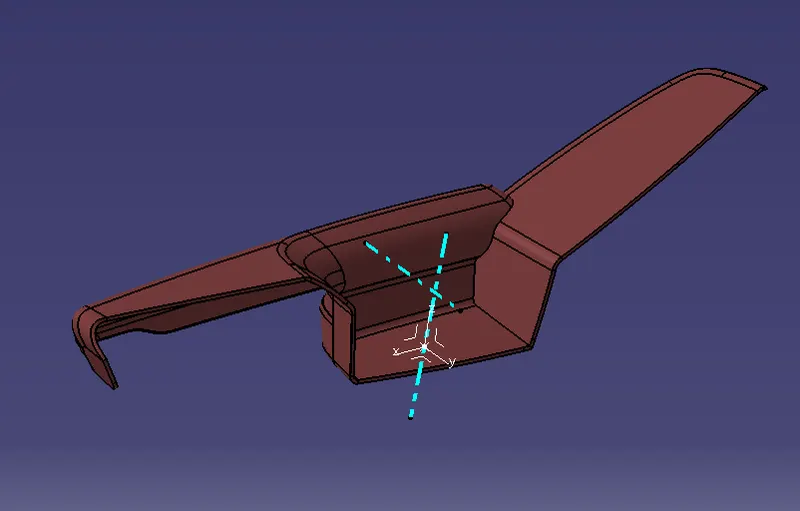
Enginnering features
Dog House
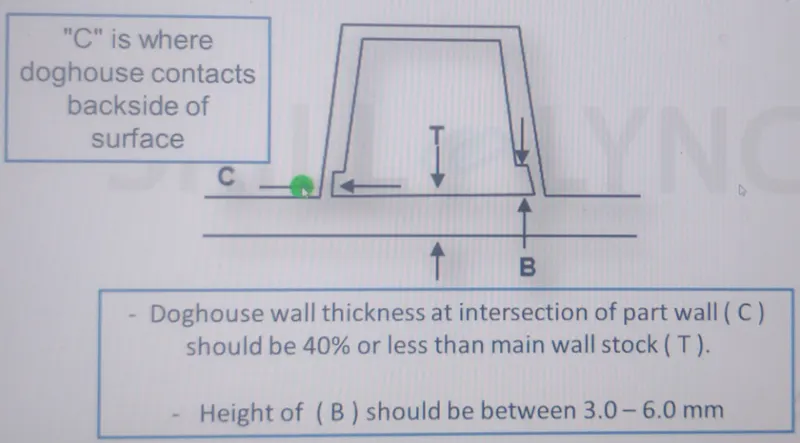
Dog house is an engineering feature used in plastic trim design. Dog houses are used as supporting feature. Sometimes other engineering features like snaps, heat stakes, push pins, locators etc. are mounded on them to increase their strength. Dog houses are subjected to draft analysis to prevent breakage of the component during ejection from mould cavity. Dog house and other engineering components are built on B-surface.
DESIGN CONSIDERATION
Wall thickness = 0.70 x Thickness of the plastic material
Fillet on the inner side = 0.25 x Thickness of the plastic material
Fillet on the outer side = 1.25 x Thickness of the plastic material
Fillet on the coring edges = 0.25 x Thickness of the plastic material
Coring thickness = 0.40 x Thickness of the plastic material
Draft angle 2deg to 3deg.
Heat stakes
Thermal staking is an assembly method that uses the controlled melting and reforming of a plastic stud or boss to capture or lock another plastic or metal component of an assembly in place. The plastic stud protrudes through a hole in the component to be locked in place. The heated thermal tip contacts the top of the stud, which melts and fills the volume of the tip cavity to produce a head, locking the component in place. The progressive melting of plastic under continuous pressure forms the head. When staking, the right combination of heat and pressure for the
application is critical.
Design the engineering features wherever it is necessary according to the master section on the B-Surface.
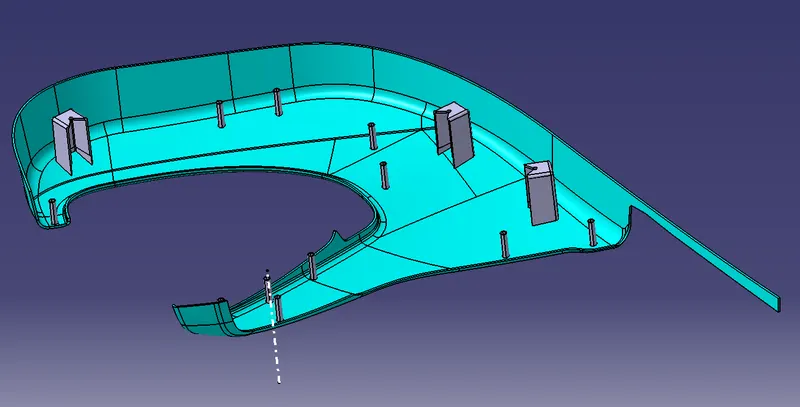
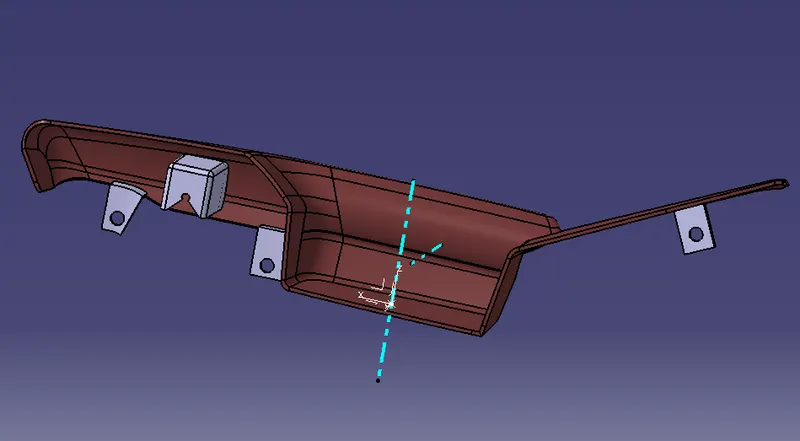
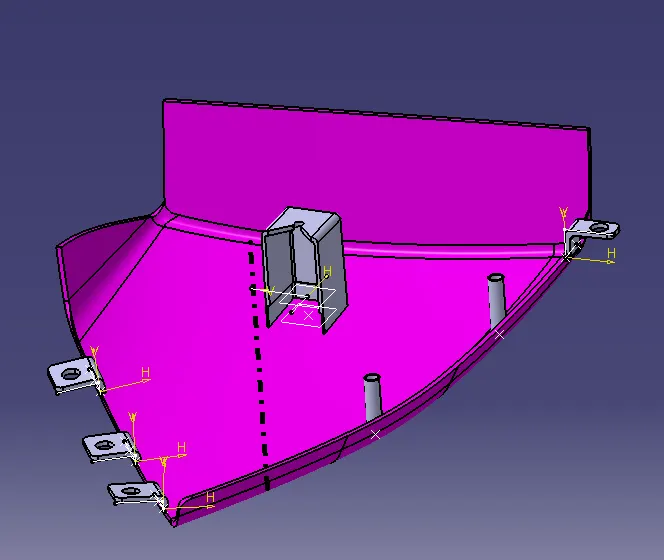
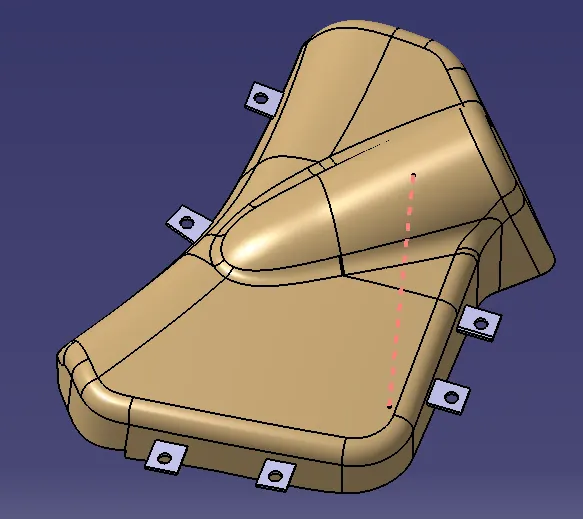
Draft anaylsis of Final component - Map pockets
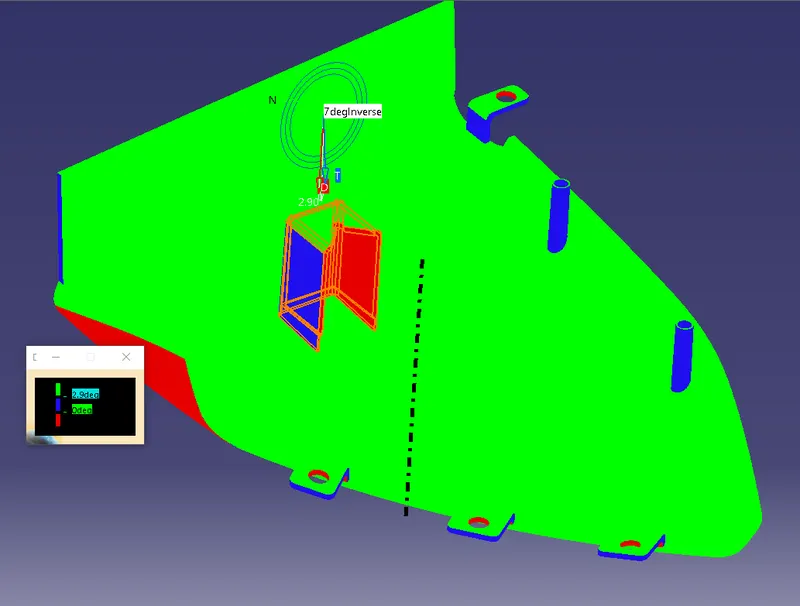
For Engineering features - Draft angle 0.5°
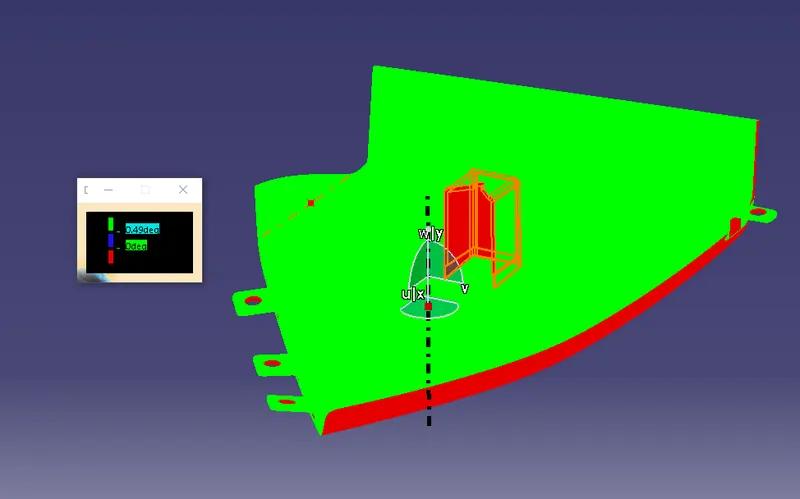
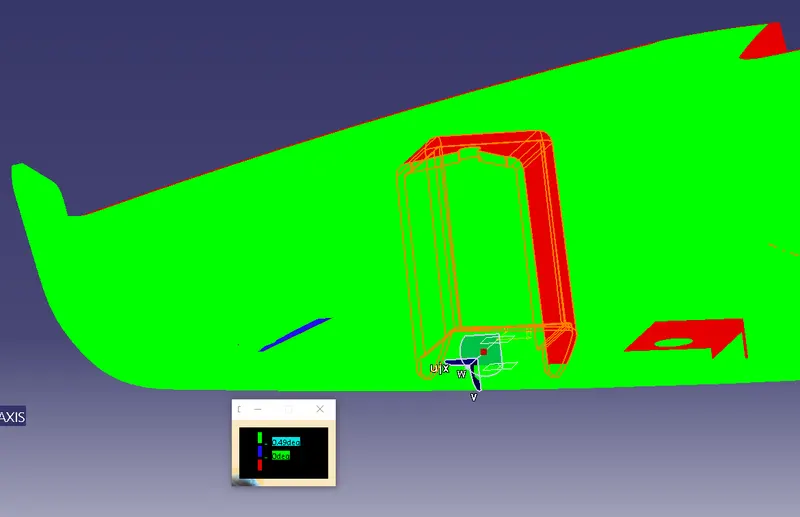
Draft anaylsis for Dog house
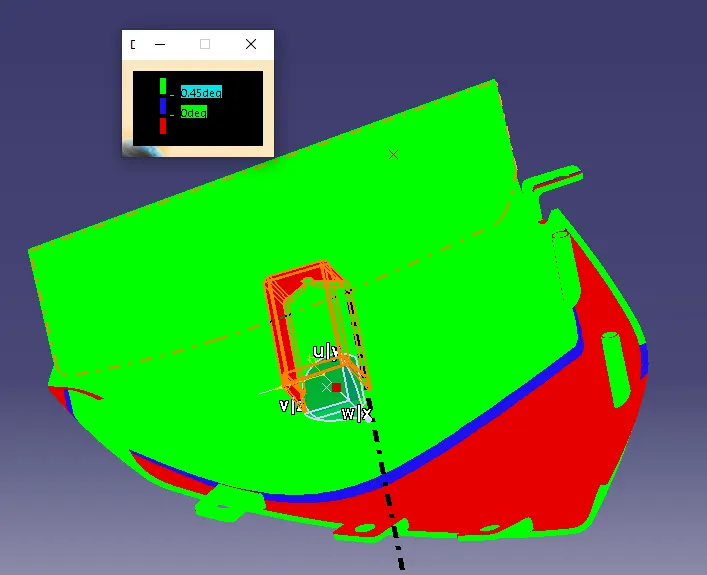
Draft anaylsis of Final component - Bottle holder
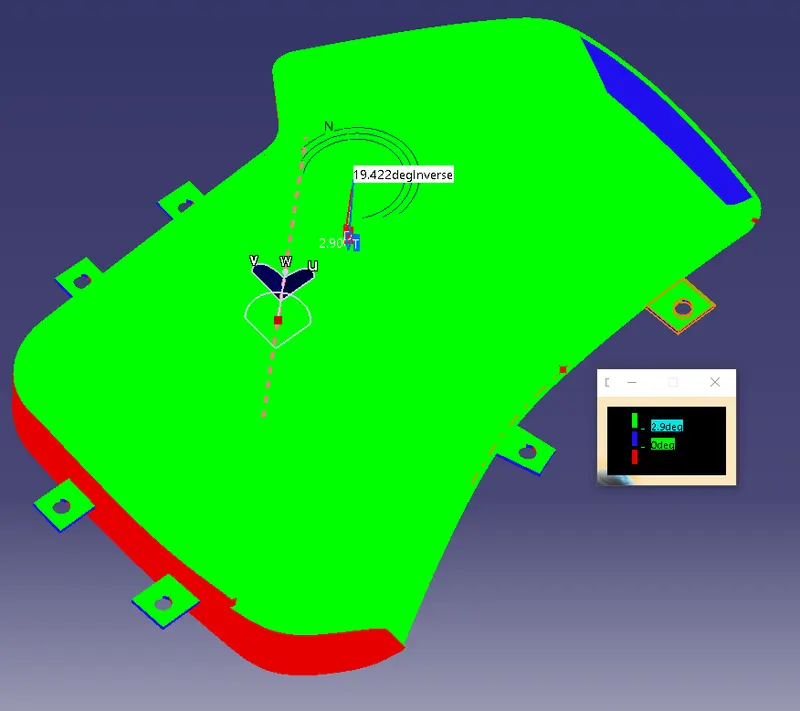
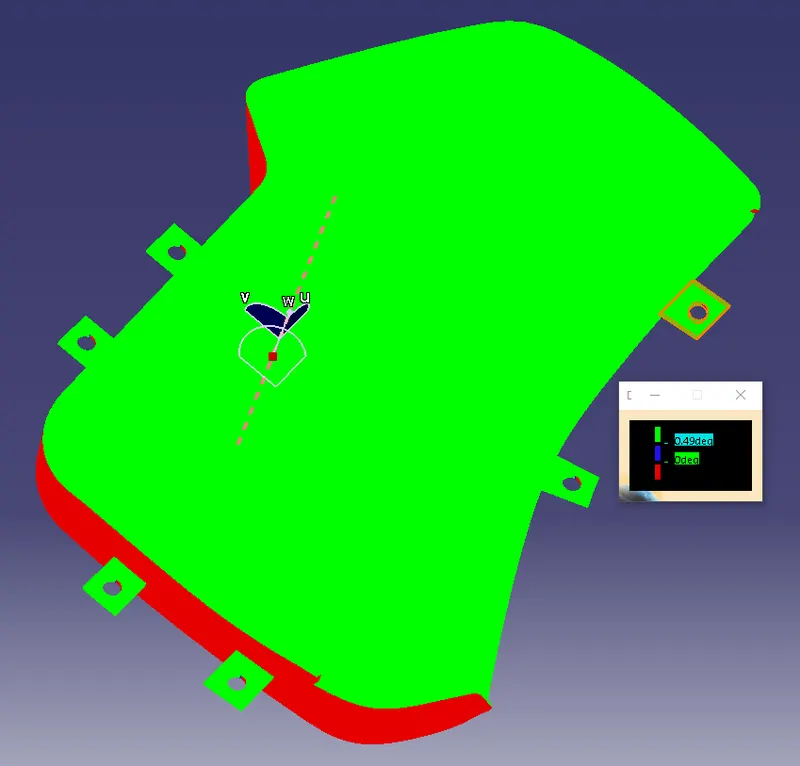
Draft anaylsis of Final component - Lower substrate
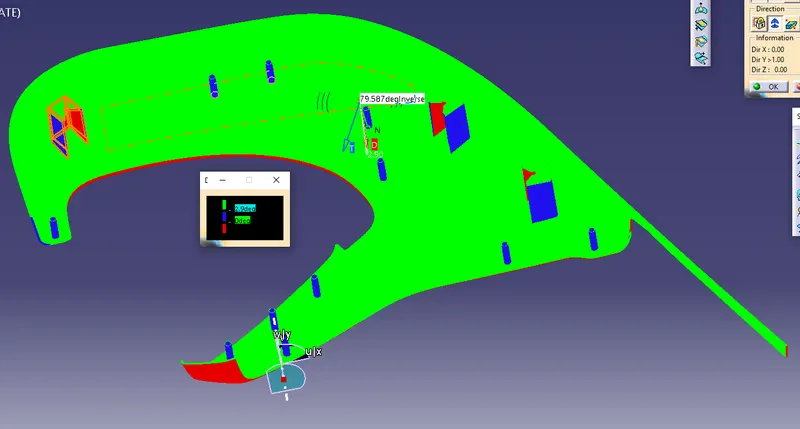
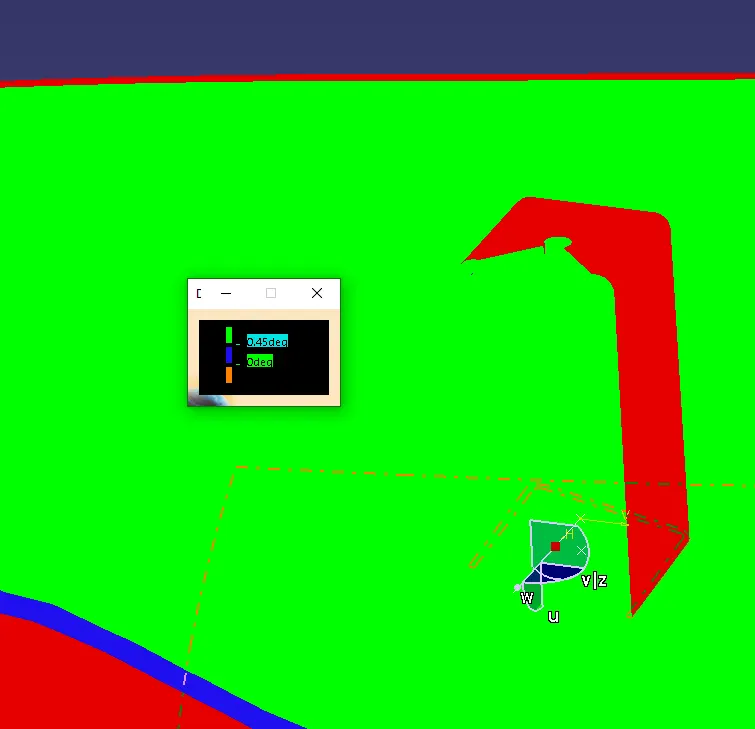
Draft anaylsis of Final component - Armrest
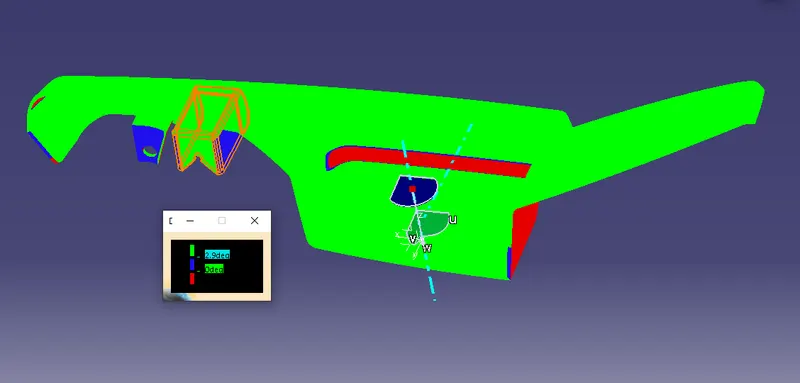
Draft anaylsis for side core tooling axis
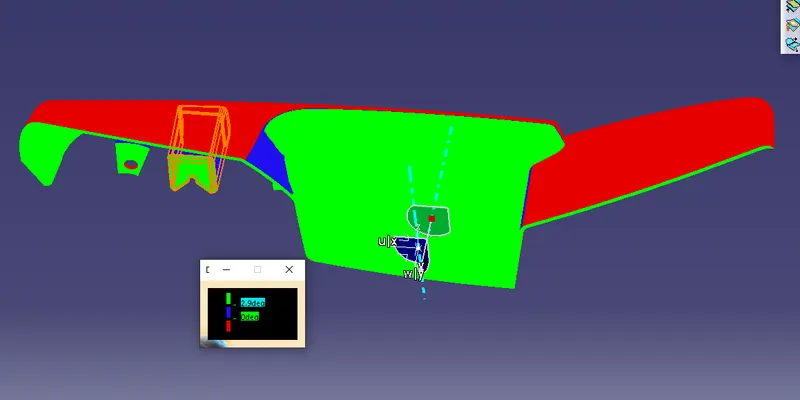
Draft analysis for engineering feature
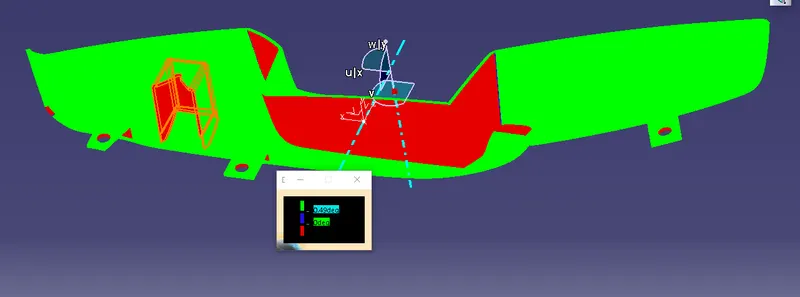
Draft anaylsis - Dog house
Conclusion:-
Thus the door trim panel is developed with given class A surface and master section along with engineering features following the design guidelines.