Week 11 - Final project
AIM :Creation of CAD model considering following inputs as like in OEM and tier1 companies
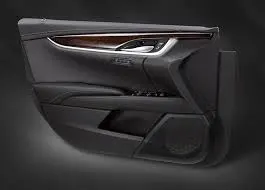
Development of a Door Trim panel
OBJECTIVE:
- To create a thickened part by given references of master section.
- To create a nominal feature creation as per the design.
- And chech the draft using tooling axis and draft analysis.
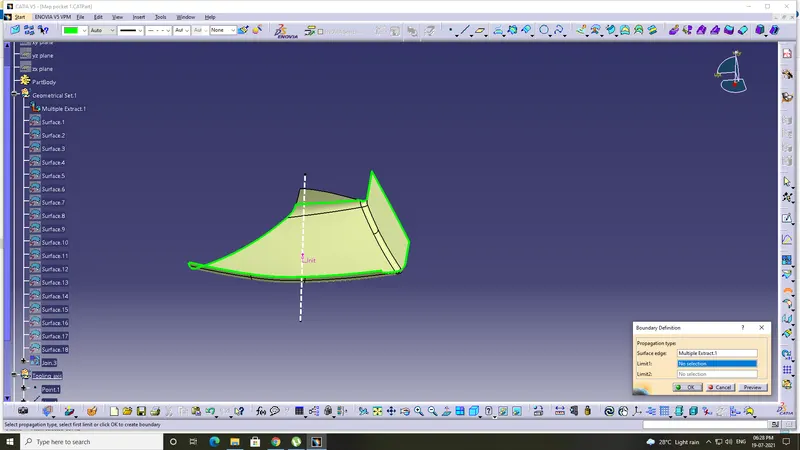
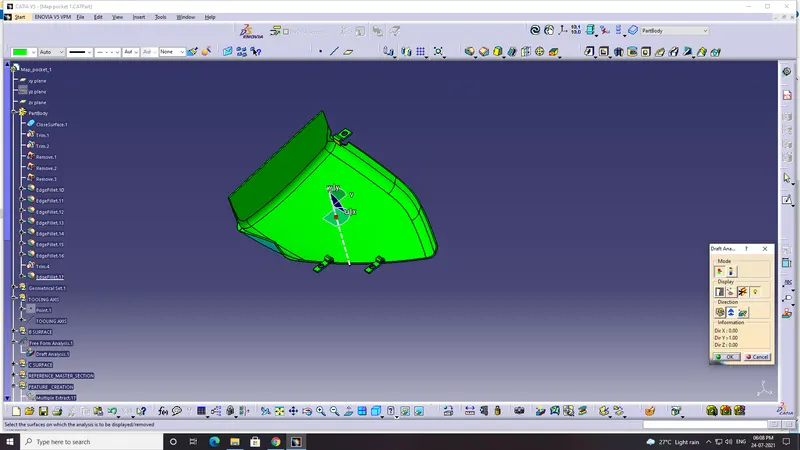
MAP POCKET 1:
check the boundary:
check the boundary of the given surface which is map pocket 1.
and correct the patches of the surface.
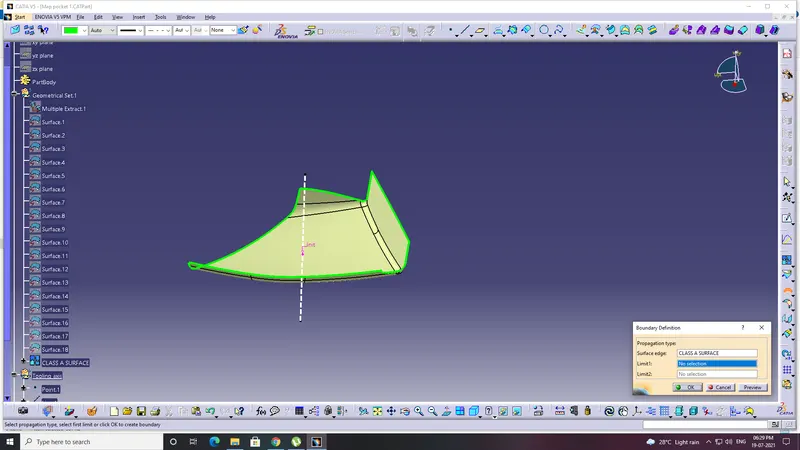
Creating tooling direction:
Tooling axis is which used to find the direction in which the part to remove from core and cavity.
Create an tooling axis for map pocket using the point-point line direction.
And check the surface using material mode and also using draft analysis.
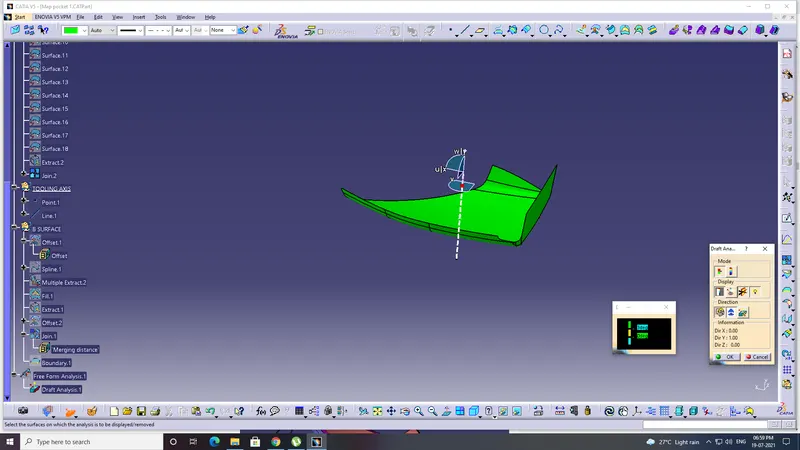
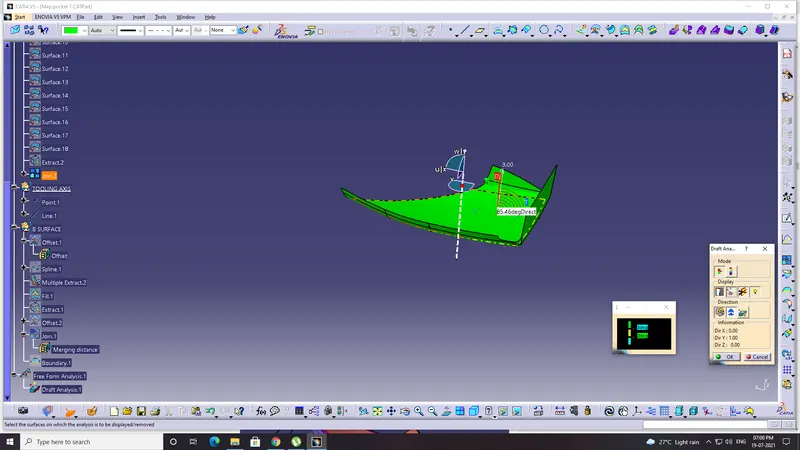
Now create a class b surface which is just offset the class A with 2.5mm.
That offset part will be consider as B surface.
And now thicken the part using sweep.
which is in reference surface of 90 degree.
and join that sweep and A surface which will will be consider as c surface.
Now the Class B surface should be extrapolated which is to be trim with the C surface. so that the B surface is extrapolated along 10mm or above.
And trim the extrapolated B surface and C surface.
and give the close surface to trim surface.Which is now thickened.
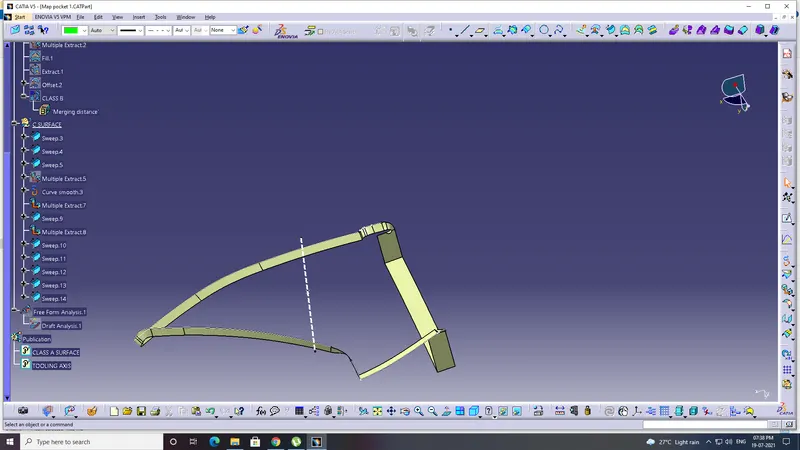
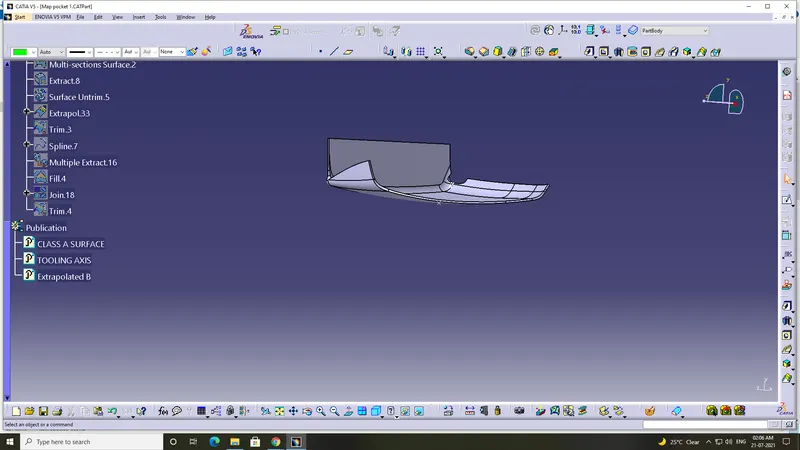
And check the draft of the final thickned componet using the same draft analysis procedure.
Tooling axis is which used to find the direction in which the part to remove from core and cavity.
Create an tooling axis for map pocket using the point-point line direction.
And check the surface using material mode and also using draft analysis.
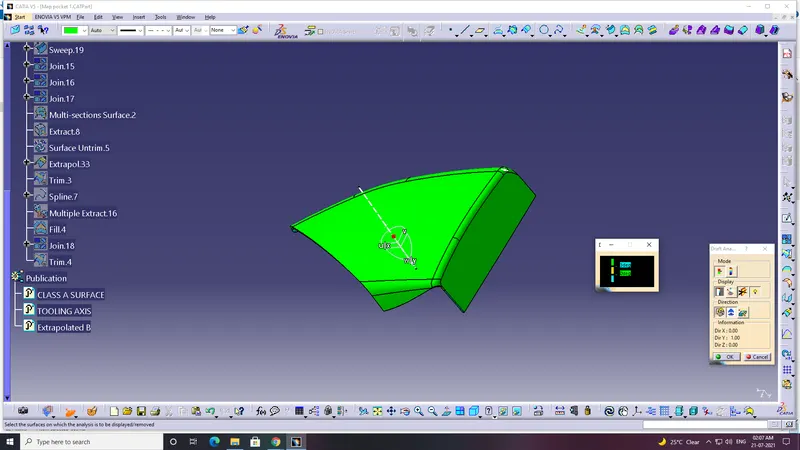
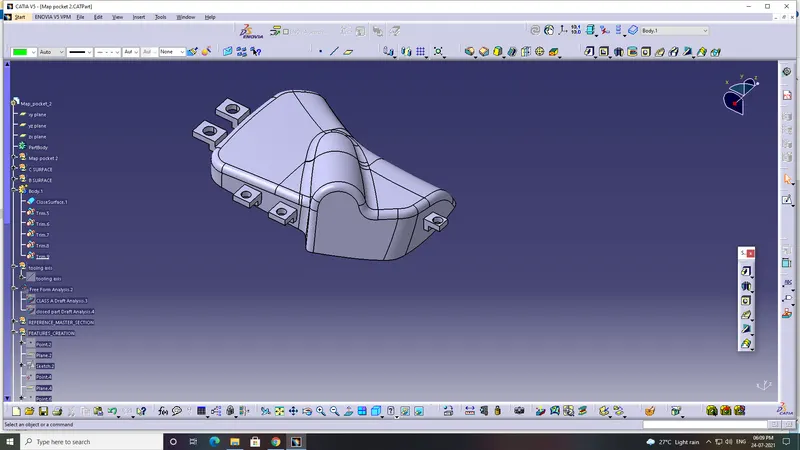
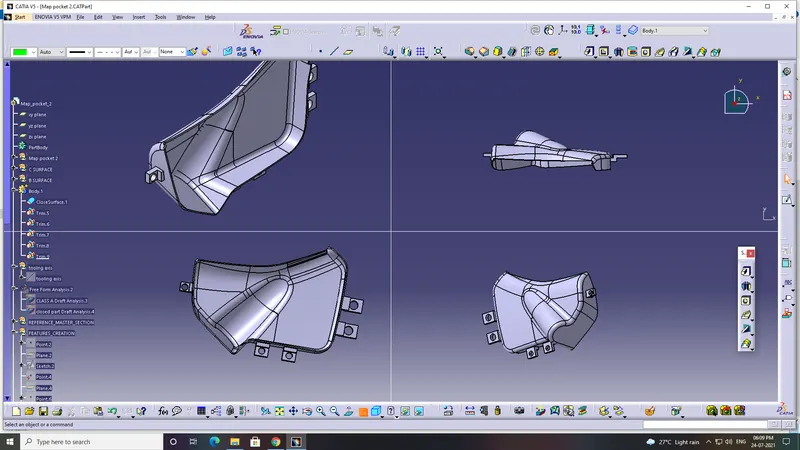
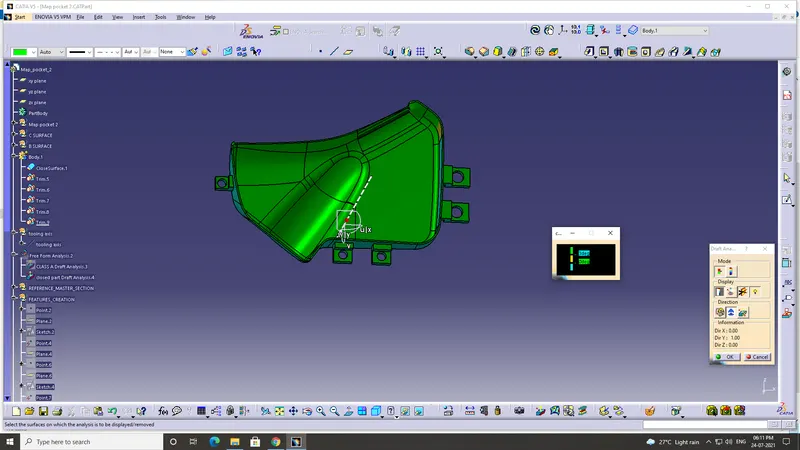
MAP POCKET 2:
check the boundary:
check the boundary of the given surface which is map pocket 1.
and correct the patches of the surface.
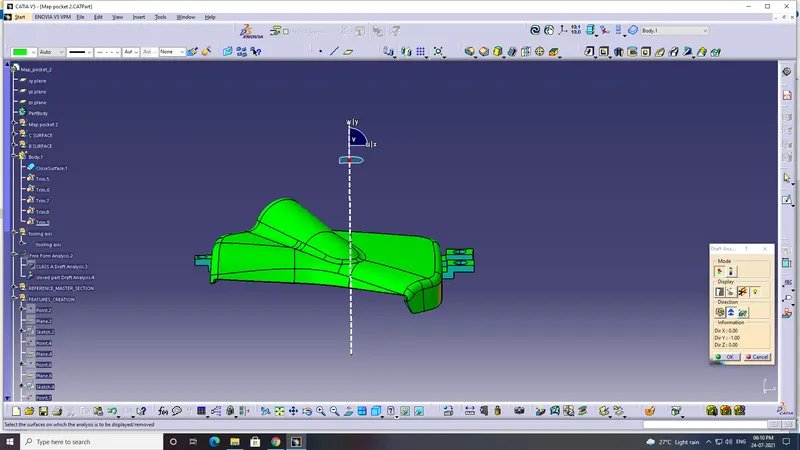
Creating tooling direction:
Tooling axis is which used to find the direction in which the part to remove from core and cavity.
Create an tooling axis for map pocket using the point-point line direction.
And check the surface using material mode and also using draft analysis.
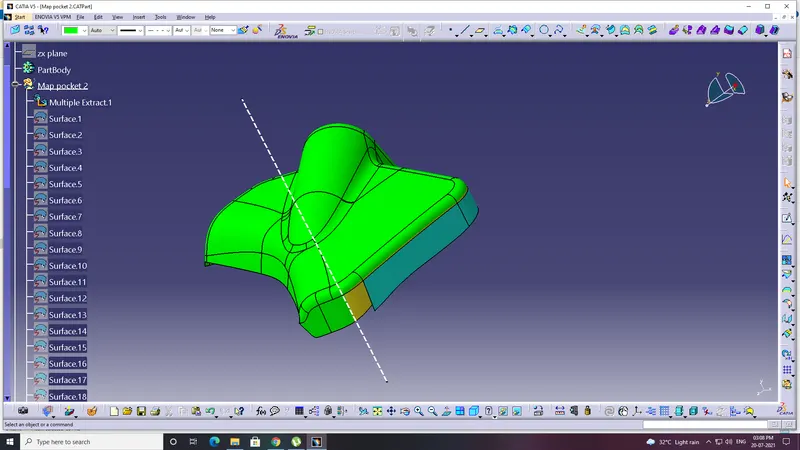
Thicken the given part:
Now create a class b surface which is just offset the class A with 2.5mm.
That offset part will be consider as B surface.
And now thicken the part using sweep.
which is in reference surface of 90 degree.
and join that sweep and A surface which will will be consider as c surface.
Now the Class B surface should be extrapolated which is to be trim with the C surface. so that the B surface is extrapolated along 10mm or above.
And trim the extrapolated B surface and C surface.
and give the close surface to trim surface.Which is now thickened.
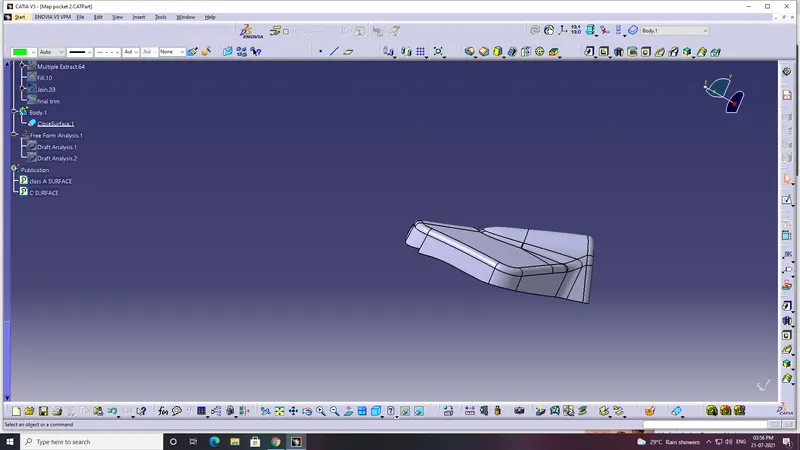
And check the draft of the final thickned componet using the same draft analysis procedure.
Tooling axis is which used to find the direction in which the part to remove from core and cavity.
Create an tooling axis for map pocket using the point-point line direction.
And check the surface using material mode and also using draft analysis.
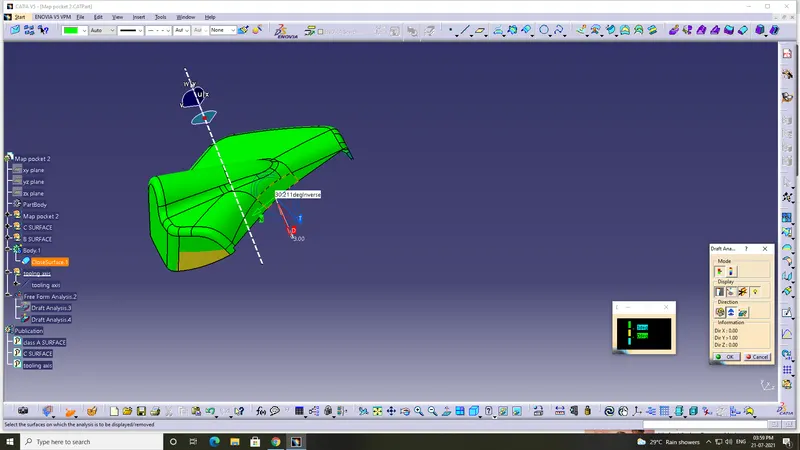
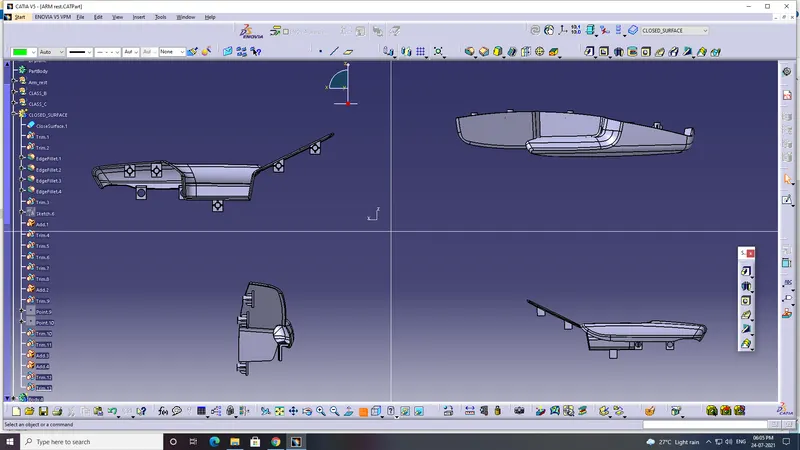
Arm rest part :
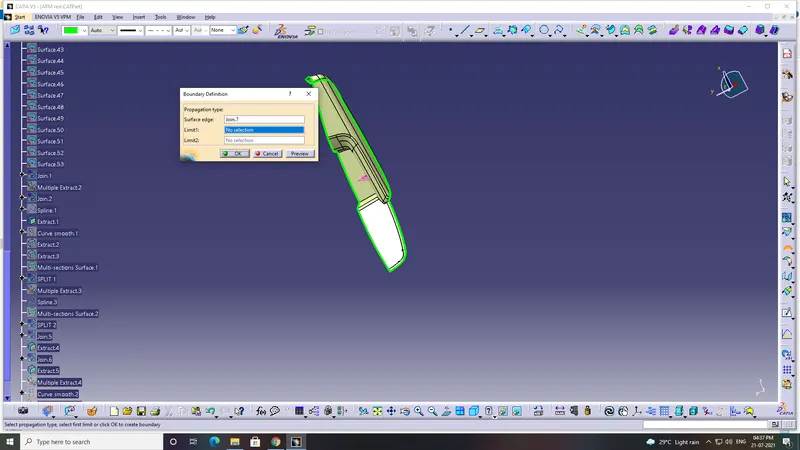
check the boundary:
check the boundary of the given surface which is map pocket 1.
and correct the patches of the surface.
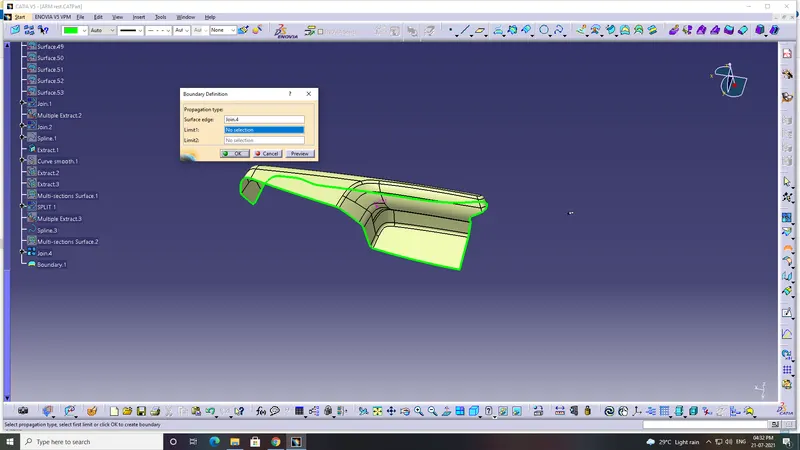
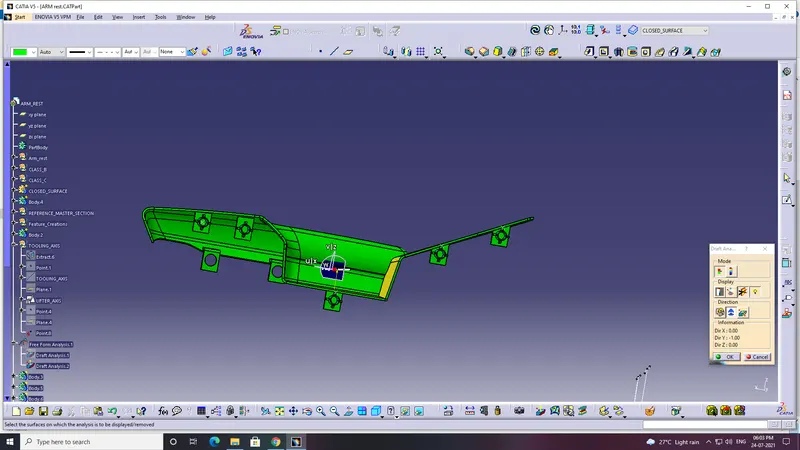
Creating tooling direction:
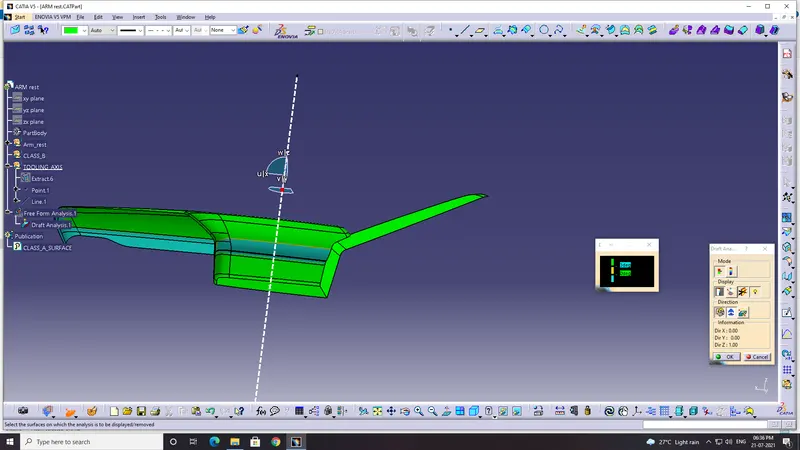
Tooling axis is which used to find the direction in which the part to remove from core and cavity.
Create an tooling axis for Arm rest using the point-point line direction.
And check the surface using material mode and also using draft analysis.
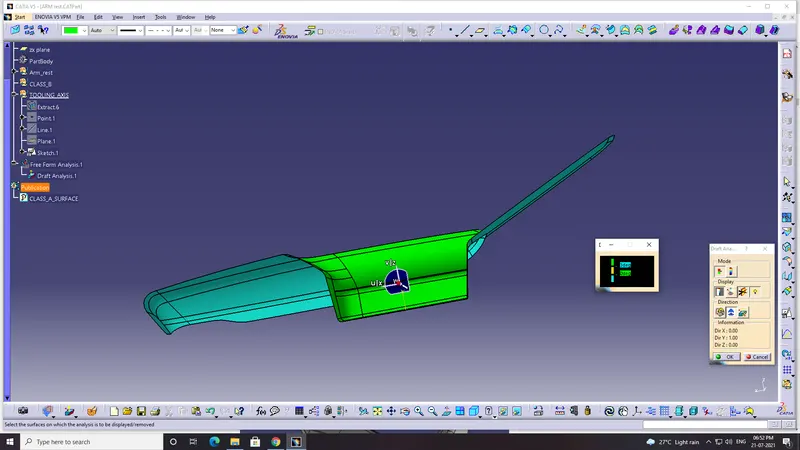
Using Lifter axis:
Thicken the given part:
Now create a class b surface which is just offset the class A with 2.5mm.
That offset part will be consider as B surface.
And now thicken the part using sweep.
which is in reference surface of 90 degree.
and join that sweep and A surface which will will be consider as c surface.
Now the Class B surface should be extrapolated which is to be trim with the C surface. so that the B surface is extrapolated along 10mm or above.
And trim the extrapolated B surface and C surface.
and give the close surface to trim surface.Which is now thickened.
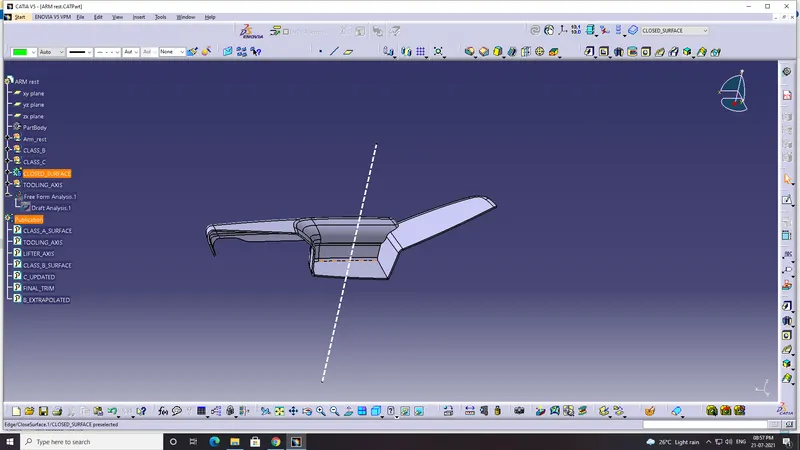
And check the draft of the final thickned componet using the same draft analysis procedure.
Tooling axis is which used to find the direction in which the part to remove from core and cavity.
Create an tooling axis for map pocket using the point-point line direction.
And check the surface using material mode and also using draft analysis.
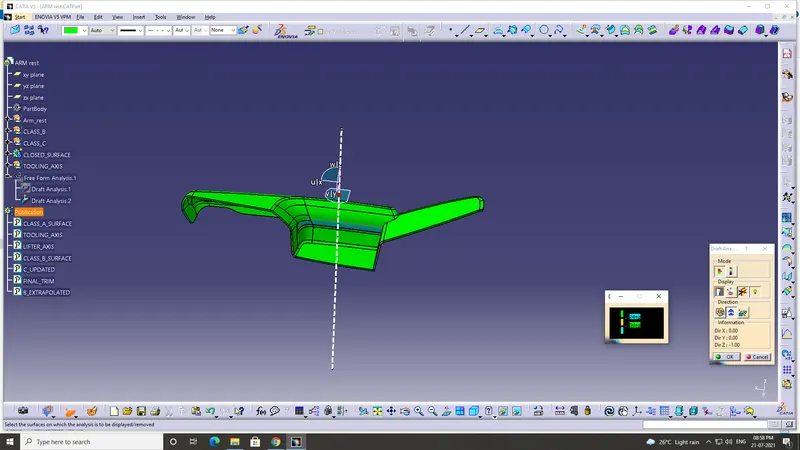
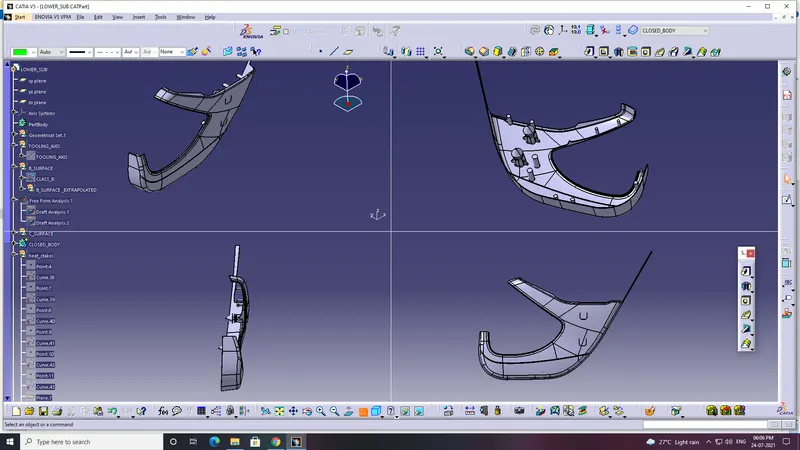
Lower sub:
check the boundary:
check the boundary of the given surface which is map pocket 1.
and correct the patches of the surface.
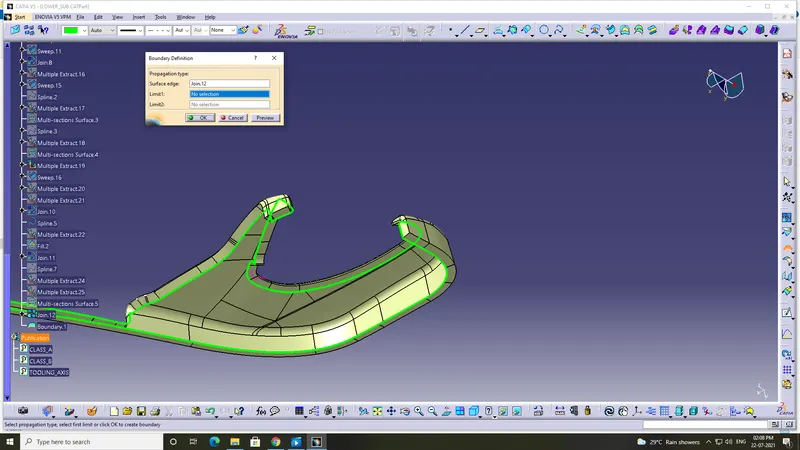
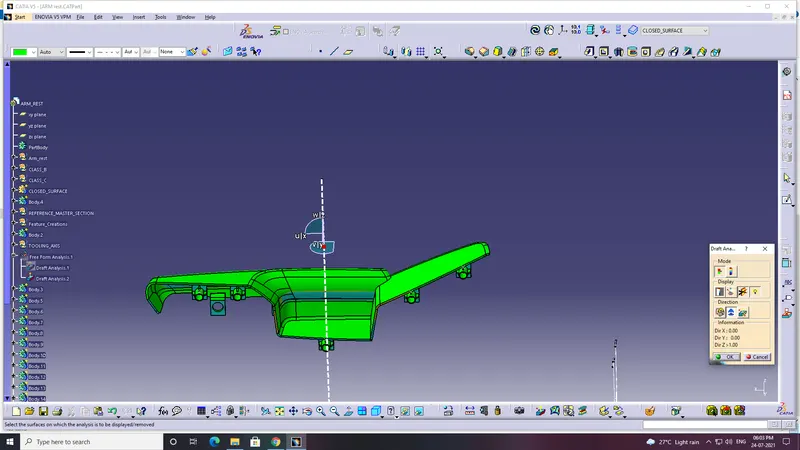
Creating tooling direction:
Tooling axis is which used to find the direction in which the part to remove from core and cavity.
Create an tooling axis for Lower sub using the point-point line direction.
And check the surface using material mode and also using draft analysis.
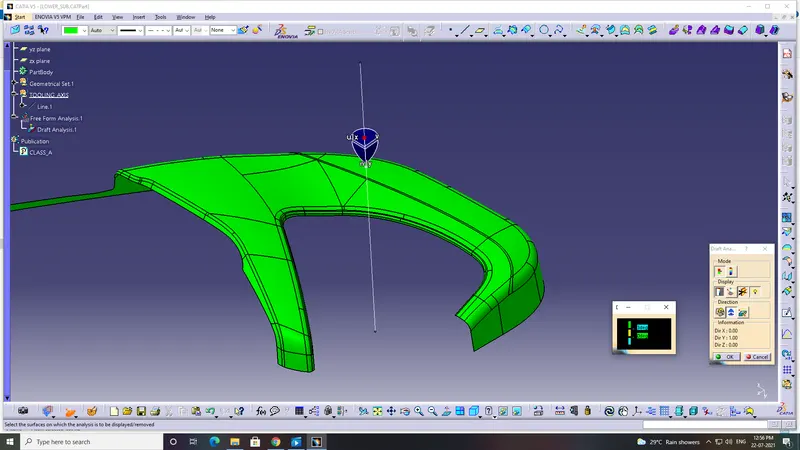
Thicken the given part:
Now create a class b surface which is just offset the class A with 2.5mm.
That offset part will be consider as B surface.
And now thicken the part using sweep.
which is in reference surface of 90 degree.
and join that sweep and A surface which will will be consider as c surface.
Now the Class B surface should be extrapolated which is to be trim with the C surface. so that the B surface is extrapolated along 10mm or above.
And trim the extrapolated B surface and C surface.
and give the close surface to trim surface.Which is now thickened.
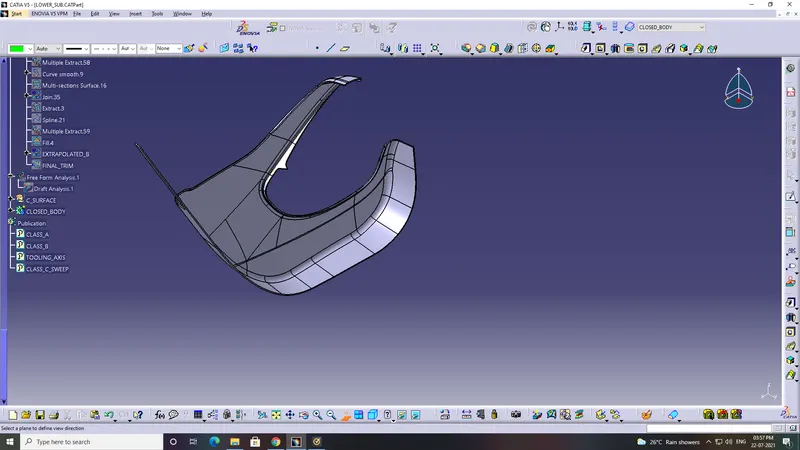
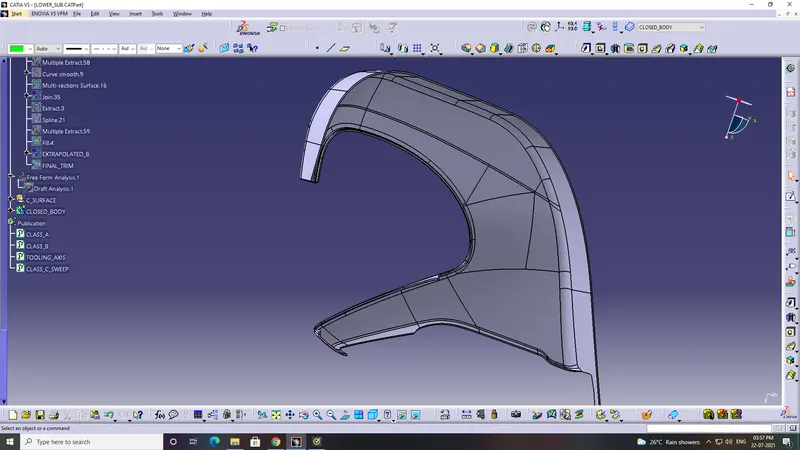
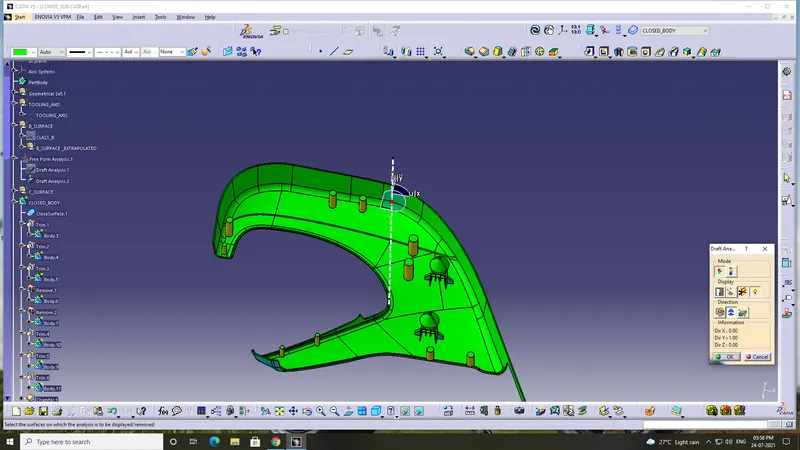
And check the draft of the final thickned componet using the same draft analysis procedure.
Tooling axis is which used to find the direction in which the part to remove from core and cavity.
Create an tooling axis for map pocket using the point-point line direction.
And check the surface using material mode and also using draft analysis.
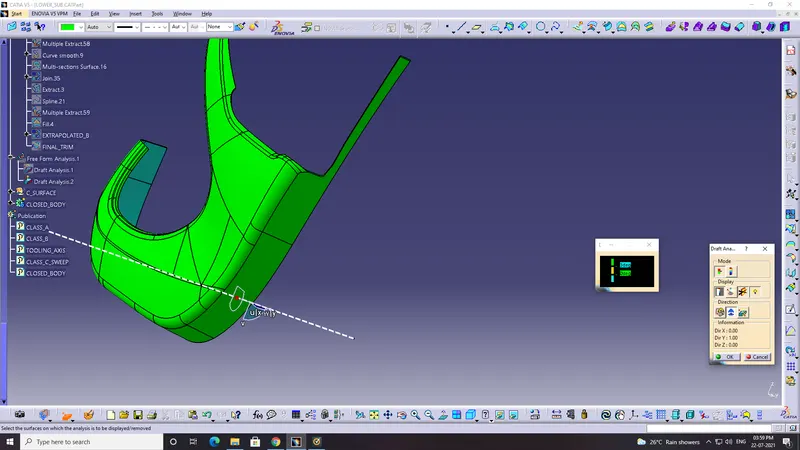
B_SIDE_FEATURE_CREATION
RIBS,FLANGES,HEAT STAKES,DOG HOUSE AND PUSH CLIPS,SCREW BOSS etc...
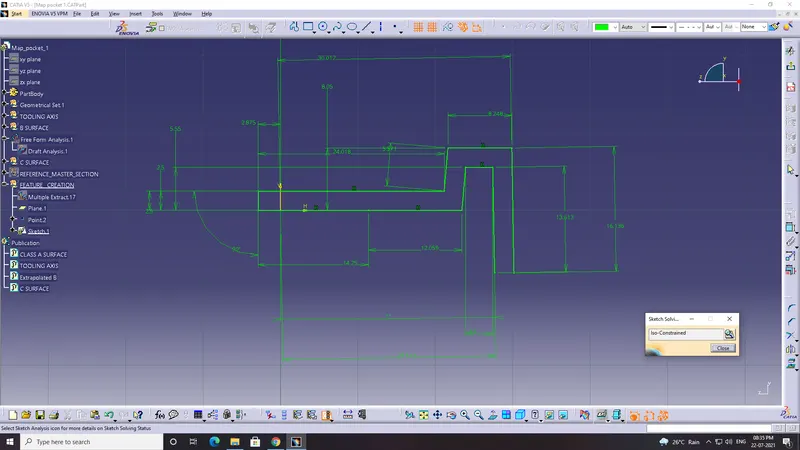
Using the mastre section the skecth is drawn and paded.
Make sure the sketch is in poistioned sketch and Iso constraine.
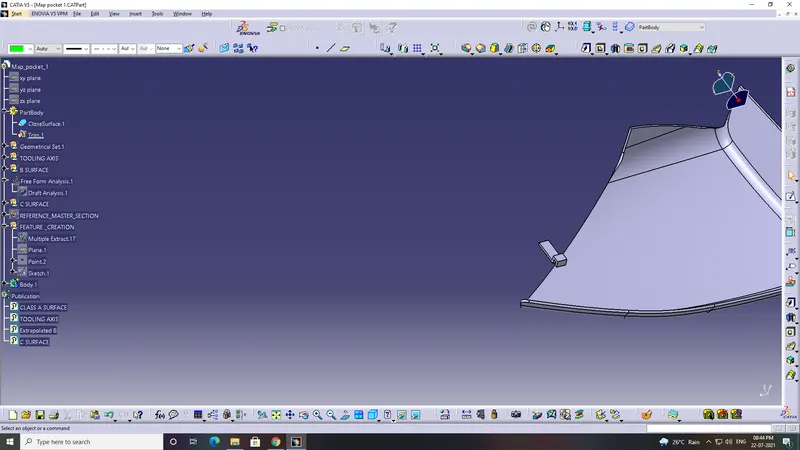
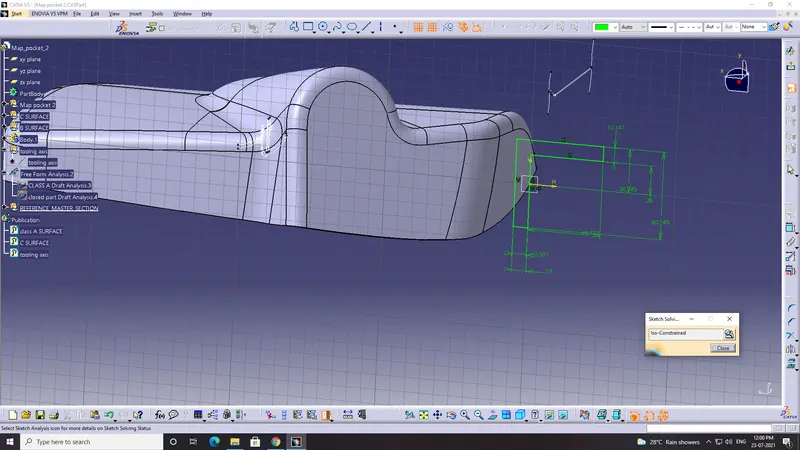
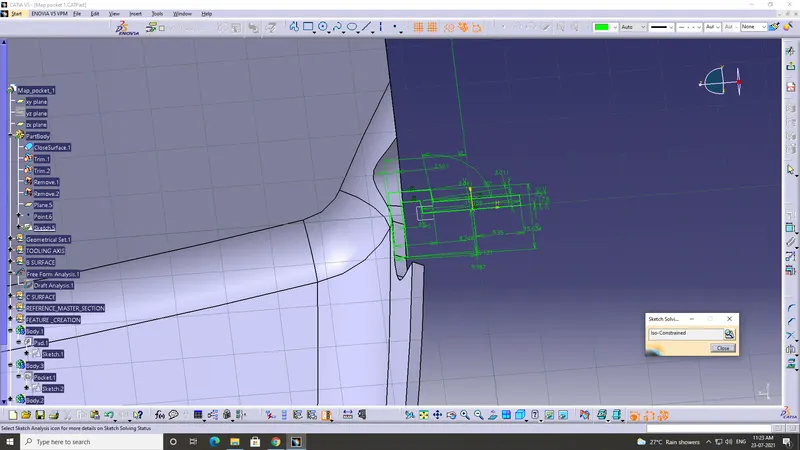
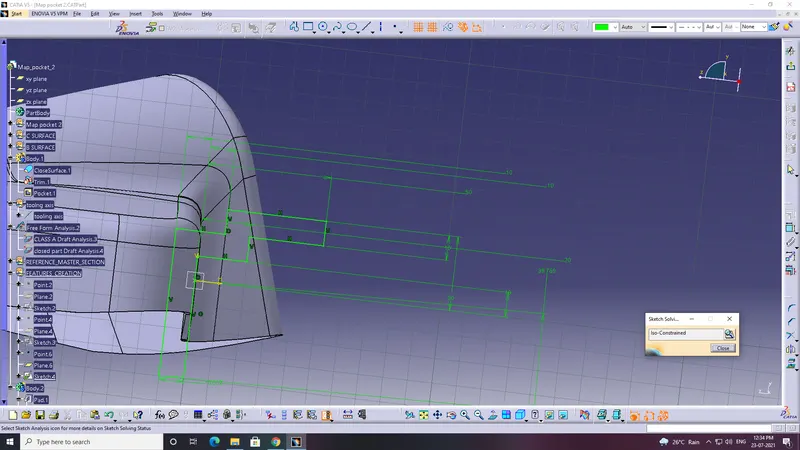
Creation of dog house:
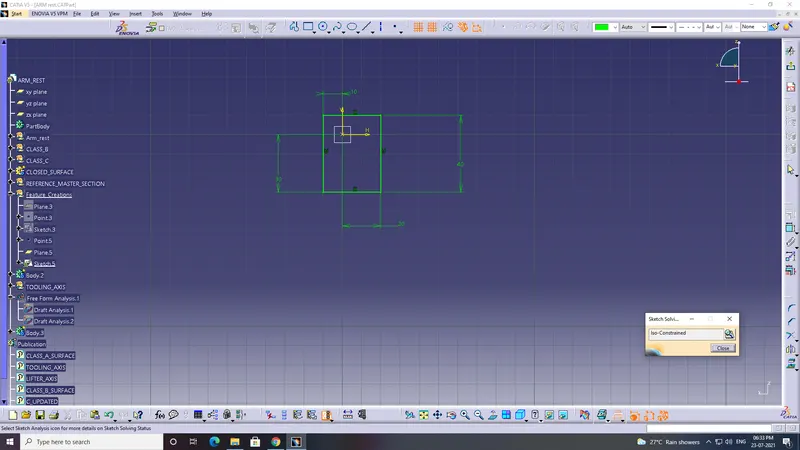
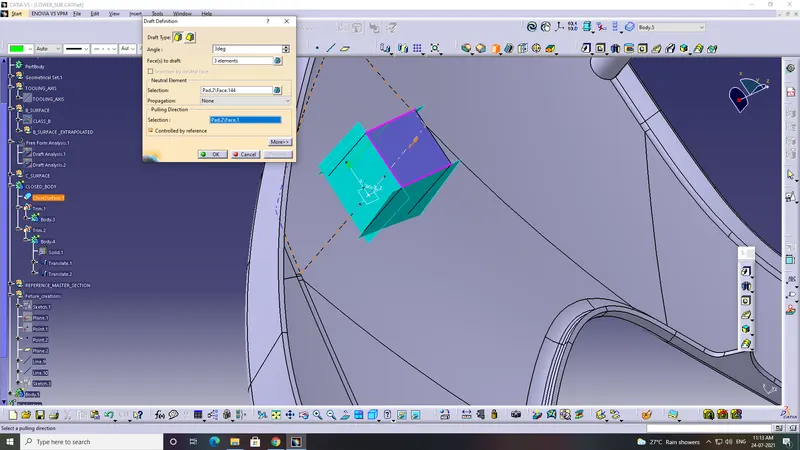
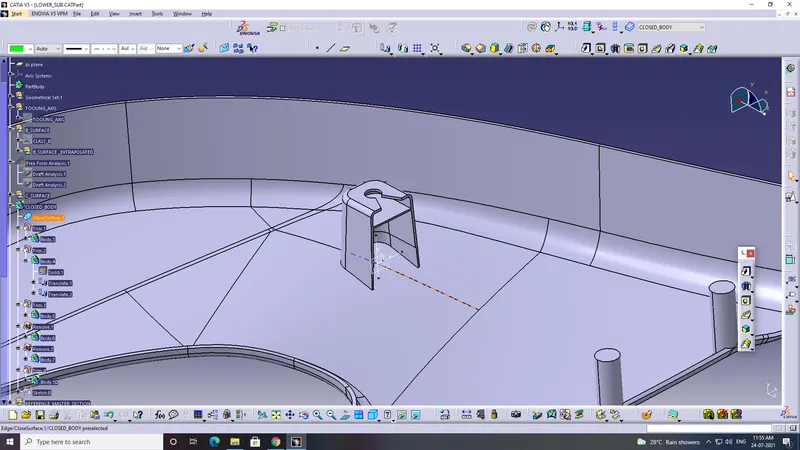
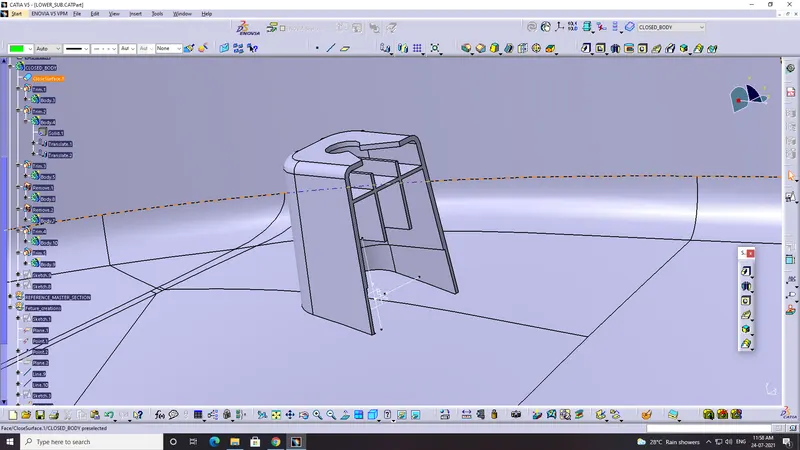
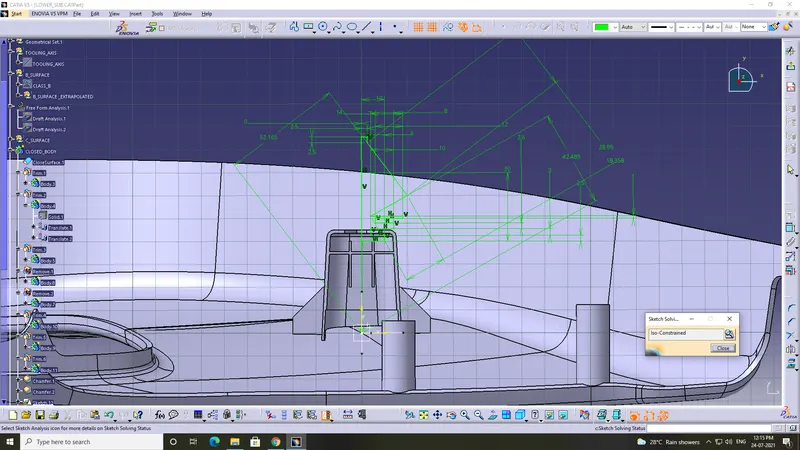
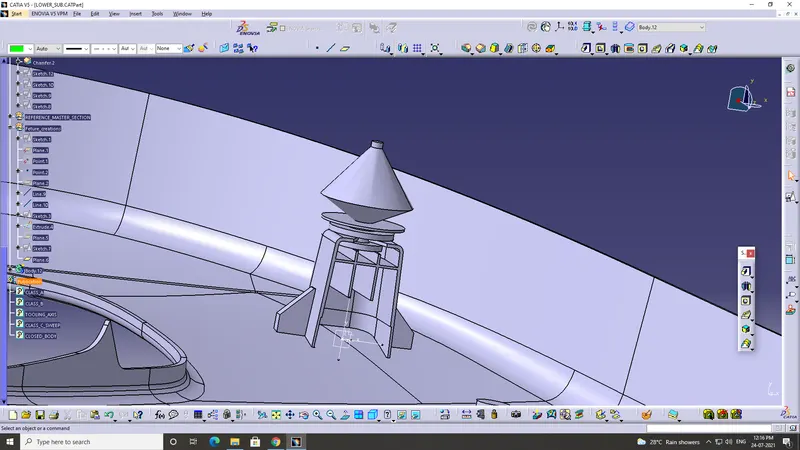
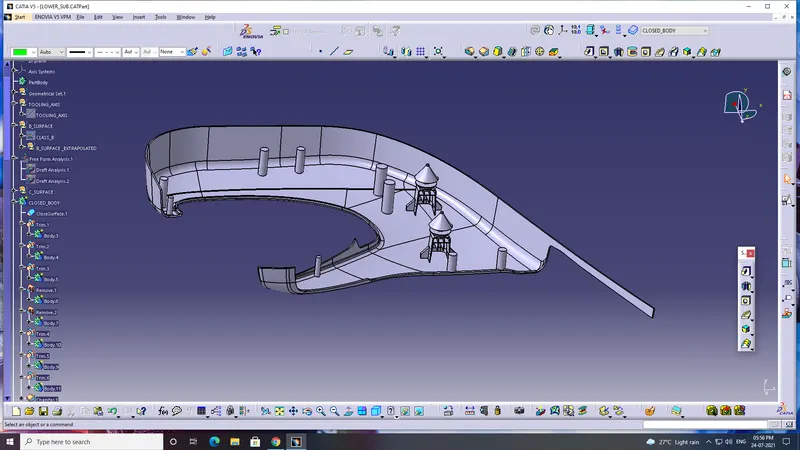
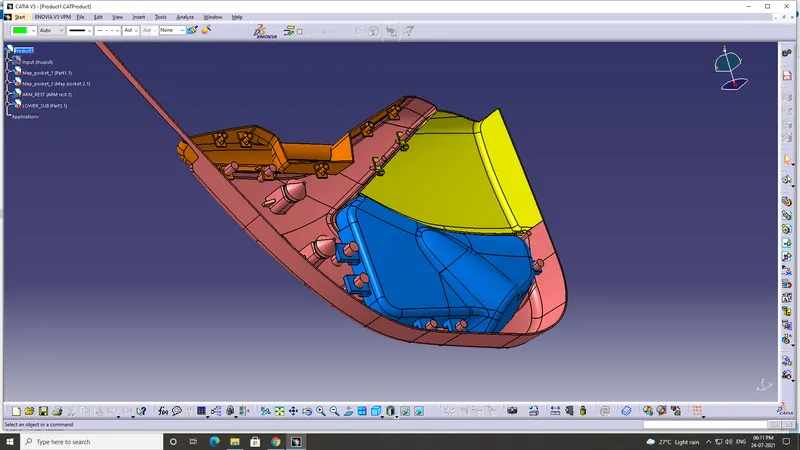
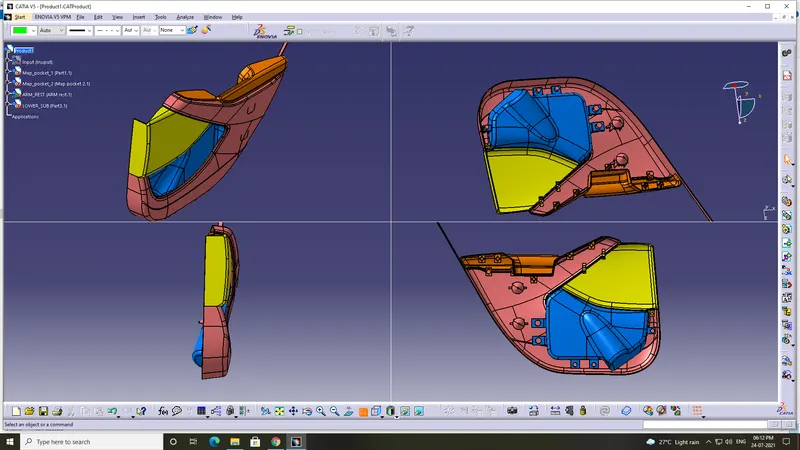
ALL FEATURE CREATION OF THE COMPONENT
Map pocket 1:
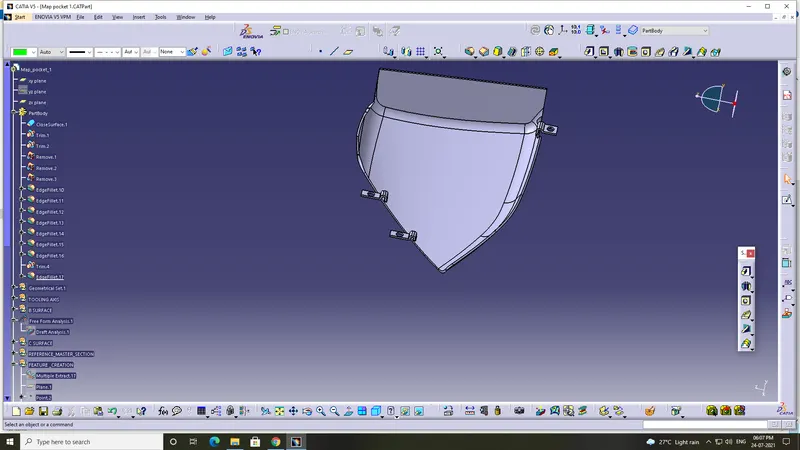
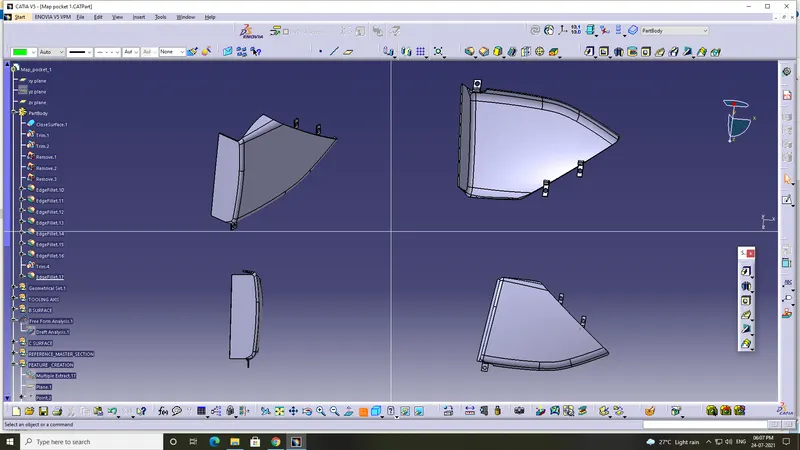
MAP POCKET 2:
ARM REST :
LOWER SUB :