Week 11- Broadband Noise modelling over Ahmed body
- Aim- To perform Broadband Noise modelling over Ahmed body.
- Objectve - To Describe ahmeds body and its importance .
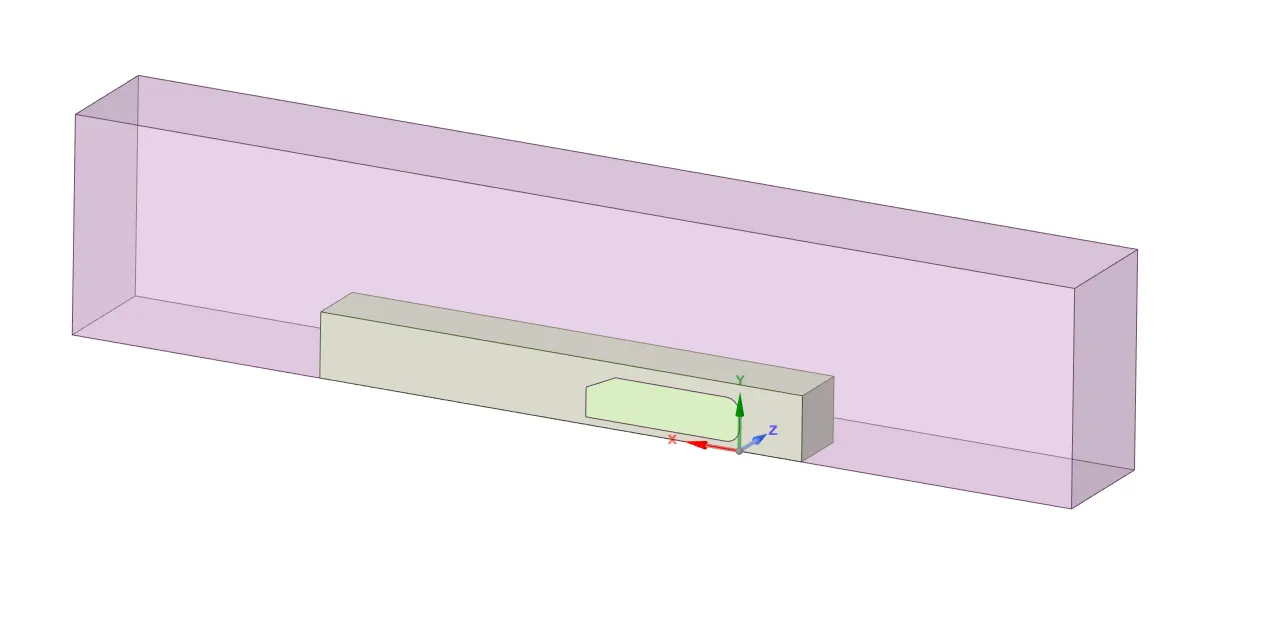
- Setup the domain for ahmed body and setup assuming body is travelling at 110 kmph.
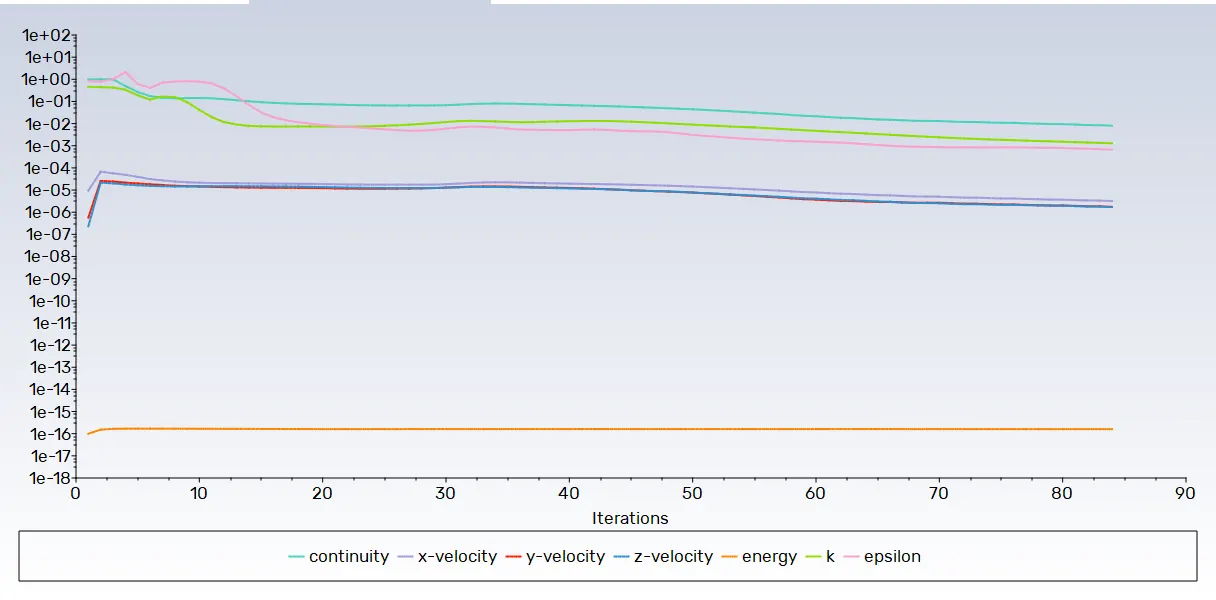
- Run the setup till convergence and plot for static pressure and coefficient of drag and lift to check convergence.
- Turn on broadband modelling and detail the acoustic filed study over ahmed body.
- Introduction
- Ahmed body
- Ahmed body is a generic simplified car body i,e flow around ahmed body captures essential flow parameters around an automobile.
- Ahmed's Body was created by S.R. Ahmed. It plays an important role in benchmarking for aerodynamic simulation tools.
- The exact dimensional values of the ideal Ahmed body are Length – 1.044 meters, height – 0.288 meters and width – 0.389 meters.
- And the Ahmed body has cylindrical shapes like legs on the bottom of the body which is used to replicate the wheels. And the rear end of the body has an oblique fall of 35 degrees.
- Importance of Ahmed's Body -
- The drag force against the body plays an important role in accounting for the vehicle's fuel consumption.
- We can say that the drag force acting on the body is directly proportional to the fuel consumption of the vehicle.
- The higher the resistance, the higher the fuel consumption would be, leading to more expensive car maintenance.
- As burning fossil fuels becomes a problem, car manufacturers want to produce a fuel efficient car.
- And now the geometry of the car becomes more complex and it is difficult to calculate the aerodynamic drag. So here comes the Ahmed body as a benchmark model which is widely used in the automotive industry for validating simulation tools.
- Acoustic
- Acoustic field deals with the study of sound /noise generated due to aerodynamic forces and motion of turbulent flows in the domain.
- The study of acoustics revolves around the generation, propagation and reception of mechanical waves and vibrations.
- There are many kinds of causes, both natural and voluntary. There are many types of transduction processes that convert energy from some other form into sound energy and create a sound wave.
- Common examples are car mirrors, car wheels, landing gears, wind around electric cables etc.
- Sound is propogated as waves and waves are classified into two types i,e. longitudinal waves and lateral waves.
- In Longitudinal wave particles moves in the wave propogation direction of wave.
- Sound wave can be considered as a longitudinal wave .
- In lateral wave form particles move perpendicular to the direction of propogation of wave.
- Electromagnetic waves can be considered as lateral wave.
- Sound waves are generally pressure waves.
- Broadband noise
- Broadband noise also called as wideband noise.
- Noise whose sound energy is distributed over a wide part of the audible range in contrast to narrowband noise.
- Broadband noise frequency ranges between 10 KHz to 18 KHz.
- RF noise supply components generate noise output ENR starting from 15 to 30 dB with flatness and stability over temperature.
- Broadband refers to telecommunications in which a wide band of frequencies is to be had to transmit records. Because a wide band of frequencies are available , information may be multiflexed and dispatched on many unique frequencies or channels within the band simultaneously.
- Procedure
- CAD geometry
- Import the given geometry of Ahmed body in spaceclaim.
- Mesh
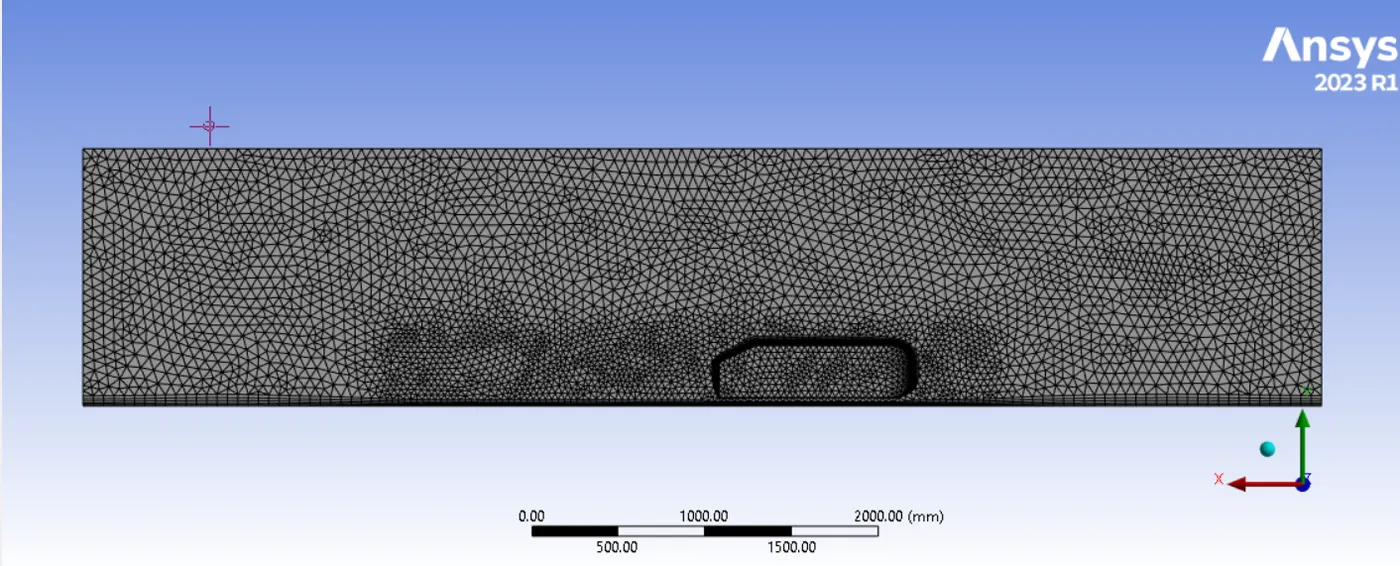
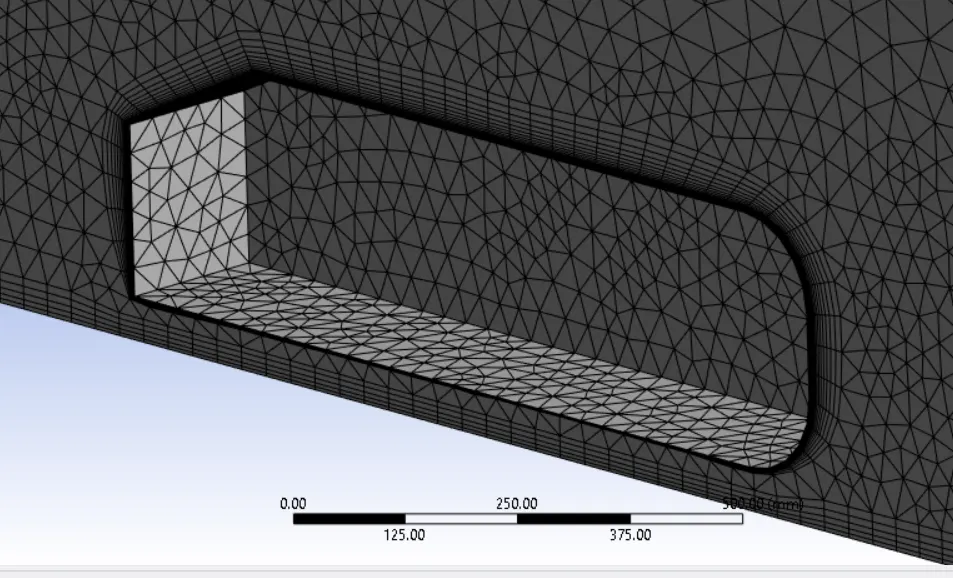
- Element size = 59.4
- Add inflation layers and body sizing to more refine mesh.
- Body sizing
- Inflation
- Run the setup till convergence and plot for static pressure and coefficient of drag and lift to check for convergence
Pre-processing and solver setting
The next step in the simulation after generating the meshing is to set up the physical properties for the case.
- Type of solver: Pressure-based
- Simulation method: Steady-state simulation
- Turbulent Model: k-epsilon realizable
- Material properties of the fluid (Air)
Density: 1.225 kg/m3
Cp (Specific heat): 1006.43 J/kg-k
Thermal Conductivity: 0.0242 w/m-k
Viscosity: 1.7894e-05 kg/m-s
- Inlet velocity: X velocity = 31 m/s
- Inlet Temperature: 300 K
- Outlet: Pressure type, 0-gauge pressure.
- Walls: wall type with no-slip
- Results
After setting up a case and providing appropriate initial and boundary conditions, the simulations are performed . - Residuals
- Pressure Contours
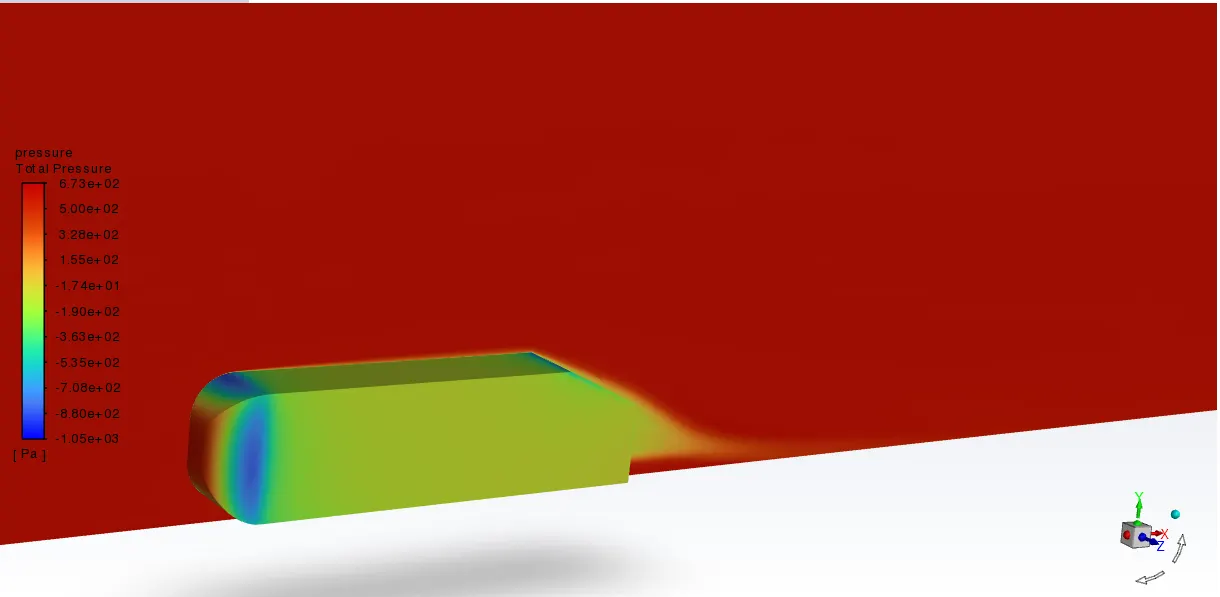
- Total pressure
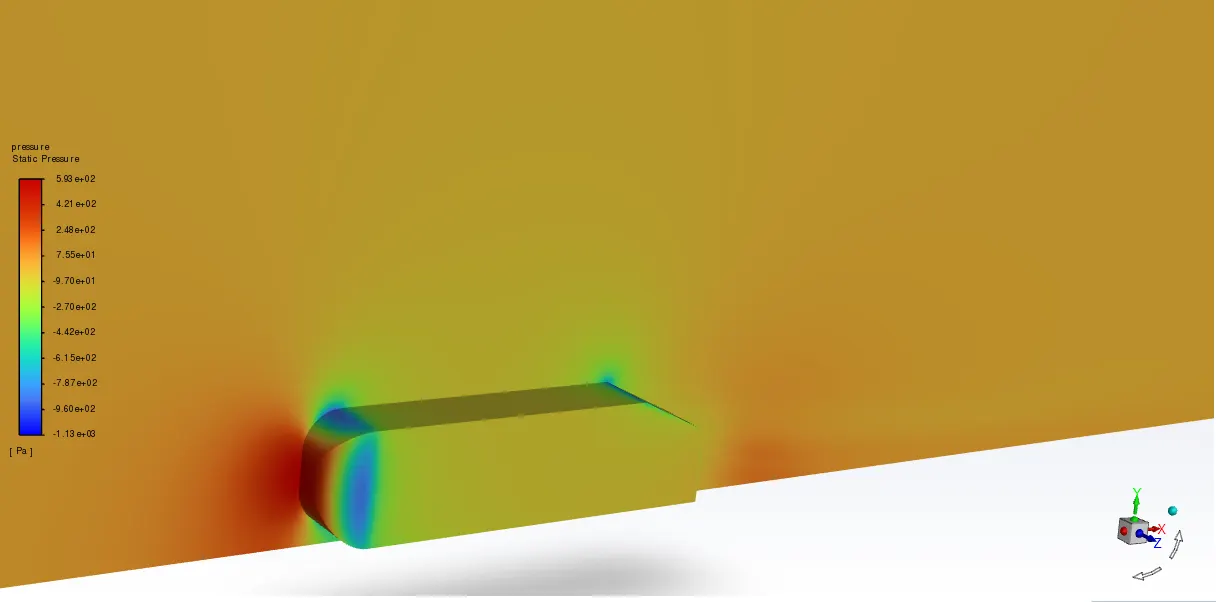
- Static pressure
- Velocity Contour
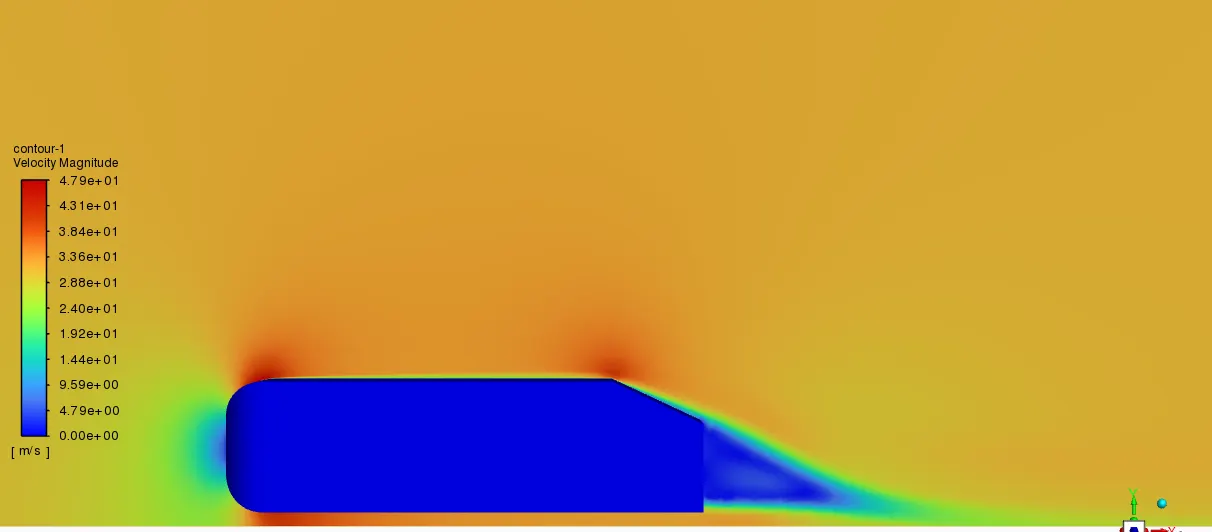
- From the pressure and velocity results above, it can be seen that a large wake is formed at the rear end of Ahmed's body. Regions of accelerated flow can be observed on the leading edge and slope of the Ahmed body and can be attributed to their convex shape with respect to the flow stream.
- Plots
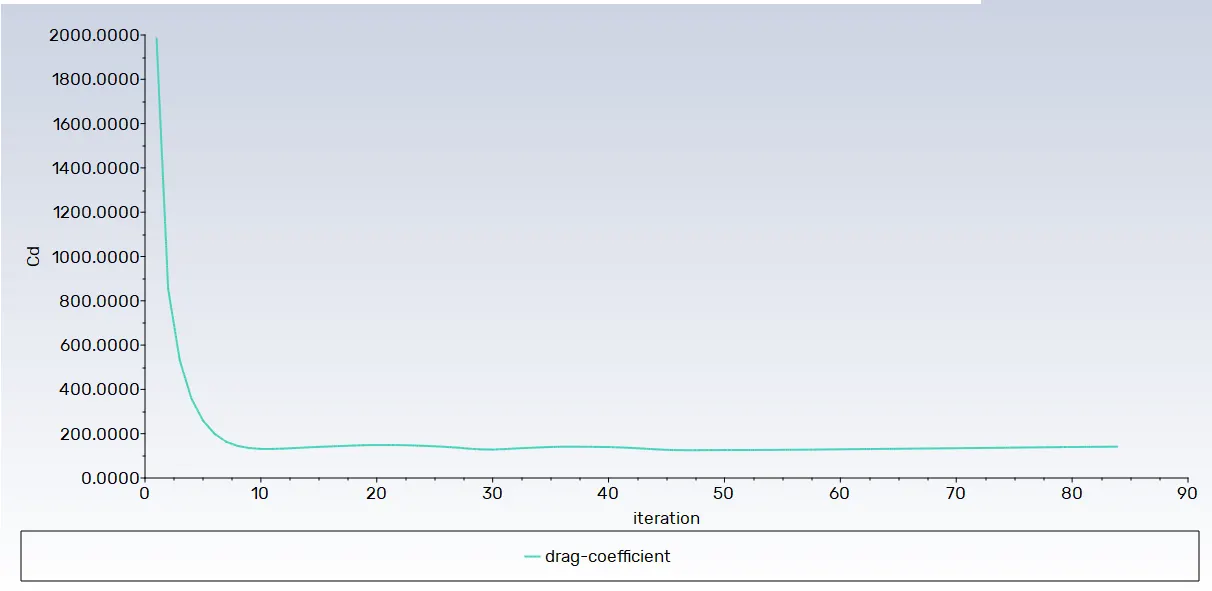
- Drag coefficient
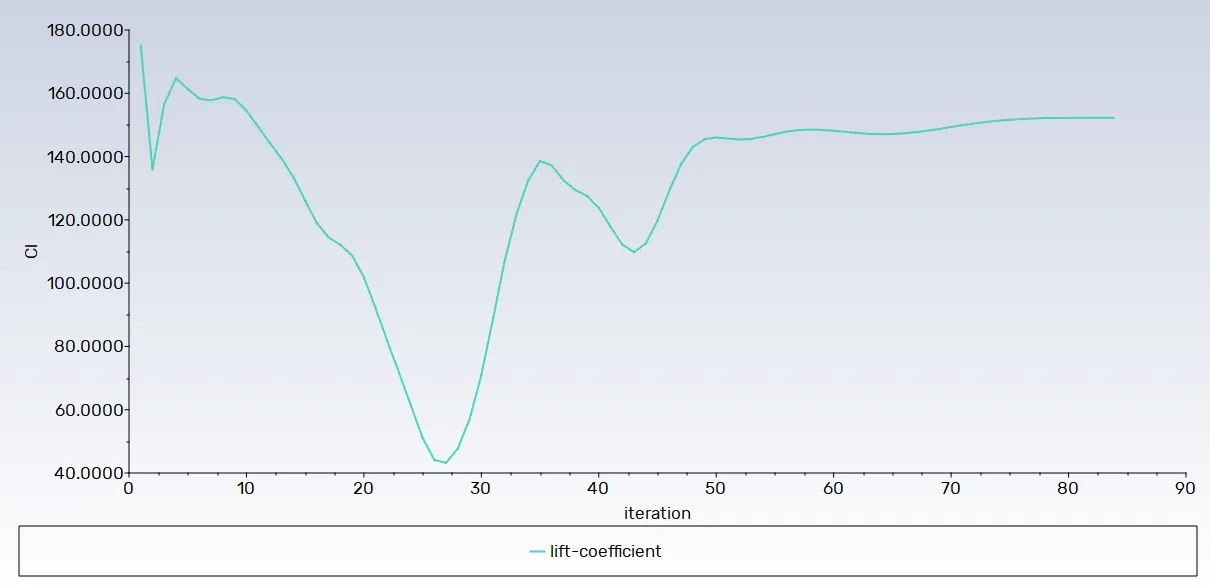
- Lift Coefficient
-
4) Turn on Broadband- modeling, and detail the acoustic field study over Ahmed body.
- After attaining the results turn ON the acoustics and extract the other required results as shown below,
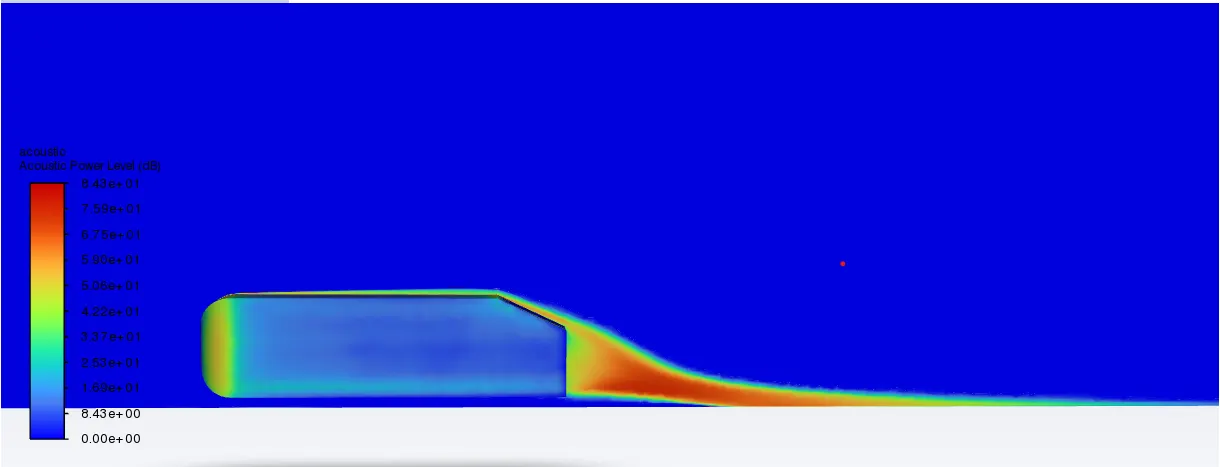
- Acoustic power level
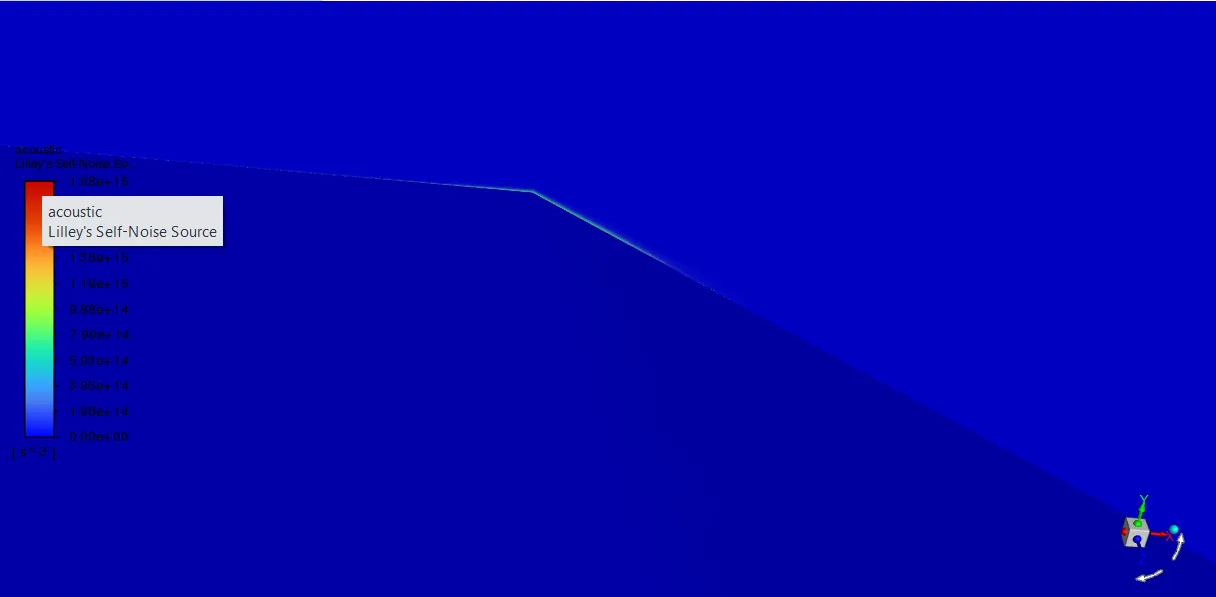
- Lilley's Self-Noise Source
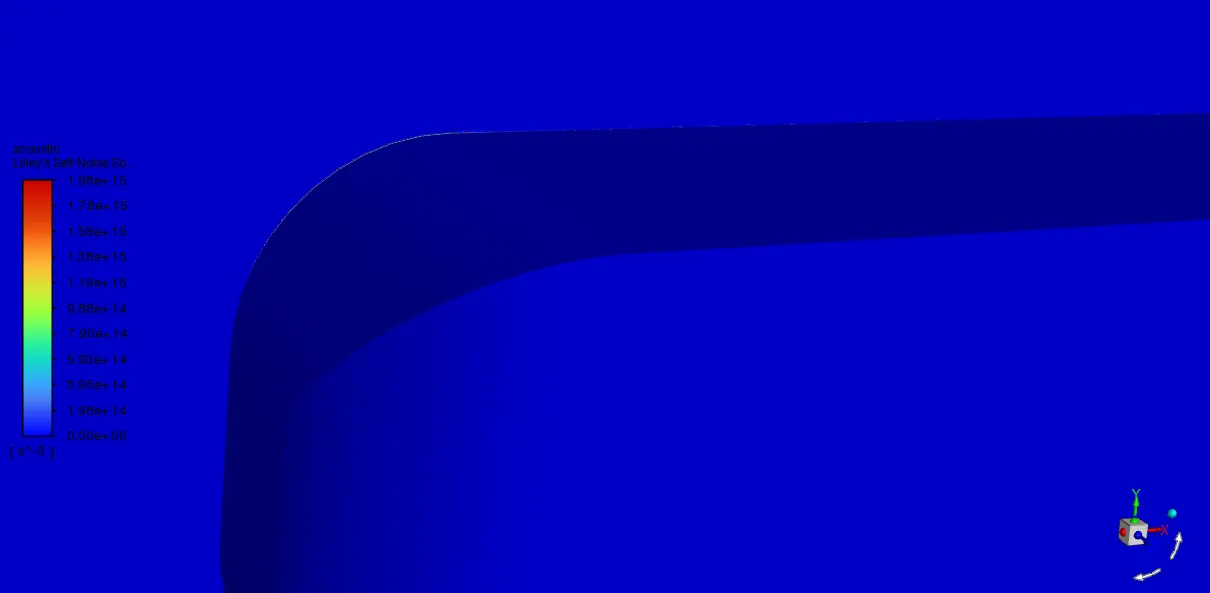
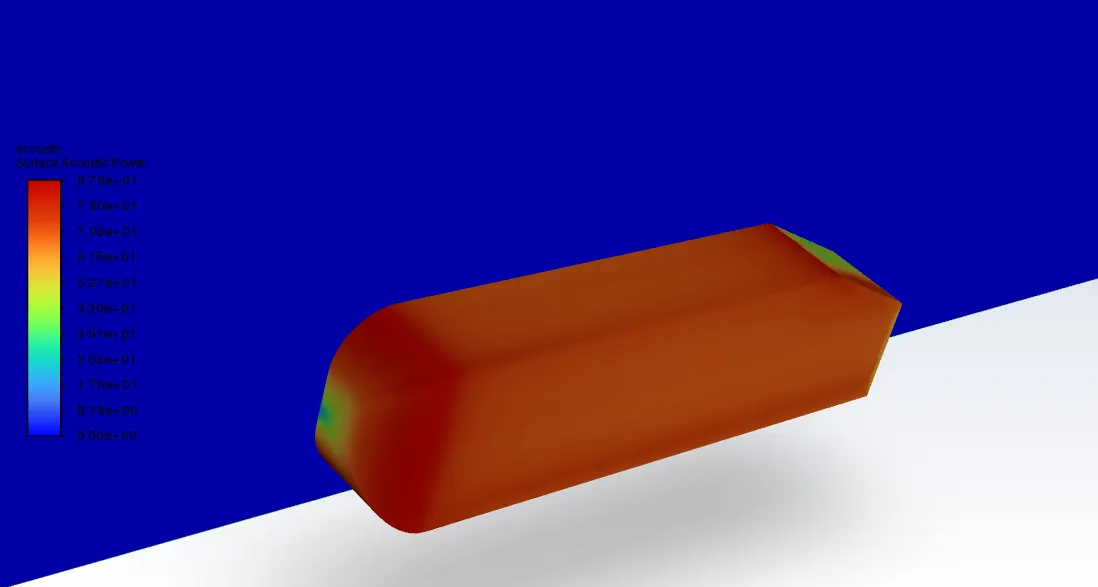
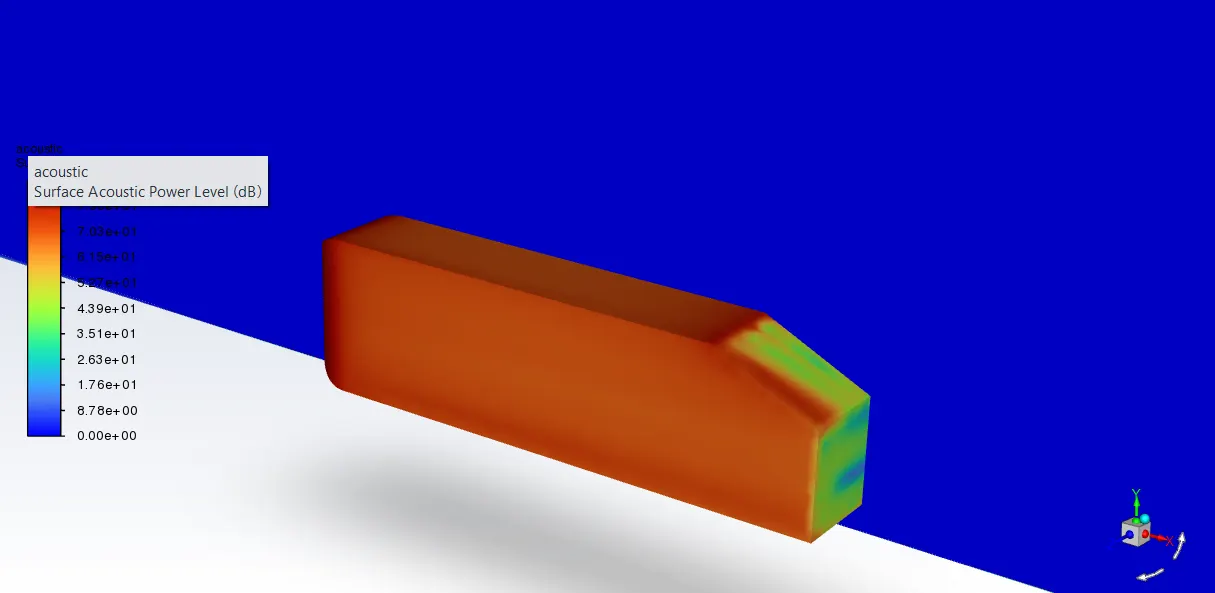
- The images above show that most of the generated noise comes from the leading edge of Ahmed's body and in the wake area behind him. A significant amount of noise can also be seen in the region of the thin boundary layer attached to the walls of Ahmed's body.
- Surface Acoustic power level
- Conclusion
- Accomplished external flow simulation over an ahmed body using k epsilon turbulence model ,performed steady state simulation.
- Used Broadband noise model to capture the acoustics effects over the surface of the car model.
- Drag coefficient and lift coefficient plots are plotted to see the impact of acoustic broadband modelling simulation.
- Acoustic power level contour suggest that the essential acoustic disturbance is discovered inside the wake regions where high vortices are created cause the large pressure differnce in developing sound waves.