Week 11- Broadband Noise modelling over Ahmed body
AIM:
- To perform a steady-state external flow simulation over an Ahmed body model. Use of Broadband model to capture the acoustic effects produced due to pressure difference at the surface of the body. Post-process the results and justify the solution derived.
OBJECTIVE:
- To describe Ahmed's body and its importance.
- To set up the domain and setup assuming the body is travelling at 110 mph
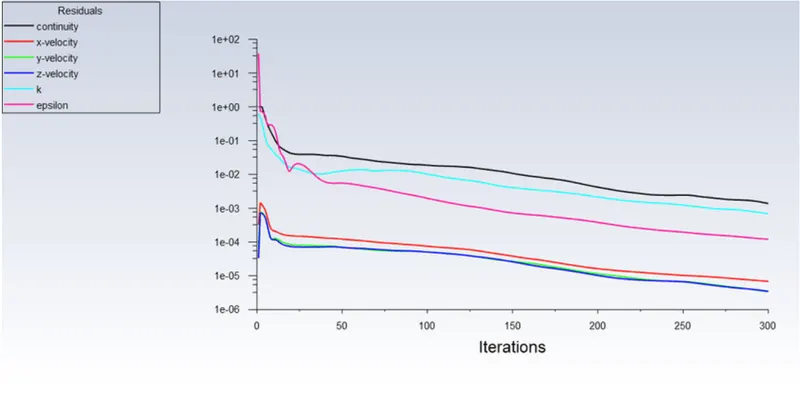
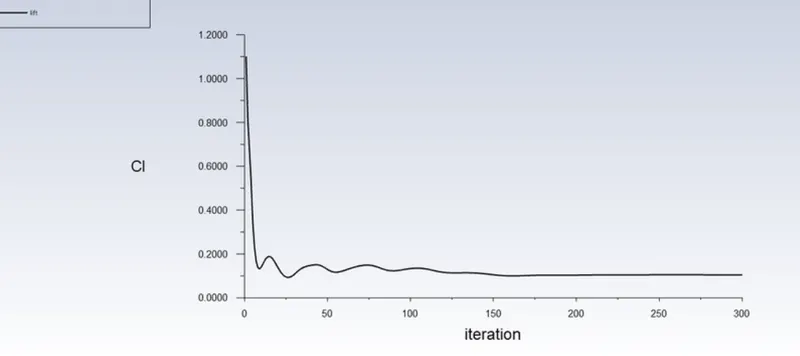
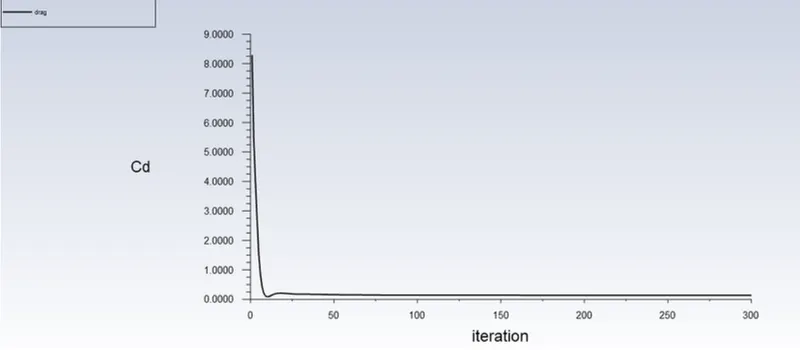
- To run the setup till convergence and plot for static pressure and coefficient of drag and lift to check for convergence
- To turn on Broadband- modelling and detail the acoustic field study over Ahmed's body.
THEORY:
Ahmed's body:
- As the burning of fossil fuels becomes a more pressing issue, manufacturers are introducing more fuel-efficient cars to the market. One main contributor to fuel burn is the car’s aerodynamic drag. Complexly shaped, cars are very challenging to model and it’s difficult to quantify the aerodynamic drag computationally. The Ahmed body is a benchmark model widely used in the automotive industry for validating simulation tools. The Ahmed body shape is simple enough to model while maintaining car-like geometry features.
-
The Ahmed Body was first created by S.R. Ahmed in his research “Some Salient Features of the Time-Averaged Ground Vehicle Wake” in 1984. Since then, it has become a benchmark for aerodynamic simulation tools. The simple geometrical shape has a length of 1.044 meters, a height of 0.288 meters, and a width of 0.389 meters. It also has 0.5-meter cylindrical legs attached to the bottom of the body and the rear surface has a slant that falls off at 40 degrees.
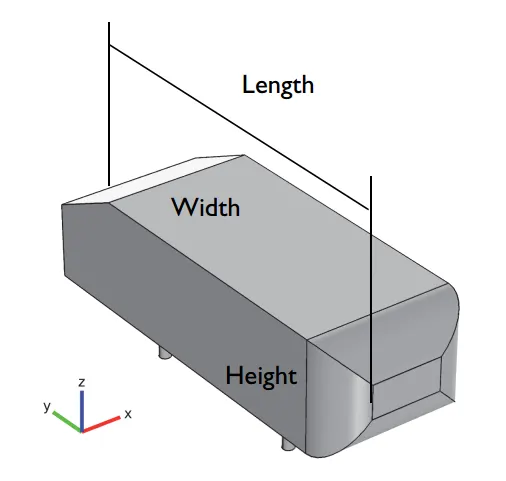
The simple geometry of an Ahmed body. - This model is also used to describe the turbulent flow field around a car-like geometry. Once the numerical model is validated, it is used to design new models of the car.
SETUP & SOLUTION:
GEOMETRY:
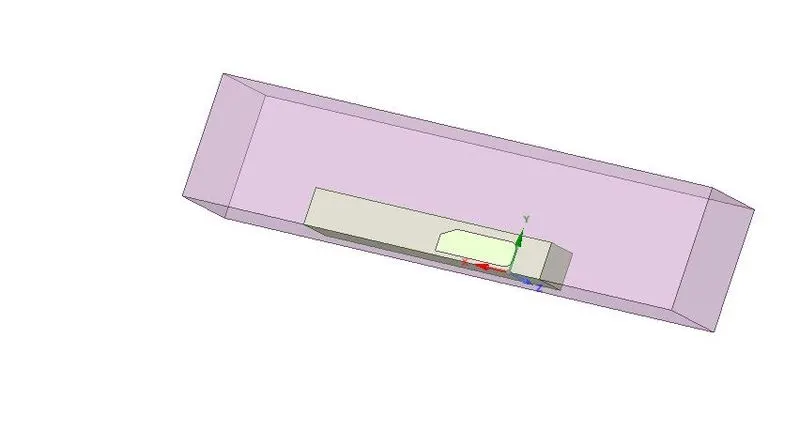
- First, we have to import the geometry file which is given to us in SpaceClaim as shown below.
MESH:
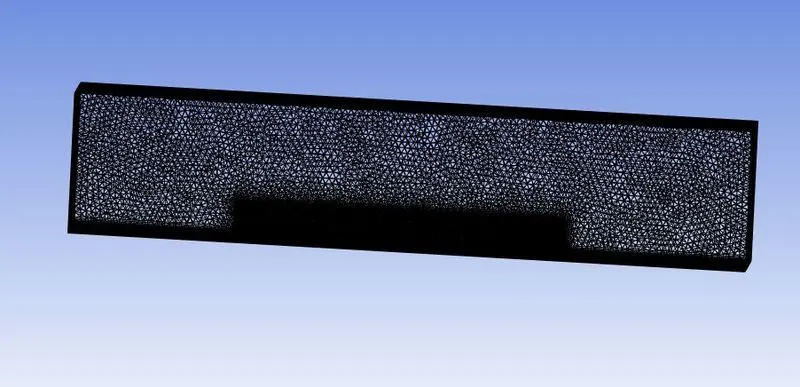
- After importing create the mesh using the following steps,
- Ansys Mesher:
1. Global element size: 70mm
2. Body sizing: 20mm
- Body of influence => choose density body
3. Inflation: Road to the upper surface
- Layers: 5, growth rate: 1.2
4. Inflation: Ahmed's body to symmetry planes
- First layer height: 0.48mm (calculated for Y+=40 since we are using the k-epsilon model)
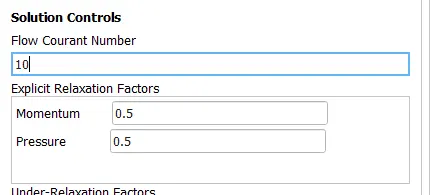
SETUP & SOLUTION:
The next step in the simulation after generating the meshing is to set up the physical properties of the case.
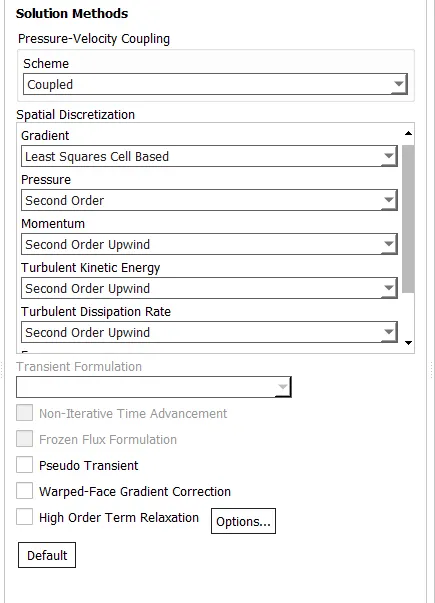
- Type of solver: Pressure-based
- Simulation method: Steady-state simulation
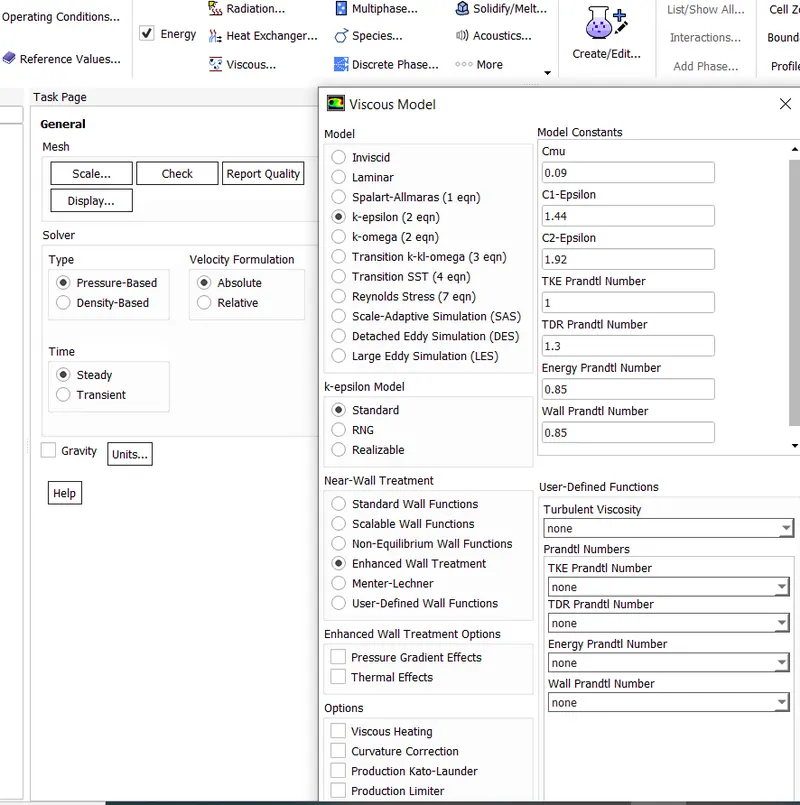
- Turbulent Model: k-epsilon realizable
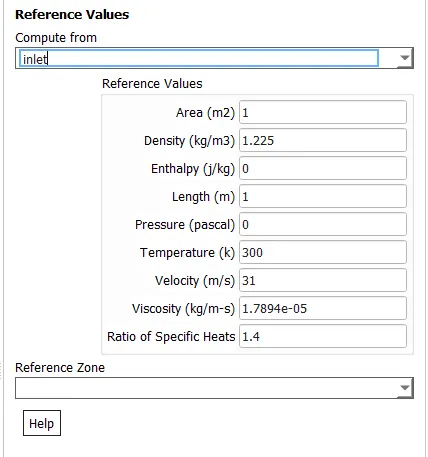
- Material properties of the fluid (Air)
Density: 1.225 kg/m3
Cp (Specific heat): 1006.43 J/kg-k
Thermal Conductivity: 0.0242 w/m-k
Viscosity: 1.7894e-05 kg/ms
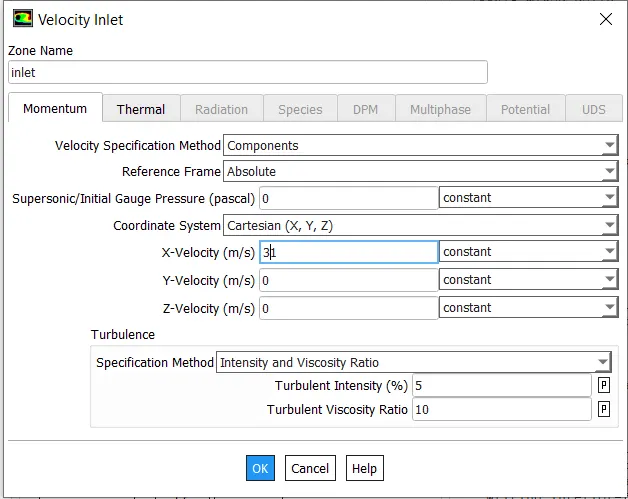
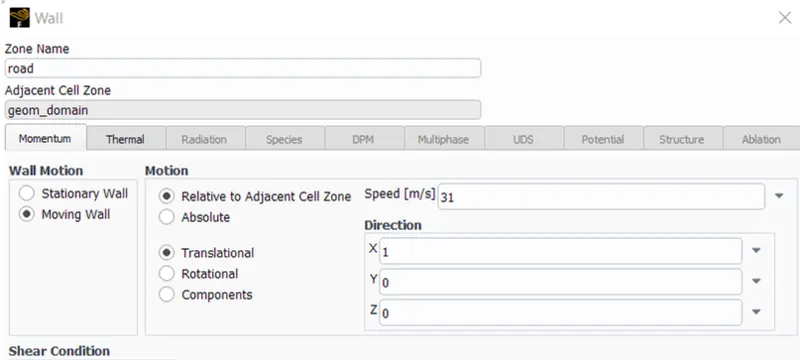
- Inlet velocity: X velocity = 31 m/s
- Inlet Temperature: 300 K
- Outlet: Pressure type, 0-gauge pressure.
- Walls: wall type with no-slip
RESULT:
- RESIDUAL:
- Lift-coefficient:
- Drag-coefficient:
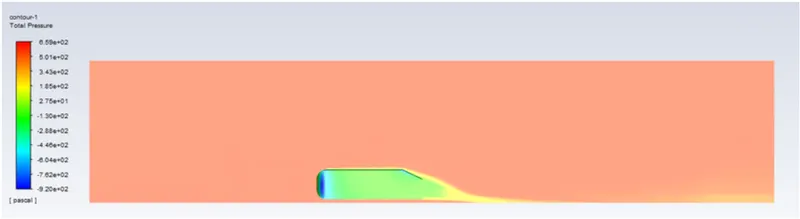
- Pressure contour:
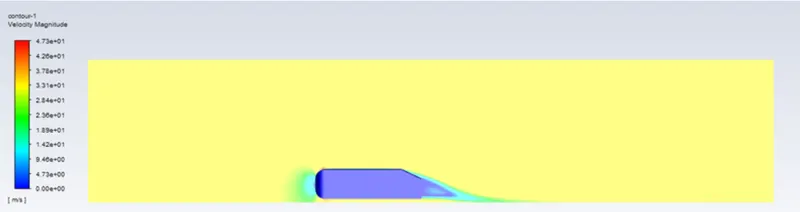
- Velocity contour:
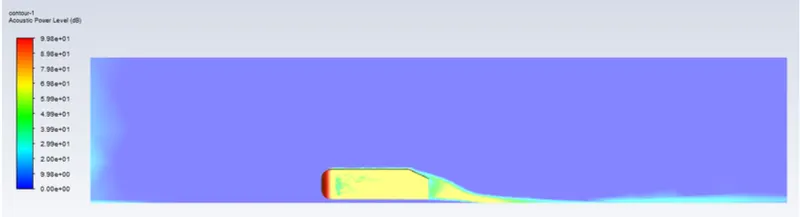
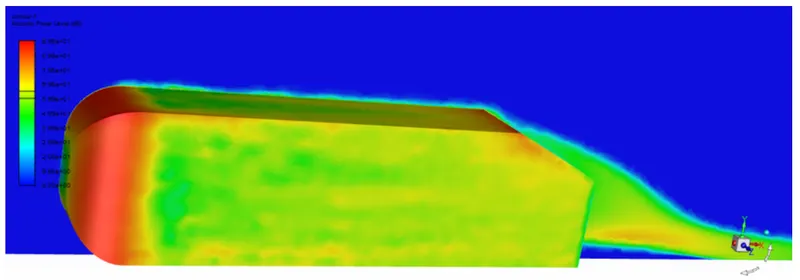
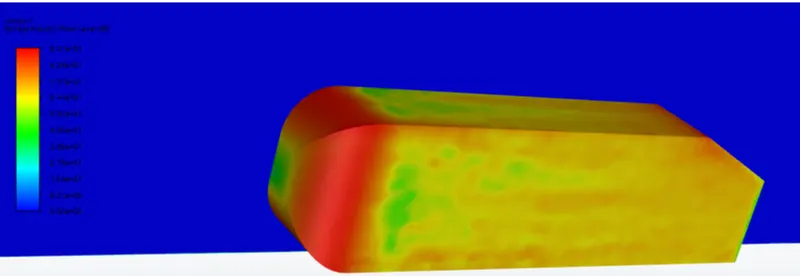
- Acoustic power level:
CONCLUSION:
-
Performed external flow simulation over an Ahmed body, using the k-epsilon turbulence model. Used Broadband noise model to capture the acoustics effect over the surface of the car. A drag coefficient of 0.18 was achieved for a 25-degree slant angle, while a lift coefficient of 0.198 was achieved.
-
The acoustic power level contour clearly shows that the major acoustic disturbance/generation is found in the wake regions where high vortices are formed and cause large pressure differences in developing sound waves. 85.1 dB is the max acoustic power level achieved at the wake region.