Week 10 Thermal Management
Question:
Prepare a report summarizing thermal management techniques for electric car battery pack.
Answer:
While advancements have been made in electric vehicle batteries that allow them to deliver more power and require less frequent charges, one of the biggest challenges that remain for battery safety is the ability to design an effective cooling system.
In electric cars, discharging the battery generates heat; the more rapidly you discharge a battery, the more heat it generates.
Batteries work based on the principle of a voltage differential, and at high temperatures, the electrons inside become excited which decreases the difference in voltage between the two sides of the battery. Because batteries are only manufactured to work between certain temperature extremes, they will stop working if there is no cooling system to keep it in a working range. Cooling systems need to be able to keep the battery pack in the temperature range of about 20-40 degrees Celsius, as well as keep the temperature difference within the battery pack to a minimum (no more than 5 degrees Celsius).
If there is a large internal temperature difference, it can lead to different charge and discharge rates for each cell and deteriorate the battery pack performance.
Potential thermal stability issues, such as capacity degradation, thermal runaway, and fire explosion, could occur if the battery overheats or if there is non-uniform temperature distribution in the battery pack. In the face of life-threatening safety issues, innovation is continually happening in the electric vehicle industry to improve the battery cooling system.
ELECTRIC VEHICLE COOLING SYSTEMS
Which cooling system works best in Electric Vehicles?
Battery thermal management systems are still a highly researched topic, and what we know about them is going to change and develop over the coming years as engineers continue to rethink how our car engines work.
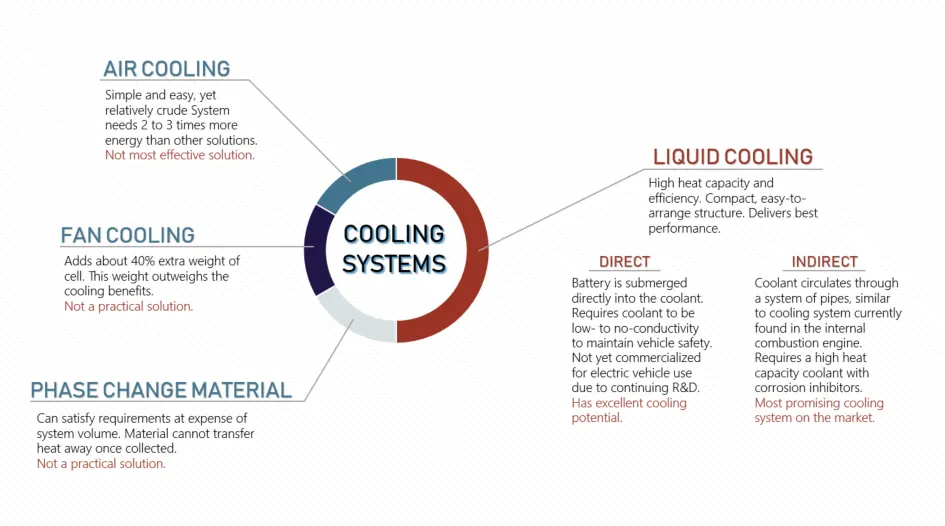
There are a few options to cool an electric car battery—with phase change material, fins, air, or a liquid coolant.
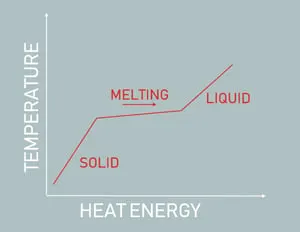
Phase change material absorbs heat energy by changing state from solid to liquid. While changing phase, the material can absorb large amounts of heat with little change in temperature. Phase change material cooling systems can meet the cooling requirements of the battery pack, however, the volume change that occurs during a phase change restricts its application. Also, phase change material can only absorb heat generated, not transfer it away, which means that it won’t be able to reduce overall temperature as well as other systems. Although not favorable for use in vehicles, phase change materials can be useful for improving thermal performance in buildings by reducing internal temperature fluctuations and reducing peak cooling loads.
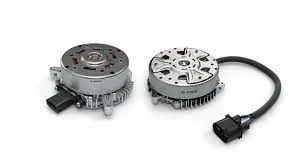
Cooling fins increase surface area to increase the rate of heat transfer. Heat is transferred from the battery pack to the fin through conduction, and from the fin to the air through convection. Fins have high thermal conductivity and can achieve cooling goals, but they add a lot of additional weight to the pack. The use of fins has found a lot of success in electronics, and traditionally they have been used as an additional cooling system on internal combustion engine vehicles. Using fins to cool the electric car battery has fallen out of favor since the additional weight of the fins outweighs the cooling benefits.
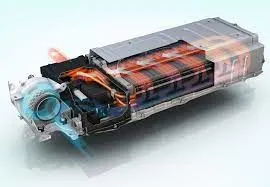
Air cooling uses the principle of convection to transfer heat away from the battery pack. As air runs over the surface, it will carry away the heat emitted by the pack. Air cooling is simple and easy, but not very efficient and relatively crude compared to liquid cooling. Air cooling is used in earlier versions of electric cars, such as the Nissan Leaf. As electric cars are now being used more commonly, safety issues have arisen with purely air-cooled battery packs, particularly in hot climates. Other car manufacturers, such as Tesla, insist that liquid cooling is the safest method.
Liquid coolants have higher heat conductivity and heat capacity (ability to store heat in the form of energy in its bonds) than air, and therefore performs very effectively and own advantages like compact structure and ease of arrangement. Out of these options, liquid coolants will deliver the best performance for maintaining a battery pack in the correct temperature range and uniformity. Liquid cooling systems have their own share of safety issues related to leaking and disposal, as glycol can be dangerous for the environment if handled improperly. These systems are currently used by Tesla, Jaguar, and BMW, to name a few.
Air cooling:
Fan cooling:
Phase change material:
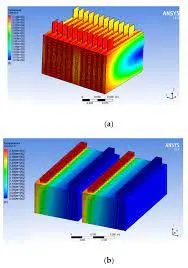
Liquid cooling:
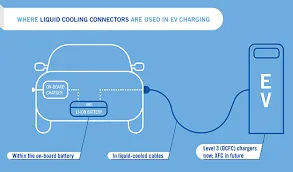
The determining features of an electric vehicle battery cooling system are temperature range and uniformity, energy efficiency, size, weight, and ease of usage (i.e. implementation, maintenance).
Each of these proposed systems can be designed to achieve the correct temperature range and uniformity. Energy efficiency is more difficult to achieve, as the cooling effects need to be greater than the heat generated when powering the cooling system. Also, a system with too much additional weight will drain energy from the car as it outputs power.
Phase change material, fan cooling, and air cooling all fail at the energy efficiency and size and weight requirements, though they may be just as easy to implement and maintain as liquid cooling. Liquid cooling is the only remaining option that does not consume too much parasitic power, delivers cooling requirements, and fits compactly and easily into the battery pack. Tesla, BMW i-3 and i-8, Chevy Volt, Ford Focus, Jaguar i-Pace, and LG Chem’s lithium-ion batteries all use some form of liquid cooling system. Since electric vehicles are still a relatively new technology, there have been problems maintaining temperature range and uniformity in extreme temperatures even when using a liquid cooling system. These are likely due to manufacturing problems, and as companies gain experience developing these systems, the thermal management issues should be resolved.
In liquid cooling systems, there is another division between direct and indirect cooling—whether the cells are submerged in the liquid or if the liquid is pumped through pipes.
Direct cooling systems place the battery cells in direct contact with the coolant liquid. These thermal management schemes are currently in the research and development stage, with no cars on the market using this system. Direct cooling is more difficult to achieve, due to the fact that a new type of coolant is required. Because the battery is in contact with the liquid, the coolant needs to have low to no conductivity.
Indirect cooling systems are similar to ICE cooling systems in that both circulate liquid coolant through a series of metal pipes. However, the construction of the cooling system will look much different in electric vehicles. The structure of the cooling system that achieves maximum temperature uniformity is dependent on the shape of the battery pack and will look different for each car manufacturer.