Week 10 - Simulating Combustion of Natural Gas.
SIMULATING THE COMBUSTION OF NATURAL GAS IN A COMBUSTION CHAMBER
INTRODUCTION
Combustion or burning is a high-temperature exothermic redox chemical reaction between a fuel (the reductant) and an oxidant, usually, atmospheric oxygen, that produces oxidized, often gaseous products, in a mixture termed smoke. Combustion does not always result in fire, because a flame is only visible when substances undergoing combustion vaporize, but when it does, a flame is a characteristic indicator of the reaction. While the activation energy must be overcome to initiate combustion the heat from a flame may provide enough energy to make the reaction self-sustaining.
Combustion is often a complicated sequence of elementary radical reactions. Solid fuels, such as wood and coal, first undergo endothermic pyrolysis to produce gaseous fuels whose combustion then supplies the heat required to produce more of them. Combustion is often hot enough that incandescent light in the form of either glowing or a flame is produced. A simple example can be seen in the combustion of hydrogen and oxygen into water vapor, a reaction that is commonly used to fuel rocket engines. This reaction releases 242 KJ/mol of heat and reduces the enthalpy accordingly at constant temperature and pressure.
`2Hunderset2``(g)+Ounderset2``(g)``rightarrow2Hunderset2``Ouparrow`
Combustion of an organic fuel in air is always exothermic because the double bond in O2 is weaker than other double bonds or pairs of single bonds involved, and the formation of the stronger bonds in the combustion products CO2 and H2O result in the release of energy. The bond energies in the fuel play only a minor role since they are similar to those in the combustion products; e.g., the sum of the bond energies of methane, CH4, is nearly the same as that of CO2. The heat of combustion of organic fuels is approximately −419 kJ per mole of O2 used up in the combustion.
Complete and Incomplete combustion
Complete-
In complete combustion, the reactant burns in oxygen and produces a limited number of products. When a hydrocarbon burns in oxygen, the reaction will primarily yield carbon dioxide and water. When elements are burned, the products are primarily the most common oxides. Carbon will yield carbon dioxide, sulfur will yield sulfur dioxide, and iron will yield iron oxide. Nitrogen is not considered to be a combustible substance when oxygen is the oxidant. Still, small amounts of various nitrogen oxides (commonly designated NOx species) form when the air is oxidative.
Combustion is not necessarily favorable to the maximum degree of oxidation, and it can be temperature-dependent. For example, sulfur trioxide is not produced quantitatively by the combustion of sulfur. NOx species appear in significant amounts above about 2,800 °F (1,540 °C), and more is produced at higher temperatures. The amount of NOx is also a function of oxygen excess.
The amount of air required for complete combustion to take place is known as pure air. However, in practice, the air used is 2-3 times that of pure air.
Incomplete-
Incomplete combustion will occur when there is not enough oxygen to allow the fuel to react completely to produce carbon dioxide and water. It also happens when the combustion is quenched by a heat sink, such as a solid surface or flame trap. As is the case with complete combustion, water is produced by incomplete combustion; however, carbon, carbon monoxide, and hydroxide are produced instead of carbon dioxide.
For most fuels, such as diesel oil, coal, or wood, pyrolysis occurs before combustion. In incomplete combustion, products of pyrolysis remain unburnt and contaminate the smoke with noxious particulate matter and gases. Partially oxidized compounds are also a concern; partial oxidation of ethanol can produce harmful acetaldehyde, and carbon can produce toxic carbon monoxide.
Combustion model for CFD
Computational fluid dynamics modeling of combustion calls upon the proper selection and implementation of a model suitable to faithfully represent the complex physical and chemical phenomenon associated with any combustion process. The model should be competent enough to deliver information related to the species concentration, their volumetric generation or destruction rate, and changes in the parameters of the system like enthalpy, temperature, and mixture density. The model should be capable of solving the general transport equations for fluid flow and heat transfer as well as the additional equations of combustion chemistry and chemical kinetics incorporated into that as per the simulating environment desired.
Types of Combustion model for Ansys fluent
Combustion based on mixing
- Non-premixed Combustion fuel and oxidizer enter the reaction zone in distinct streams. This is in contrast to premixed systems, in which reactants are mixed at the molecular level before burning. Examples of non-premixed combustion include pulverized coal furnaces, diesel internal combustion engines, and pool fires.
- Premixed Combustion consists of the chemical reactions within a flow of a premixture of reacting species. These reactions occur in a fluid in motion such as would occur in a gas turbine combustor. The chemical kinetics induce various temporal and spatial scales because of the multiple preexponential factors and activation energies between all species of each reaction at stake
- Partially Premixed Combustions is a modern combustion process intended to be used in internal combustion engines of automobiles and other motorized vehicles in the future. Its high specific power, high fuel efficiency, and low exhaust pollution have made it a promising technology. As a compression-ignition engine, the fuel mixture ignites due to the increase in temperature that occurs with compression rather than a spark from a spark plug.
Combustion based on phase
- Fluid phase(Volumetric Reaction)
- Wall(Surface Reaction)
- Particles(Surface Reaction)
- Porous region
OBJECTIVES
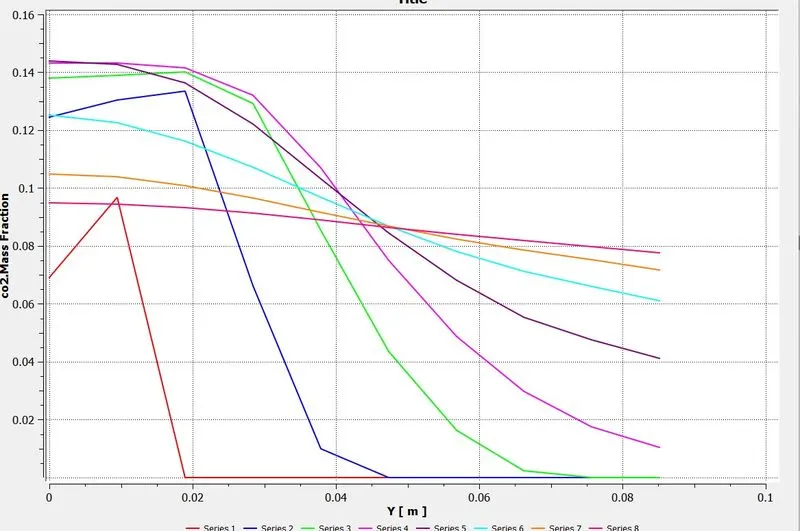
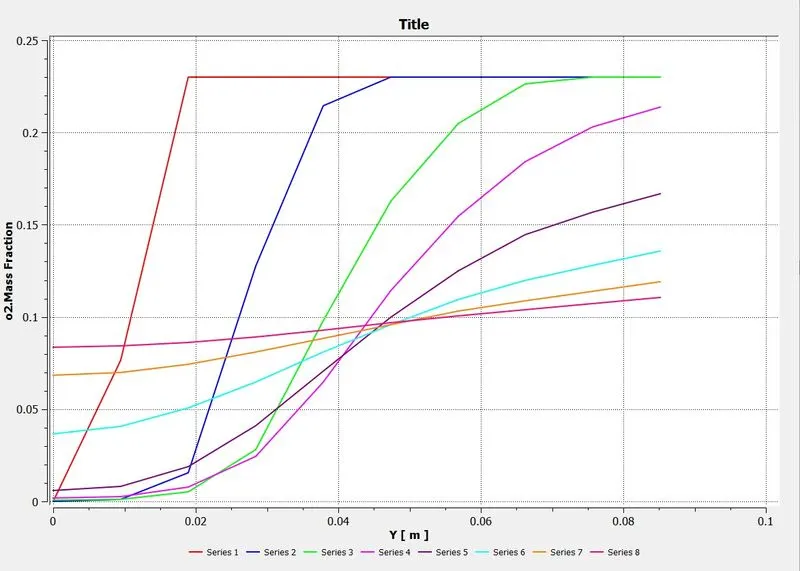
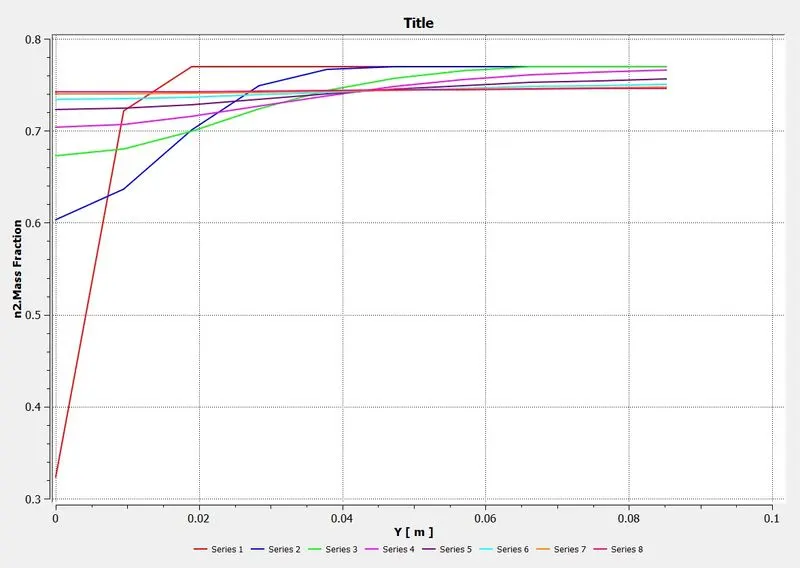
- To Perform a combustion simulation on the combustor model and plot the variation of the mass fraction of the different species in the simulation using line probes at different locations of the combustor.
- The fuel species is Methane and the fluid is air, which contains Oxygen and Nitrogen
-
plot for CO2, H2O, CH4, N2, O2, NOx emissions & Soot formation.
- By adding the water content in the fuel from 5% to 30% by mole and observing its effect of it on the results.
PRE-PROCESSING AND SOLVER SETUP
SPACECLAIM MODEL
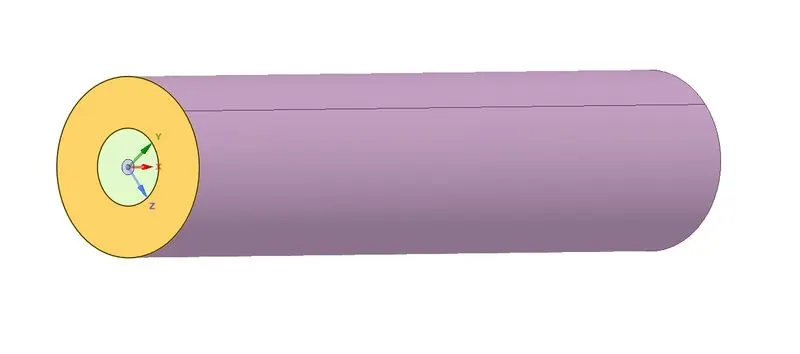
-This is the 3D Geometry which takes a lot of time and is expensive so instead of a 3d model we took the 2d model. To get the 2d geometry we have to cut it into half and then extract all excluding the surface.
-Then copy the surfaces and paste them into a new design of the x-y plane and combine them using the 'combine command ' to get a single 2D surface.
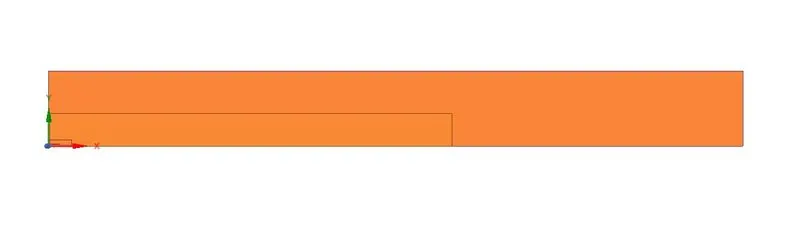
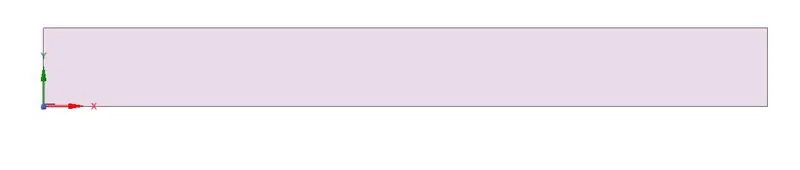
Meshing
Mesh setup
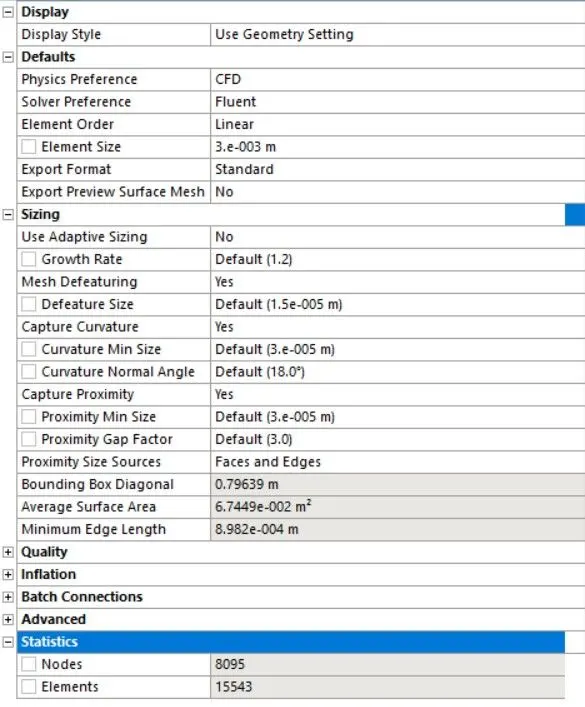
The mesh
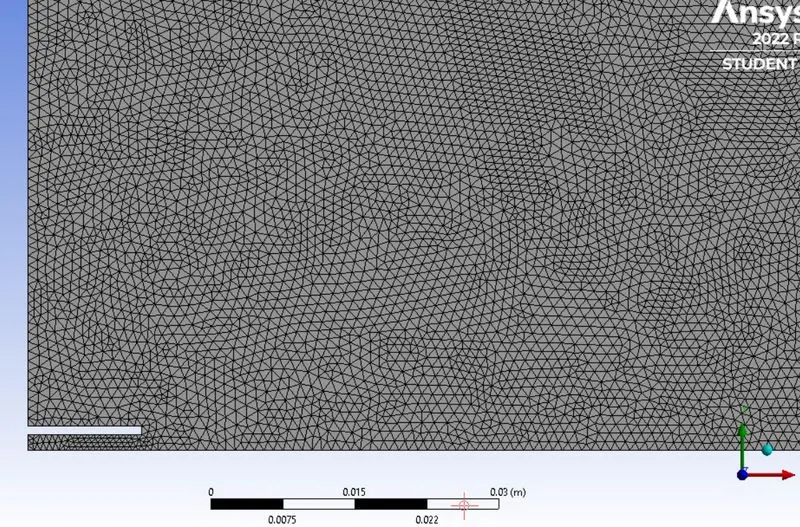
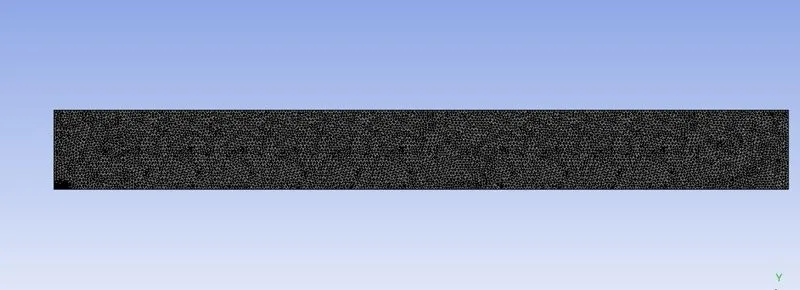
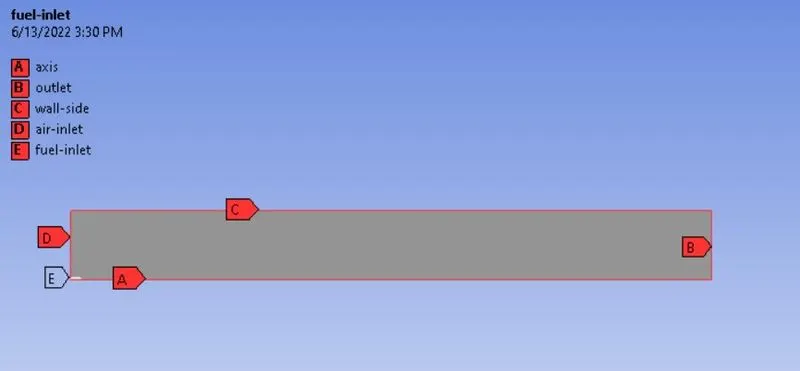
Boundaries
Simulation setup
Solver
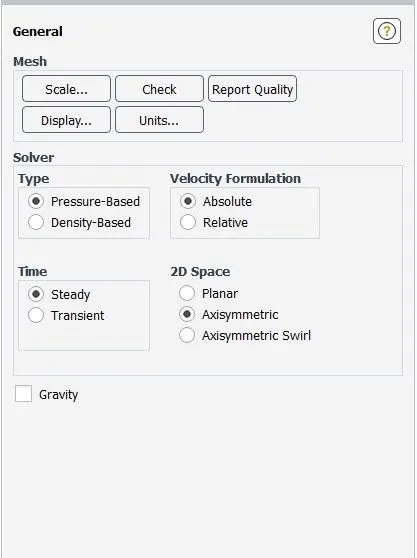
-Energy mode-On
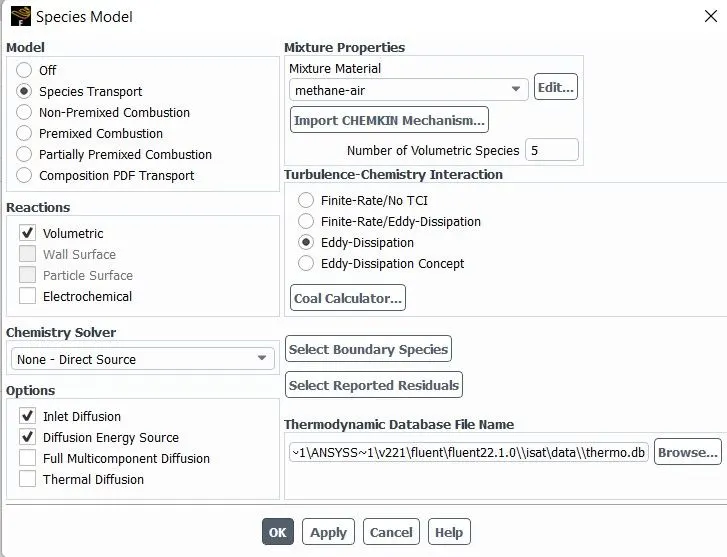
Species model
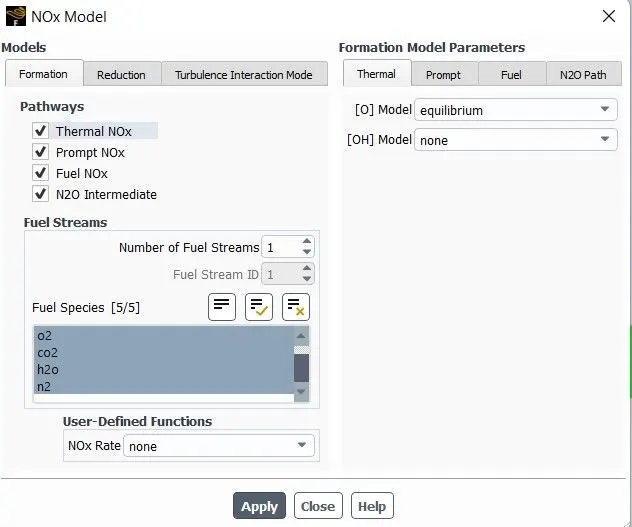
Nox model
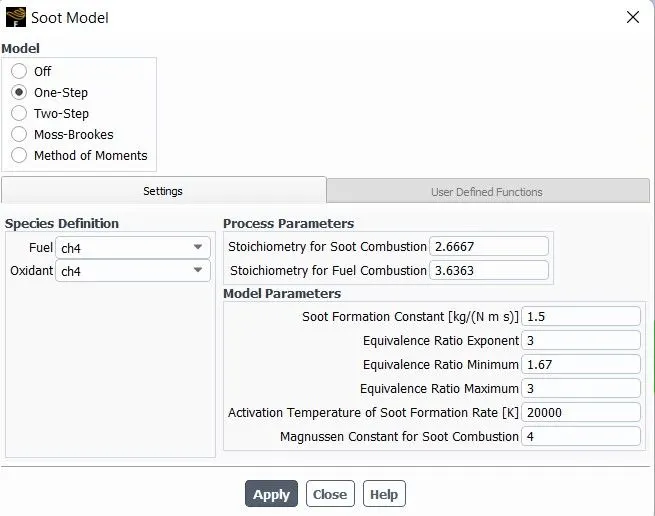
Soot model
Boundaries
Inlet(Air)
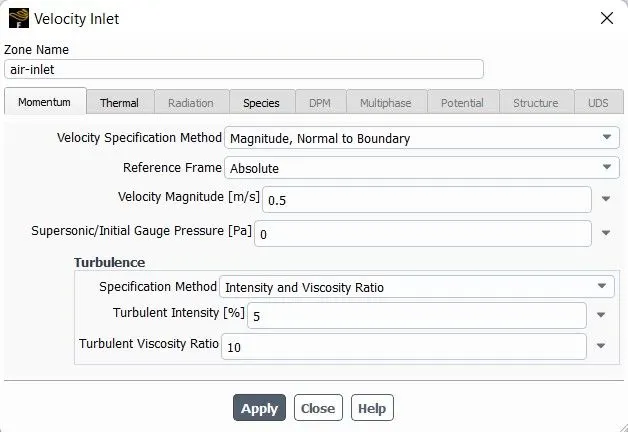
Species mass fraction(air)
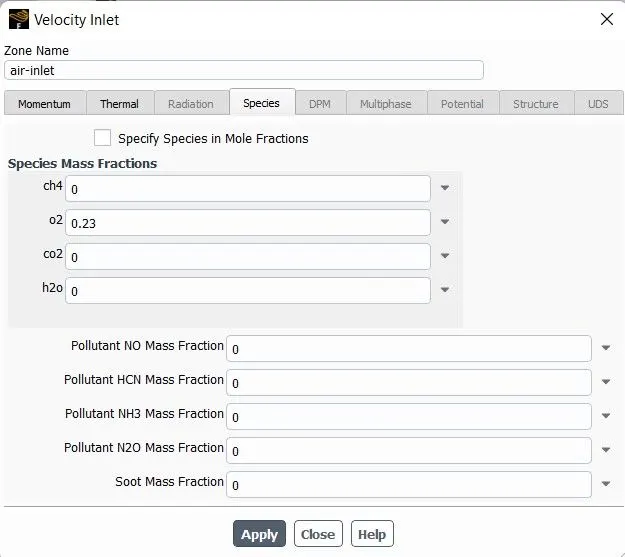
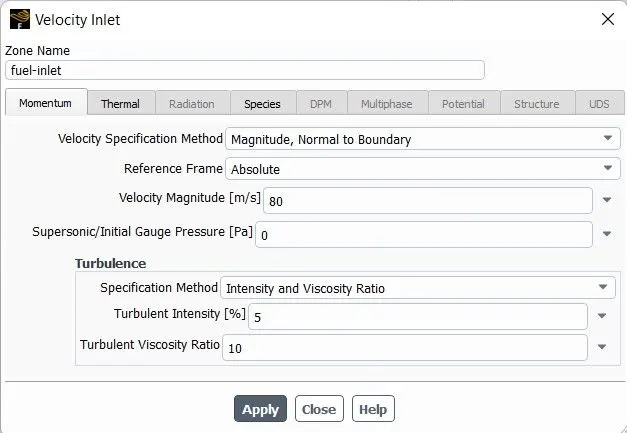
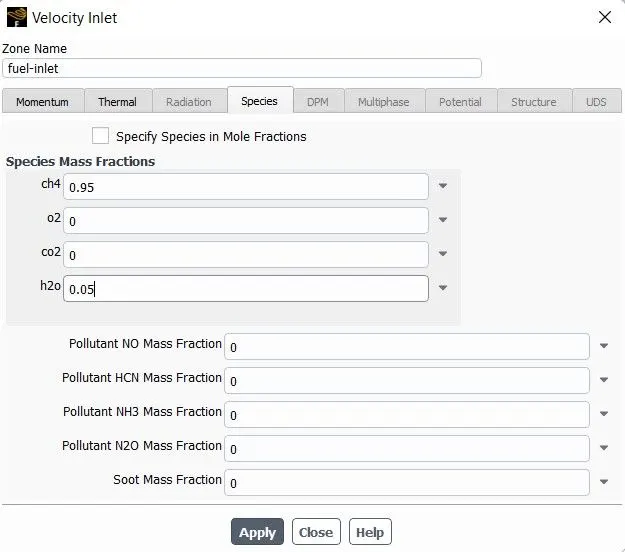
Inlet(Fuel)
Species Mass Fraction
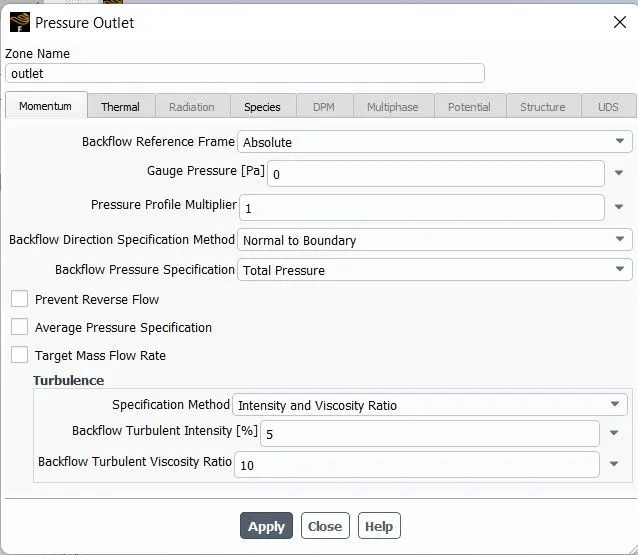
Outlet
Initialization
- Method-Hybrid initialization
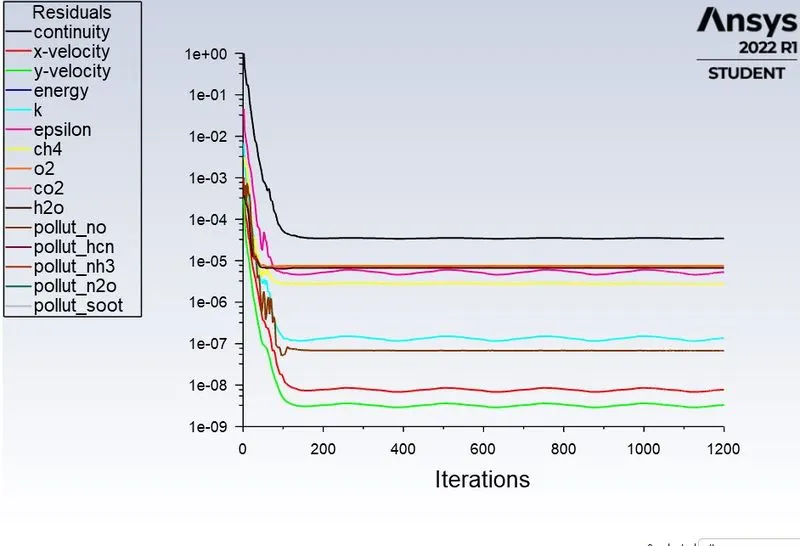
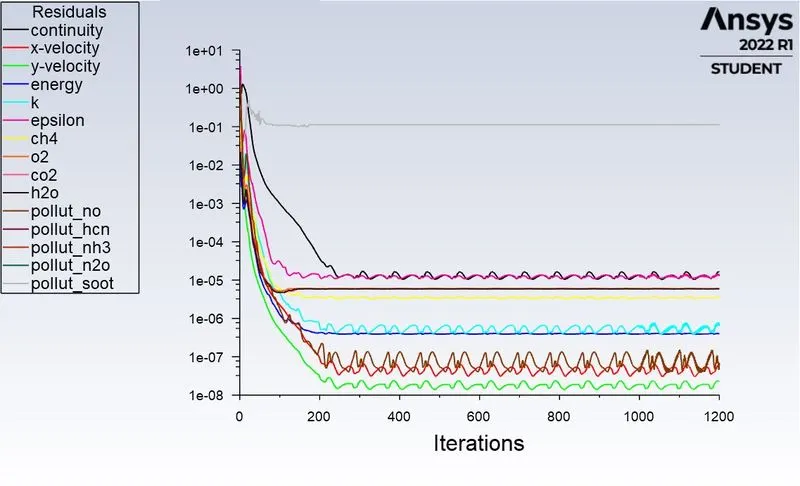
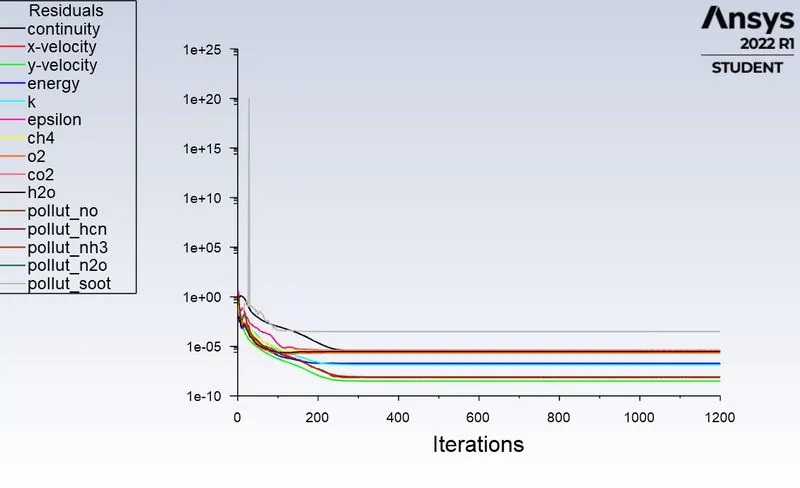
- Number of iterations- 1200
Post-processing
Contours for temprature,Nox,soot & species(CH4,Co2,H2O,N2,O2)
Results(part-1)
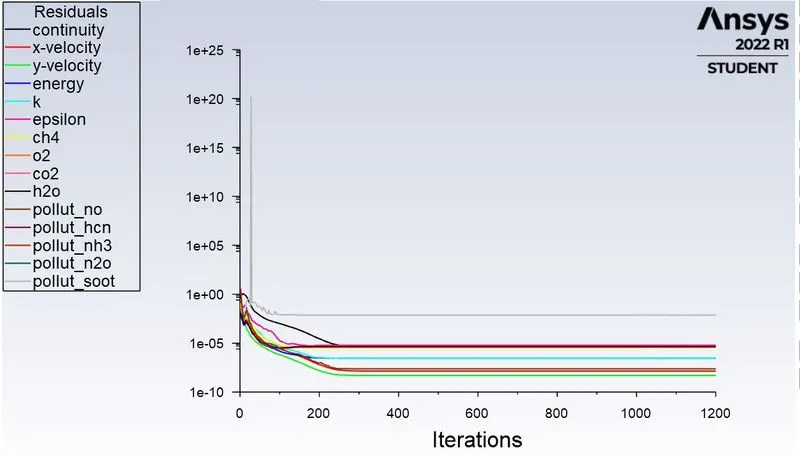
Residuals
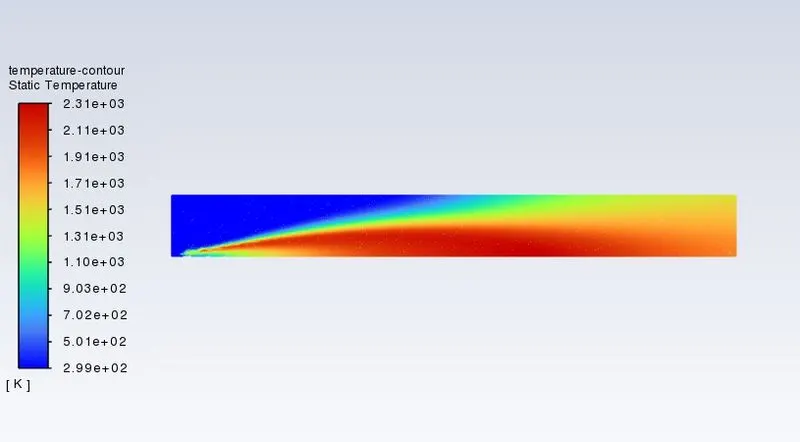
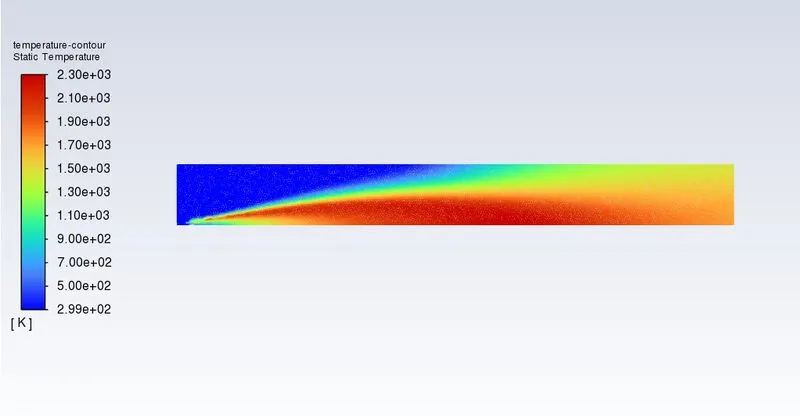
Temperatur contour
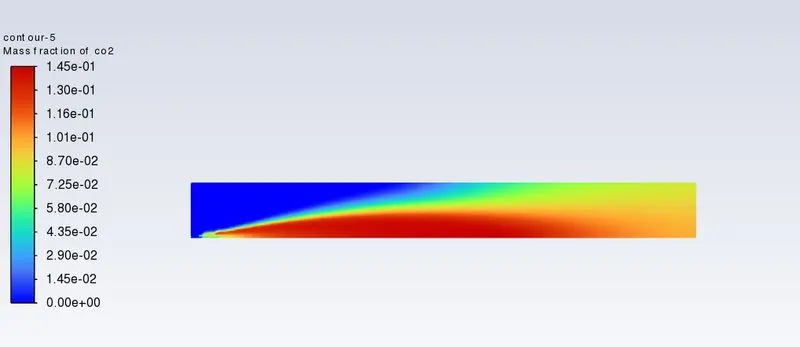
Co2 Contour & Mass fraction
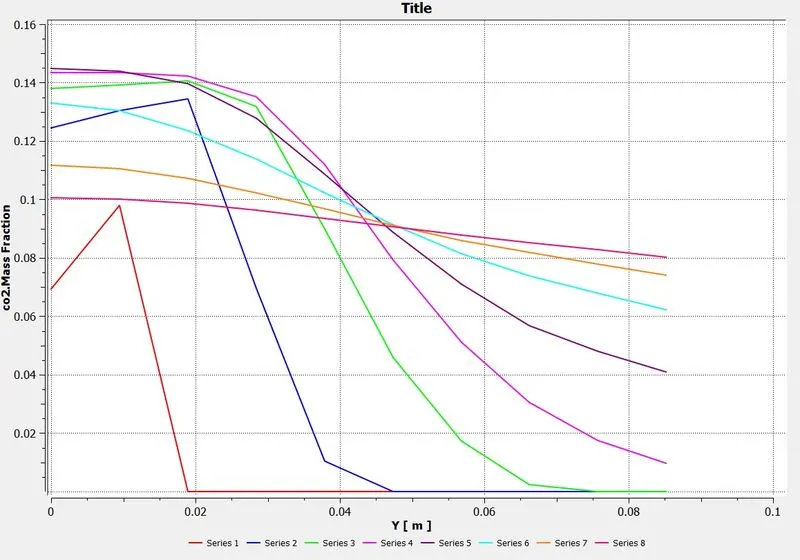
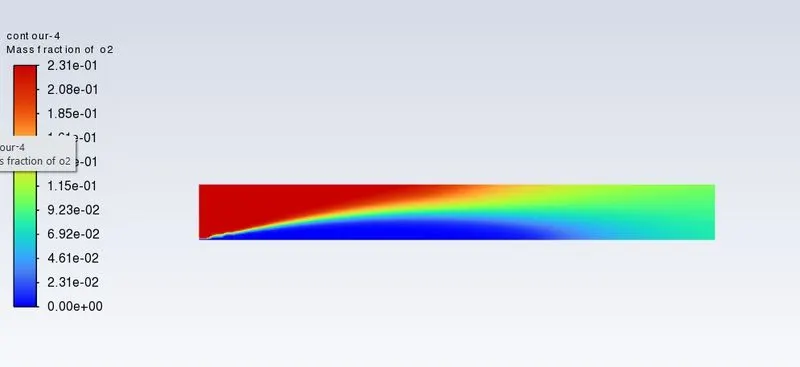
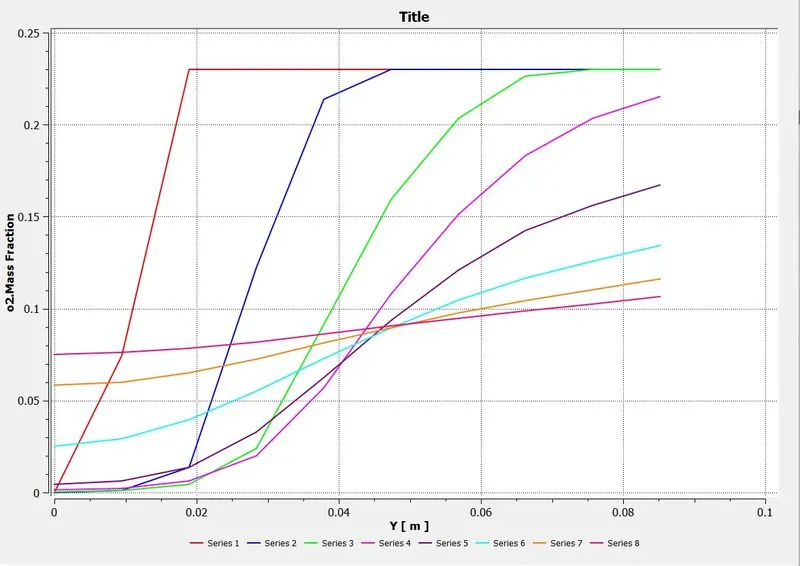
O2 Contour & Mass fraction
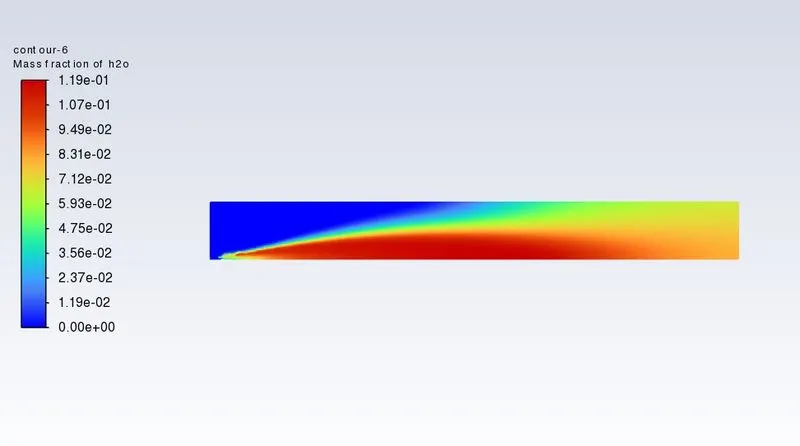
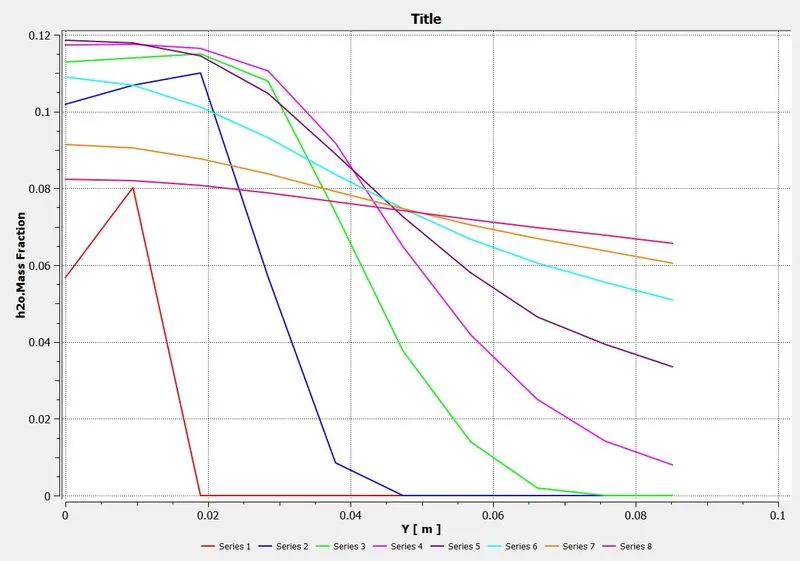
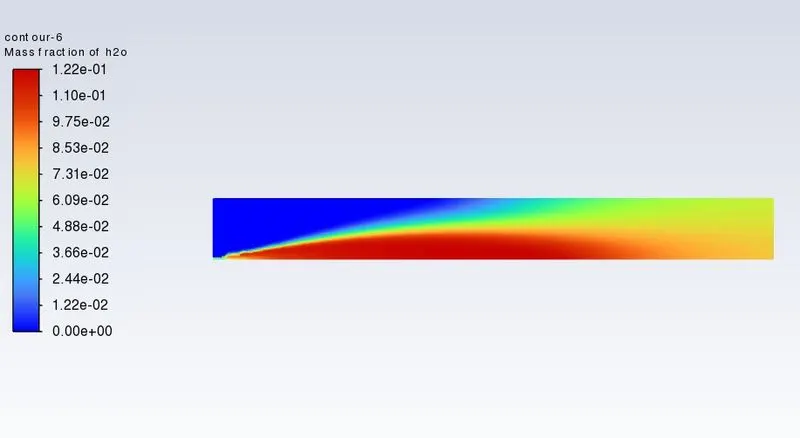
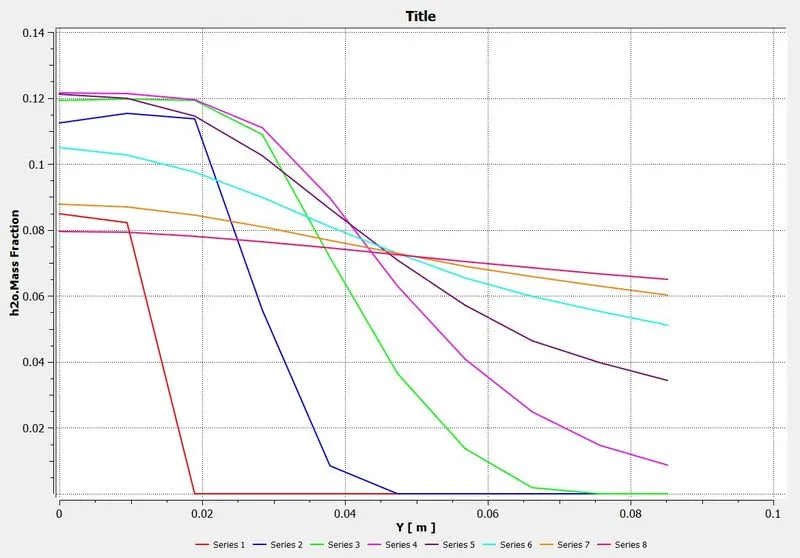
H2o Contour & Mass Fraction
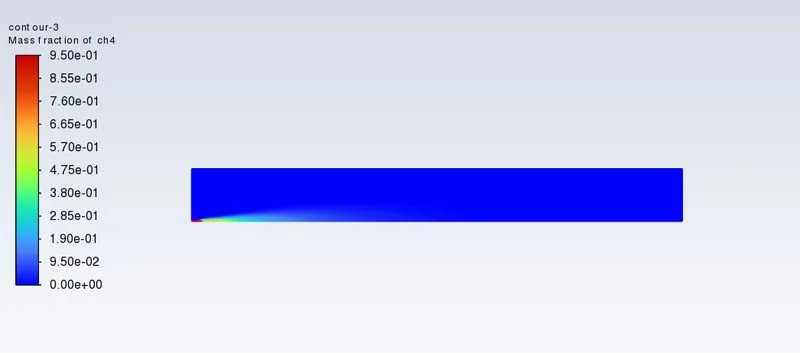
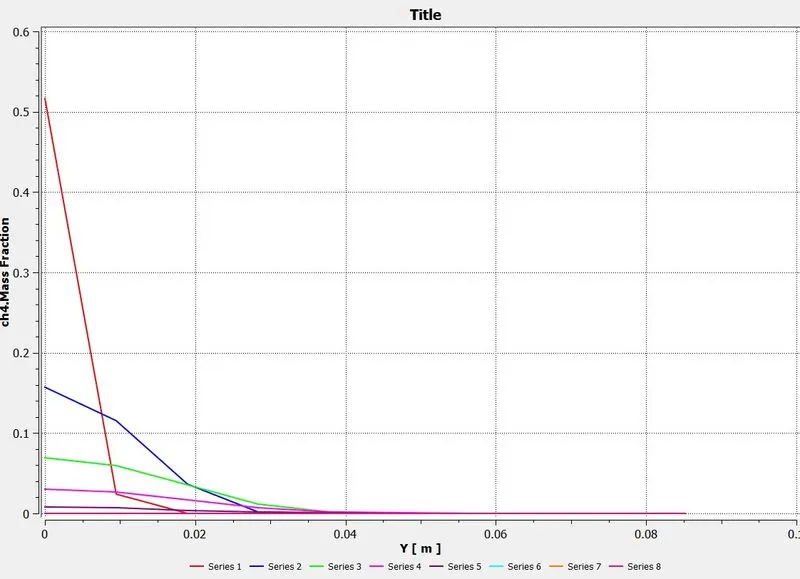
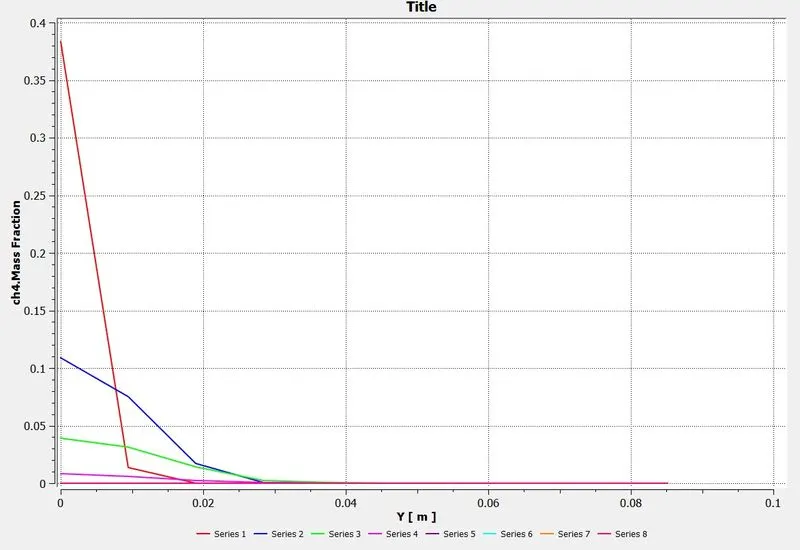
CH4 Contour & Mass Fraction
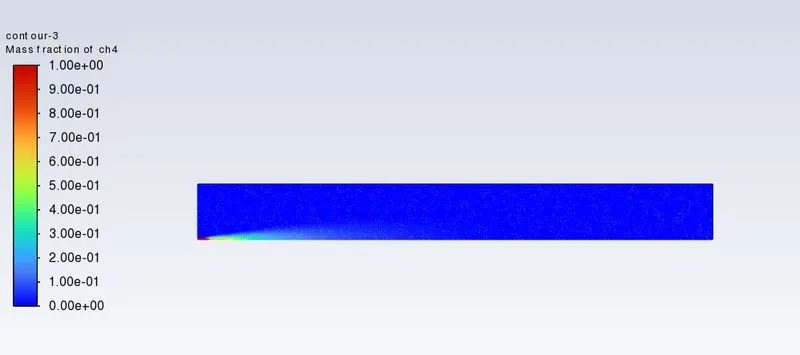
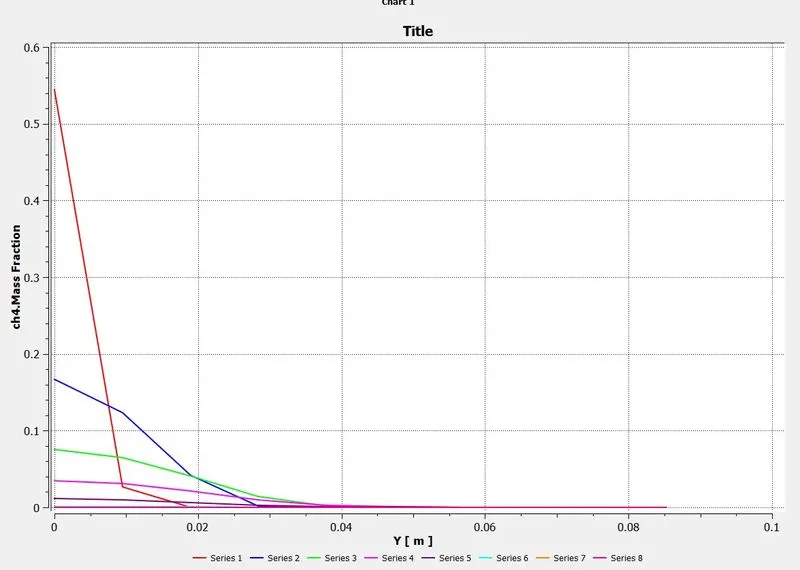
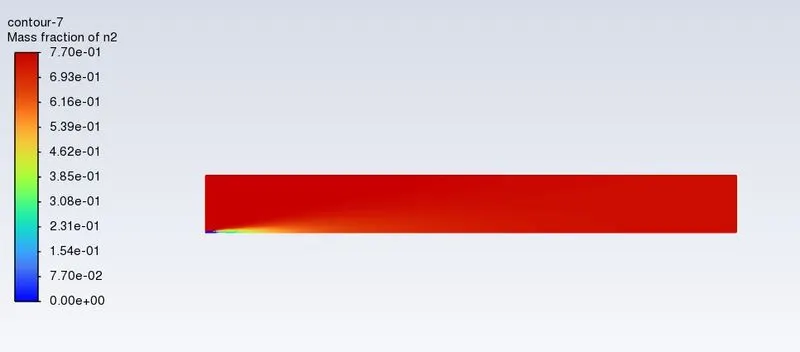
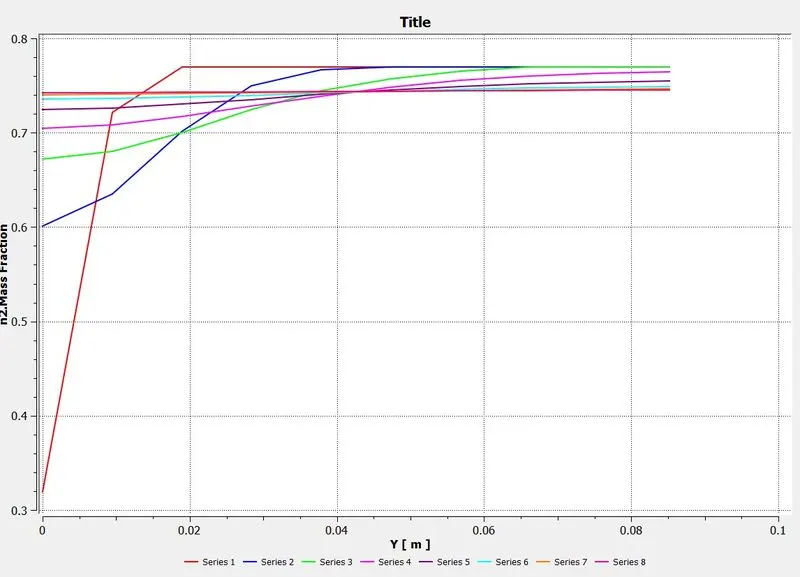
N2 Contour & Mass Fraction
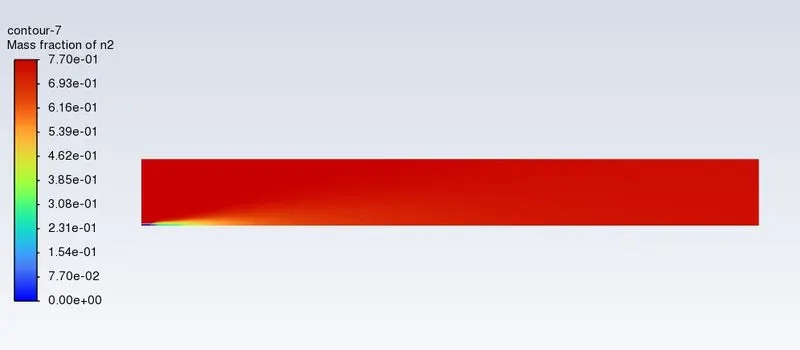
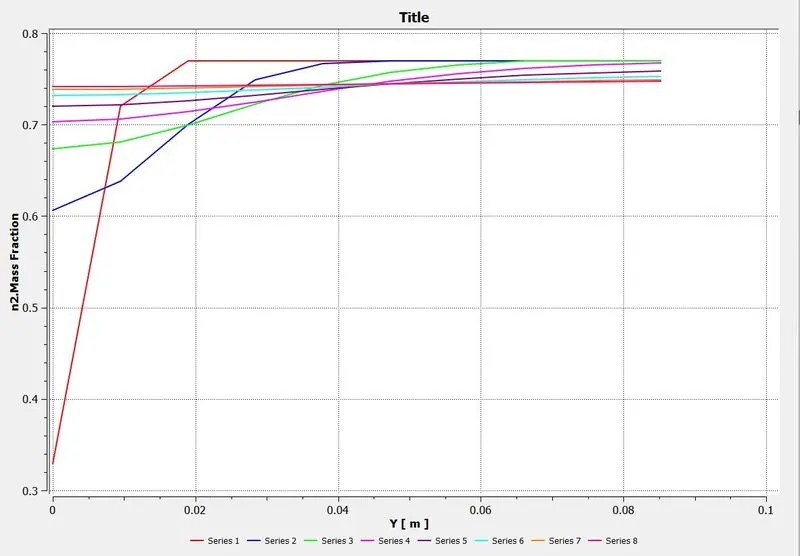
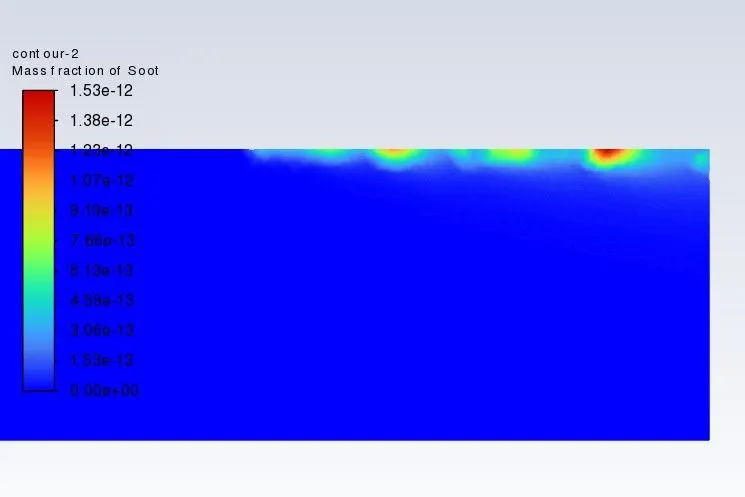
Soot Contour 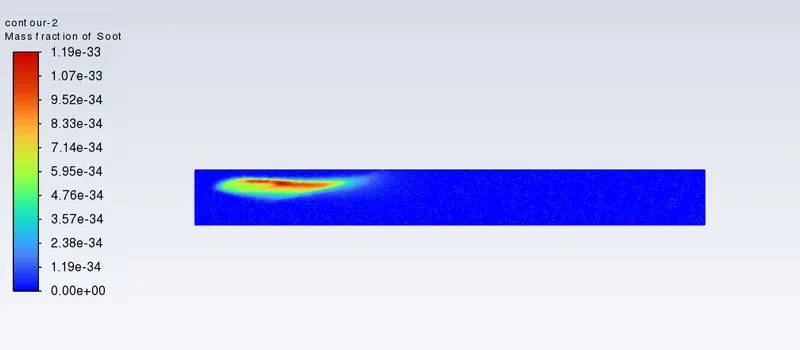
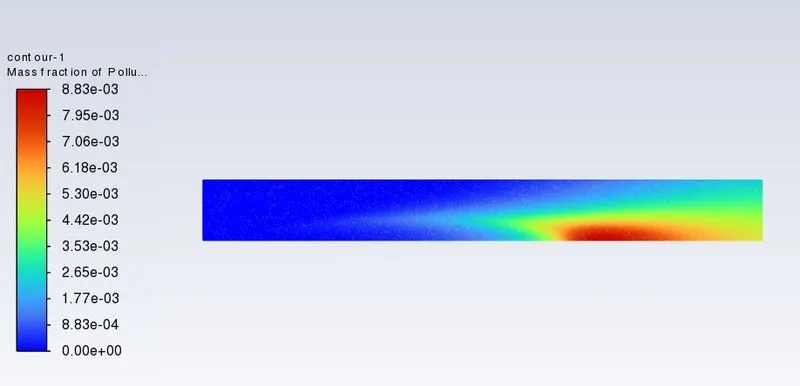
NoX contour
Part-2
I-CH4-95% and H2o-5%
Residuals
Temperatur contour
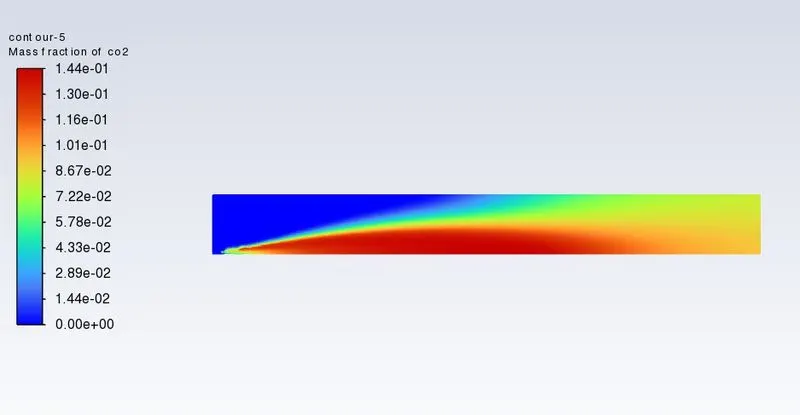
Co2 Contour & Mass fraction
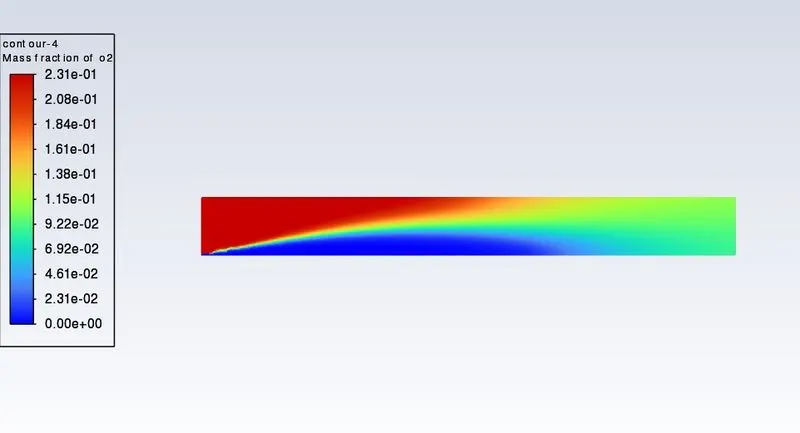
O2 Contour & Mass fraction
H2o Contour & Mass Fraction
CH4 Contour & Mass Fraction
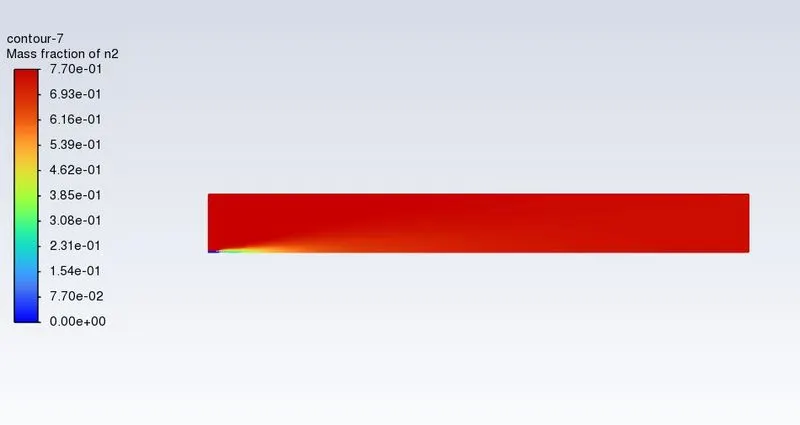
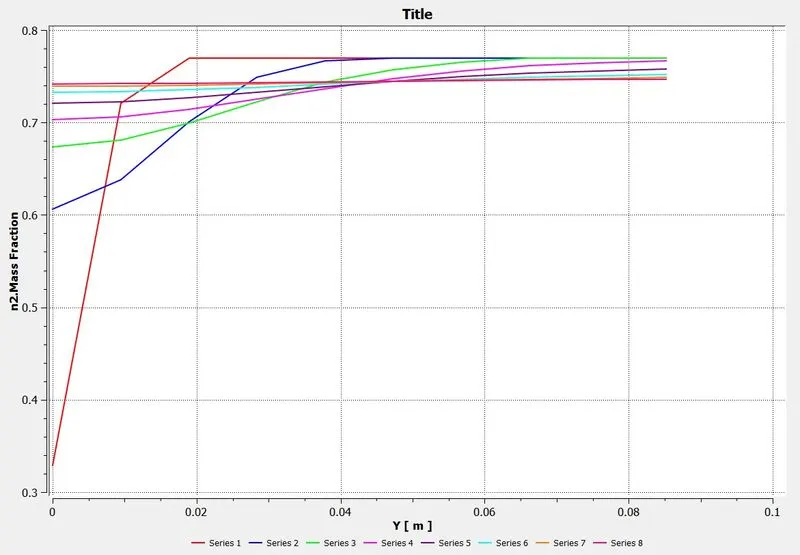
N2 Contour & Mass Fraction
Soot Contour
NoX contour
II-CH4-90% and H2o-10%
Residuals
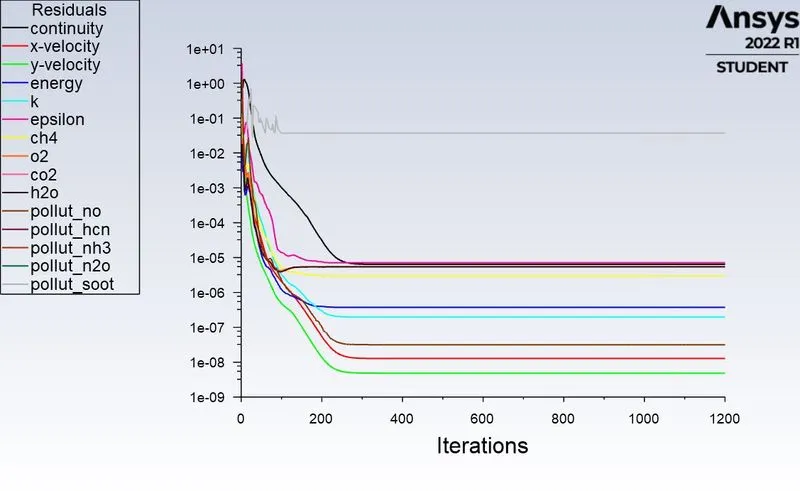
Temperatur contour
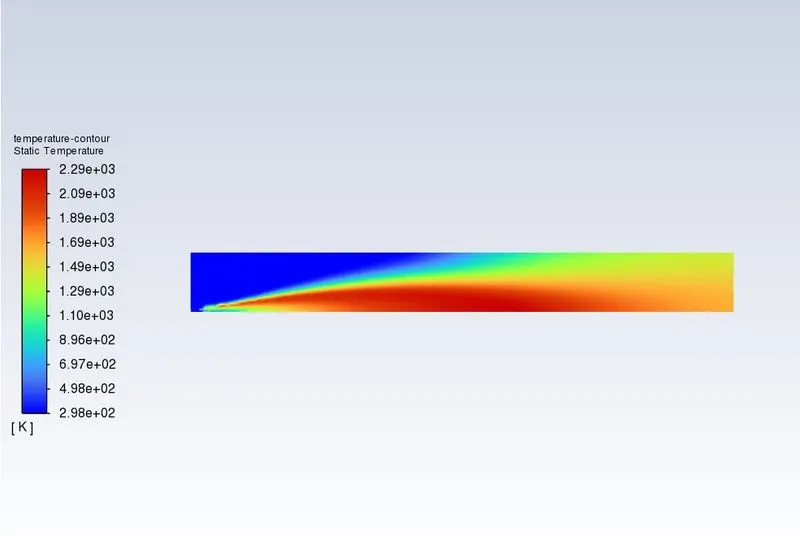
Co2 Contour & Mass fraction
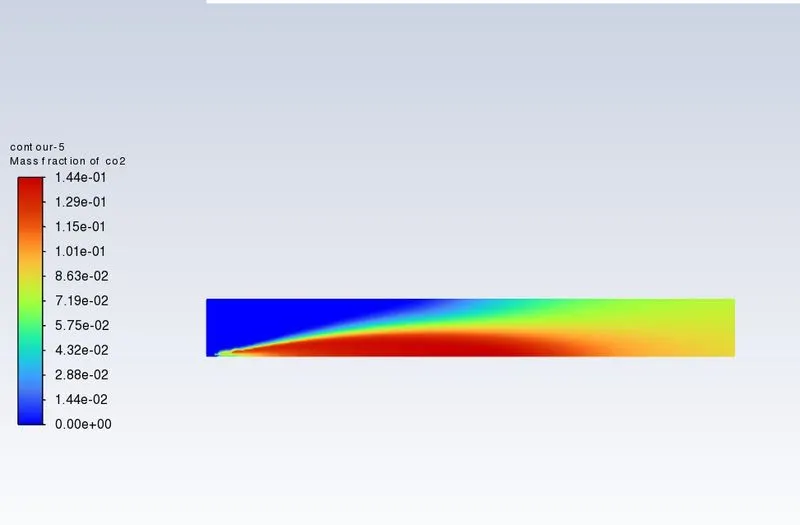
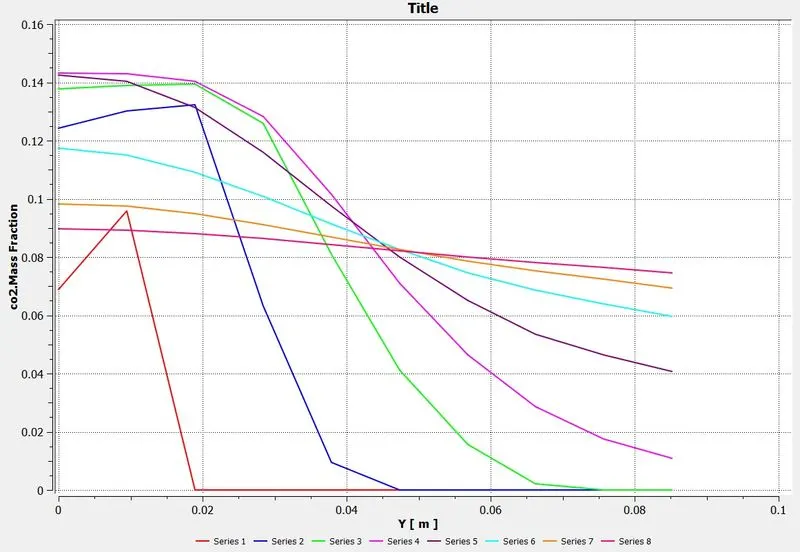
O2 Contour & Mass fraction
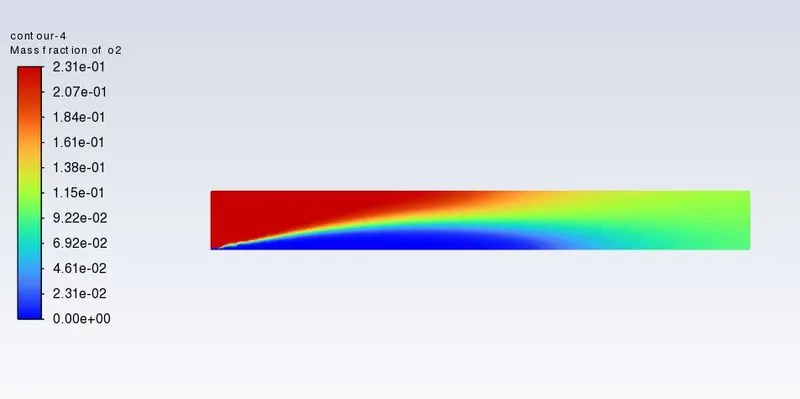
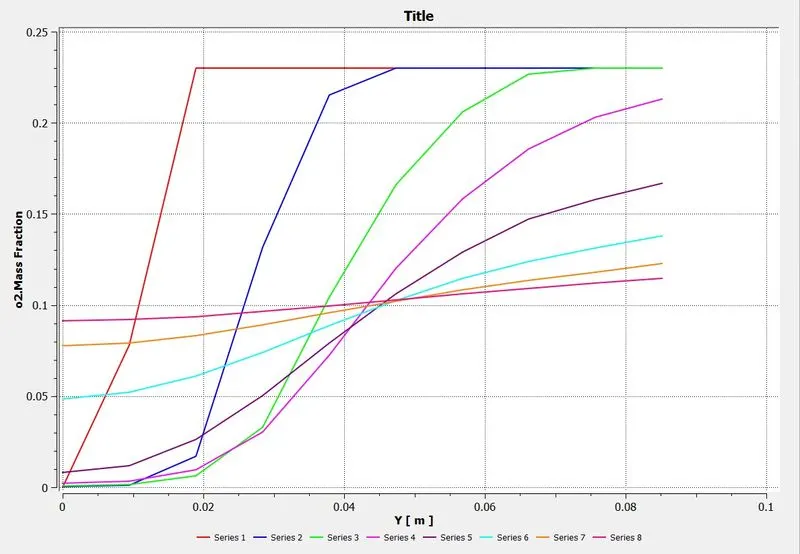
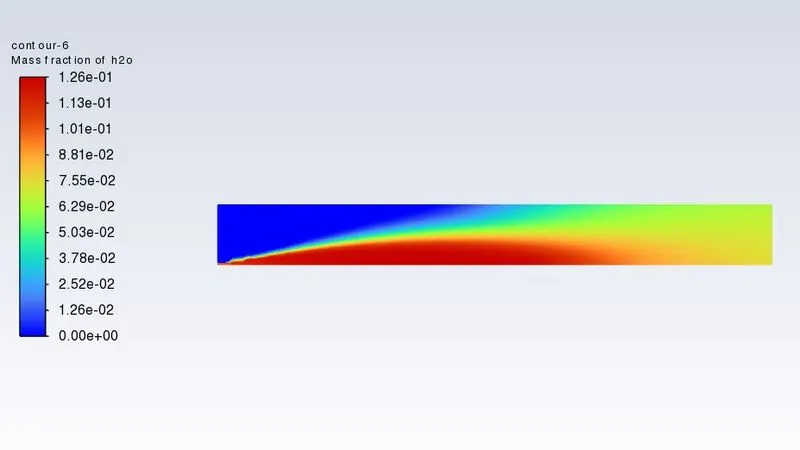
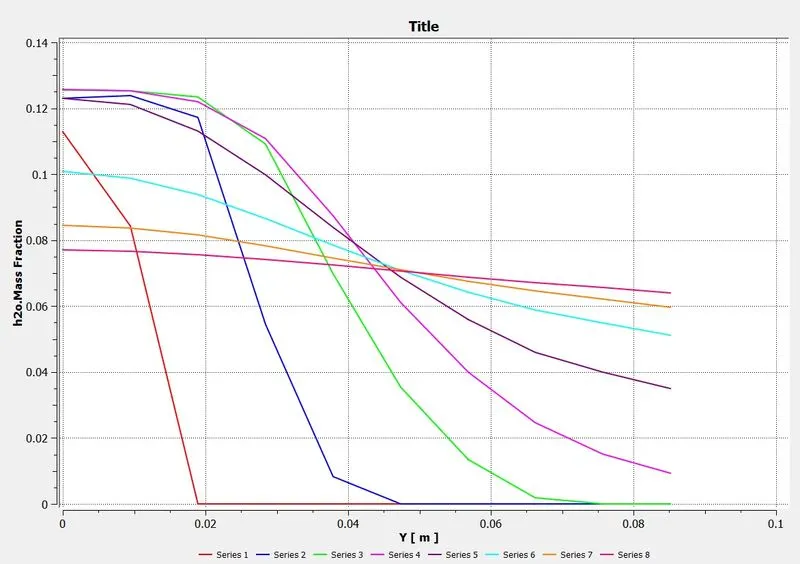
H2o Contour & Mass Fraction
CH4 Contour & Mass Fraction
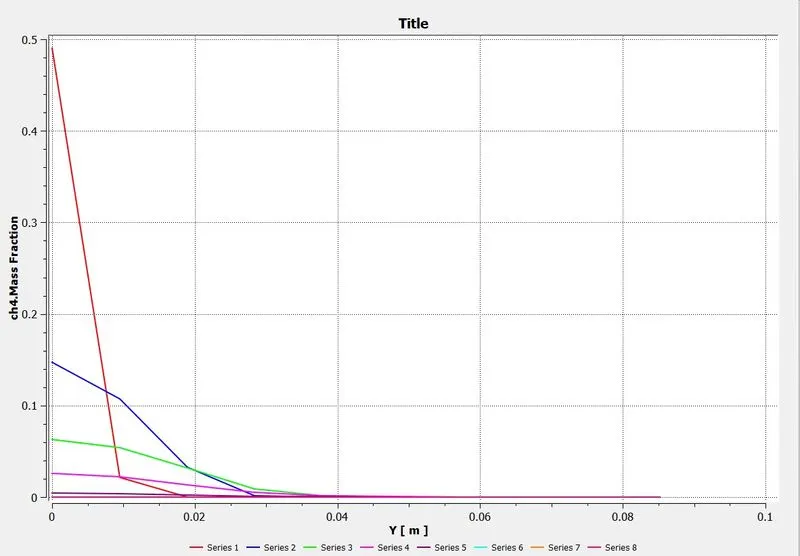
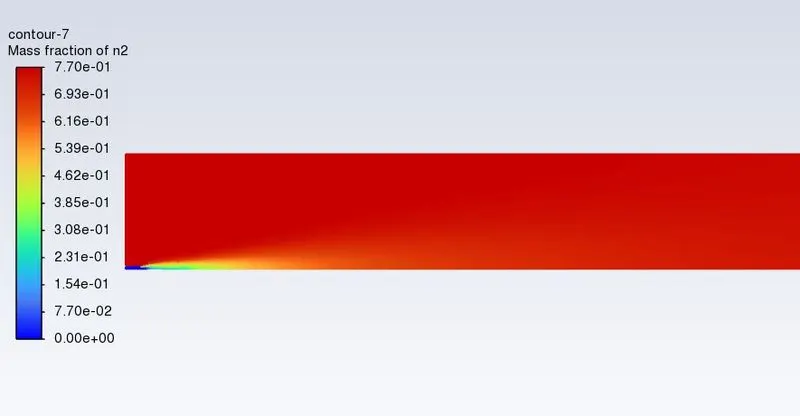
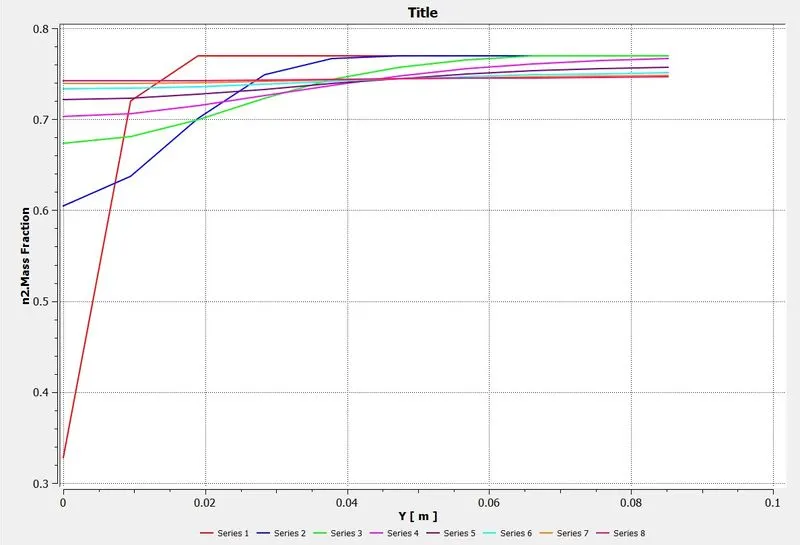
N2 Contour & Mass Fraction
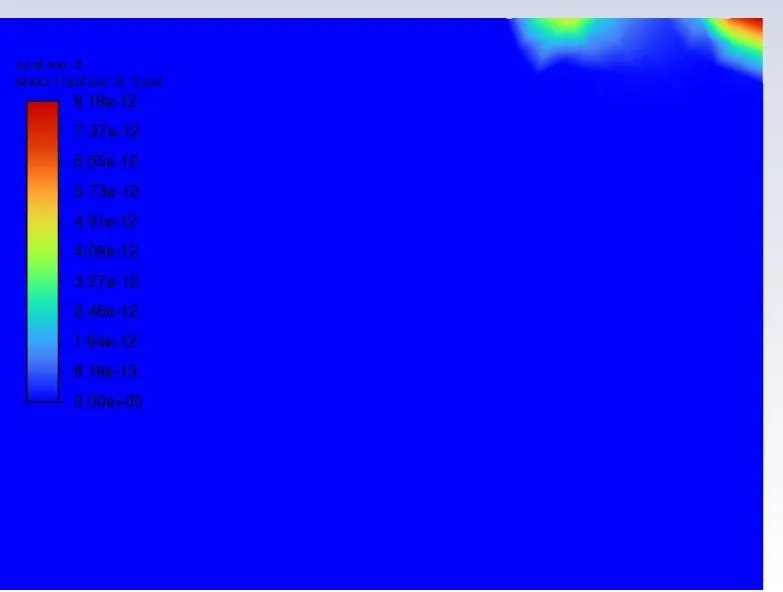
Soot Contour
NoX contour
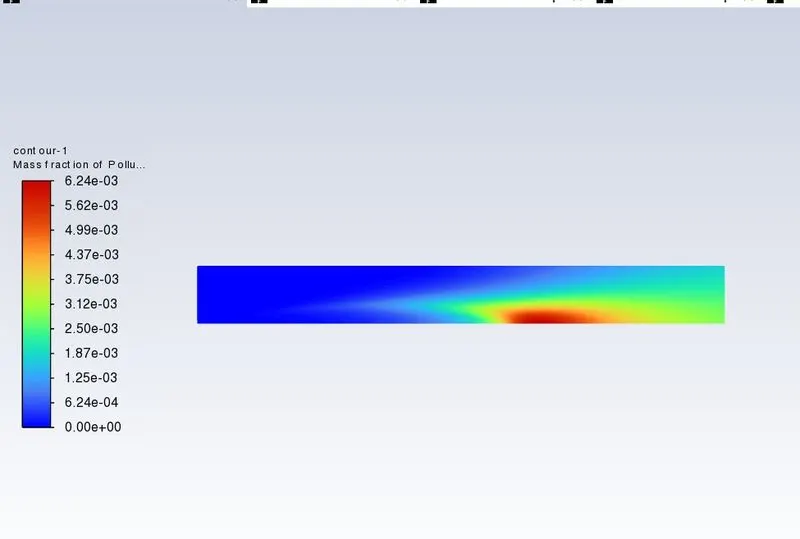
III-CH4-80% and H2o-20%
Residuals
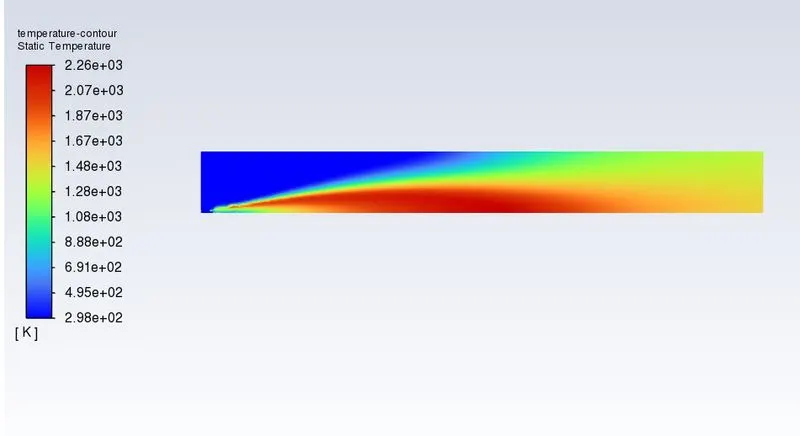
Temperatur contour
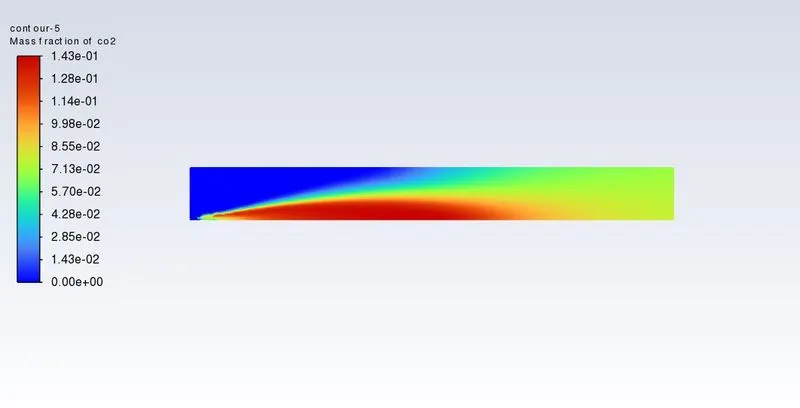
Co2 Contour & Mass fraction
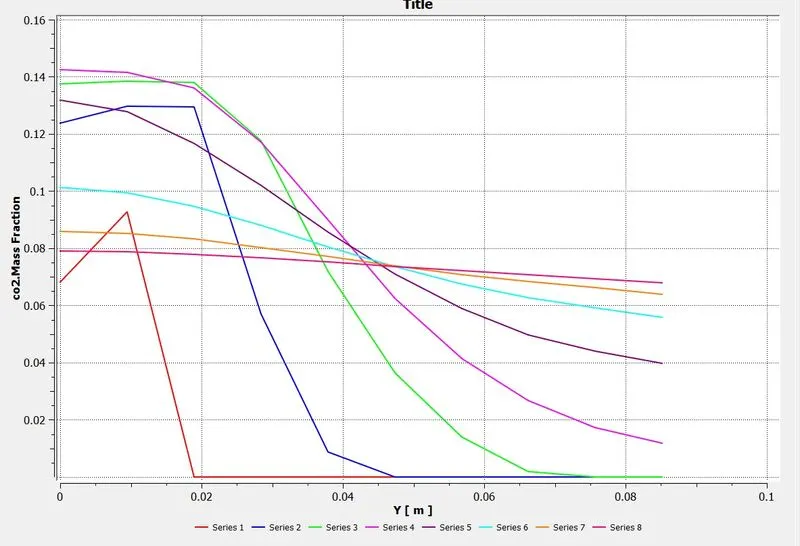
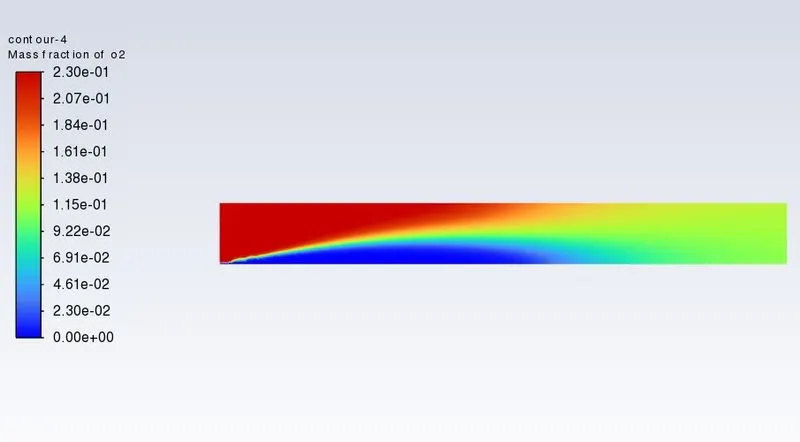
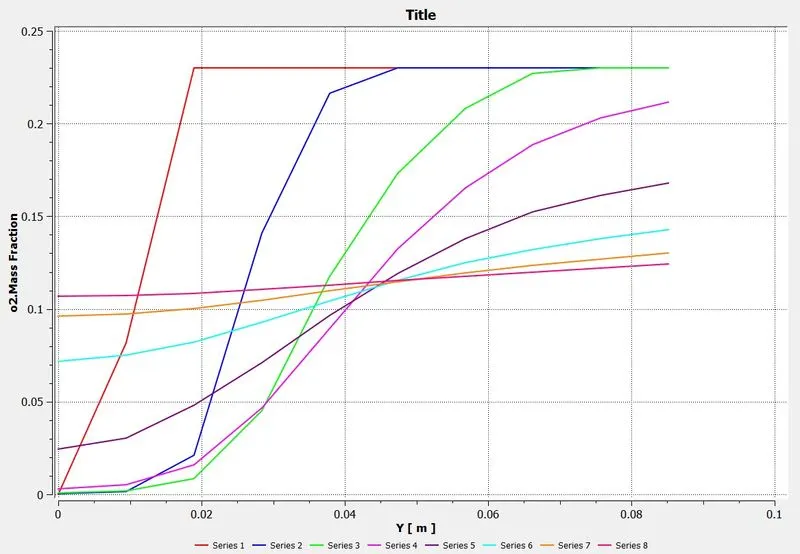
O2 Contour & Mass fraction
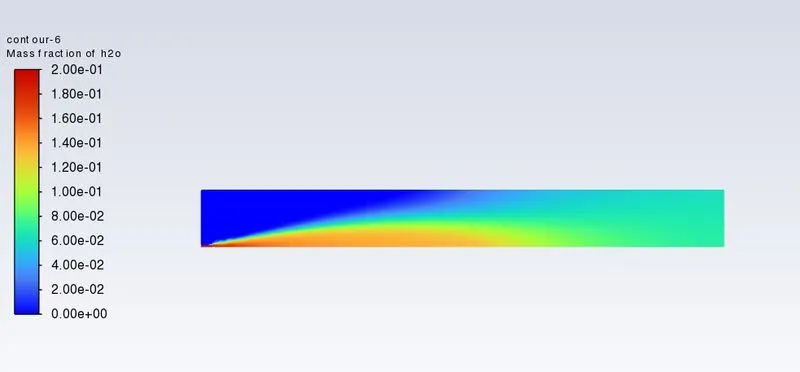
H2o Contour & Mass Fraction
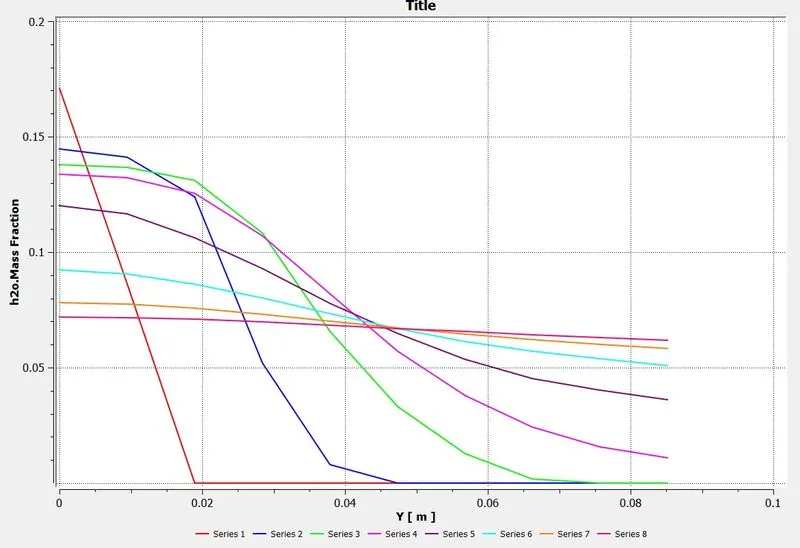
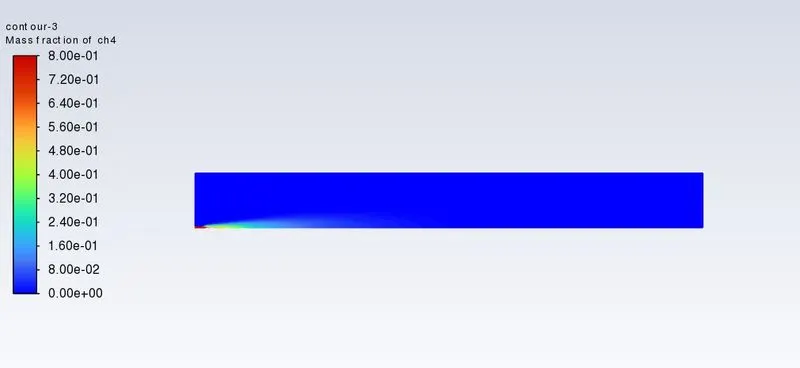
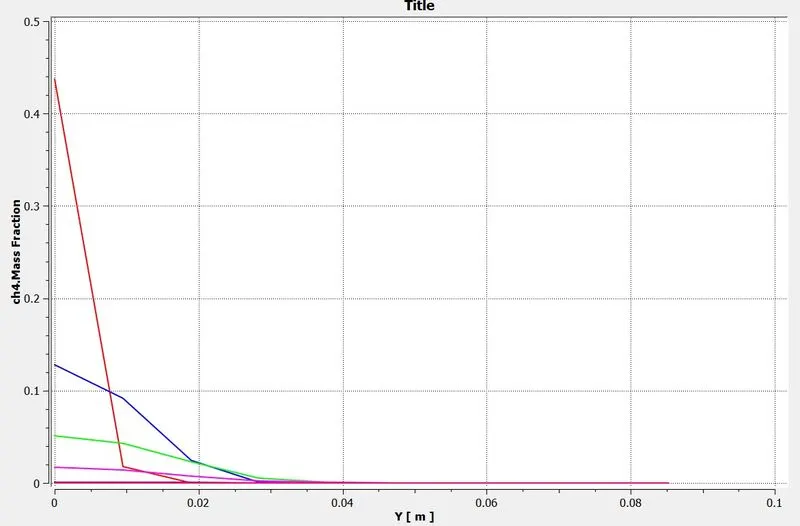
CH4 Contour & Mass Fraction
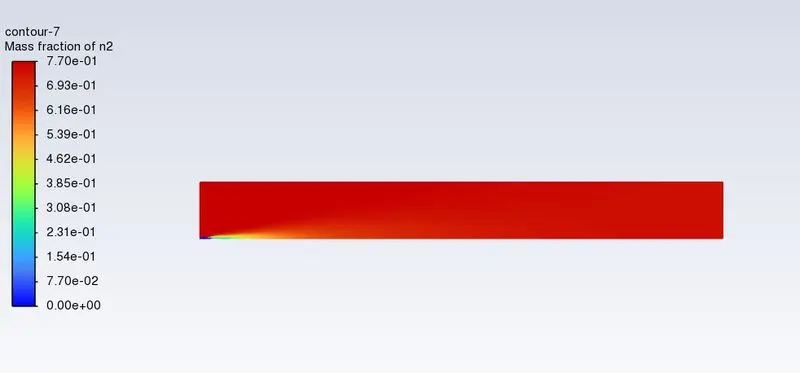
N2 Contour & Mass Fraction
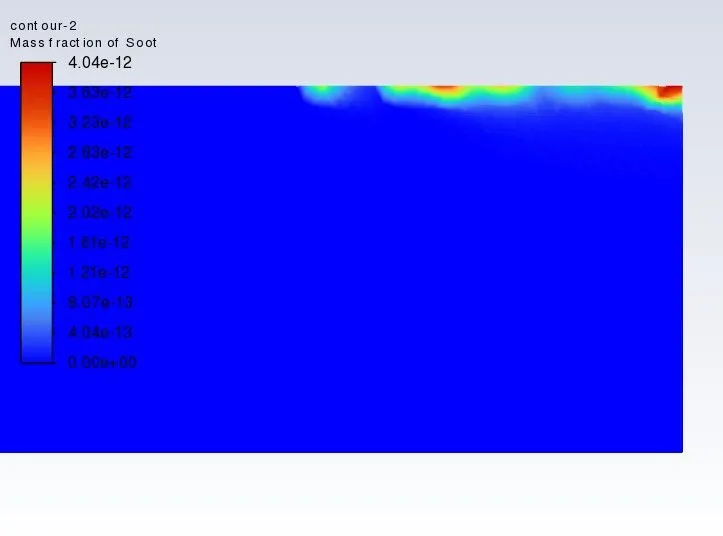
Soot Contour
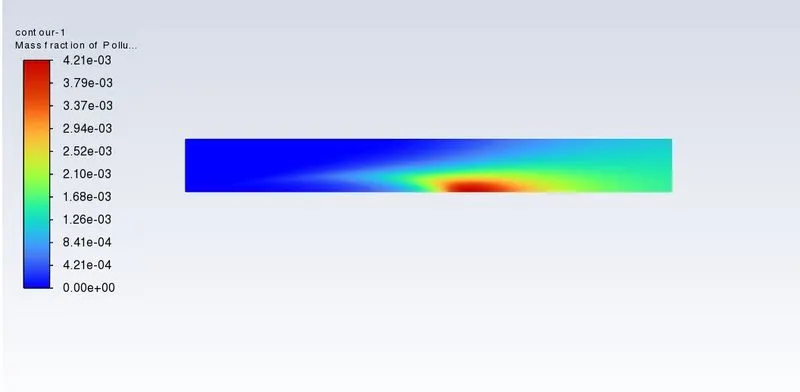
NoX contour
IV-CH4-70% and H20-30%
Residuals
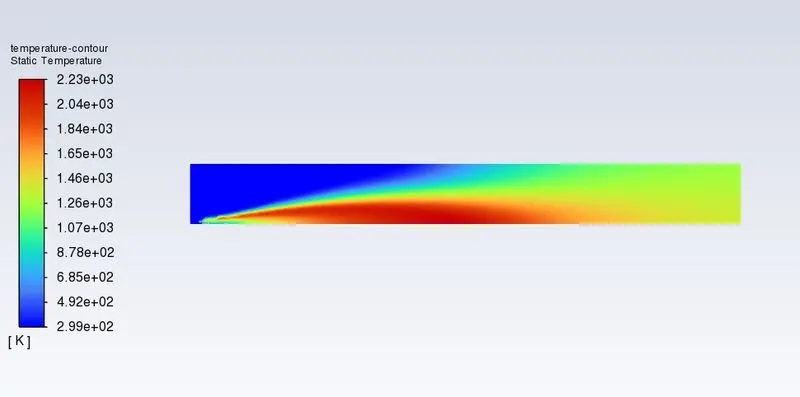
Temperatur contour
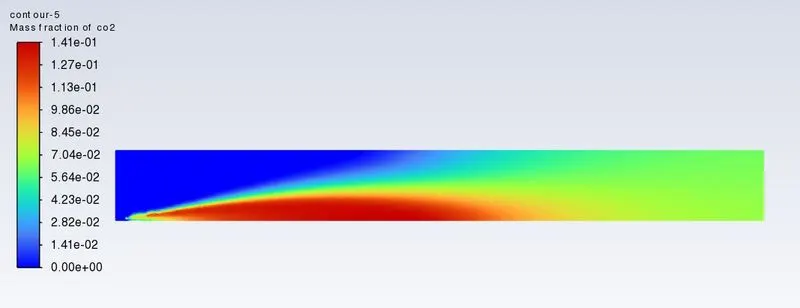
Co2 Contour & Mass fraction
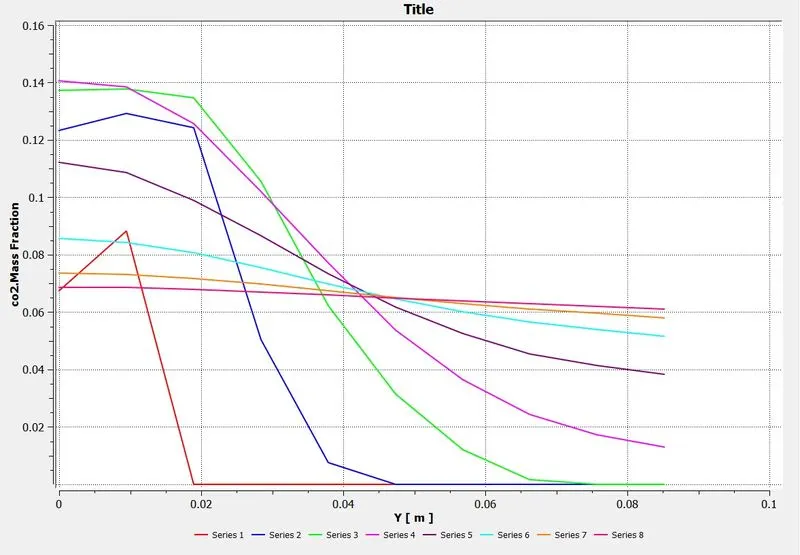
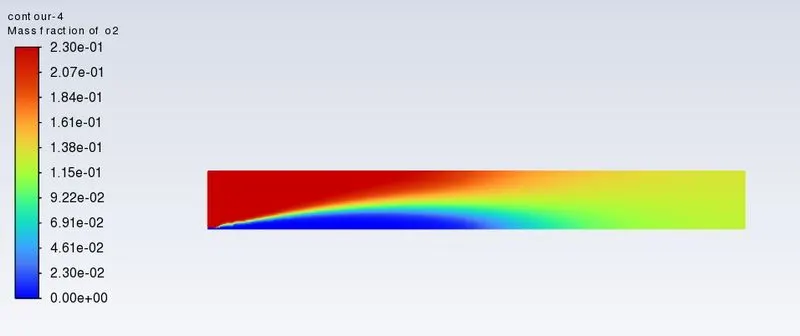
O2 Contour & Mass fraction
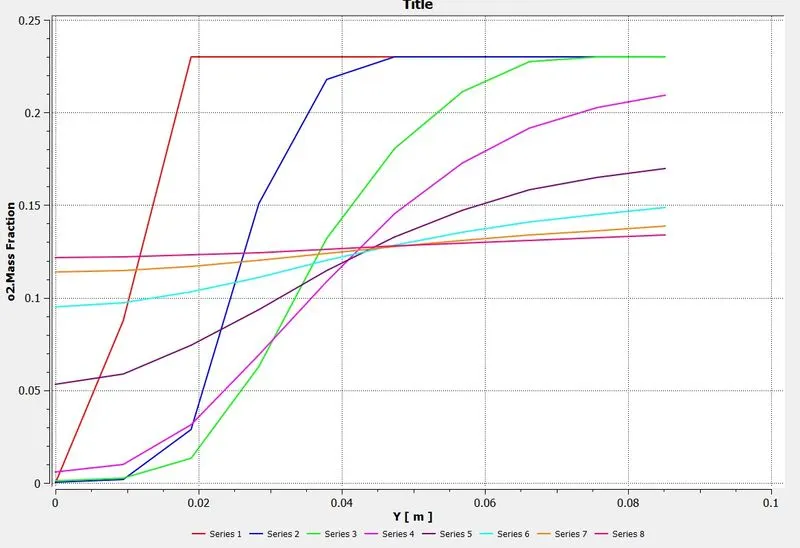
H2o Contour & Mass Fraction
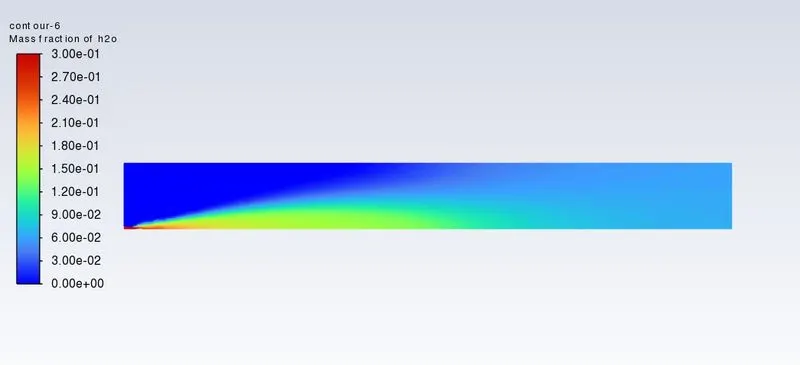
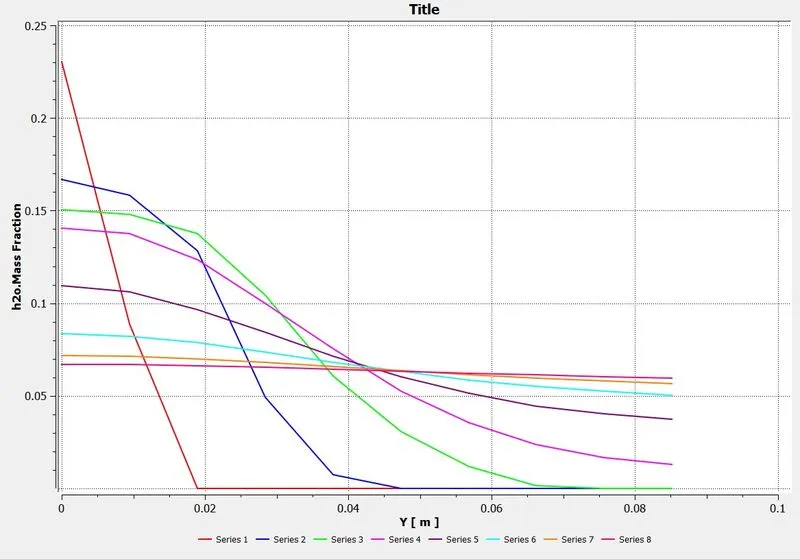
CH4 Contour & Mass Fraction
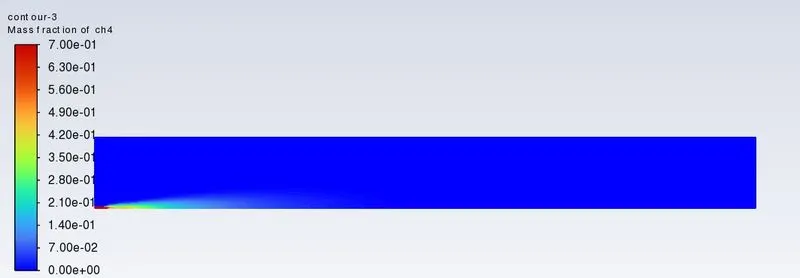
N2 Contour & Mass Fraction
Soot Contour
NoX contour
OBSERVATION
| CASES | TEMPERATURE | MASS FRACTION OF( Nox) | MASS FRACTION OF SOOT |
| PART-1 | 2.31e+03 | 8.83e-03 | 1.19e-33 |
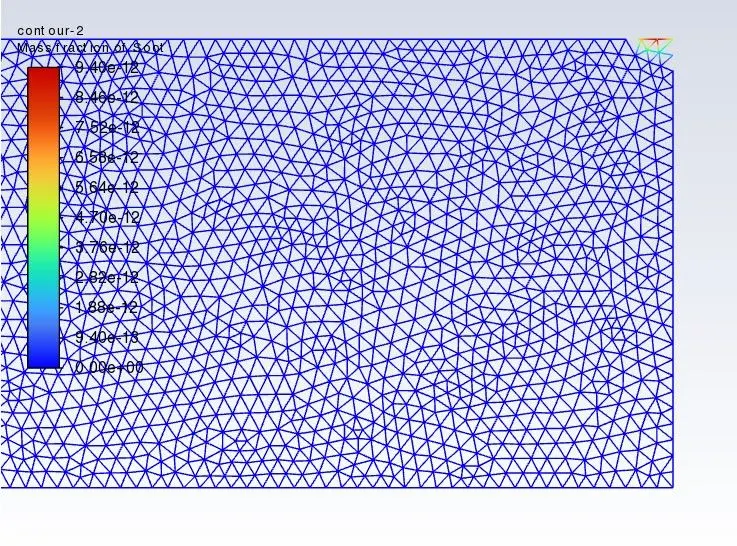
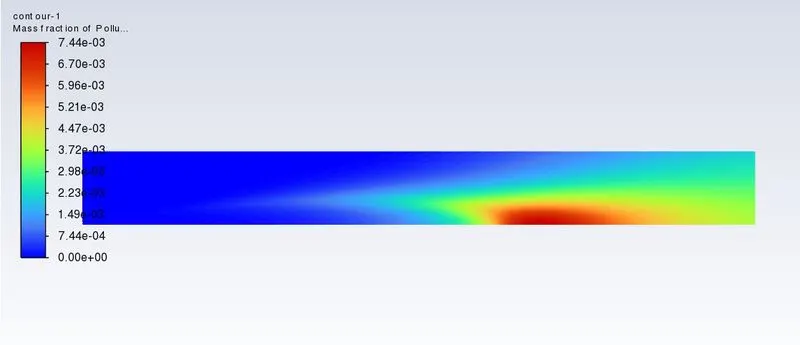
| PART2-CI | 2.30e+03 | 7.44e-03 | 9.40e-12 |
| C-II | 2.29e+03 | 6.24e-03 | 9.18e-12 |
| C-III | 2.26e+03 | 4.21e-03 | 4.043-12 |
| C-IV | 2.23e+03 | 2.261e-03 | 1.53e-12 |
- We saw that the mass fraction of O2 increase up to 0.23, After that it decrease. Also, we could see that CH4 is burning from high at 1 to o. But in reality, some unburnt carbon particles always remain. due incomplete combustion soot or fly ass occurs.
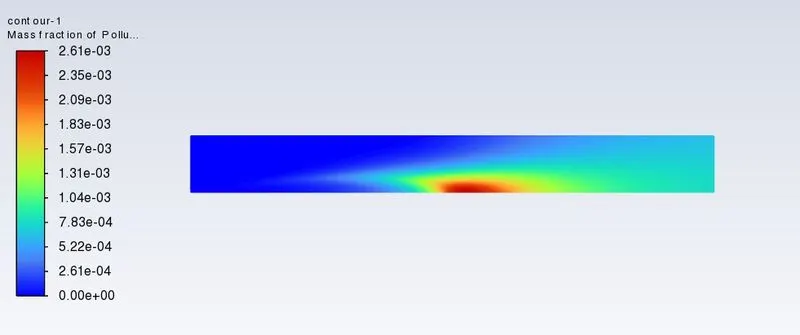
-We could also see there are Nox emissions, Which are due to combustion of nitrogen present in the air, which is 78%.due to that we can see N2 is Maximum all over the contours.
-There is a very small temperature drop when we added water in fuel in each case from CI to CIV of Part 2.
-Also there is no ignition source for combustion So, the rate of reactions is controlled by turbulence mixing in the Eddy dissipation Model. So with a large eddy mixing time scale, combustion starts when turbulence occurs.
CONCLUSION-
- From the above simulation we conclude that, if we add water to the fuel, it helps in decreasing Nox and soot formation.
- Water addition leads to increase OH radicals that Might have a significant impact on shoot oxidation and reduce the soot formed in the gas phase
- Added water dilutes calories genr=erated by combustion that decreases combustion temperature if temperature reduces sufficiently, Nox can not be formed in great concentration.