Week 10 - Challenge 3 - Door Trim Lower with Engineering Features
1.TOOLING AXIS
1.1 MAIN TOOLING AXIS
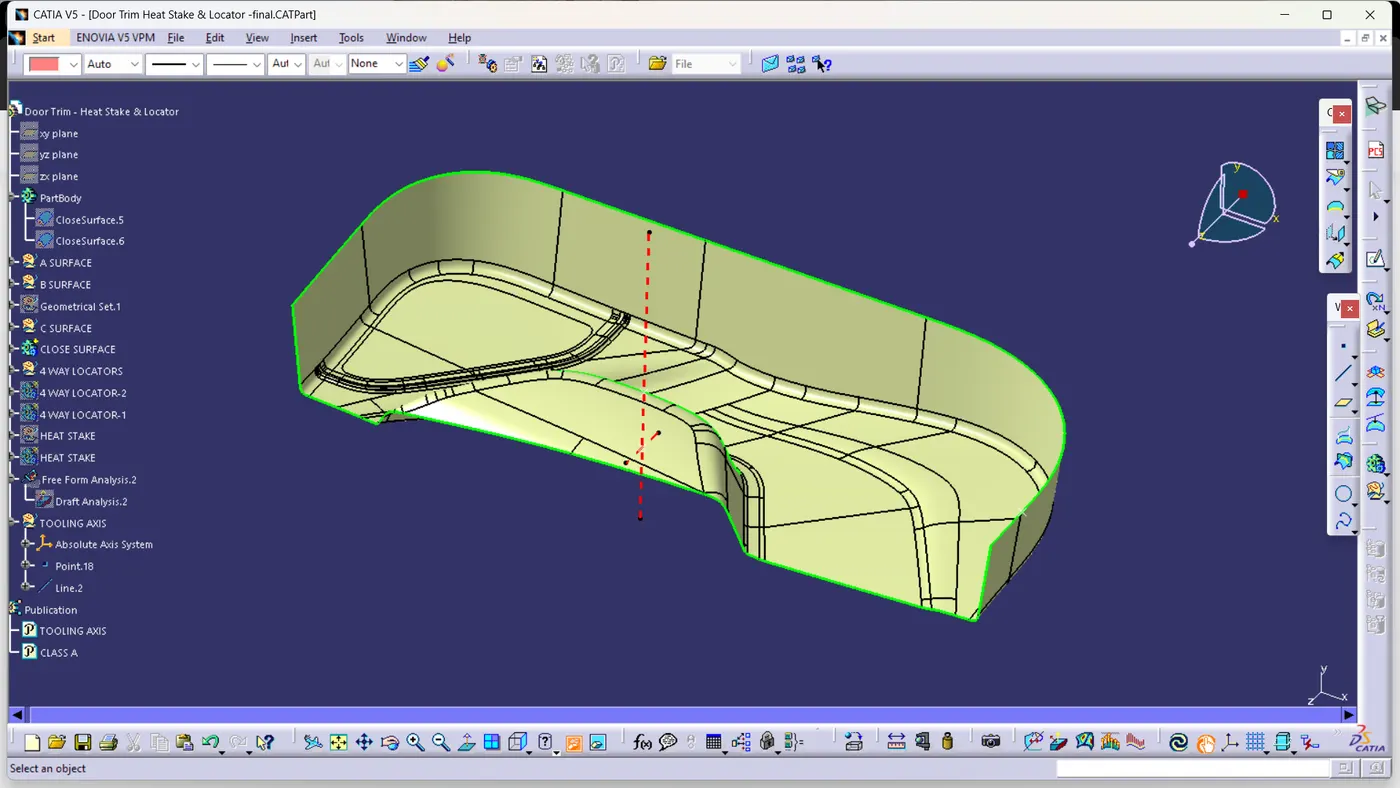
1.2 SIDE CORE AXIS
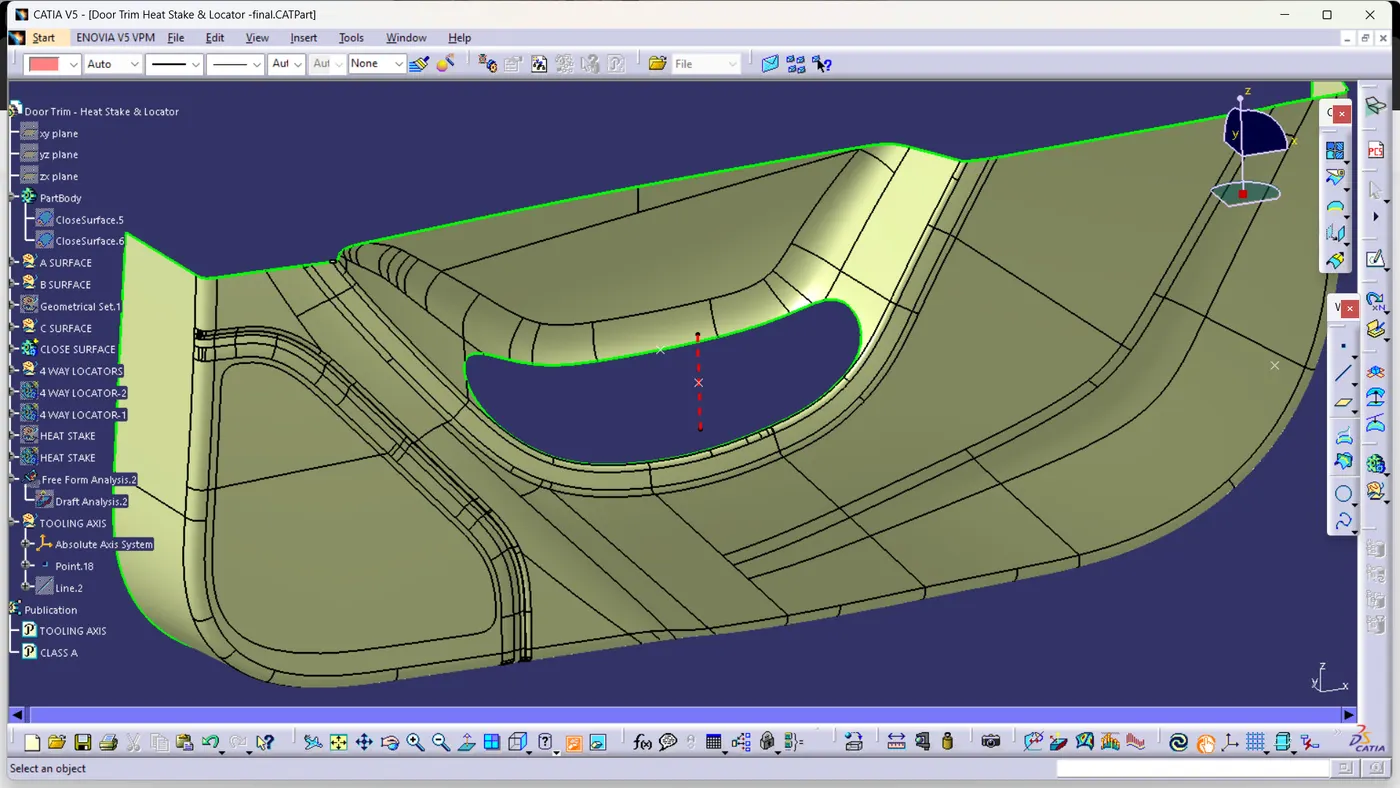
2.DRAFT ANALYSIS
2.1 CLASS A DRAFT ANALYSIS
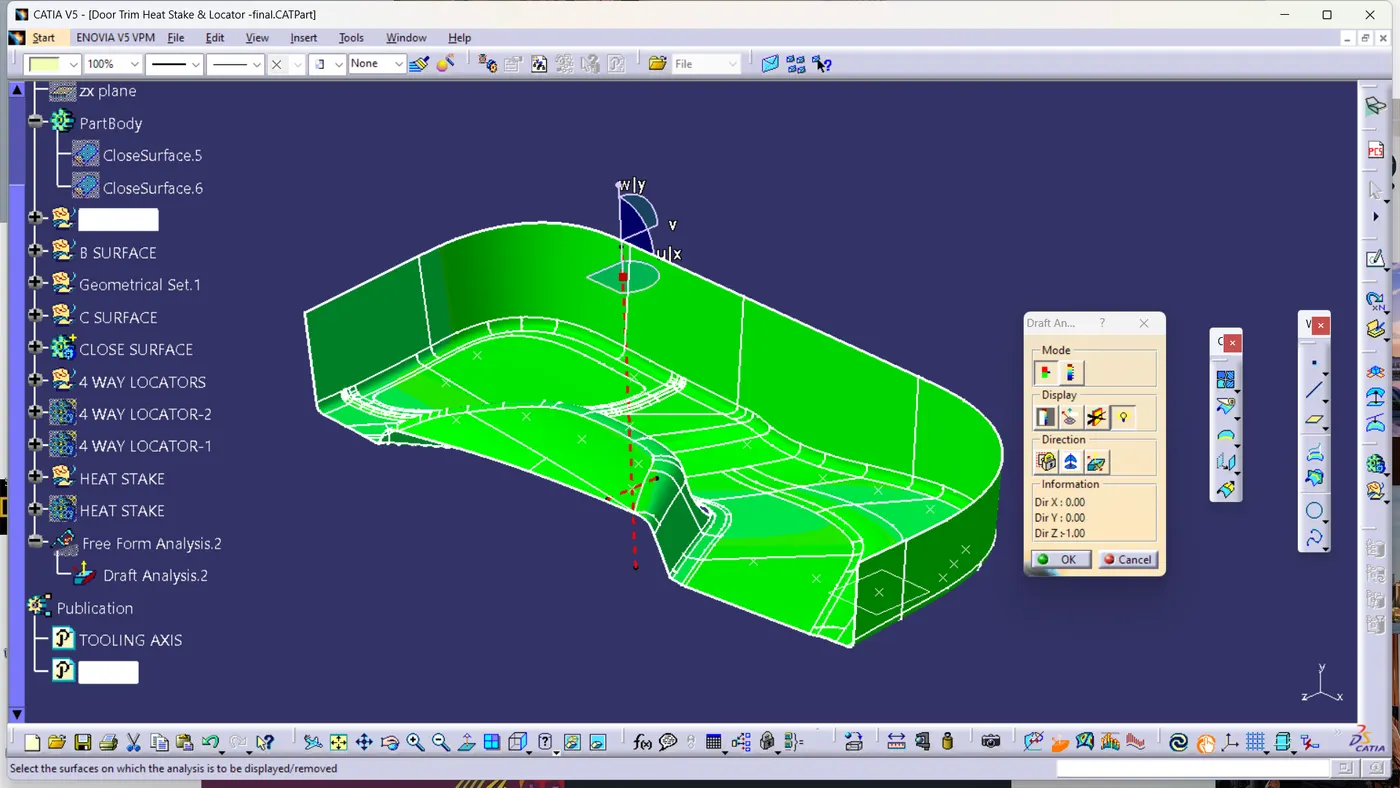
2.2 FINAL COMPONENT DRAFT ANALYSIS
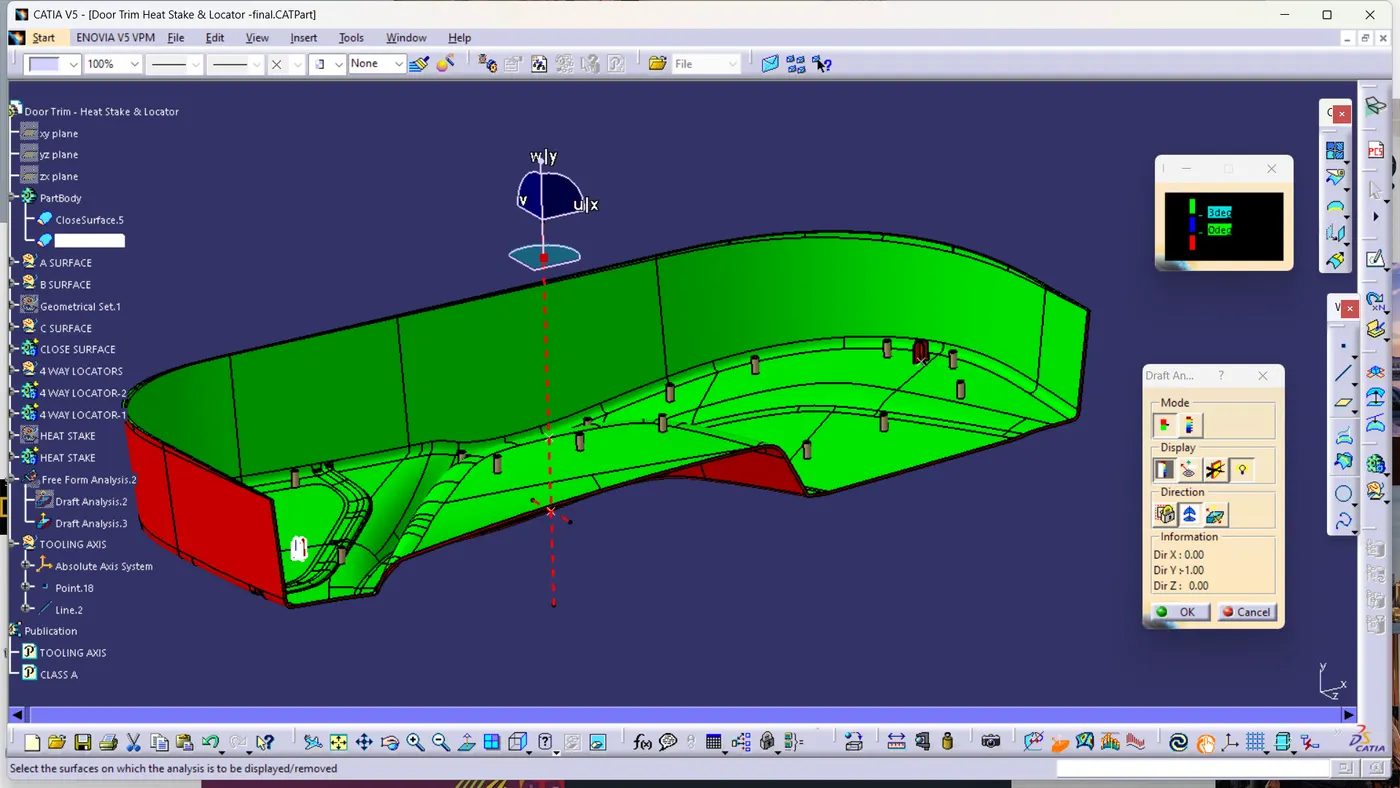
3.SURFACES A&B
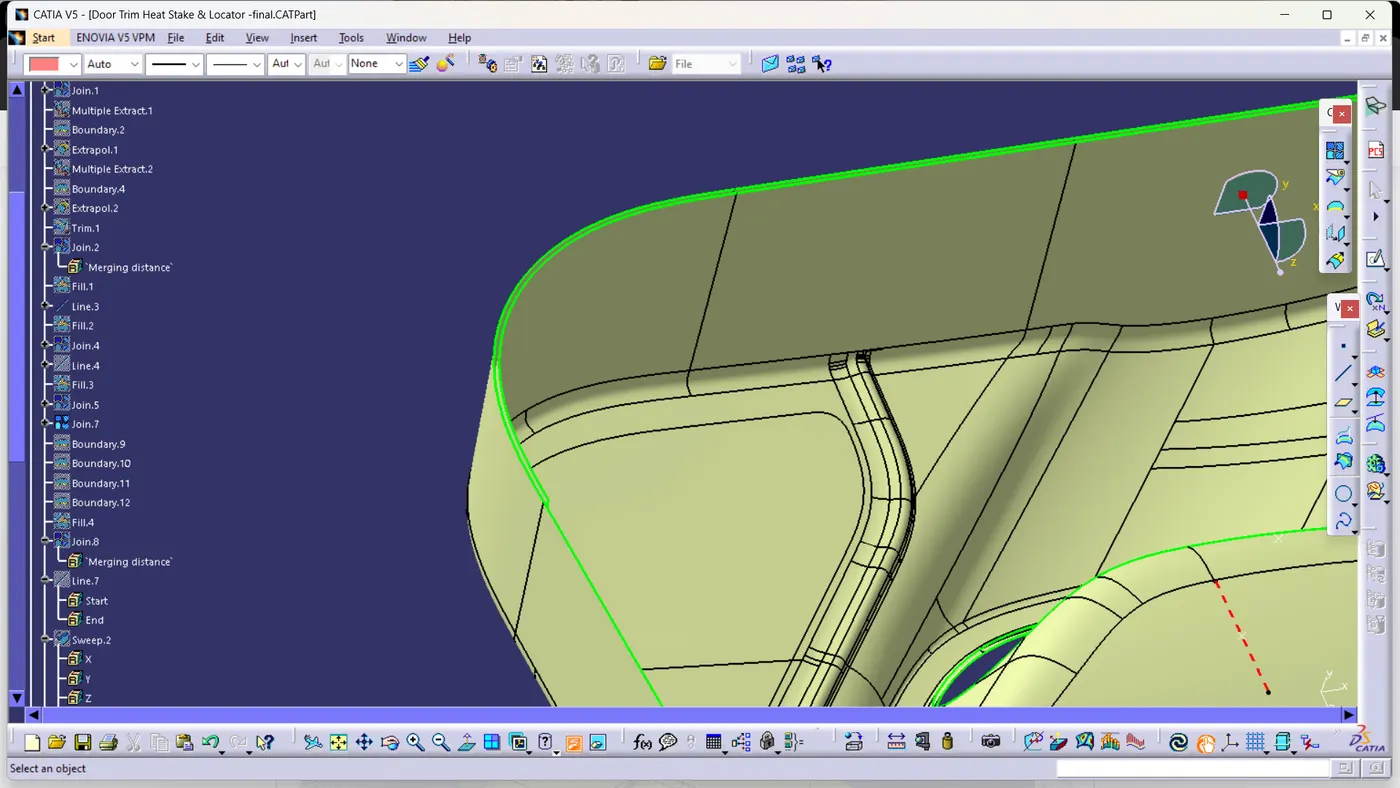
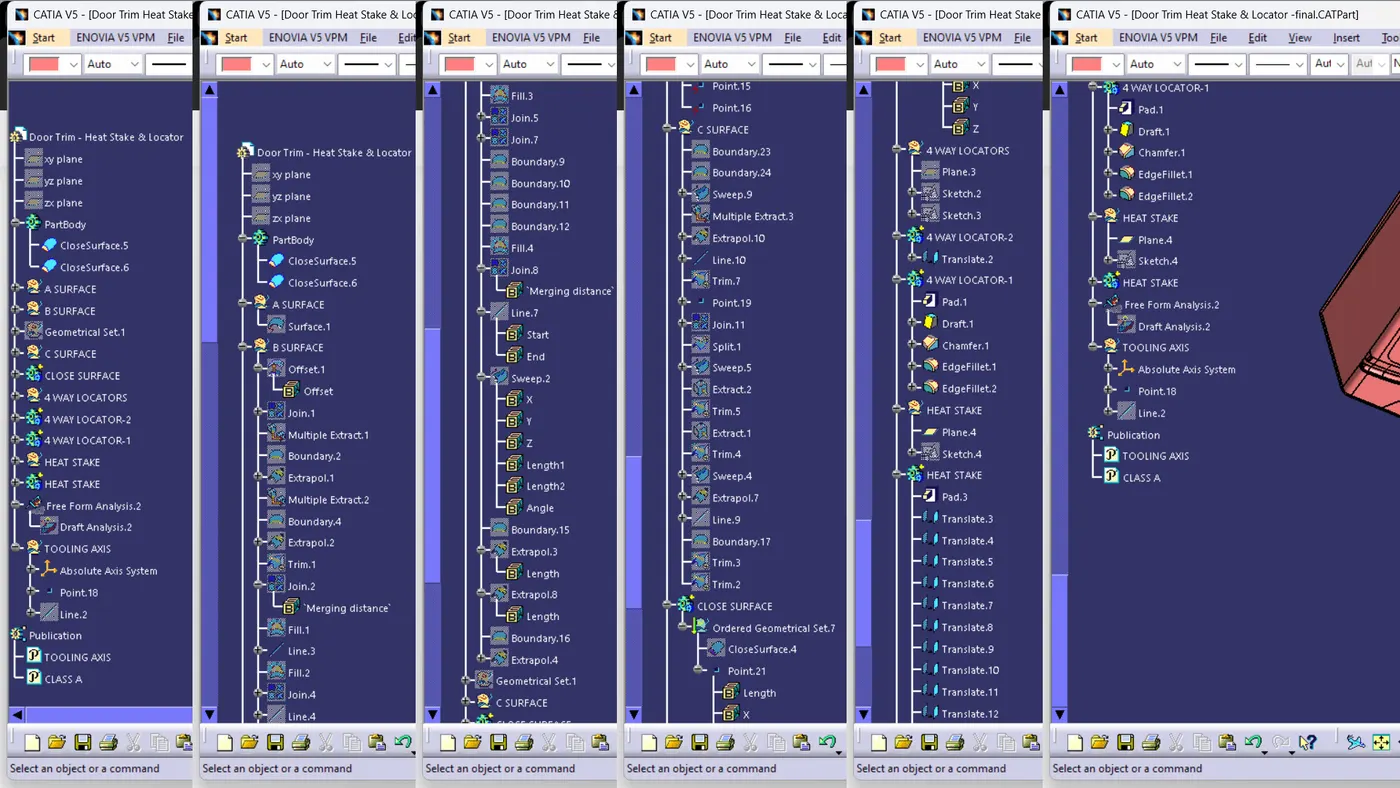
4.TREE STRUCTURE
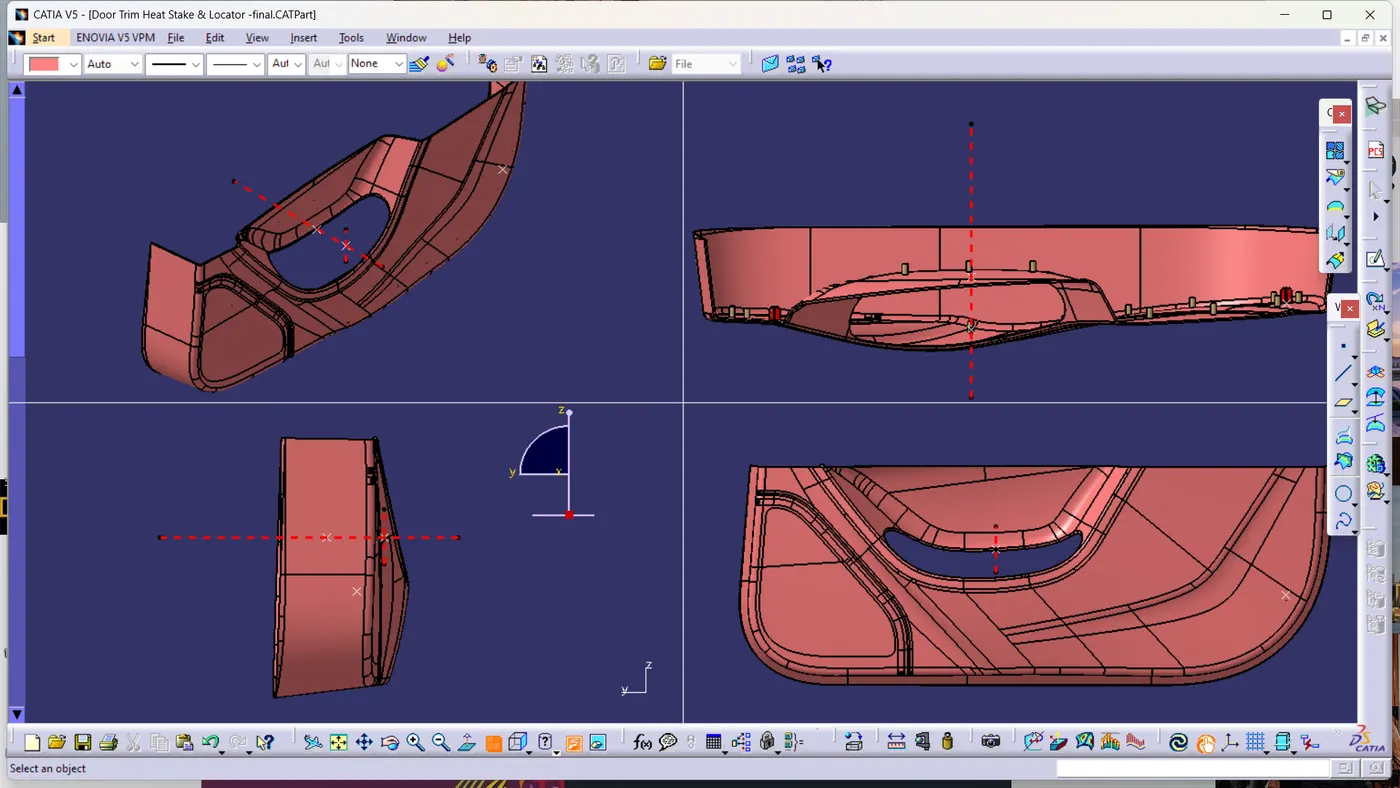
5.MULTIPLE VIEWS
6. REPORTS
6.1 Draft Analysis
The draft analysis for the plastic door component shows a range of angles from -3 degrees to 3 degrees, ensuring smooth ejection from the mold. The green areas represent a 3-degree draft, ideal for easy release. Blue areas indicate 0 degrees, which may cause difficulty during mold release. Red areas show a -3-degree draft, which could lead to ejection issues or material defects. To improve manufacturability, it is recommended to adjust critical red and blue areas to positive drafts, especially near functional elements like heat stakes and locators.
6.2 Heat Stakes
The heat stakes are designed with a diameter ranging from 1.5mm to 2mm, adhering to industry-standard rules for plastic components. The stakes provide strong joints by using heat to melt the stakes, securing parts together. Proper draft angles are applied to ensure smooth mold release and avoid warping during the process.
6.3 Locators
Locators are used for precise alignment and assembly of the component. The design ensures accurate positioning between mating parts. Locators are strategically placed to minimize assembly errors and improve fit. Drafting angles of 0.5 degrees ensure their manufacturability without affecting the assembly accuracy.