Week 10 - Challenge 3 - Door Trim Lower with Engineering Features
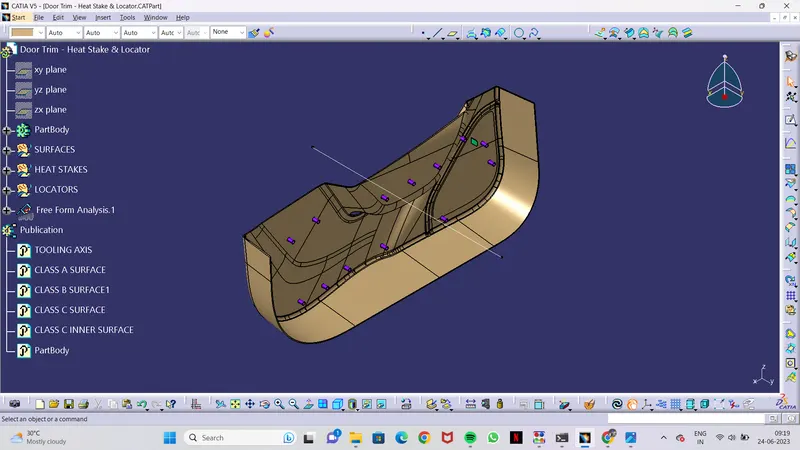
The given class A surface of the Door Trim is succesfully thickened to a thickness of 2.5 mm as a part. The class A surface was offested to create class b surface, and there were two unformed patch areas. The left out patches were rectified by reworking the surfaces and giving required fillets. The class C surface is created and then added to the class A surface. Then the class A surface is trimed with the class B surface. The final trim surfaces is converted into a part using close body command. Heat Stakes were created considering the design guidelines after closing the surfaces with close body command. Heat Stakes of inner diameter of 5mm and outer dia of 7 mm are created in the reference points provides. Points were created for the locators, 2way & 4 way locators were created. The Heat Stakes & Locators are union trimmed with the part body to get the final body. Bellow figure shows the various views of the Door trim .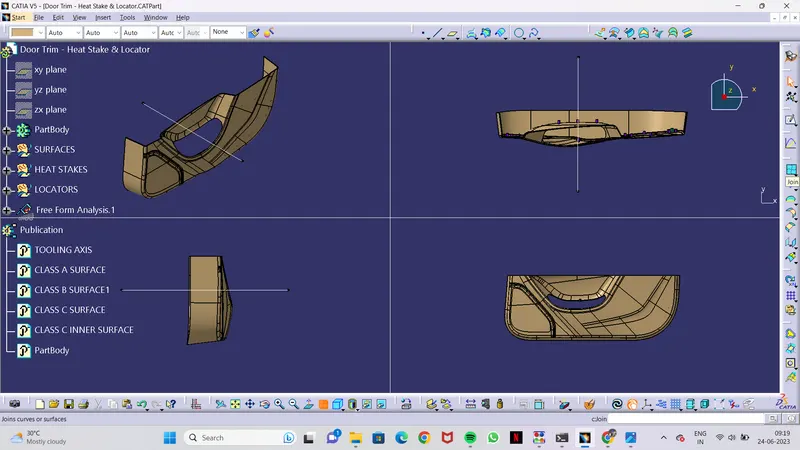
Tolling axis creation:
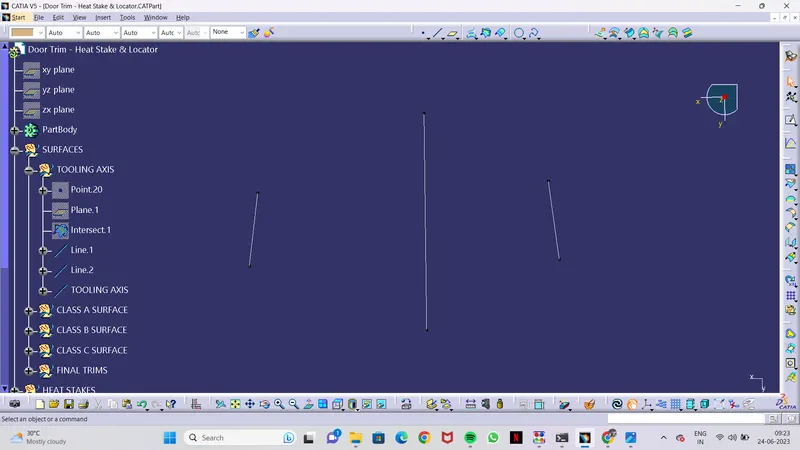
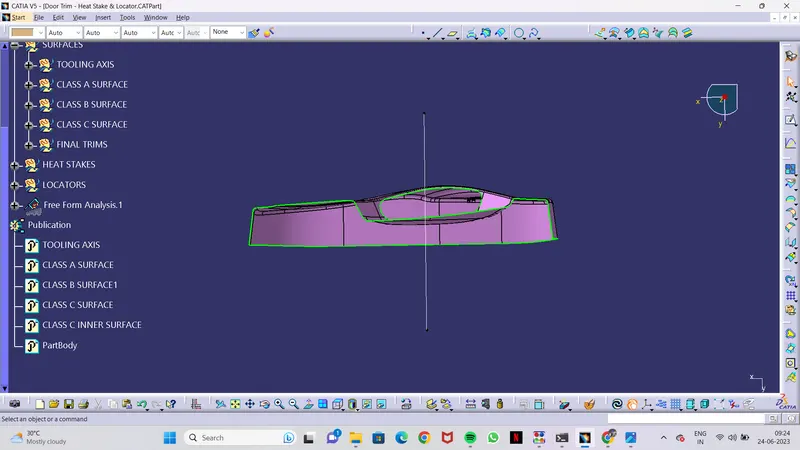
tooling axis is considered to be taken in y axis considering the core and cavity movement and no side core will be required. This also helps in convinent ejecting of the part form the mould. 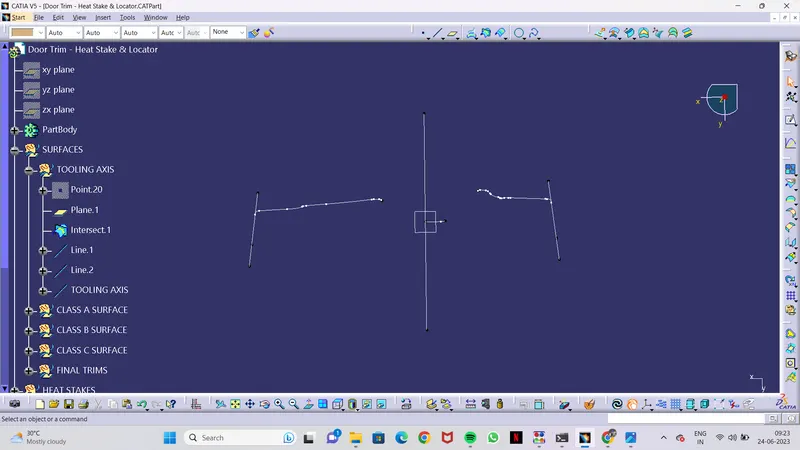
Draft Analysis Of Class A Surface:
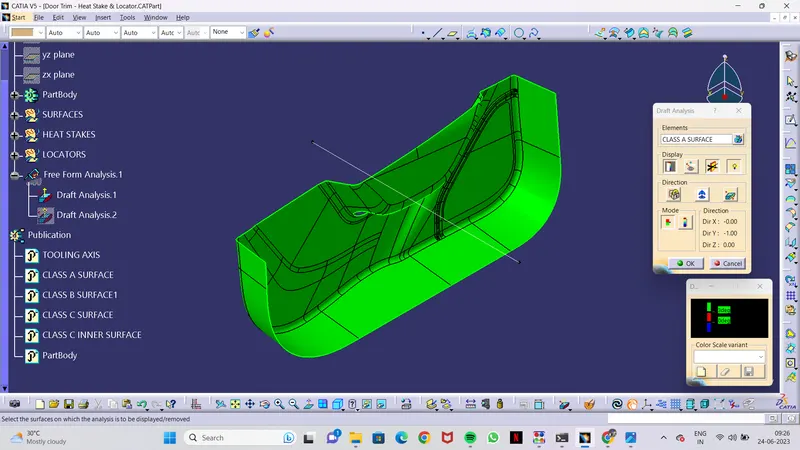
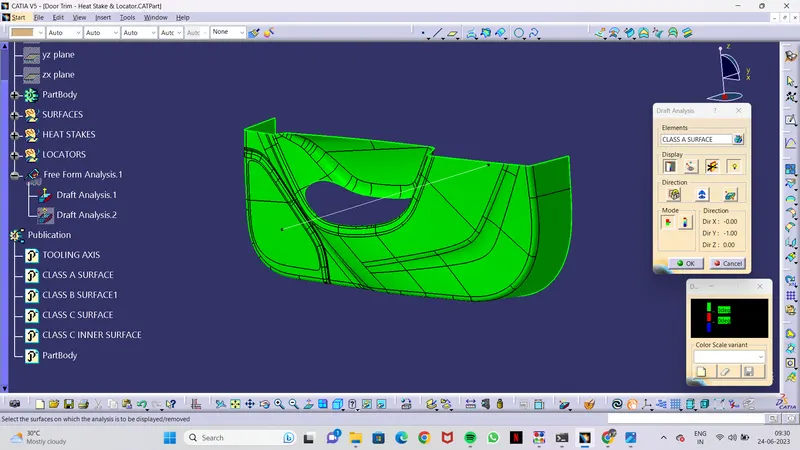
The above image shows the draft analysis of provided class A surface. The draft analysis was done for an angle of 3 degree. From the picture its is observed that surfaces in green are in positive draft with an angle more than 3 degree and surfaces in red have a draft of an angle between 0-3 degree.
Draft Analysis Of Part Body:
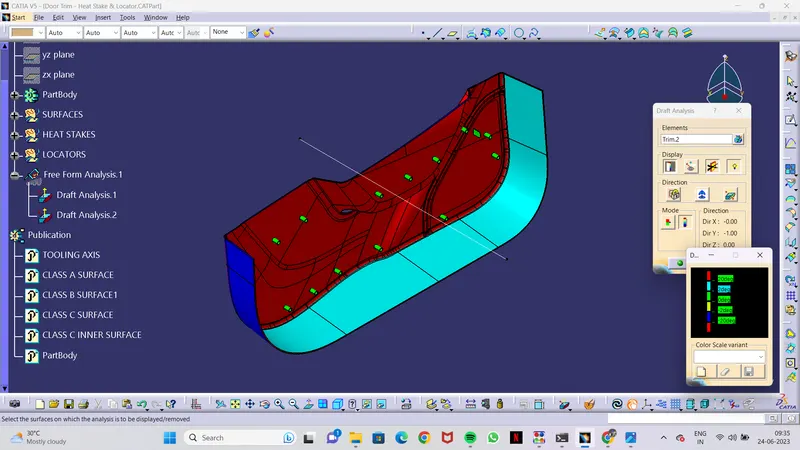
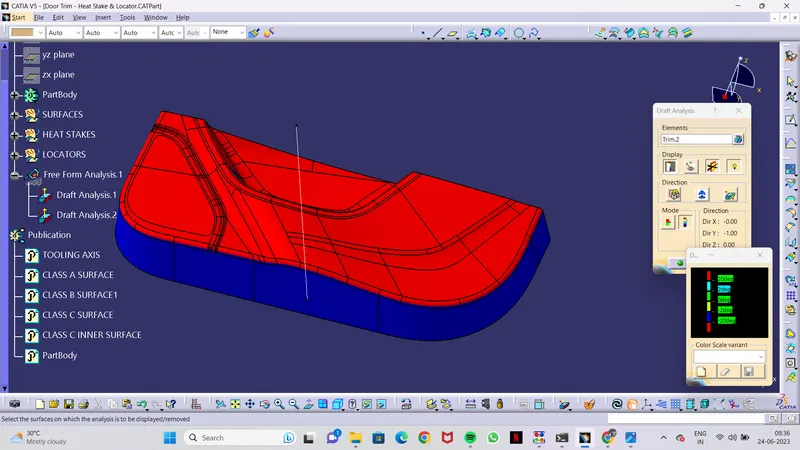
The above images show the draft analysi of the part body door trim. The surface in cyan colour are drafted to and angle between 2-20 degree and the surfaces in yellow are negatively drafted to an angle between 2-20 degree. Which means the will be able to clear the core and cavity without any friction while ejecting. when a draft angle of 3 degre is given to the mould the product formed will be of excat dimensions after cooling and there wont be any damage on the surfaces of the product due to friction.