Week 10 Bullet penetrating a Bucket Challenge
AIM:
- To perform an explicit dynamic analysis on a bullet penetrating a bucket using ansys workbench with three different materials with the same velocity.
PROCEDURE:
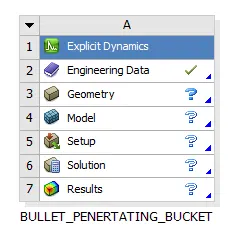
- Open ansys workbench and drop an explicit dynamics analysis system and rename it as bullet penetrating a bucket.
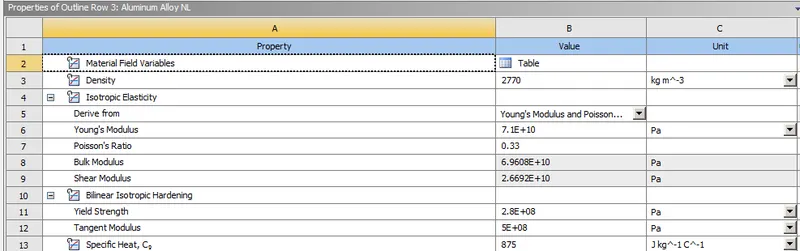
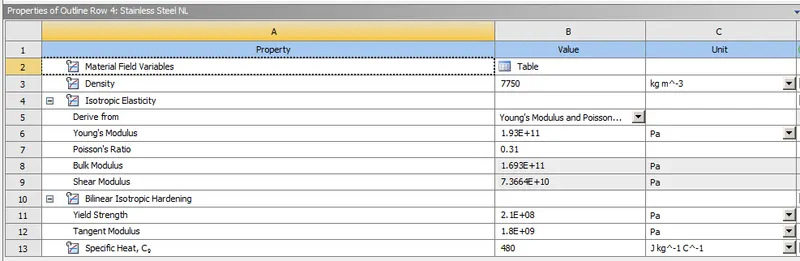
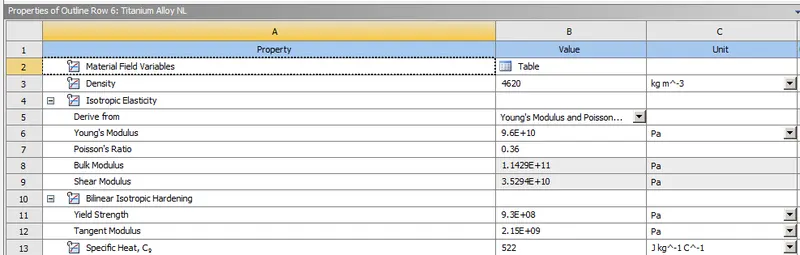
- Add the required materials for the simulation.
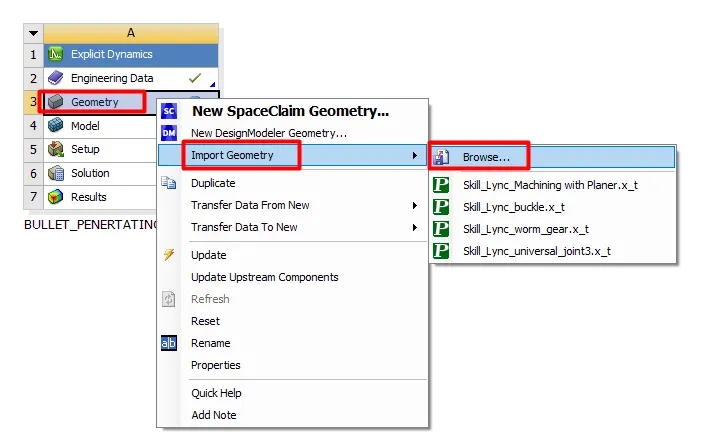
- Import geometry by browsing to the file location.
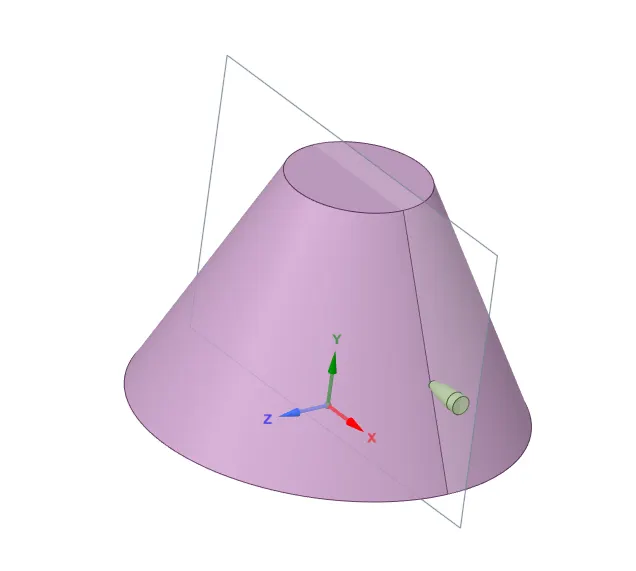
- Open geometry in Spaceclaim and check for abnormalities.
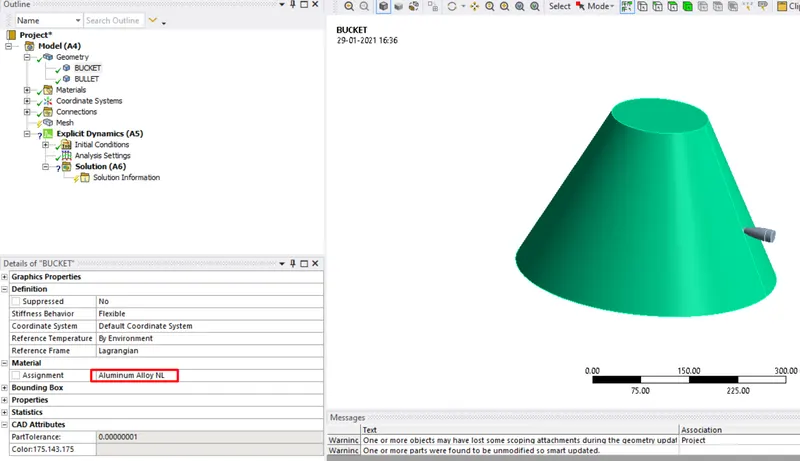
- Close Spaceclaim and open ansys mechanical to set up the simulation.
- For case-1 assign bucket material as aluminum alloy NL.
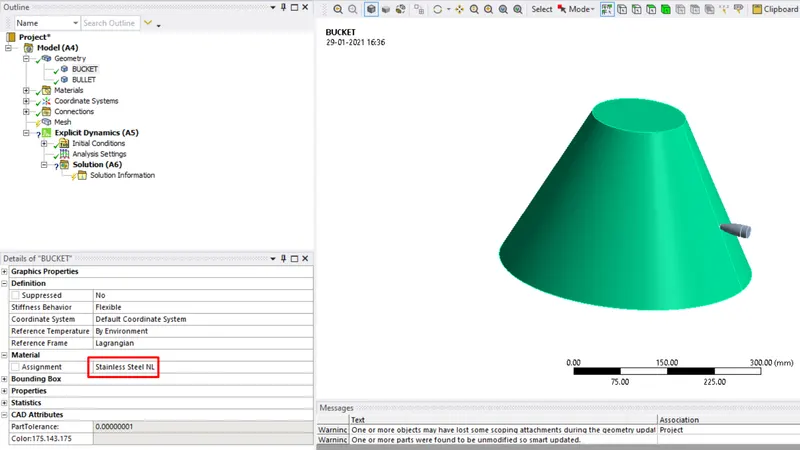
- For case-2 assign bucket material as Stainless steel NL.
- For case-3 assign bucket material as titanium alloy NL.
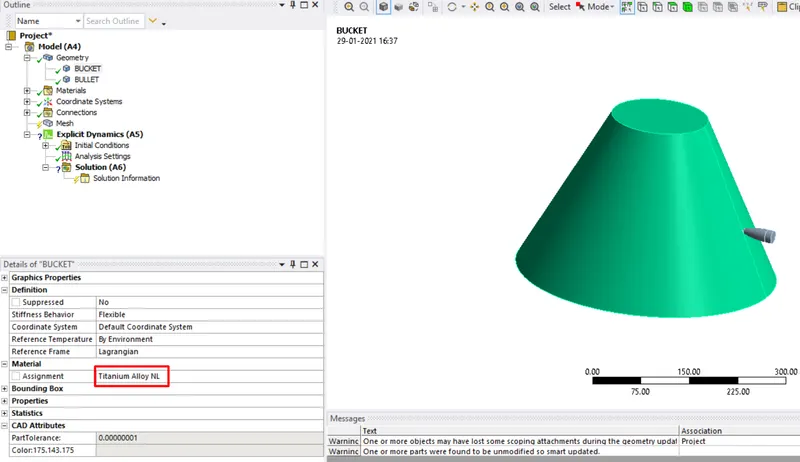
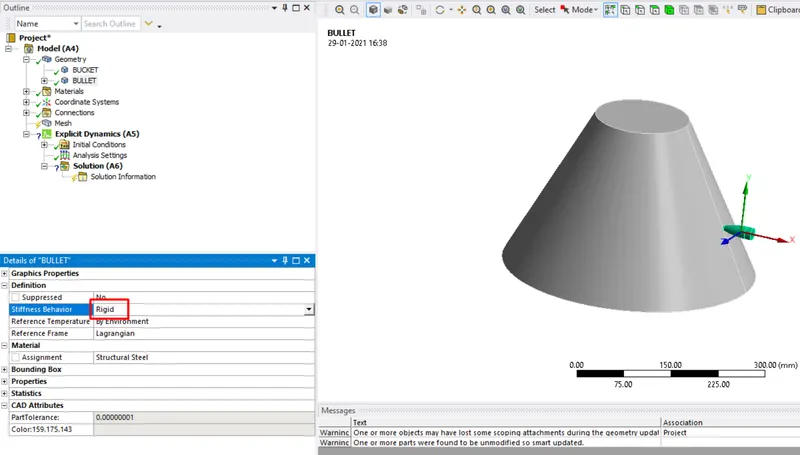
- Change the behavior of the bullet to rigid.
- Delete the automatically created contacts.
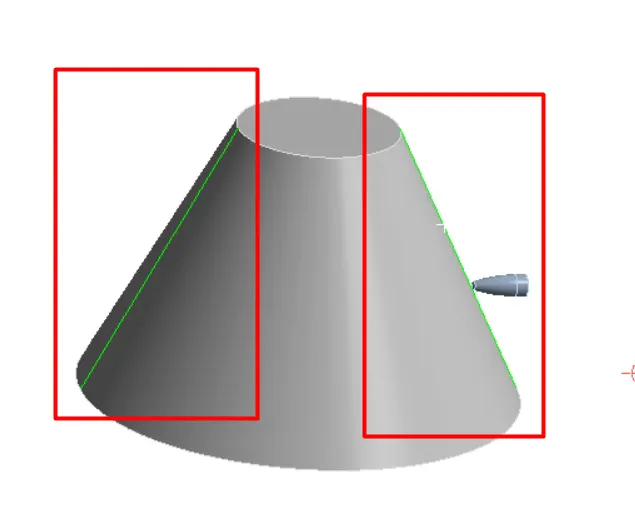
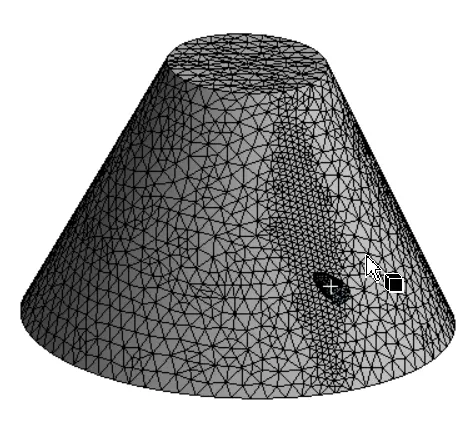
- Under mesh insert sizing and select the two edges as shown below and insert an element size of 6mm
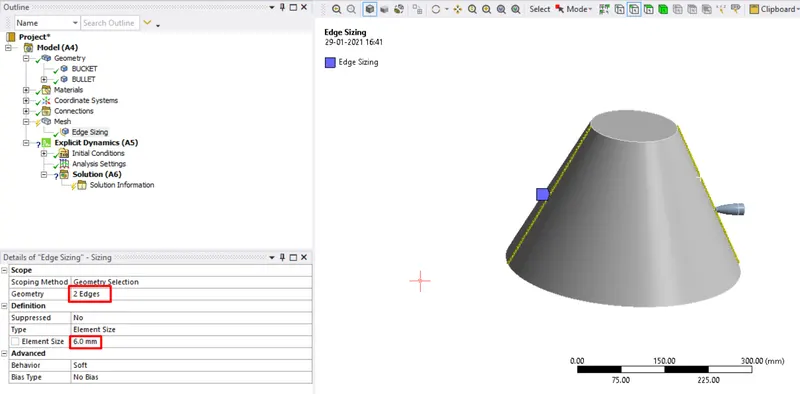
- Insert body sizing fr bullet with 10 mm of element size and for the bucket with an element size of 35 mm.
- Generate mesh.
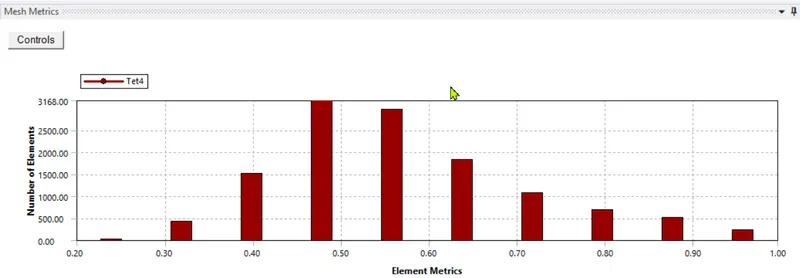
- The above graph represents mesh metrics which gives a clear idea of mesh quality and the type of elements used for the simulation.
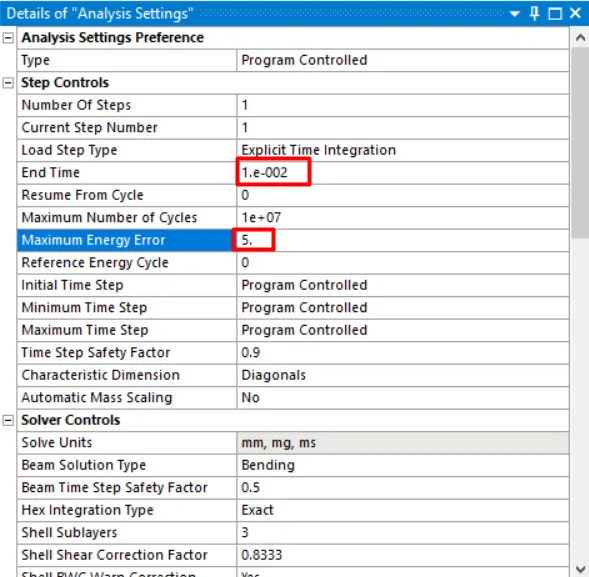
- Under analysis, settings change end time to 0.01 and change the maximum energy error to 5.
- Insert fixed support to the bucket.
- Give a velocity of -139000. mm/s.
- List the outputs required and simulate the model for the results.
RESULTS:
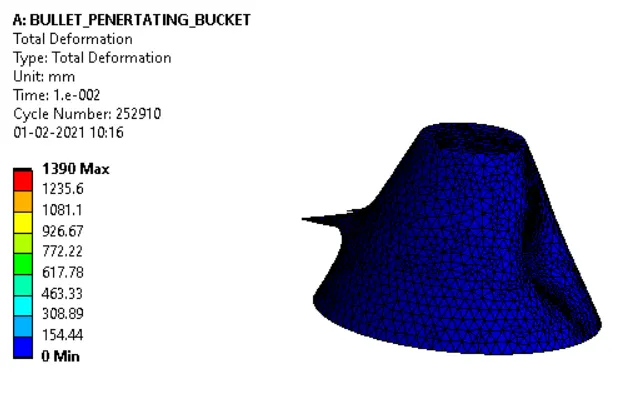
CASE-1: ALUMINIUM ALLOY NL:
TOTAL DEFORMATION:
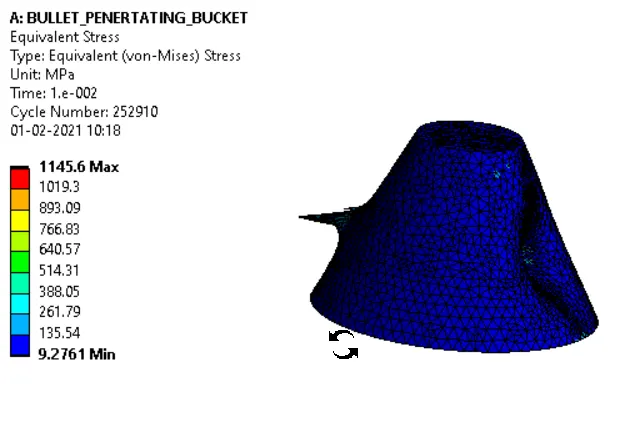
EQUIVALENT STRESS:
CASE-1: STAINLESS STEEL NL:
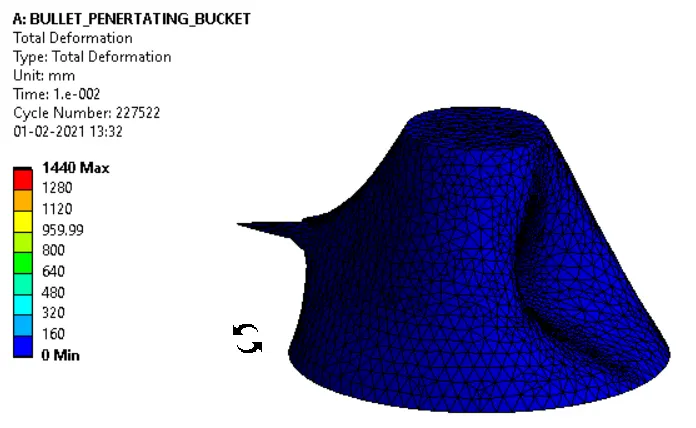
TOTAL DEFORMATION:
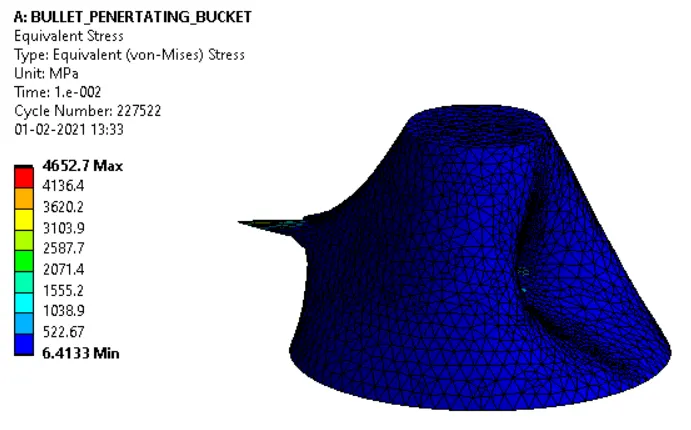
EQUIVALENT STRESS:
CASE-3: TITANIUM ALLOY NL:
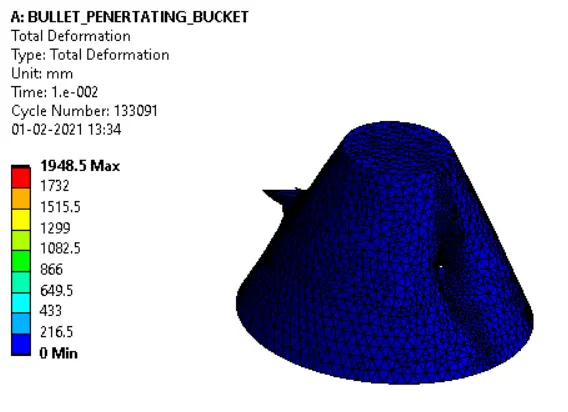
TOTAL DEFORMATION:
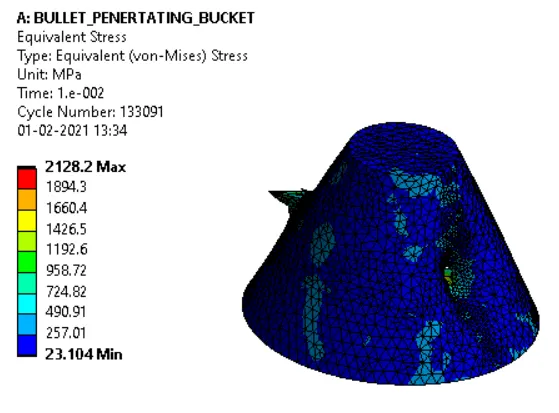
EQUIVALENT STRESS:
| SL.NO | MATERIAL | TOTAL DEFORMATION | EQUIVALENT STRESS |
| 1 | ALUMINIUM ALLOY NL | 1145.6 MPa | 1390 mm |
| 2 | STAINLESS STEEL NL | 4652.7 MPa | 1440 mm |
| 3 | TITANIUM ALLOY NL | 2128.2 MPa | 1948.5 mm |
CONCLUSIONS:
- Explicit dynamic analysis of a bullet penetrating on a bucket is performed successfully using ansys workbench with three different materials.
- The total deformation and equivalent stress under three cases are obtained.
- The equivalent stress developed in the case of stainless steel Nl is much higher compared to the stress developed in case of aluminium alloy NL and titanium alloy NL.