Week 10 Bullet penetrating a Bucket Challenge
Stress Concentration on Bullet Penetrating a Bucket
OBJECTIVES:
To carry out an Explicit Dynamic Analysis of the Bullet penetrating a bucket for the given three materials of the bucket and determine the stress, deformation, and strain.
MATERIAL:
The Explicit Dynamic Analysis was carried out on the given specimen. The material used for this analysis was Stainless Steel NL, Cupper Alloy NL, Aluminum Alloy NL, and Tantalum and the study was carried out using ANSYS Mechanical Enterprise. The model for Tension Test was imported to ANSYS Workbench software and is shown in the figure below. The Bullet has been provided with RIGID Stiffness Behavior.
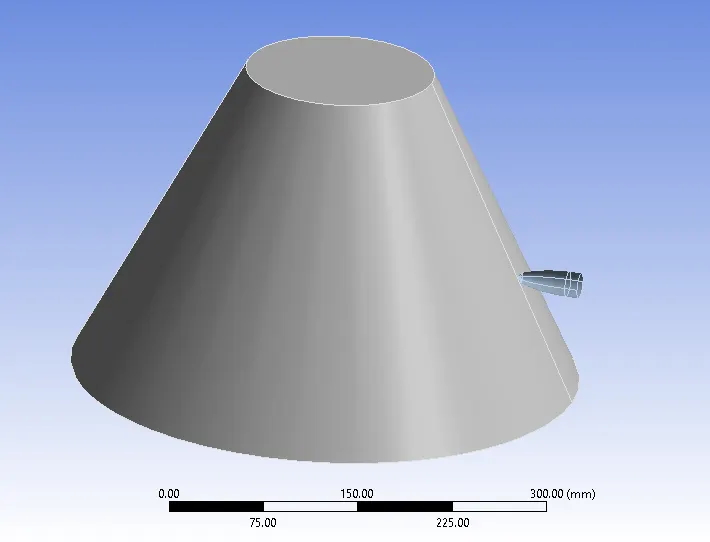
Fig.1 Bullet and the Bucket
Later the material was assigned and its properties used for this analysis are specified below.
- Bucket: Stainless Steel NL, Cupper Alloy NL, Aluminum Alloy NL,
- Bullet: Tantalum
|
Cases |
Case-1 |
Case-2 |
Case-3 |
All Cases |
|
Material |
Stainless Steel |
Copper Alloy NL |
AluminumAlloy NL |
Tantalum |
|
Density |
7.75e-6 kg/mm3 |
8.3e-6 kg/mm3 |
2.77e-6 kg/mm3 |
1.66e-6 kg/mm3 |
|
Young’s Modulus |
1.93e+5 MPa |
1.1e+5 MPa |
71000 MPa |
|
|
Poisson Ratio |
0.31 |
0.34 |
0.33 |
|
|
Bulk Modulus |
1.693e+5 MPa |
1.1458e+5 MPa |
69608 MPa |
|
|
Shear Modulus |
73664 MPa |
41045 MPa |
26692 MPa |
65600 MPa |
|
Components |
Bucket |
Bucket |
Bucket |
Bullet |
CONNECTIONS:
Body Interactions with FRICTIONLESS Type was provided by default to both the Bucket and the Bullet.
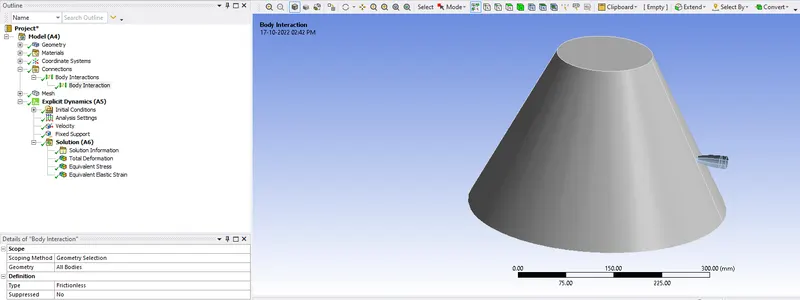
Fig.2 Body Interactions
MESHING:
- Edge Sizing: To the 2 edges of the Bucket
- Element Size: 6mm
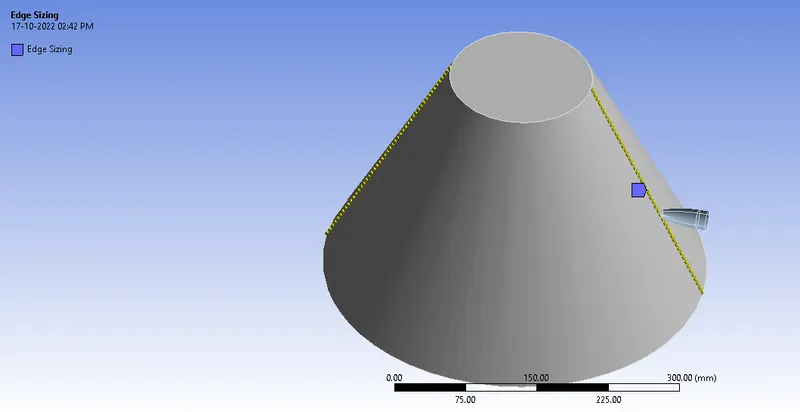
Fig.3 Edge Sizing
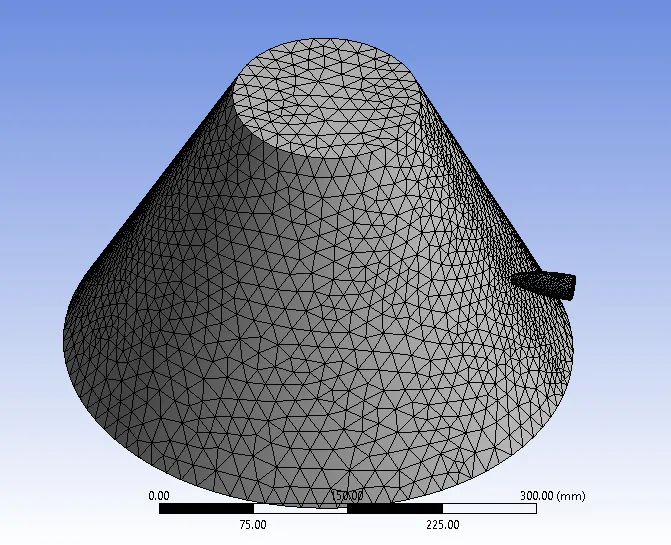
Fig.4 Meshed Model
A mesh metric that identifies elements according to their quality was employed and it can be seen that the elements of the lowest quality are minimal. Most of the elements have very high quality in the range of 0.5 to 0.9. Hence, the mesh is of acceptable quality. The meshed model is shown below.
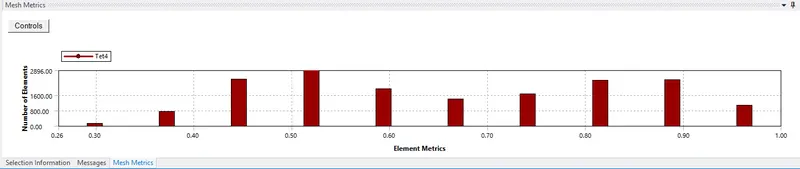
Fig.5 Element Quality
ANALYSIS SETTING (All Cases):
- of Steps: 1
- Load Step Type: Explicit Time Integration
- End Time: 0.01s
- No. of Cycles: 1e+7
- Energy Error: 5
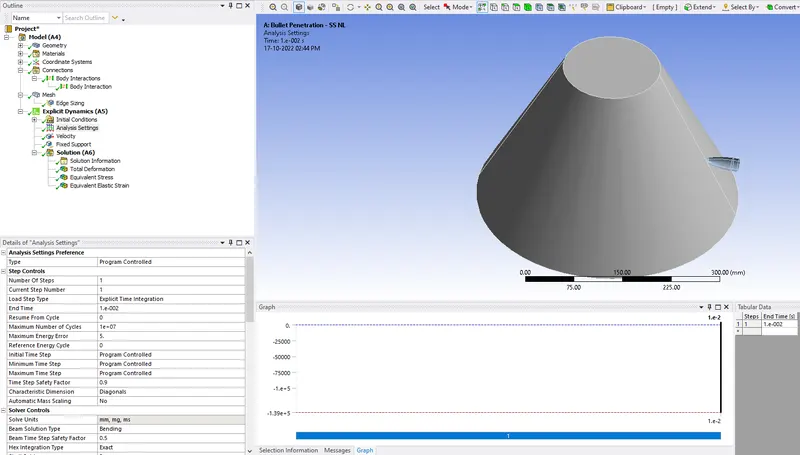
Fig.6 Analysis Setting (all cases)
BOUNDARY CONDITIONS AND LOAD (All Cases):
- Fixed Support: Bottom Face of the Bucket
- Velocity: The Bullet
- X Component: -139000mm/s
- Y and Z Component: Constant – 0mm/s
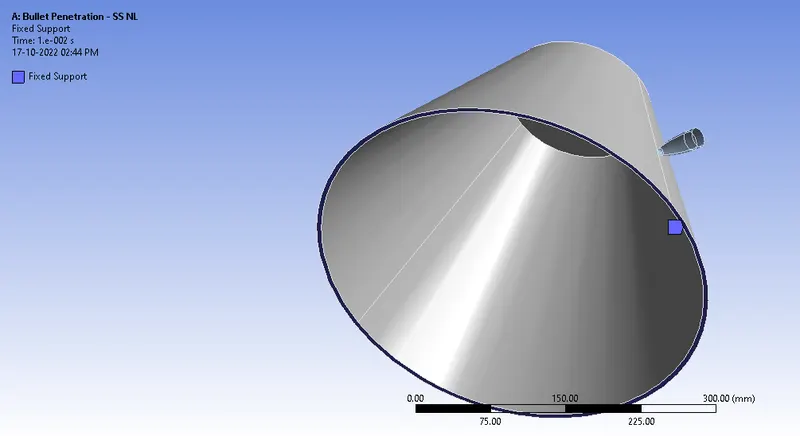
Fig.7 Fixed Support
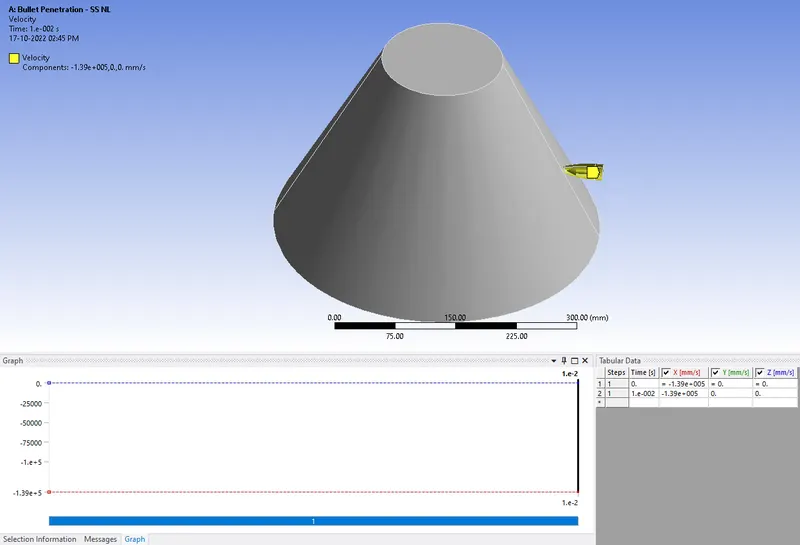
Fig.8 Velocity Load -139000mm/s
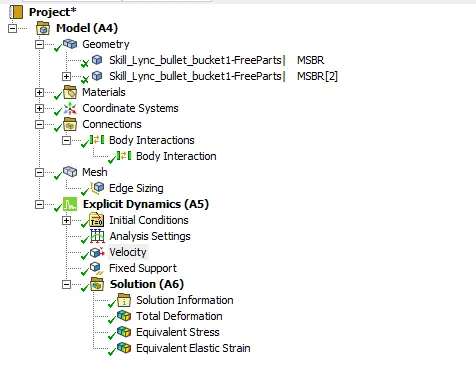
Fig.9 Case Setup
RESULTS – Stainless Steel NL:
The Total Deformation obtained from the analysis is shown below.
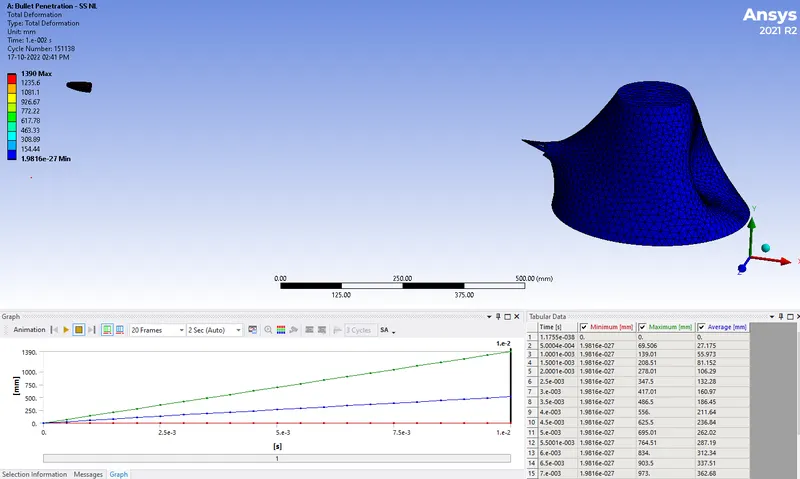
Fig.10 Total Deformation Contour Plot
The Equivalent (Von-Mises) Stress obtained from the analysis is shown below.
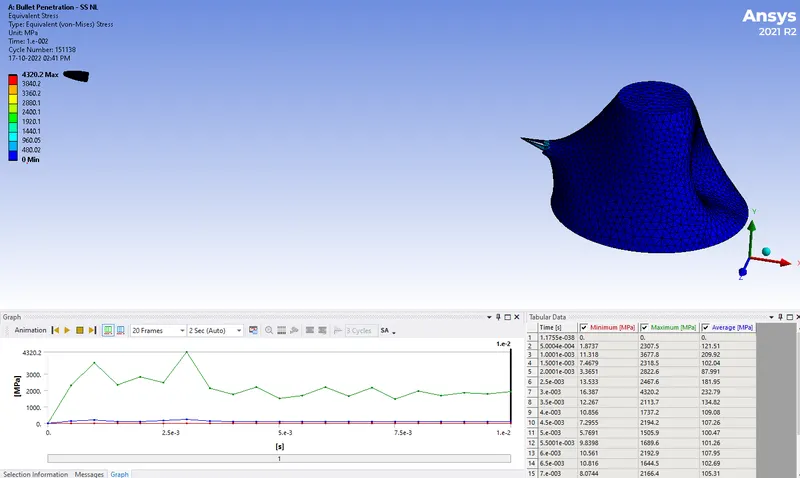
Fig.11 Equivalent Stress Contour Plot
The Equivalent Strain of the Model obtained from the analysis is shown below
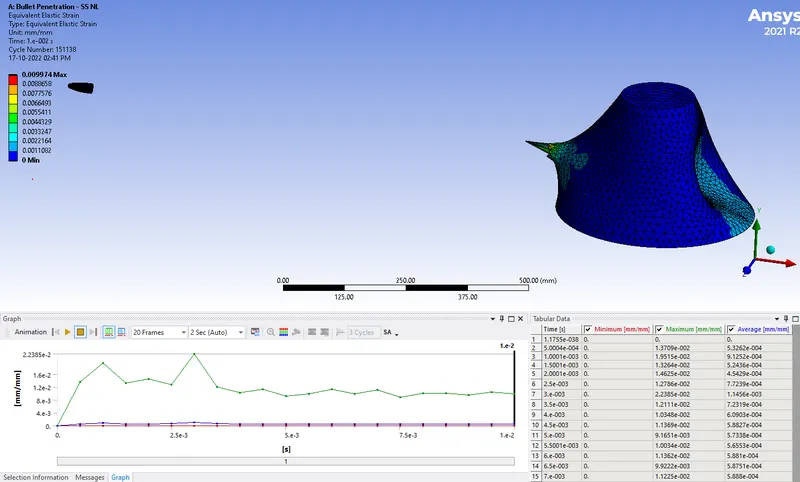
Fig.12 Equivalent Strain Contour Plot
RESULTS – Copper Alloy NL:
The Total Deformation obtained from the analysis is shown below.
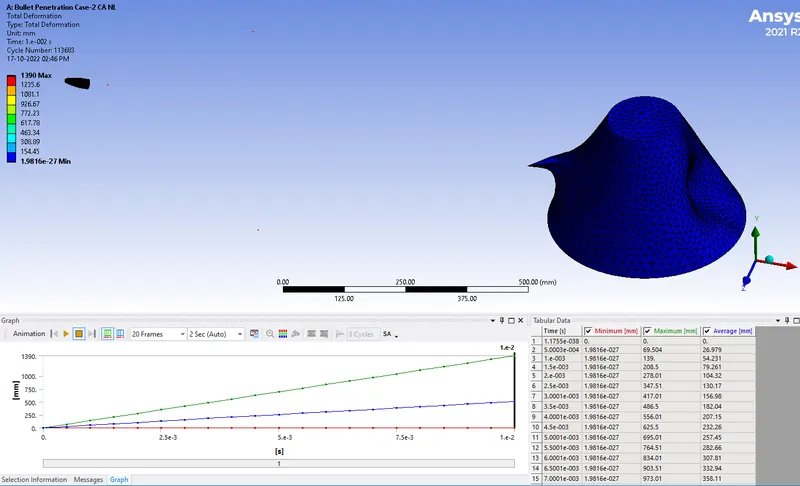
Fig.13 Total Deformation Contour Plot
The Equivalent (Von-Mises) Stress obtained from the analysis is shown below.
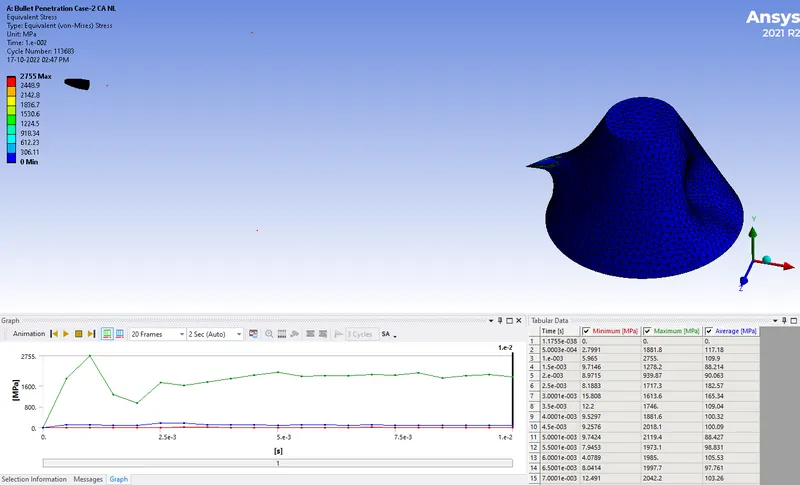
Fig.14 Equivalent Stress Contour Plot
The Equivalent Strain of the Model obtained from the analysis is shown below
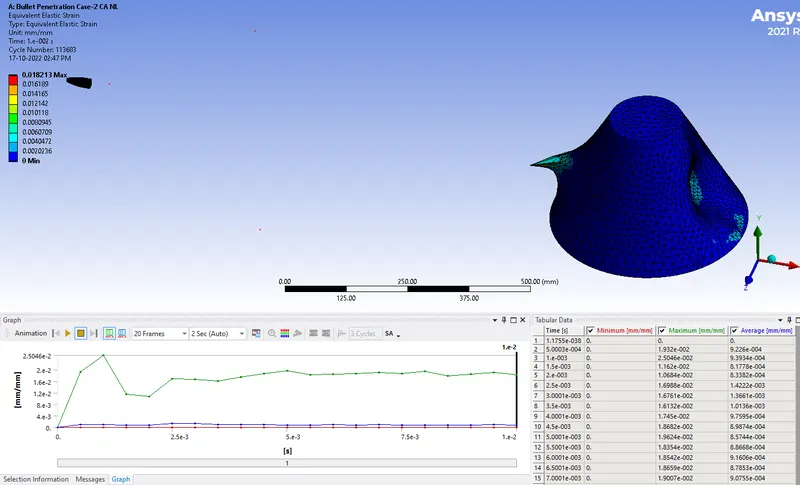
Fig.15 Equivalent Strain Contour Plot
RESULTS – Aluminum Alloy NL:
The Total Deformation obtained from the analysis is shown below.
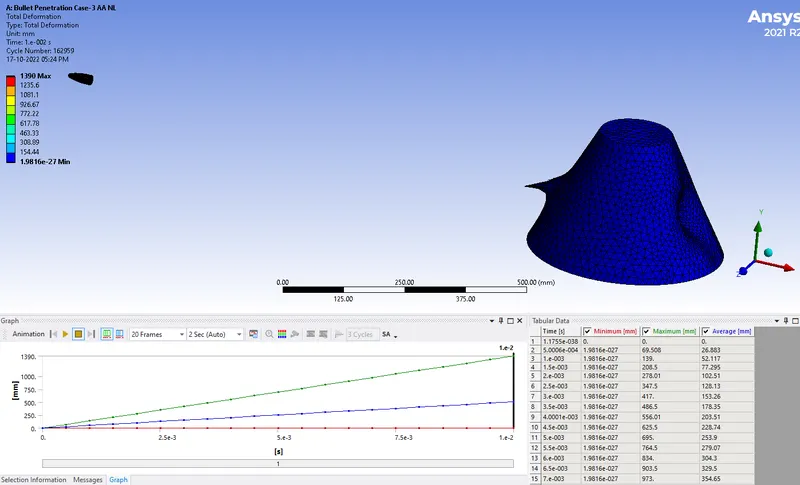
Fig.16 Total Deformation Contour Plot
The Equivalent (Von-Mises) Stress obtained from the analysis is shown below.
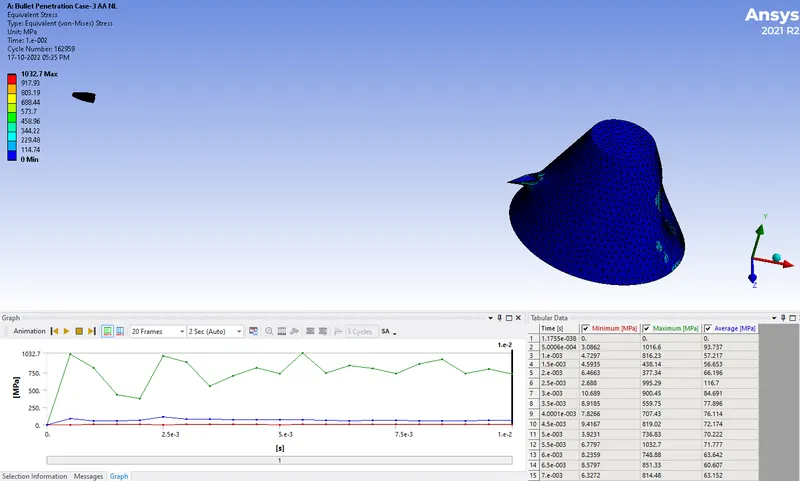
Fig.17 Equivalent Stress Contour Plot
The Equivalent Strain of the Model obtained from the analysis is shown below
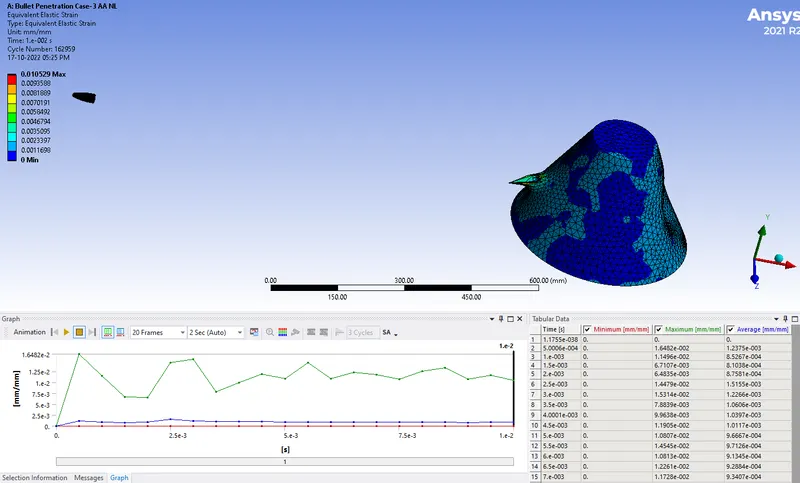
Fig.18 Equivalent Strain Contour Plot
The simulation was run and the results are tabulated below.
|
Output |
Case-1 Stainless Steel NL |
Case-2 Copper Alloy NL |
Case-3 Aluminum Alloy NL |
|
Total Deformation Max. [mm] |
1390 |
1390 |
1390 |
|
Equivalent Stress Max. [MPa] |
4320.2 |
2755 |
1032.7 |
|
Equivalent Strain Max. [mm/mm] |
2.2385e-2 |
2.5046e-2 |
1.6482e-2 |
CONCLUSION:
The analysis was run successfully and results were obtained and tabulated.
- The Maximum Deformation was identical in all three cases
- The Maximum Stress was 4320.2 obtained for the Stainless Steel NL
The stress generated by the bullet on the bucket is more in the material Stainless Steel NL, than any other material provided above, this is due to the stiffness of the material, as the stiffness of the material increases the stress generated also increases accordingly.