Week 1 Understanding Different Battery Chemistry
*AIM:-
Q1. Prepare a table that includes materials and chemical reactions occurring at the anode and cathode of LCO, LMO, NCA, NMC, LFP, and LTO types of lithium-ion cells. Give your detailed explanation of it.
Q2. Compare the differences between each type of Li+ion battery based on their characteristics
*SOLUTION:-
Q1. Prepare a table that includes materials and chemical reactions occurring at the anode and cathode of LCO, LMO, NCA, NMC, LFP, and LTO types of lithium-ion cells.
>Lithium-Ion:-
As you may have already noticed, lithium-ion batteries are commonly used in the appliances that satisfy our daily life needs, such as tablets, laptops, cell phones, E-bikes, E-scooters, power tools, etc. And these batteries are increasingly popular because of their high specific energy. However, there’re various types of lithium-ion batteries on the market and each type of lithium-ion battery constitutes different elements. Thus, the features and performance are also different from one another.
If you want to learn more about the information about lithium-ion batteries, you’ve come to the right place. In this article, six different types of lithium-ion batteries are explained. After reading them you’ll be able to differentiate them on the basis of specific energy, power, cost, safety, and lifespan.
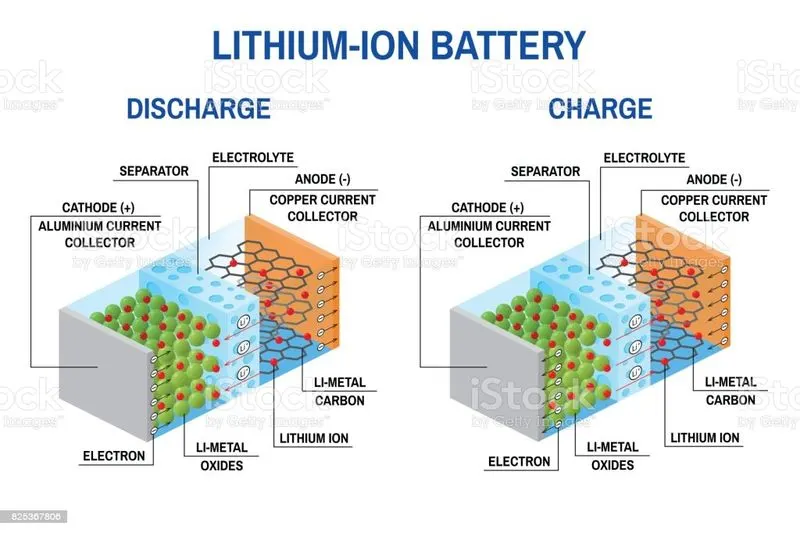
A lithium-ion battery or Li-ion battery is a type of rechargeable battery in which lithium ions move from the negative electrode through an electrolyte to the positive electrode during discharge, and back when charging.
Lithium-ion batteries are used in most aspects of our everyday lives. Most devices like smartphones and laptops cannot operate without these batteries. Lithium-ion batteries have also become very important in the field of electromobility as it is now the battery of choice in most electric vehicles. Its high specific energy gives it an advantage over other batteries.
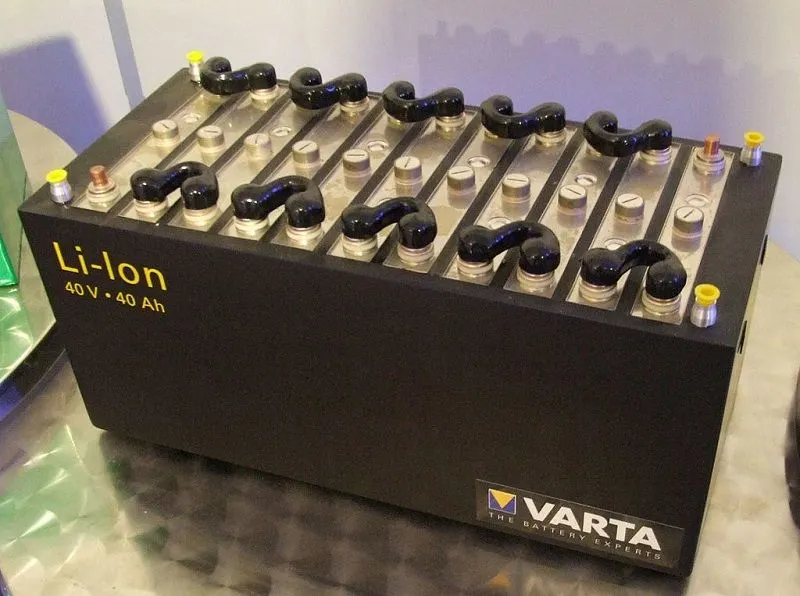
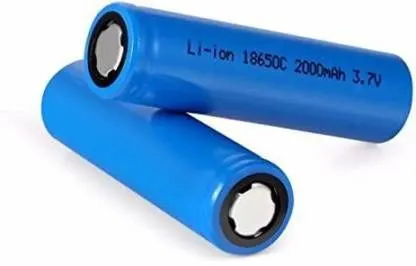
>SEE THE BELOW IMAGES:
>Charging and discharging process of the li-ion batteries:
>Types of Li-ion batteries:-
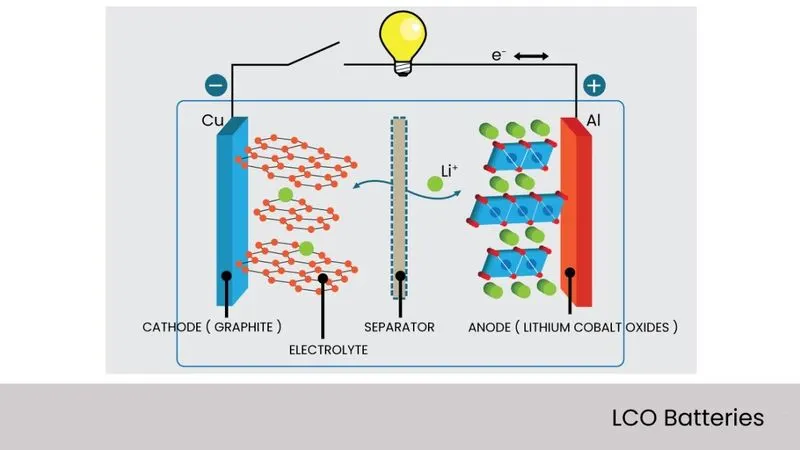
1. LCO:- LCO stands for Lithium cobalt battery. Lithium cobalt oxide is one of the most common Lithium-ions, it has a chemical symbol which is LiCoO2, and is abbreviated as LCO. For simplification, Li-cobalt –which is short-term- can also be used for this type of battery. Cobalt is the core active material that defines the character of the battery.
>LCO batteries technology and applications
LCO (Lithium cobalt oxide) was invented in the year 1991. Its anode material is LiaC6, the cathode material is LibCoO2 and the carrier is Li+. It is used in various applications ranging from electronic devices to all laptops and phone batteries. The majority of lithium-ion batteries for portable devices are cobalt-based. The system contains a cobalt oxide cathode (positive electrode) and graphite carbon anode (negative electrode).
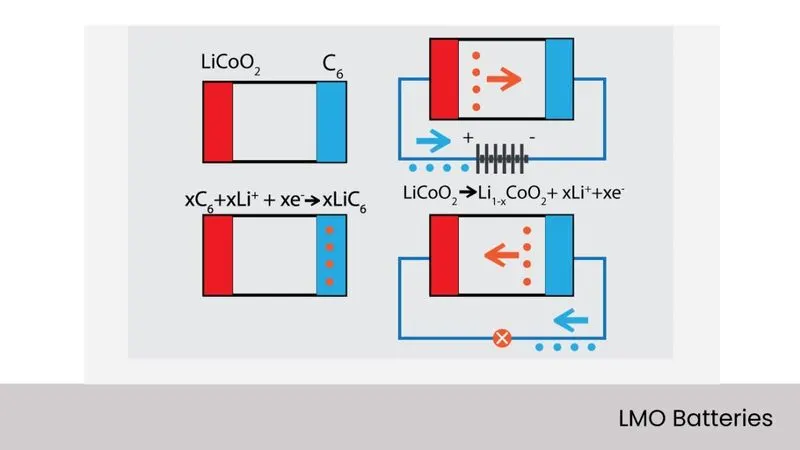
2. LMO:- LMO stands for Lithium manganese oxide batteries, which are commonly referred to as lithium-ion manganese batteries or manganese spinel. This battery was discovered in the 1980s, yet the first commercial lithium-ion battery made with a cathode material made from lithium manganese was produced in 1996.
>LMO batteries technology and applications
LMO (Lithium magnesium oxide) was invented in the year 1996. Its anode material is LiaC6, the cathode material is LibMn2O4 and the carrier is Li+. It is used in different applications like power tools and electric cars. LMO batteries have the ability to deliver a lot of energy in a short period of time, which makes them extremely useful for use in power tools like drills. In 1996, lithium manganese oxide was first used as a cathode material. A three-dimensional spinel structure was formed by this structure, this improves the flow of ions between the electrodes. The high Bdecreases the internal resistance and increases loading capability. LMO batteries are usually used in medical devices and equipment, power tools, electric bikes, and more. Because of their thermal resistance and higher safety. LMO batteries can also be used for laptops and electric cars.
3. NCA:- NCA battery stands for Lithium nickel cobalt aluminum oxide-based battery (LiNiCoAlO2). Also, NCA batteries are becoming more and more important in in-grid storage and electrical power terrain applications.
>NCA battery technology and applications
NCA (Lithium nickel cobalt aluminum oxide) battery was invented in the year 1999. Its anode material is LiaC6, the cathode material is LibNi0.8Co0.15Al0.05O2 and the carrier is Li+. It is used in different applications like power grid applications, medical devices, and electric cars. Most notably Tesla deploys NCA batteries in their electric vehicle's system. NCA batteries can store the same amount of energy as NMC. NCA batteries are not widely common in the consumer industry but are quite promising in the electric car industry.
4. NMC:- NMC stands for Lithium Nickel Manganese Cobalt Oxide battery. (LiNiMnCoO2) The cathode combination of NMC (nickel-manganese-cobalt) is among the most successful Li-ion systems. The NMC systems can serve as a Power Cell or an Energy Cell.
>NMC batteries technology and applications
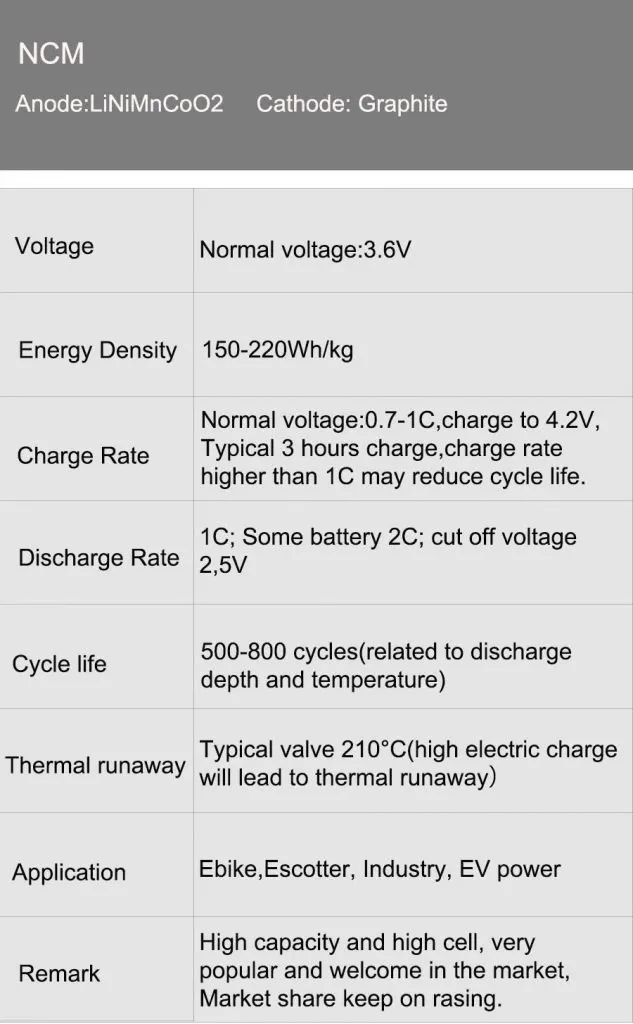
NMC (Nickel Manganese Cobalt Oxide) battery was invented in the year 2008. Its anode material is LiaC6, the cathode material is LibNi1–x–yCoxMnyO2, and the carrier is Li+. They commonly use it in different applications like Energy Systems and electric cars. NMC combines the best of nickel and manganese. Nickel has high specific energy but poor stability; manganese can form a spinel structure so as to achieve low internal resistance yet provides low specific energy. Joining the metals increases the strengths of both parts. NMC batteries are widely used for power tools, energy storage systems (EES) which need frequent cycling, and electrical power trains like automotives. The cathode combination typically used is 1-1-1 which means one-third nickel, one-third manganese, and one-third cobalt. This reduces the raw material cost due to lowered content of cobalt. Another known combination for NCM is 5-3-2 (5 parts nickel, 3 parts cobalt, and 2 parts manganese). Other combinations are also possible.
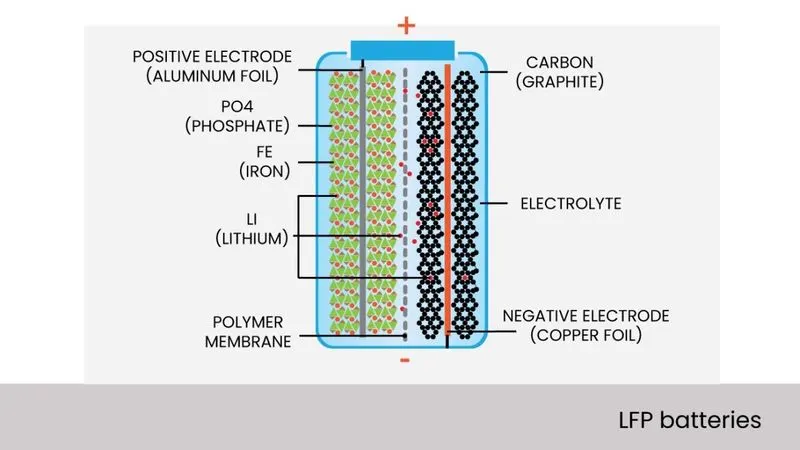
5. LFP:- LFP batteries stand for Lithium iron phosphate(LiFePO4) batteries, which are known as li-phosphate batteries as well. They use phosphate as cathode material. In addition, they benefit from the low resistance properties that enhance their thermal stability and safety.
>LFP batteries technology and applications
LFP (Lithium iron phosphate) was invented in the year 1996. Its anode material is LiaC6, the cathode material is LibFePO4 and the carrier is Li+. They use LFP batteries in different applications like electric cars, electric buses, and electric trucks. The LFP is ideal for use in electric trucks or buses – as volume or weight isn’t really a restriction as is in cars- because the battery is less energy-dense yet cheaper to manufacture than other Li-ion battery types. In addition, they use LFP batteries in other applications like electric motorcycles which need a longer life cycle and increased safety. LFP provides good electrochemical performance with lower resistance. This is enabled by the nano-scale phosphate cathode material. The main benefits are long cycle life, higher current rating, and thermal stability which means extra safety.
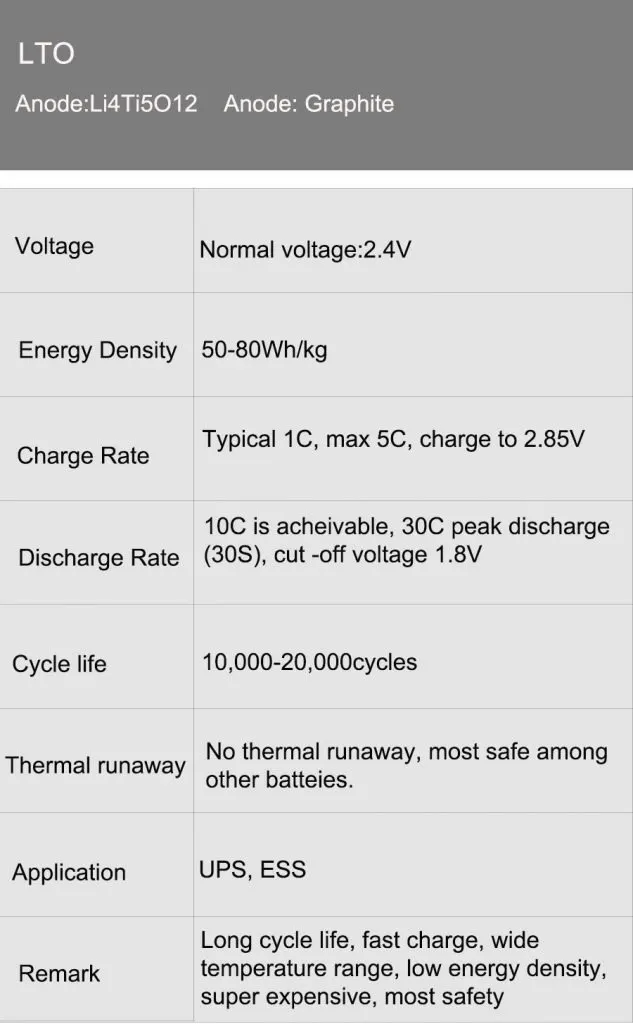
6. LTO:- LTO batteries are lithium titanate (Li2TiO3) or li-titanate batteries, which is a class of batteries that is used in a growing number of applications. They are high-power batteries, so they are perfect for use in fast-charging stations.
>LTO batteries technology and applications
LTO (Lithium tint) was invented in the year 2008. Its anode material is Li4+aTi5O12, the cathode material is LibFePO4 and the carrier is Li+. They use it in applications like UPS, electrical power trains, solar-powered street lights, fast-charge stations, and forklifts. Other applications for LTO batteries include aerospace and military uses, and more importantly wind and solar energy storage and smart grid creation. Li-titanate is used instead of graphite in the anode of a common lithium-ion battery and the material is formed into a spinel structure. The cathode material is either LMO or NMC. As mentioned, they use li-titanate batteries in electric vehicles, yet LTO batteries have lower energy density than other Li-ion battery types, which can be a disadvantage in efficiently powering vehicles. Still, the density of LTO batteries is higher than other non-Li-ion batteries.
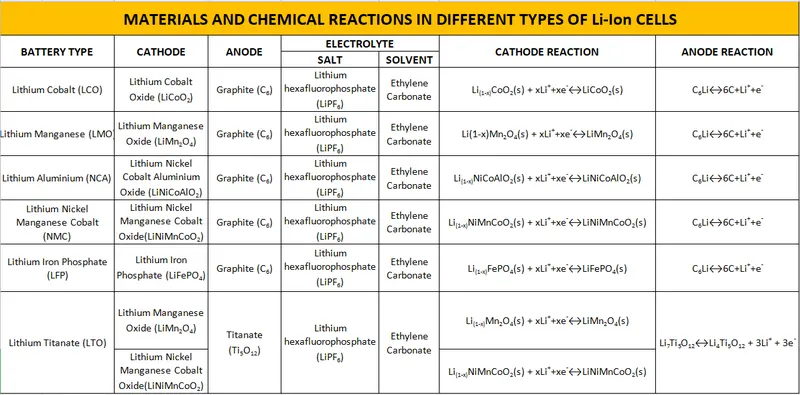
Materials & chemical reactions occur at the anode and cathode of LCO, LMO, NCA, NMC, LFP, and LTO types of lithium-ion cells:
Six types of lithium-ion batteries are compared relative to one another:
| Lithium-ion battery Types | SP | SE | SF | LS | CS | PF |
|---|---|---|---|---|---|---|
|
Lithium Cobalt Oxide |
L |
H |
L |
L |
L |
M |
|
Lithium Manganese Oxide |
M |
M |
M |
L |
L |
L |
|
Lithium Nickel Manganese Cobalt Oxide |
M |
H |
M |
M |
L |
M |
|
Lithium Iron Phosphate |
H |
L |
H |
H |
L |
M |
|
Lithium Nickel Cobalt Aluminum Oxide |
M |
H |
L |
M |
M |
M |
|
Lithium Titanate |
M |
L |
H |
H |
H |
H |
- SP stands for specific power
- SE stands for specific energy
- SF stands for safety
- LS stands for lifespan
- CS stands for cost
- PF stands for performance
- L stands for low
- M stands for moderate
- H stands for high
Summary of the Table
- Lithium Cobalt Oxide has high specific energy as compared to the other batteries which make it the preferred choice for laptops and mobile phones. It also has a low cost and a moderate performance. However, it is highly unfavorable in all the other aspects when compared to the other lithium-ion batteries. It has low specific power, low safety, and a low lifespan.
- Lithium Manganese Oxide has moderate specific power, moderate specific energy, and a moderate level of safety when compared to the other types of lithium-ion batteries. It has the added advantage of a low cost. The downsides are its low performance and low lifespan. It is usually used in medical devices and power tools.
- Lithium Nickel Manganese Cobalt Oxide has two major advantages as compared to the other batteries. The first one is its high specific energy which makes it desirable in electric powertrains, electric vehicles, and electric bikes. The other is its low cost. It is moderate in terms of specific power, safety, lifespan, and performance when compared to other lithium-ion batteries. It can be optimized to either have high specific power or high specific energy.
- Lithium Iron Phosphate only has one major disadvantage when compared to other types of lithium-ion batteries and that is its low specific energy. Other than that, it has moderate to high ratings in all the other characteristics. It has high specific power, offers a high level of safety, has a high lifespan, and comes at a low cost. The performance of this battery is also moderate. It is often employed in electric motorcycles and other applications that require a long lifespan and a high level of safety.
- Lithium Nickel Cobalt Aluminum Oxide offers one strong advantage as compared to the five other batteries and that is high specific energy. It is pretty moderate in the rest of the characteristics like performance, cost, specific power, and lifespan. The only downside to this battery type is its low level of safety. Its high specific energy and moderate lifespan make it a good candidate for electric powertrains.
- Lithium Titanate offers high safety, high performance, and a high lifespan which are very important features every battery should have. Its specific energy is low compared to the five other lithium-ion batteries but it compensates for this with moderate specific power. The only major disadvantage of lithium titanate as compared to the other lithium-ion batteries is its extremely high cost. Another important feature of this battery worthy of mention is its remarkably fast recharge time. It can be used for storing solar energy and creating smart grids.
Q2. Compare the differences between each type of Li+ion batteries based on their characteristics
If you want to learn more about the information about lithium-ion batteries, you’ve come to the right place. In this article, six different types of lithium-ion batteries are explained. After reading them you’ll be able to differentiate them on the basis of specific energy, power, cost, safety, and lifespan.
compare all six types of batteries, the differences between each type of Li+ion battery based on their characteristics,
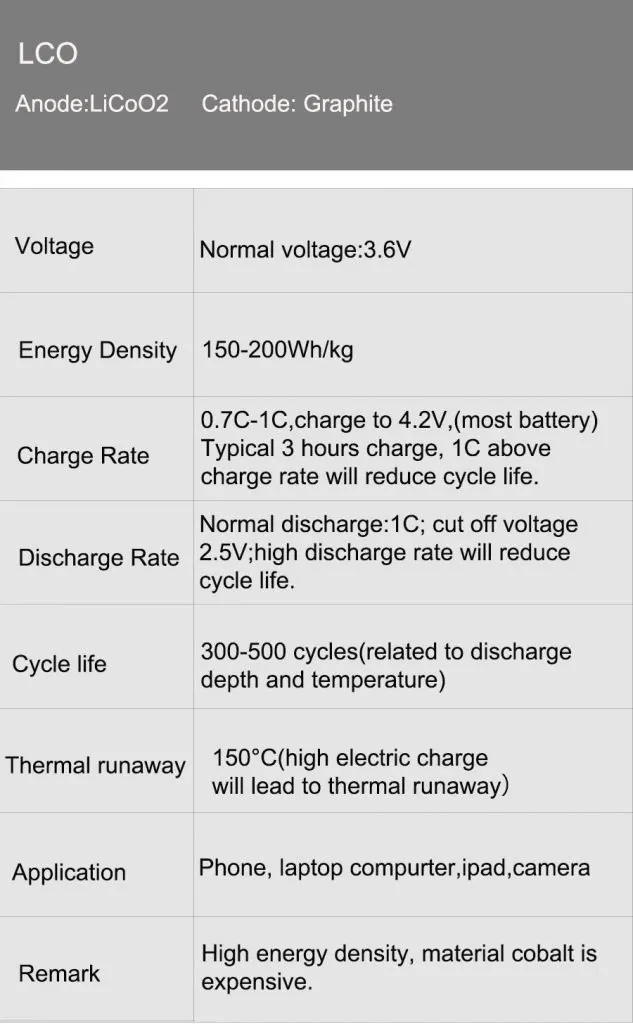
1. Lithium Cobalt Oxide
Its high specific energy density makes lithium cobalt a popular choice for mobile phones, laptops, and digital cameras. The battery consists of a cobalt oxide cathode and a graphite carbon anode. The Cathode has a layered structure, during discharge, lithium ions move from the anode to the cathode and flow in the opposite direction during charging.
2. LMO
The Safest Li-ion Chemistry
Lithium manganese oxide batteries are also known as lithium-ion manganese batteries. It has LiMn2O4 as a cathode. The earliest commercially developed battery with this chemistry was produced in 1996. These batteries have low internal resistance and high-temperature stability which makes them safer than other lithium-ion battery types. LMO batteries are capable of delivering current up to 20-30 Amps due to their low internal resistance, thus making fast charging and discharging possible.
The main disadvantage of this chemistry is its relatively low cycle life of 300-700 cycles. These batteries also have lower capacity. Because of these drawbacks, limited research and advancement of this battery type are expected in the future.
LMO batteries are extensively used in applications where high C-rates are required such as power tools. It also has applications in EVs and in medical applications.
3. NCA
High Energy with Long Life
Lithium Nickle Cobalt batteries, also known as NCA batteries have a combination of nickel, cobalt and aluminum as active material in their cathode. These batteries have a high life cycle and are one of the most energy-dense Li-ion chemistry with energy density as high as 260Wh/kg and a nominal voltage of 3.6V. But the main disadvantage of this battery is its lower thermal stability and high cost making them an unviable option for consumer electronics. They are a good option for EVs due to their energy density, the NCA batteries must be used in cars with extra safety measures to monitor their performance and other data to keep the drivers secure.
The NCA batteries are becoming increasingly important in electric powertrains such as in Tesla and find application in grid storage due to their lifespan and energy density.
4. NCM
One of the most successful lithium-ion systems is the nickel manganese cobalt (NCM) cathode assembly. Similar to Lithium Manganate, the system can be customized for use as an energy or power battery.
The NMC is the preferred battery for electric tools, electric bikes, electric scooters, and other electric power systems. The cathode combination is usually five parts nickel, three parts cobalt, and two parts Manganese (5-3-2). Different combinations of cathode materials can also be used.
Because of the high cost of cobalt, battery makers have shifted from cobalt to nickel cathodes. Nickel-based systems have a higher energy density, lower cost, and longer cycle life than cobalt-based batteries, but their voltages are slightly lower.
The new electrolytes and additives allow a single battery to charge to more than 4.4 v, increasing the charge.
5. LFP (Lithium Iron Phosphate)
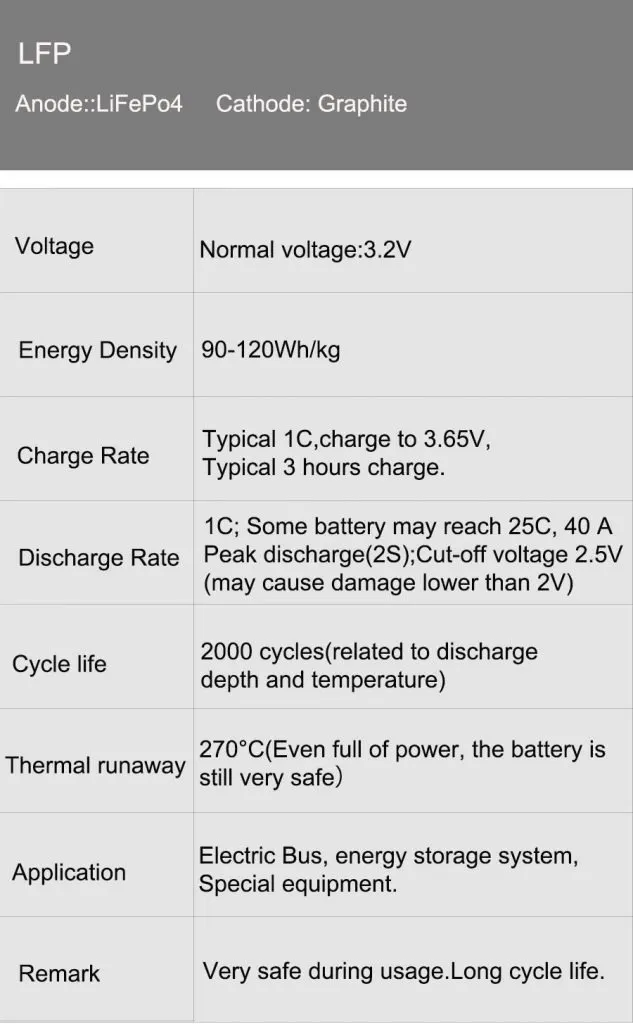
In 1996, the University of Texas discovered phosphate as a cathode material for rechargeable lithium batteries. Lithium phosphate has good electrochemical properties and low resistance. This is done by means of nanoscale phosphate cathode materials.
For most batteries, low temperatures reduce performance, higher storage temperatures shorten life, and lithium phosphate is no exception. Lithium phosphate has a higher self-discharge rate than other lithium-ion batteries, which may cause aging and lead to equalization problems, although this can be remedied by selecting high-quality batteries or using advanced battery management systems, both methods add to the cost of the battery pack.
Lithium phosphate has good safety and long life, moderate specific energy, and self-discharge ability.
6. LTO (Lithium Titanate Battery)
Lithium titanate batteries have been known since the 1980s. Lithium titanate replaces graphite in the typical lithium-ion battery anode, and the material forms a spinel structure.
LTO thermal stability at high temperatures is better than that of other Lithium-ion Systems; however, batteries are expensive. Low specific energy, only 65 wh/kg, equivalent to NICD. Lithium titanate is charged to 2.80 V and discharged to 1.80 v.
Lithium titanate performs well in terms of safety, low-temperature performance, and cycle life. Efforts are being made to increase specific energy and reduce costs.