Week 1 Understanding Different Battery Chemistry
AIM:
1.To prepare a table which includes materials & chemical reactions occuring at the anode and cathode of LCO(Lithium cobalt battery), LMO(Lithium ion manganese oxide), NCA(Lithium nickel cobalt aluminium), NMC(Nickel manganese and cobalt), LFP(Lithium iron phosphate) and LTO(Lithium titanate oxide battery) type of lithium ion cells and detail explaination of cells.
2.To compare the differences between each type of Li+ion batteries based on their characteristics.
DESCRIPTION:
INTRODUCTION:
Lithium ion batteries are batteries that function based on the transfer of lithium ions between a cathode and an anode.
Lithium ion batteries have higher specific energies than batteries made from other materials such as zind and lead due to the relatively light weight and low density of lithium. Lithium batteries are also more stable over charge/recharge cycles due to the small radii of lithium ions, which causes fewer disruptions of the electrode structure during ion transfer. Lithium ion batteries commonly use graphite and cobalt as additional electrode materials.
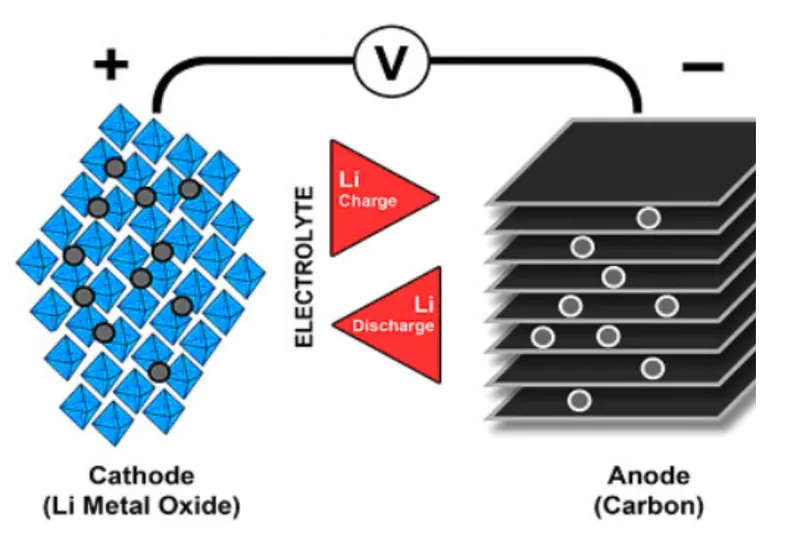
When the cell charges and discharges, ions shuttle between cathode (positive electrode) and anode (negative electrode). On discharge, the anode undergoes oxidation or loss of electrons, and the cathode sees a reduction, or a gain of electrons. Charges reverses the movement.
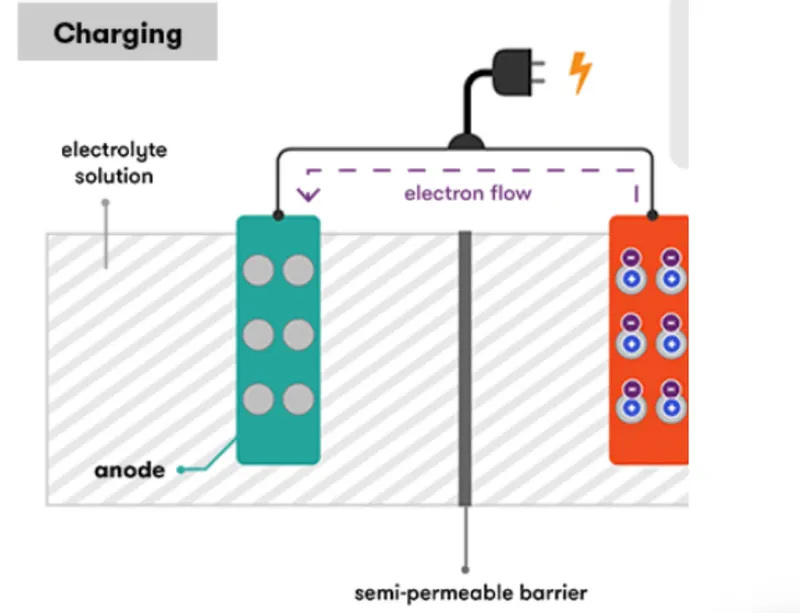
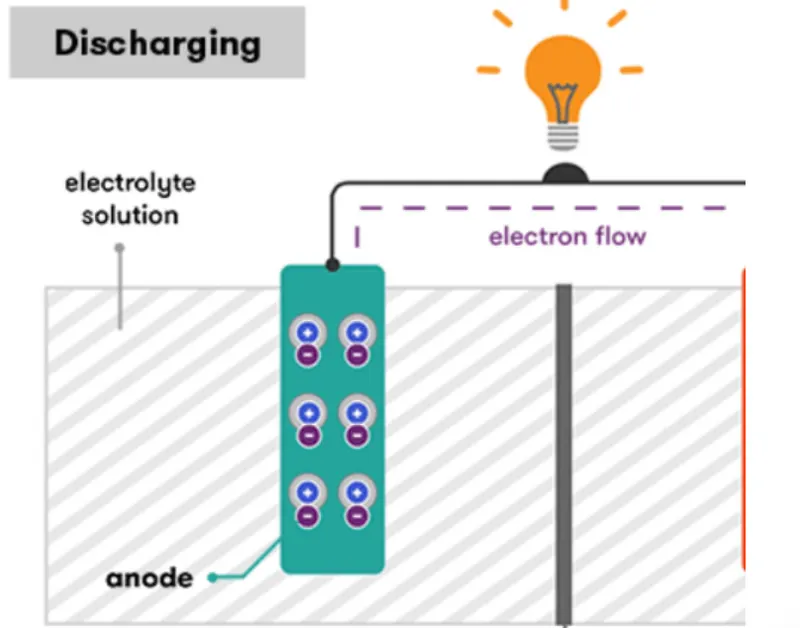
During discharge, the lithium ions are de-intercalated from the anode and travel back through the electrode to the cathode. This also releases the electrons that were tying them to the anode, and these floe through and external wire, providing the electric current that we used to do work. It's the connection of the external wire that enables the reaction to proceed when the electrons are free to travel, so are the positively charged lithium ions that will balance the movement of their negative charge.
When the cathode becomes full the lithum ions, the reaction stops and the battery is flat. Then we recharge our lithium ion batteries again and the external electric charge that we apply pushes the lithium ions back into the anode from the cathode.
LCO(Lithium cobalt battery):
Lithium ion bateries work by using the transfer of lithium ions and electrons from the anode to the cathode. At the anode, the neutral lithium is oxidized and converted to Li+. These Li+ ions then migrate to the cathode, where they are incorporated into LiCoO2. This results in the reduction of Co4 to Co3 when the elctrons from the anode reaction are received at the cathode. Because lithium is involved in the reactions at both electrodes, the battery can be recahrged by running the reactions in reverse.
Working:
During discharge, lithium is oxidized from Li to Li+ (0 to +1) oxidation state in the lithium-graphite anode through the following reaction
C6Li--->6C(graphite) + Li+ + e-
These lithium ions migrate through the elctrolyte medium to the cathode where they are incorporated into lithium cobalt oxide through the following reaction, which reduces cobalt from a +4 to +3 oxidation state.
Li(1-x)CoO2(s) + x Li+ + x e- ---> LiCoO2(s)
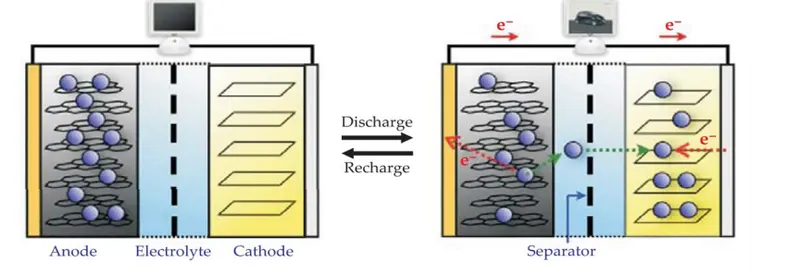
These reactions can be run in reverse to recharge the cell. In this case the lithium ions leave the lithium cobalt oxide cathode and migrate back to anode, where they are reduced back to neutral lithium and reincorporated into the graphite network.
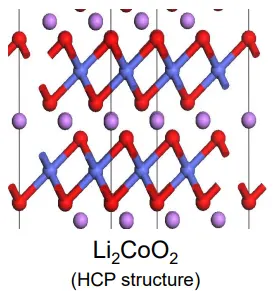
Cathode:
Cathode is most commonly a lithiated metal oxide. There are mainly 3 types
1.Layered oxide like LixCoO2
2.Polyanion materials such as LiFePO4 and Li2FeSiO4
3.Spinel oxides like LiMn2O4
Electrolyte:
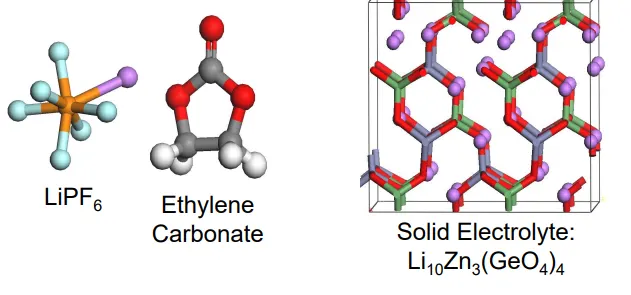
There are many different kinds of materials that are used as electrolytes. All of them are based on lithium containing material that allows for the easy diffusin of lithium.
Liquid: Most commonly used today. Often use LiPF6 or similar lithium salt and Ethylene Carbonate as a solvent.
Solid State and Polymer: Are being researched, butt are rarely used due to the low diffusivity of lithium.
Anode:
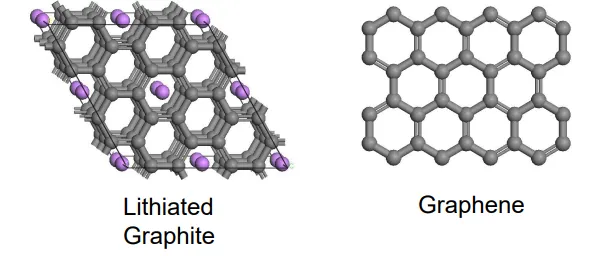
One of the most common anode materials used today is lithiated graphite, LixC6 which is composed of graphene sheets intercalated with lithium. New materials such as thode based on silicon and othe elemental blends are being researched. Lithiated graphite has a unit cell with a HCP structure.
Applications: They are widely used for powering mobile phones, laptops, video cameras and other modern day electronic gadgets.
LMO(Lithium ion manganese oxide):
Lithium manganate oxide battery refers to the battery that used lithium manganate oxide as an anode material. Bu lithium manganate oxide is not very stable, easy to decompose gas, may lead to swell and its high temperature performance is poor.
Compared to traditional anode materials such as lithium cobalt oxides, lithium manganate oxide has rich resources, low cost, no pollution, good safety and nice rate capability. It is an ideal anode material for power battery.
LiMn2O4 is a spinel managanese acid lithium is the first anode material. The electrode material has low price and high potential, environment friendly and good safety perfromance and is most promising anode materials of new generation of lithium ion battery to replace LiCoO2.
Anode, Cathode and Electrolyte:
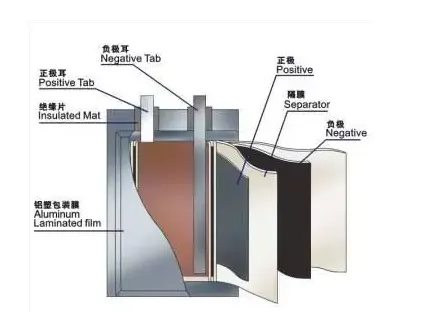
Lithium managanate oxide battery is a lithium ion battery that uses lithium manganate oxide as anode, graphite as cathode and electrolyte with LiPF6 organic solution. The structure of LiMn2O4 battery is packed in aluminium shell as shown in figure.
Working:
When a lithium managanate oxide battery is charged, lithium ions in the anode detach from the lattice, pass through the electrolyte to the cathode surface and embed into the graphite layer. When you discharge the process is reversed. In charging and discharging process lithium ions go between the anode and cathode which is known as the 'rocking chari' battery.
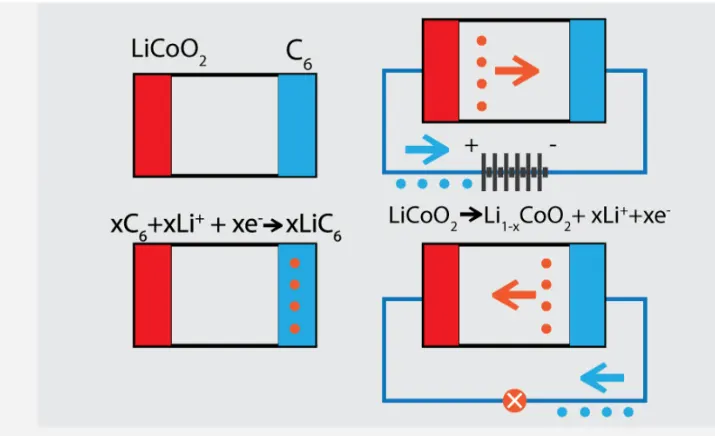
When the battery is charged by the power source, the electron on the anode runs to the cathode from the external circuit. The lithium in (Li+) goes into the electrolyte from the anode, passes through the small winding hole in the separator, reaches the cathode, and combines with the electrons that have already come over.
Reaction at anode: LiMn2O4--->Li1-x Mn2O4 + xLi+ + xe-(electron)
Reaction at cathode: 6C+xLi+xe- = LixC6
When the battery is discharging, the electron on the cathode runs from the external circuit to the anode, and the lithium ions goes into the electrolyte from the cathode, passes through the small winding hole in the separator runs to the anode, and combines with the electrons that have already come over.
Reaction on anode: Li1-xMn2O4 + xLi+ + xe- ---> LiMn2O4
Reaction at cathode: LixC6 = 6C+xLi+xe
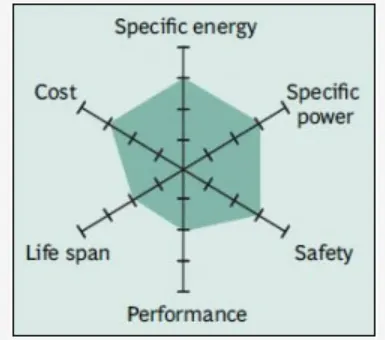
Applications: Its widely used in electricity, gas and water meters, fire and smoke alarms, security devices etc.,
NCA(Lithium nickel cobalt aluminium):
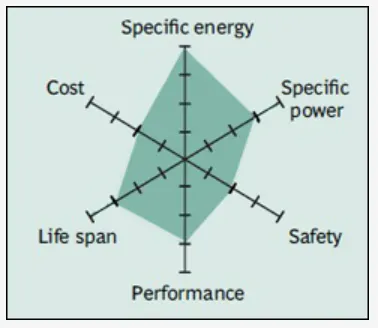
NCA battery stands for Lithium nickel cobalt aluminium oxide based battery (LiNiCoAlO2). Also NCA batteries are becoming more and more important in in-grid storage and electrical power terrain applications.
NCA battery anode material is LiaC6 and cathode material is LibNiO.8CoO.15AlO.05O2 and the carrier is Li+.
Applications: Used in medical devices, industrial, electric powertrain (Tesla)
NMC(Nickel manganese and cobalt):
One of the most successful Li-ion systems is a cathode combination of nickel-manganese-cobalt(NMC). The secret of NMC lies in combining nickel and manganese. An anology of this table salt in which the main ingredients, sodium and chloride, are toxic on their own but mixing them serves as seasoning salt and food preserver. Nickel is known for its high specific energy but poor stability; manganese has the benefir of forming a spinel structure to achieve low internal resistance but offers a low specific energy. Combining the metals enhances each other strengths.
Ternary composites Li(Ni1-x-y Mnx Coy)O2 are widely used as cathode material. In these electrodes, nickel changes its oxidation states during charge-discharge cycling of the battery due to the lithium insertion-deinsertion (Ni2+ --> Ni4+).
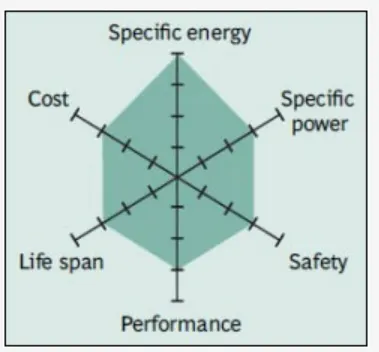
Applications: Used in e-bikes, medical devices, Evs and industrial purposes.
LFP(Lithium Iron Phosphate) Battery:
LFP batteries use lithium iron phosphate (LiFePO4) as the cathode material along side a graphite carbon electrode with a metallic backing as the anode. Unlike many cathode materials, LFP is a polyanion compound composed of more than one negatively charged element. Its atoms are arranged in a crystalline structure forming a 3D network of lithium ions compared to the 2D slabs from nickel manganese cobalt.
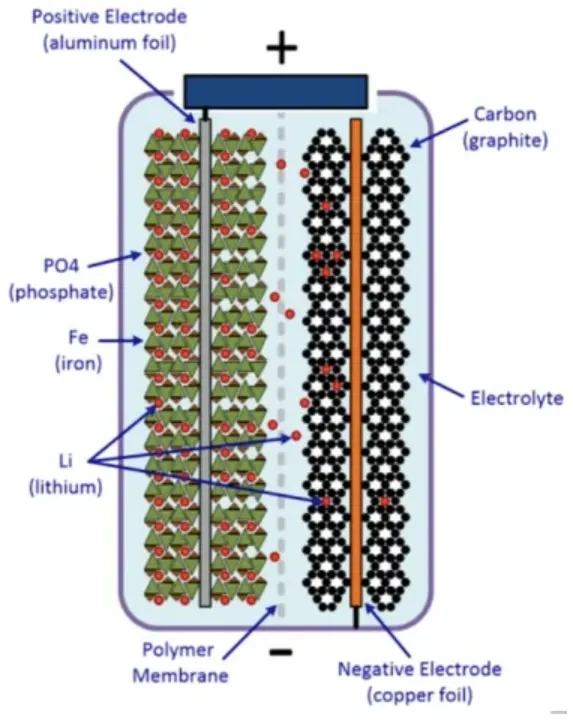
The LFP battery operates similarly to other Lithium-ion batteries, moving between positive and negative electrodes to charge and discharge. However, phosphate is a non-toxic material compared to cobalt oxide or manganese oxide.
The cathode is made up of LiFePO4 and upon discharging it is transformed to FePO4. The anode is made up of graphite.
The cathode reaction: LiFePO4 --->FePO4 + Li+ + e-
The anode reaction : Li+ + C6 +e- ----> LiC6
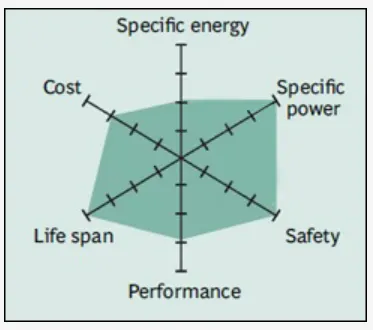
Applications: Due to their constant voltage and safe discharge, LFPs have found applications in cars, bicycles and solar devices.
LTO(Lithium titanate oxide battery):
Here Li-titanate replaces the graphite in the anode of a typical lithium-ion battery and the material forms into a spinel structure. The cathode can be lithium manganese oxide or NMC.
When charge/discharge the following reaction occurs
Li4Ti5O12 + 3Li+ +3e- ---> Li7Ti5O12
Reduction of titanium ions from +4 to +3 oxidation state which involves additional two Li+ ions.
Li7Ti5O12 + 2Li+ + 2e- ---> Li9Ti5O12
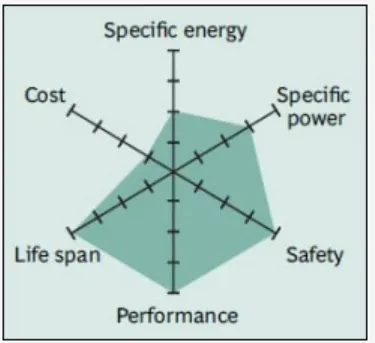
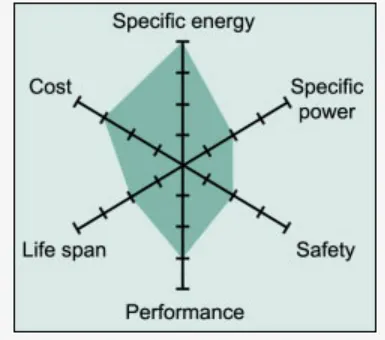
Li-titanate excels in safety, low temperature performance and life span.Efforts are being made to improve the specific energy and lower cost.
2.COMPARISION BASED ON CHARACTERISTICS OF Li+:
LCO Battery:
Voltages : 3.6V nominal; typical operating range 3.0-4.2V/cell
Specific energy: 150-200Wh/kg
C-rate(charge) : 0.7-1C, charges to 4.2V:3h charge. Charge current above 1C shortens battery life
C-rate(discharge): 1C, 2.5V cut-off.Discharge current above 1C shortens battery life
Cycle life: 500-1000
Thermal Runaway : 150 degree centigrade
LMO Battery:
Voltages : 3.7V nominal; typical operating range 3.0-4.2V/cell
Specific energy: 100-150Wh/kg
C-rate(charge) : 0.7-1C, charges to 4.2V
C-rate(discharge): 1C,10C possible with some cells 2.5V cut-off
Cycle life: 300-700
Thermal Runaway : 250 degree centigrade
NCA Battery:
Voltages : 3.6V nominal; typical operating range 3.0-4.2V/cell
Specific energy: 200-260Wh/kg
C-rate(charge) : 0.7, charges to 4.2V:3h charge. fast Charge possible for some cells
C-rate(discharge): 1C, 3.0V cut-off. high Discharge rate shortens battery life
Cycle life: 500
Thermal Runaway : 150 degree centigrade
NMC Battery:
Voltages : 3.6-3.7V nominal; typical operating range 3.0-4.2V/cell
Specific energy: 150-220Wh/kg
C-rate(charge) : 0.7-1C, charges to 4.2V:3h charge. Charge current above 1C shortens battery life
C-rate(discharge): 1C, 2C possible on some cells 2.5V cut-off
Cycle life: 1000-2000
Thermal Runaway : 210 degree centigrade
LFP Battery:
Voltages : 3.2-3.3V nominal; typical operating range 2.5-3.65V/cell
Specific energy: 90-120Wh/kg
C-rate(charge) : 1C typical, charges to 3.65V:3h charge time typical
C-rate(discharge): 1C,25C on some cells;40A pulse 2.5V cut-off
Cycle life: >2000
Thermal Runaway : 270 degree centigrade
LTO Battery:
Voltages : 2.4V nominal; typical operating range 1.8-2.8V/cell
Specific energy: 50-80Wh/kg
C-rate(charge) : 1C typical, 5C maximum, charges to 2.85V
C-rate(discharge): 10C possible, 30C 5s pulse; 1.80V cut-off on LCO/LTO
Cycle life: 3000-7000
Thermal Runaway : One of the safest Li-ion batteries
CONSLUSION:
Thus, the challange of week 1 for study of material and chemical reaction of Li-ion batteries and its characteristics has been studies successfully.