Week 1 Understanding Different Battery Chemistry
AIM :
To understand different battery chemistry.
OBJECTIVES:
Prepare a table that includes materials & chemical reactions occurring at the anode and cathode of different type of lithium-ion cells. Given detail about it.
2)Comparing the differences between each type of Li+ion battery based on their characteristics
Q.1.Prepare a table that includes materials & chemical reactions occurring at the anode and cathode of LCO, LMO, NCA, NMC, LFP, and LTO type of lithium-ion cells.Give your detailed explanation on it
Ans:
INTRODUCTION OF LITHIUM-IRON BATTERY
A lithium-ion battery is a family of rechargeable battery types in which lithium ions move from the negative electrode to the positive electrode during discharge and back when charging. Chemistry, performance, cost and safety characteristics vary across lithium-ion battery types. Unlike lithium primary batteries (which are disposable), lithium-ion batteries use an intercalated lithium compound as the electrode material instead of metallic lithium.
Lithium-ion batteries are common in consumer electronics. They are one of the most popular types of rechargeable battery for portable electronics, with one of the best energy-to-weight ratios, high open circuit voltage, low self-discharge rate, no memory effect and a slow loss of charge when not in use. Beyond consumer electronics, lithium-ion batteries are growing in popularity for military, electric vehicle and aerospace applications due to their high energy density.
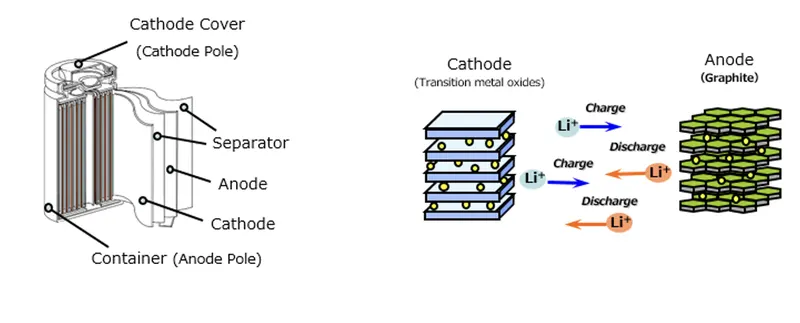
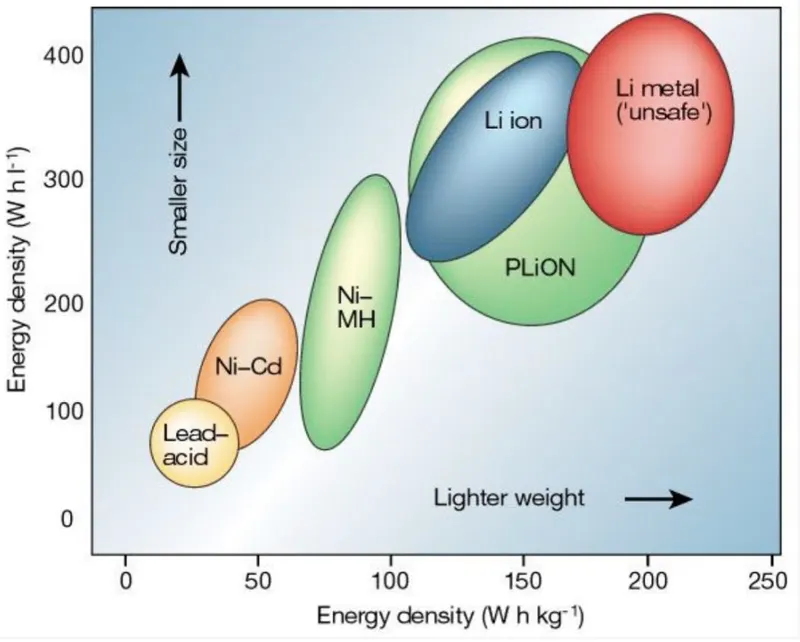
High Energy Density: Lithium-ion batteries offer greater energy density versus other types of rechargeable batteries (Nickel Metal Hydride battery, Nickel-Cadmium battery, Lead Acid battery) which enables batteries to become smaller and lighter.
Great Power: As the operating voltage of Lithium-ion battery is higher versus other types of rechargeable batteries, it has the ability to support greater output.
Long Life: Rechargeable batteries can be used repeatedly by charging. The life of lithium-ion battery is defined as the number of full charge/discharge cycles. The greater the number of full charge/discharge cycles, the longer the batteries
will last.
Li-ions are usually delivered in a stainless steel or aluminum case. The case is most often cylindrical but can be button-shaped or rectangular (prismatic). The case is relatively costly to produce and tends to restrict the sizes and shapes that are available. But it is also robust, helping to protect the battery from damage. The case is sealed using a laser welding process.
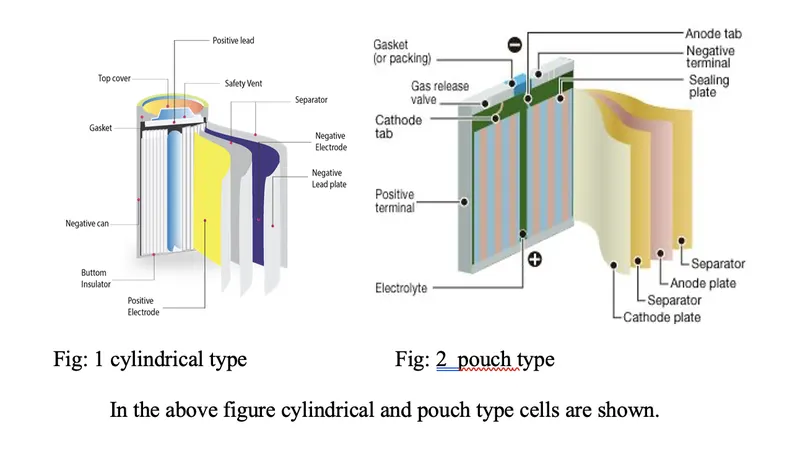
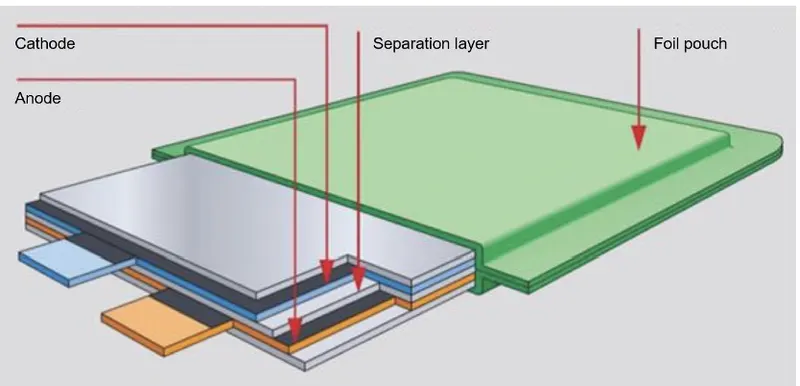
LiPos are packaged in an aluminum foil “pouch” and are called soft or pouch cells. The pouch is mostly prismatic and easier to fabricate, and lower in cost than the stainless steel or aluminum cases of Li-ions.
AUTOMOTIVE APPLICATIONS FOR LITHIUM-ION BATTERIES
There is a range of applications for batteries in passenger cars. The ones that will be considered here were selected either because they already use lithium-ion batteries or because they could potentially do so in the future. Note that there are a number of standard automotive requirements that all lithium-ion batteries used in cars need to meet: these include life (8–15 years are typical requirements), temperature range (–40°C to at least +60°C, ideally 80°C), and vibration resistance (at least 4.5 root-mean-square acceleration (grams)). Each application will now be briefly described.
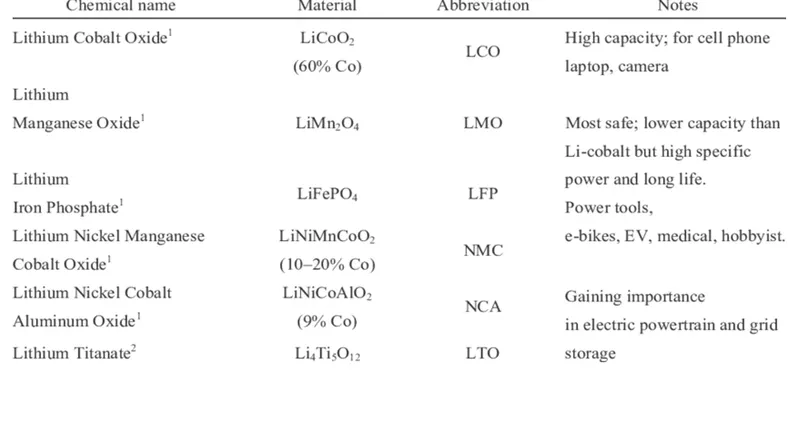
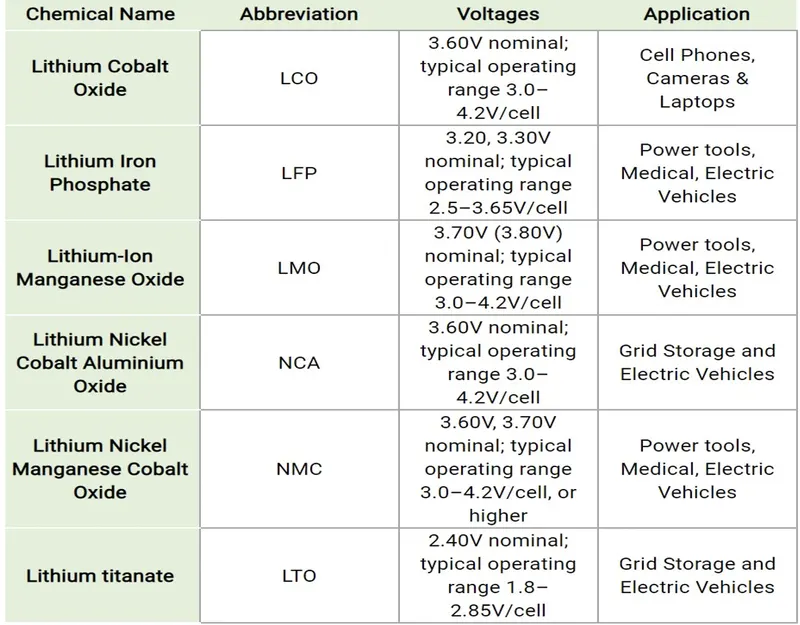
The table below compares the voltages and typical applications of the six basic lithium battery chemistries. Other characteristics of these batteries include:
- LCO – 200Wh/kg, deliver a high power, but with the tradeoff of relatively short lives, low power ratings, and low thermal stability.
- LFP – 120Wh/kg, have long cycle lives and stability at high operating temperatures.
- LMO – 140Wh/kg, cathodes are based on manganese-oxide components that are abundant, inexpensive, non-toxic, and provide good thermal stability.
- NCA – 250Wh/kg, offers high specific energy and long cycle lives.
- NMC – 200Wh/kg, varying the proportions of the chemical constituents allows the development of batteries optimized as power or energy cells. Because of its flexibility, it is one of the most successful lithium battery chemical systems.
- LTO – 80Wh/kg, lowest specific energy, but can be fast charged, discharged at up to 10-times its rated capacity, and is safe.
LIPO CHEMISTRIES
A polymer electrolyte results in several performance enhancements, including high energy density and lightweight batteries. Depending on the structure of the polymer layers, it can also enhance battery safety. Compared with conventional Li-ion batteries, LiPo batteries can be fabricated with a wider range of specific energy densities (Wh/kg) and specific power densities (W/kg), making LiPo batteries more flexible across a wider range of potential applications. As a result, LiPo technology is used across all the main lithium battery chemistries:
- Lithium cobalt oxide battery (LCO)
- Lithium-ion ternary battery (NCA, NMC)
- Lithium-ion manganese oxide battery (LMO)
- Lithium iron phosphate battery (LFP)
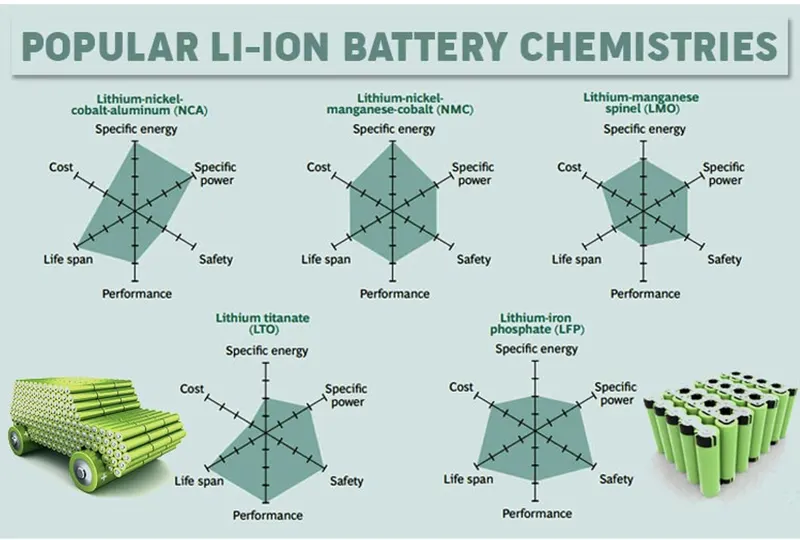
2.Compare the differences between each type of Li+ion batteries based on their characteristics?
Ans:-
References
Current Li-Ion Battery Technologies in Electric Vehicles and Opportunities for Advancements, MDPI
Different types of Lithium Polymer batteries, Grepow
Introduction to Lithium Polymer Battery Technology, Jauch
Lithium polymer battery, Wikipedia
Manufacturing Lithium-ion Batteries, TechSci Research
Types of Lithium-ion, Battery University