Week 1 Understanding Different Battery Chemistry
AIM : To understand different battteris chemistry
OBJECTIVE :
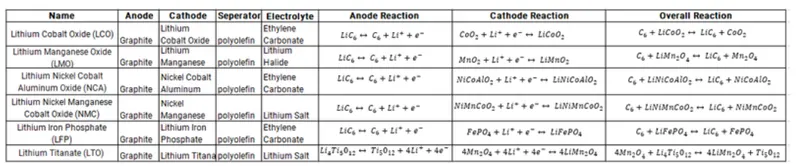
1. To prepare a table which includes materials and chemical reactions occuring at the anode and cathode of LCO,LMO,NCA,NMC,LFP and LTO types of lithium ion cells.
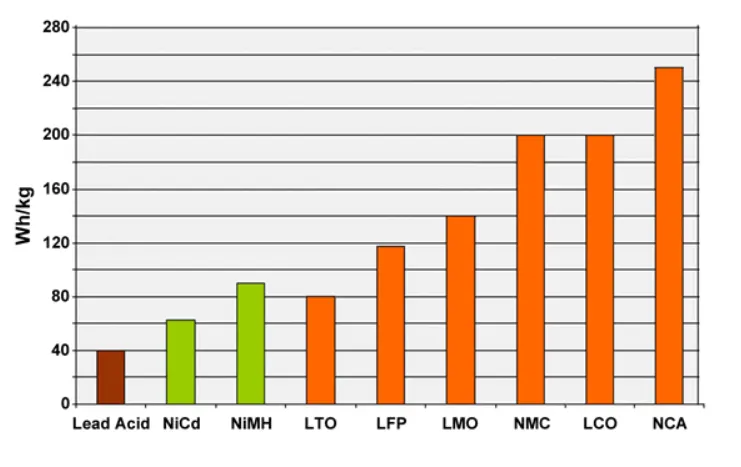
2. To compare the difference between each type of Li+ionj batteries based on their characteristics.
INTRODUCTION :
A battery is an electrochemical device that can store energy in the form of chemical energy. It translates to electric energy when the battery is connected in a circuit due to the flow of electrons because of the specific placement of chemicals. It was invented by Alessandro Volta, whereas Gaston Plante invented the rechargeable battery.
The battery consists of three elements: the negative side, the positive side, and electrolyte (the chemical which reacts with both sides), as shown in the image below. The electrolyte is used as an electron transportation medium between the anode and cathode.
It works due to electrochemical reactions called oxidation and reduction. In this reaction, electrons flow from one side to another side when the external circuit is connected to the anode and cathode.
Types of Batteries
Based on functionality, there are two types of batteries available in the market.
- Primary Batteries.
- Secondary Batteries.
LITHIUM-ION BATTERY CHEMISTRY :
Lithium - ion battery consists of reversible redox reactiopns that takes place on the electrode surface facing the electrolyte.
It is defined that the anode(negavtive electrode ) is where the oxidation happens while in tbhe cathode (positive electrode ) the reductiuon , both during the discharge process.
The commonly active material usewd for LIB are graphitised carbon (C) in anodea and lithium cobalt oxide (LiCoO2)in cathodes.
TYPES OF ION-CELLS :
Lithium Manganese Oxide (LiMn2O4 or Li-manganese): LiMn2O4 gets its name from the use of a manganese matrix structure in the cathode. LiMn2O4 can handle relatively high power in very short bursts and offers high thermal stability. This makes it one of the safer Li-ion chemistries because higher temperatures are required to cause thermal runaway. LiMn2O4 cells can also be tweaked for either higher power or higher capacity at the expense of each other.
The downside to LiMn2O4 is its relatively lower cycle life compared to other Li-ion chemistries.
Lithium Cobalt Oxide (LiCoO2, Li-co or Li-cobalt): It uses a layered cobalt structure in its cathode. LiCoO2 is known for its relatively low cost and high capacity, but generally has a lower current rating and only moderate cycle life. It also has a lower thermal runaway temperature, making it somewhat less safe than other Li-ion chemistries. LiCoO2 is also the basis for the much more dangerous RC lipo batteries.
Lithium Nickel Manganese Cobalt Oxide (LiNiMnCoO2 or NMC): LiNiMnCoO2 is a fairly new chemistry that is still undergoing constant
development. NMC falls in the sweet spot of improving upon the
drawbacks of many previous types of Li-ion chemistries while retaining their benefits. NMC shares many of the advantages of both LiCoO2 and
LiMn2O4 chemistries.
Lithium Nickel Cobalt Aluminum Oxide (LiNiCoAlO2, NCA, or NCR): LiNiCoAlO2 is very similar to the NMC chemistry above, but with aluminum swapped for manganese in the cathode. The addition of aluminum helps NCA cells achieve the highest capacity of all Li-ion chemistries.
Lithium polymer (li-poly or lipo or RC lipo): There is an entire class of Li-ion cells used for radio-controlled (RC) toys and vehicles that are generally referred to as lipo batteries. These are extremely high-power Li-ion cells that are specifically used in the RC industry for their ability to provide the highest possible current.
Lithium Iron Phosphate (LiFePO4): Lithium iron phosphate is technically a subset of the more general Li-ion class, but it is unique enough that it is often listed separately. LiFePO4 cells are both heavier and less energy-dense than most Li-ion cells. This means that battery packs built from LiFePO4 cells will be bulkier and more massive than Li-ion or RC lipo batteries of the same voltage and capacity.