Week 1 Understanding Different Battery Chemistry
Aim:
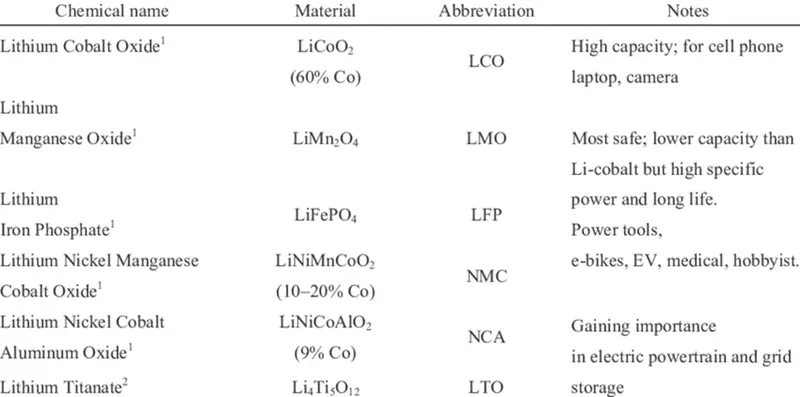
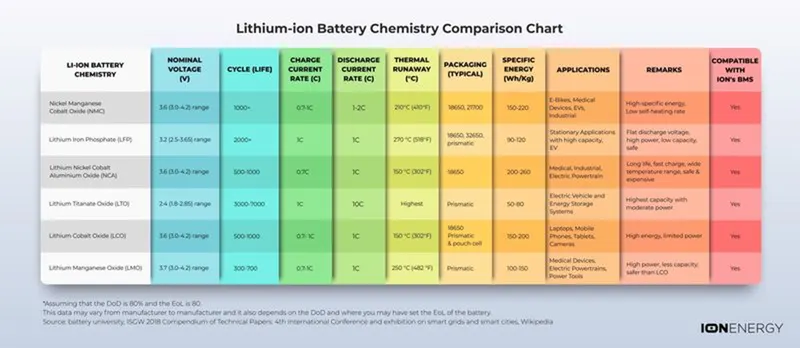
Prepare a table which includes materials & chemical reactions occurring at the anode and cathode of LCO, LMO, NCA, NMC, LFP and LTO type of lithium ion cells.
Introduction:
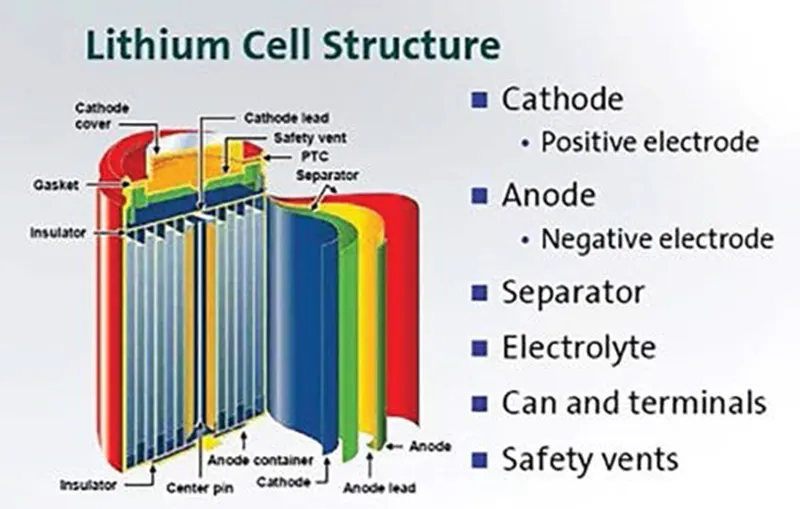
Lithium-ion cells are widely used for cellular phones and note-type personal computers (PCs) because of their high voltage and high energy density. More than 1000 million such cells were sold in the year 2007. Many of the commercial lithium-ion cells have lithium cobalt oxide (LiCoO2) positive electrodes, carbon negative electrodes, and nonaqueous electrolyte solutions. These cells should be safe because the various types of electronic protection devices such as overcharge protection circuit and fuse are installed in the commercial battery pack even if the battery pack employs only one cell. However, the safety margin of these cells is still small for practical use. Many accidents involving lithium-ion cells have been reported in newspapers and via the Internet since 1995. Whatever happens to the cells, the primary reason for these accidents is thermal runaway of lithium-ion cells. Abuse test results show that lithium-ion cells have two fundamental weaknesses, namely, they have insufficient tolerance to overcharging and poor thermal stability. When overcharging and heating occur simultaneously, cell safety is drastically reduced.
Studies on various new lithium-ion cells have been carried out for electric vehicles (EVs), uninterrupted power supplies (UPSs), backup power supplies (BPSs), and so on. Further trend of cell development is to make higher energy density cells and large-size cells. This trend makes cell safety a very important issue in the near future.
At present the best way to evaluate cell safety is to carry out abuse tests on bare cells without protection systems. This chapter describes the recent status of safety of practical lithium-ion cells, a theoretical approach to an understanding of cell safety, how to evaluate the safety of lithium-ion cells before practical use, and example results of safety tests of lithium-ion cells.
Lithium Nickel Manganese Cobalt Oxide Batteries
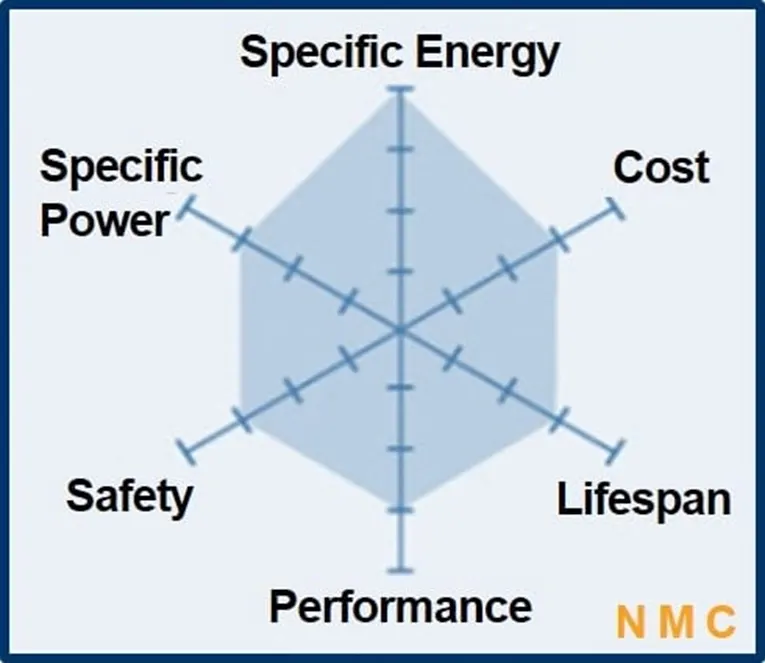
One of the most successful li-ion cathode formulas developed to date is obtained by combining nickel, manganese, and cobalt. Lithium-Nickel-Manganese-Cobalt-Oxide (LiNiMnCoO2), abbreviated as NMC, has become the go-to cathode powder to develop batteries for power tools, e-bikes and other electric powertrains. It delivers strong overall performance, excellent specific energy, and the lowest self-heating rate of all mainstream cathode powders, which makes it the preferred option for automotive batteries.
While NMC powder can refer to a variety of blends, the formula typically consists of 33% nickel, 33% manganese and 33% cobalt. This blend, sometimes referred to as 1-1-1, is a popular option for mass-produced cells in applications requiring frequent cycling (automotive, energy storage) due to the reduced material cost resulting from lower cobalt content
Lithium Iron Phosphate Batteries
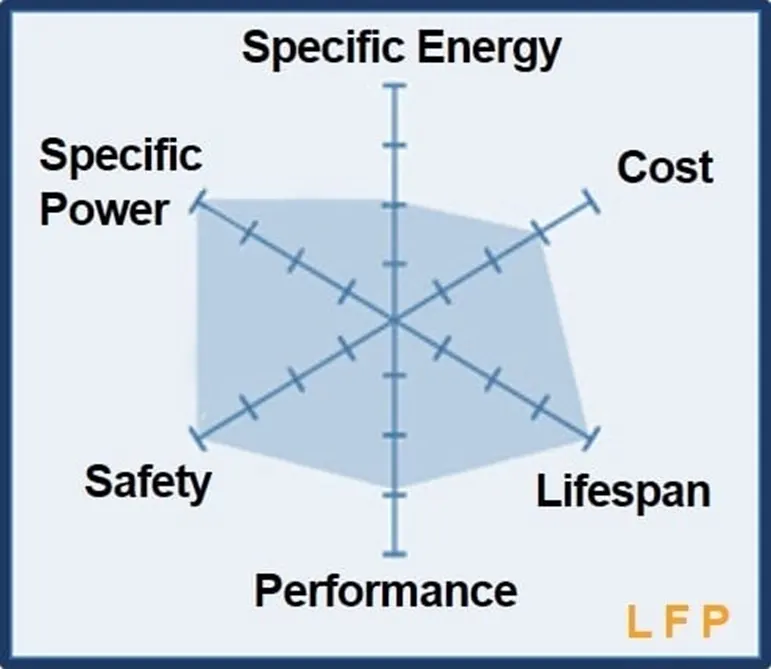
Lithium Iron phosphate (LFP) is a popular, cost-effective cathod material for lithium-ion cells that is known to deliver excellent safety and long life span, which makes it particularly well-suited for specialty battery applications requiring high load currents and endurance.
Discovered by University of Texas researchers in the mid-90s, LFP cathode offers several key advantages including a high current rating, long cycle life, and superior thermal stability, which makes it one of the safest and most abuse-tolerant cathode material options available to manufacturers. On the other hand, LFP delivers a lower nominal voltage, which results in lower specific energy when compared to other cathode materials on the market. Consequently, LFP batteries tend to have a higher self-discharge than other Li-ion battery types.
NCA – Lithium Nickel Cobalt Aluminium Oxide (LiNiCoAlO2):
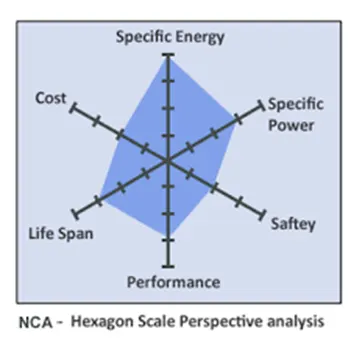
Lithium Nickel Cobalt Aluminum Oxide (NCA) is a highly thermally stable cathode material used lithium-ion batteries. Doping the lithium nickel cobalt oxide with aluminum both stabilizes its thermal and charge transfer resistance. Lithium Nickel Cobalt Aluminum Oxide is generally immediately available in most volumes. American Elements produces to many standard grades when applicable, including Mil Spec (military grade); ACS, Reagent and Technical Grade; Food, Agricultural and Pharmaceutical Grade; Optical Grade, USP and EP/BP (European Pharmacopoeia/British Pharmacopoeia) and follows applicable ASTM testing standards. Typical and custom packaging is available. Additional technical, research and safety (MSDS) information is available as is a Reference Calculator for converting relevant units of measurement.
Lithium Titanate Batteries (LTO):
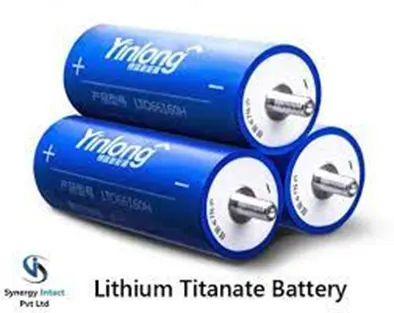
The advantages of Lithium Titanate Oxide (lithium titanium oxide) battery technology are significant and the whole LTO technology is a game-changer for the entire battery industry. The LTO is bringing a new dimension of possibilities for the energy storage with a number of economical as well as ecological aspects.
With applications in many sectors, with a primary focus on high speed charging and energy storage, Lithium Titanate Oxide (lithium titanium oxide) technology is the future of battery-powered technology. Let's see the key benefits and advantages of the LTO battery technology.
In essence, the LTO is a rechargeable battery based on the, or modified from, the Lithium-Ion (li-ion) battery technology. Li-titanate oxide (LTO) replaces the graphite in the anode of the typical Li-Ion battery and forms the materials into a spinel 3D crystal structure. Having a nominal a cell voltage of 2.40V, it releases a high current discharge current that is 10 times the capacity of the other types of lithium batteries. Instead of using carbon particles on its surface as other lithium batteries do, Lithium Titanate utilizes lithium-titanate nanocrystals.
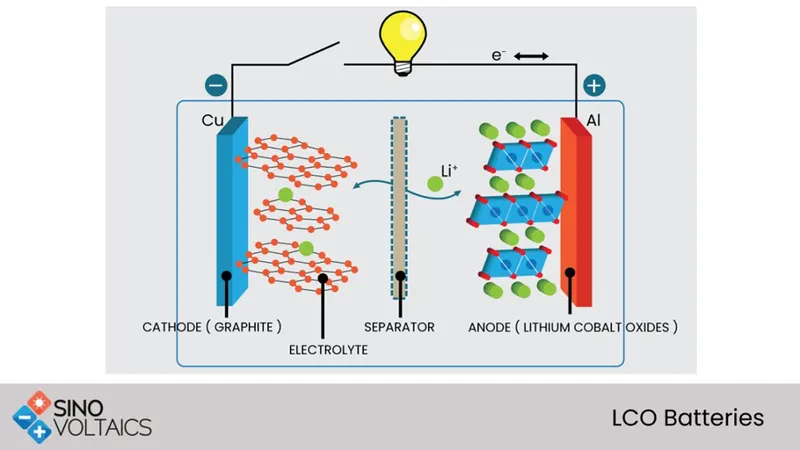
LCO batteries:
LCO (Lithium cobalt oxide) was invented in the year 1991. Its anode material is LiaC6, the cathode material is LibCoO2 and the carrier is Li+.It is used in various applications ranging from electronic devices to all laptops and phone batteries.The majority of lithium-ion batteries for the portable devices are cobalt based. The system contains a cobalt oxide cathode (positive electrode) and graphite carbon anode (negative electrode).
The main advantages of the LCO batteries are:
- High energy density.
- Long runtime making it optimum for new technologies
The main disadvantages of the LCO batteries are:
- It has a relatively low discharge current so high load can lead to pack overheat
- The safety circuit of the LCO battery is typically limited to a 1C for charging and discharging.
- The internal resistance increases with cycling and aging. This high internal resistance can cause the battery to become unserviceable due to a large voltage drop under the load after a couple of years of use.
LMO Battery:
LMO (Lithium magnesium oxide) was invented in the year 1996. Its anode material is LiaC6, the cathode material is LibMn2O4 and the carrier is Li+. It is used in different applications like power tools and electric cars.LMO batteries have the ability to deliver a lot of energy in a short period of time, which makes them extremely useful for use in power tools like drills.In 1996, lithium manganese oxide was first used as a cathode material. A three dimensional spinel structure was formed by this structure, this improves the flow of ions between the electrodes. The high flow decreases the internal resistance and increases loading capability.LMO batteries are usually used in medical devices and equipment, power tools, electric bikes and more. Because of their thermal resistance and higher safety. LMO batteries can also be used for laptops and electrical cars.
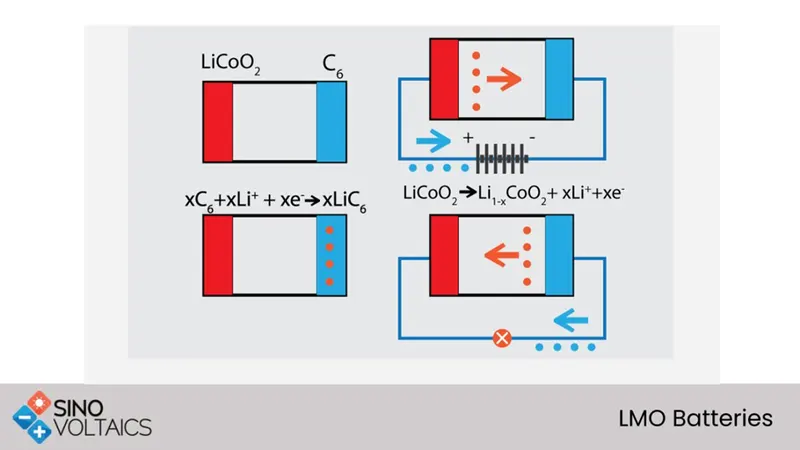
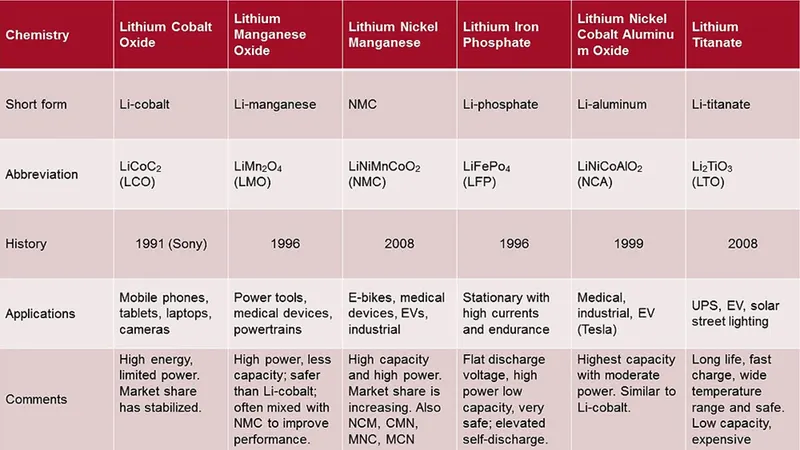
Table:
Conclusion:
Over 100 of electrictronic appliences use Li-ion cells and study has been carried out to obtain the most powerfull li-ion cells that can last long and can be use in all electric vehicle and convinient to several appliences and have high performances.