Week 1 Understanding Different Battery Chemistry
Lithium ion battery
there structure is same as other batteries present in the market,but now a days they are used in every Domain of application because of their high Performance and High productivity compare to other batteries.
Like other batteries ,lithium ion batery uses cathode as postive and anode as negative electrodes, and some chemical or solution ,liquid as a electolyte for conduction between anode and cathode.
While charging flow of electrons are from Cathode to Anode and While discharging,flow is reverse.
At cathode some metal oxide are use and at anode carbon/graphite is used.
refer the image
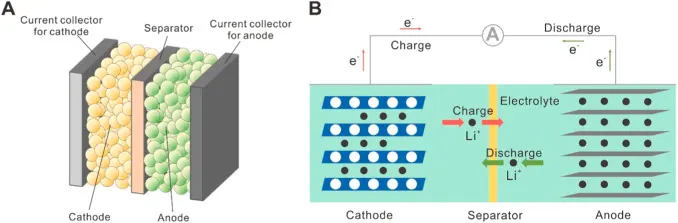
Below are the different Lithium ion batteries and materials used in it.
- LCO – Lithium Cobalt Oxide (LiCoO2)
- LMO – Lithium Manganese Oxide (LiMn2O4)
- NCA – Lithium Nickel Cobalt Aluminium Oxide (LiNiCoAlO2)
- NMC - Lthium nickle Colbalt manganese Oxide(LiNiCoMnO2)
- LFP - Lithium Iron Phosphate(LiFePO4)
- LTO - Lithium Titanate Oxide (LiTiO2)
LCO
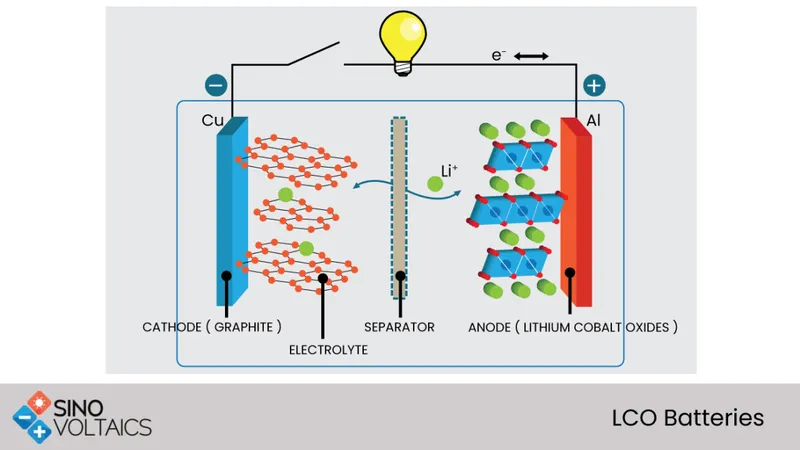
Image show the anide is positve source because of the passive load.
this type of battery are usend mobile phones and laptops.
Colblat oxide udes as cathode and grapgite/carbon as anode. and lithium is used as carrier.
its is a fast charging battery but low energy density as compare to other.
LMO
These types of battery are non rechargeable,used in marine and industries because of its high delevering continious power.
Low internal resistance
Its anode material is LiaC6, the cathode material is LibMn2O4 and the carrier is Li+.
NCA
Lithium nickel cobalt aluminum oxide (LiNi0.8Co0.15Al0.05O2) is a cathode material
its a high range power capablities.
Nickle colblat Aluiminum oxide is used as cathode.
This type of batteries are mainly used in automobile industries and in power tools.
its contains 80% nickle ,15% colblat,5% aluinium
NMC
cathode material is used are Nickle,Manganese,Colblat.
It conatins 33% nickle,33%manganese,33%colblat.
low cost
high Power density.
LFP
Lithium iron phoshphate material is used as cathode.
Li-phosphate is more tolerant to full charge conditions and is less stressed than other lithium-ion systems if kept at high voltage for a prolonged time
cold temperature reduces performance
storage temperature shortens the service life
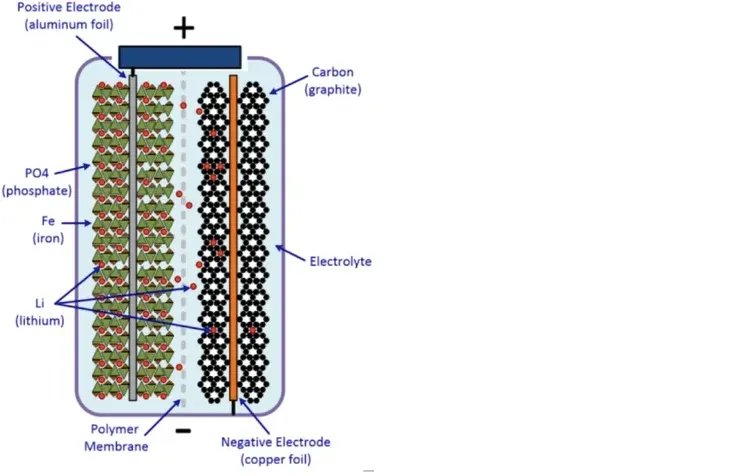
LTO
Lithium titanate Oxide used as cathode.
these are the fastest charging batteries(90% charge capacity in just 10 minutes-toshiba made)
but low energy density
can be used in every applications,but cost is high.
..
| Battery | Materials at cathode | Materials at anode | ||||
| LCO | Lithium Cobalt Oxide | graphate/carbon | ||||
| LMO | Lithium Manganese Oxide | graphate/carbon | ||||
| NCA | Lithium Nickel Cobalt Aluminium Oxide | graphate/carbon | ||||
| NMC | Lthium nickle Colbalt manganese Oxide | graphate/carbon | ||||
| LFP | Lithium Iron Phosphate | graphate/carbon | ||||
| LTO | Lithium Titanate Oxide | graphate/carbon |
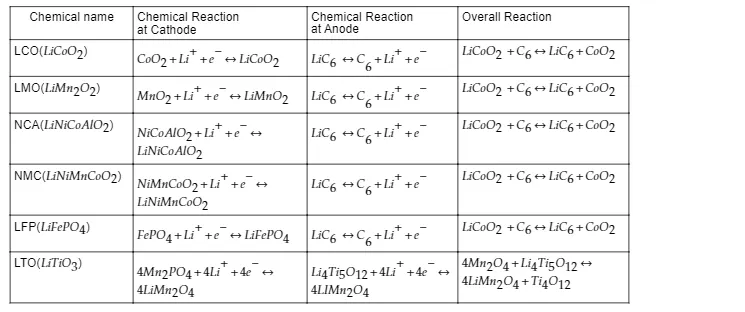
CHaractertics of different Lithium ion batteries .
high-power density, long life, low self-discharge, low maintenance costs and low environmental impact.
Following is the graph in image from.
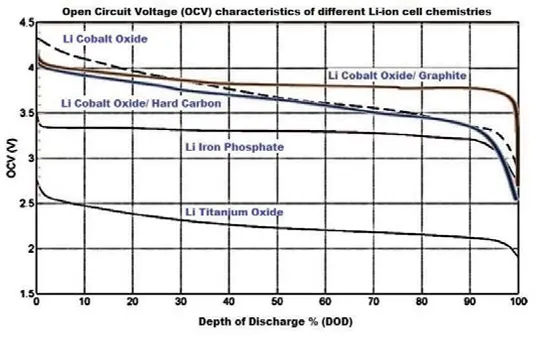
OVC - potential difference between 2 terminals.
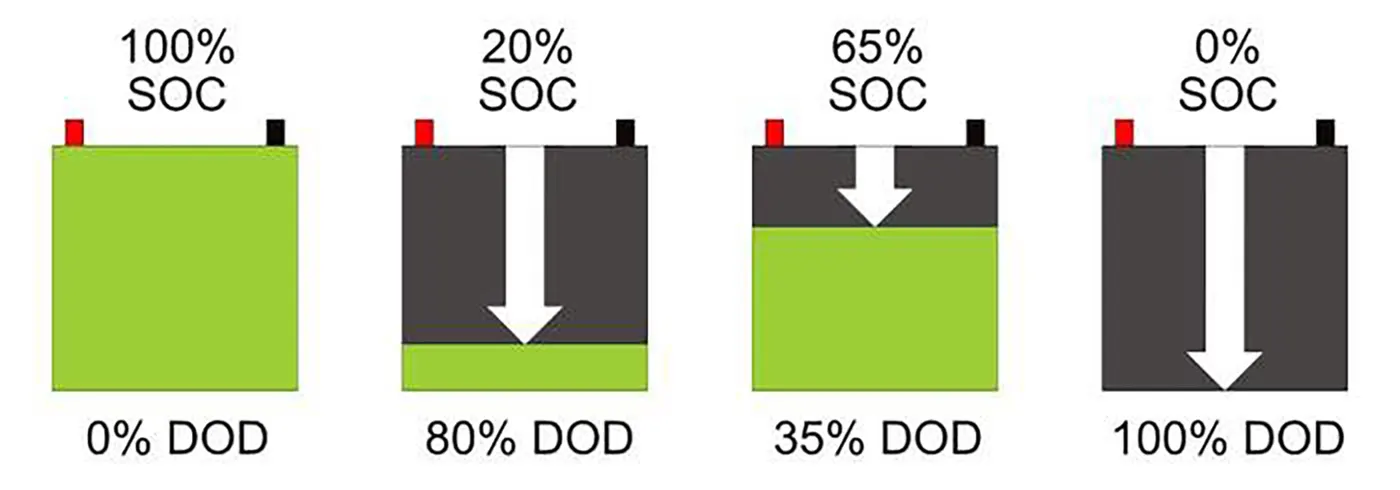
depth of discharge- it is a capacity when discharge fully from the full charge battery to the nominal battery capacity.
Y axis is the voltage
X axis is the DOD of Li-ion batteries
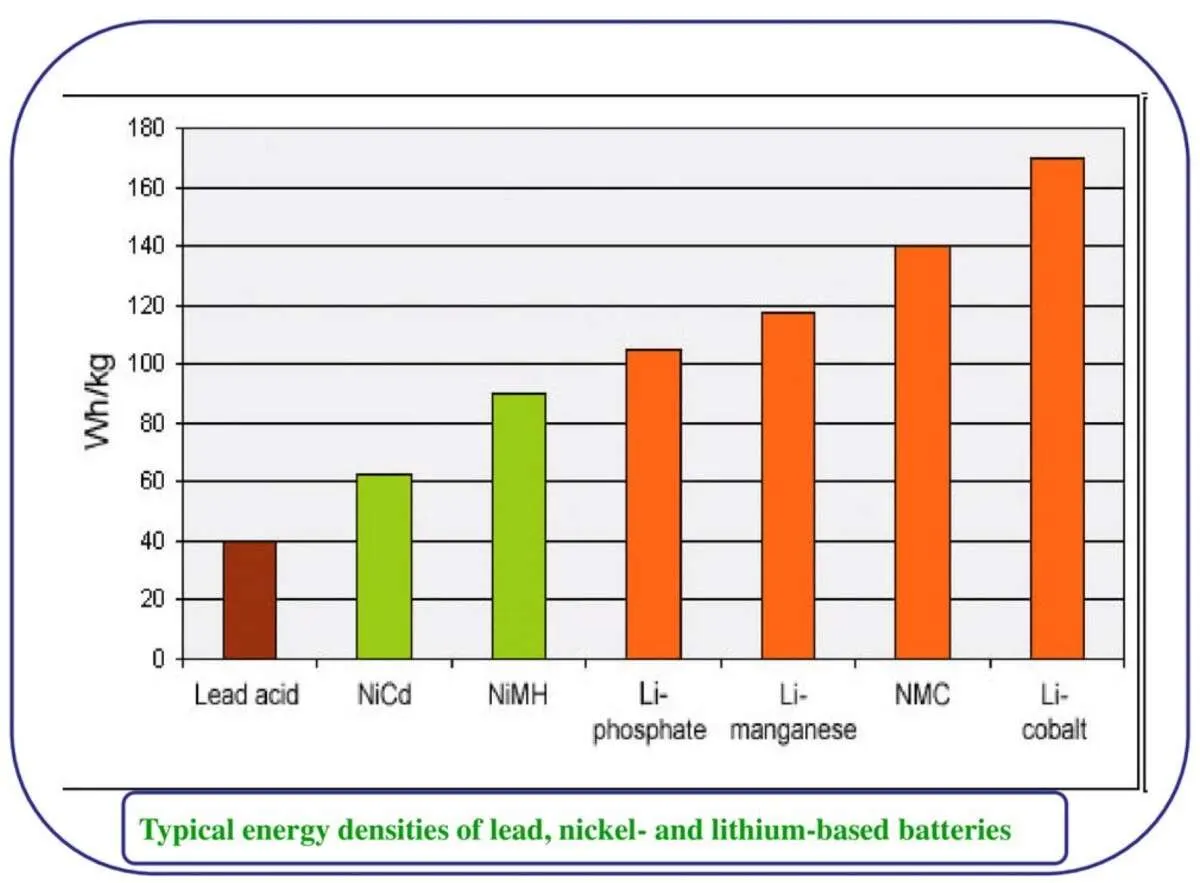
image represent he Watt per hours KG of the differents battery,
Li coblat has the highest,then come NIckle mangense coblat, and so on....