Week 1 Understanding Different Battery Chemistry
Aim: Study the different types of battery
Objective:
1.Prepare a table which includes materials & chemical reactions occurring at the anode and cathode of LCO, LMO,NCA, NMC, LFP and LTO type of lithium ion cells.
2.Compare the differences between each type of Li+ion batteries based on their characteristics,
Theory:
Li-ion Battery:
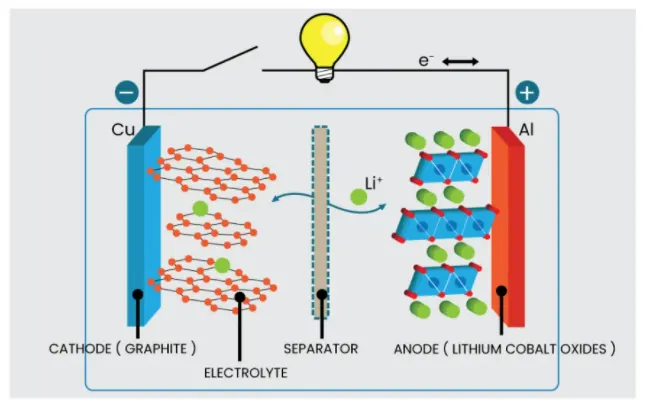
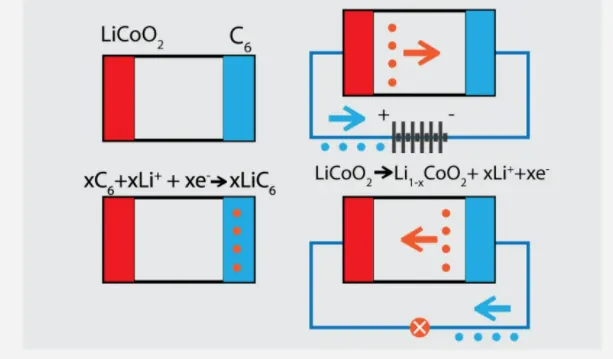
A lithium-ion (Li-ion) battery is an advanced battery technology that uses lithium ions as a key component of its electrochemistry. During a discharge cycle, lithium atoms in the anode are ionized and separated from their electrons. The lithium ions move from the anode and pass through the electrolyte until they reach the cathode, where they recombine with their electrons and electrically neutralize. The lithium ions are small enough to be able to move through a micro-permeable separator between the anode and cathode. In part because of lithium’s small size (third only to hydrogen and helium), Li-ion batteries are capable of having a very high voltage and charge storage per unit mass and unit volume.
Li-ion batteries can use a number of different materials as electrodes. The most common combination is that of lithium cobalt oxide (cathode) and graphite (anode), which is most commonly found in portable electronic devices such as cellphones and laptops. Other cathode materials include lithium manganese oxide (used in hybrid electric and electric automobiles) and lithium iron phosphate. Li-ion batteries typically use ether (a class of organic compounds) as an electrolyte.
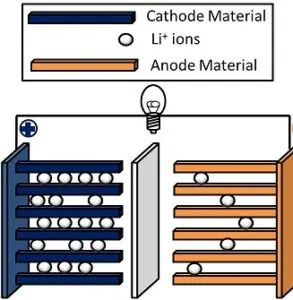
The lithium battery was proposed by British chemist M. Stanley Whittingham. Whittingham started on the research that led to his breakthrough at Stanford University. Early in the 1970s, he discovered how to store lithium ions within the layers of a disulfide material. After getting hired by Exxon, he improved on this innovation.Whittingham used titanium(IV) sulfide and lithium metal as the electrodes. However, this rechargeable lithium battery could never be made practical. Titanium disulfide was a poor choice, since it has to be synthesized under completely sealed conditions, also being quite expensive (~$1,000 per kilogram for titanium disulfide raw material in 1970s). When exposed to air, it reacts to form hygrogen sulfide compounds, which have an unpleasant odour and are toxic to humans and most animals. For this, and other reasons, Exxon discontinued development of Whittingham's lithium-titanium disulfide battery.
Batteries with metallic lithium electrodes presented safety issues, as lithium metal reacts with water, releasing flammable hydrogen gas. Consequently, research moved to develop batteries in which, instead of metallic lithium, only lithium compounds are present, being capable of accepting and releasing lithium ions.
Reversible intercalation in graphite and intercalation into cathodic oxides was discovered during 1974–76 by J. O. Besenhard at TU Munich. Besenhard proposed its application in lithium cells. Electrolyte decomposition and solvent co-intercalation into graphite were severe early drawbacks for battery life.
Li-ion Battries provide different characteristics and are used in different application accordingly
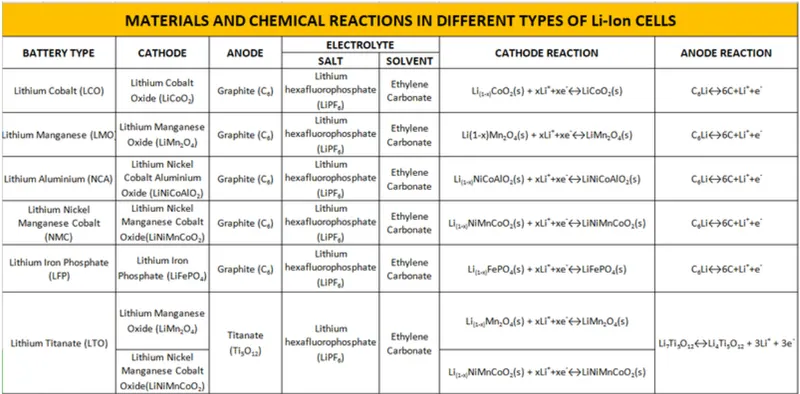
1) LCO stands for Lithium cobalt battery. Lithium cobalt oxide is one of the most common Lithium-ions, it has a chemical symbol which is LiCoO2 and is abbreviated as LCO. For simplification, Li-cobalt –which is the short term- can also be used for this type battery. Cobalt is the core active material which defines the character of the battery.
LCO batteries technology and applications
LCO (Lithium cobalt oxide) was invented in the year 1991. Its anode material is LiaC6, the cathode material is LibCoO2 and the carrier is Li+.It is used in various applications ranging from electronic devices to all laptops and phone batteries. The majority of lithium-ion batteries for the portable devices are cobalt based. The system contains a cobalt oxide cathode (positive electrode) and graphite carbon anode (negative electrode).
2) NMC
Lithium Nickel Manganese Cobalt Oxide Batteries
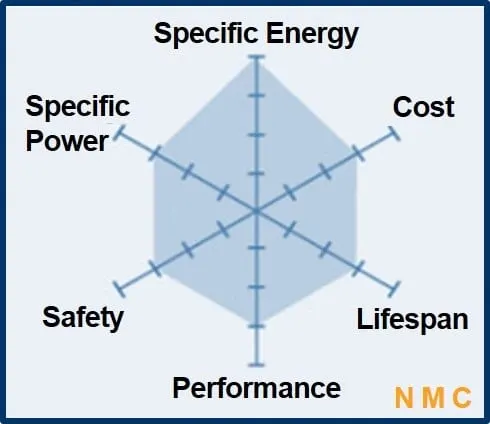
One of the most successful li-ion cathode formulas developed to date is obtained by combining nickel, manganese, and cobalt. Lithium-Nickel-Manganese-Cobalt-Oxide (LiNiMnCoO2), abbreviated as NMC, has become the go-to cathode powder to develop batteries for power tools, e-bikes and other electric powertrains. It delivers strong overall performance, excellent specific energy, and the lowest self-heating rate of all mainstream cathode powders, which makes it the preferred option for automotive batteries.
While NMC powder can refer to a variety of blends, the formula typically consists of 33% nickel, 33% manganese and 33% cobalt. This blend, sometimes referred to as 1-1-1, is a popular option for mass-produced cells in applications requiring frequent cycling (automotive, energy storage) due to the reduced material cost resulting from lower cobalt content.
3) LFP
Lithium Iron Phosphate Batteries
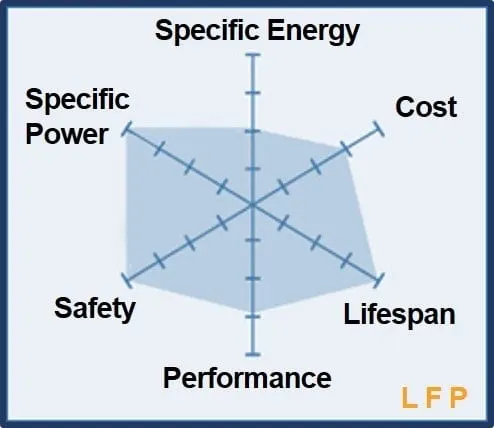
Lithium Iron phosphate (LFP) is a popular, cost-effective cathode material for lithium-ion cells that is known to deliver excellent safety and long life span, which makes it particularly well-suited for specialty battery applications requiring high load currents and endurance.
Discovered by University of Texas researchers in the mid-90s, LFP cathode offers several key advantages including a high current rating, long cycle life, and superior thermal stability, which makes it one of the safest and most abuse-tolerant cathode material options available to manufacturers. On the other hand, LFP delivers a lower nominal voltage, which results in lower specific energy when compared to other cathode materials on the market. Consequently, LFP batteries tend to have a higher self-discharge than other Li-ion battery types.
4) LMO
LMO stands for Lithium manganese oxide batteries, which are commonly referred to as lithium-ion manganese batteries or manganese spinel. This battery was discovered in the 1980s, yet the first commercial lithium-ion battery made with a cathode material made from lithium manganese was produced in 1996.
LMO batteries technology and applications
LMO (Lithium magnesium oxide) was invented in the year 1996. Its anode material is LiaC6, the cathode material is LibMn2O4 and the carrier is Li+. It is used in different applications like power tools and electric cars. LMO batteries have the ability to deliver a lot of energy in a short period of time, which makes them extremely useful for use in power tools like drills. In 1996, lithium manganese oxide was first used as a cathode material. A three dimensional spinel structure was formed by this structure, this improves the flow of ions between the electrodes. The high flow decreases the internal resistance and increases loading capability. LMO batteries are usually used in medical devices and equipment, power tools, electric bikes and more. Because of their thermal resistance and higher safety. LMO batteries can also be used for laptops and electrical cars.
5) NCA
The lithium nickel cobalt aluminium oxides (NCA) are a group of substances comprising metal oxide. Some of them are important due to their application in lithium ion batteries. NCAs are used as active material on the positive pole (which is the cathode when the battery is discharged). NCAs are mixed oxides comprising the cations of the chemical elements lithium, nickel, cobalt and aluminium. The most important representatives have the general formula LiNixCoyAlzO2 with x + y + z = 1. In case of the NCA comprising batteries currently available on the market, which are also used in electric car and electric appliances, x ≈ 0,8, and the voltage of those batteries is between 3.6 V and 4.0 V, at a nominal voltage of 3.6 V or 3.7 V. A version of the oxides currently in use in 2019 is LiNi0,84Co0,12Al0,04O2.
6) LTO
The lithium-titanate-oxide (LTO) battery is a type of rechargeable battery which has the advantage of being faster to charge than other lithium-ion batteries, but the disadvantage of having a much lower energy density.