Week 1 Understanding Different Battery Chemistry
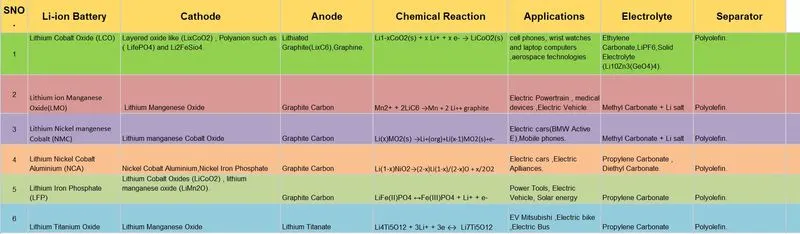
OBJECTIVE 1 - To Prepare table which includes materials & chemical reactions occurring at the anode and cathode of LCO, LMO, NCA, NMC, LFP and LTO type of lithium ion cells.
THEORY -
Definition Of Battery - A battery is a source of electric power consisting of one or more electrochemical cells with external connections for powering electrical devices such as flashlights,mobile phones, and electric cars.
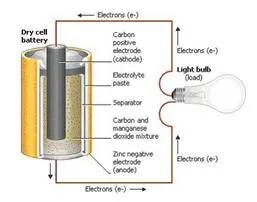
Construction -
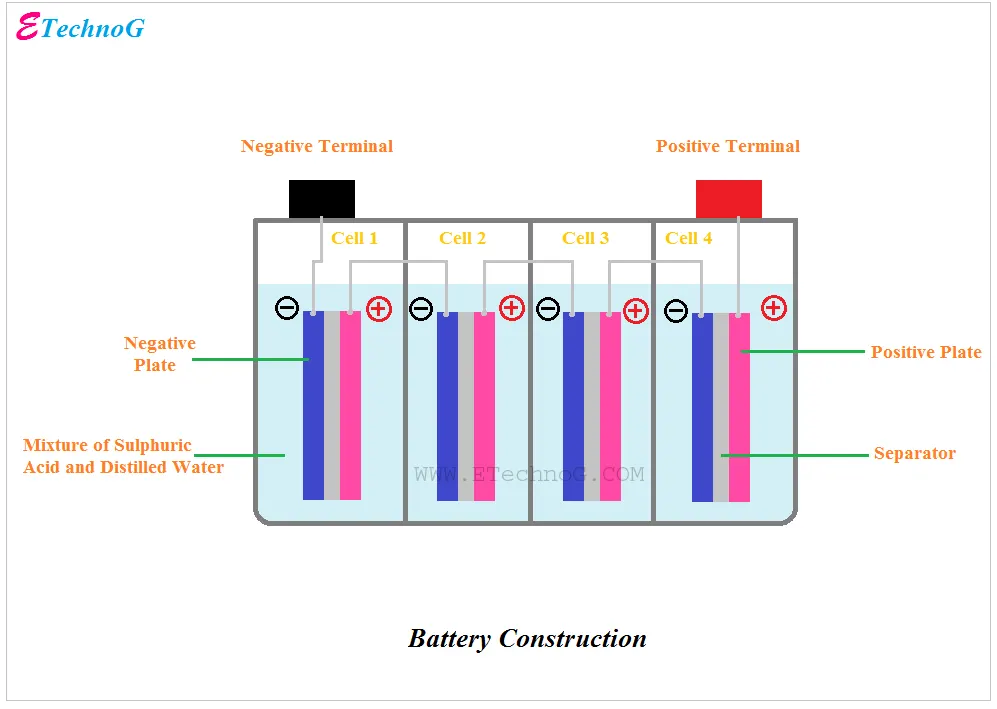
Parts -
- Cathode (+ve Terminal) - An electrode through which the conventional current leaves an electrical device.
- Anode (-ve Terminal) - Electrode through wich the conventional current enters into polarized electrical device.
- Electrolyte - - Medium that permits ionic conduction between electrodes.
- Non conductor of electrons.
- Separator - - Insulating layer between electrode.
- Permeable to ions of electrolyte.
- Prevents internal short circuits between electrods.
Working Principal - Electrochemical Reactions and Electromotive Force.
Working Of Lithium Ion Battery -
Working -
A battery is made up of an anode, cathode, separator, electrolyte, and two current collectors (positive and negative). The anode and cathode store the lithium. The electrolyte carries positively charged lithium ions from the anode to the cathode and vice versa through the separator. The movement of the lithium ions creates free electrons in the anode which creates a charge at the positive current collector. The electrical current then flows from the current collector through a device being powered (cell phone, computer, etc.) to the negative current collector. The separator blocks the flow of electrons inside the battery.
Chemistry Involves In Lithium ion Battrey -
Inside a lithium ion battrey , oxidation-reduction (Redox) Reaction takes place.
Reduction takes place at the cathode. There, cobalt oxide combines with lithium ions to form lithium-cobalt oxide (LiCoO2). The Half Reaction is:
CoO2 + Li+ + e- → LiCoO2
Oxidation takes place at the anode. There, the graphite intercalation compound LiC6 forms graphite (C6) and lithium ions. The half-reaction is:
LiC6 → C6 + Li+ + e-
Here is the full reaction (left to right = discharging, right to left = charging):
LiC6 + CoO2 ⇄ C6 + LiCoO2
Discharging Of Battery -
When the lithium-ion battery is powering , positively charged lithium ions (Li+) move from the negative anode to the positive cathode. They do this by moving through the electrolyte until they reach the positive electrode. There, they are deposited. The electrons, on the other hand, move from the anode to the cathode.
Charging Of Battery -
When we charge a lithium-ion battery, the exact opposite process happens. The lithium ions move back from the cathode to the anode. The electrons move from the anode to the cathode.
In this way the charging and discharging of Li-Ion battery occurs .
Types Of Batteries -
1) . Primary Cell -
- Dry Cell
- Lithium Battery
2). Secondary Cells -
- Lead Acid
- Nickel Cadium
- Metal Air
- Nickel Metal Hydride
- Lithium Ion
Types Of Lithium Ion Batteries -
- Lithium Nickel Manganese Cobalt (NMC)
- Lithium Nickel Cobalt Aluminium (NCA)
- Lithium Mangenese Spinel (LMO)
- Lithium Titanium Oxide
- Lithium Iorn Phosphate (LiPO or LifePO4)
Explanation -
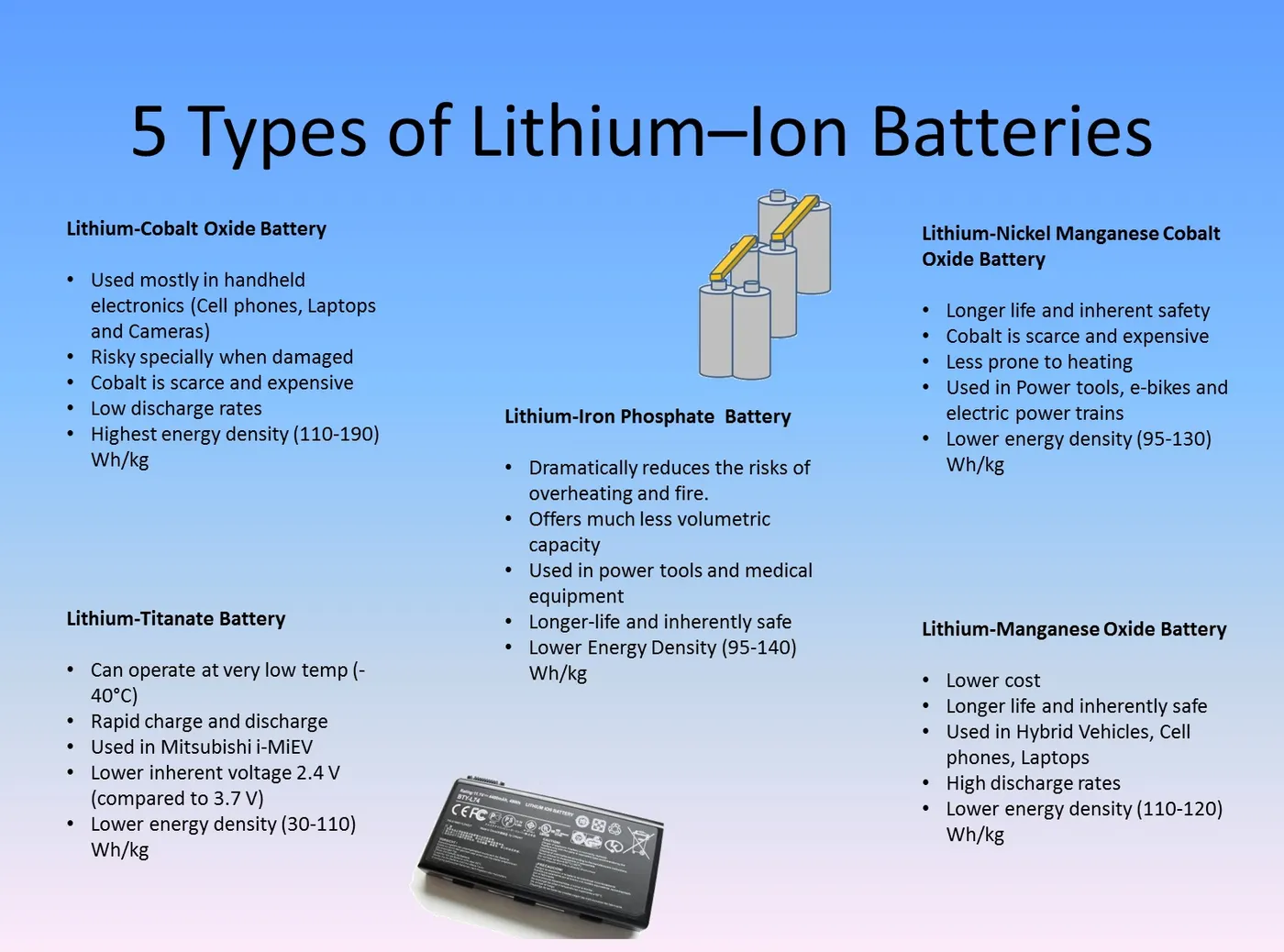
Table For Comaprison Of Different Types Of Lithium Ion Batteries -