Week 1 Spur Gear Challenge
Stress concentration on spur Gear
Case 1
For case 1 static structural analysis is carried out on spur gear. The material used is cast iron and analysis is carried out in ANSYS workbench. The model is taken from the challenge it self.
The material properties of cast iron as below
Density: 7200 Kg m^-3
Coefficient of thermal expansion: 1.1E-05 C^-1
Young modulus: 1.1E+11 Pa
Poisson’s Ratio: 0.28
Bulk Modulus: 8.3333E+10 Pa
Shear Modulus: 4.2969E+10 Pa
Tensile Ultimate strength: 2.4E+08 Pa
Compressive Ultimate strength: 8.2E+08 Pa
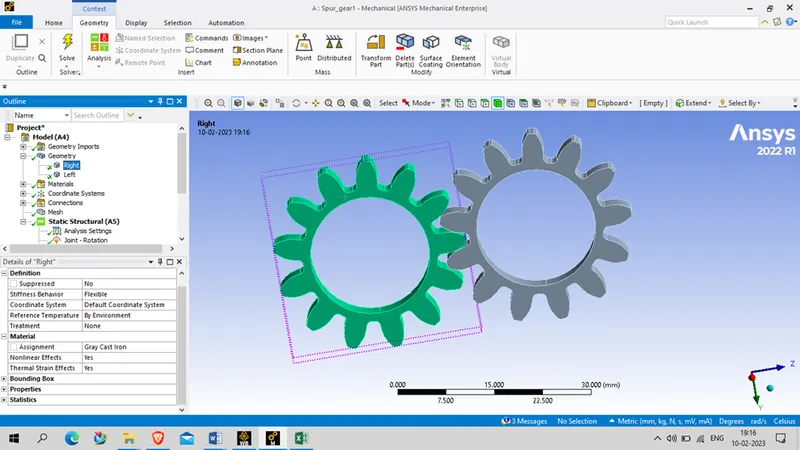
We had assign both the gear as cast iron for case 1 as shown in below figure
The model has meshed using ANSYS mesher with an element size 0.5 mm. Suing smoothing quality as low,
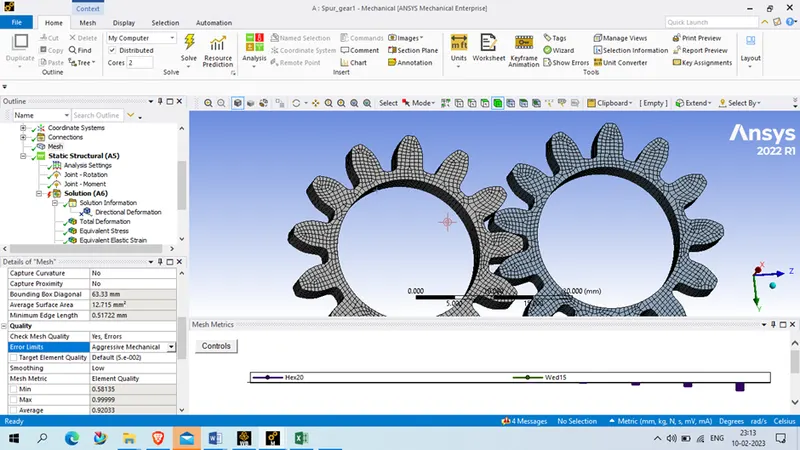
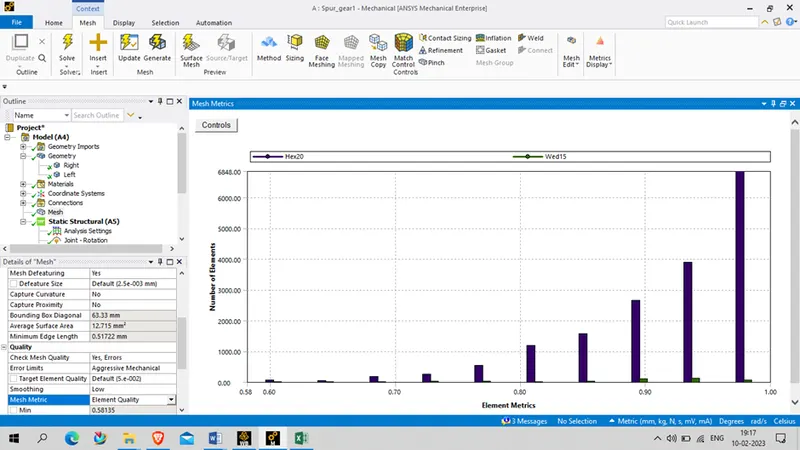
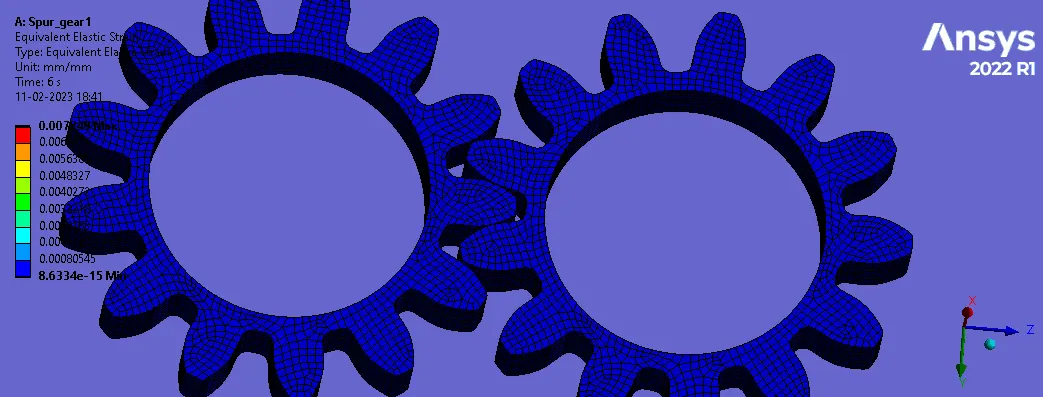
A Mesh metric that identifies elements according to their quality was employed and it can be seen that the elements of the lowest quality are the minimal. Most of the elements have very high quality in the range of 0.5 to 1. Hence, the mesh is of acceptable quality. The meshed model is as shown in image below
We made the connection one gear is as contact other gear as target, and we made connection as frictional type and use the formulation as augmented Lagrange’s, behaviors as symmetric.
We created 2 joints for one for each gear, and used the connection type as body to ground and type as revolute.
Analysis setting was done as number of step put as 6 and we defined it by time in second, initial time step was 0.2 second, minimum time step was 5e-2 second and maximum time step was 0.5 second.
We has used 2 joint load, one for each gear, one is rotational (driver gear in our case right gear) other is moment (Driven Gear in our case left gear) of 10 N-m at each step, total revolution was divided into 6 step so each step was 30 degree.
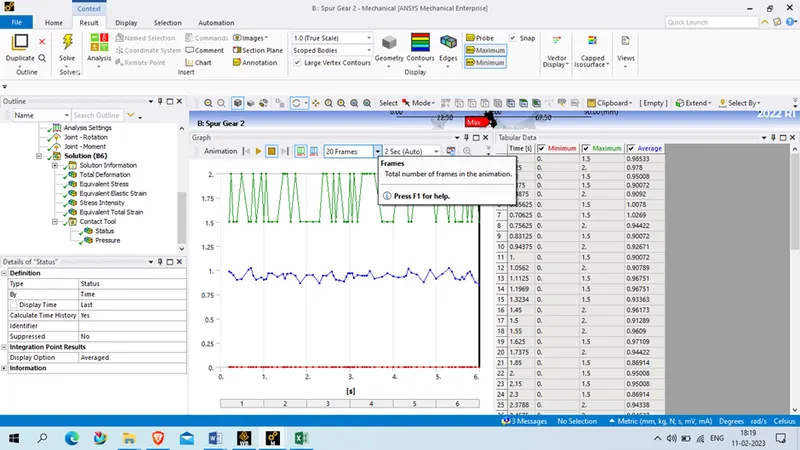
And we had solve the simulation for total deformation, equivalent stress & stress intensity and elastic strain & total strain, contact status and pressure.
The simulation is then run with the setting applied and the result obtained.
Case 2
For case 2 we had duplicate the project which was prepared in case 1, and change the material from cast iron to cast steel,
Material Properties of Cast Steel as below
Density: 7820 Kg m^-3
Coefficient of thermal expansion: 1.1E-05 C^-1
Young modulus: 2.03E+11 Pa
Poisson’s Ratio: 0.3
Bulk Modulus: 1.6917E+11 Pa
Shear Modulus: 7.8077E+10 Pa
Tensile Yield strength: 3.49E+08 Pa
Tensile Ultimate strength: 5.5E+08 Pa
The simulation is then run with the setting applied and the result obtained.
Case 3
For case 3 we had duplicate the project which was prepared in case 1, and change the material from cast iron to cast steel,
Material properties of Cast Bronze as below
Density: 8810 Kg m^-3
Coefficient of thermal expansion: 1.68E-05 C^-1
Young modulus: 8E+10 Pa
Poisson’s Ratio: 0.345
Bulk Modulus: 8.6022E+10 Pa
Shear Modulus: 2.974E+10 Pa
Tensile Yield strength: 1.44E+08 Pa
Tensile Ultimate strength: 2.67E+08 Pa
The simulation is then run with the setting applied and the result obtained.
Result:
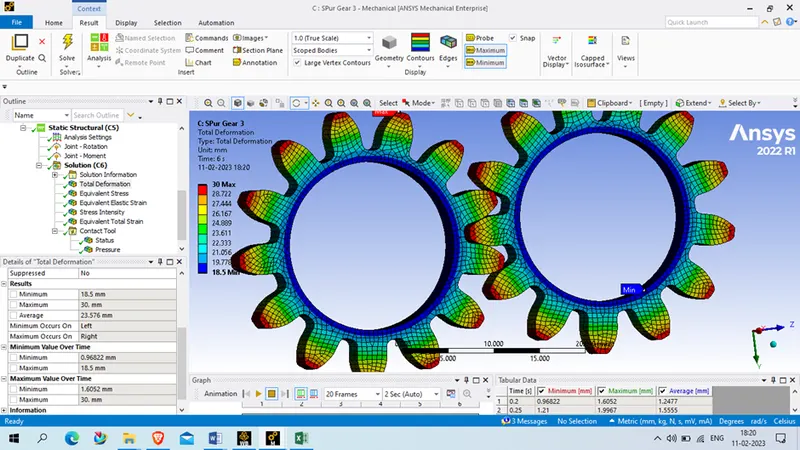
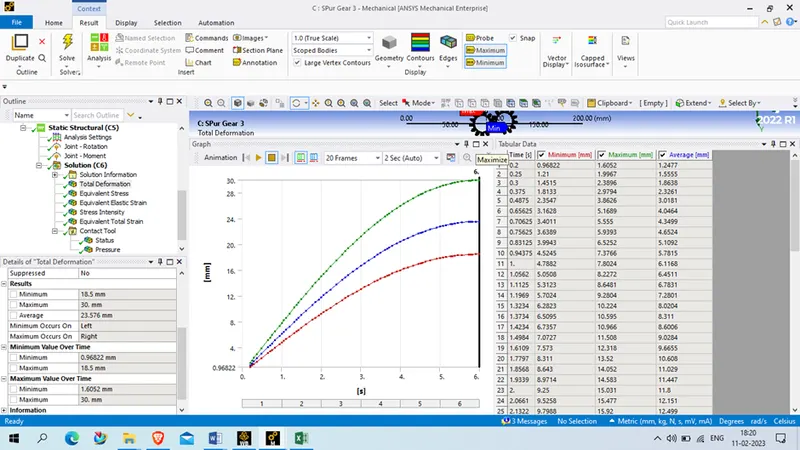
The total deformation for the three cases are compared below:
|
Material |
time (s) |
Min(mm) |
Max(mm) |
Ave(mm) |
|
Cast Iron |
6 |
18.5 |
30 |
23.567 |
|
Cast steel |
6 |
18.5 |
30 |
23.576 |
|
Cast bronze |
6 |
18.5 |
30 |
23.576 |
The equivalent stress for the three cases are compared below
|
Material |
time(s) |
Minimum (MPa) |
Maximum (MPa) |
Average (MPa) |
|
Cast Iron |
6 |
3.8424e-005 |
462.57 |
9.0436 |
|
Cast steel |
6 |
3.7904e-005 |
457.75 |
9.07 |
|
Cast bronze |
6 |
8.594e-005 |
443.07 |
9.084 |
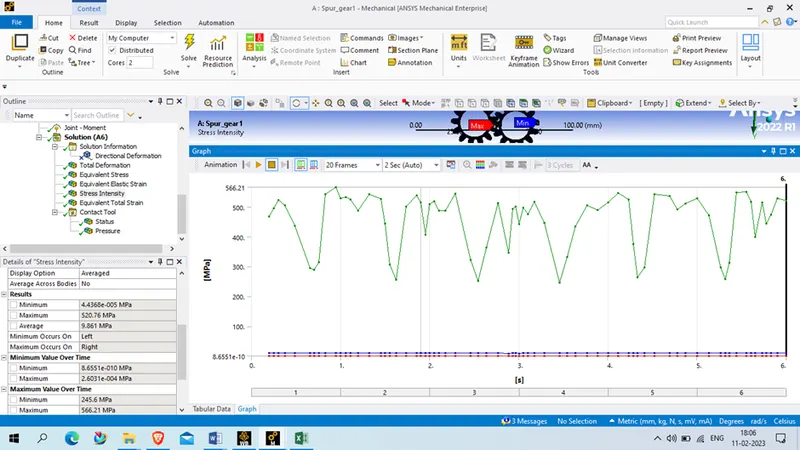
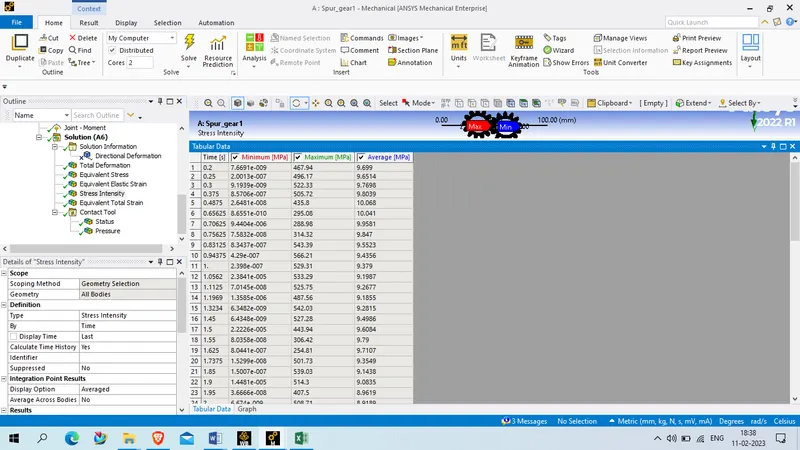
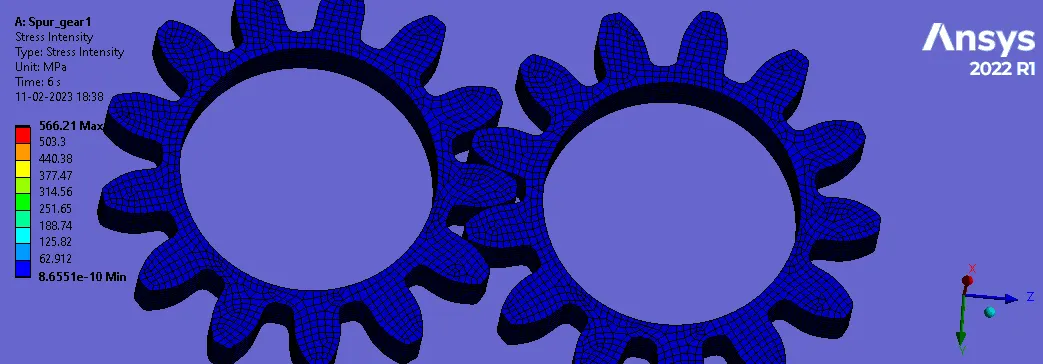
The Stress intensity for the three cases are compared below
|
Material |
time(s) |
Minimum (MPa) |
Maximum (MPa) |
Average (MPa) |
|
cast iron |
6 |
4.4368e-005 |
520.76 |
9.861 |
|
cast steel |
6 |
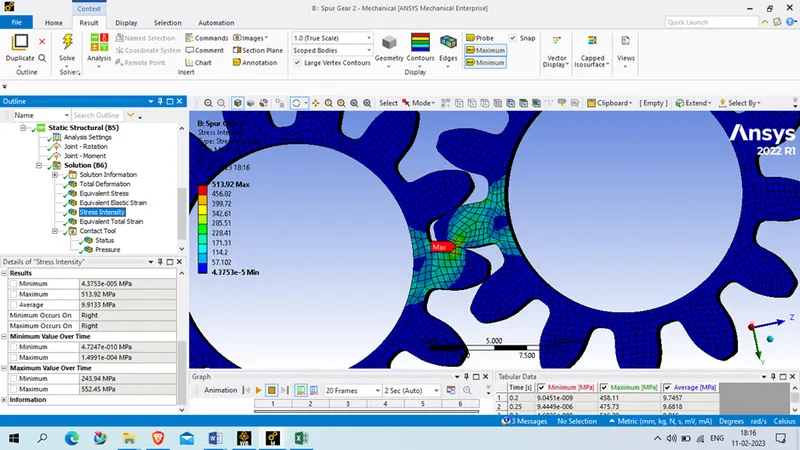
4.3753e-005 |
513.92 |
9.9133 |
|
Cast bronze |
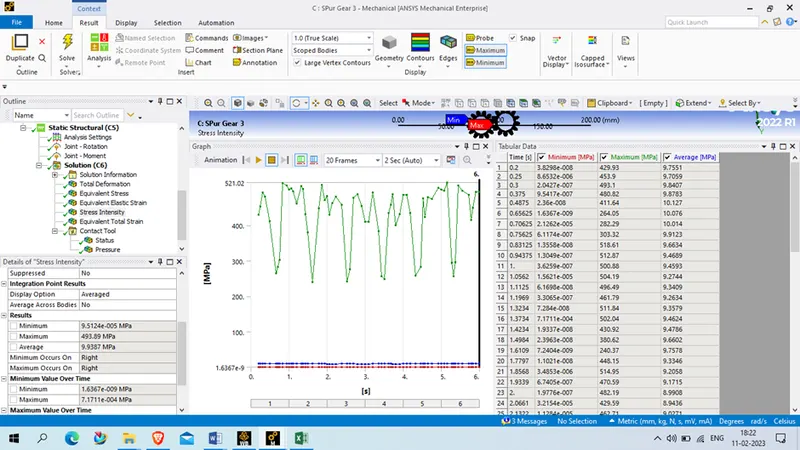
6 |
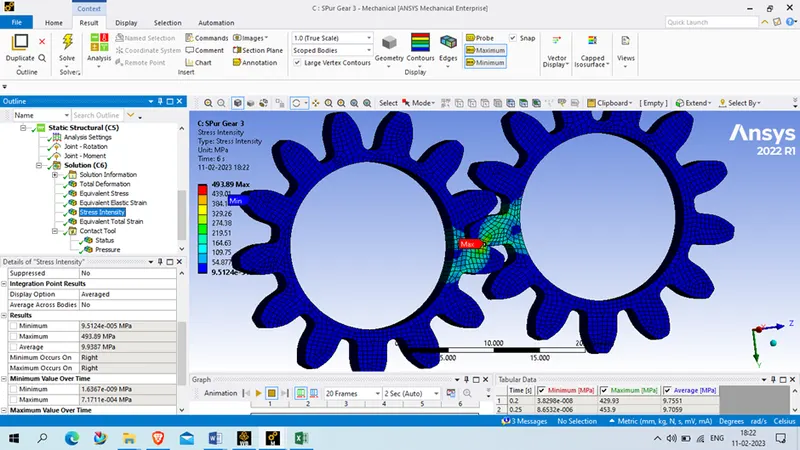
9.5124e-005 |
493.89 |
9.9387 |
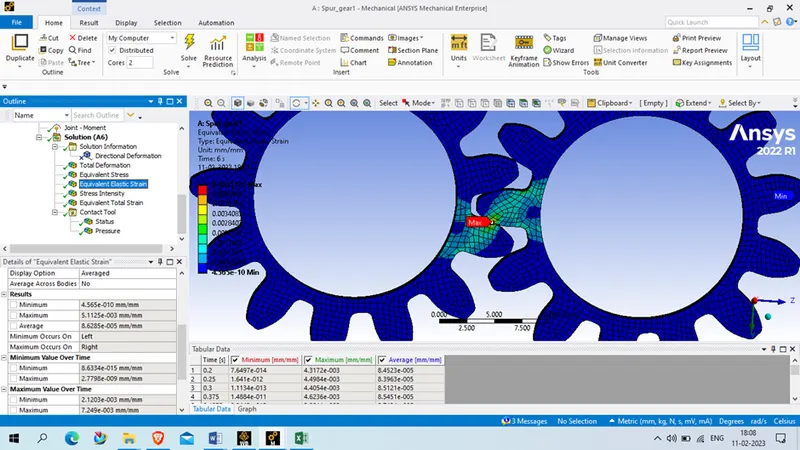
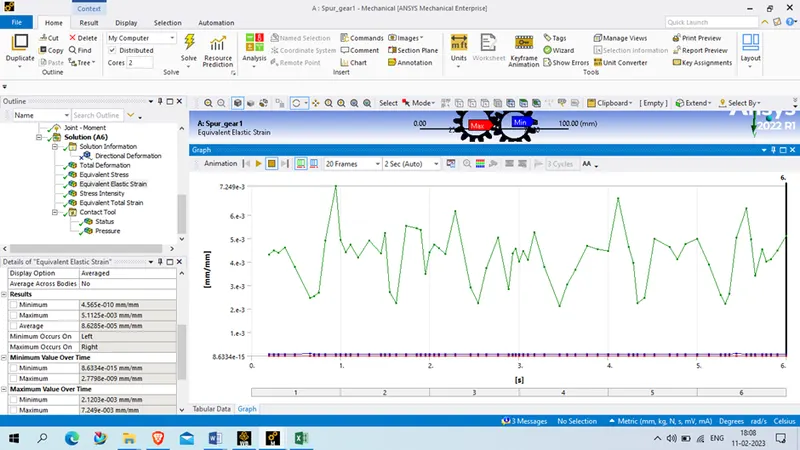
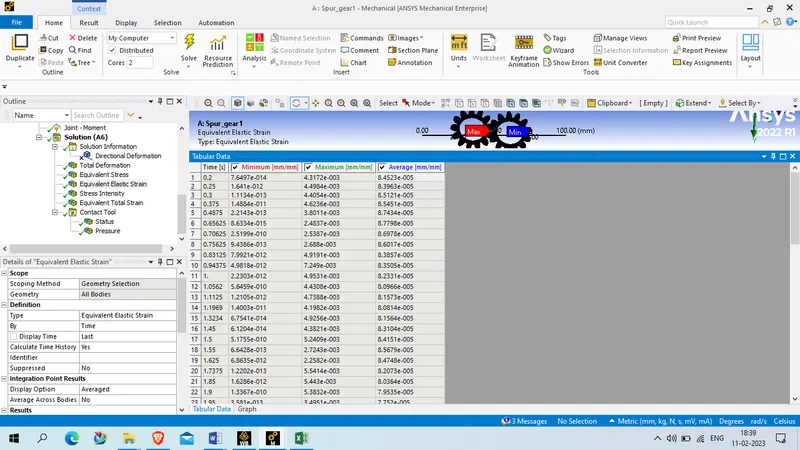
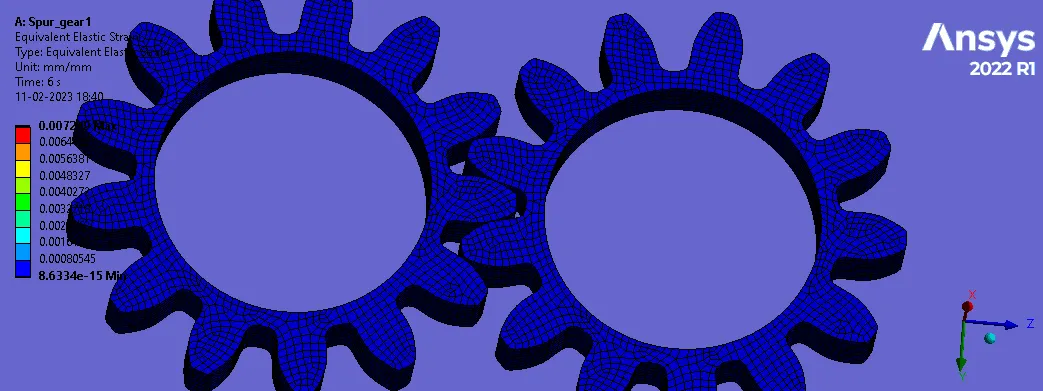
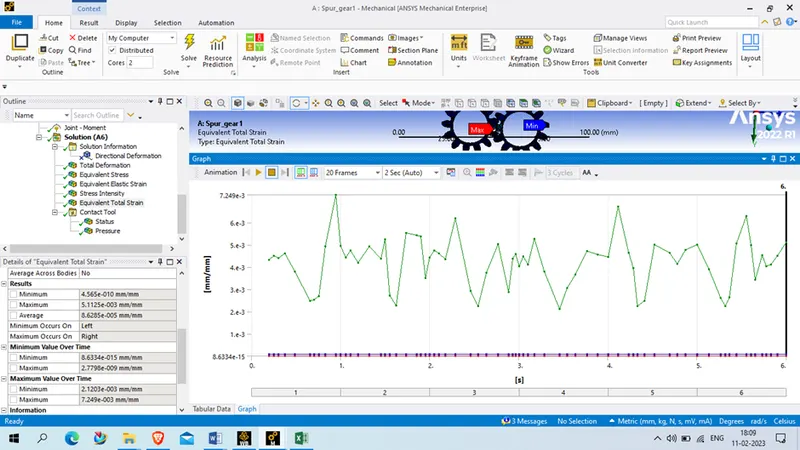
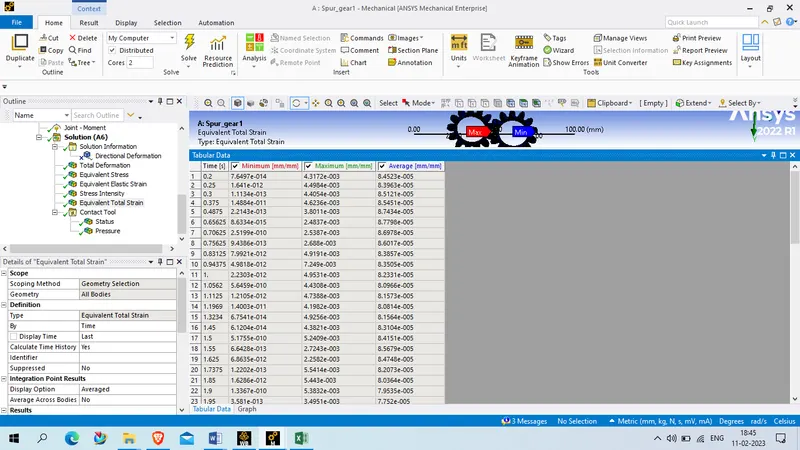
The Elastic strain for the three cases are compared below
|
Material |
time(s) |
Min |
Max |
Ave |
|
Cast Iron |
6 |
4.565e-010 |
5.1125e-003 |
8.6285e-005 |
|
Cast Steel |
6 |
2.5428e-010 |
6.3005e-003 |
8.8398e-005 |
|
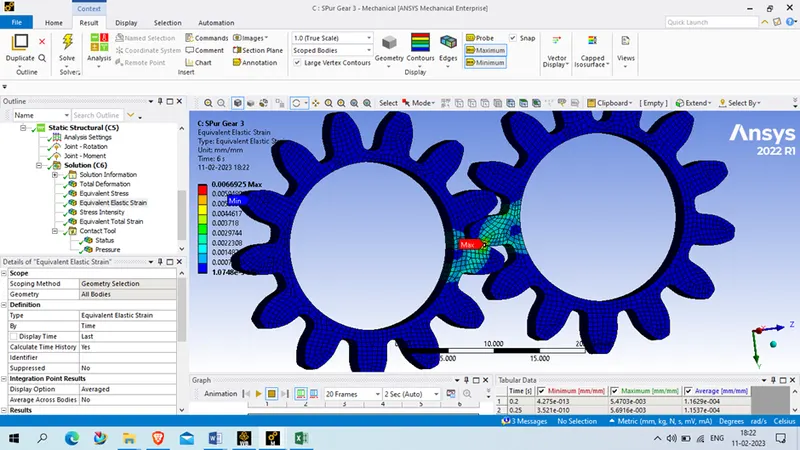
Cast bronze |
6 |
1.0748e-009 |
6.6925e-003 |
1.1909e-004 |
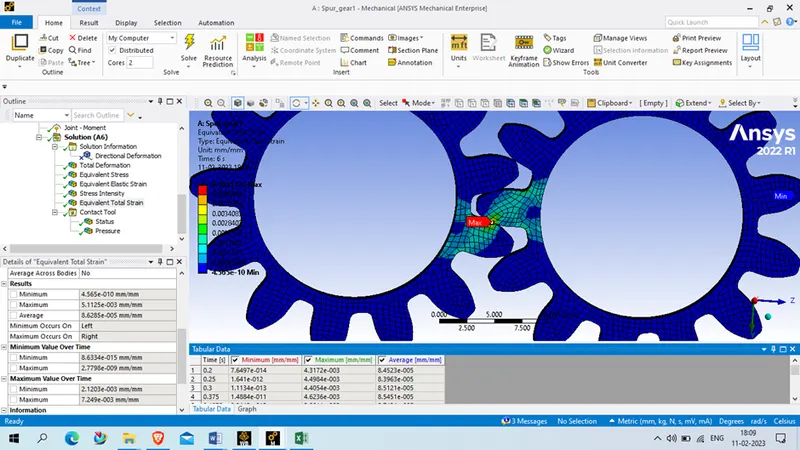
The total strain for the three cases are compared below
|
Material |
time(s) |
Min |
Max |
Ave |
|
Cast iron |
6 |
4.565e-010 |
5.1125e-003 |
8.6285e-005 |
|
Cast steel |
6 |
2.5428e-010 |
6.3005e-003 |
8.8398e-005 |
|
Cast bronze |
6 |
1.0748e-009 |
6.6925e-003 |
1.1909e-004 |
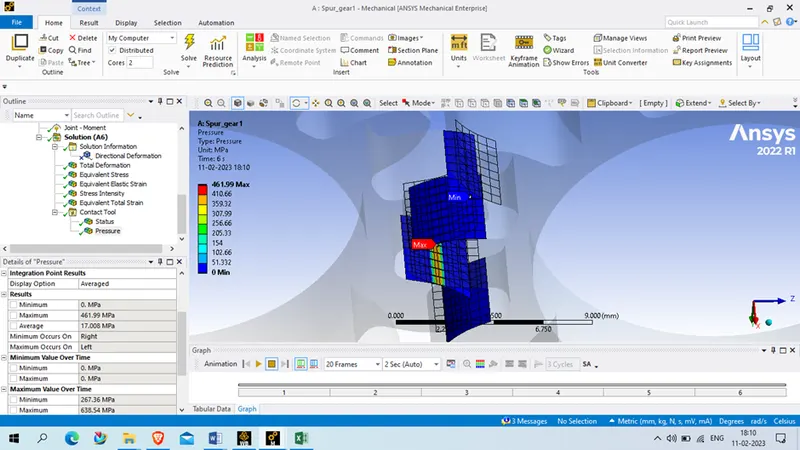
The Pressure for the three cases are compared below
|
Material |
time(s) |
Minimum (MPa) |
Maximum (MPa) |
Average (MPa) |
|
Cast Iron |
6 |
0 |
461.99 |
17.008 |
|
Cast steel |
6 |
0 |
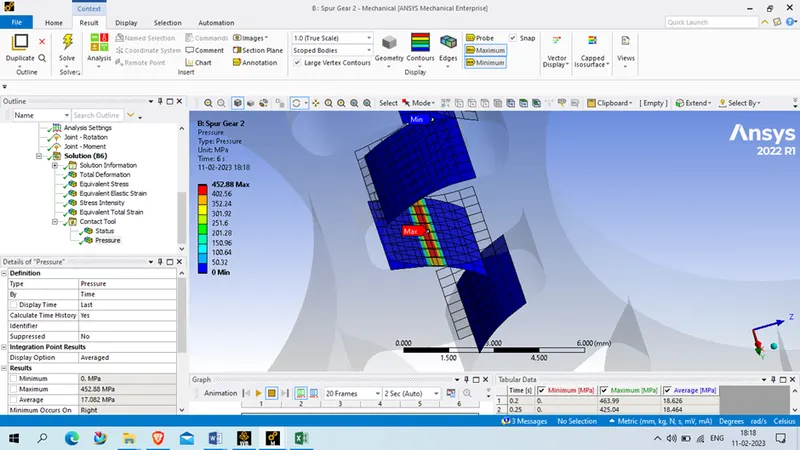
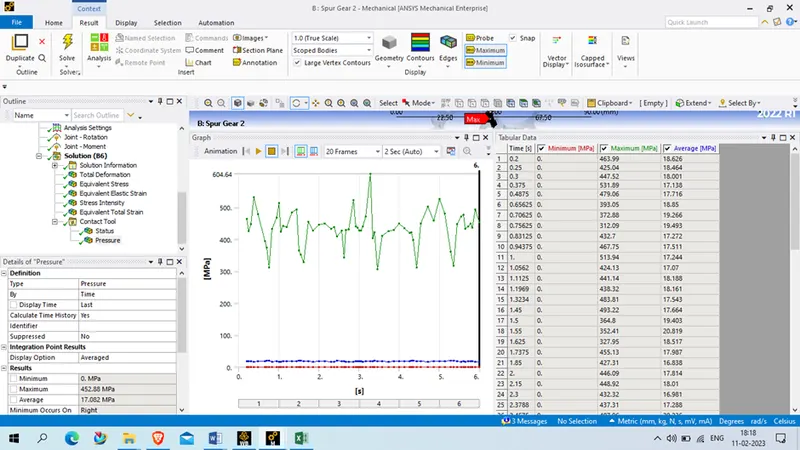
452.88 |
17.082 |
|
Cast bronze |
6 |
0 |
456.41 |
456.41 |
Pictures of result:
Case 1 : Cast Iron
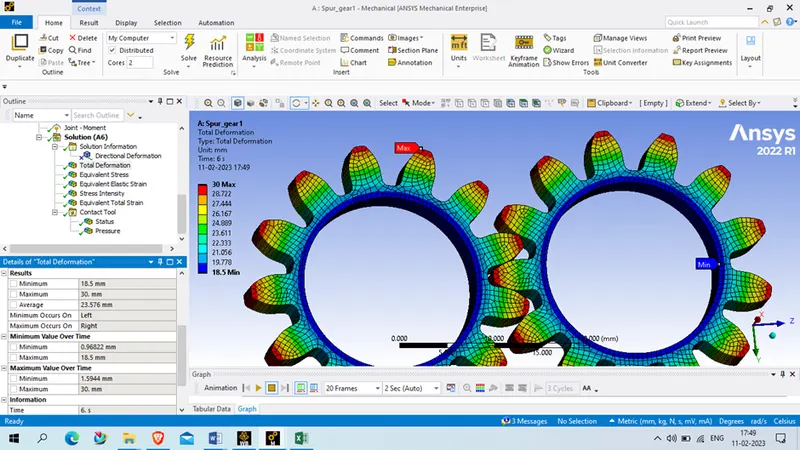
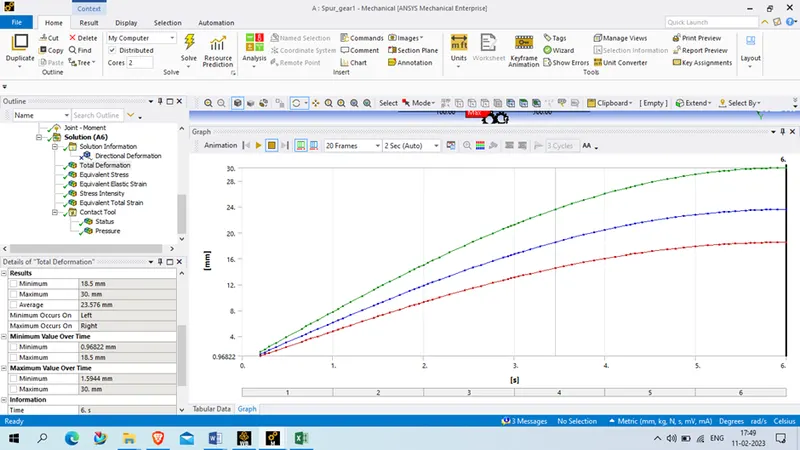
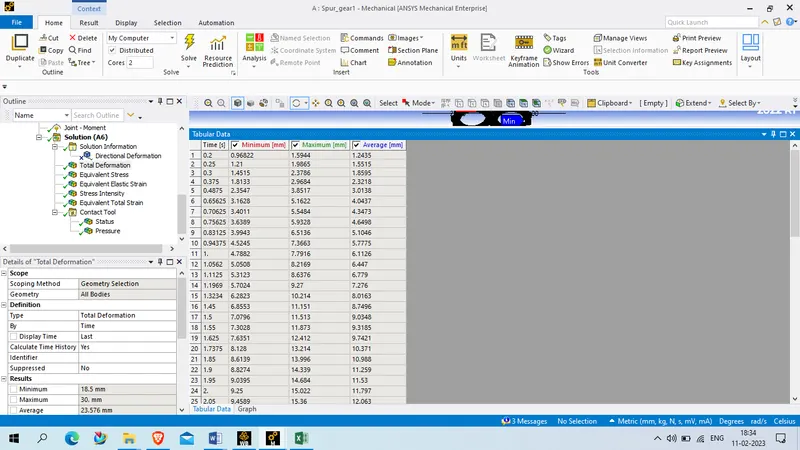
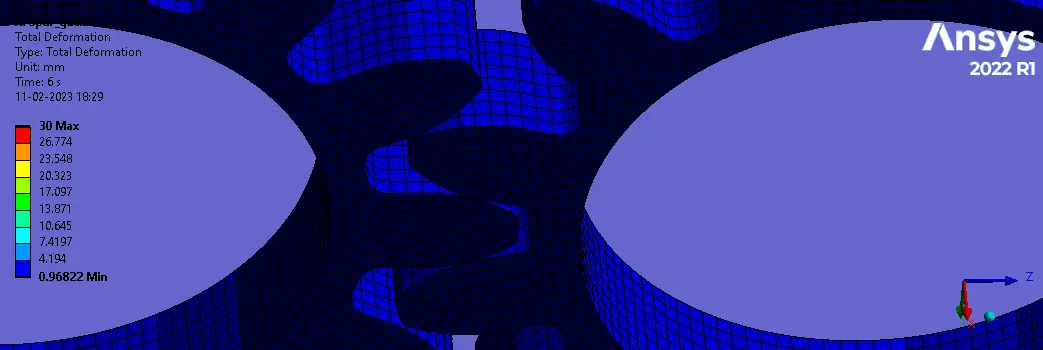
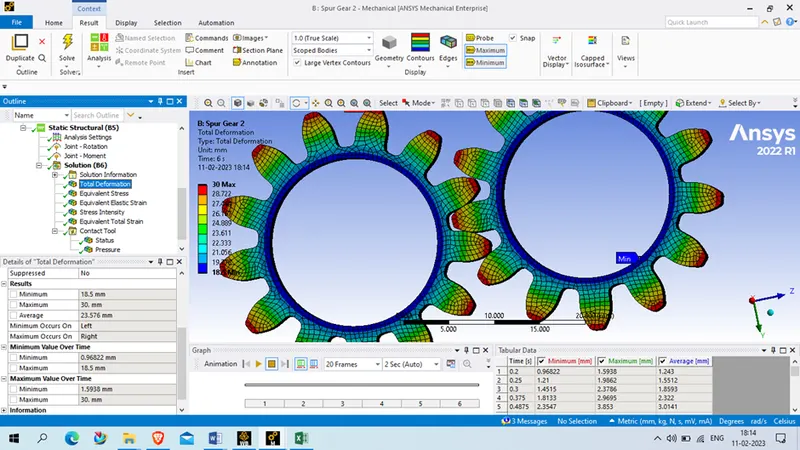
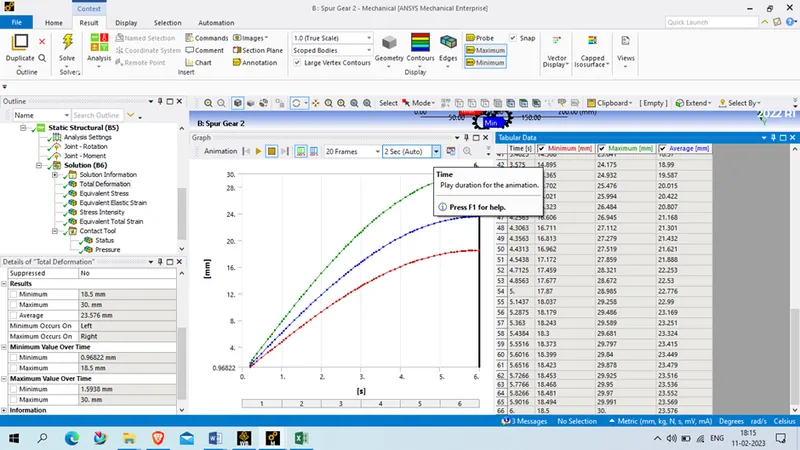
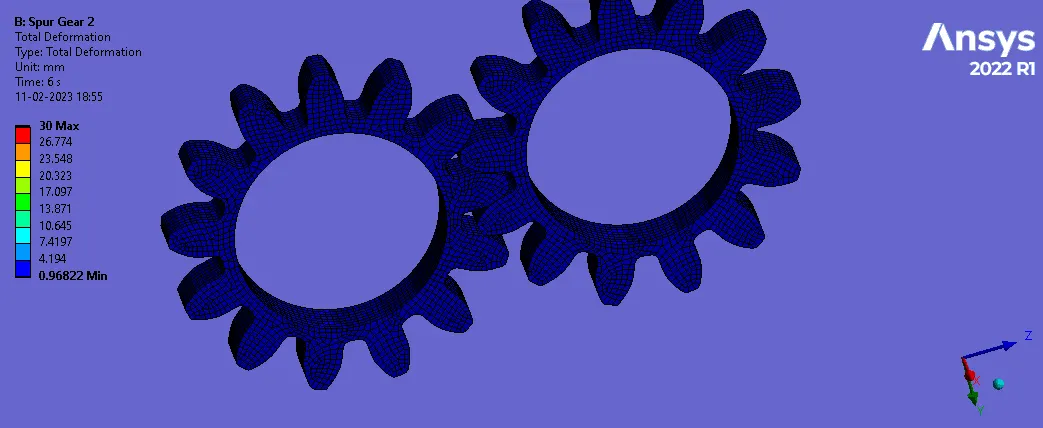
Total deformation
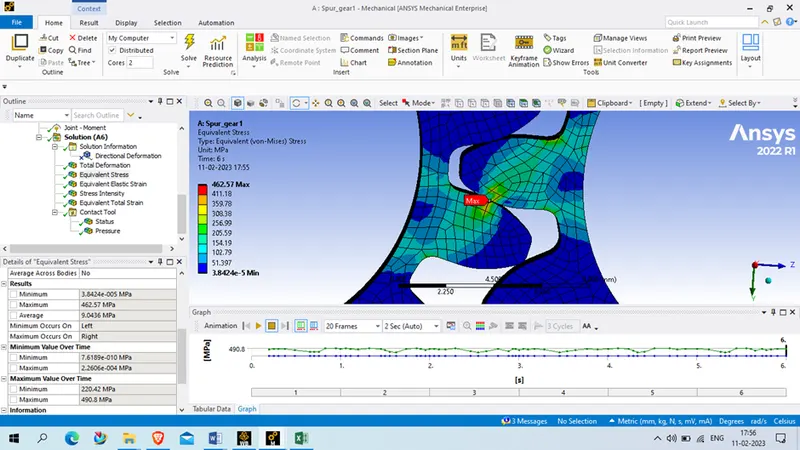
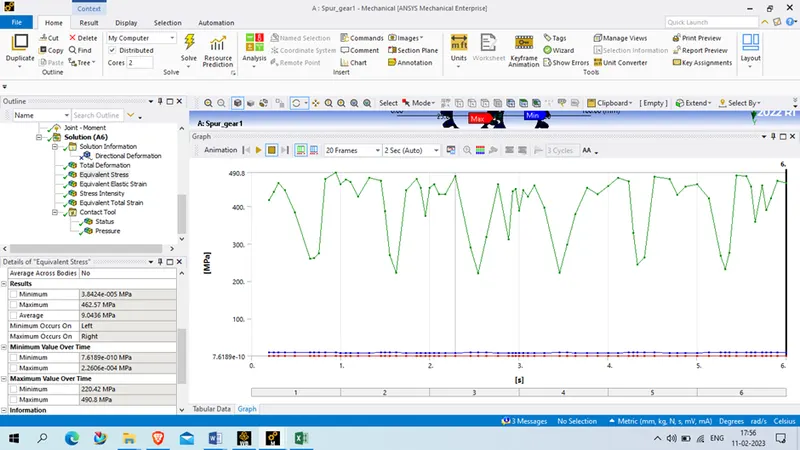
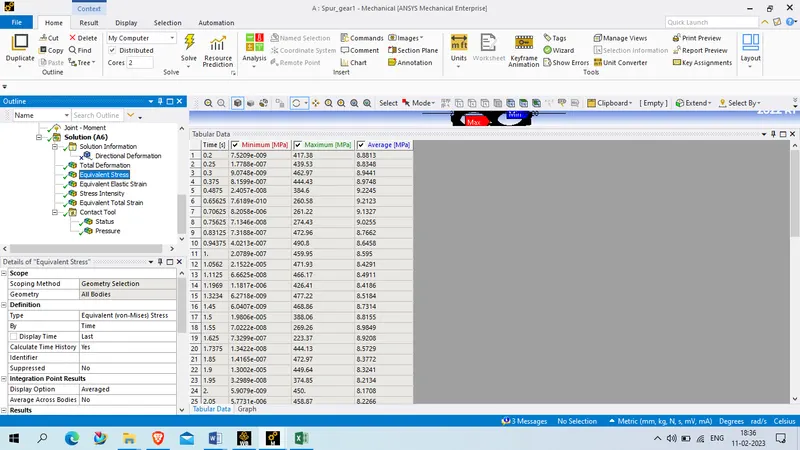
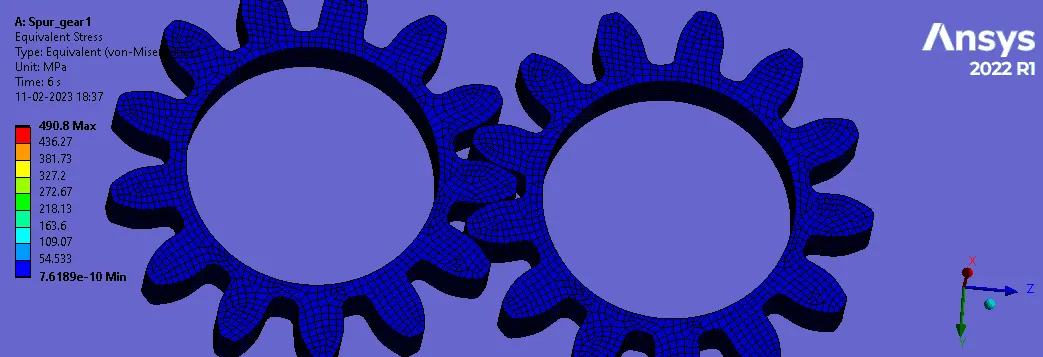
Equivalent Stress: Cast Iron
Stress intensity: cast Iron
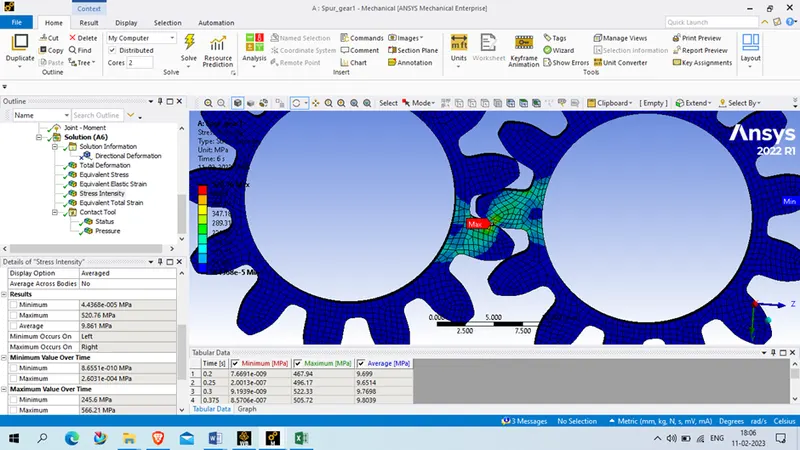
Elastic Strain: cast iron
Total STrain: Cast Iron
Pressure: Cast Iron
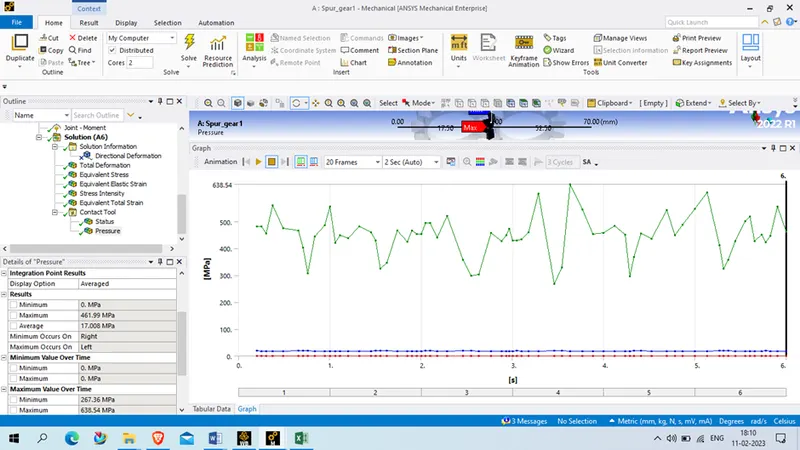
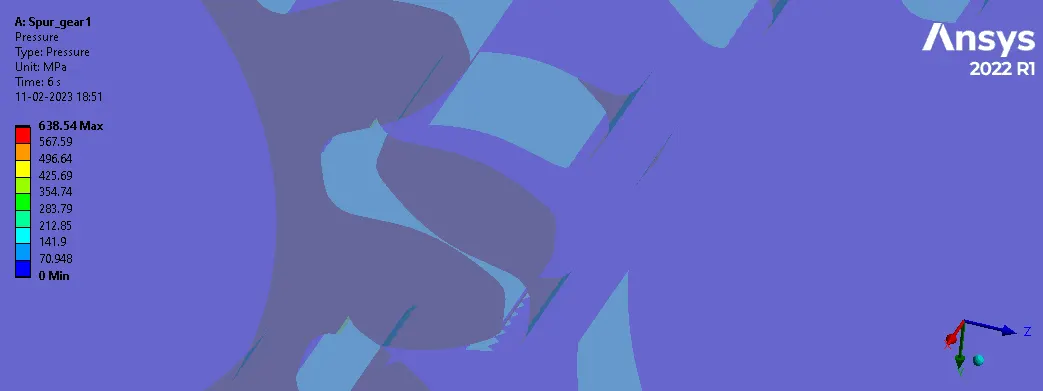
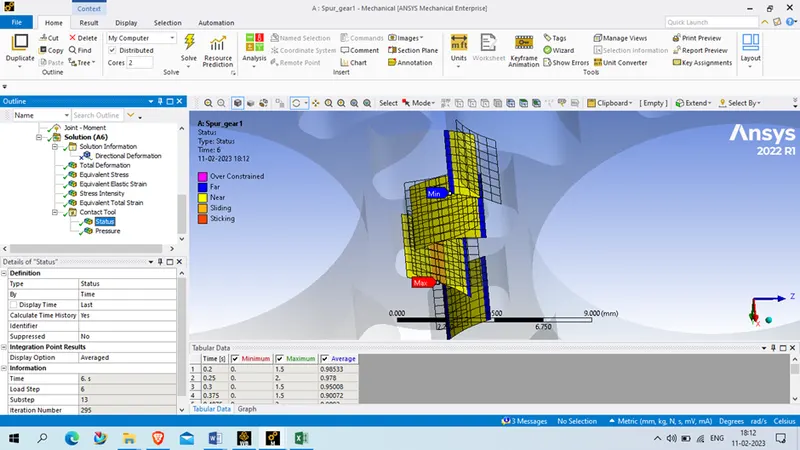
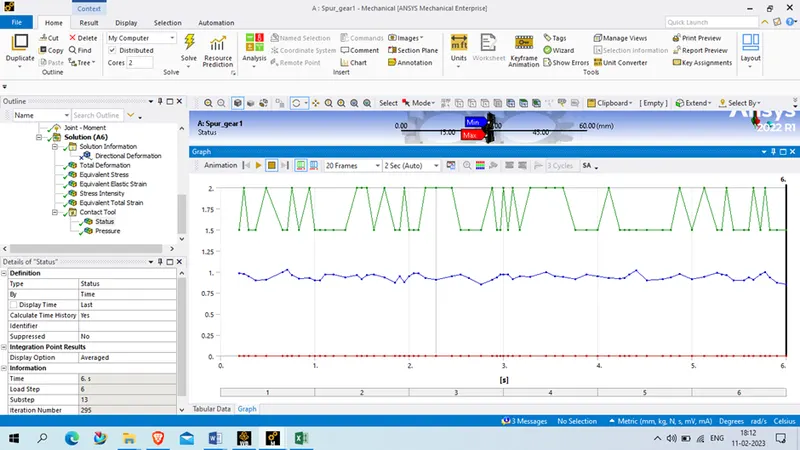
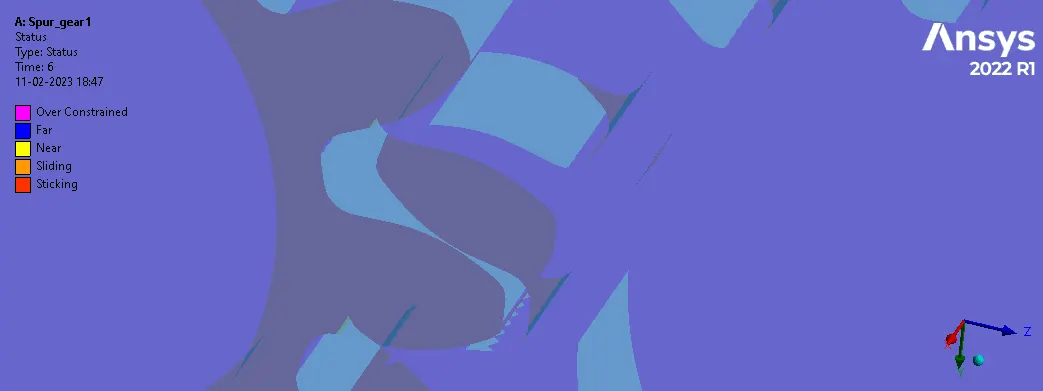
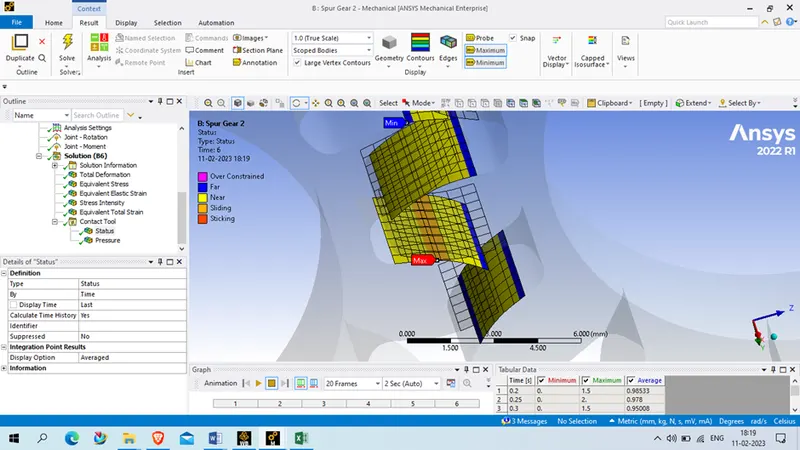
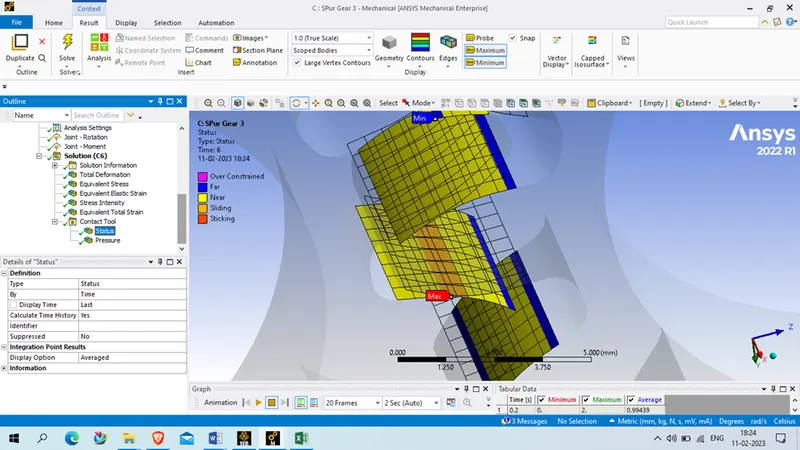
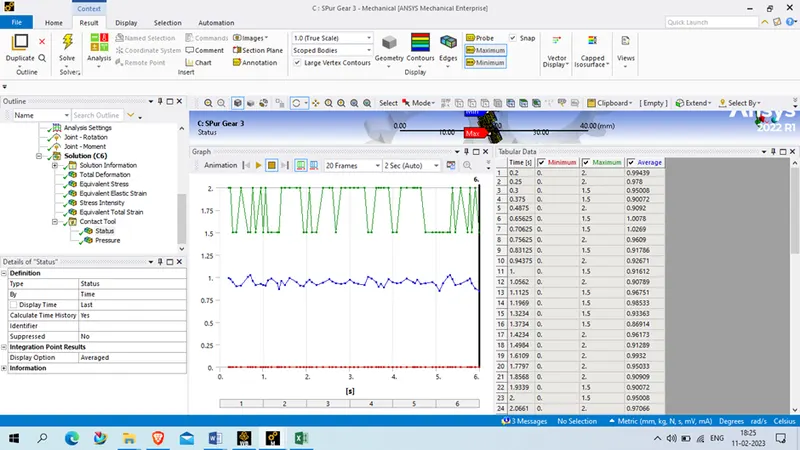
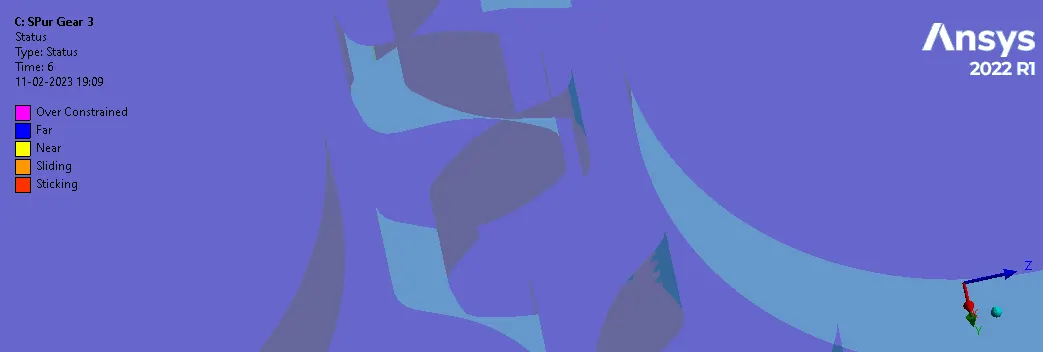
Contact Status : Cast Iron
Case 2: For using material Cast Steel
Total deformation: Cast steel
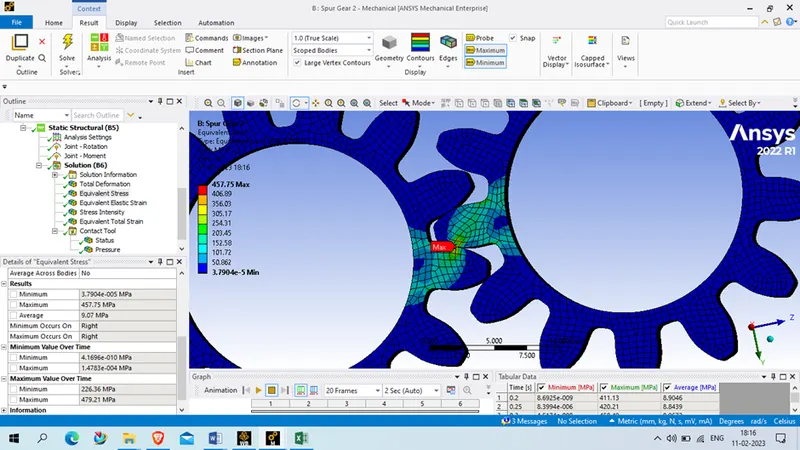
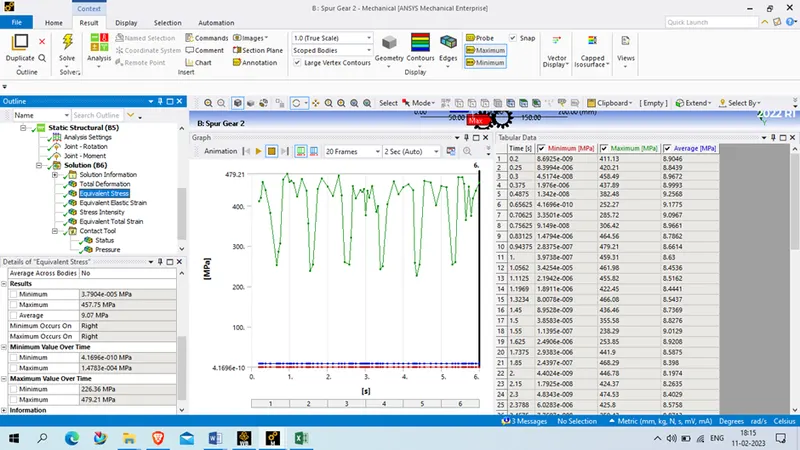
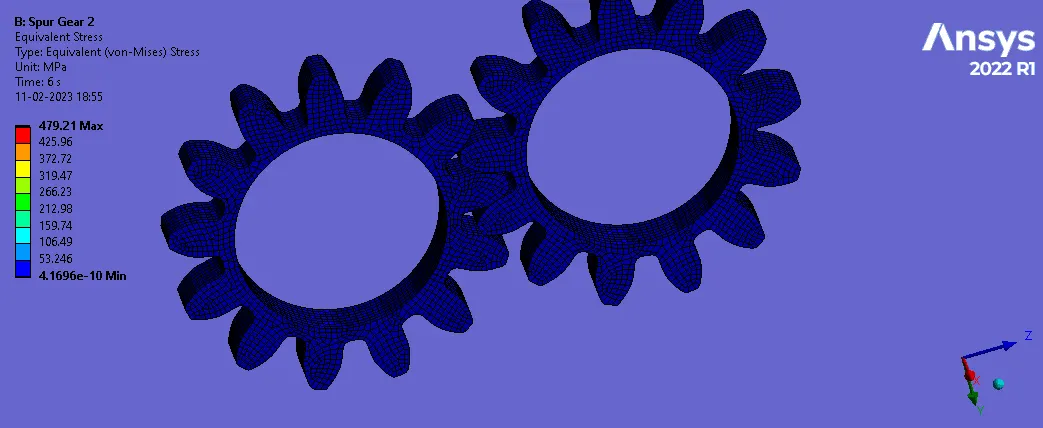
Equivalent stress: Cast steel
Stress Intensity: Cast steel
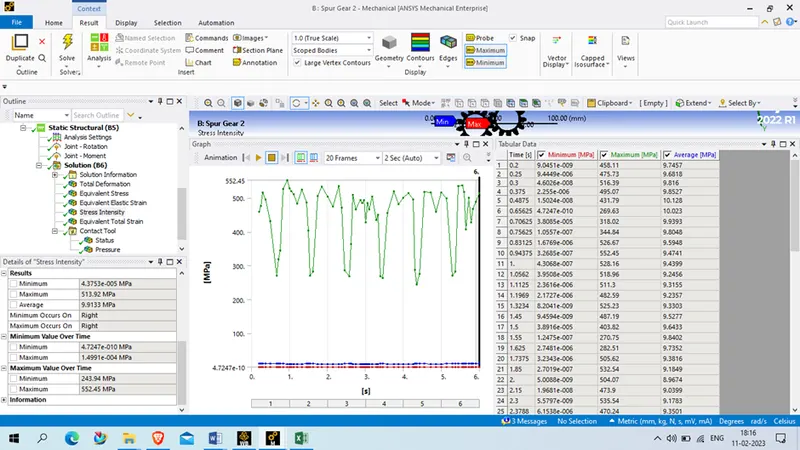
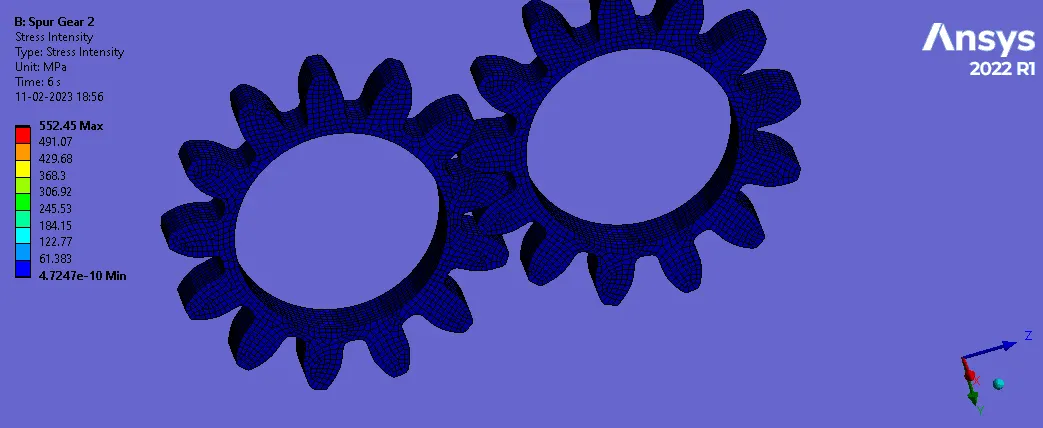
Elastic strain: Cast Steel
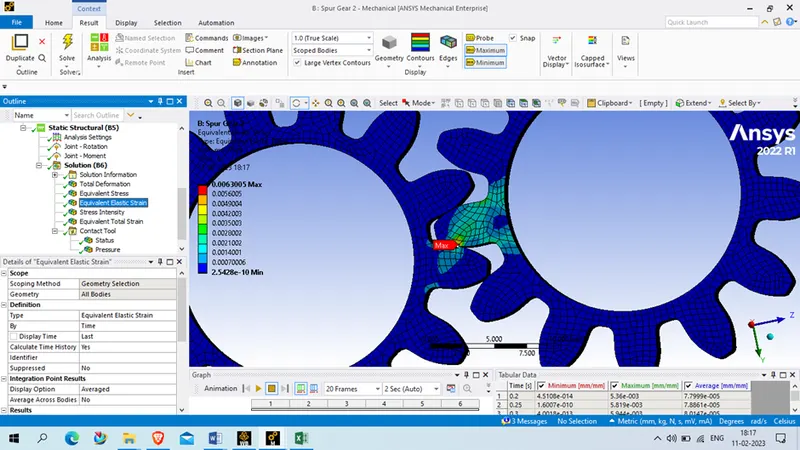
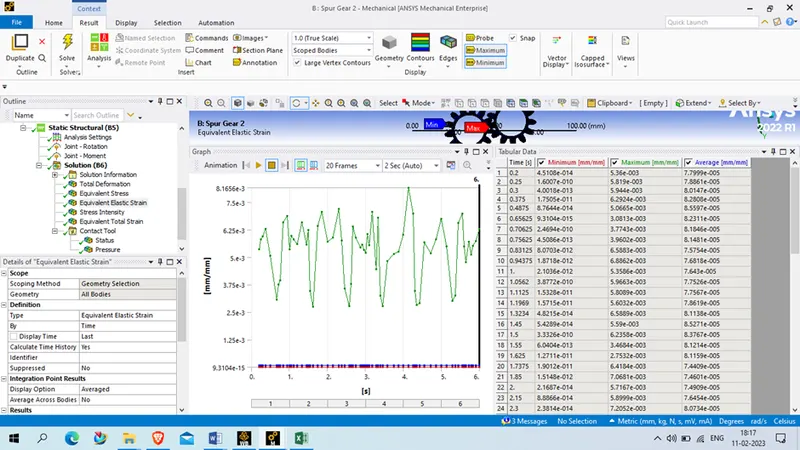
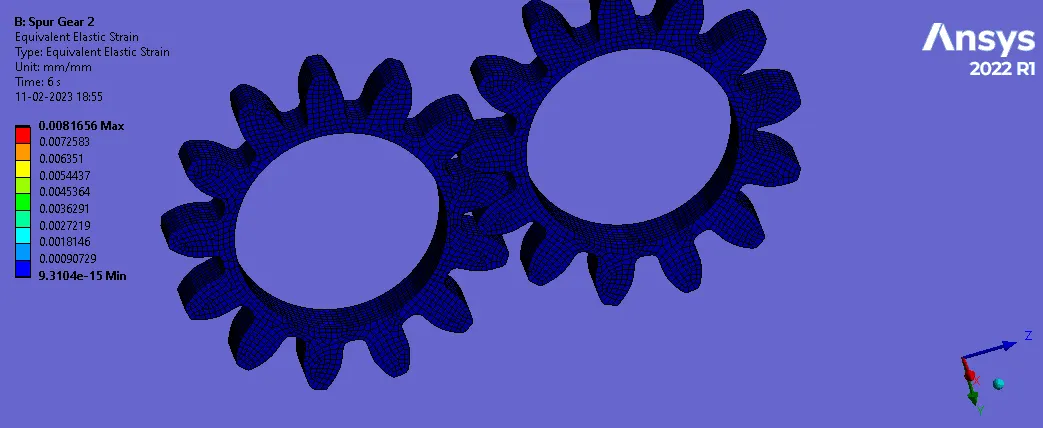
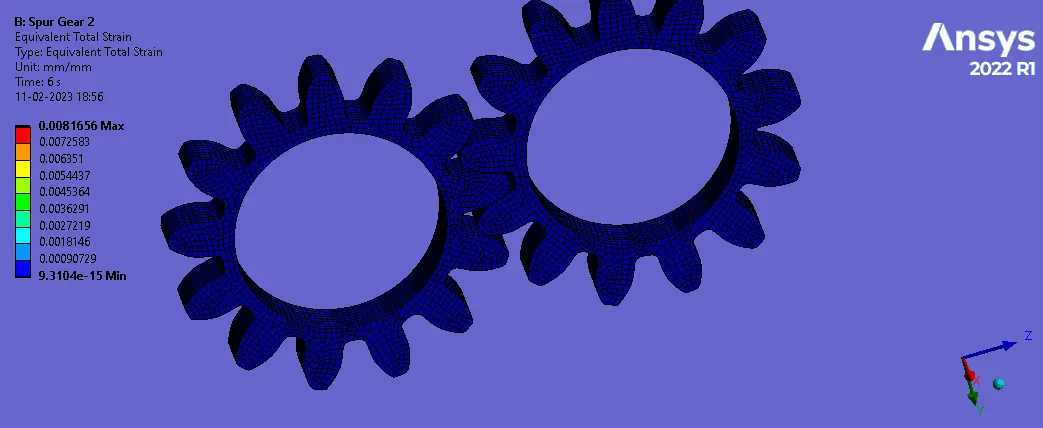
Total strain: Cast steel
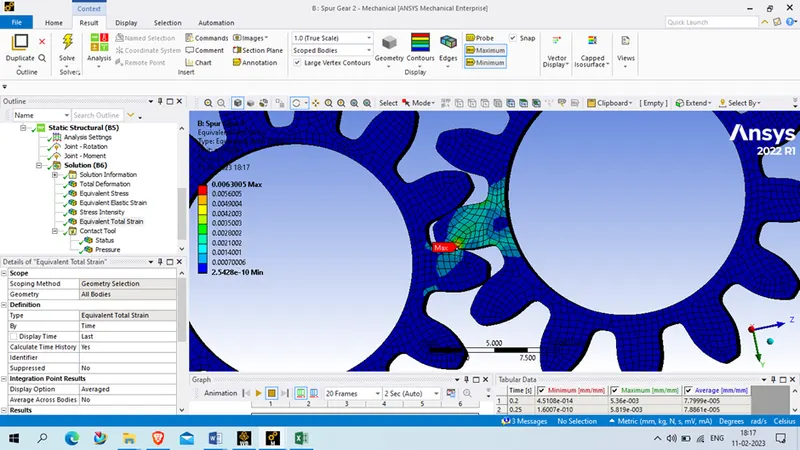
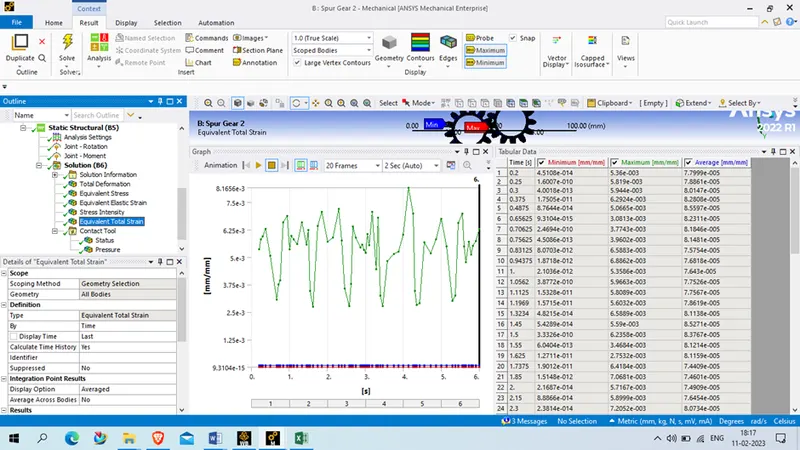
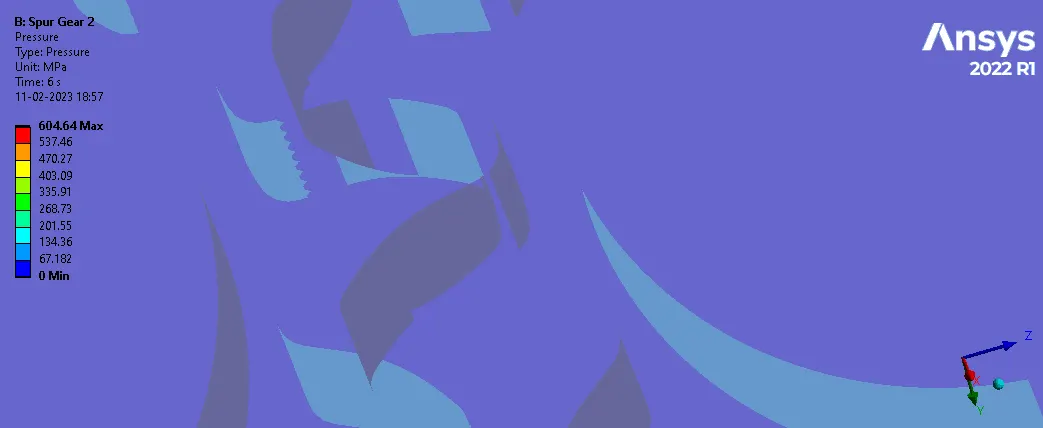
Pressure: Cast steel
Contact Status: Cast Steel
Case 3: Cast Bronze
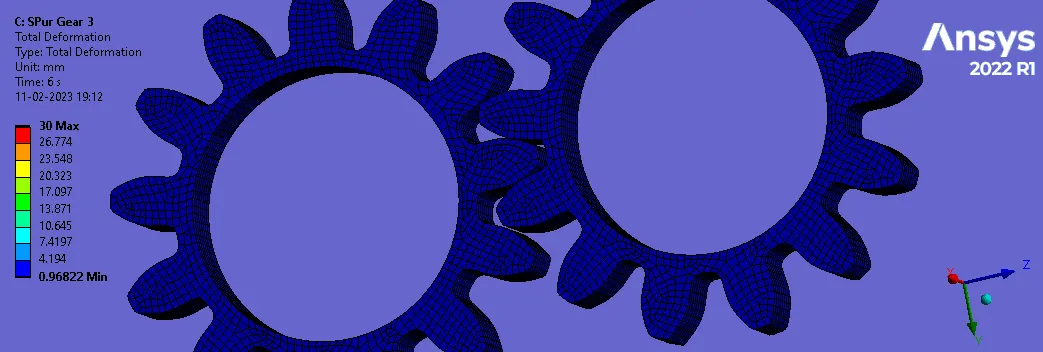
Total deformation: Cast Bronze
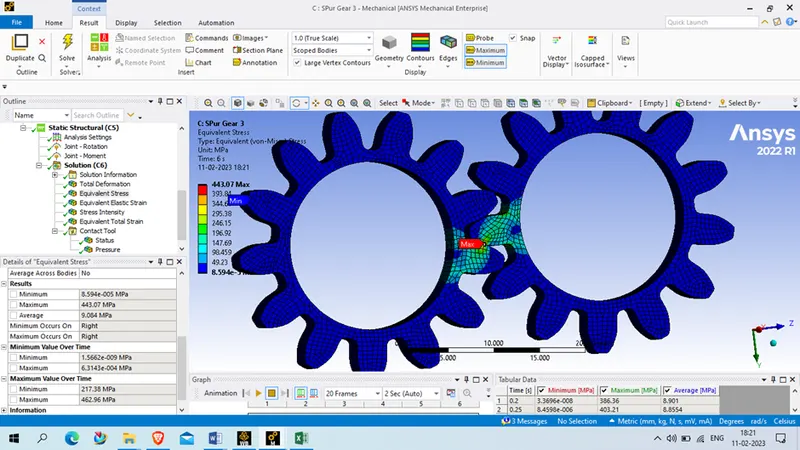
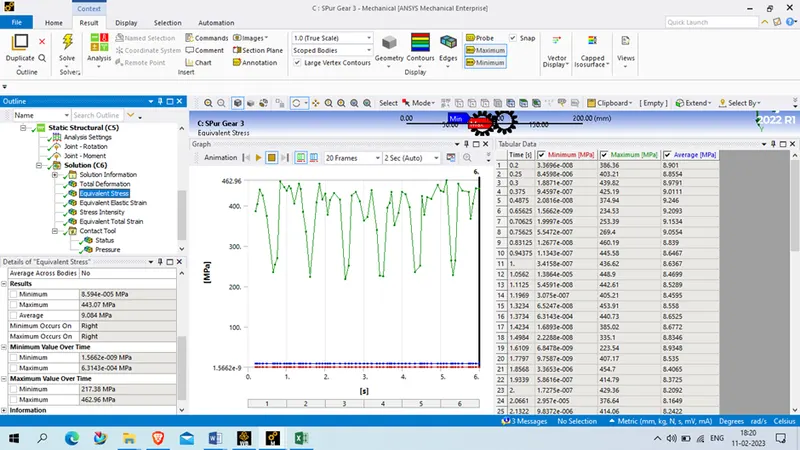
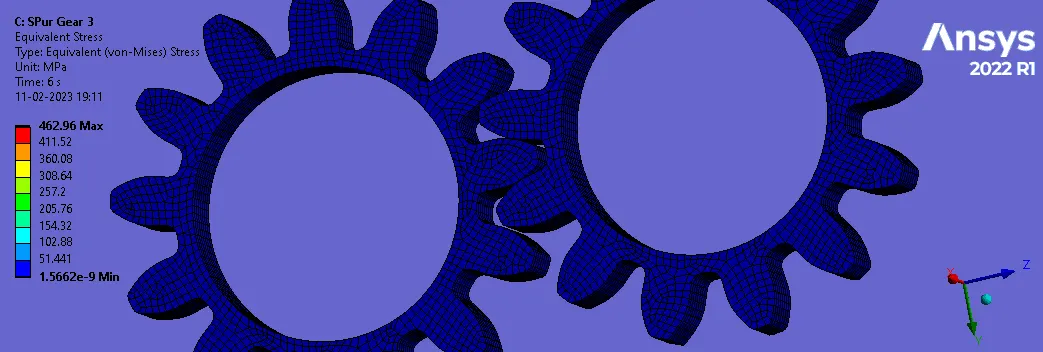
Equivalent Stress: Cast Bronze
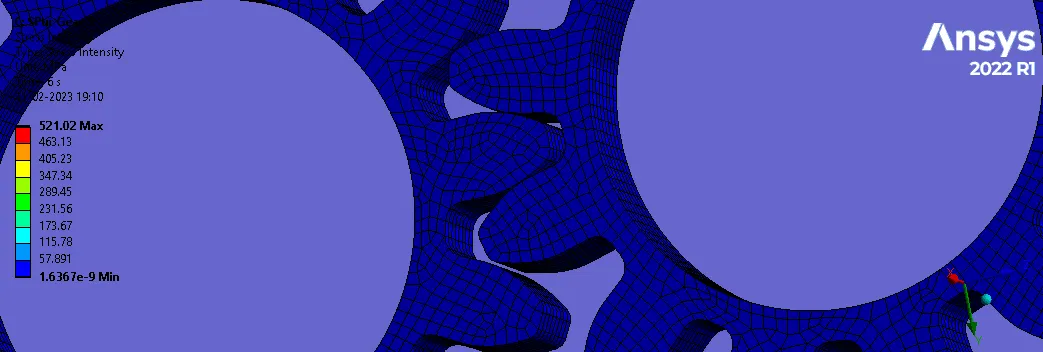
Stress Intensity : Cast bronze
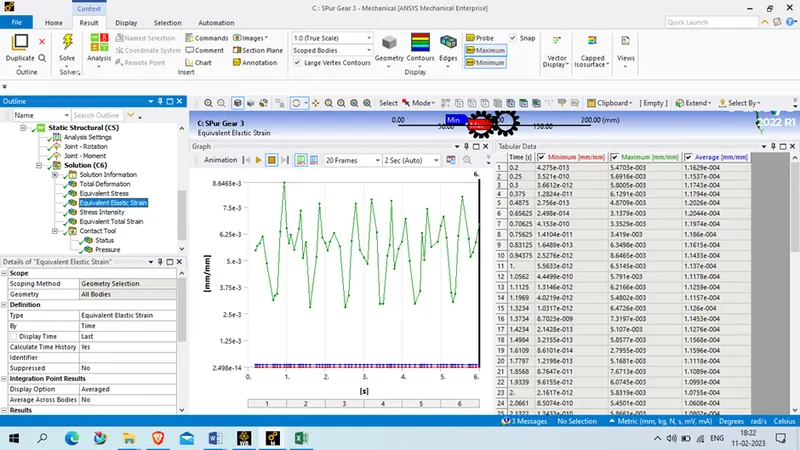
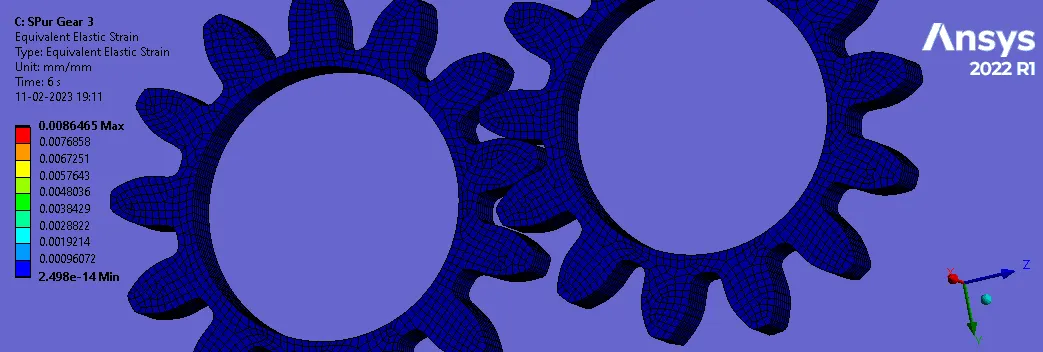
Elastic Strain : Cast Bronze
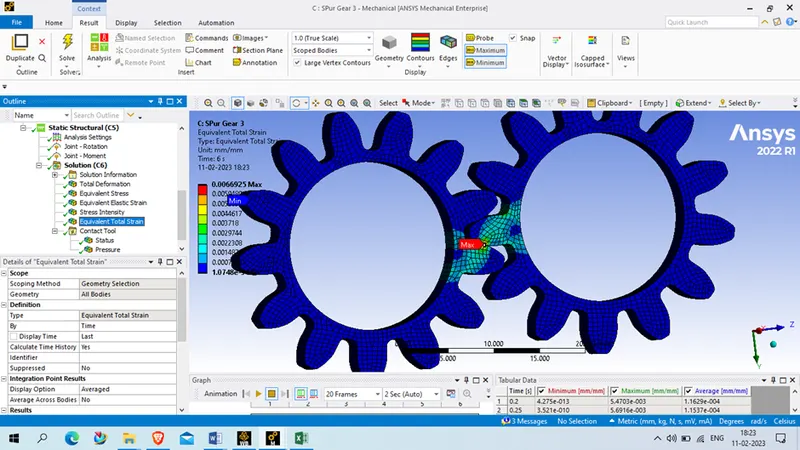
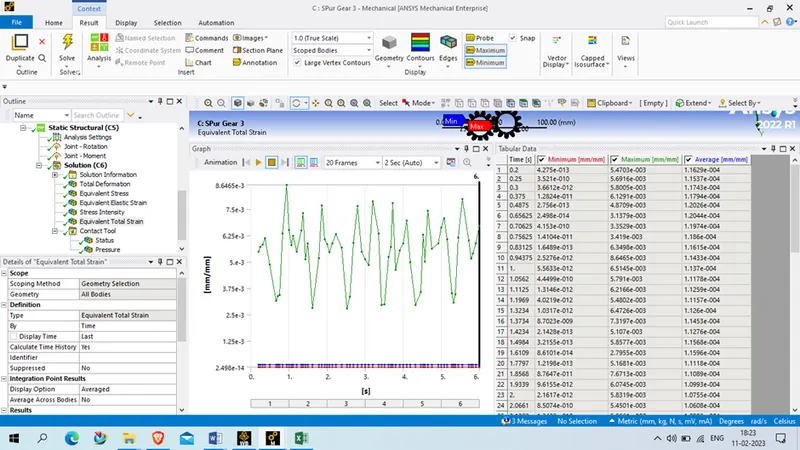
Total strain: Cast bronze
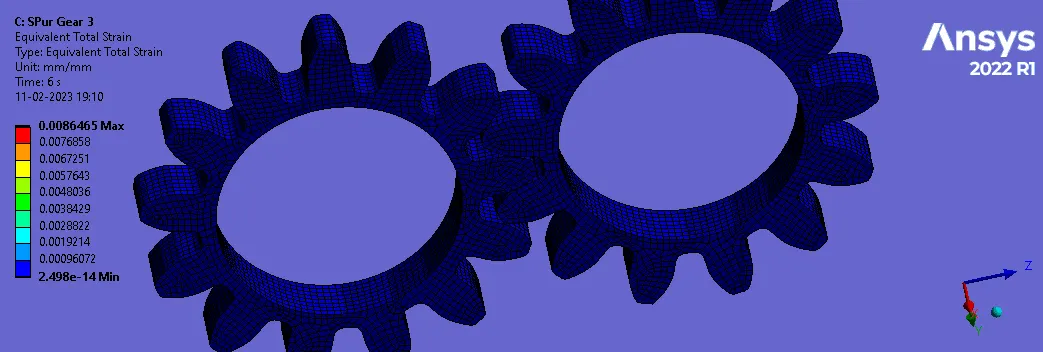
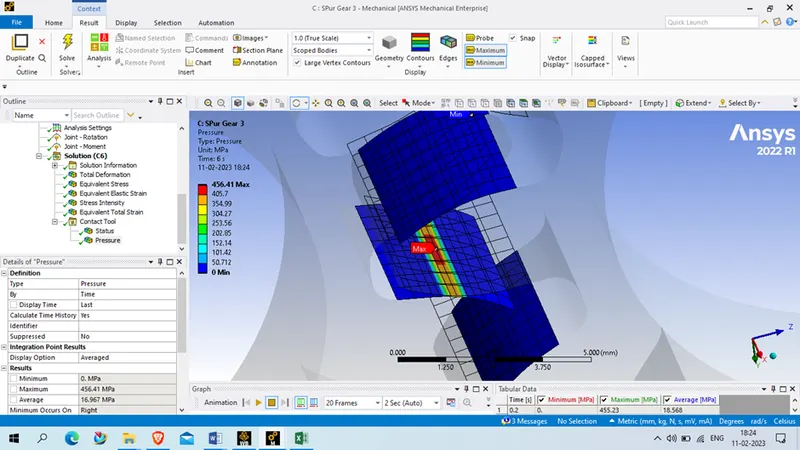
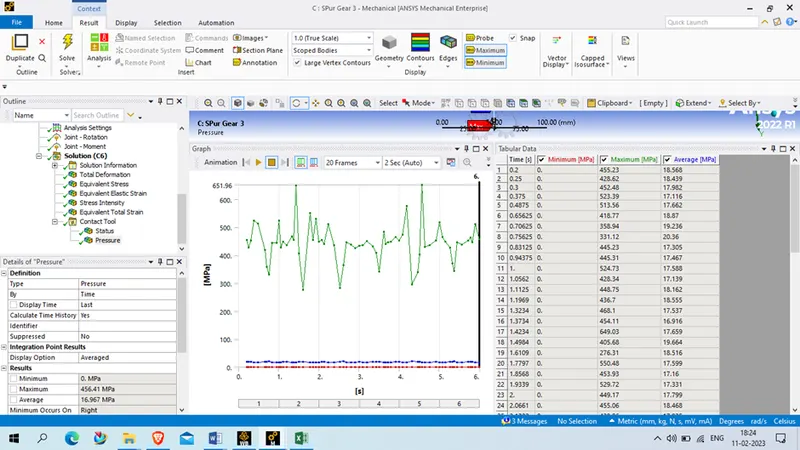
Pressure: Cast Bronze
 .
.
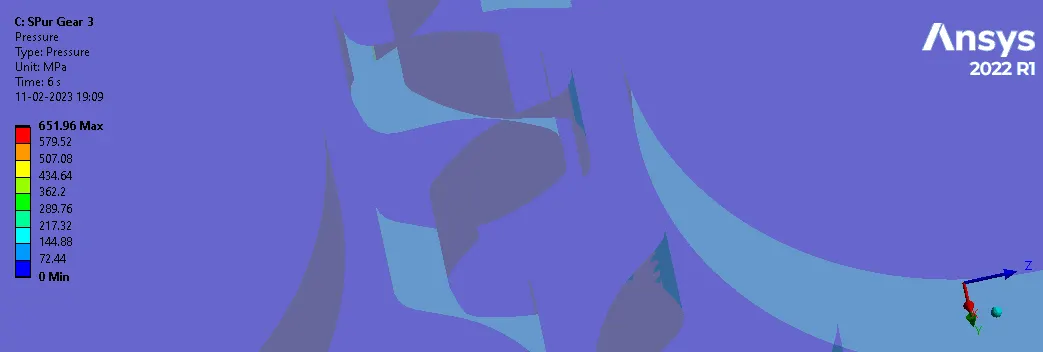
Contact status: Cast bronze
Conclusion:
The analysis was run successfully. Within the limit of academic license, the simulation for the 3 cases were examined. The mesh size of all cases are kept same as 0.5 mm.
On Comparison of the total deformation experience by the model in all 3 cases, we had found not any difference in any cases. We had found minimum deformation as 18.5 mm, maximum deformation as 30 mm and average deformation as 23.576 mm in all cases.
On comparison of equivalent stress experience by the model in all three cases, we found maximum stress (462.57 MPa) on cast iron material and minimum stress (443.07 MPa) on cast bronze model. As we know the mechanical properties of all three model and cast iron have maximum ultimate tensile stress which is 820 MPa , and fro cast bronze ultimate tensile strength is 267 MPa, thus comparing with Ultimate tensile stress cast bronze model is not fit for maximum pressure as it exceed the limit . rest two material are in limit but cast iron is more safe then cast steel.
On comparing the pressure experience by all the cases we had found that pressure have slightly difference in all three model, in case of cast iron we received max pressure thus it will generate more torque to the system
On comparing various factor of all three cases we came on conclusion that we will select cast iron material for