Week 1 Spur Gear Challenge
Aim
a) To carry out structural analysis of spur gear using ANSYS Workbench to find out Equivalent stress, Total Deformation and Stress Intensity in the following three material:
1. Cast Iron (Ductile)
2. Cast Steel
3. Bronze Cast
b) To write a detailed report comparing the results of the above three cases
1. Theory
Gears are used to transmit motion and power from one shaft to other shaft by means of teeth engagement. Gears are best to use as a power transmission mechanism because constant velecity ratio can be achieved if the cost is not an issue. Small to higher velocity ratio can also be easily achieved by gears. There are many types of gears:
a) Spur Gear
b) Bevel Gear
c) Helical Gear
d) Worm Gear
Out of the above four, spur gear has the most silent operation because the axial thrust is not available. Gears can be failed by the following reasons:
a) Gears have both rolling and sliding velocity at the point of contact. Due to this reason, gears are undergoen frictional force at contact surface. This is called as 'scoring'.
b) Gears materials are affected highly by wear of gear material because of continous contact. This reduces the endurance strength of gear material and is called as 'Pitting'.
c) The most important criteria for gear designing is the strength criteria. Generally strength of gears are considered as tensile yield or tensile ultimate.
2. Analysis of Spur Gear
2.1 Geometry of Gears Used:
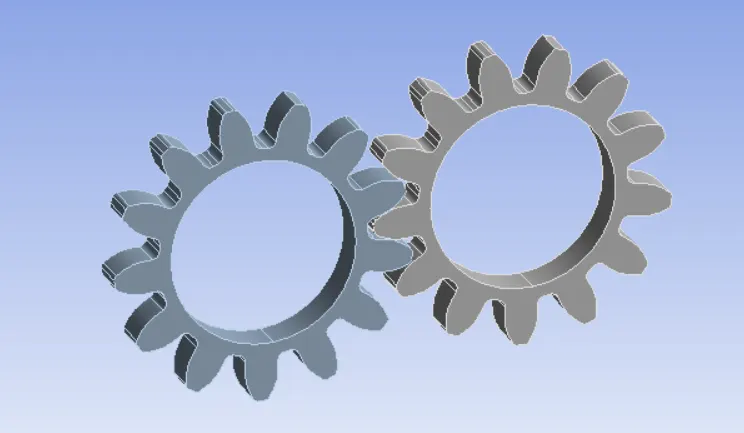
The given geometry was first imported in ANSYS Workbench. After opening the model in ANSYS Mechanical, thne geometry was shown as above figure.
2.2 Material Details:
2.2.1 Bronze Cast
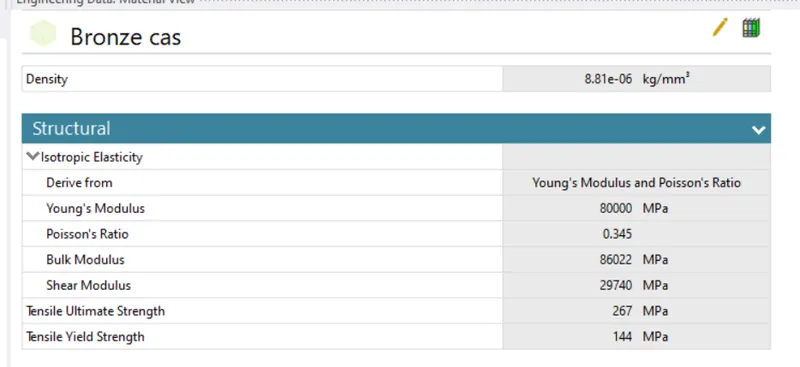
2.2.2 Cast Steel
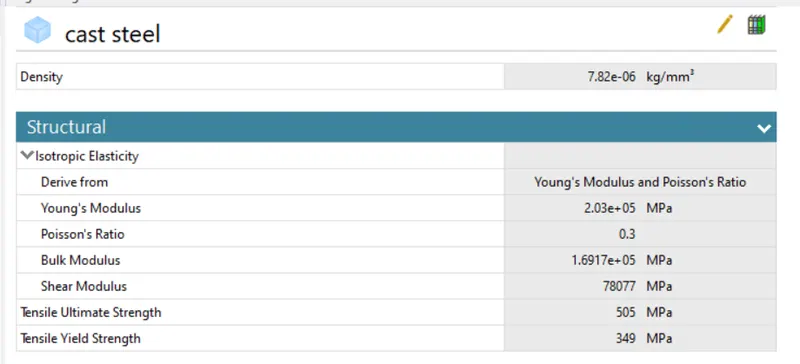
2.2.3 Ductile Cast Iron
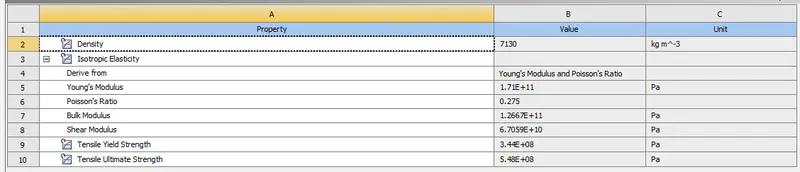
The analysis was carried for each of the material seperately.
2.3 Connection Information
2.3.1 Contacts
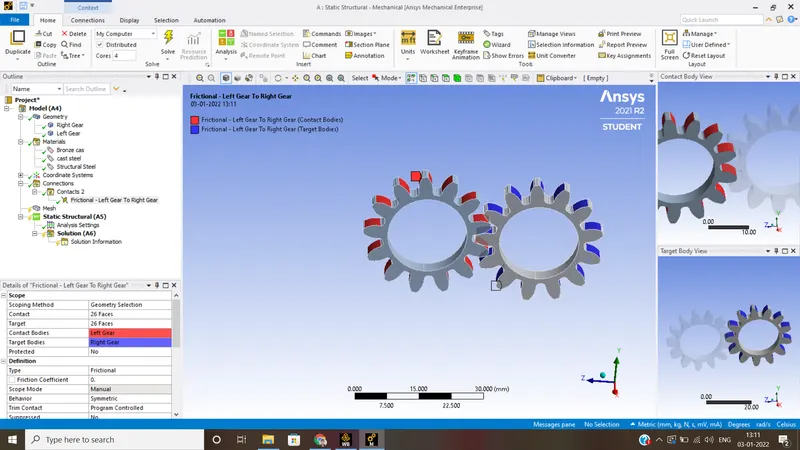
Contact was established by selecting all the possible faces of two gears. Total 26 faces were choosen for each gear. Behaviour of the contact was elected as symmetric and Augmented Lagrange method was elected to avoid vibration and chattering effect. Adjust to touch treatment was applicable for this contact.
2.3.2 Joint Details
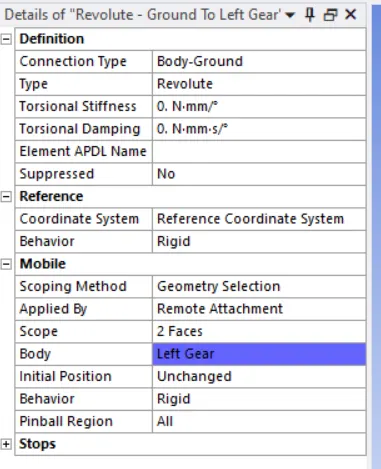
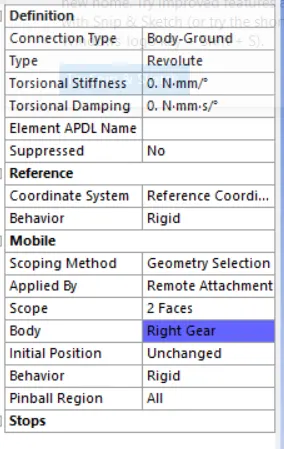
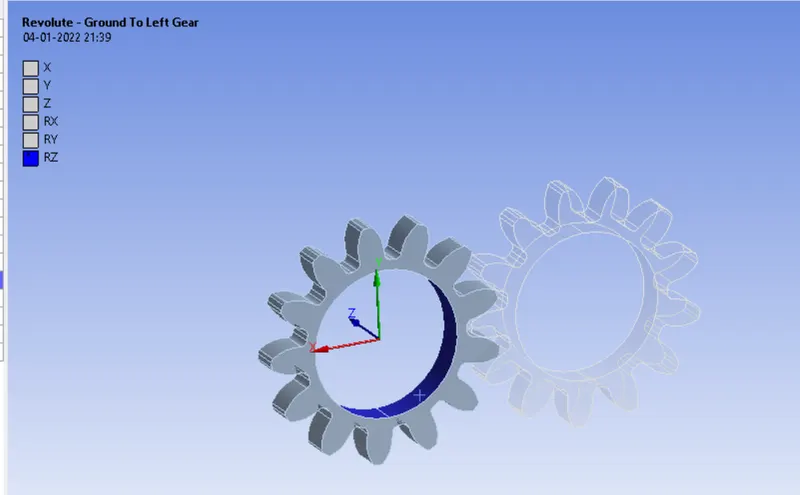
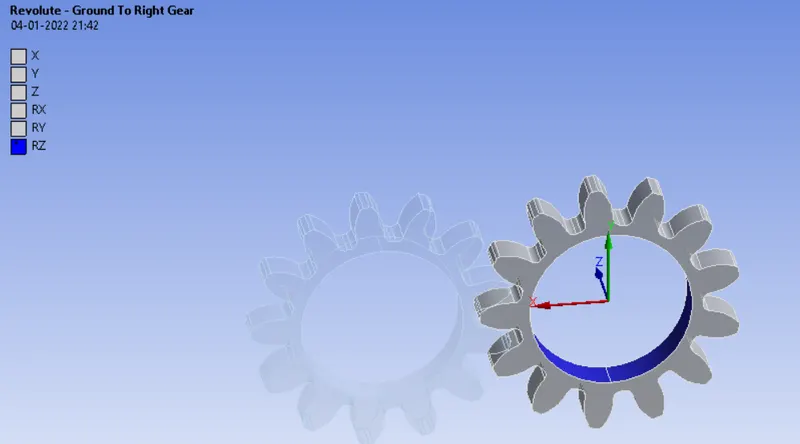
As seen in the above figure, revolute joints were created for both the gears. Gears rotate about the ground so body to ground joint was selected. Degree of freedom for gears is only as rotation about Z Axis.
2.4 Meshing Details
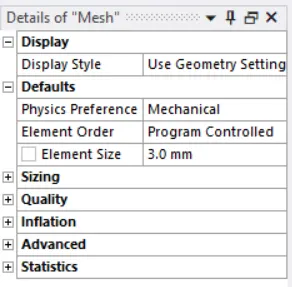
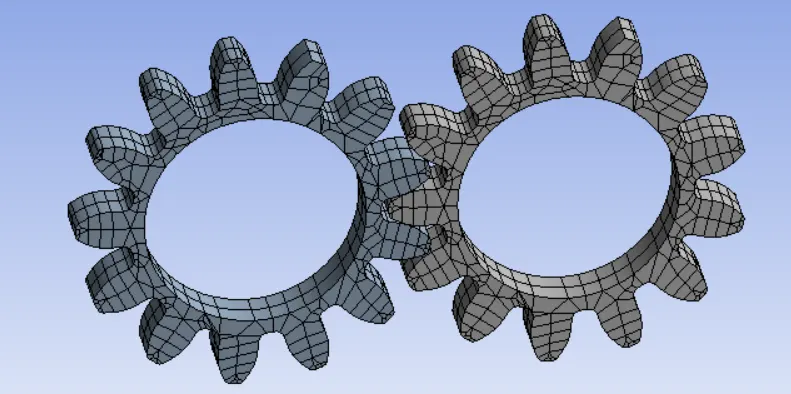
Meshing was done using as a default method stored previously in ANSYS Academic version. Mesh size was 3.0 mm. Number of nodes obtained were 7598 and number of elements were 1076.
2.5 Boundary constraints
2.5.1 Analysis Settings
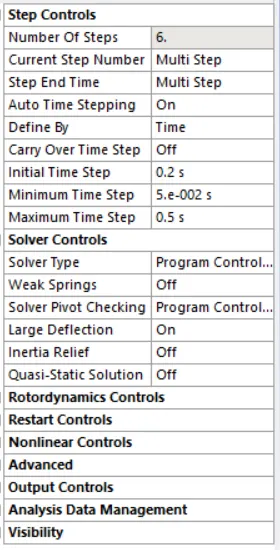
As shown in the above figure, no. of steps were 6 because we have defined the complete rotation of the gear in 6 steps. Initial step time was 0.2 s, minimum step was .005 s and maximum step time was 0.5. Automatic time stepping was on. Large deflections were allowed for then data.
2.5.2 Joint Load Details
a) Rotation in Steps

First the rotaion in six steps were given to the left gear as in the tabular data available. Rotaion was about Z Axis.
b) Moment

Right gear was loaded by a constant stepped value of moment -10000 N-mm. The direction of rotation was just opposite to that of left one.
Results:
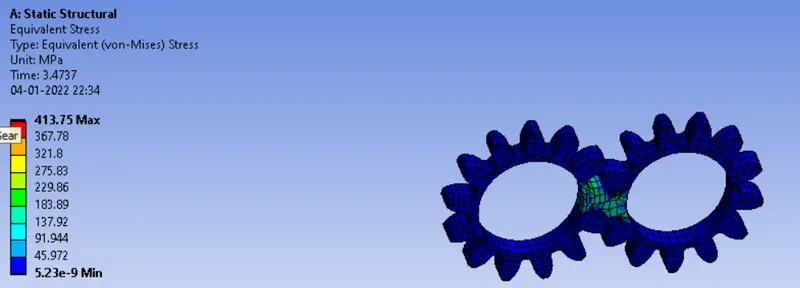
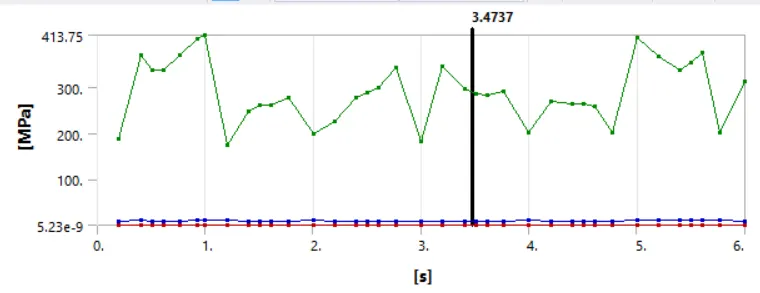
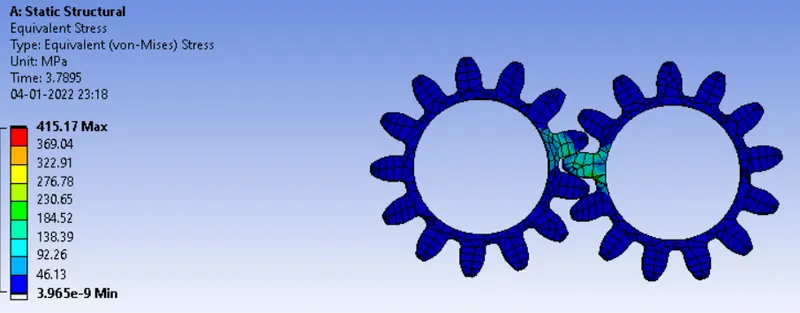
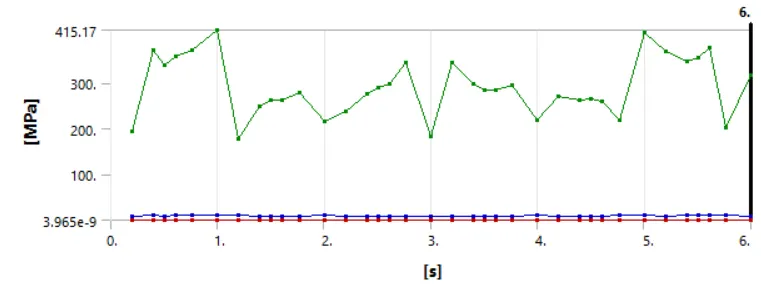
3.1 Equivalent Stress
3.1.1 Ductile Cast Iron
3.1.2 Cast Bronze
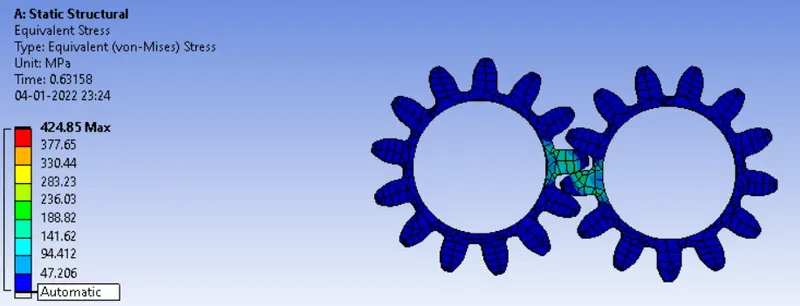
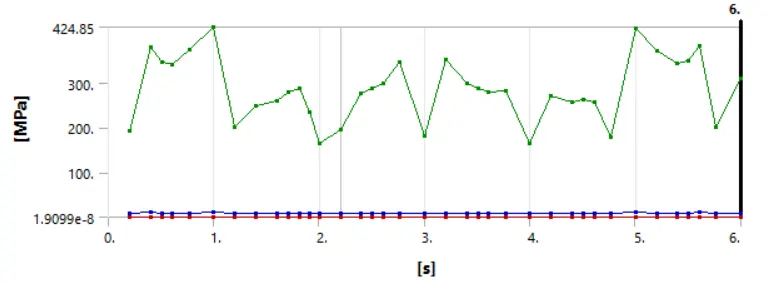
3.1.3 Cast Steel
3.2 Total Deformation
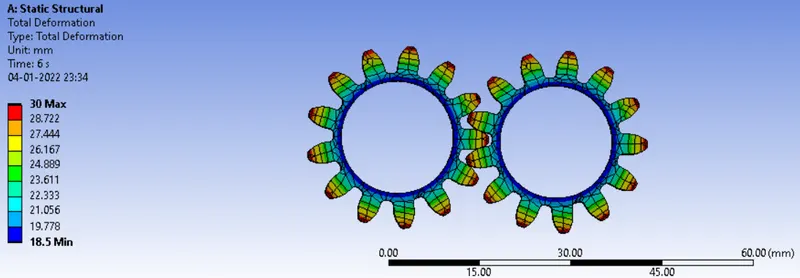
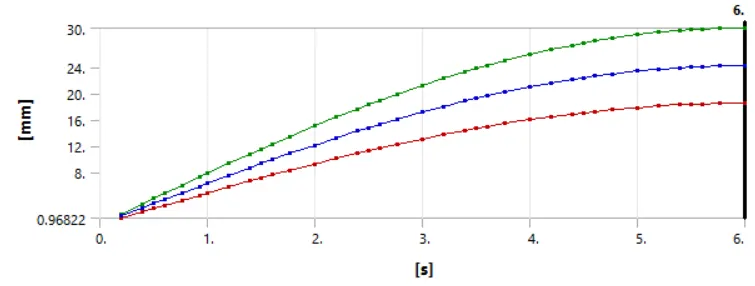
3.2.1 Ductile Cast Iron
3.2.2 Cast Bronze
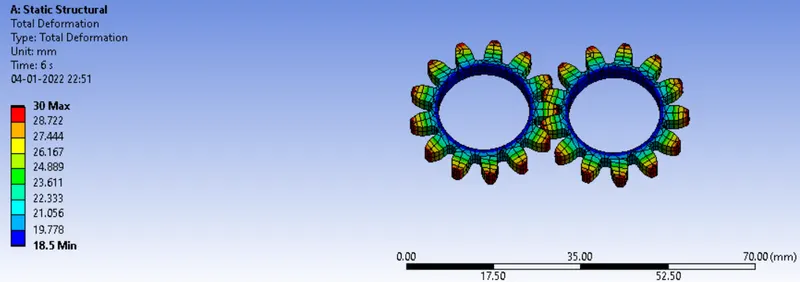
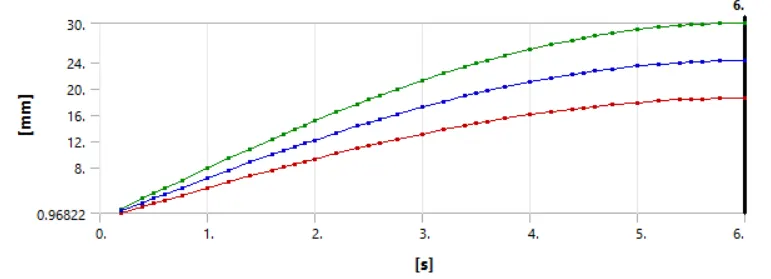
3.2.3 Cast Steel
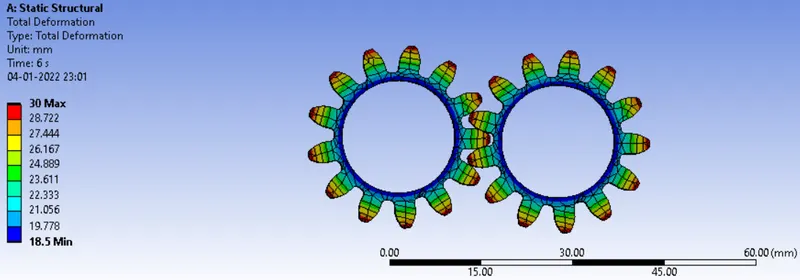
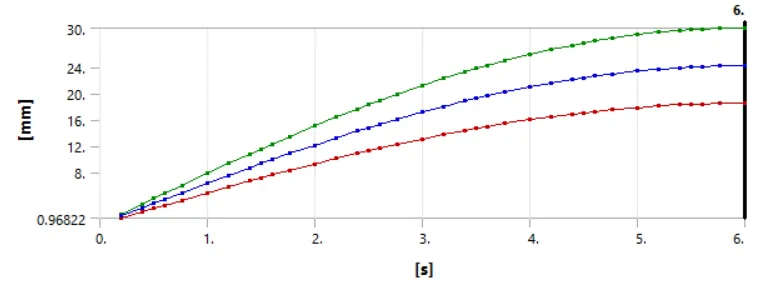
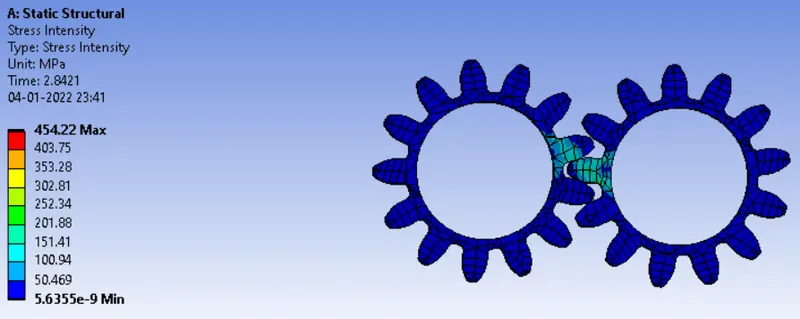
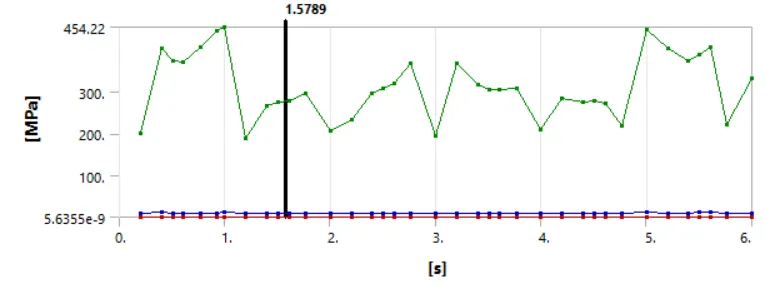
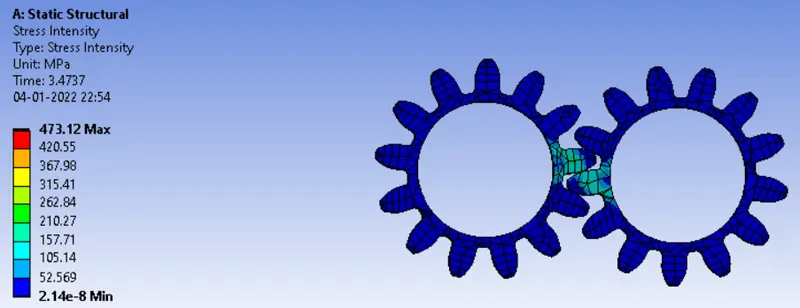
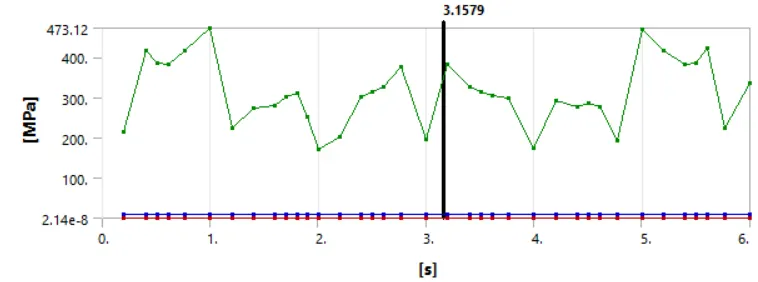
3.3 Stress Intensity
3.3.1 Ductile Cast Iron
3.3.2 Cast Bronze
3.3.3 Cast Steel
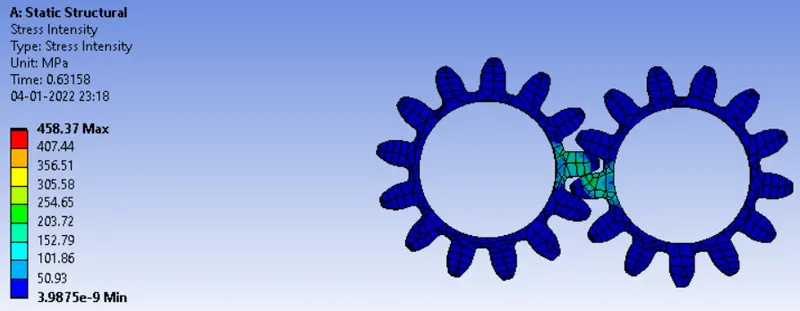
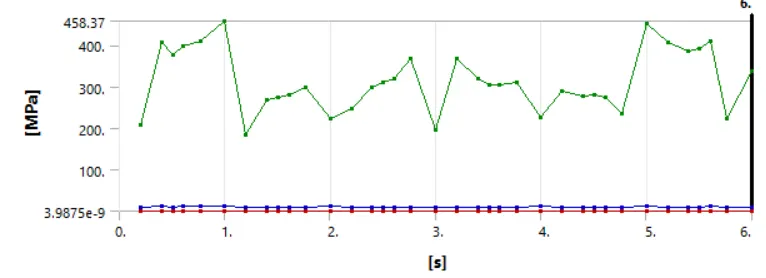
3.4 Animation results
3.4.1 Ductile Cast Iron
Equivalent Stress - 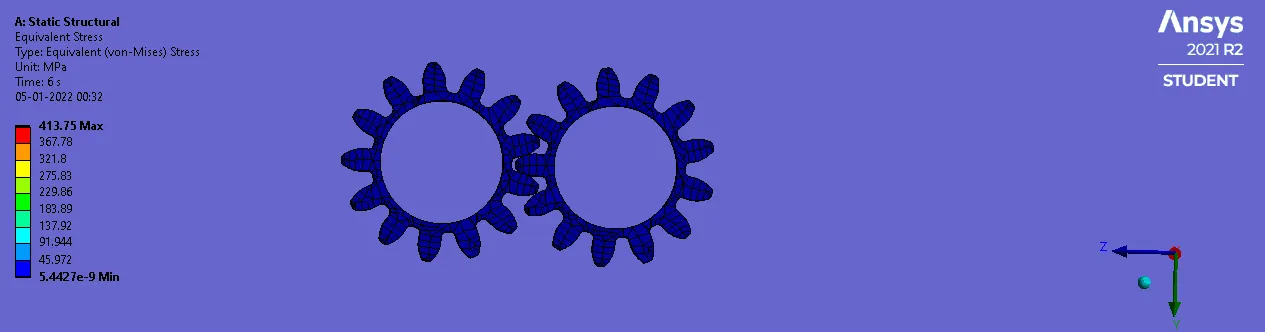
Total Deformation - 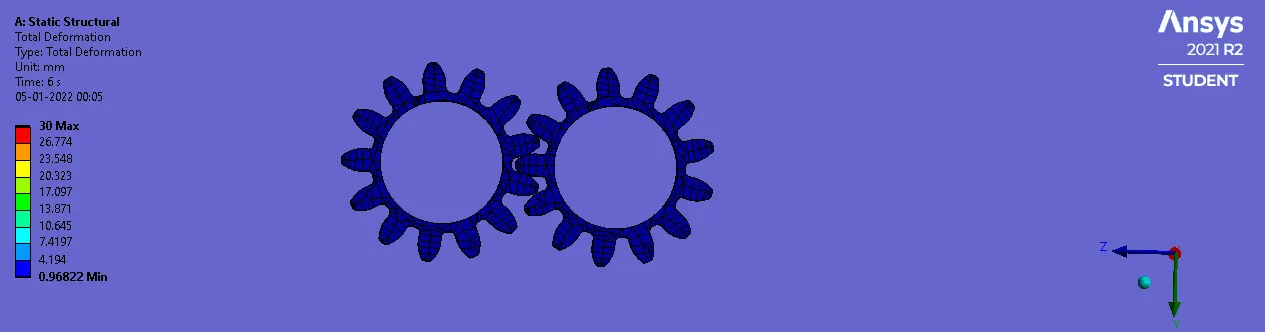
Stress Intensity -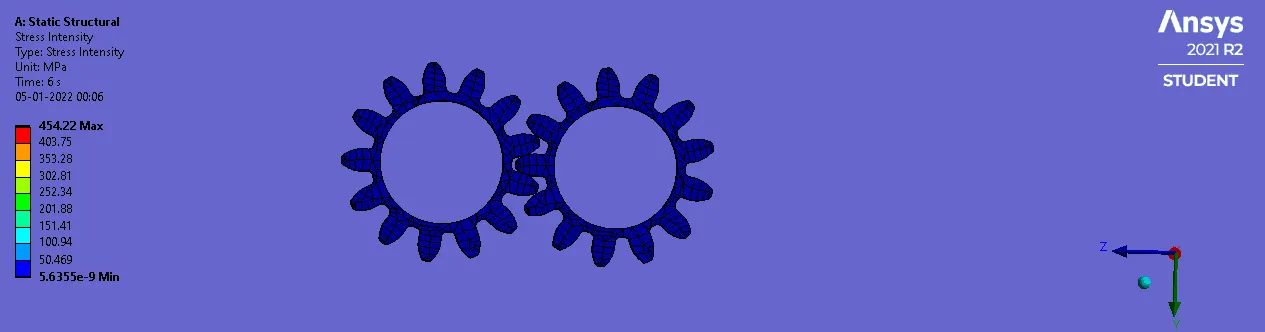
3.4.2 Cast Bronze
Equivalent Stress -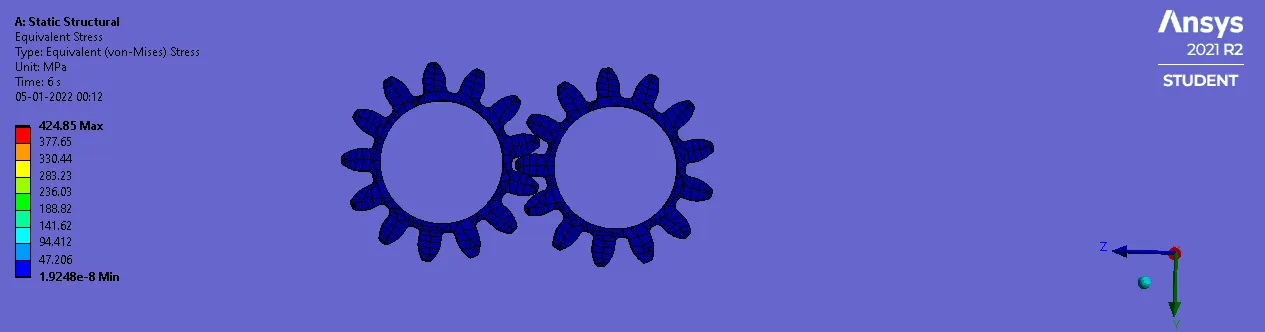
Total Deformation -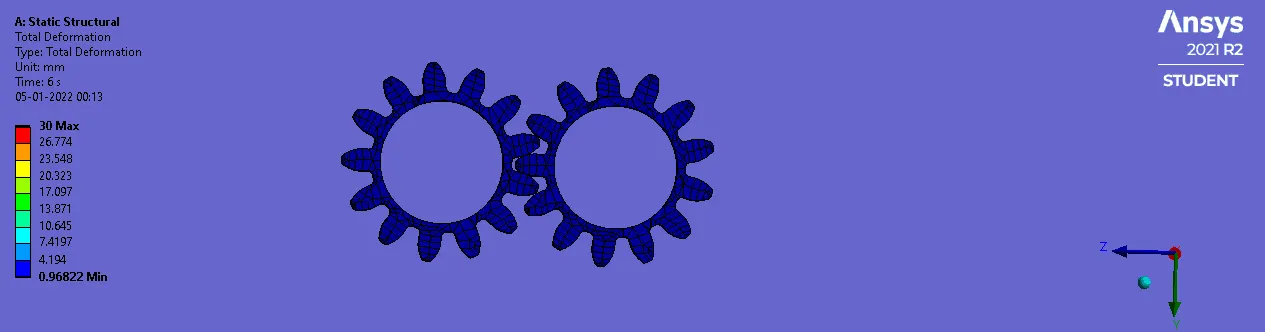
Stress Intensity-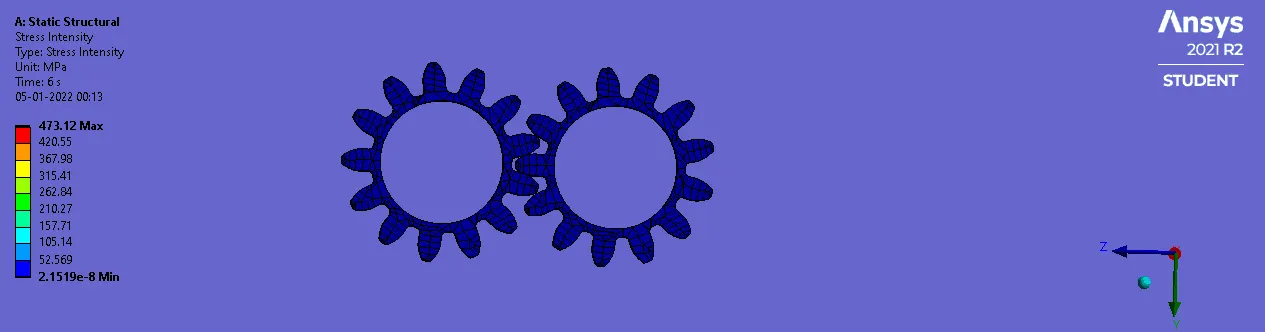
3.4.3 Cast Steel
Equivalent Stress - 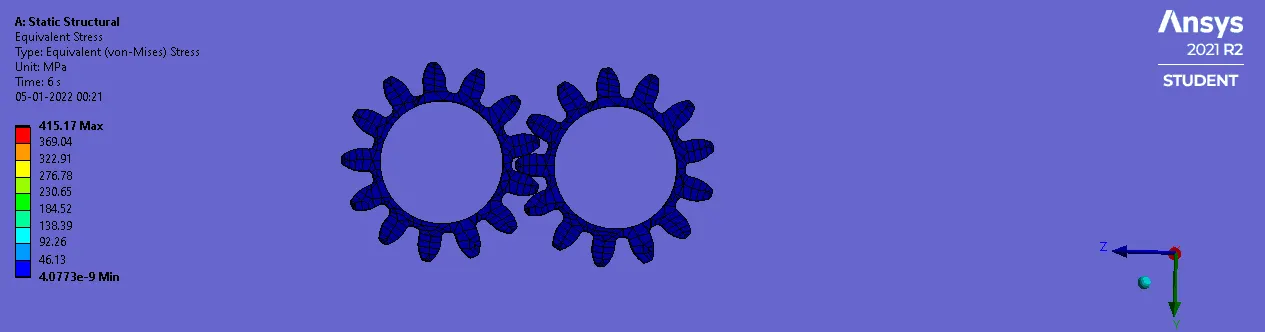
Total Deformation -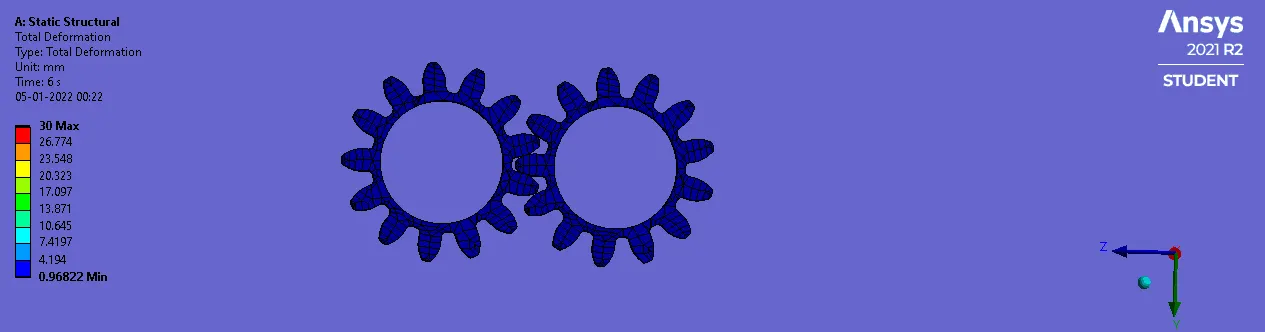
Stress Intensity -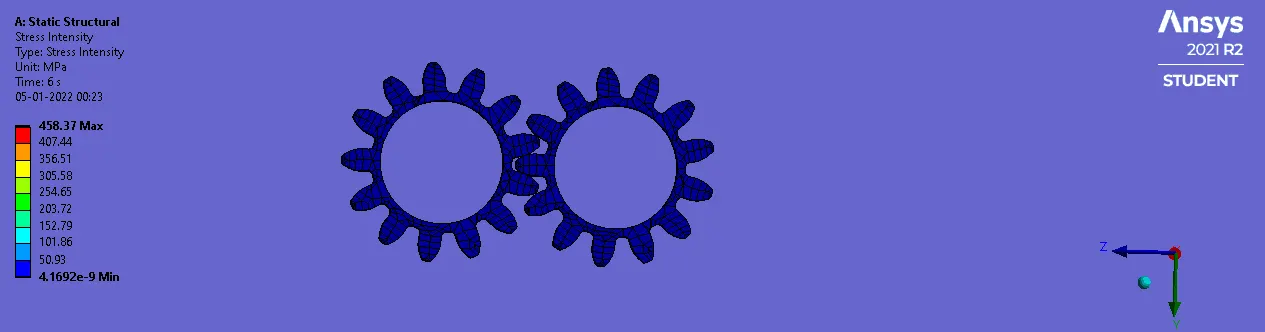
4. Conclusions:
a) From the conventional strength criteria of strength of materials, on the basis of equivalent von mises stress and deformation Ductile Cast Iron is best.
b) If we consider the stress intensity level, also Ductile Cast Iron is better.
c) From the above two observations, Ductile Cast Iron is best. From the manufacturing point of view it is better but if we talk about wear and corrosion it is worst. We should go for Cast Steel.