Week 1 Spur Gear Challenge
OBJECTIVE:-
Here we will perform an analysis on a pair of Spur Gears.
We will use different materials for gears and find out the Equivalent stress, Total Deformation and Stress Intensity, where Stress intensity results give the location of a possible fracture of Gears.
Different Cases of Materials for analysis are as given below:
CASE_1: Cast_Iron (Ductile)
CASE_2: Cast_Steel
CASE_3: Cast_Bronze
PROCEDURE:-
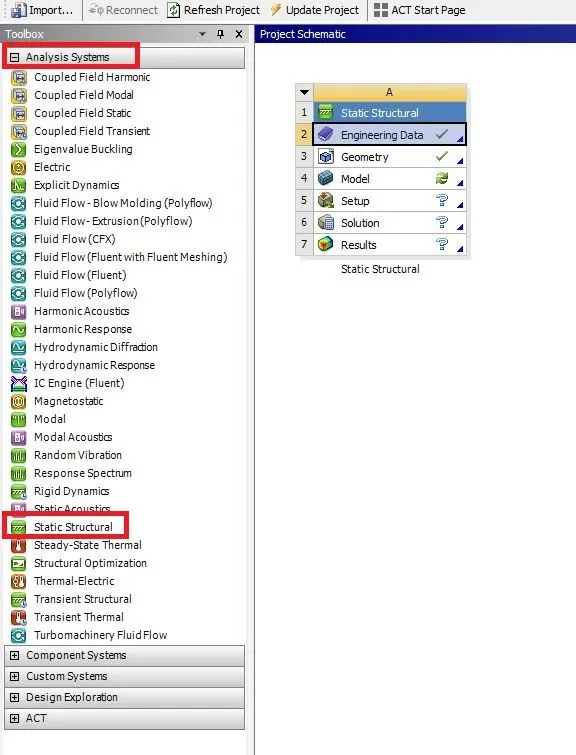
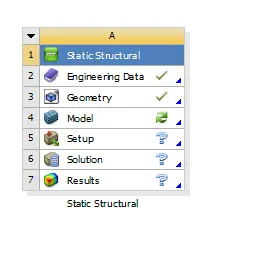
1. First open the Ansys workbench goto analysis system click on the static structural as shown below.
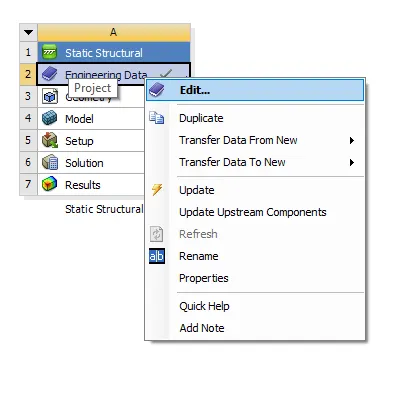
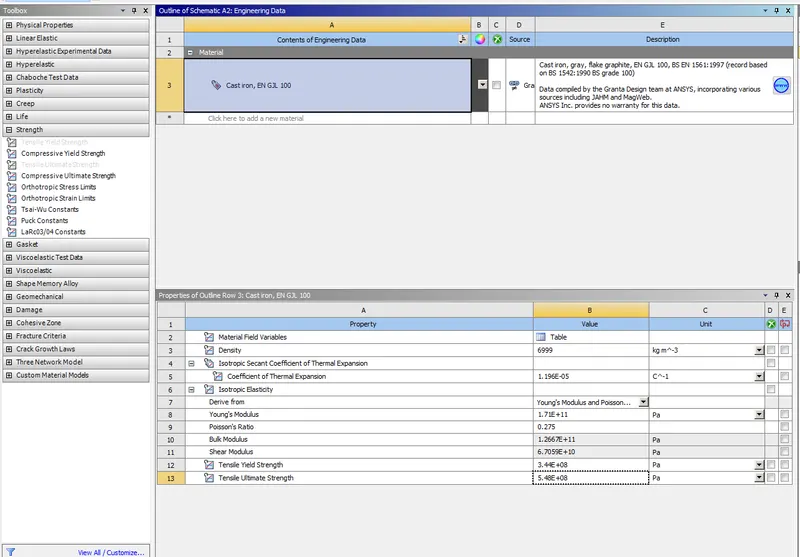
2. Next right click on the Engineering data select edit and select cast iron material added as shown below.
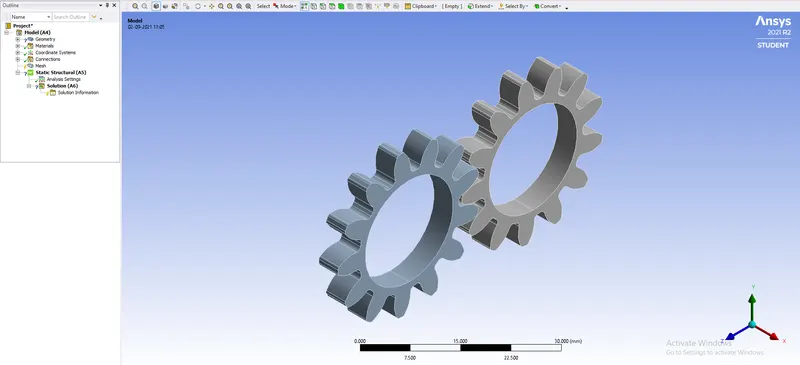
3. Next going to the geometry import the spur gear as shown below.
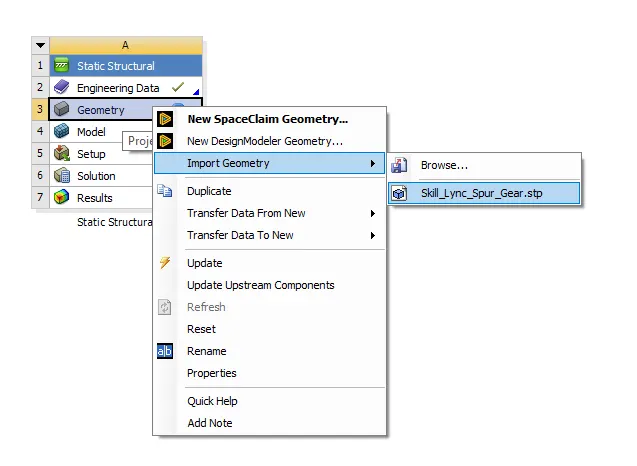
 see this image the geometry is imported.
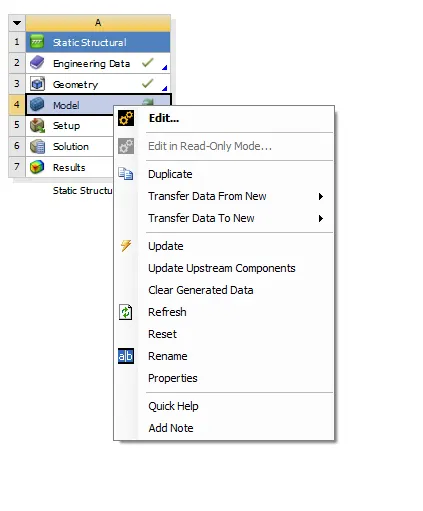
4. Next right click on the model select the edit as shown below.
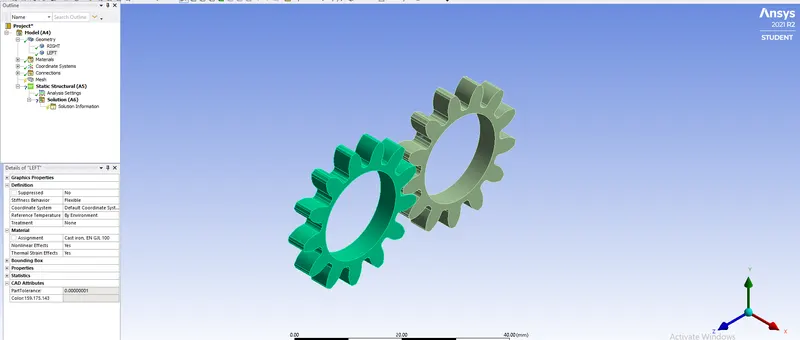
5. Next assign the properties for spur gears as shown below.
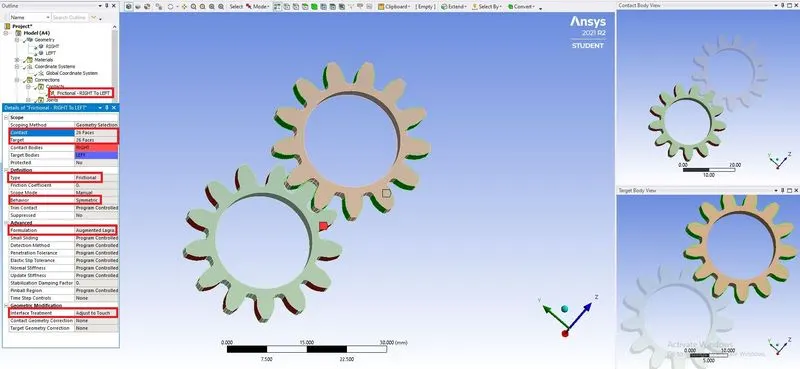
6. Go to contact select the faces as shown below.
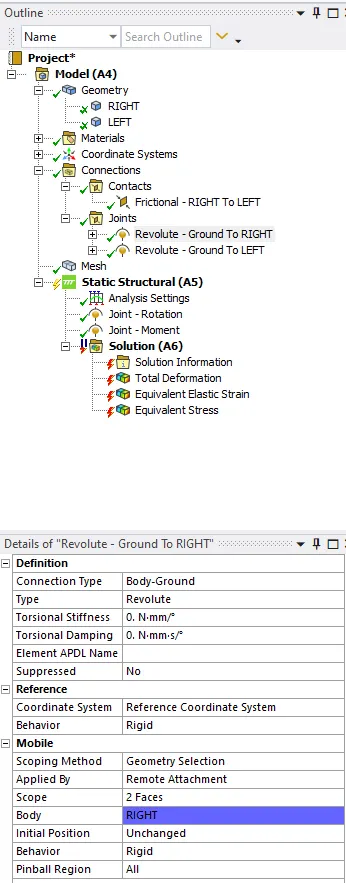
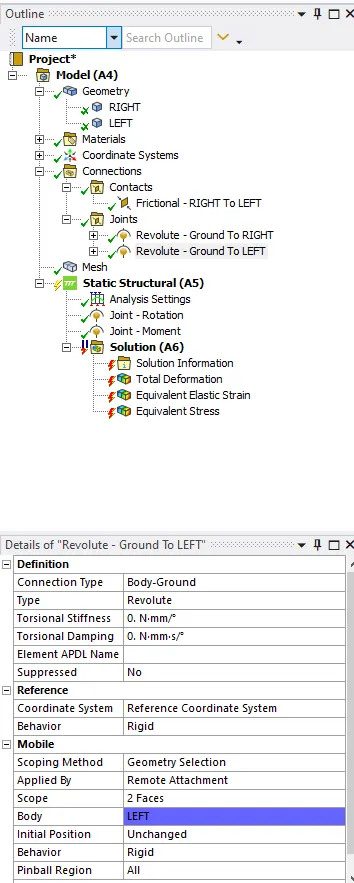
6. Next create the joint for left and right spur gears as shown below.
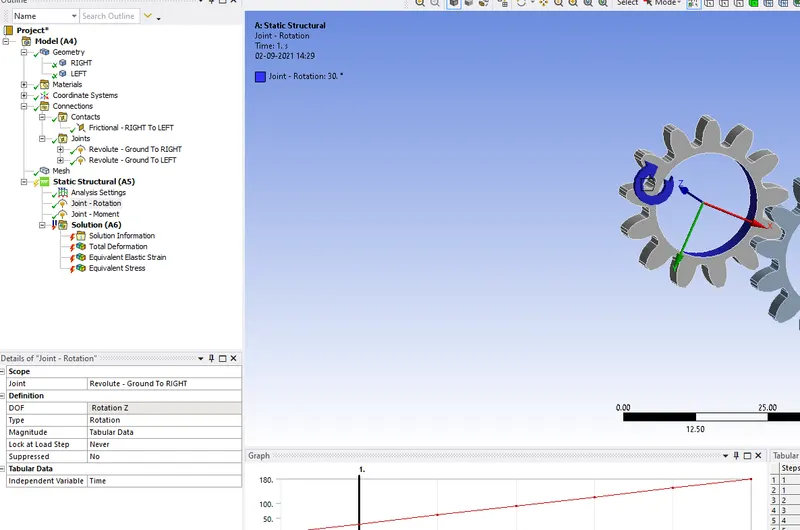
7. Next go to the static structural select joint as shown below.
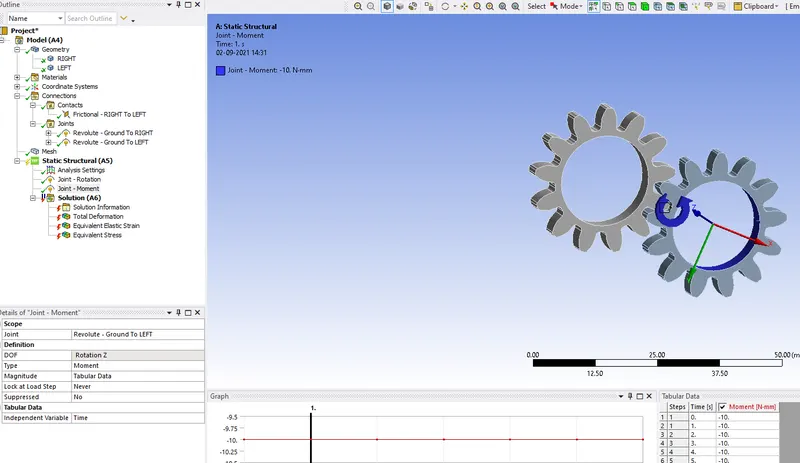
8. Next goto the solution click on solve the simulation is run wait for some time.
9. Next insert the total deformation, Equivalent elastic strain and Equivalent stress.
10. Next evaluate all results see the animation files as shown below. 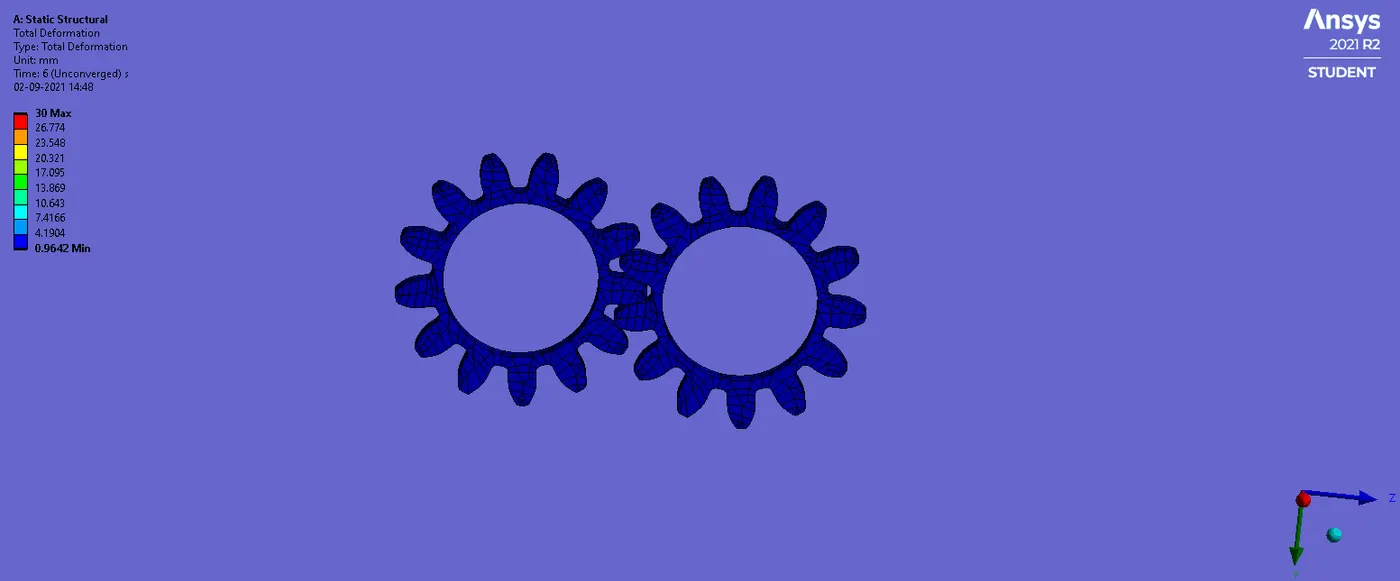 Total deformation
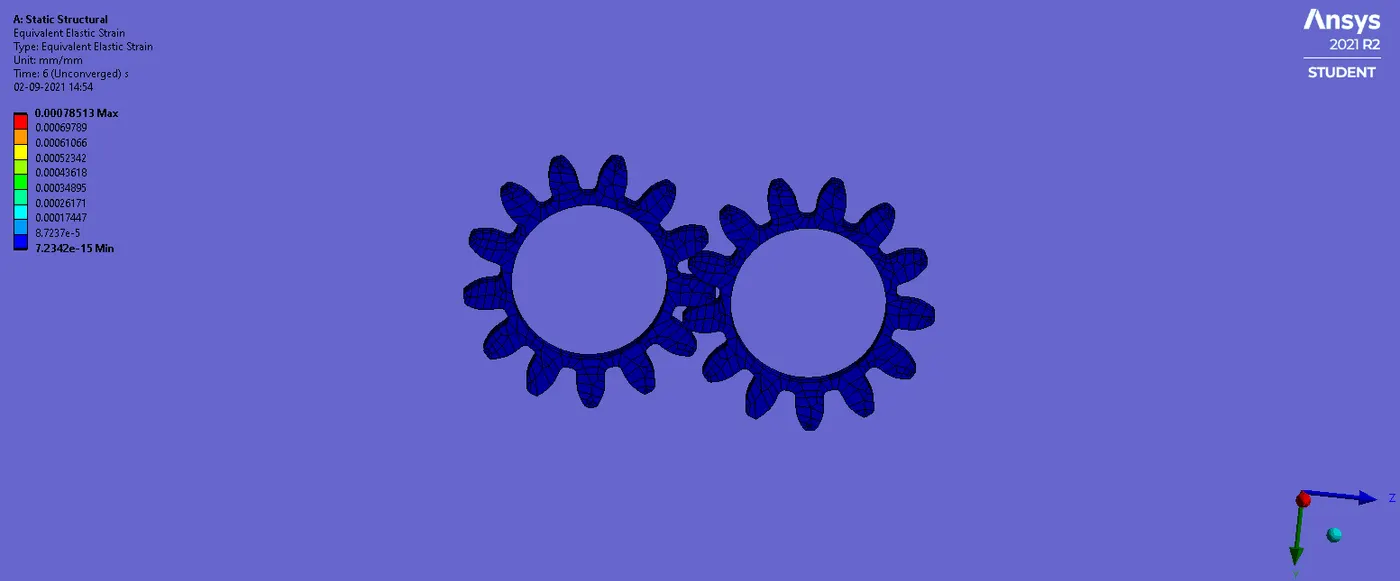 Equivalent elastic strain
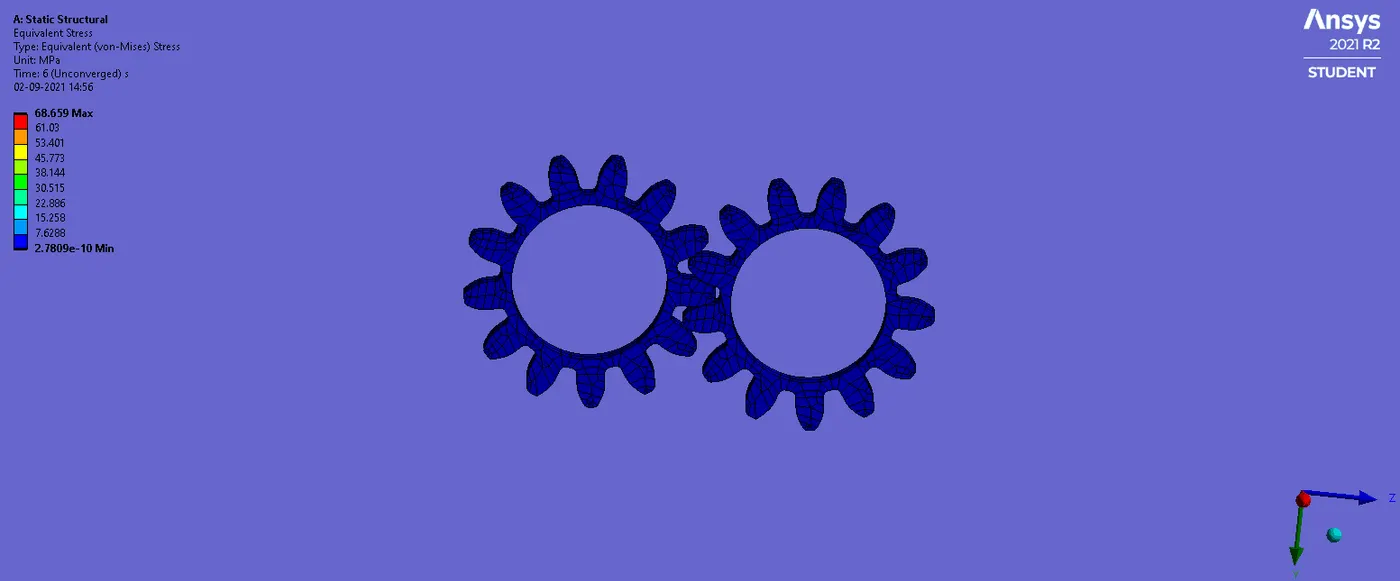 Equivalent stress.
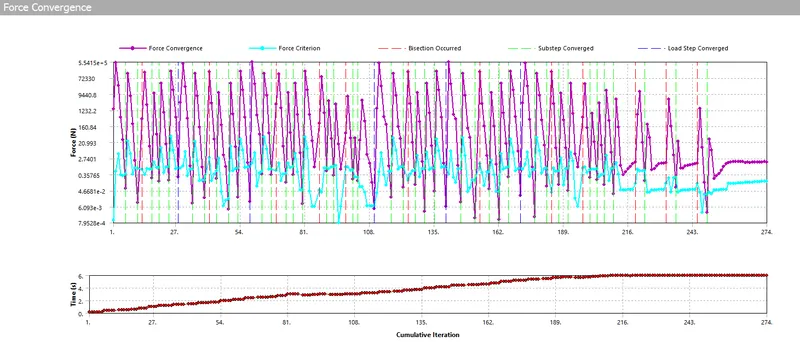 Force and time graphs.
11. Next change the material to cast steel and run the simulation to see the total deformation, equivalent strain and equivalent stress animations shown below.
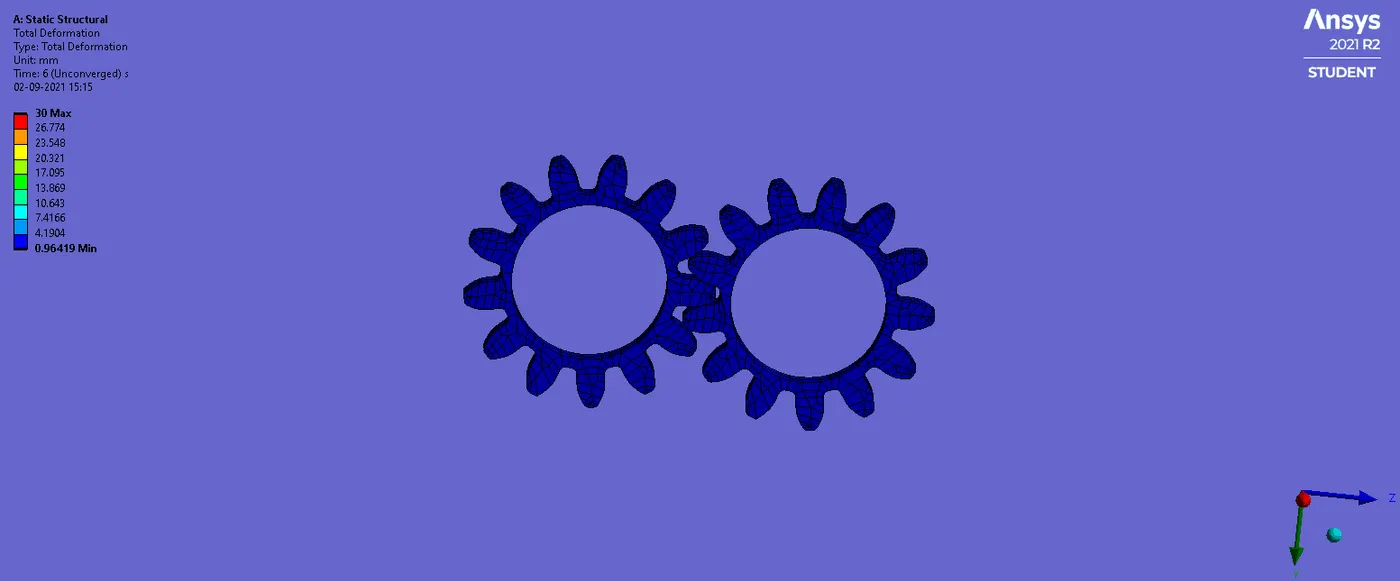 Total deformation
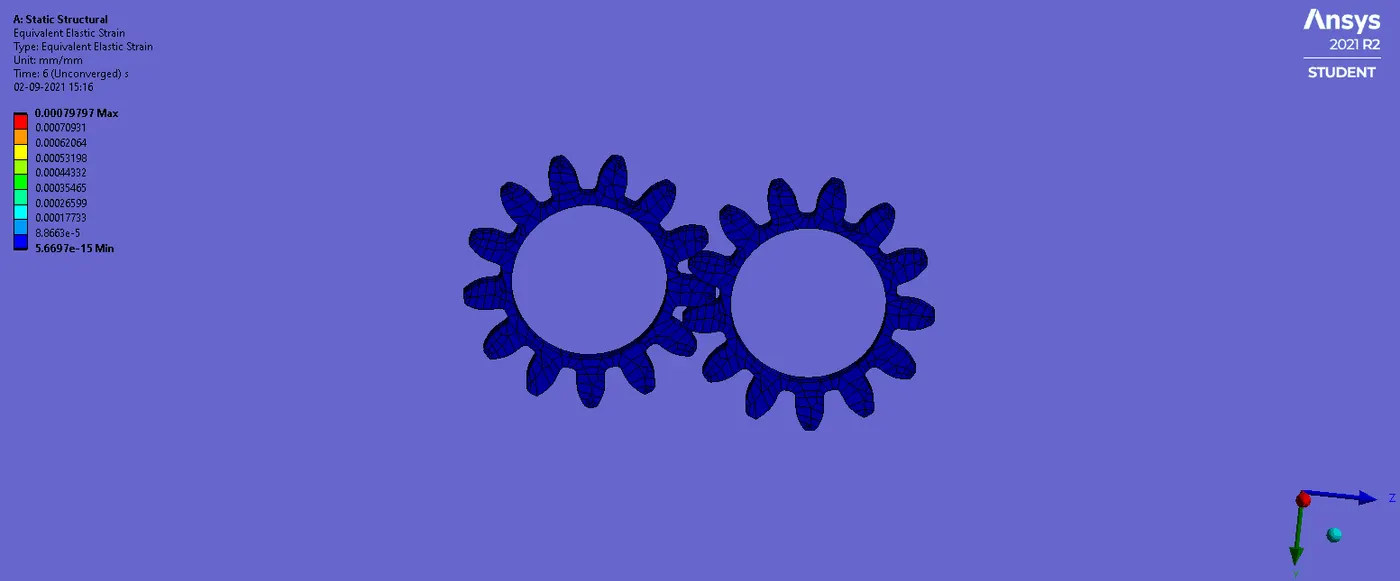 Equivalent elastic strain
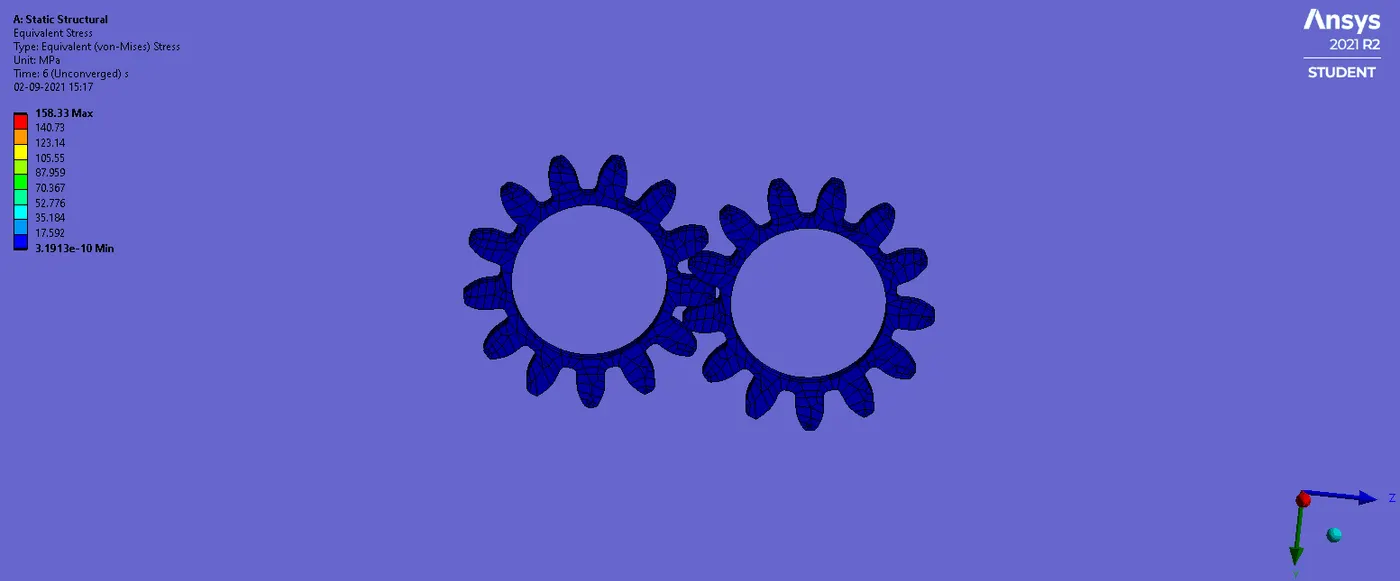 Equivalent stress.
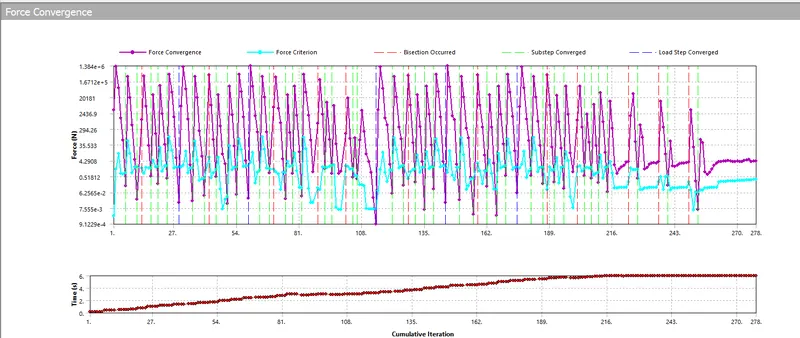 Force and time graphs.
12. Next change the material to cast bronze and run the simulation to see the total deformation, equivalent strain and equivalent stress animations shown below.
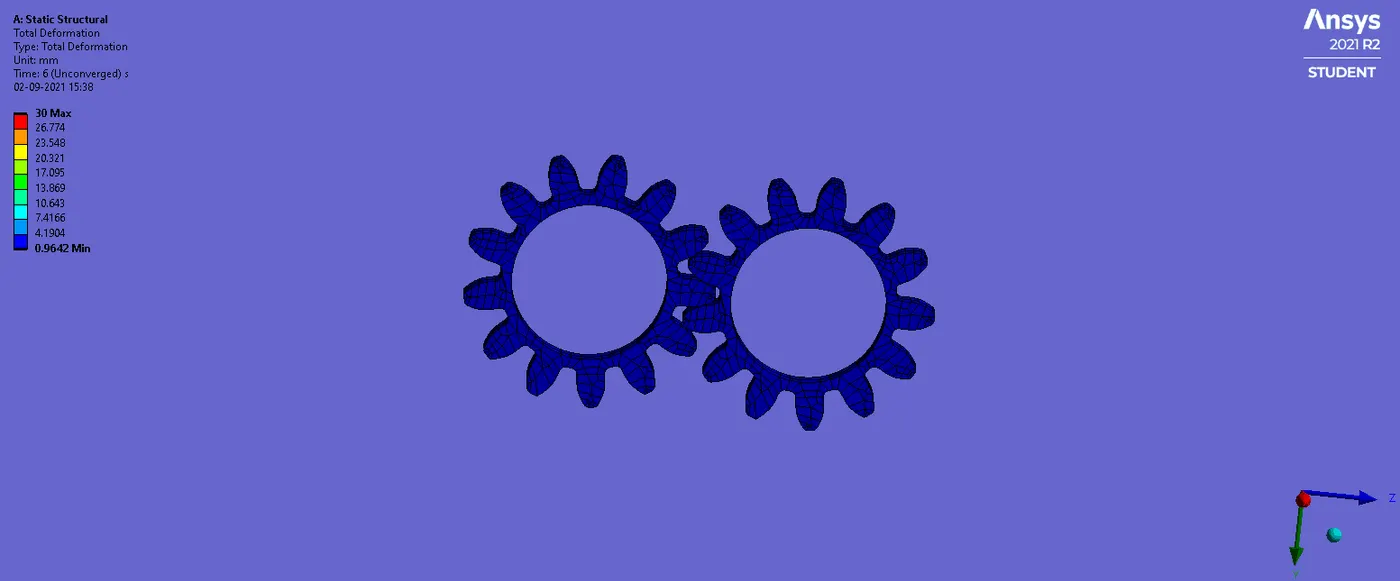 Total deformation
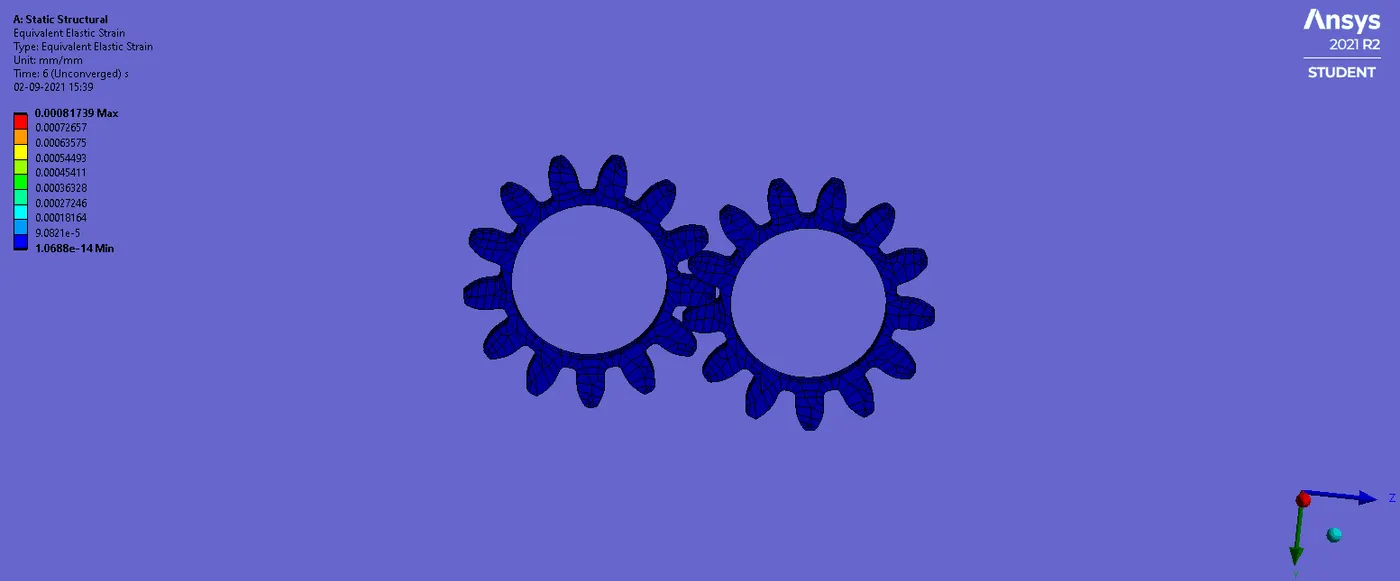 Equivalent elastic strain
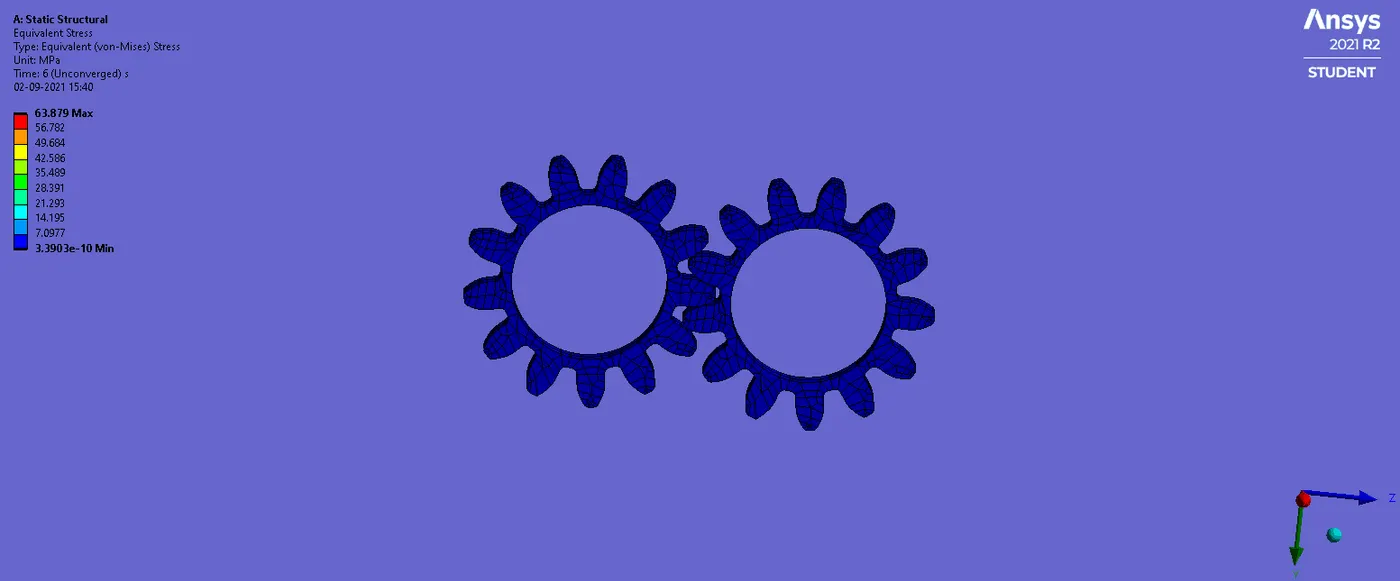 Equivalent stress.
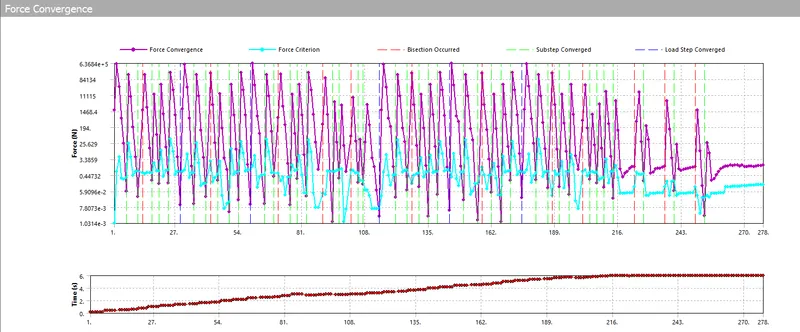 Force and time graphs.
Comparison of Results:-
The maximum and minimum values of total deformation, v-m stress and stress intensity are tabulated as shown below.
|
Materials |
Total Deformation (mm) |
Equivalent Stress (MPa) |
Equivalent Elastic strain (MPa) |
|||
|
Max. |
Min. |
Max. |
Min. |
Max. |
Min. |
|
|
Case-1: Cast Iron |
30 |
0.9642 |
68.659 |
2.780e-10 |
0.00078513 |
7.2342e-15 |
|
Case-2: Cast Bronze |
30 |
0.9642 |
63.879 |
3.3903e-10 |
0.00081739 |
1.0688e-14 |
|
Case-3: Cast Steel |
30 |
0.96419 |
158.33 |
3.1913e-10 |
0.00079797 |
5.6697e-15 |
For all three materials, the maximum stress was observed in the root of the teeth. Similarly, the stress intensity measured was also found to be
maximum in the same region. The deformation is however found to be similar for all the cases. The graph of the output components with respect to
time was observed and the values are noted in the table above. The results can be written in brief as:
Equivalent Stress: Cast Steel>Cast Iron> Cast Bronze
Stress Intensity: Cast Steel>Cast Iron> Cast Bronze
From the results, it is observed that the equivalent stress and the stress intensity is maximum for cast steel and minimum for the cast bronze. The
smaller values of stress intensity assist the part in achieving a longer life. Hence, from the analysis, it can be considered that cast bronze is the
a typical material for the spur gears due to the lower values of equivalent stress and stress intensity experienced by the material for the same
boundary conditions.
CONCLUSION:-
Static structural analysis was carried out successfully on spur gear having the following types of materials,
- Case-1: Cast Iron
- Case-2: Cast Bronze
- Case-3: Cast Steel
Based on the traditional strength of materials approach i.e., from the results of Equivalent stress and Total deformation for all the cases of spur gear,
case-2: Cast bronze is the preferred choice of material.
Based on the fracture mechanics approach i.e., from the results of Stress intensity for all the cases of spur gear,
case-3: Cast steel is the preferred choice of material.
The recommended choice of material is Cast Iron.