Week 1- Mixing Tee
AIM: MIXING OF FLUID OF TWO DIFFERENT TEMPERATURE WITH TEE JOINT
INTRODUCTION: Two fluids of different temperature are mixing with tee joint. Tee joint means two fluids are entered into the model on perpendicular with each other. We are going to see the reactions which taken between the two fluids of different temperature throughout the entire length of the pipe and changes in the outlet temperature when we are changing the momentum ratio of two inlets. These momentum ratios are checking for the two different length of the pipe (short one and long one) and lets see which one is efficient for mixing under given circumstances.
GIVEN PARAMETERS:
1)inlet-y: 19*C (cold temperature)
2)inlet-x: 36*C (hot temperature)
Check these two parameters are running with momentum ratio 2 and 4 by ansys fluent for two different length of the pipe
STEPS INCLUDE:
- Geomentry
- Meshing
- Setup ansys solver
- Solution
- Result
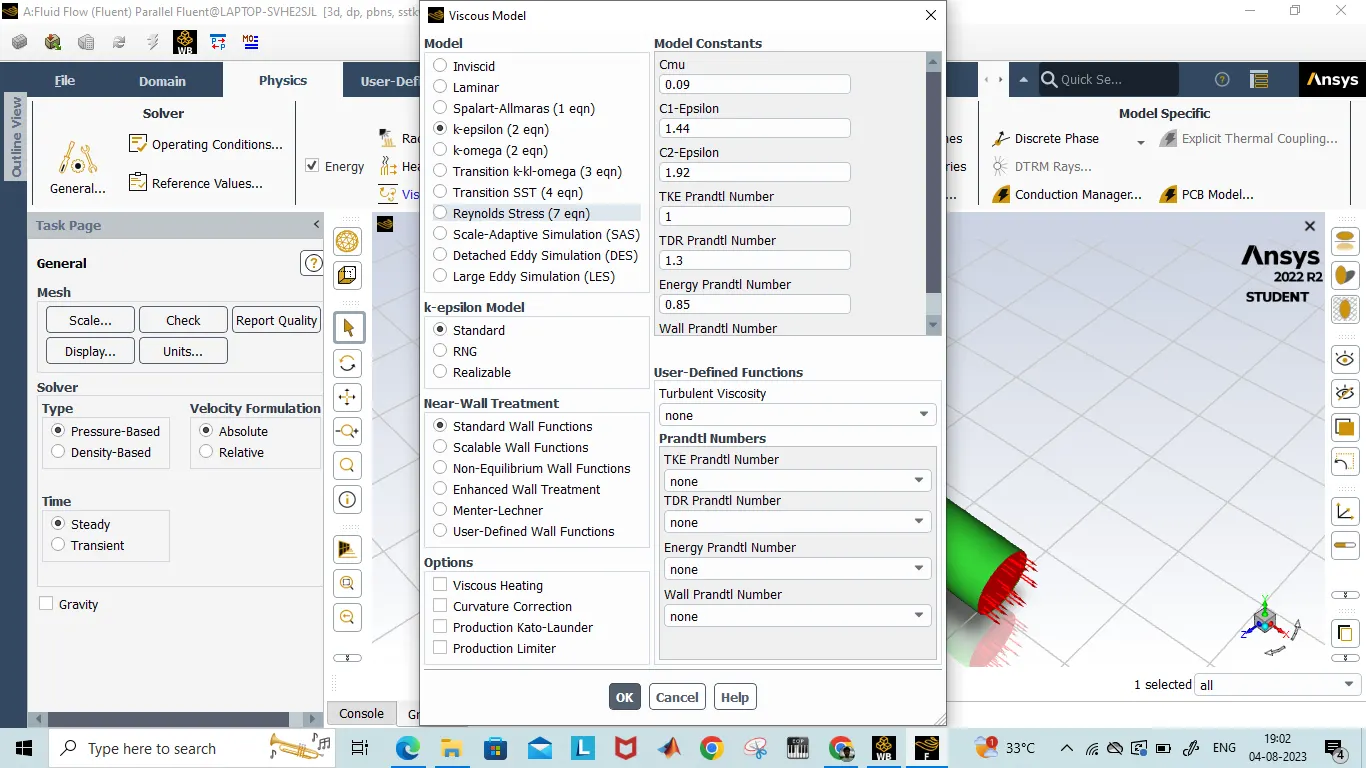
FINDS THE SUITABLE TURBULENCE MODEL FOR PERFORMING THE PROCESS
- Here we going to check the result between two turbulence model such as Epsilon-K and Epsilon-omega and decide which one is more suitable
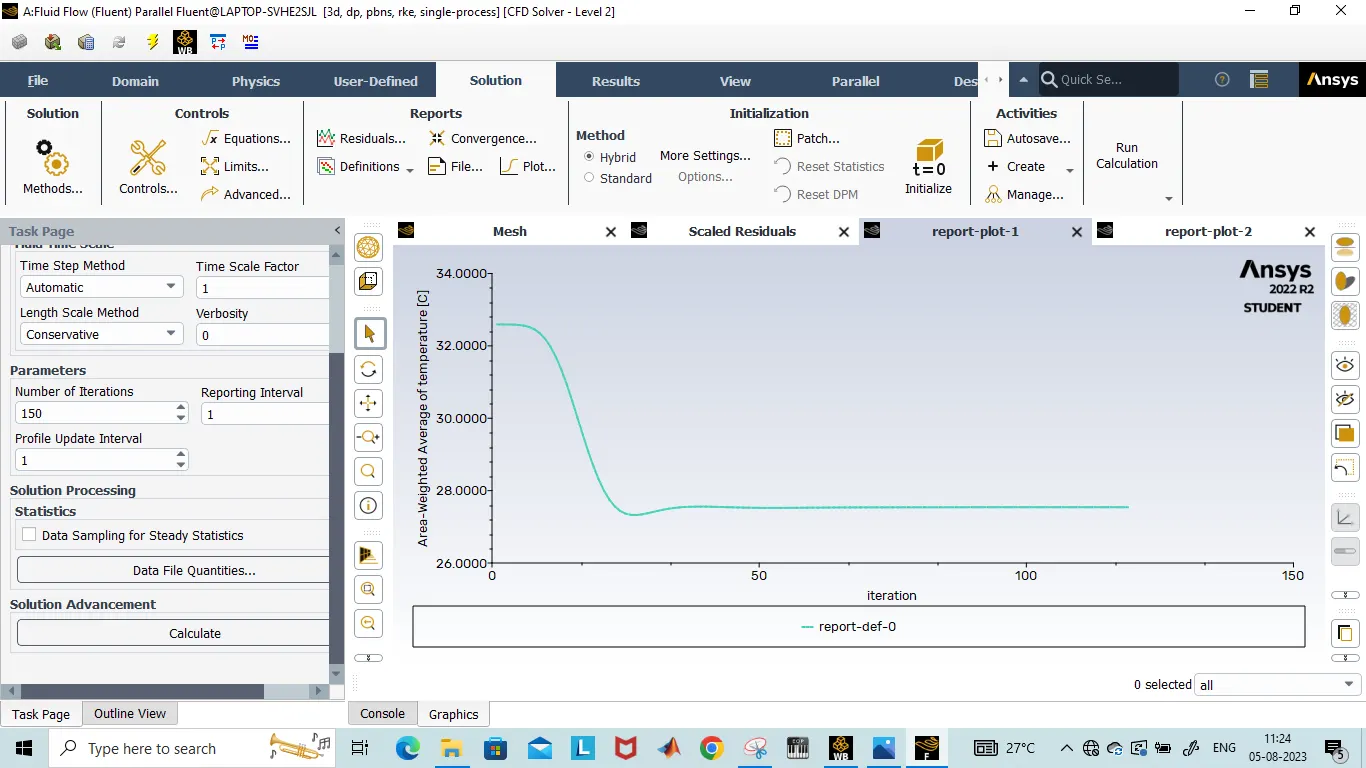
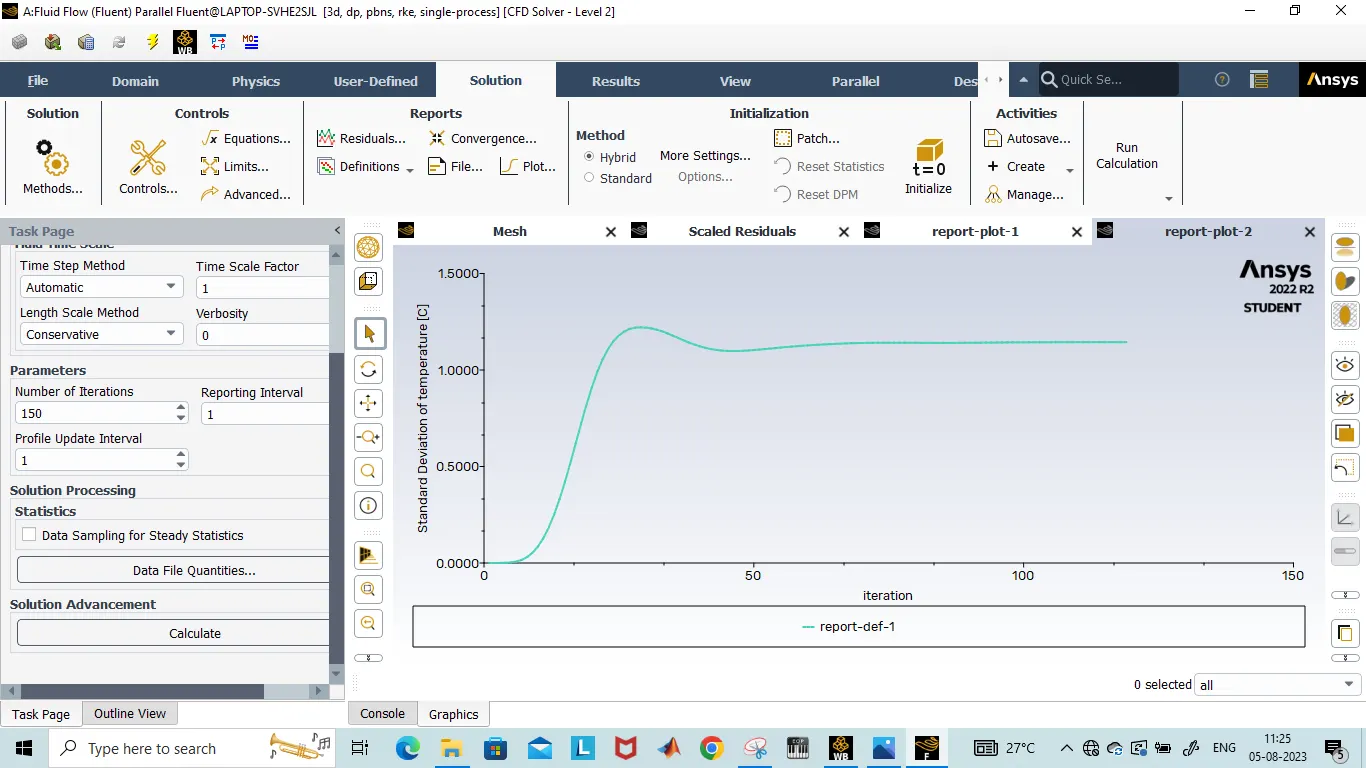
1)Epsilon-k model plot
2)Epsilon- omega model plot
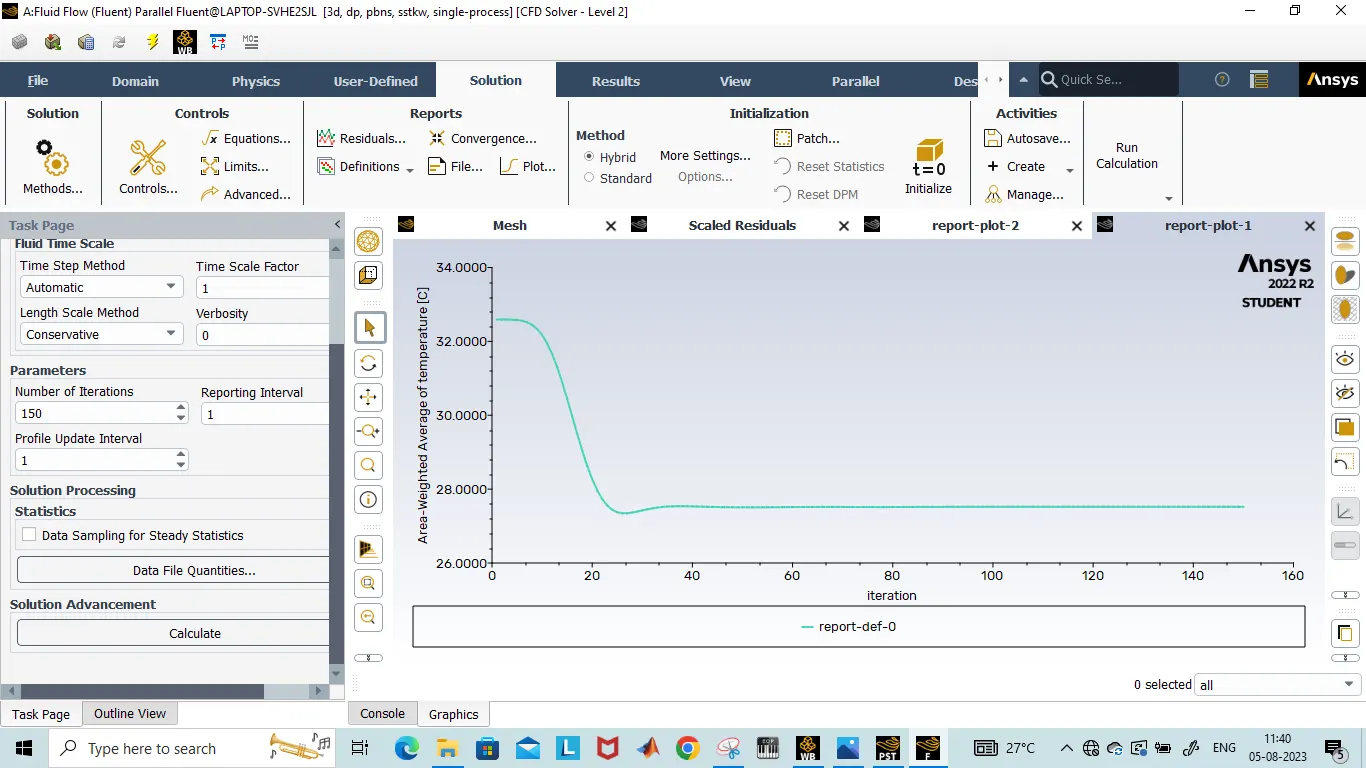
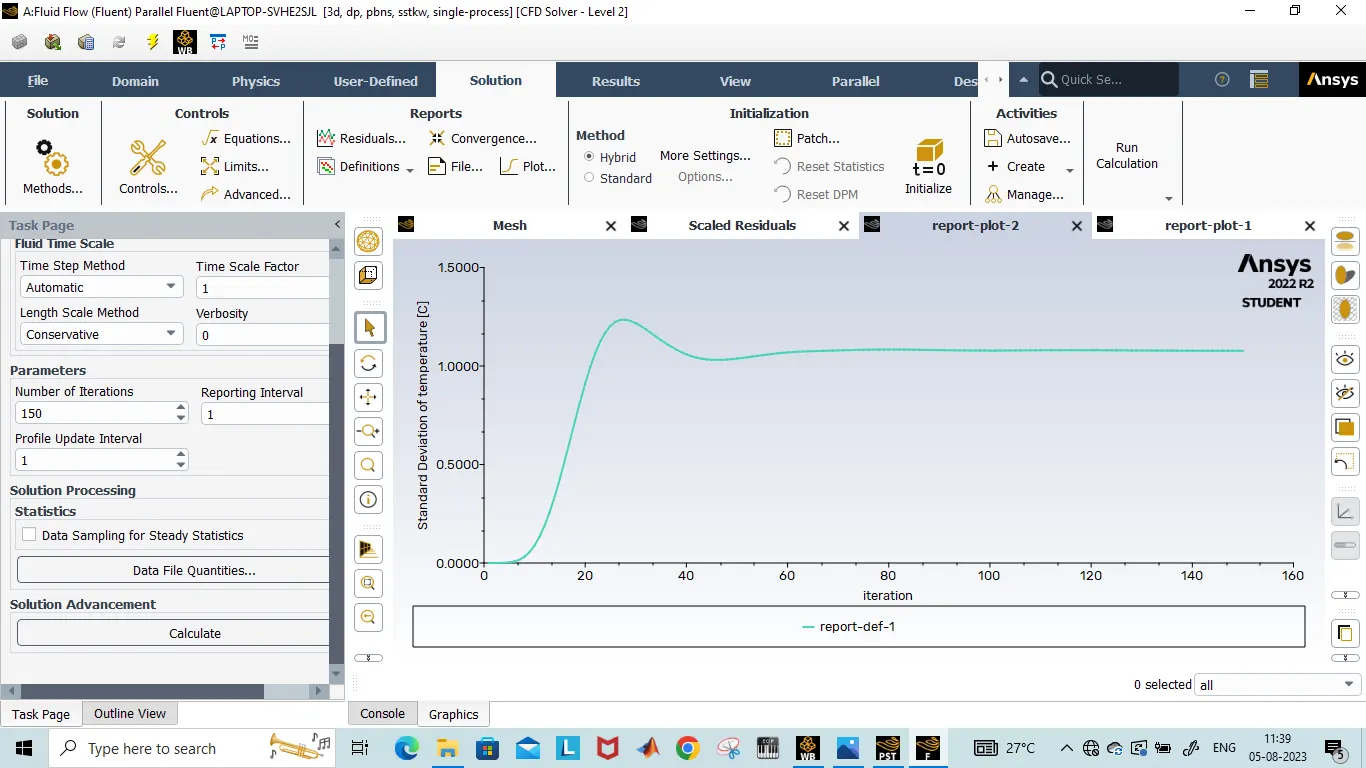
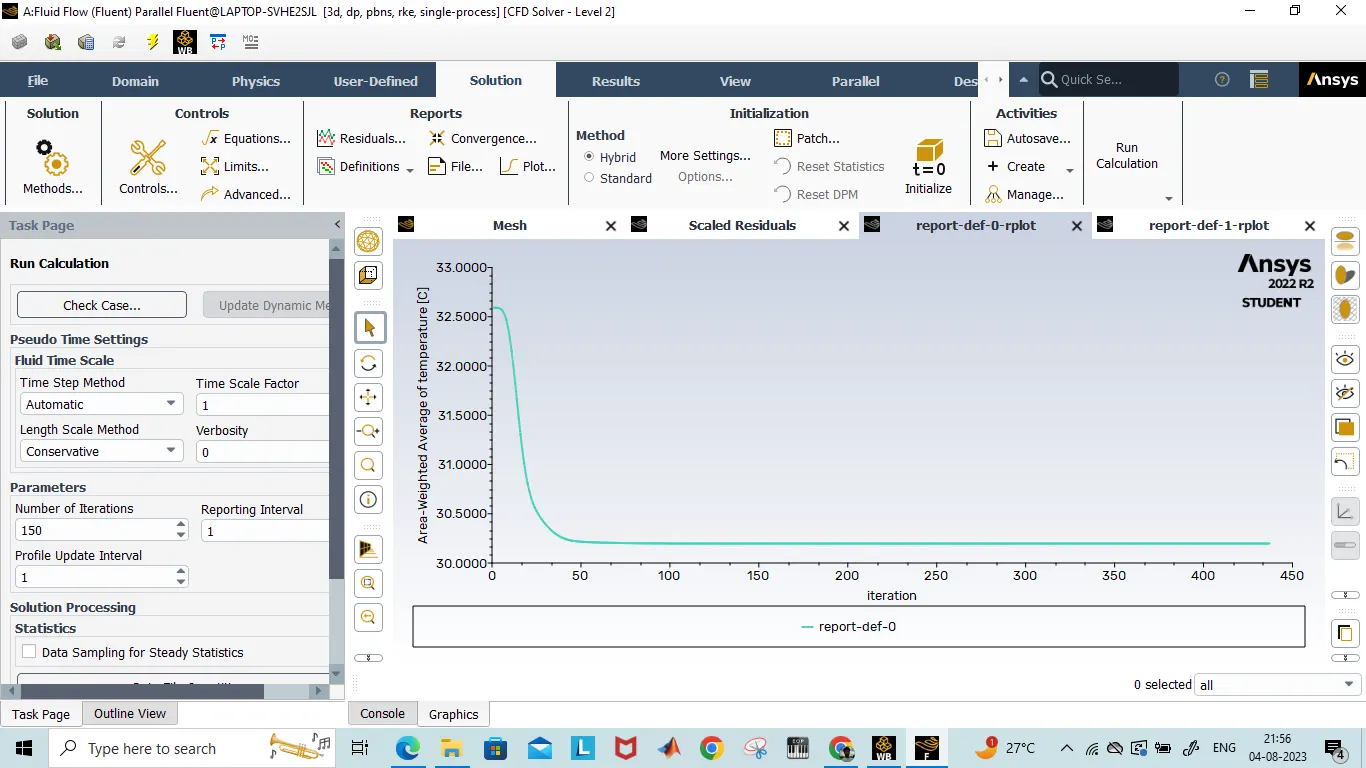
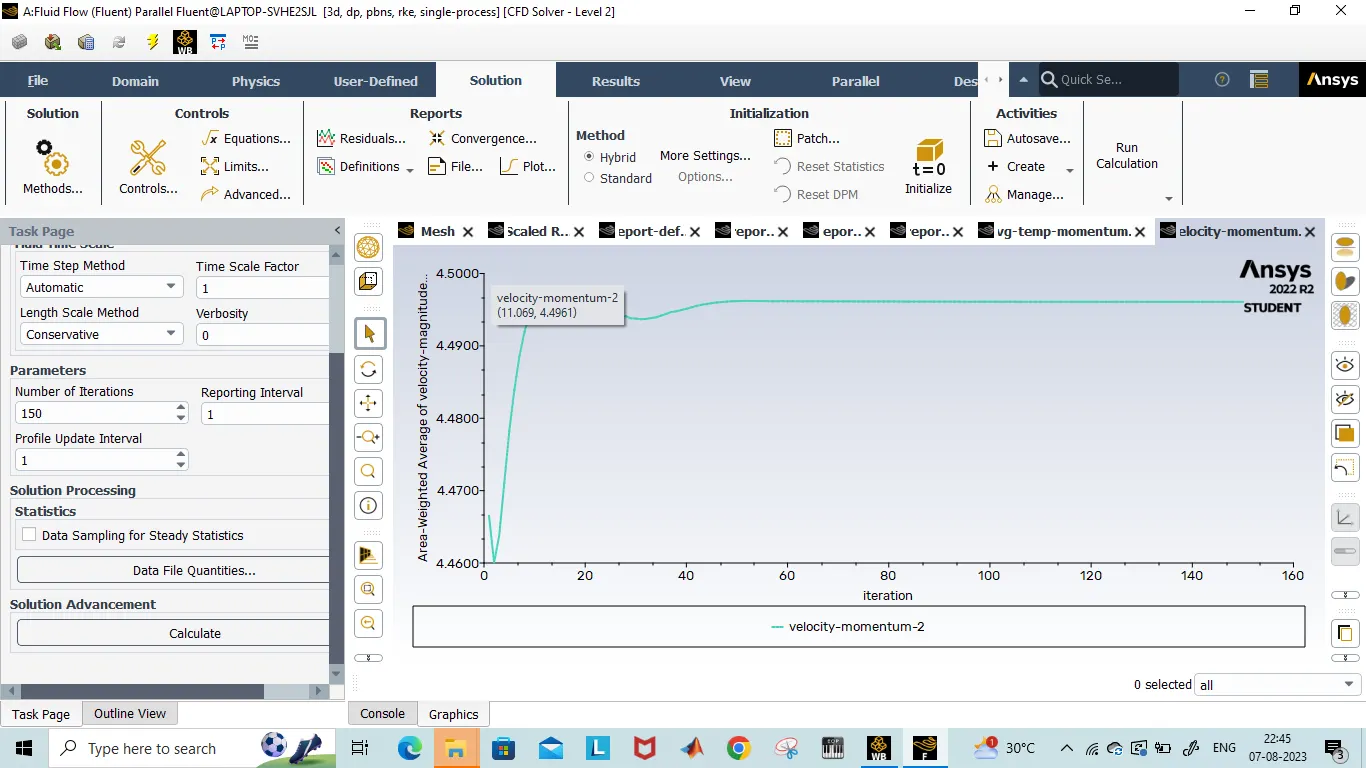
- As compared with both turbulence model, the constant temperature value generate in area weighted average plot is much quicker in Epsilon-K model than Epsilon-Omega model
- The steady state occurs at 32nd iteration in Epsilon-K model
- The steady state occurs at 34th iteration in Epsilon-omega model
- So Epsilon-K gives the better result compared with the epsilon-omega model
CASE 1: SHORT MIXING OF TEE WITH A HOT INLET VELOCITY OF 3M/S
MESHING:
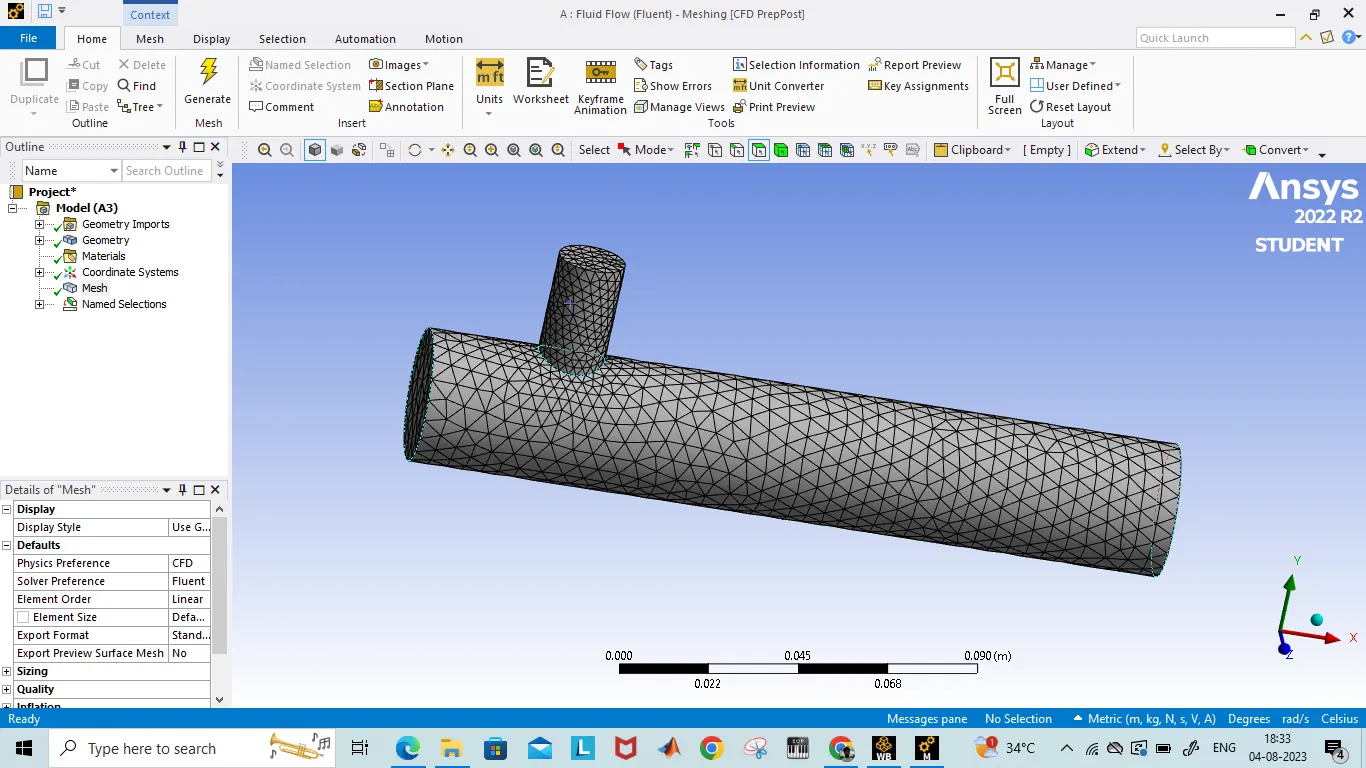

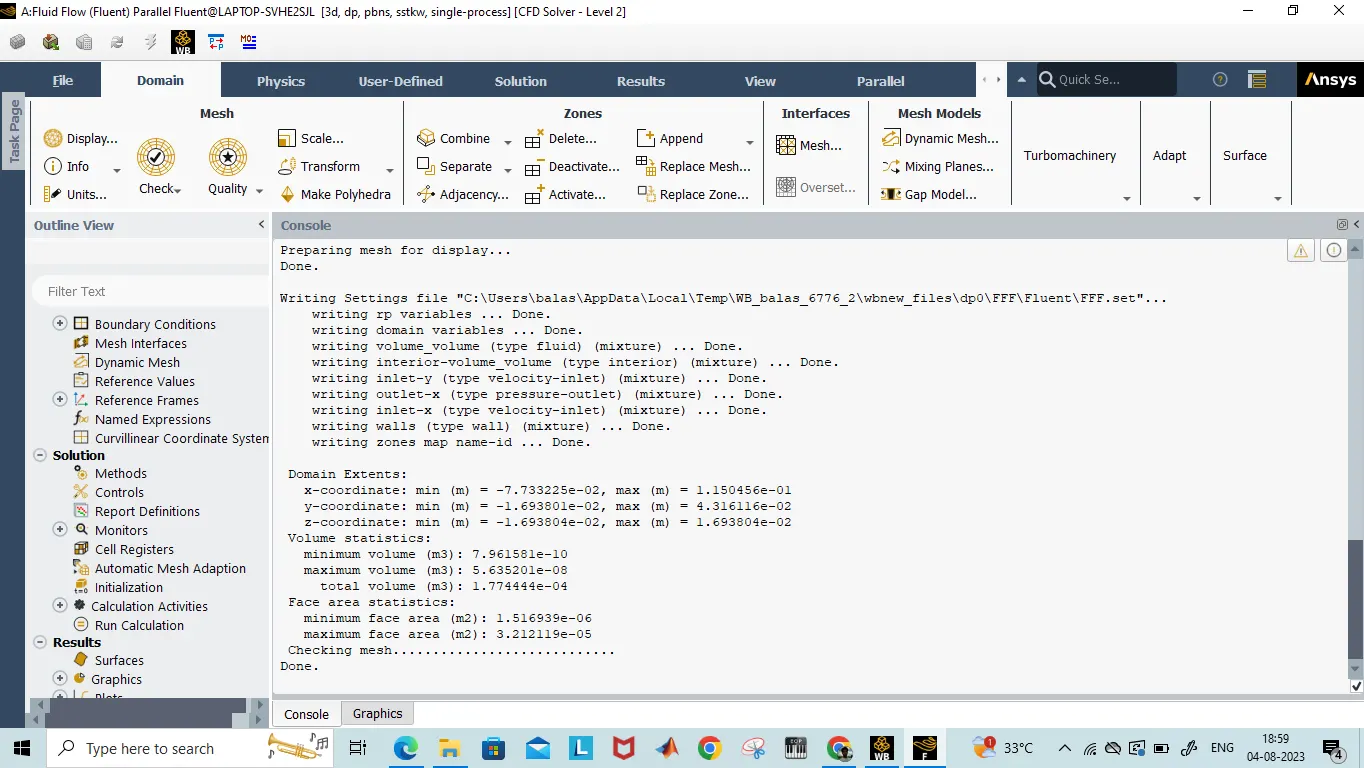
SETUP ANSYS FLUENT:

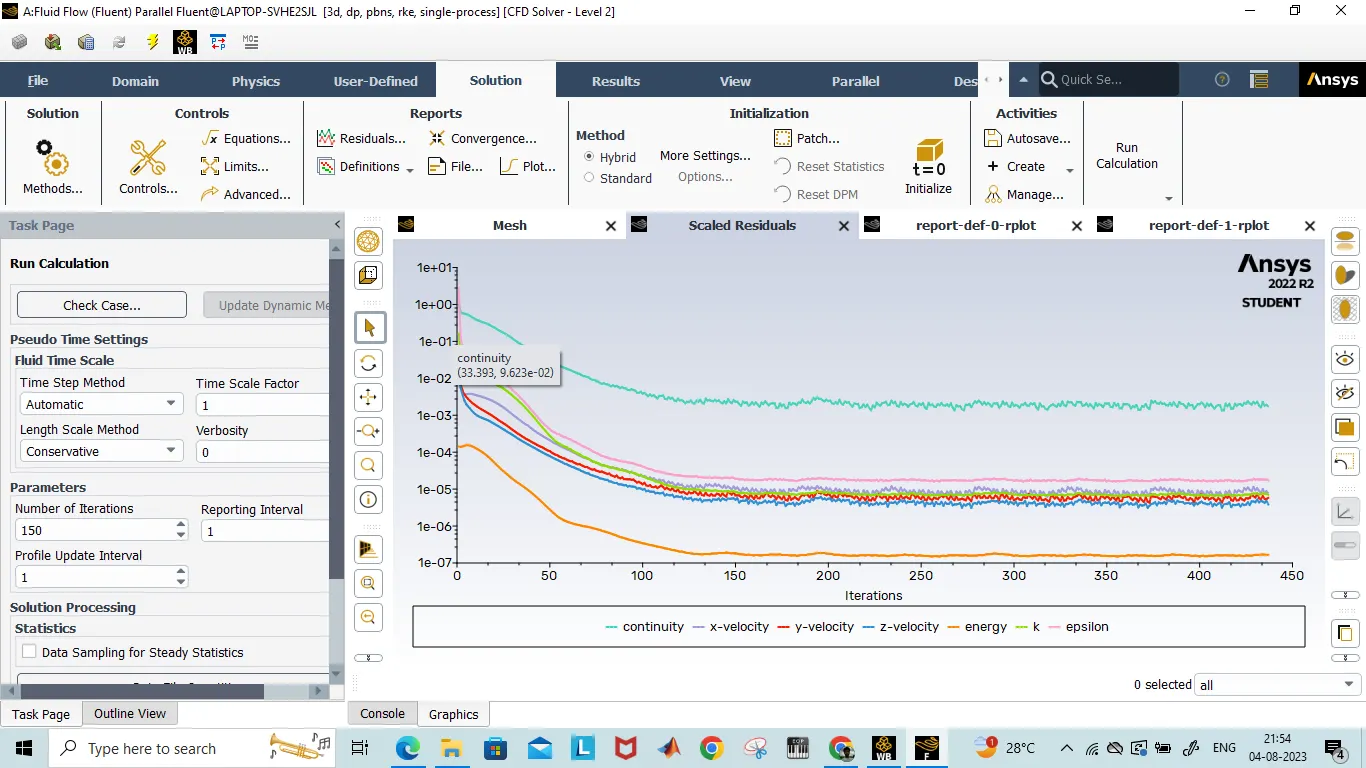
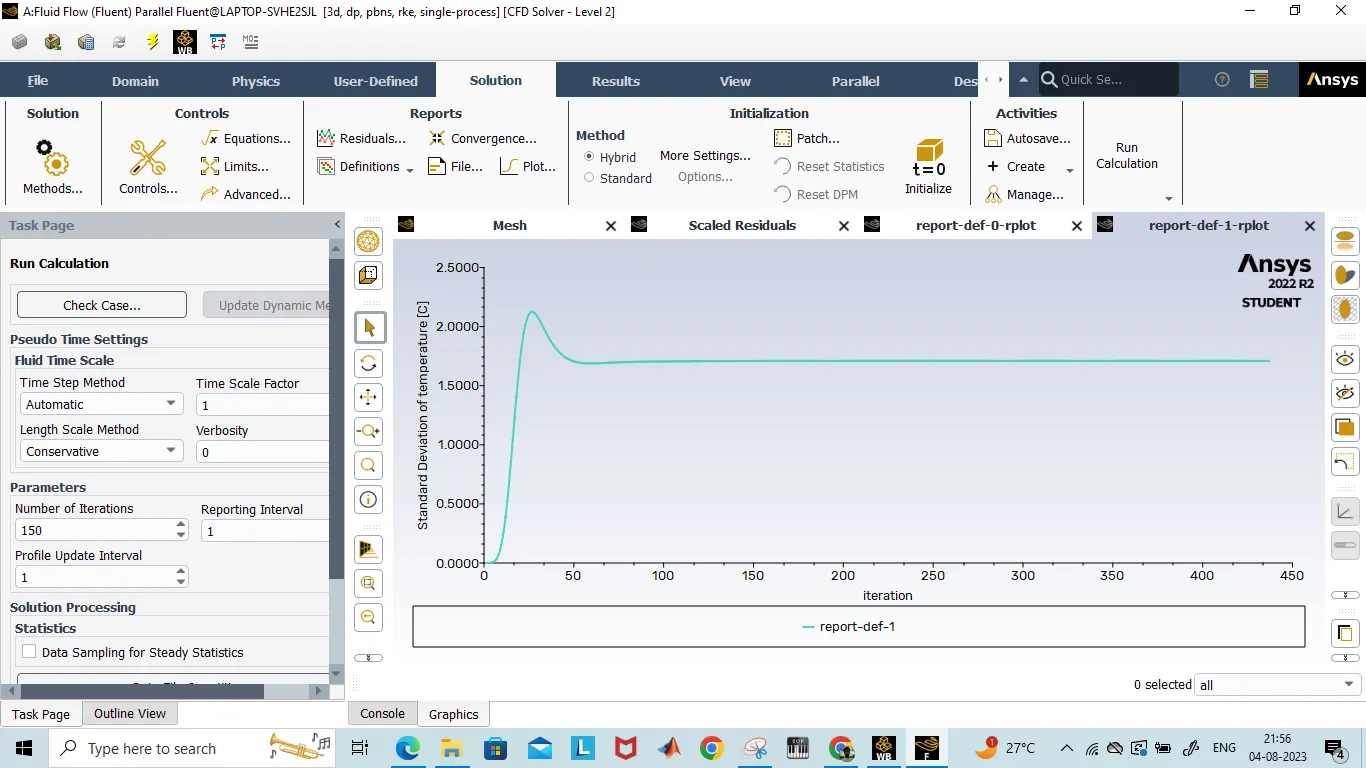
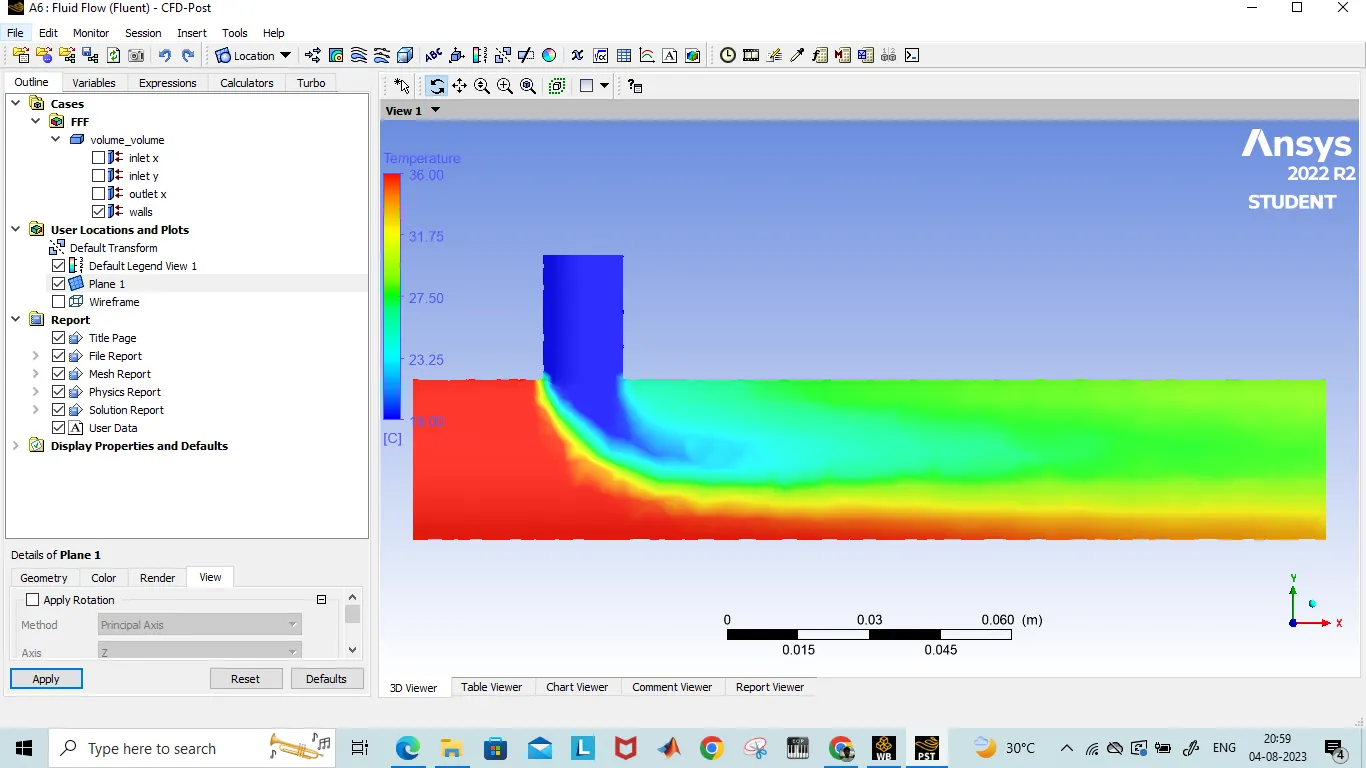
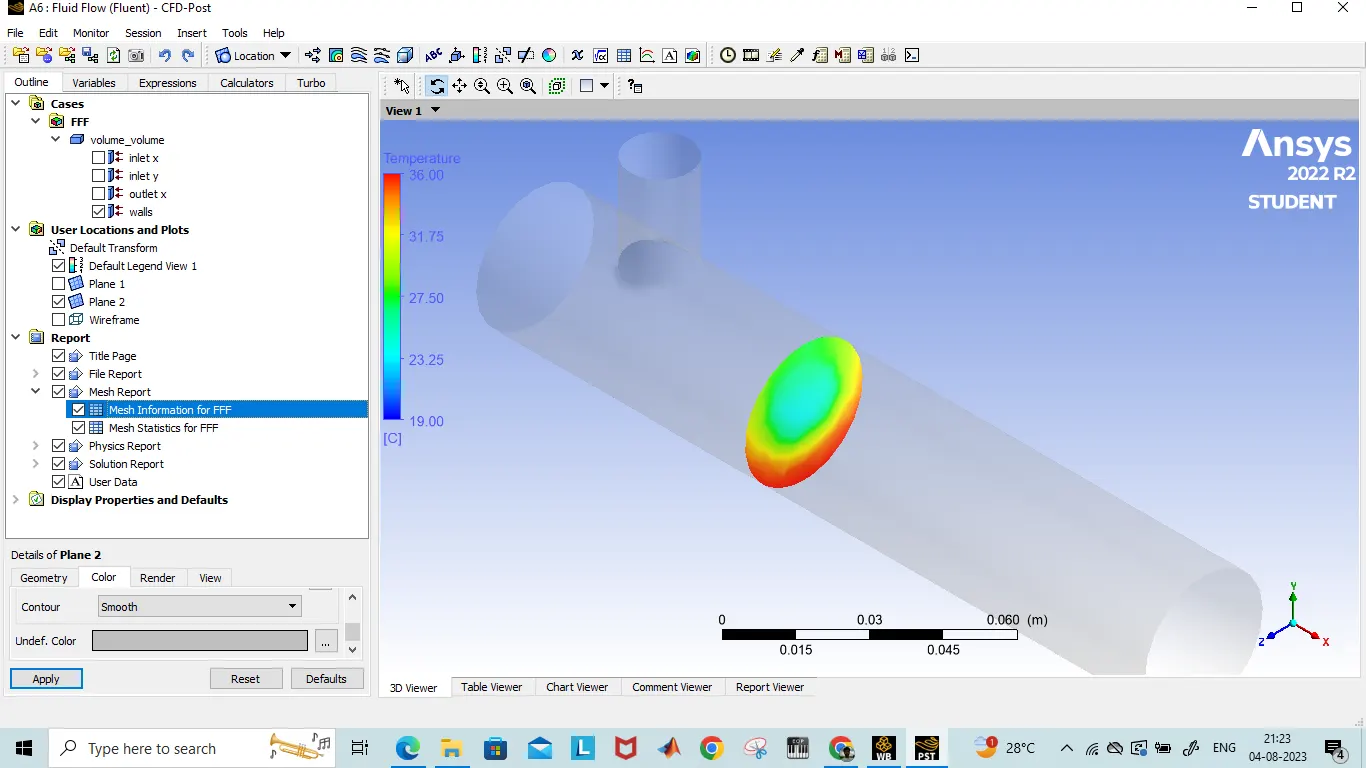
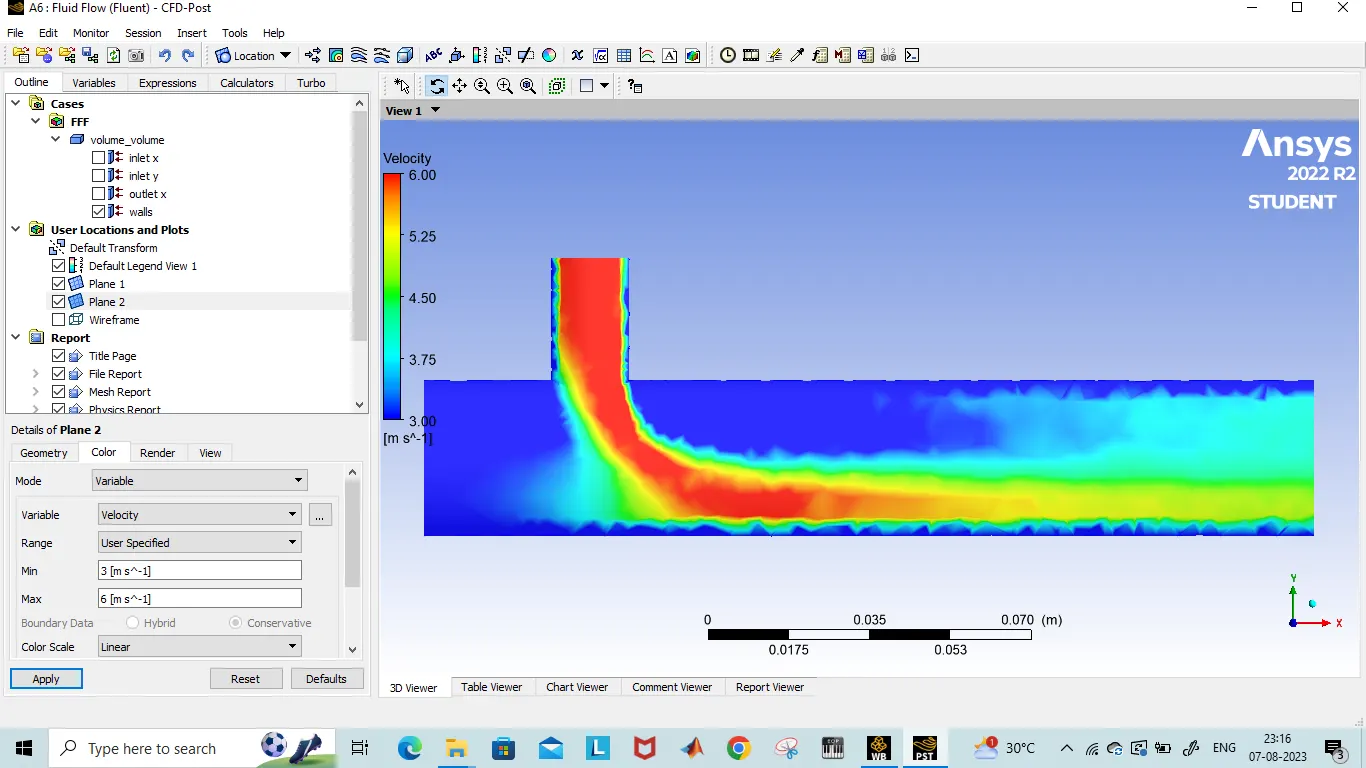
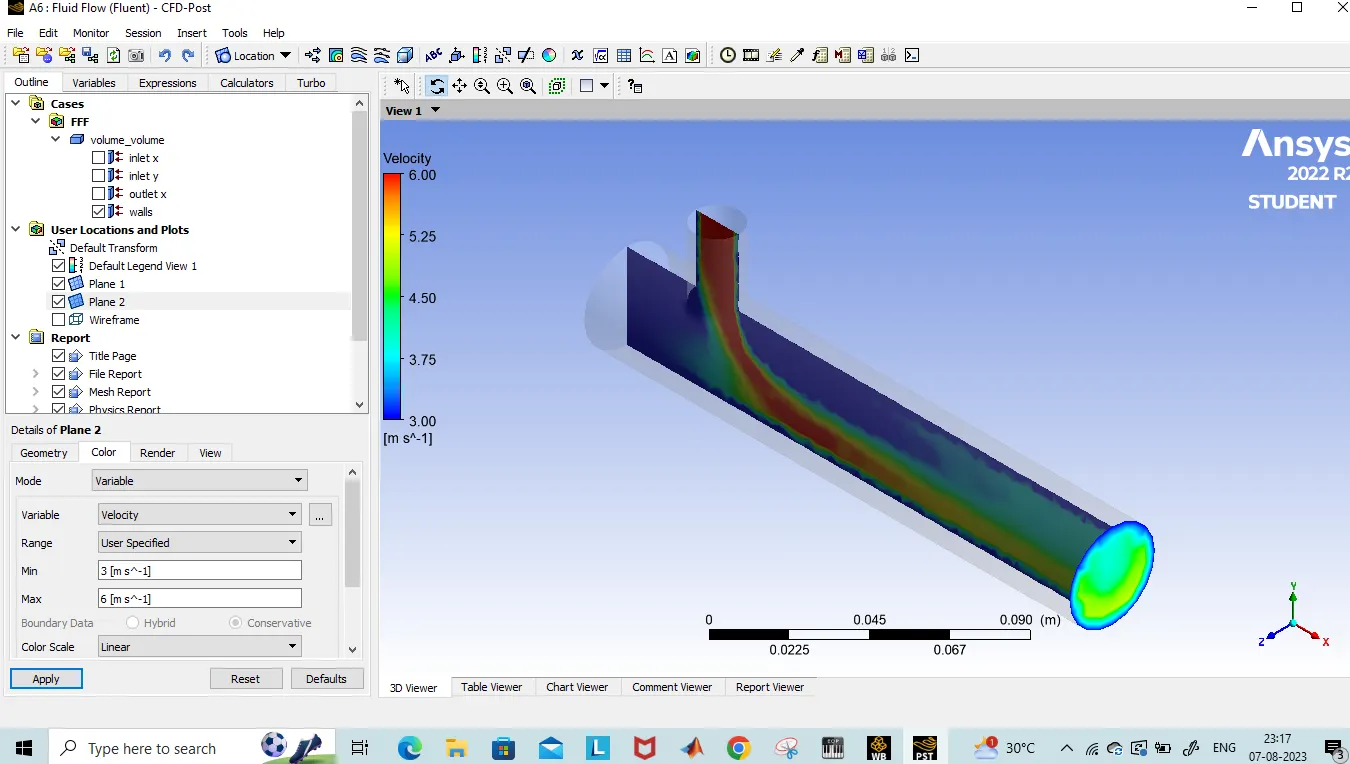
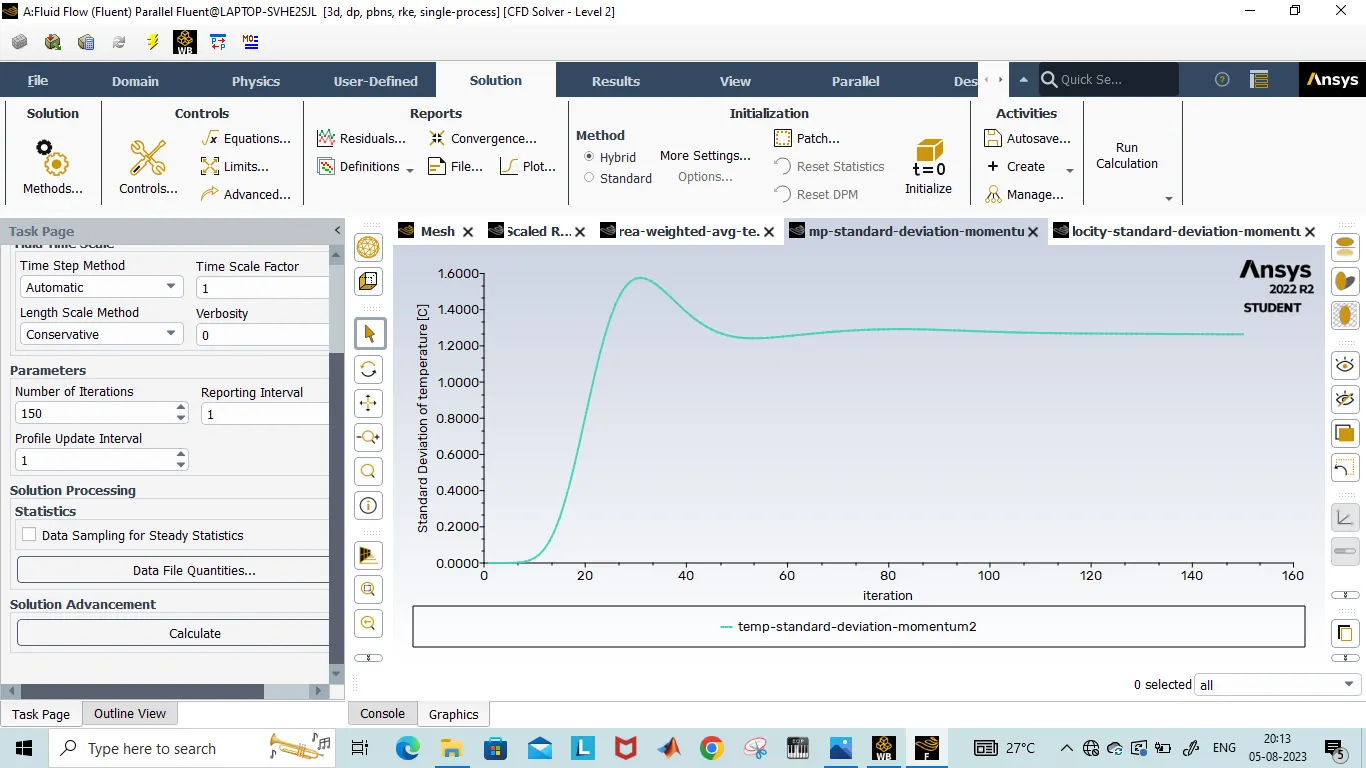
SOLUTION AND RESULT PLOT FOR MOMENTUM RATIO 2
SOLUTION AND RESULT PLOT FOR MOMENTUM RATIO 4
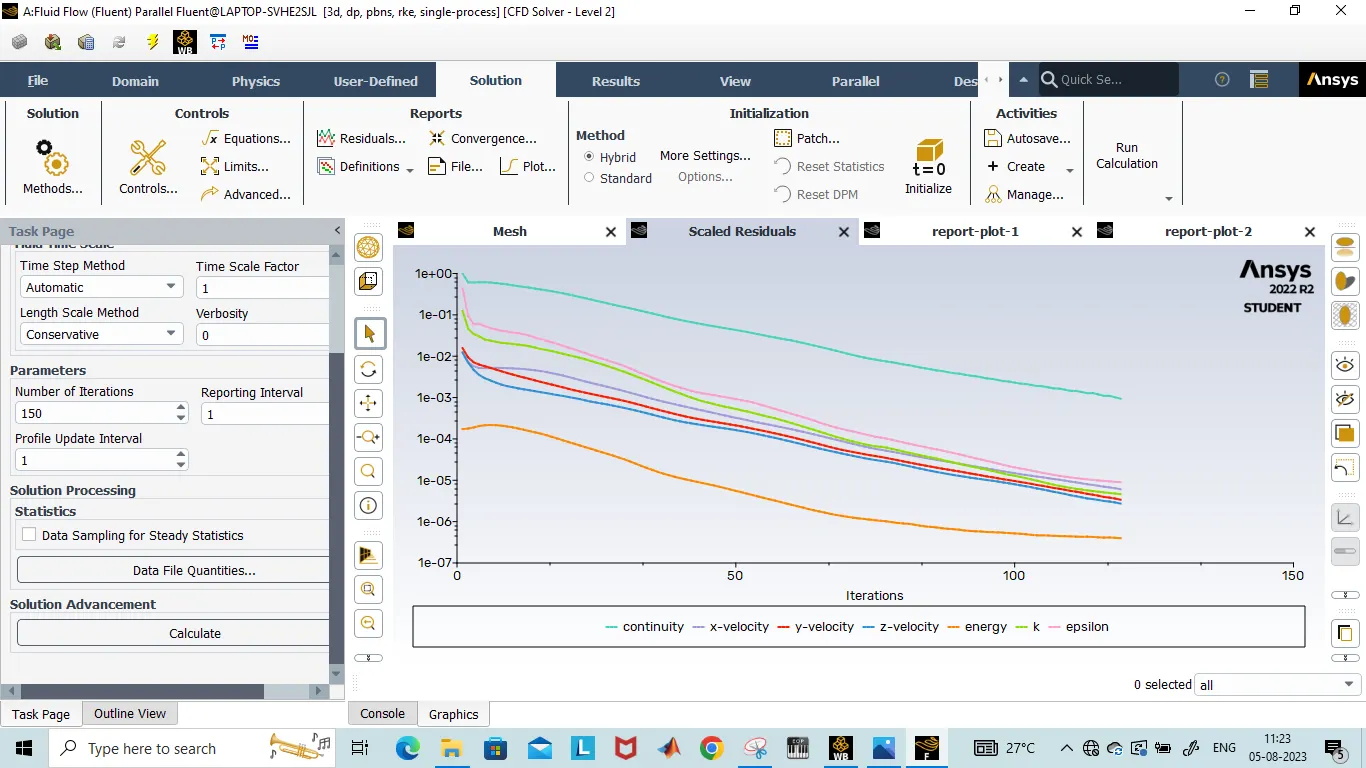
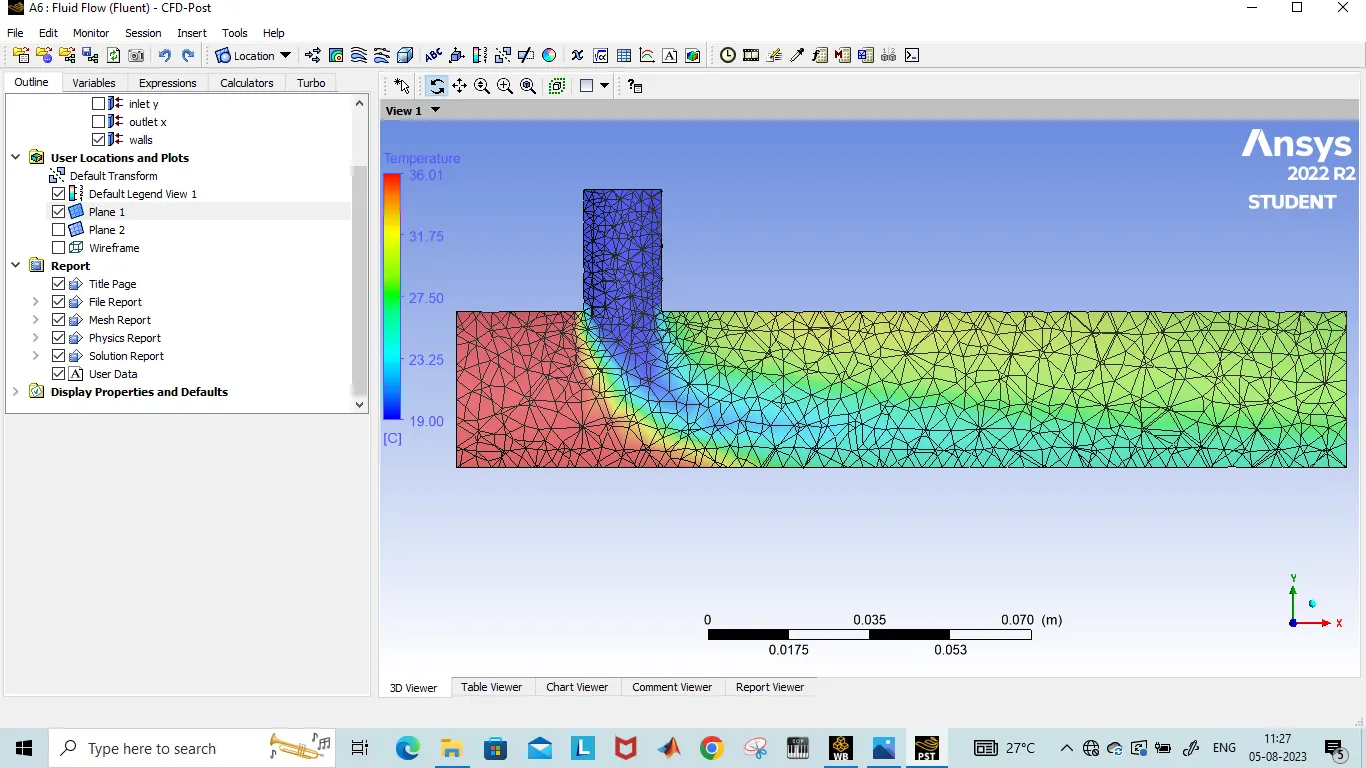
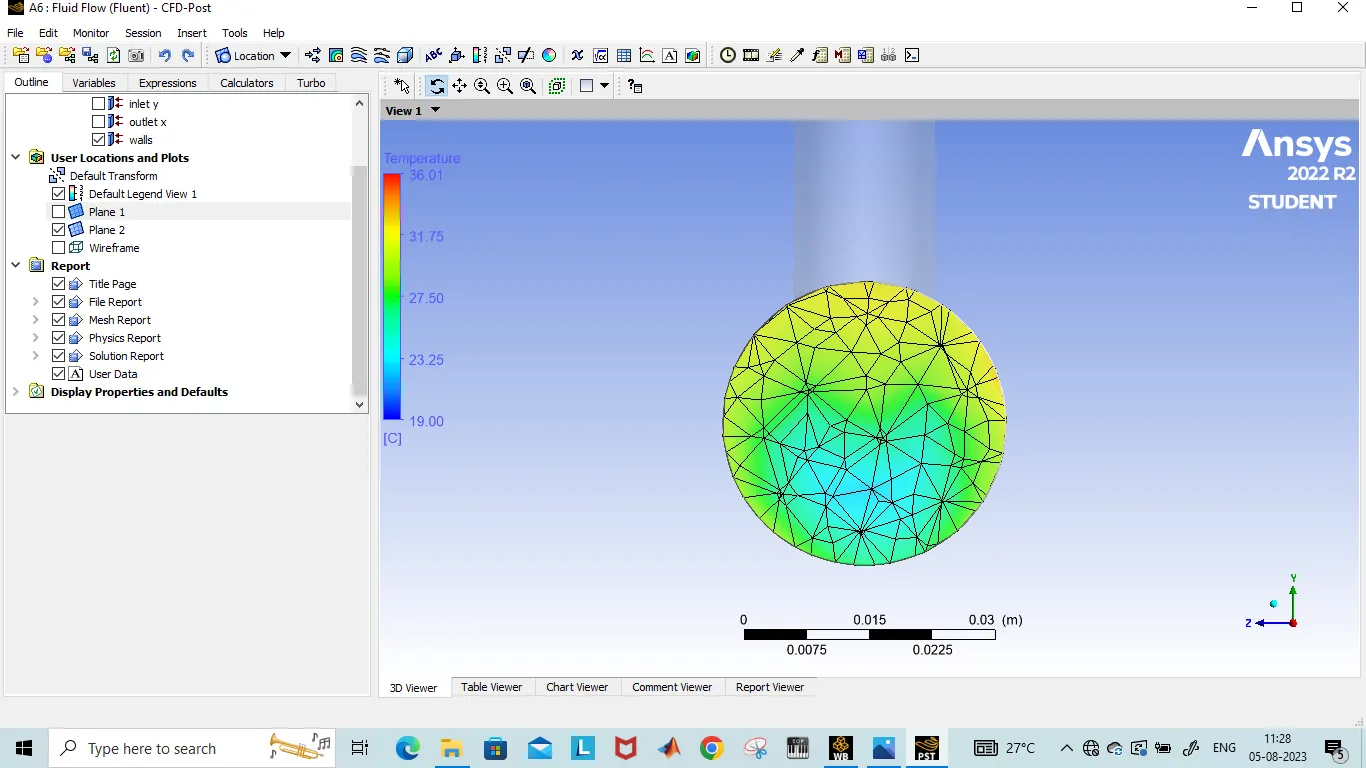
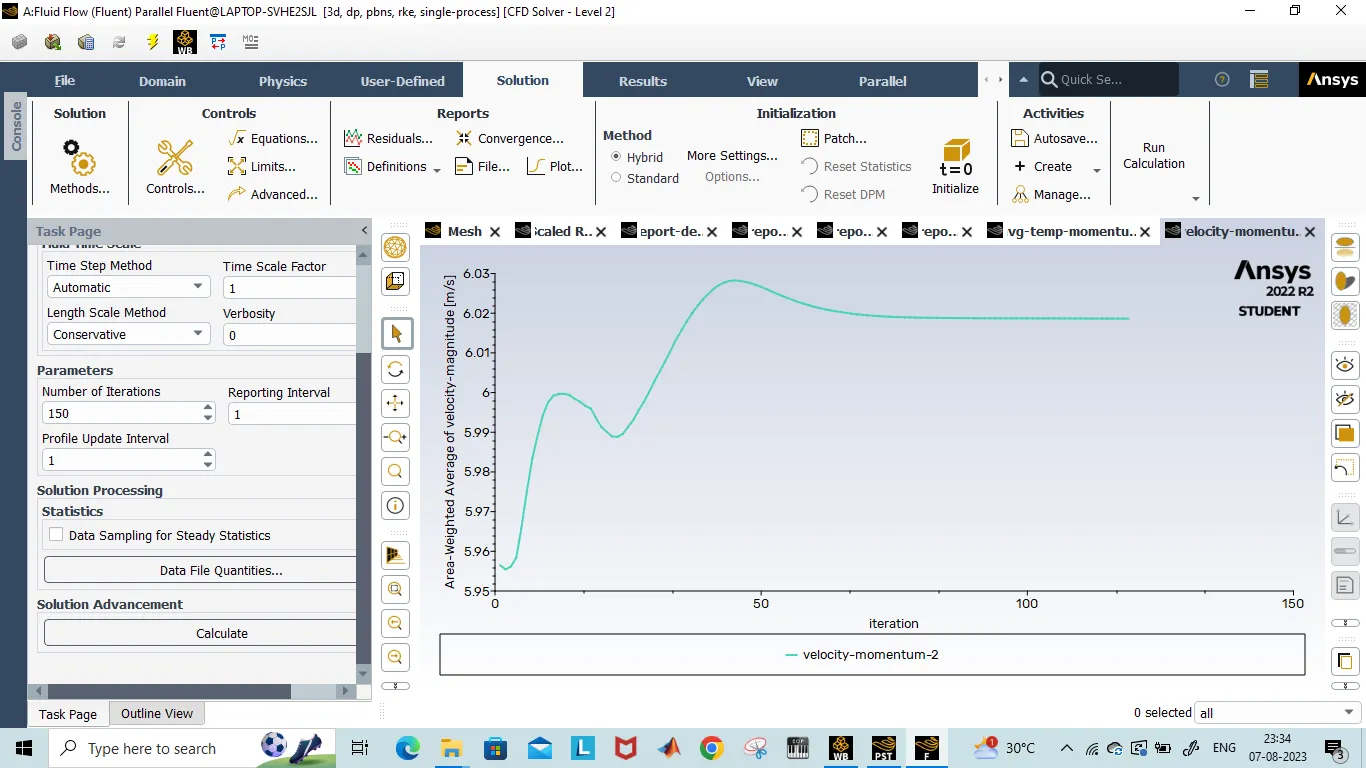
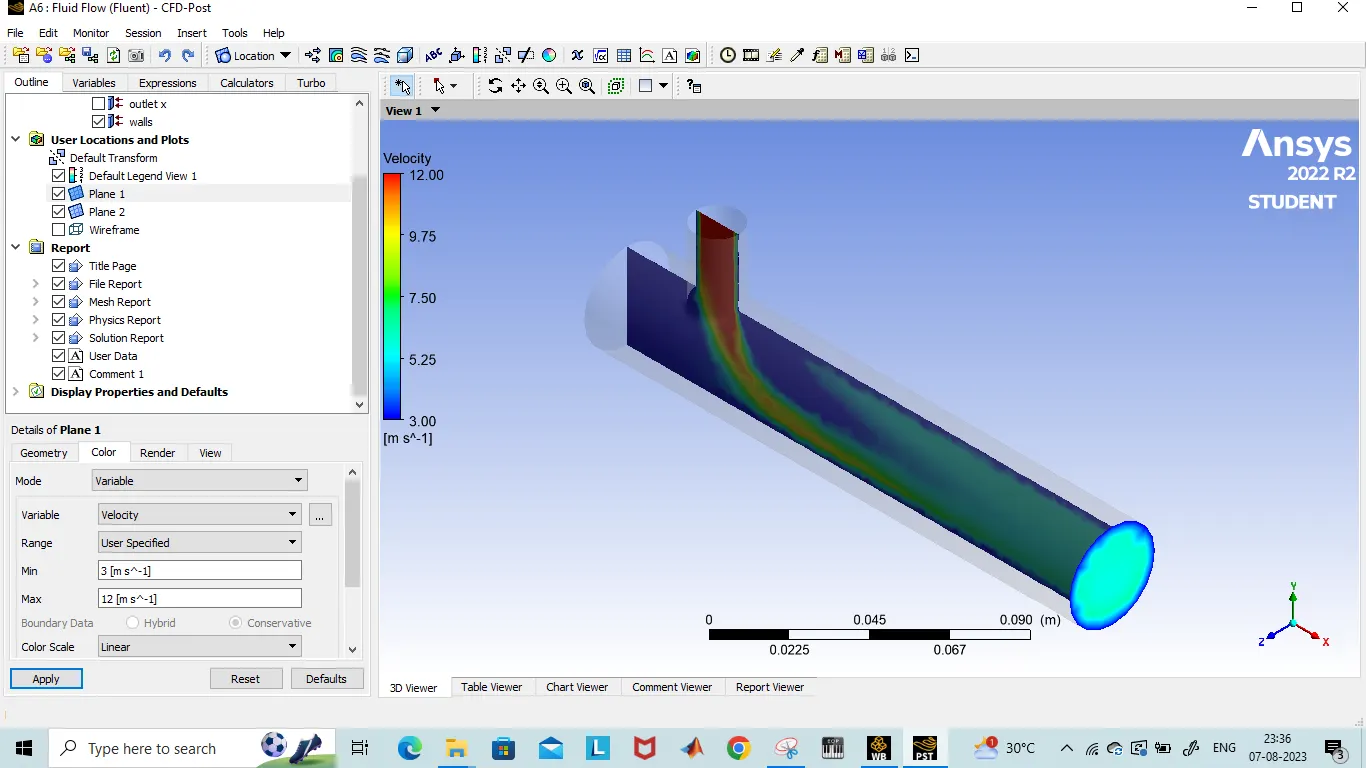
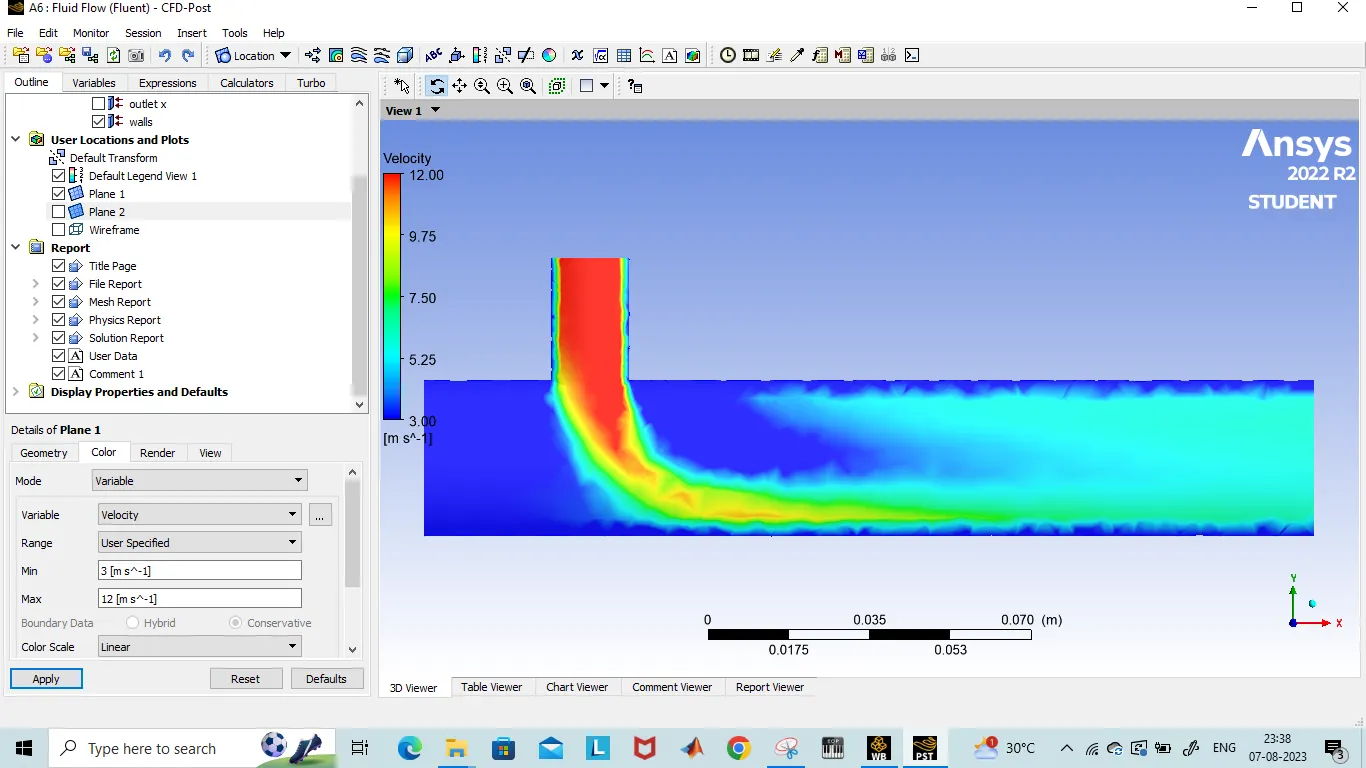
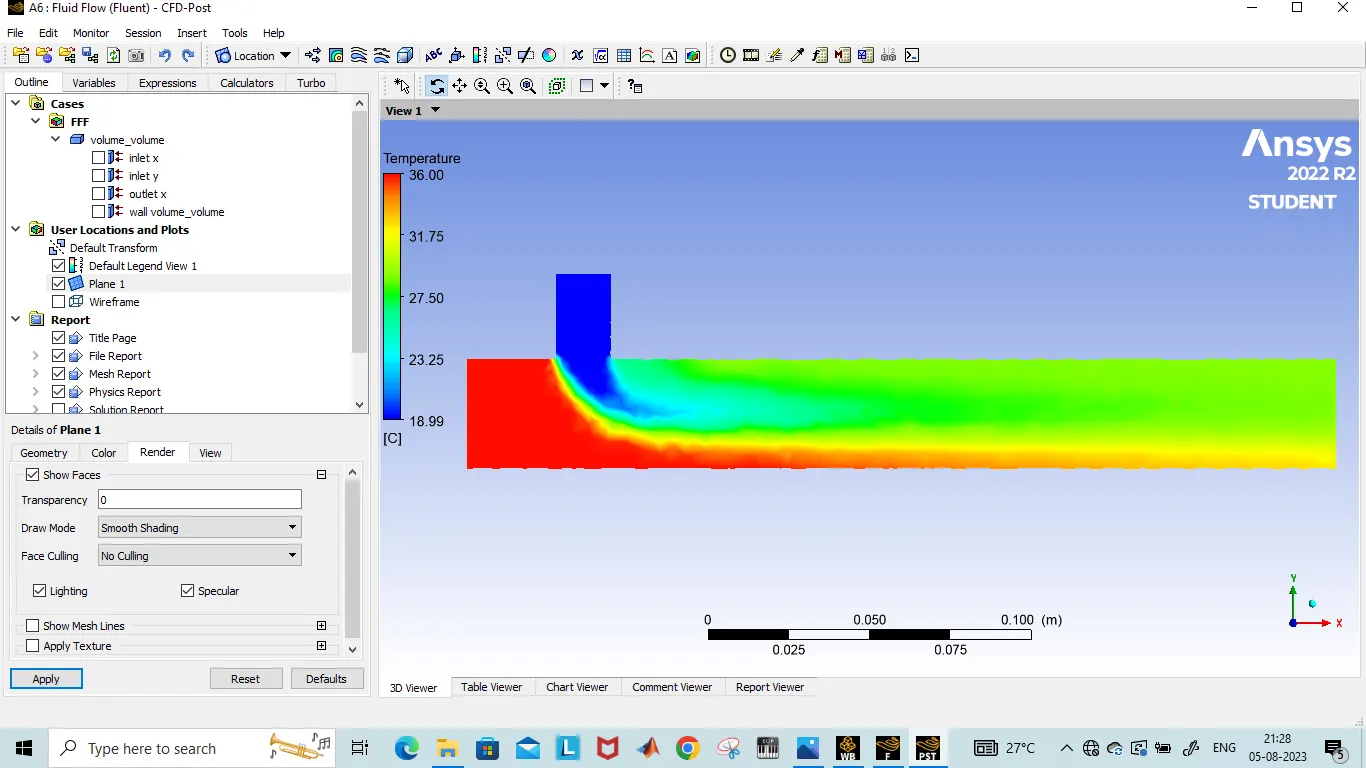
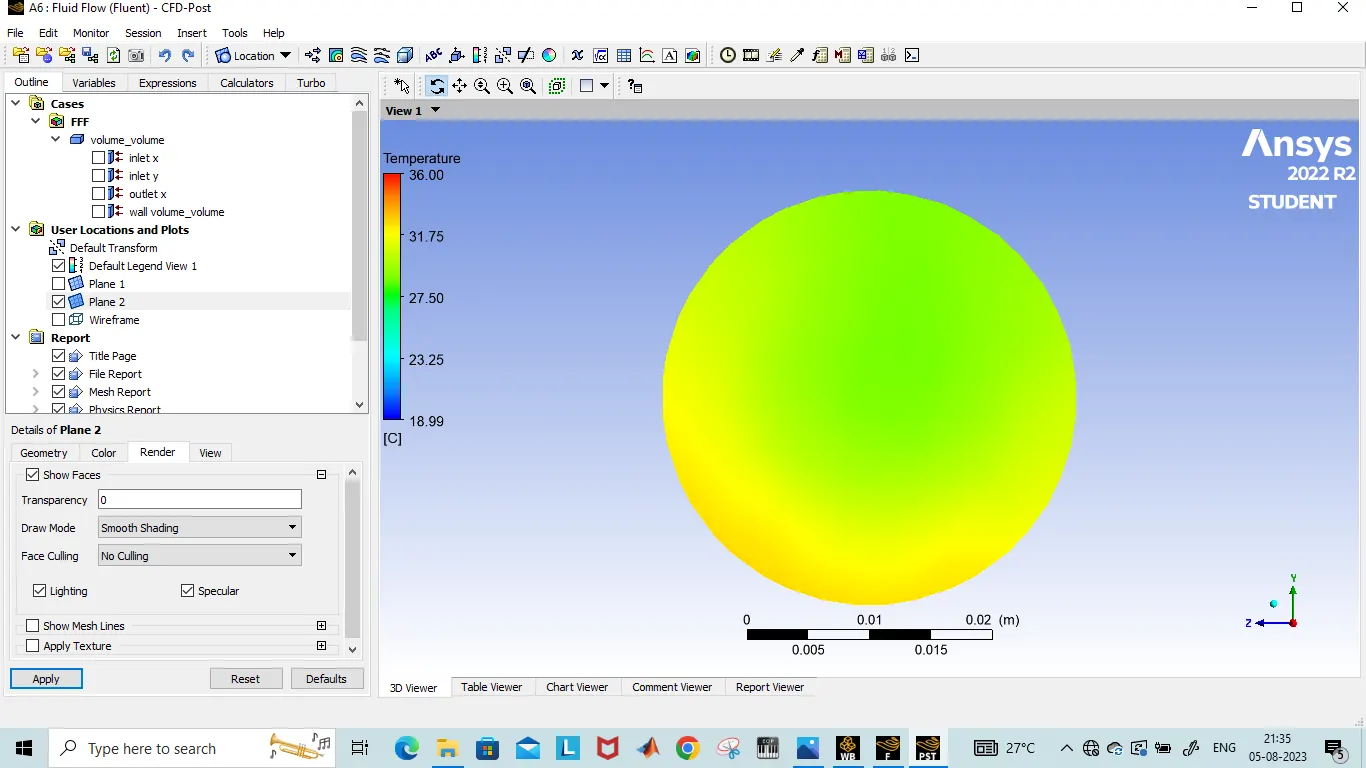
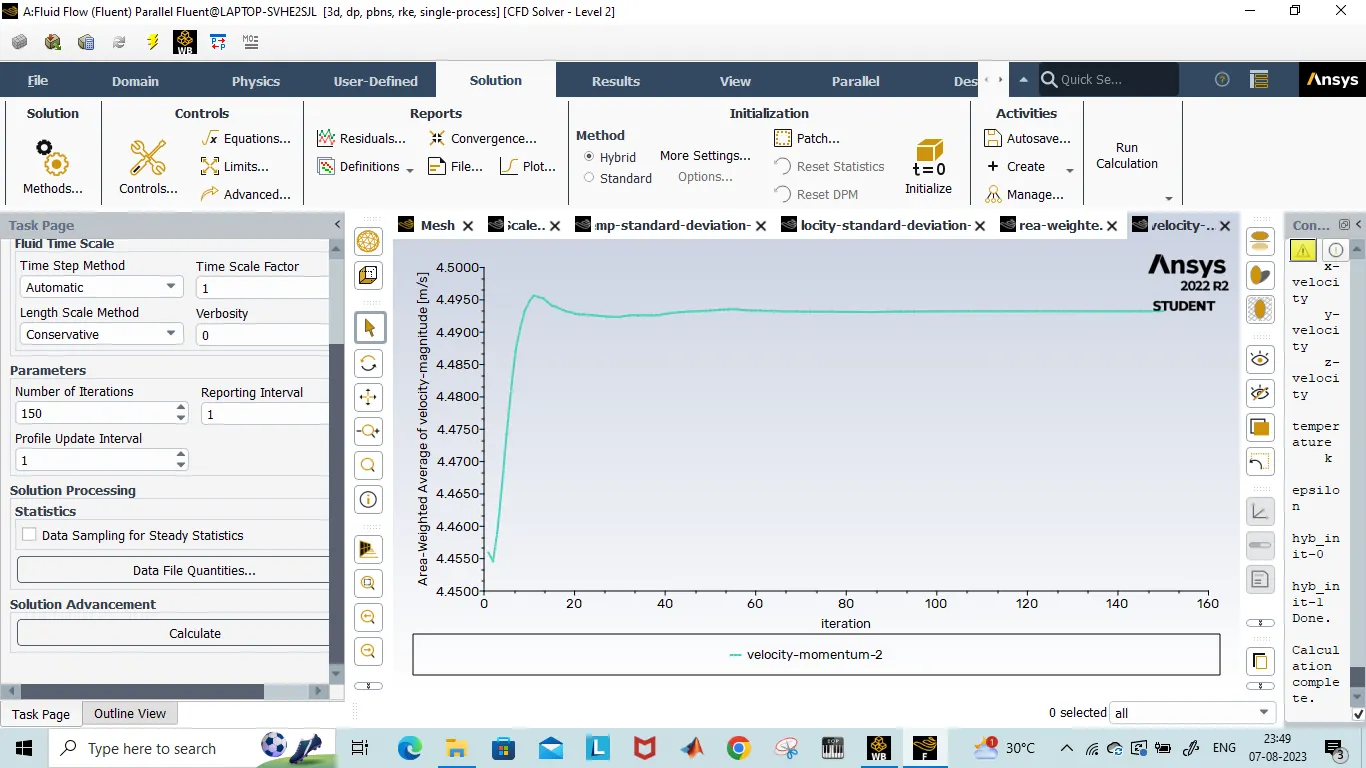
- By comparing two momentum ratios, momentum ratio 4 has a better mixing pattern than the momentum ratio 2 for short tee
CASE 2: LONG MIXING TEE WITH A HOT INLET VELOCITY OF 3M/S
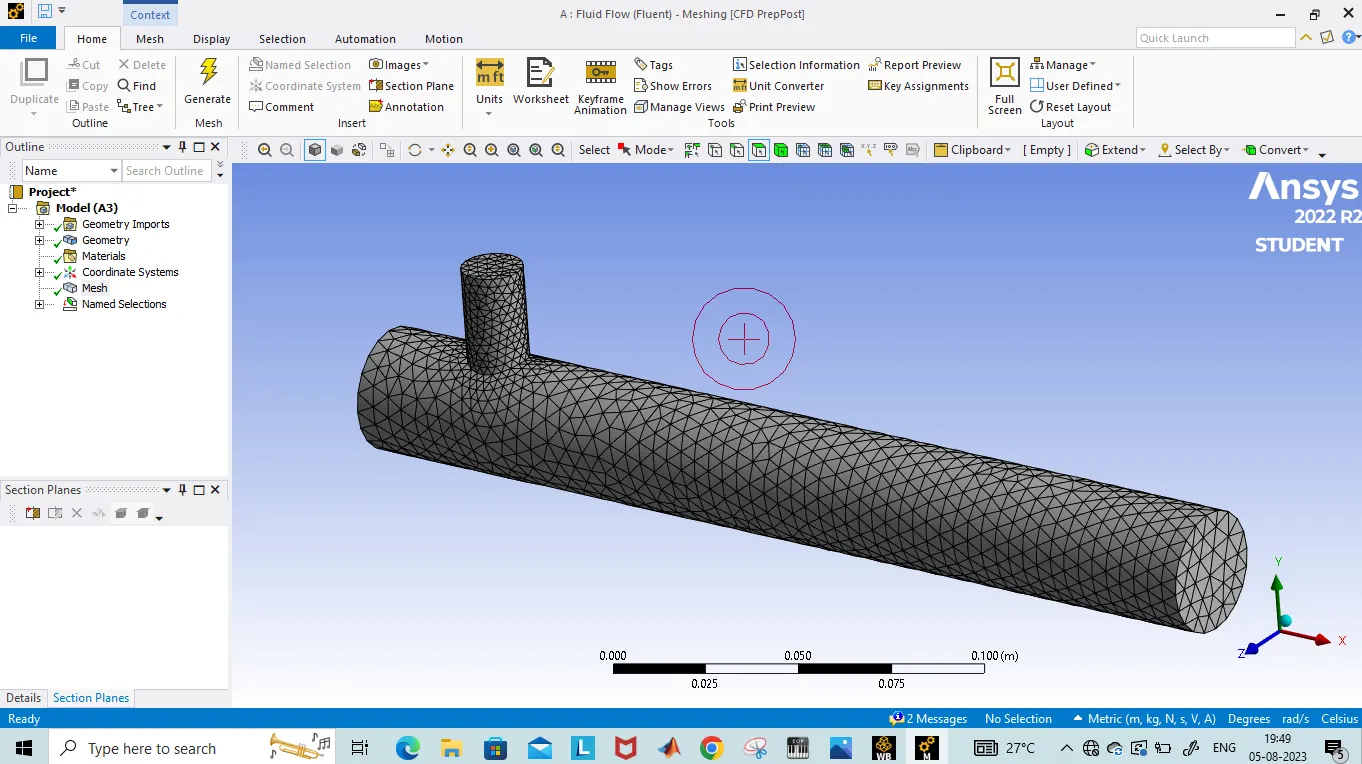
MESHING
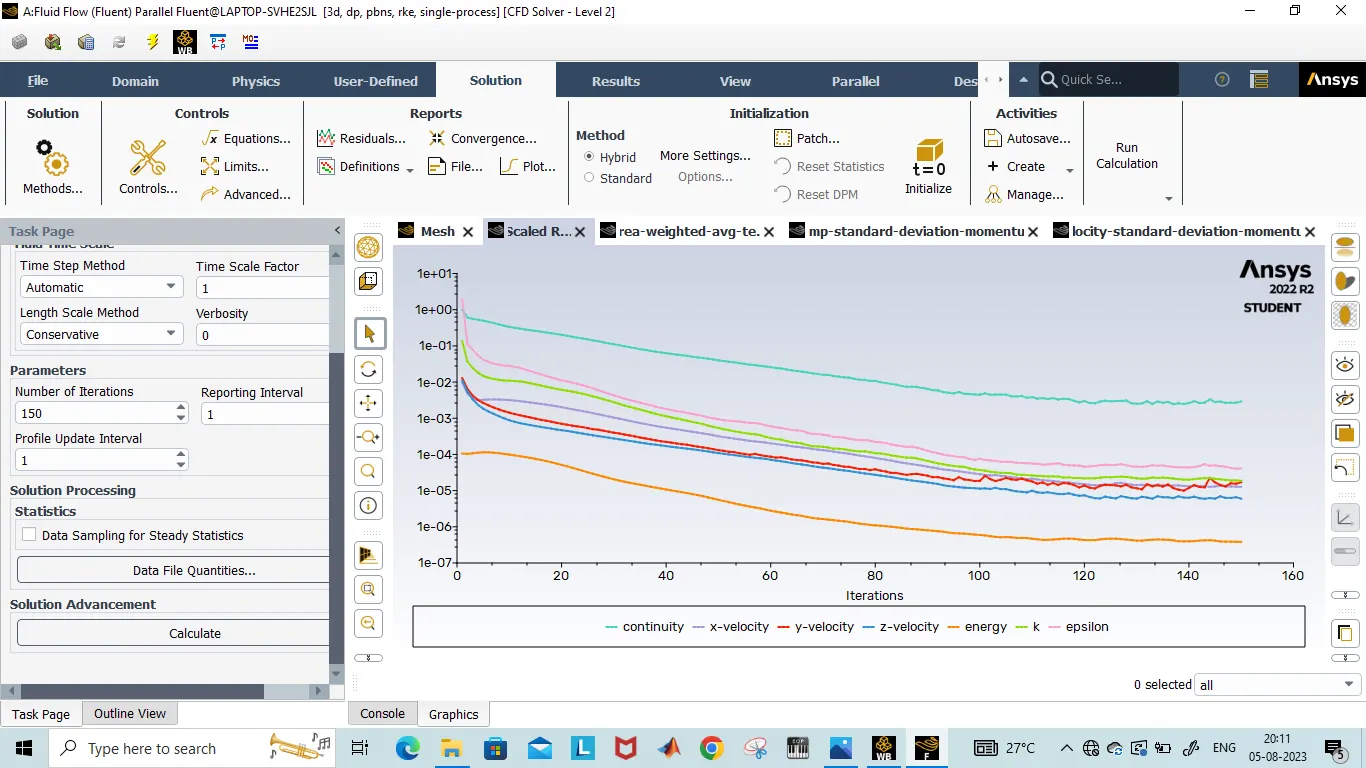
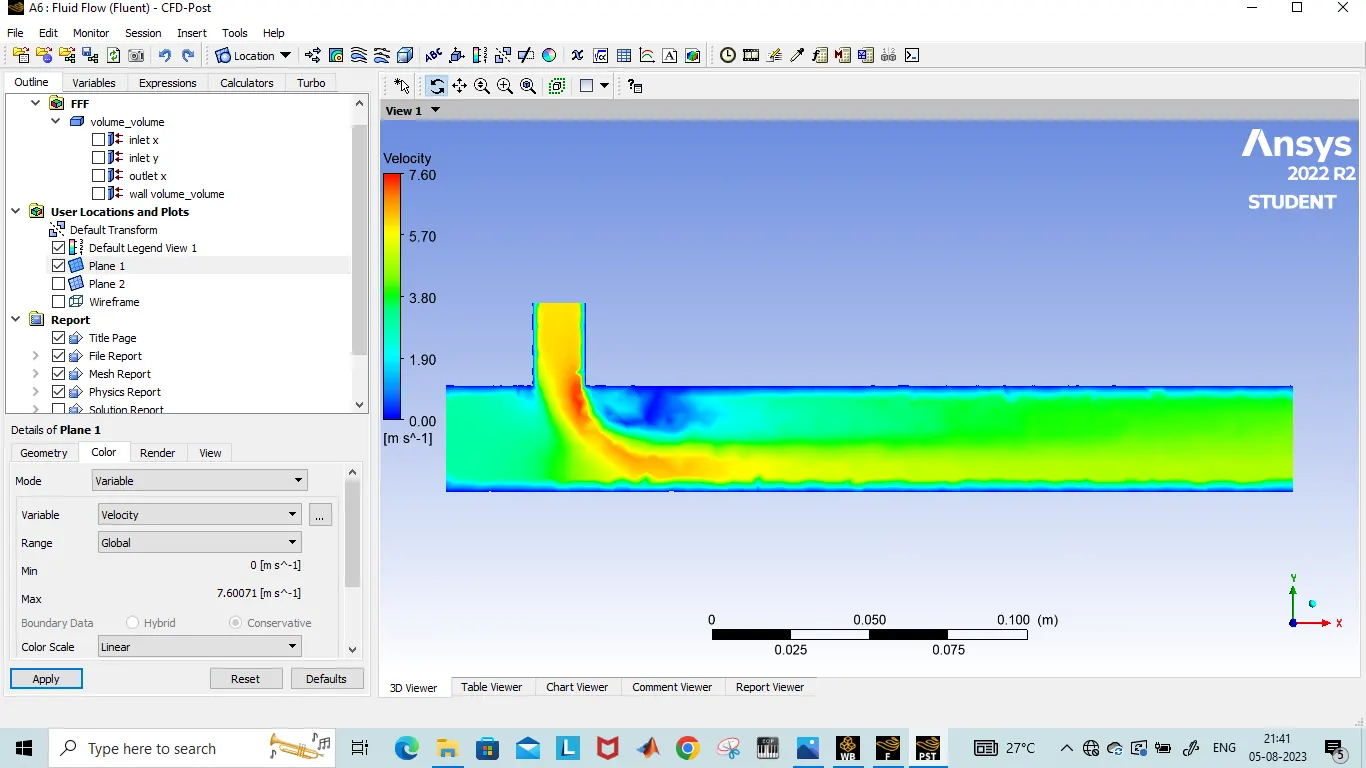
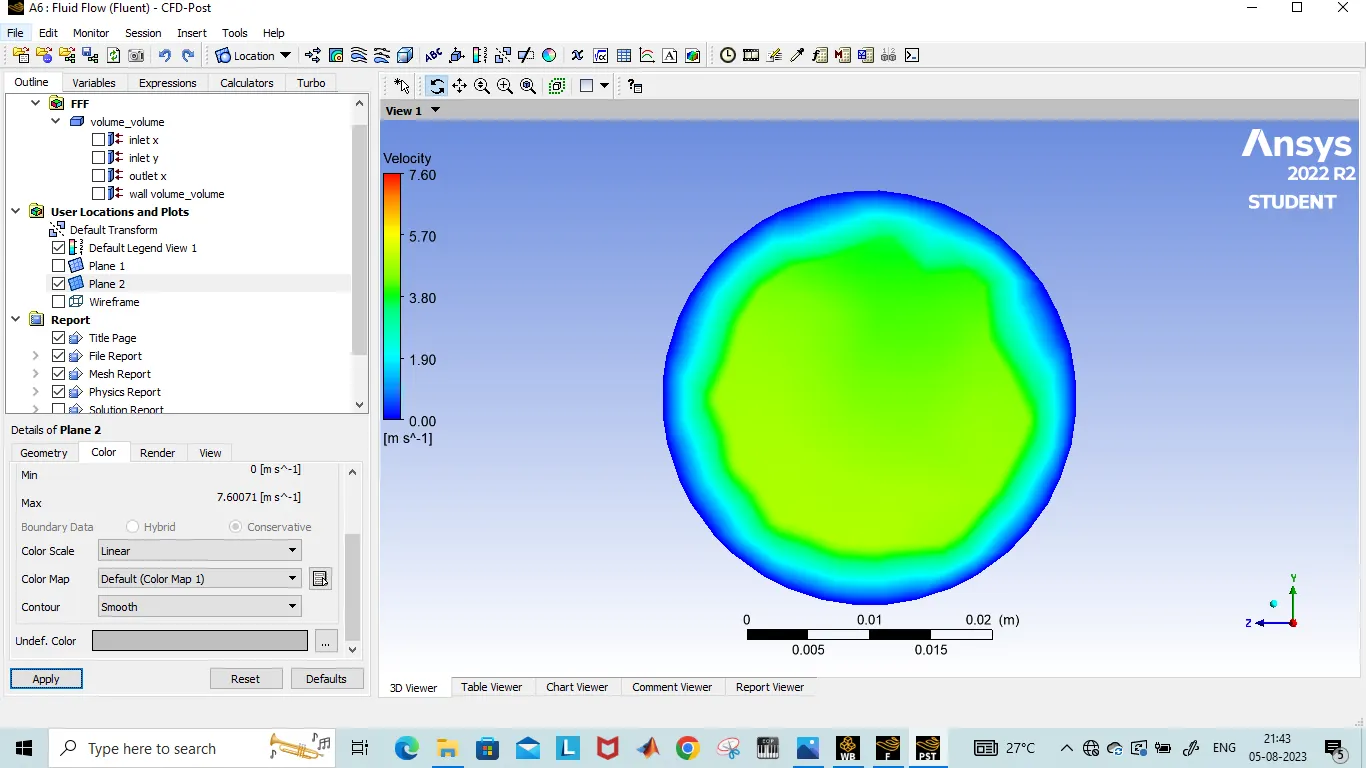
MOMENTUM RATIO 2
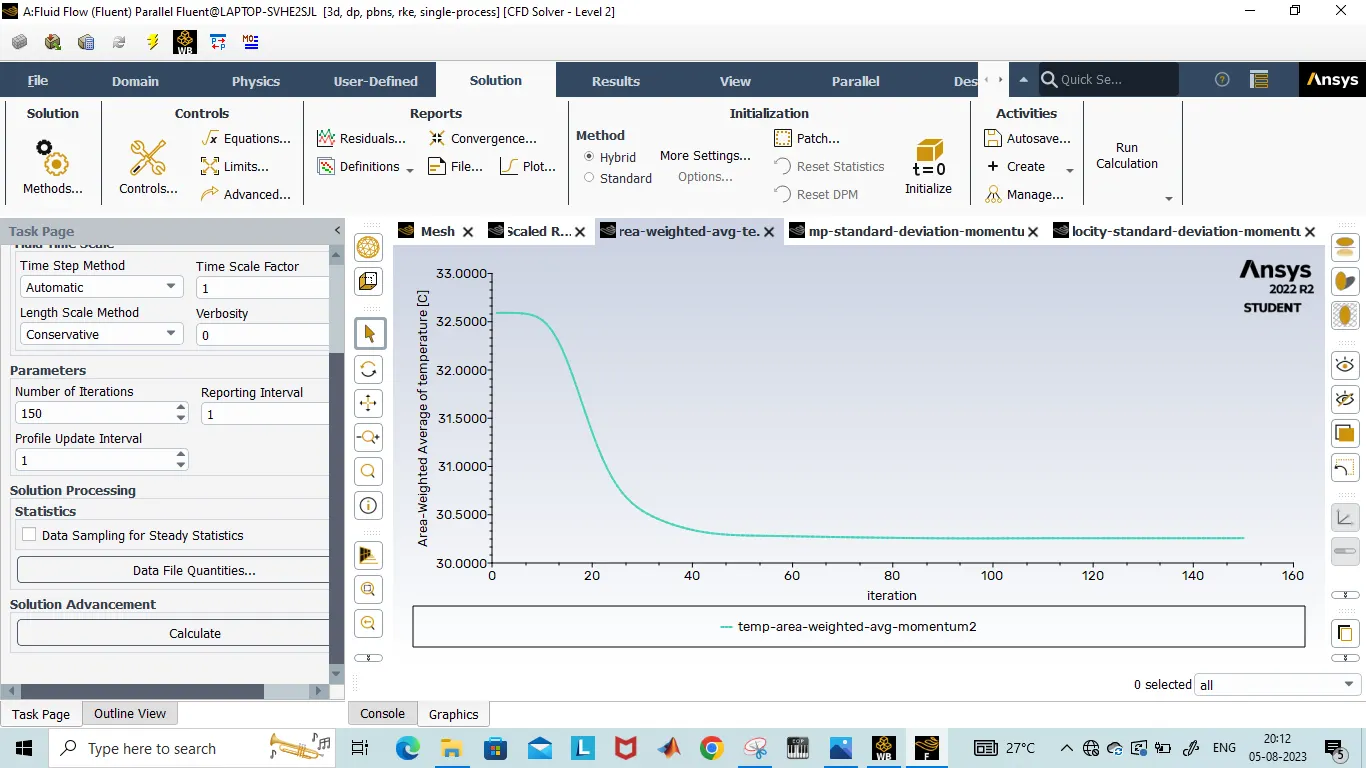
MOMENTUM RATIO 4:
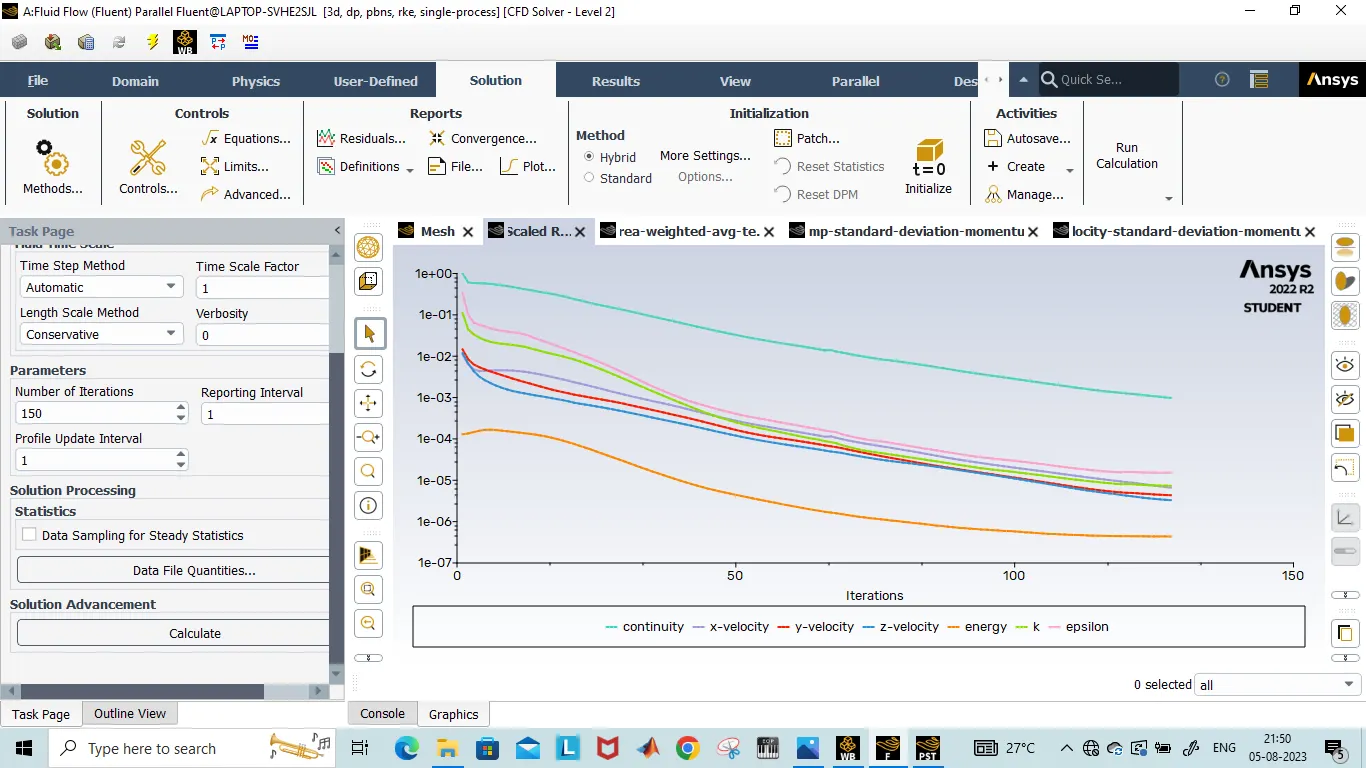
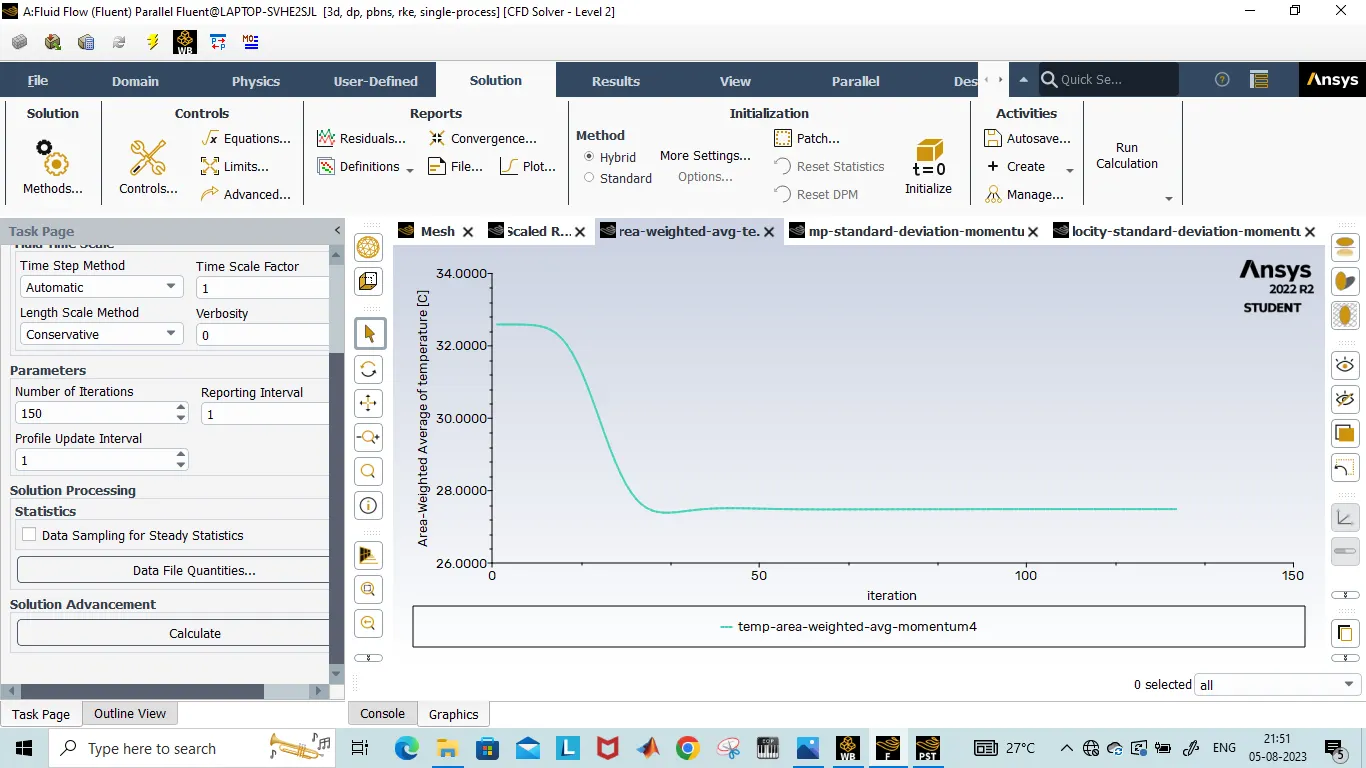
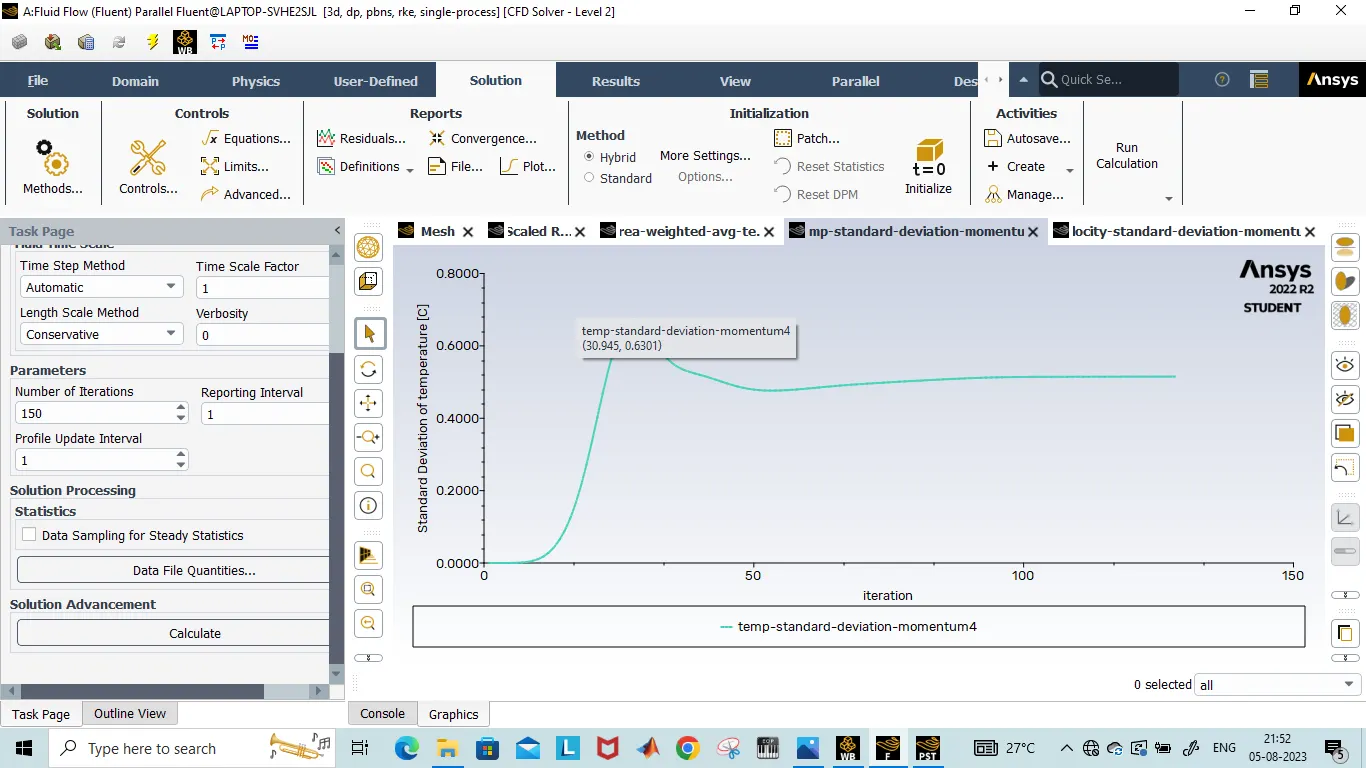
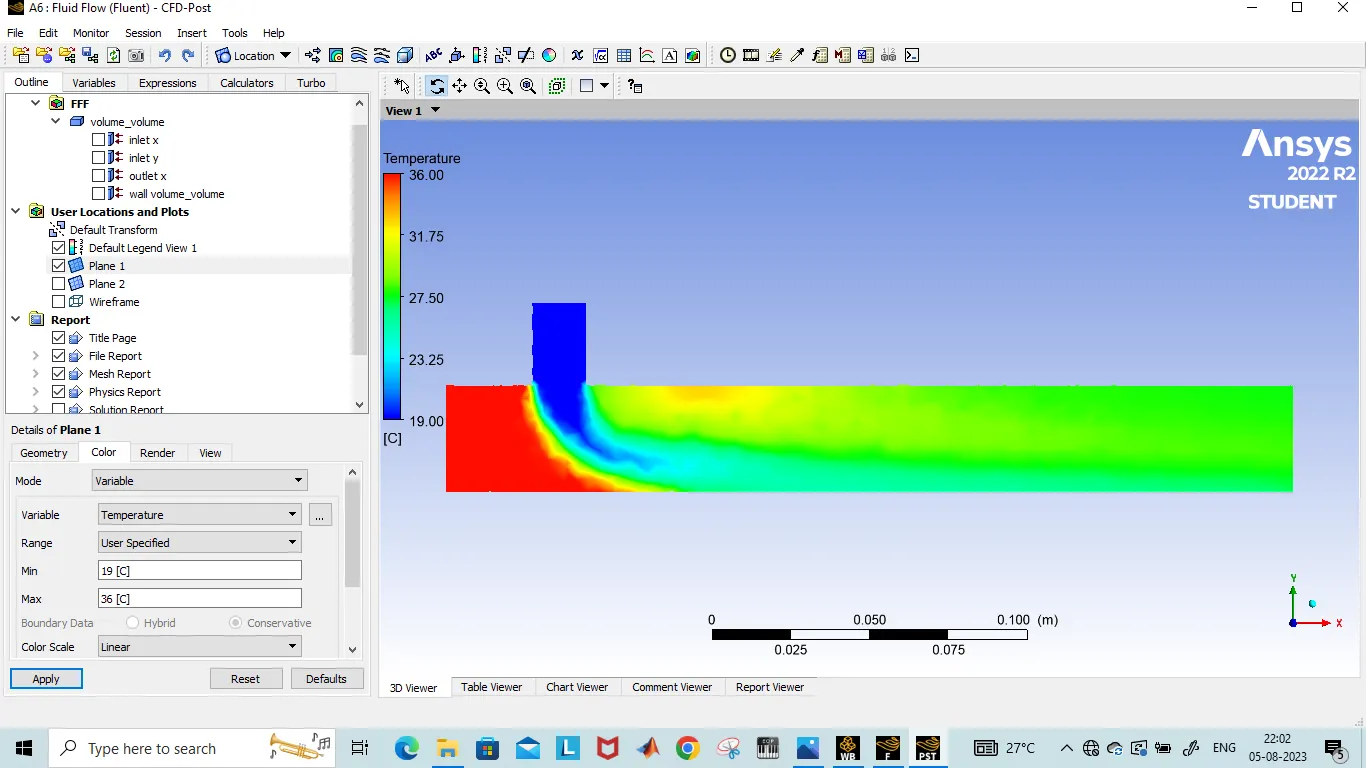
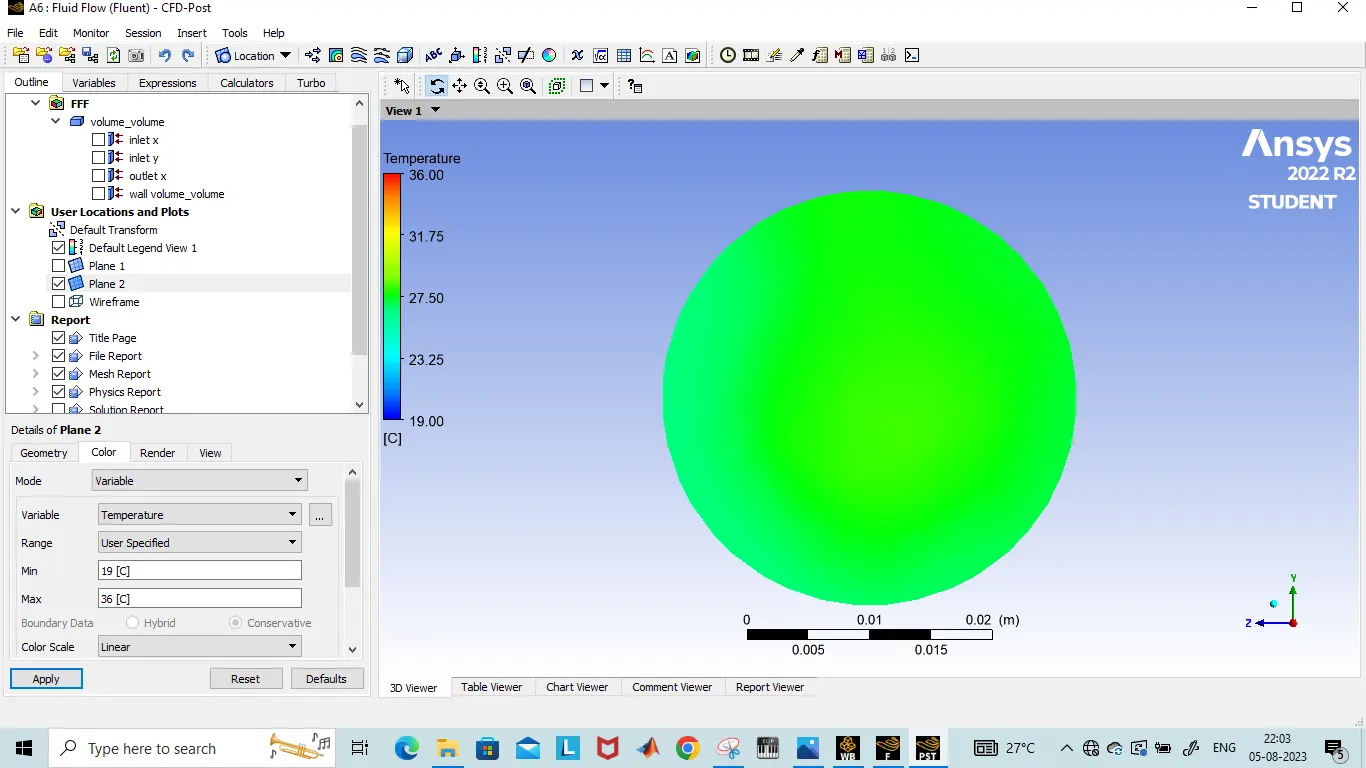
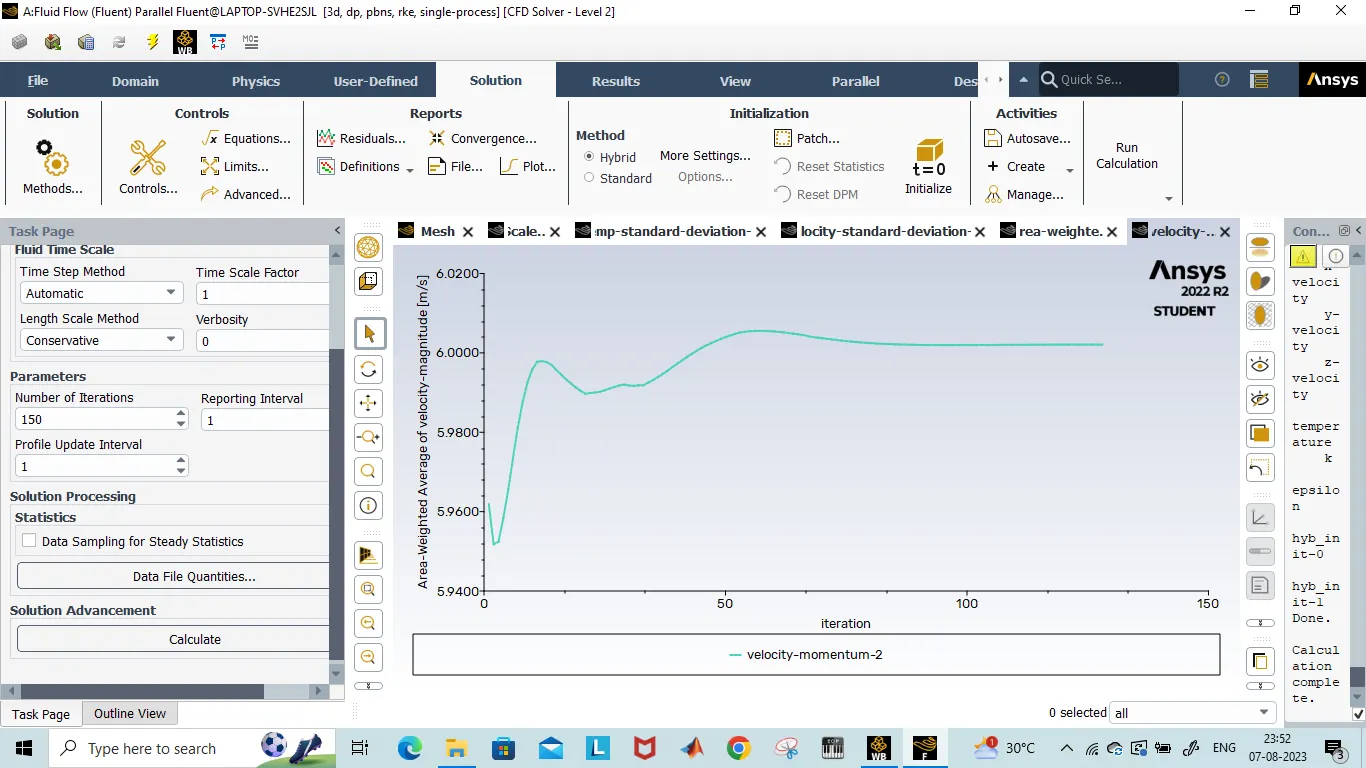
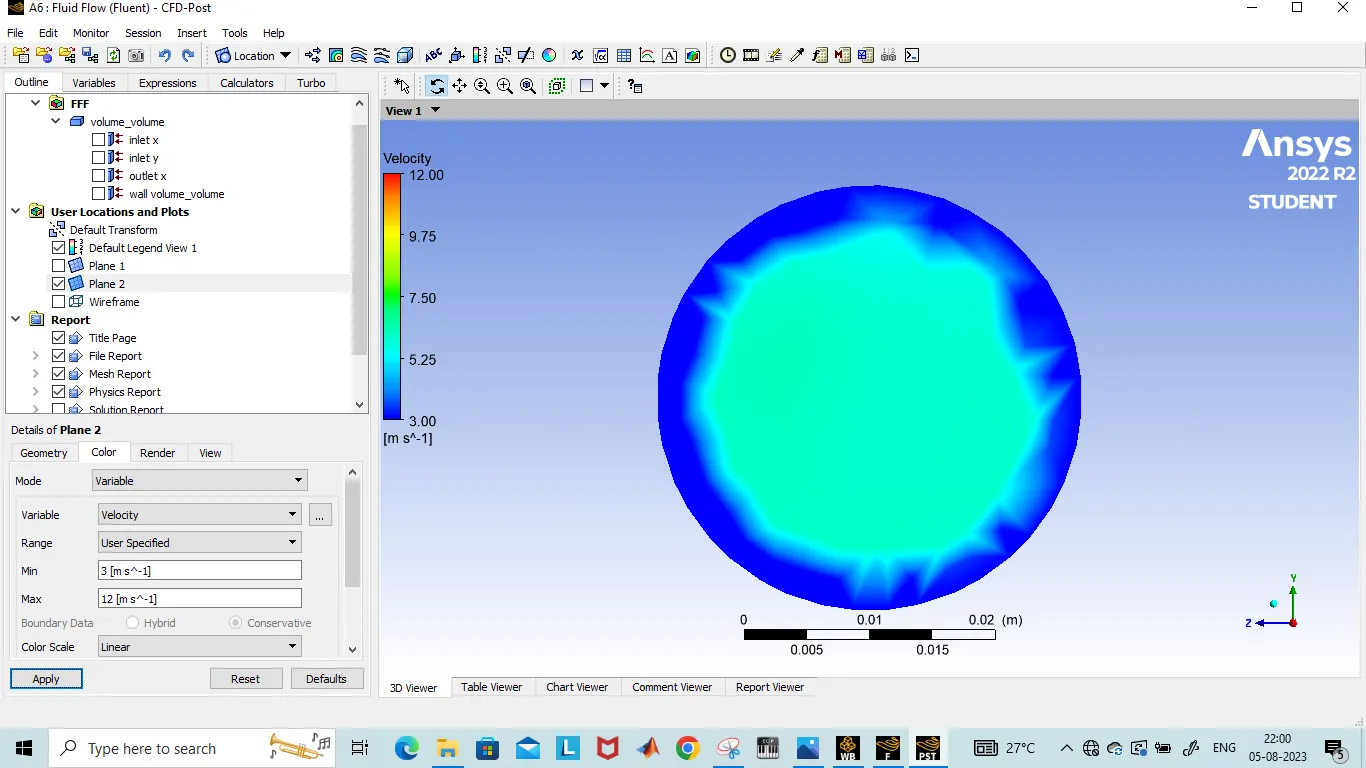
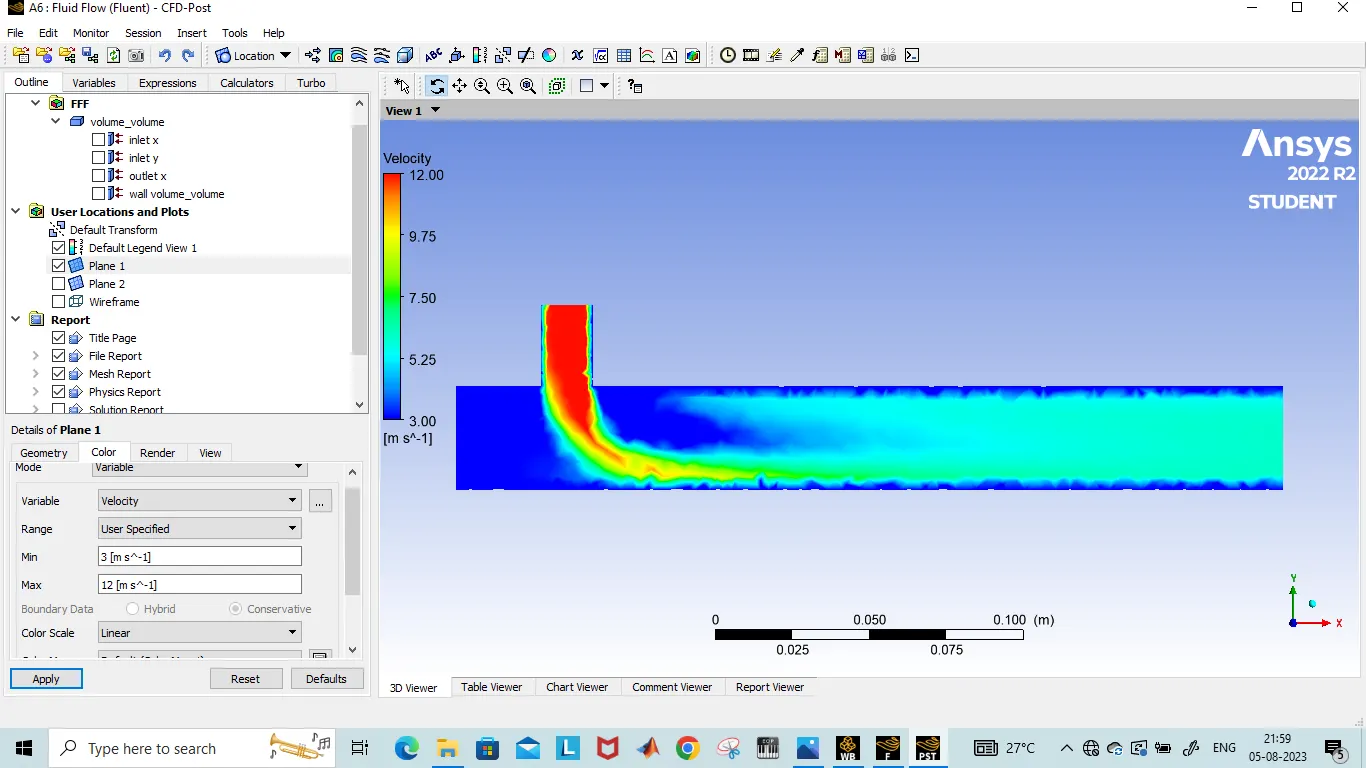
- By comparing two momentum ratios, the momentum ratio 4 has a better mixing than the momentum ratio 2 for long tee
CONCLUSION:
- As I observe from the above plots, the length difference of two pipes (short and long) doesn't make much difference in the result. But momentum ratio makes a huge difference in the result. The momentum ratio 4 has a quick and better convergence when compared with momentum ratio 2. Finally, If the momentum ratio increases, the cooling effect will also increase.
TABLE NO1:
| S.NO |
PARAMETERS |
SHORT PIPE |
LONG PIPE | ||
| MOMENTUM RATIO 2 | MOMENTUM RATIO 4 | MOMENTUM RATIO 2 | MOMENTUM RATIO 4 | ||
| 1 | Cell count | 12783 | 15727 | ||
| 2 | Average outlet temperature | 30.20*C | 27.51*C | 30.27*C | 27.48*C |
| 3 | Number of iteration for convergence | 47.06 | 34.46 | 47.90 | 40.73 |