Week 1- Mixing Tee
AIM:
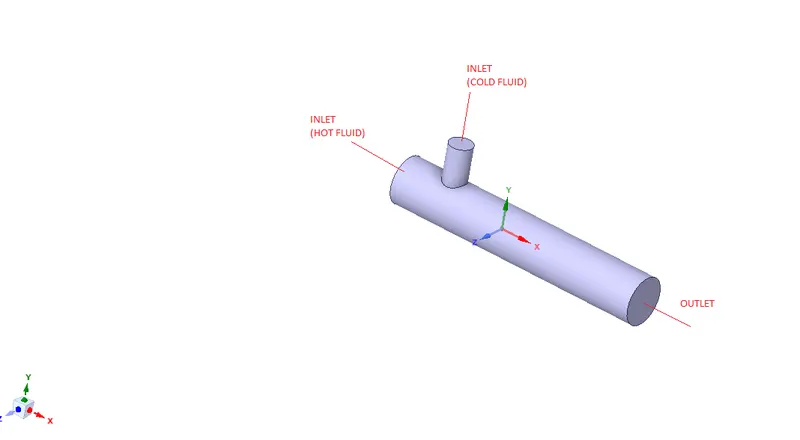
To simulate the diffusion of hot and cold fluids and compare mixing effectiveness using ANSYS workbench to solve when hot liquid at 36deg C flows through the main pipe and cold fluid at 19degc enter at the branch connection to the main pipe.
INTRODUCTION:
Turbulent mixing of different fluids at different temperatures has become more significant in the field of petrochemical, Oil & gas, and nuclear industries. For this importance, it is required a detailed study of thermal fatigue stress at the pipe walls and at the T junctions.
CASE 1- SHORT TEE
a) For inlet velocity of 3m/s and momentum ratio of 2
Procedure:
1. Geometry setup:
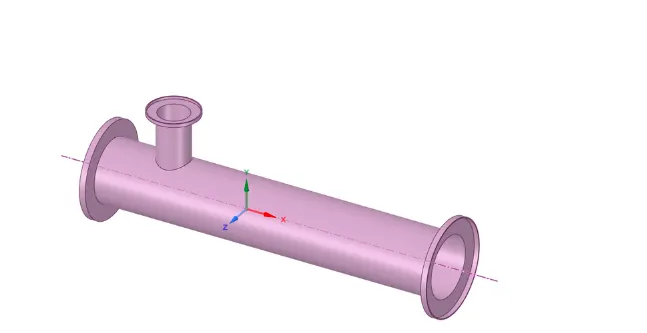
Import the given geometries of short tee & long tee into the space claim of the Ansys workbench module.
the geometry of the short tee is as follows:
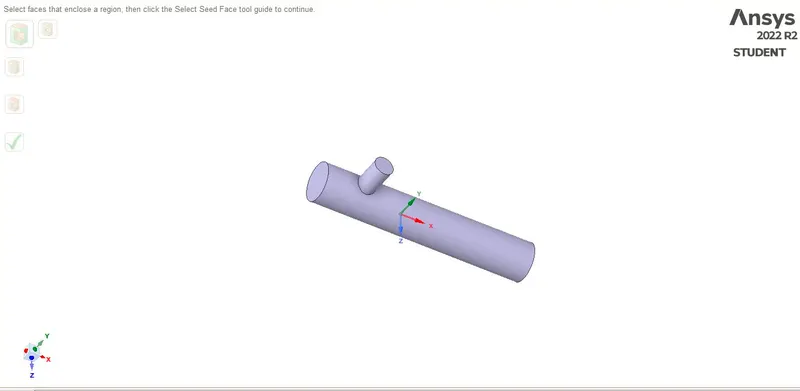
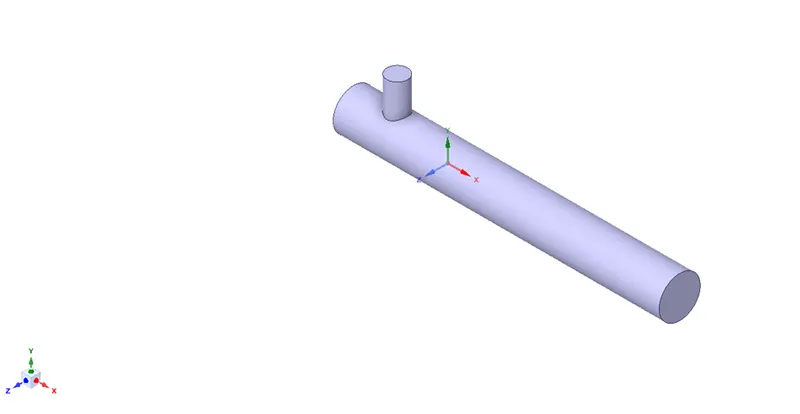
To simulate the mixing effect at the T junction, extract fluid volumes
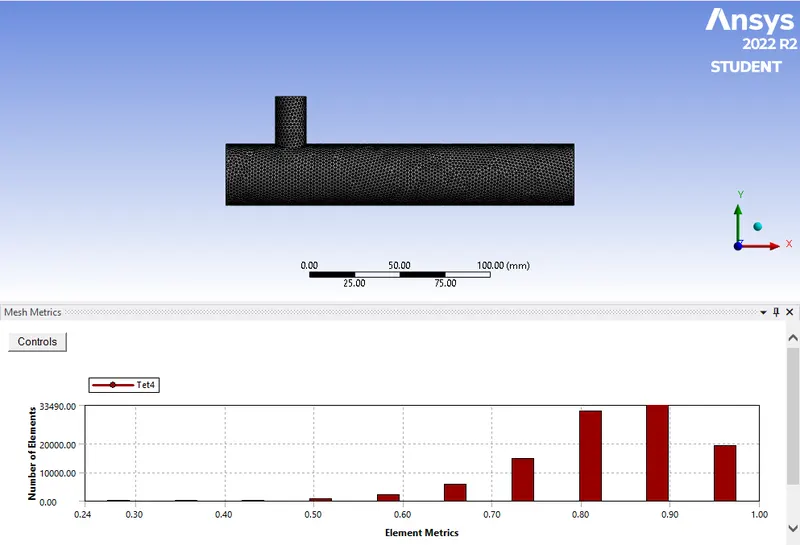
2. Mesh Generation:
Mesh size of 2mm
3. setup for Physics solver:
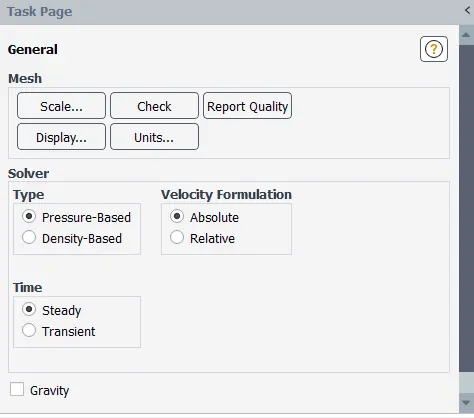
Click on pressure-based --> steady
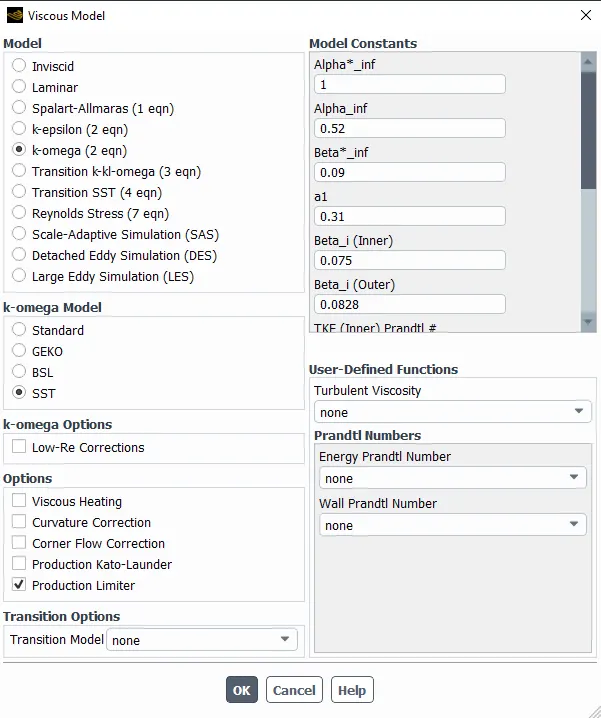
Click on Viscous model --> K-omega model
- Specify the material as air.
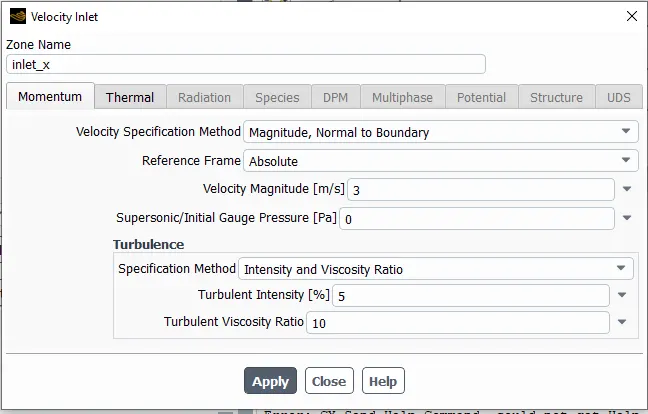
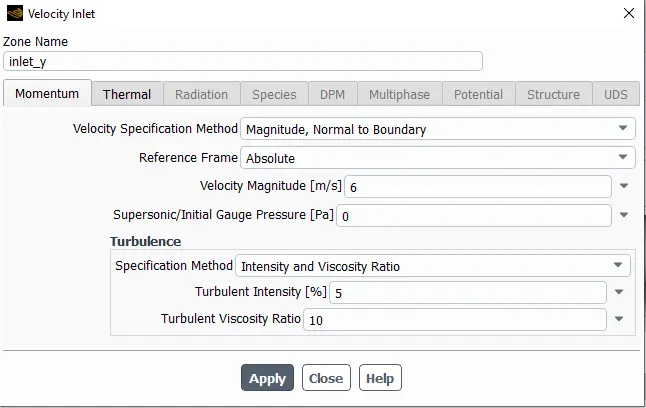
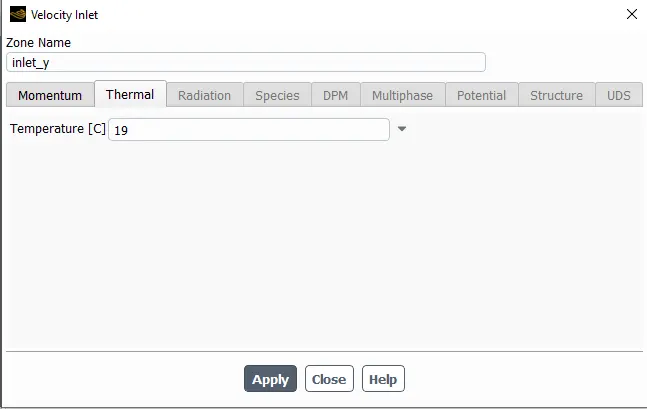
- for short-tee MR=2, define the boundary conditions as follows
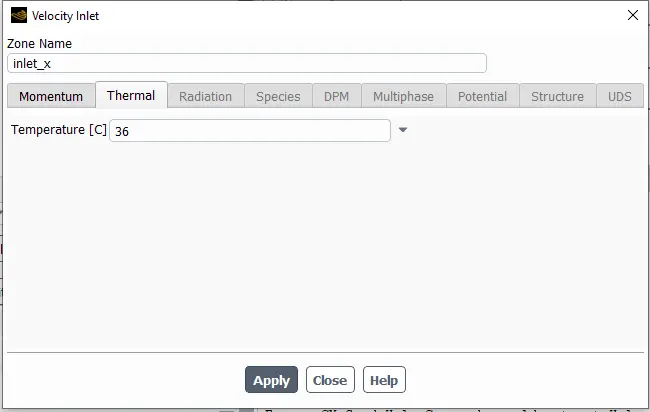
- for inlet_x temperature as 36degc and velocity=3m/s
- inlet_y temperature = 19degC , velocity = 6m/s
- Report definitions for Temp and standard deviation
- Initialize the solver with hybrid schemes.
- Set up the no of iterations to 300minimum. Click on calculate option.
4. POST-PROCESSING RESULTS
STEPS
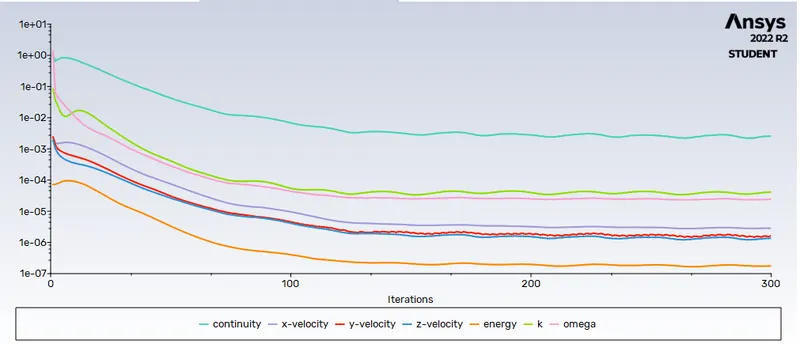
- After the computation ends check for graphical visualization for the interaction convergence rate, area-weighted temperature, and standard deviation plot at the outlet section.
Residual plot Case 1(a):
Temperature plot case 1(a):
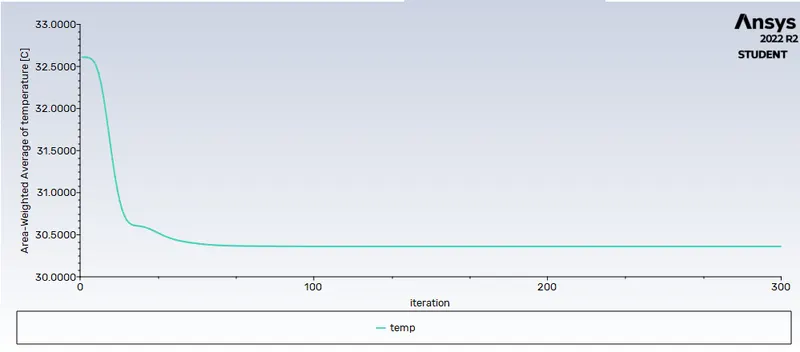
Area weighted average outlet temperature:
The average outlet temperature seems to be 30.360422 deg.C.
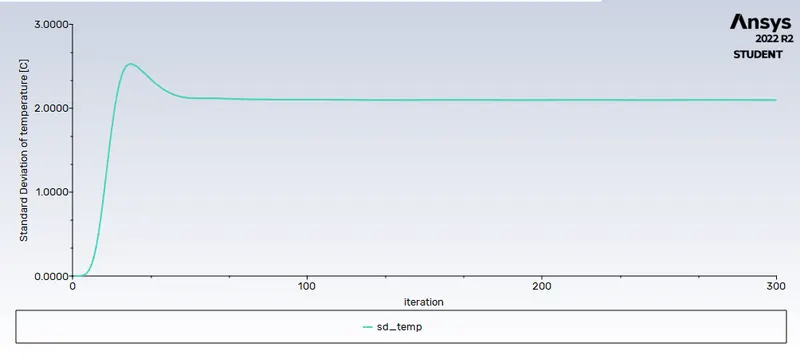
Standard deviation of temperature case 1(a):
value standard deviation shows the difference in temperature value from the average temperature value is 2.098.
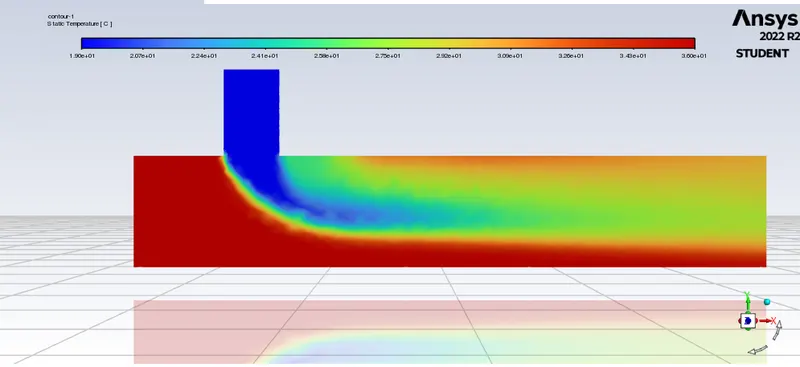
Temperature Contour for Case 1(a):
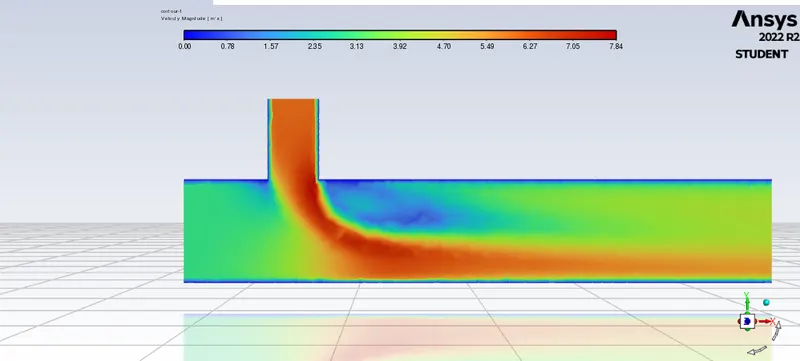
Velocity Contour for Case 1(a):
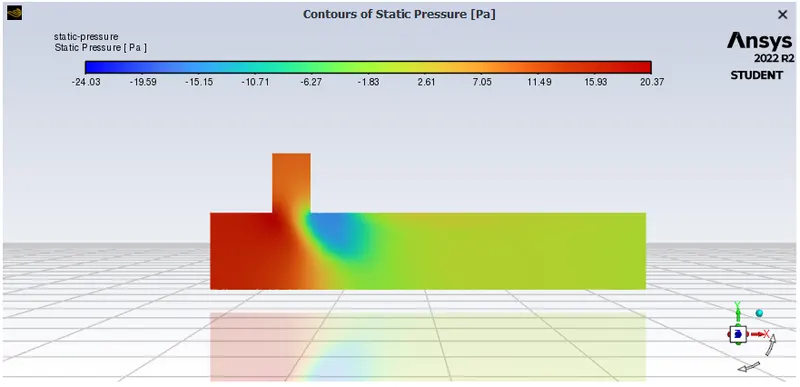
Static pressure contour for case 1(a)
View the results from the POST CFD:
- Go to POST CFD and activate the inlet, outlet, and wall section to view the geometry.
- Select planes along and across the geometry of the pipe at different crosssections.
- Highlight the planes with velocity and temperature variables.
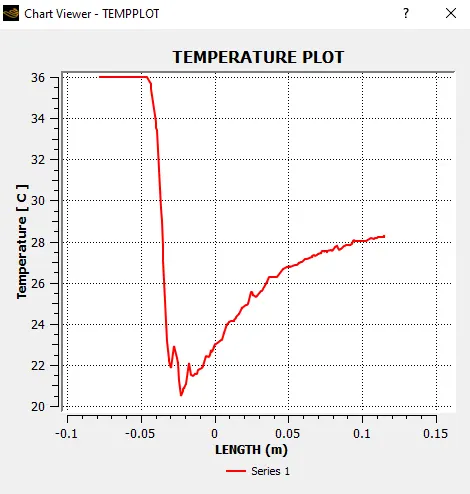
- Use a line plot along and across the pipe and measure the temperature and velocity variation in a chart.
The following demonstrates the post-processing results.
Post-processing results
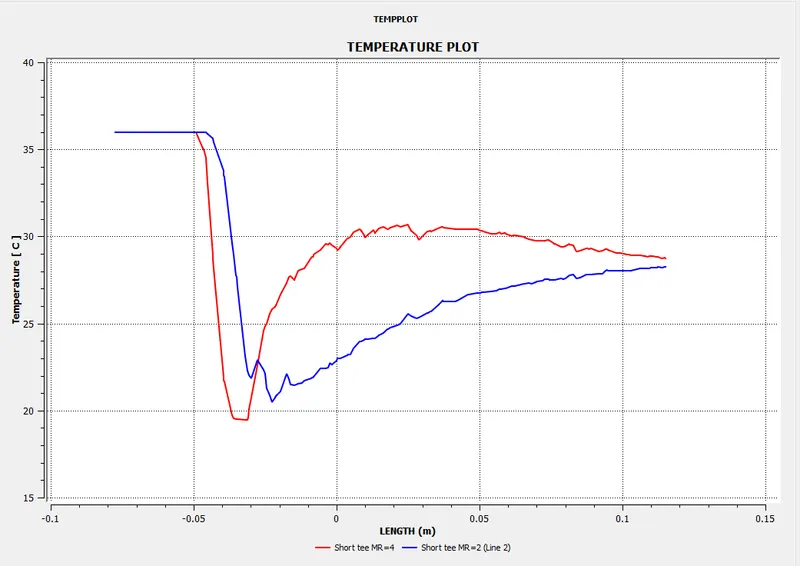
Temperature along the length case 1(a)
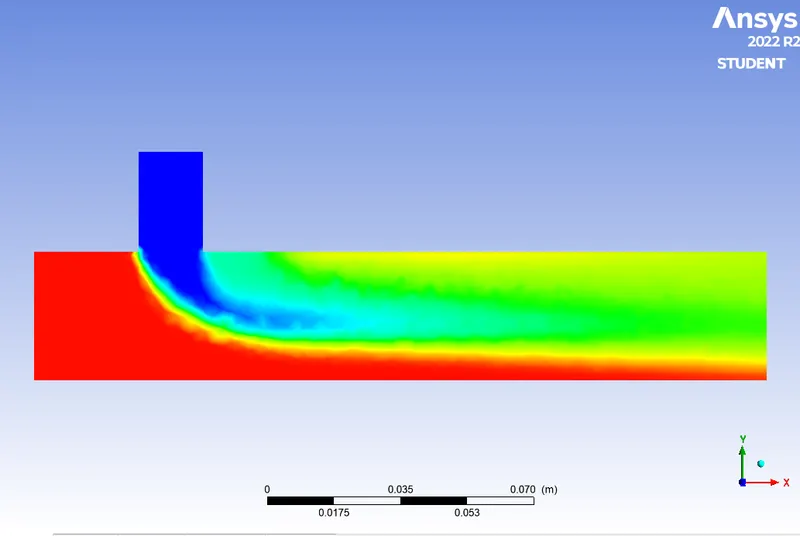
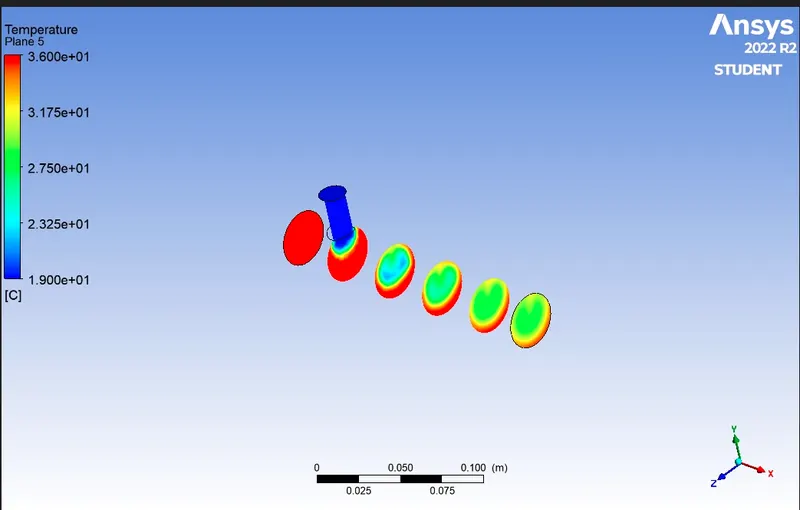
Temperature plot Case 1(a)
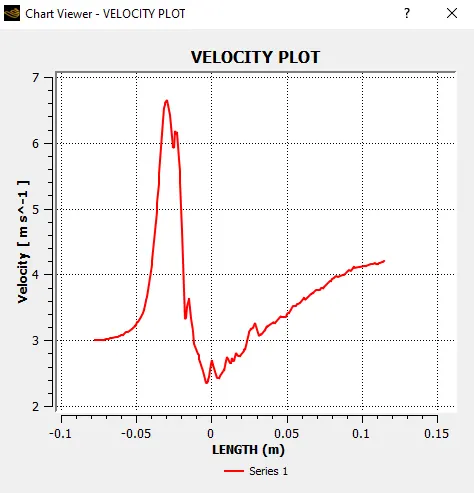
velocity along the length case 1(a)
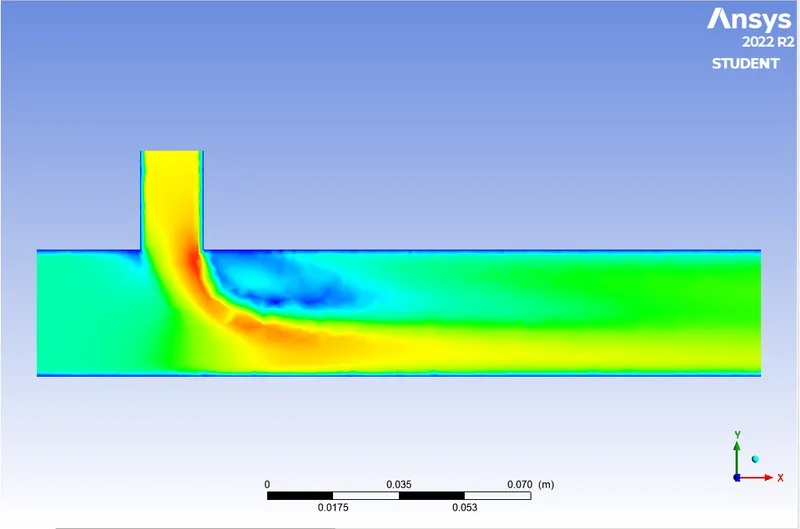
Velocity plot case 1(a)
b) For inlet velocity of 3m/s and momentum ratio of 4
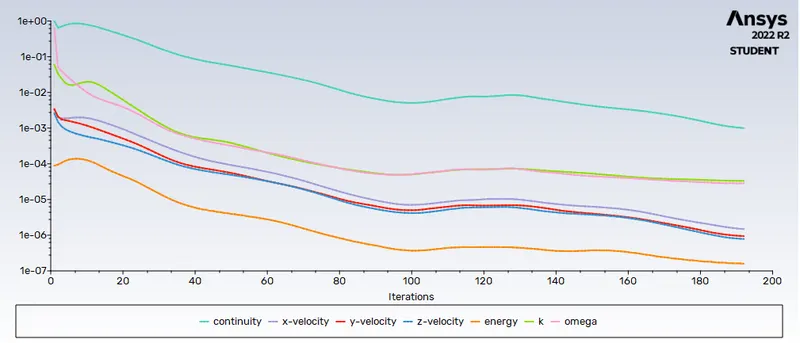
Residual plot Case 1(b):
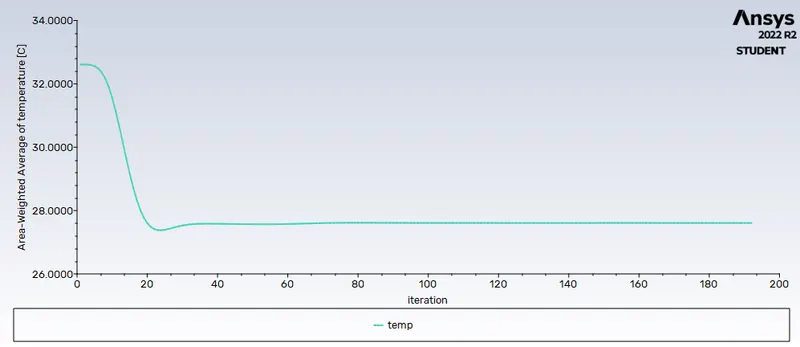
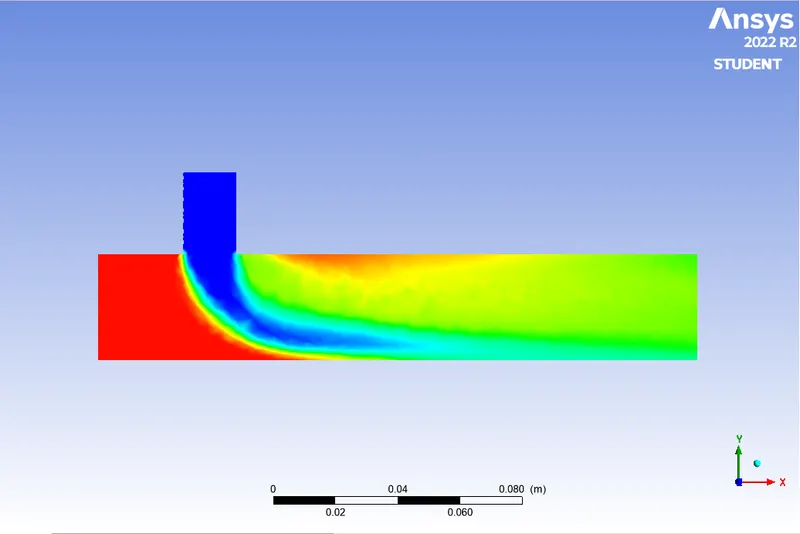
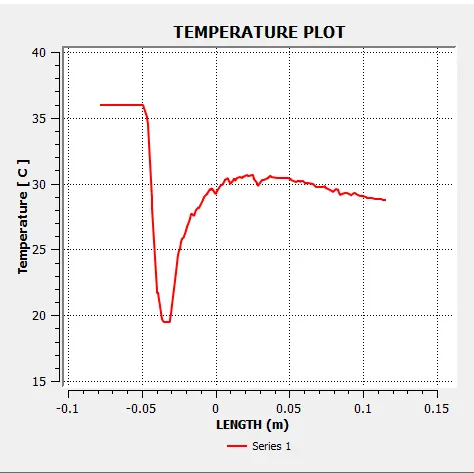
Temperature case 1(b):
Area weighted average outlet temperature:
The average outlet temperature seems to be 27.607 deg.C.
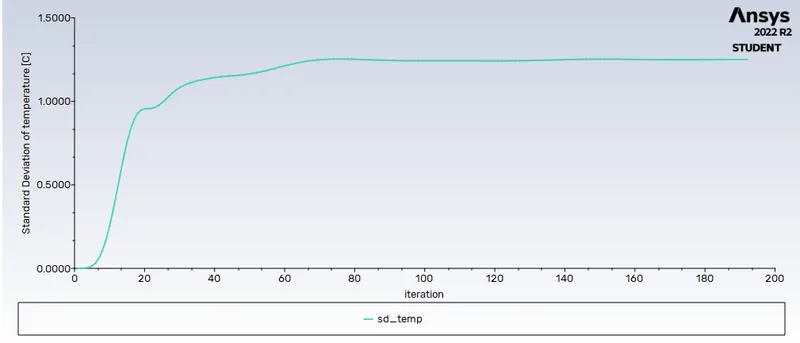
Standard deviation of temperature case 1(b):
value standard deviation shows the difference in temperature value from the average temperature value is 1.25.
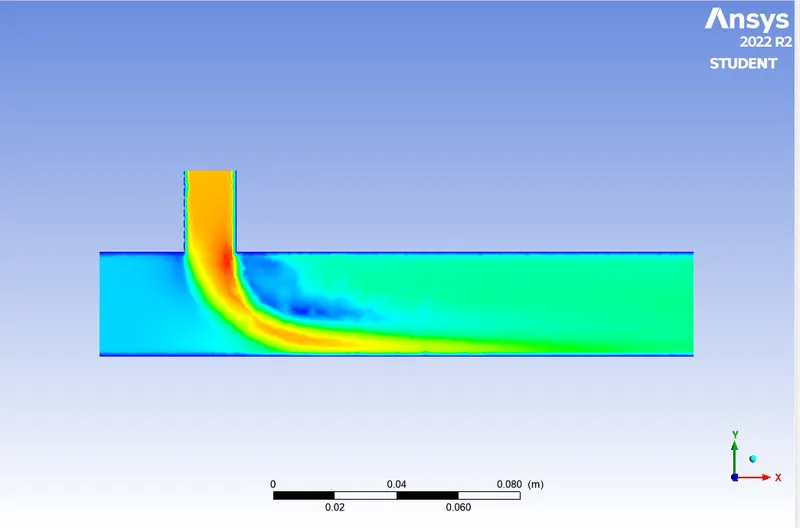
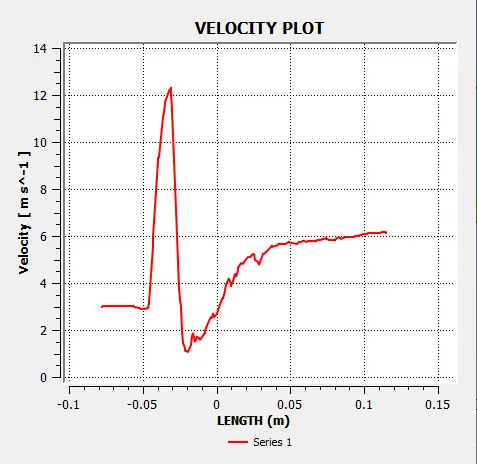
CFD CONTOUR PLOT FOR CASE 1(b)
Temperature:
Velocity:
CASE 2- LONG TEE
a) For inlet velocity of 3m/s and momentum ratio of 2
Mesh size- 2mm
Procedure:
1. Geometry setup:
Import the given geometries of short tee & long tee into the space claim of the Ansys workbench module.
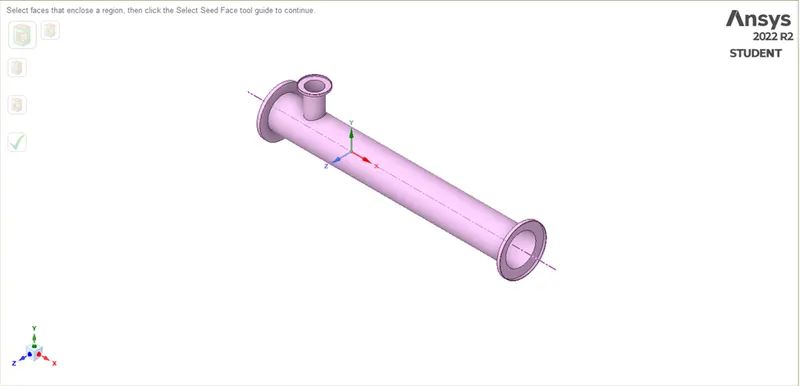
the geometry of the short tee is as follows:
2. Mesh Generation:
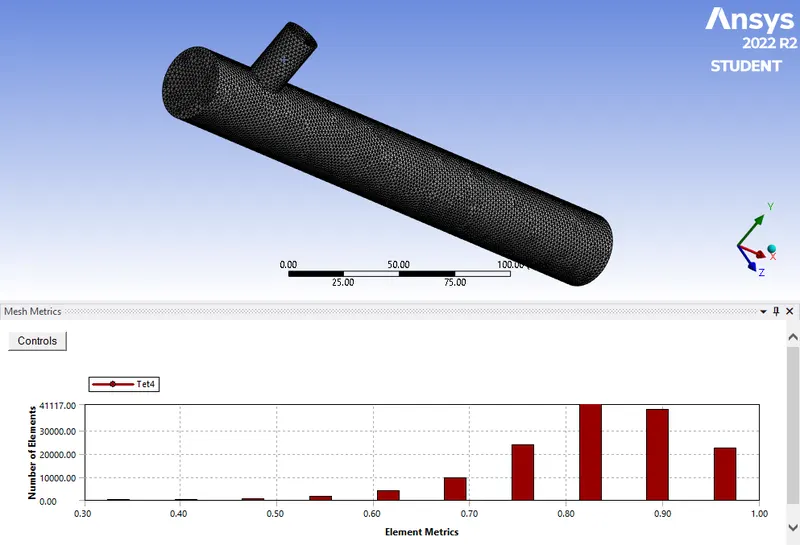
Mesh size of 2mm
Majority of mesh elements are between 0.6 and 1 hence mesh quality is acceptable.
3. setup for Physics solver:
Click on pressure-based --> steady
Click on Viscous model --> K-omega model
- Specify the material as air.
- for short-tee MR=2, define the boundary conditions as follows
- for inlet_x temperature as 36degc and velocity=3m/s
- inlet_y temperature = 19degC , velocity = 6m/s
- Report definitions for Temp and standard deviation
- Initialize the solver with hybrid schemes.
- Set up the no of iterations to 300minimum. Click on calculate option.
4. POST-PROCESSING RESULTS
STEPS
- After the computation ends check for graphical visualization for the interaction convergence rate, area-weighted temperature, and standard deviation plot at the outlet section.
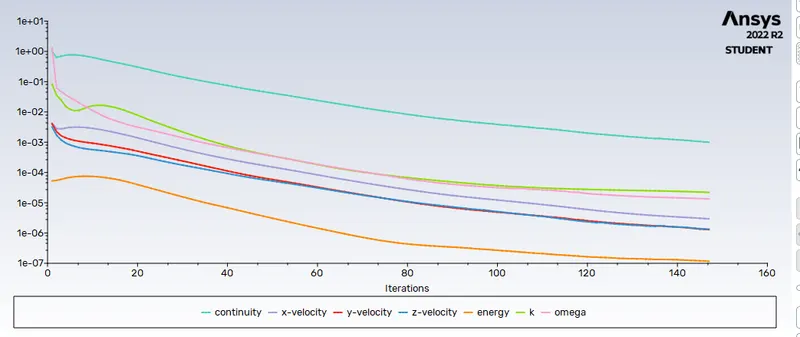
Residual plot Case 2(a):
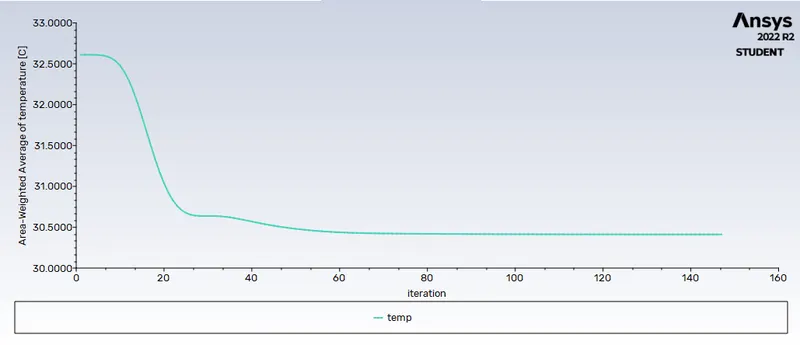
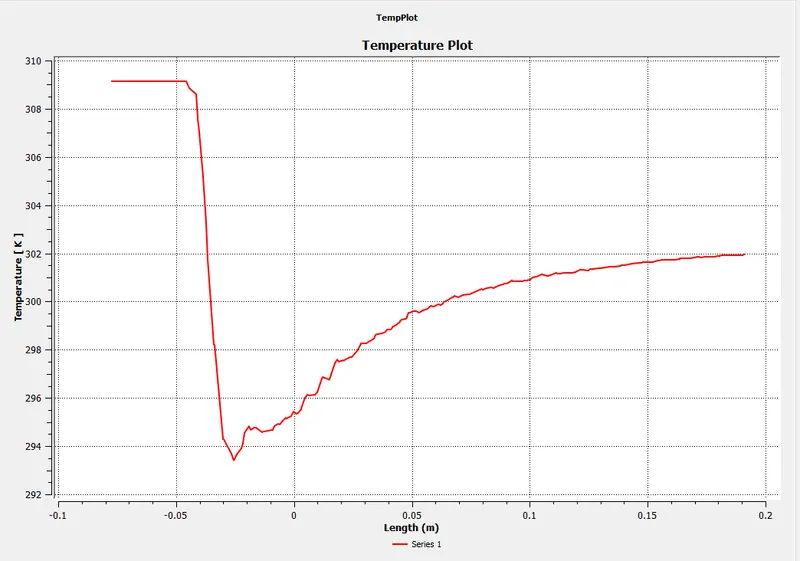
Temperature plot case 2(a):
Area weighted average outlet temperature:
The average outlet temperature seems to be 30.411705 deg.C.
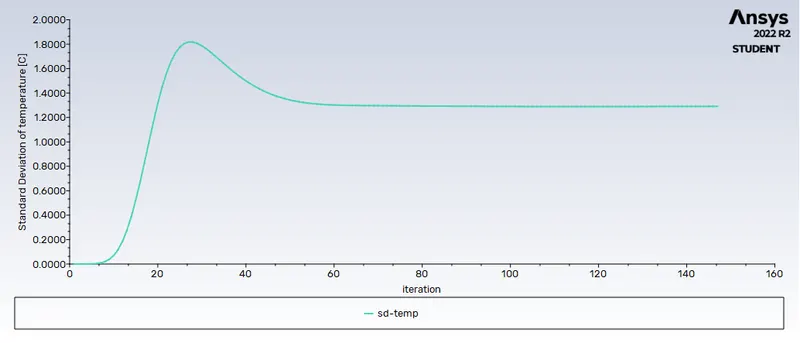
Standard deviation of temperature case 2(a):
value standard deviation shows the difference in temperature value from the average temperature value is 1.29.
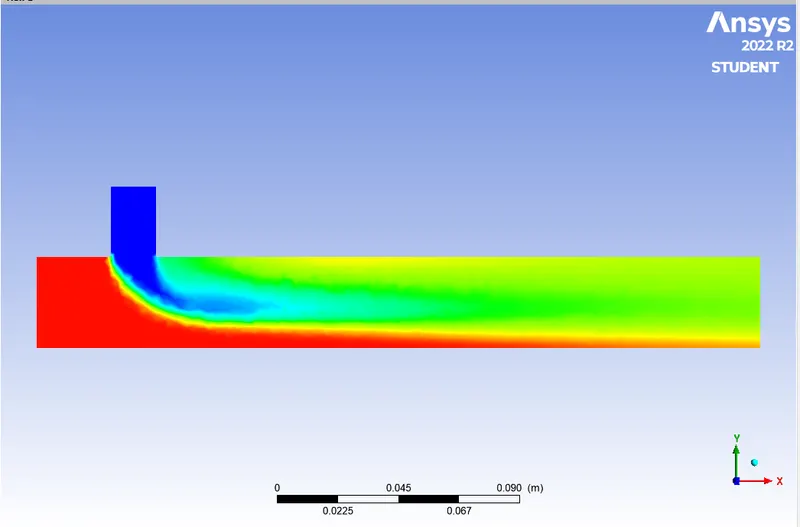
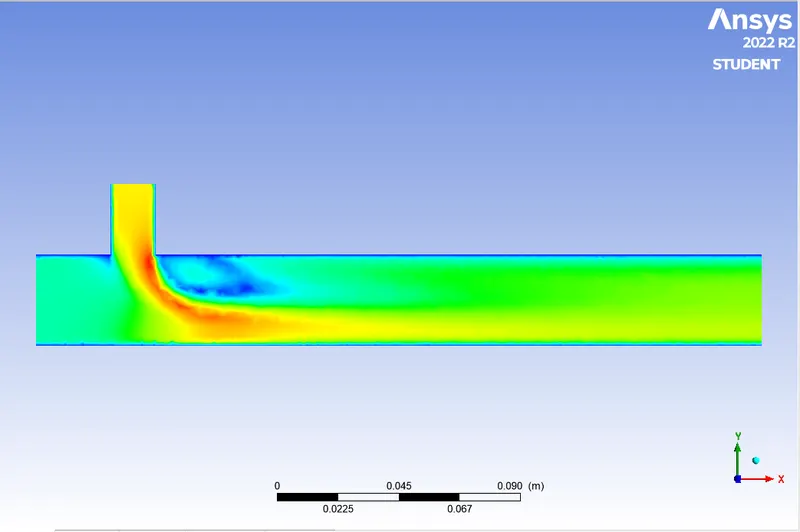
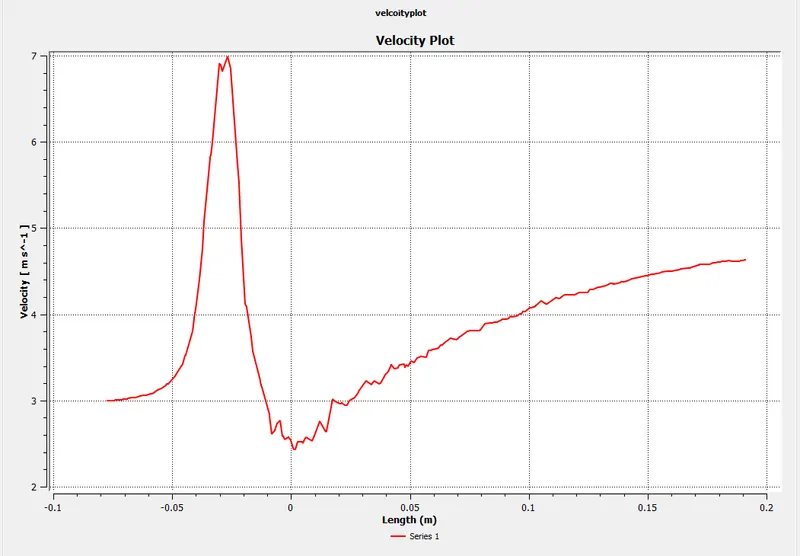
Counter Plots for Case 2 (a)
Temperature:
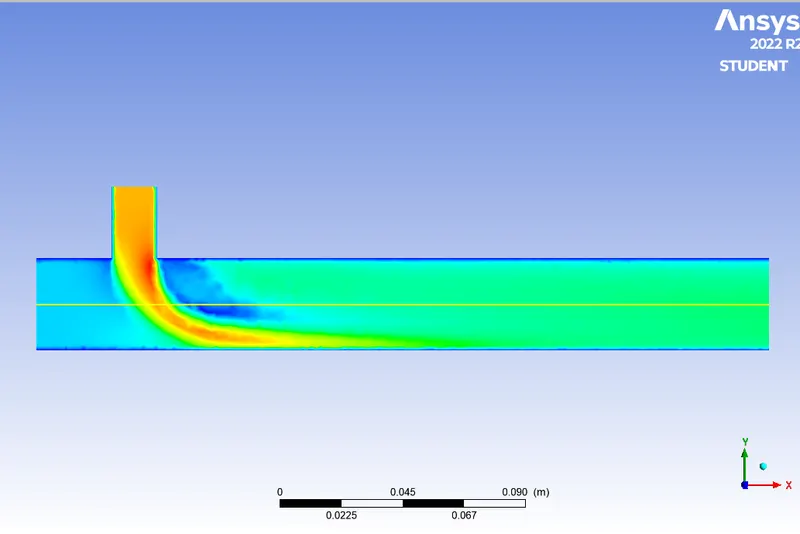
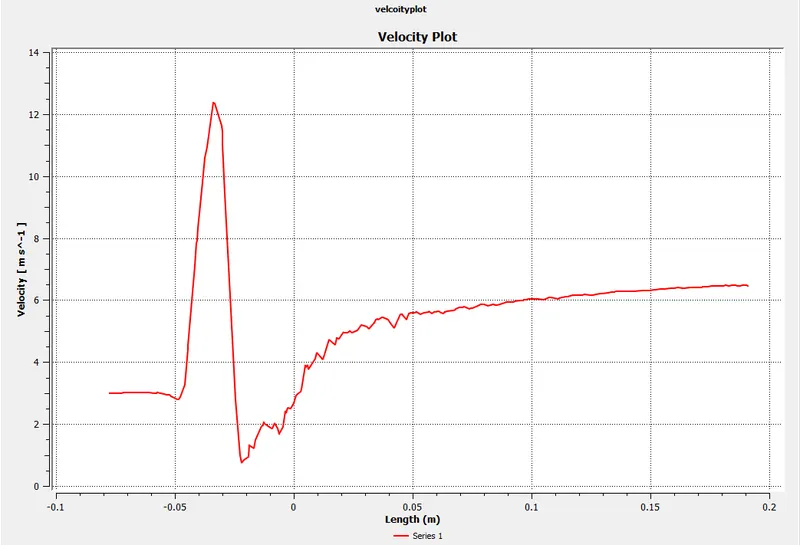
Velocity:
b) For inlet velocity of 3m/s and momentum ratio of 4
Residual plot Case 2(b):
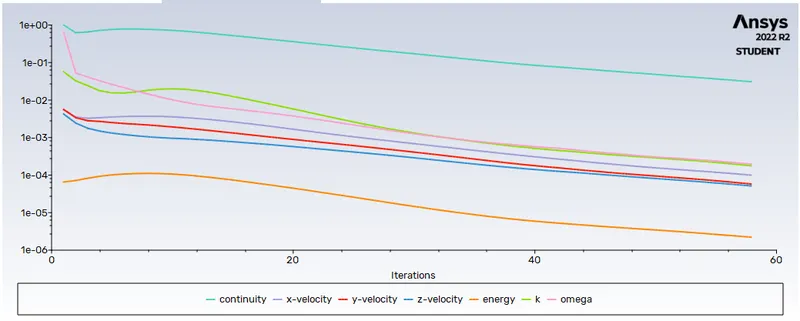
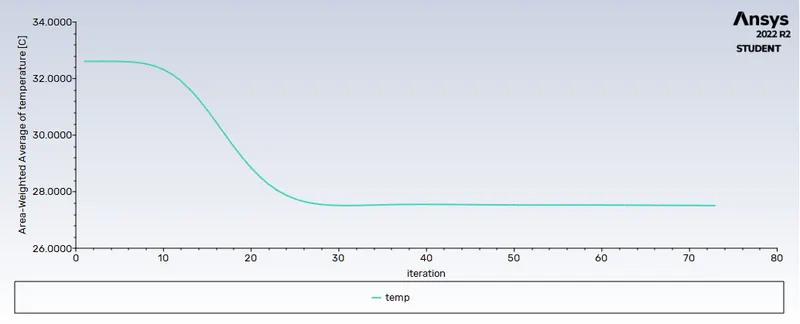
Temperature plot case 2(b):
Area weighted average outlet temperature:
The average outlet temperature seems to be 27.5 deg.C.
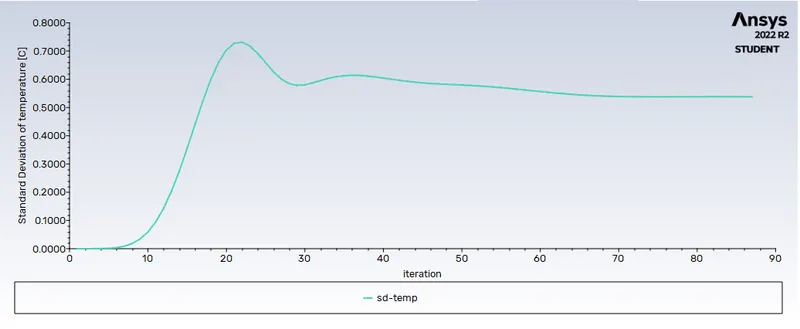
Standard deviation of temperature case 2(b):
value standard deviation shows the difference in temperature value from the average temperature value is 0.526.
Counter Plots for Case 2 (b)
Temperature:
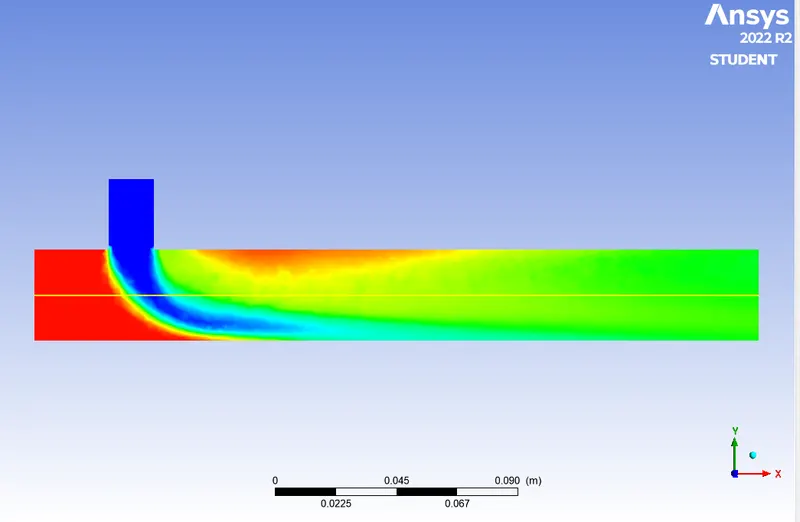
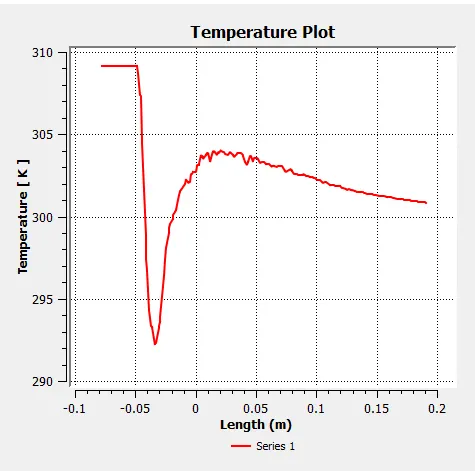
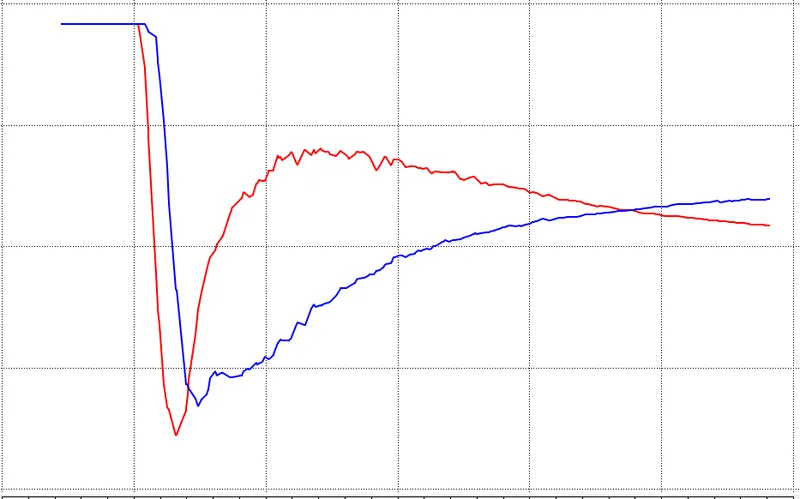
Comparison of temperatures between case 2(a) and case 2(b)
Velocity:
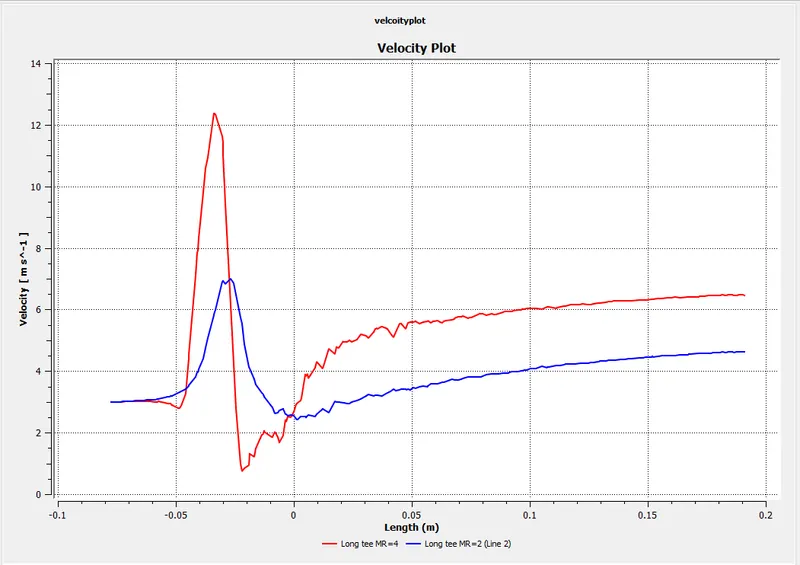
Comparison of Velocity polt between case 2(a) and case 2(b)
CONCLUSION:
Conclusion:
1. As the grid size increases, the number of elements increases, and hence it takes more time to converge and hence computational time. But with the increase in the grid size final accuracy in the result increases.
2. Momentum ratio is the ratio of velocity at the cold fluid inlet to the velocity at the hot inlet. From the above plots, it is observed that increasing the velocity of the cold inlet with respect to the velocity of the hot inlet by a factor of momentum ratio gives better mixing of the hot and cold fluid streams at the main outlet.
3. Standard deviation of temperature is a difference in temperature value outlet as compared to an average temperature value. From the plots of the standard deviation of temperature, it is observed that the standard deviation of temperature is minimum for case 2 of long mixing tee with momentum ratio=4.
4. Hence it is recommended to use a long mixing tee with a momentum ratio of 4. It is having a standard deviation of temperature value of 0.5. Hence longer mixing TEE length provides more space for a fluid stream to get mixed together.