Week 1- Mixing Tee
AIM - To capture the mixing of hot and cold air in a T joint, also known as a mixing tee. Simulation to be run on long pipes as well as short pipe and on different equations too.
INTRODUCTION - Mixing tee is used in industry as well as daily appliances, most industries have a need to mix gases at various temperatures, this simulation will let you know how the mixing of gases takes place. The Air conditioner is the best example where mixing tees are used.
THEORY - Two types of models are used to study this mixing of gases, long and short pipe. The temperature for the hot inlet is 36`@`C and the cold inlet at 19`@`C. Hot inlet velocity is 3m/s with a momentum ratio of 2.4.
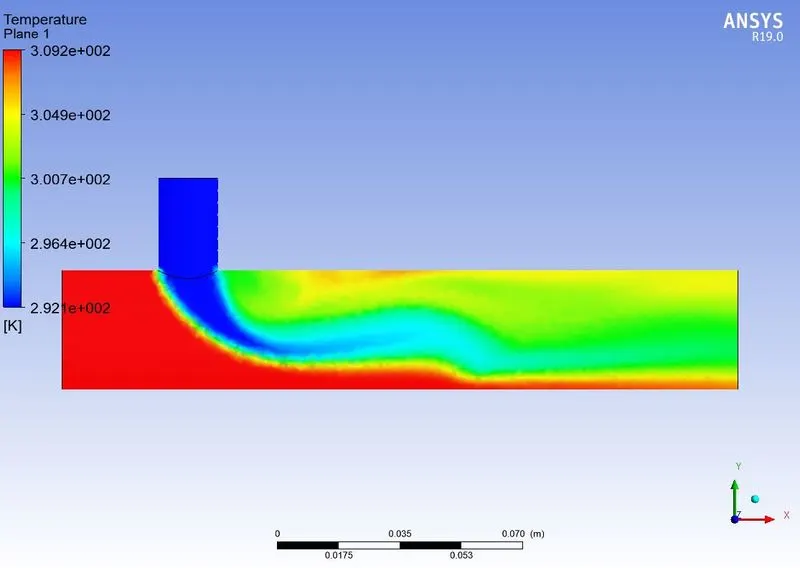
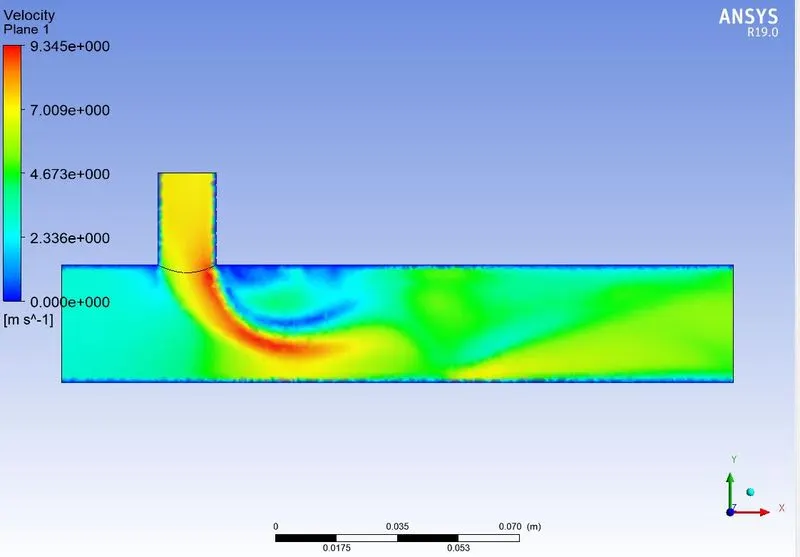
The use of both the model i.e. K-`omega`and K-`epsilon`gives us a chance to differentiate between the results of both the models and how K-`omega`is better at providing results near the wall, where viscous effects are in place.K-`epsilon` gives better results far from the wall. we will see this on the velocity and temperature contours.
Analytically The temperature, Enthalpy of the mixture is found out by using
we will simulate the same conditions in Ansys fluent and check whether the results achieved are compatible or not.
SOLVING AND RESULTS -
1.Computational method
SHORT PIPE
Ansys workbench is opened and fluent is used, geometry tab is selected and SpaceClaim is opened.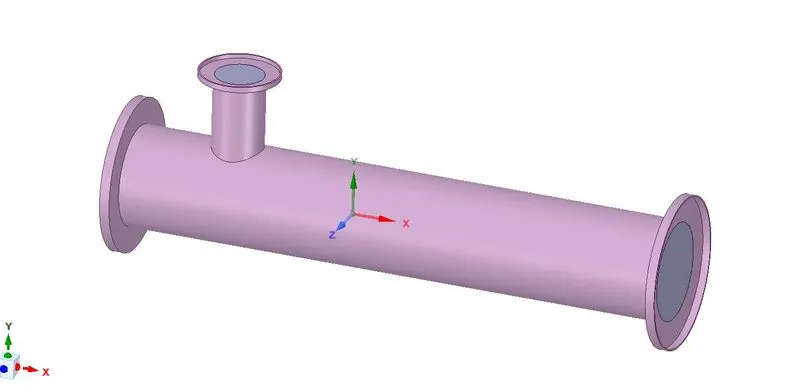
volume is extracted to make geometry clean.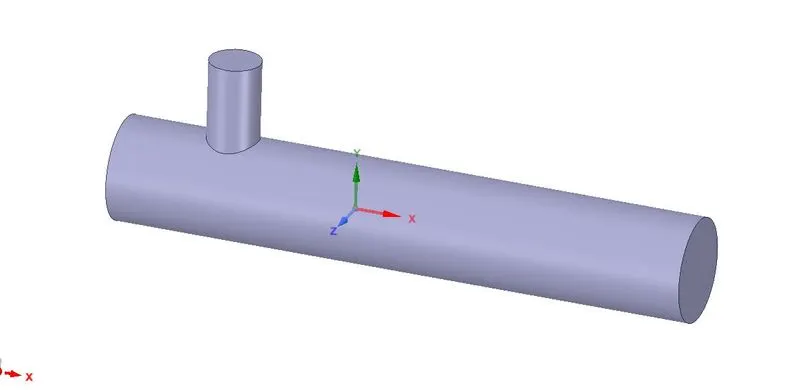
The meshing window is opened and sizing is selected, an element size of 2mm is given. Named selection is given to inlet cold, inlet hot, cold, wall.
cell count - 195424
setting up fluent on parallel, 4 processor with double precision.
steady, pressure-based, absolute velocity, the energy equation is applied, viscous equation K-`epsilon` and K-`omega`is used in two different simulations.
Material air is selected, the boundary condition is set as velocity inlet- 3m/s hot inlet, and using momentum ratio cold inlet is 7.2m/s. the temperature of 36 and 19 degrees celsius is given respectively.
the outlet is given as a pressure outlet with gauge pressure as 0.
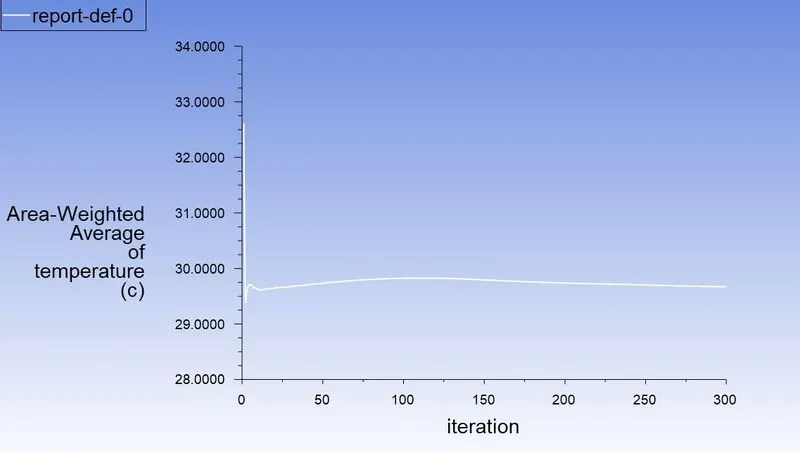
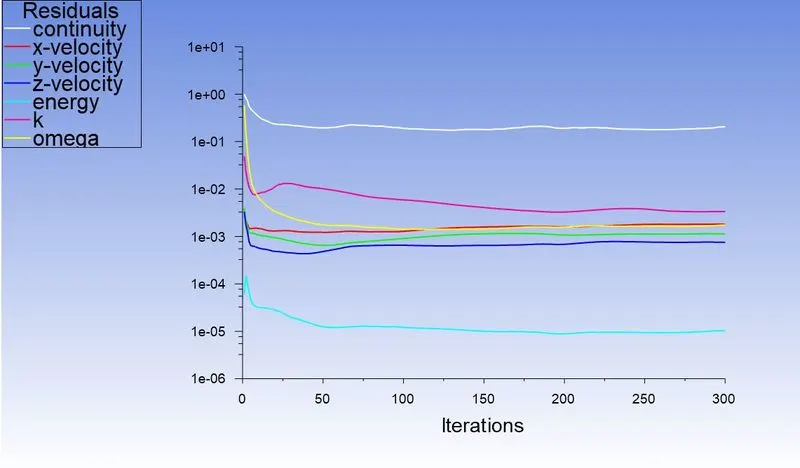
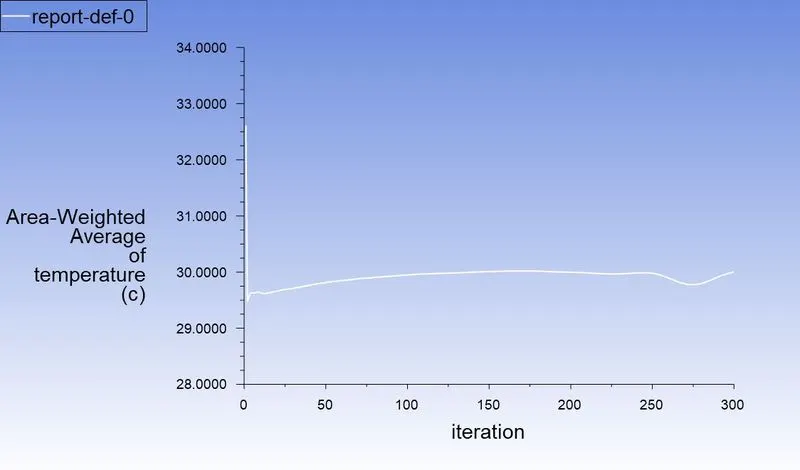
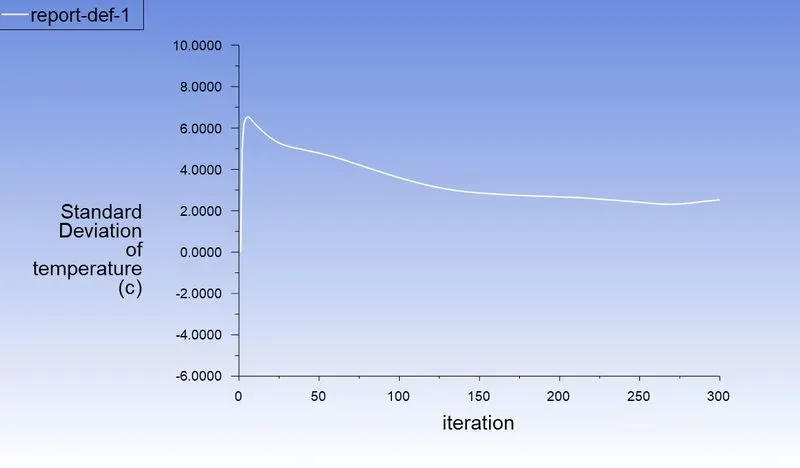
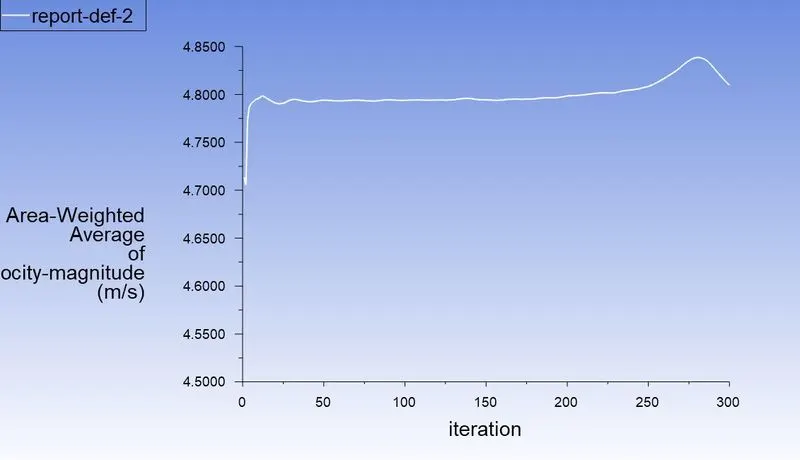
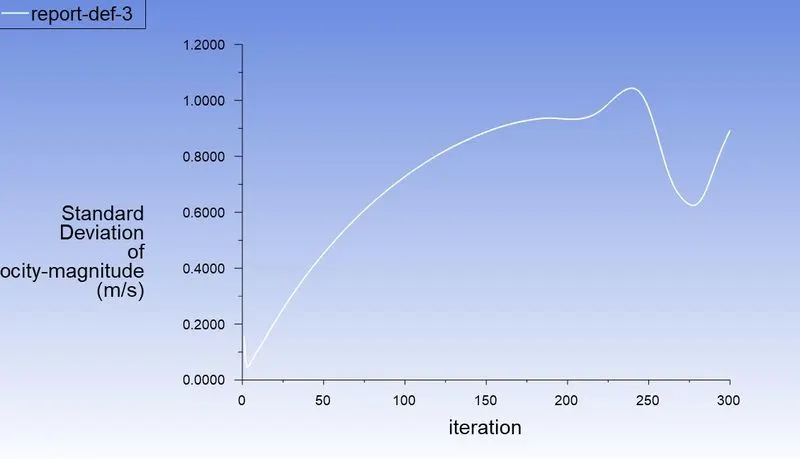
following reports are generated at each iteration.
a. Area weighted average of outlet temperature.
b. Standard deviation of the outlet temperature.
c. Area weighted average of outlet velocity.
d. Standard deviation of outlet velocity.
Hybrid initialization is done.
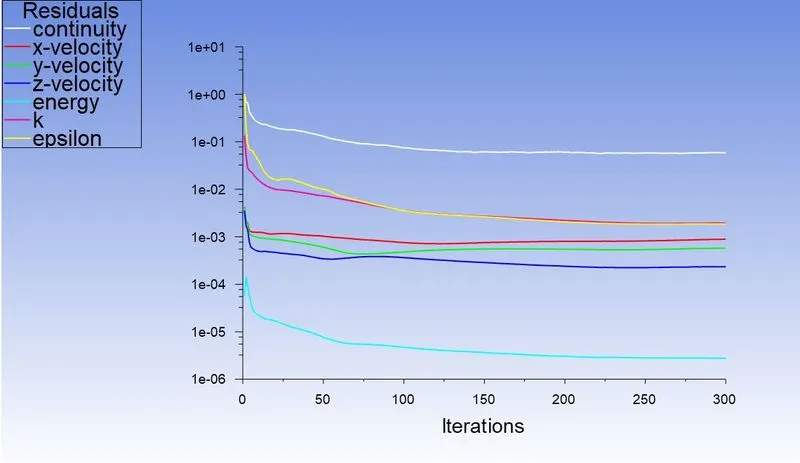
the solution is obtained for 300 iterations.
a. first results are for the K-`epsilon`model
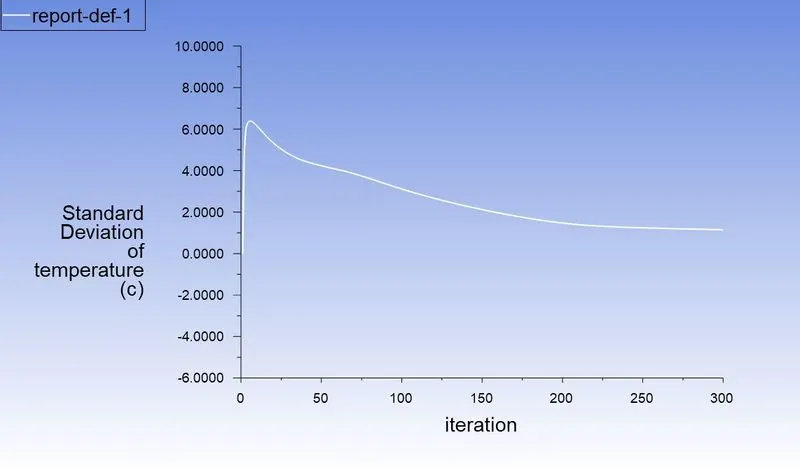
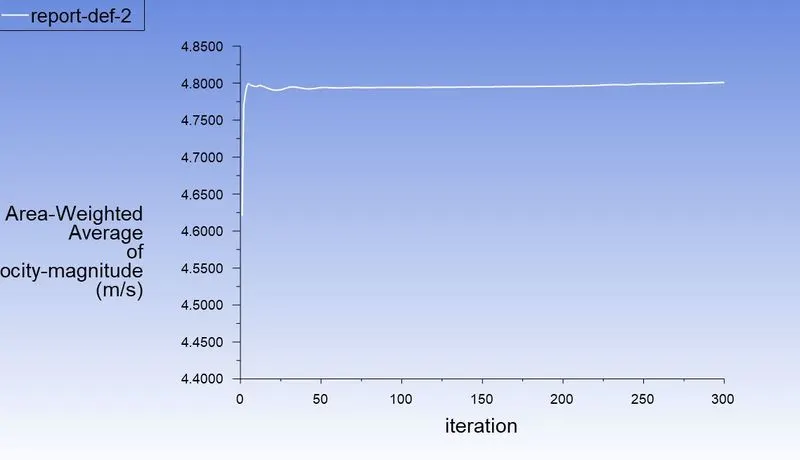
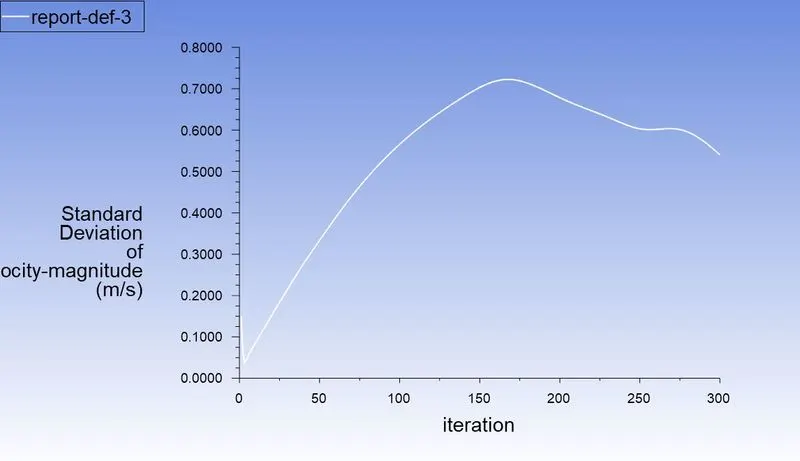
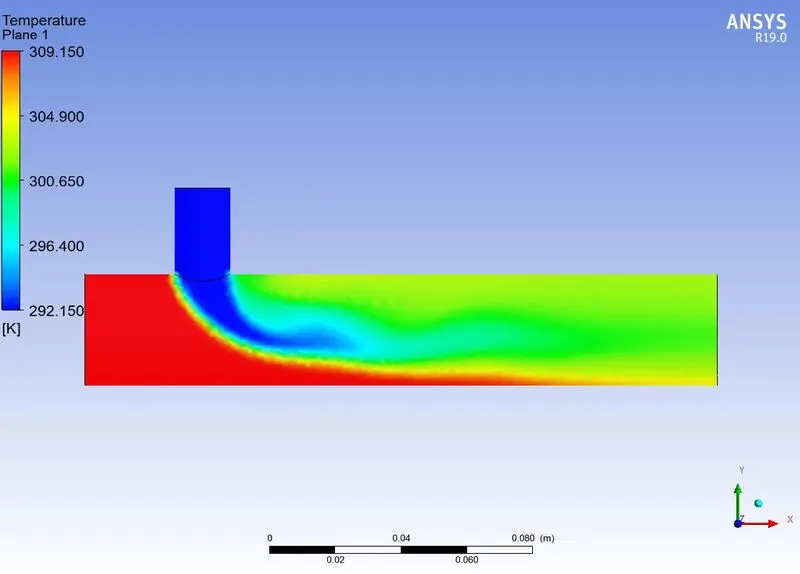
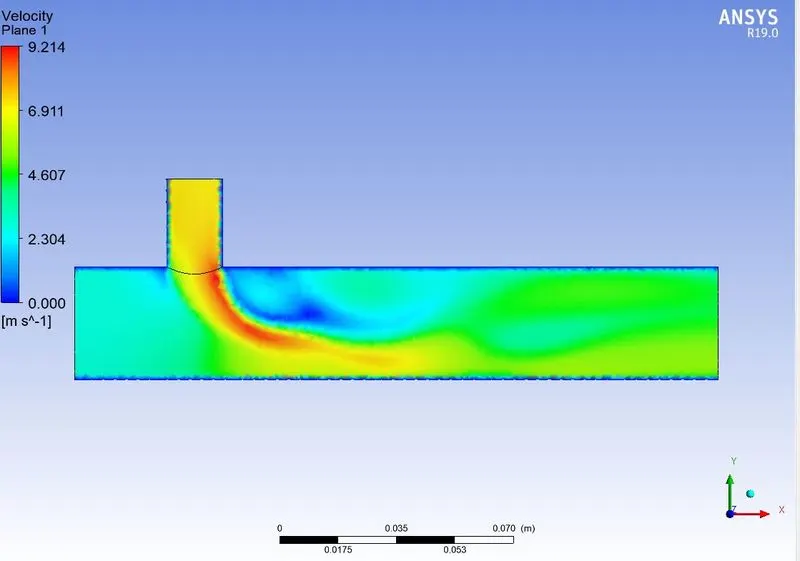
b. Second result is for K-`omega`model
LONG PIPE
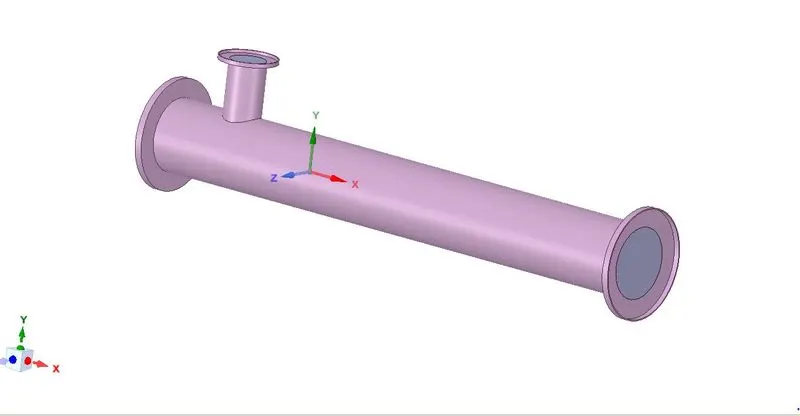
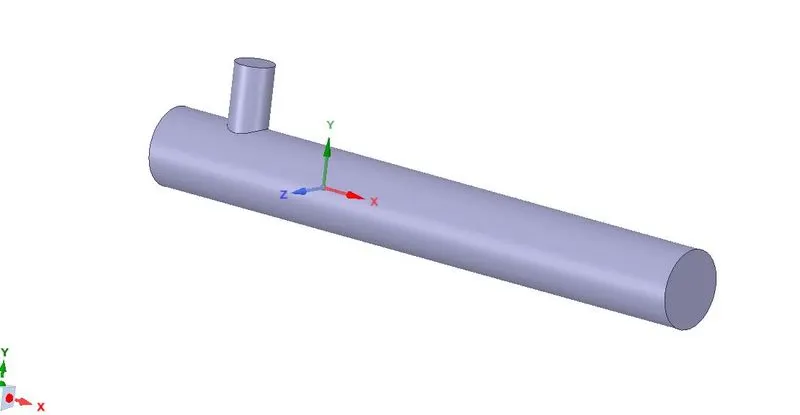

cell count - 271367
Element size - 2mm
a. First result with K-`epsilon`model
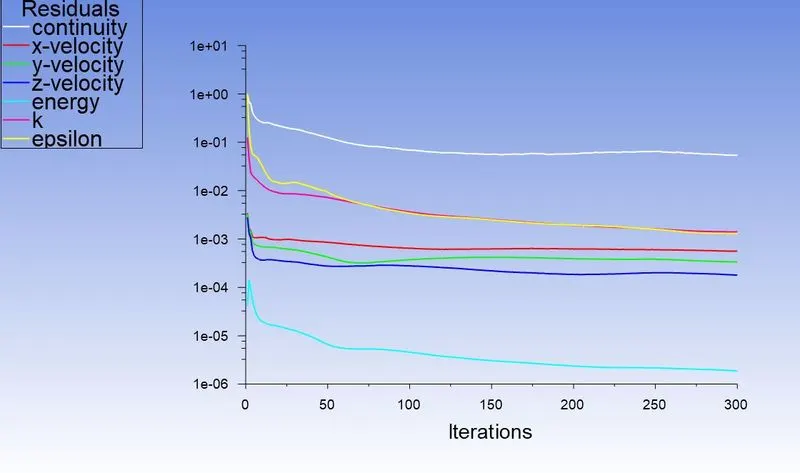
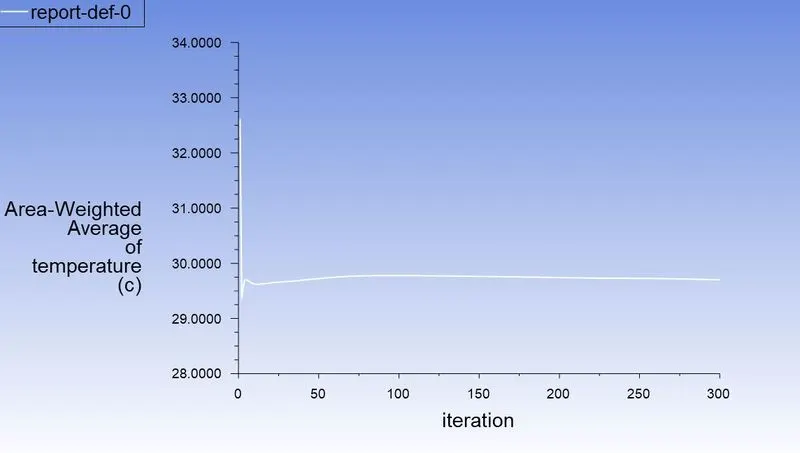
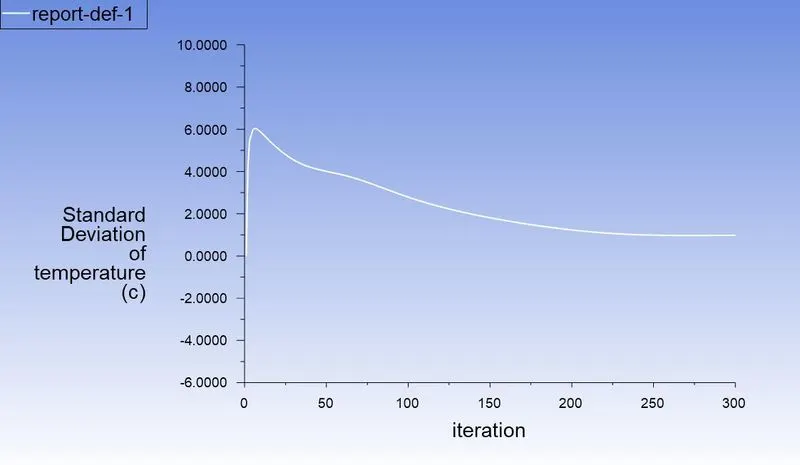
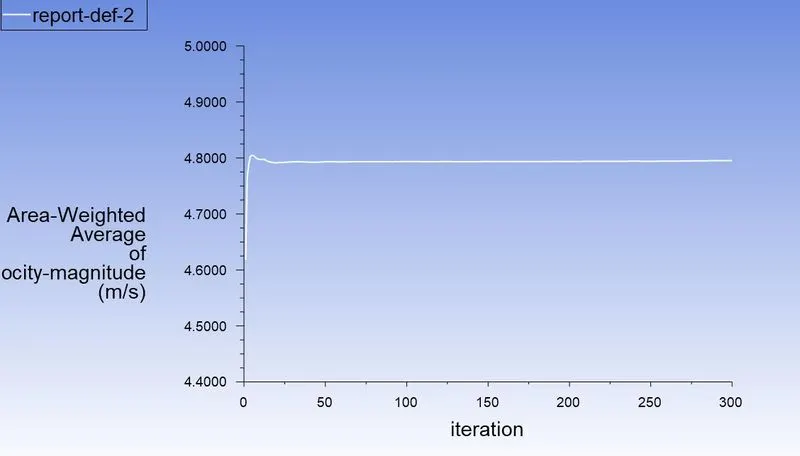
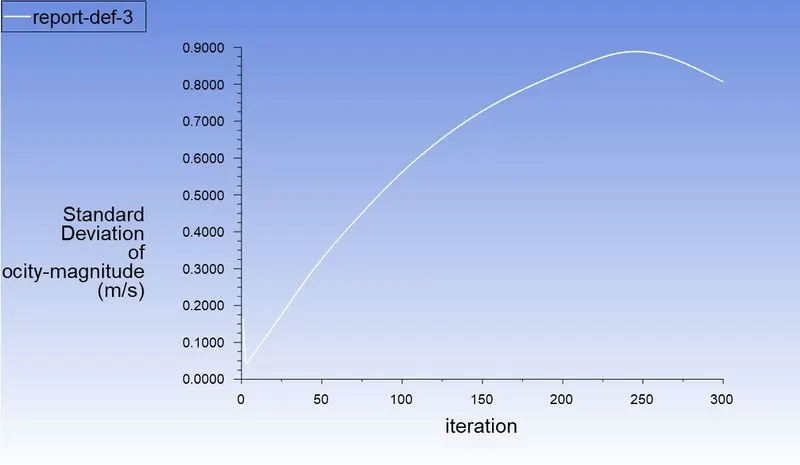
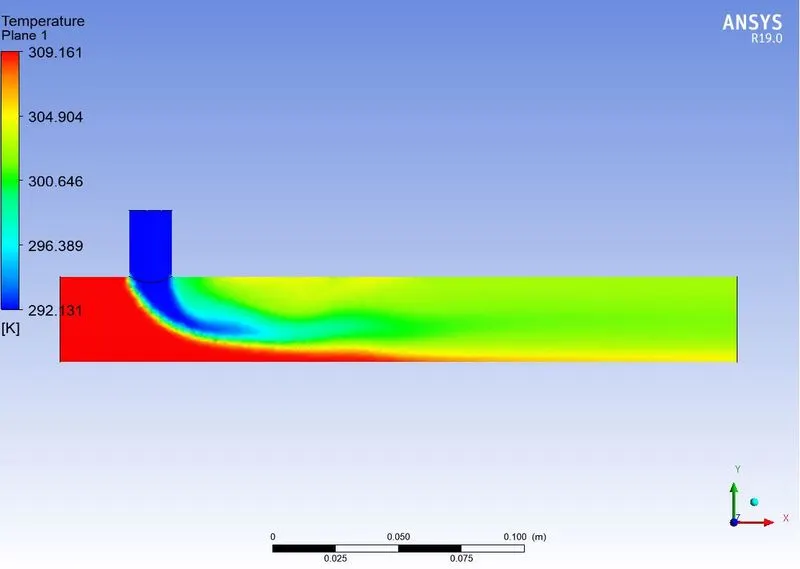
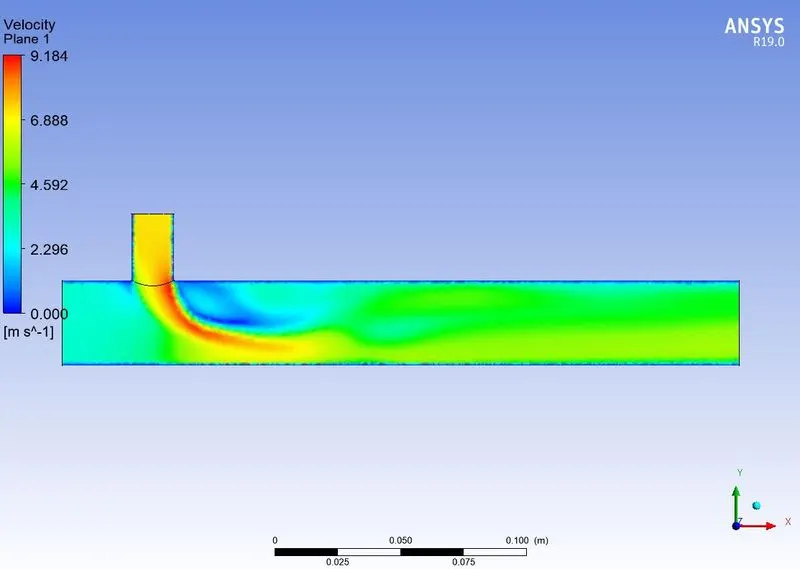
b. Second result with K-`omega`model
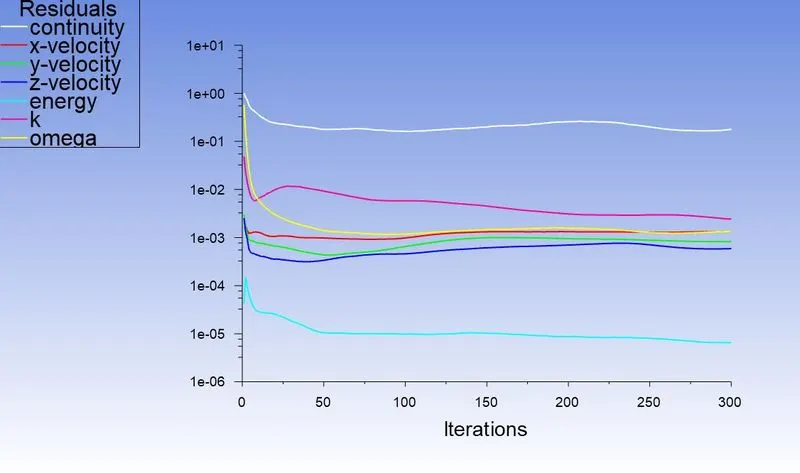
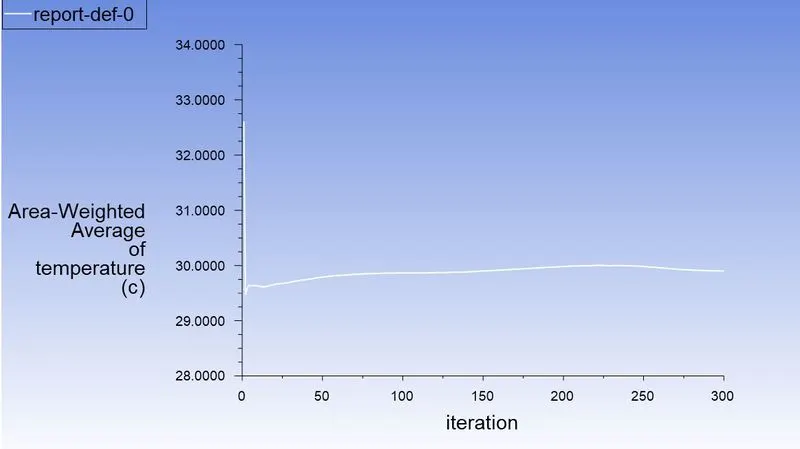
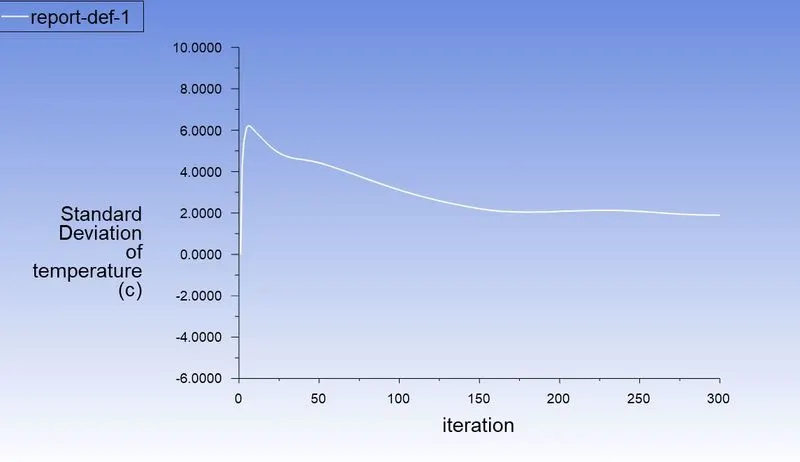
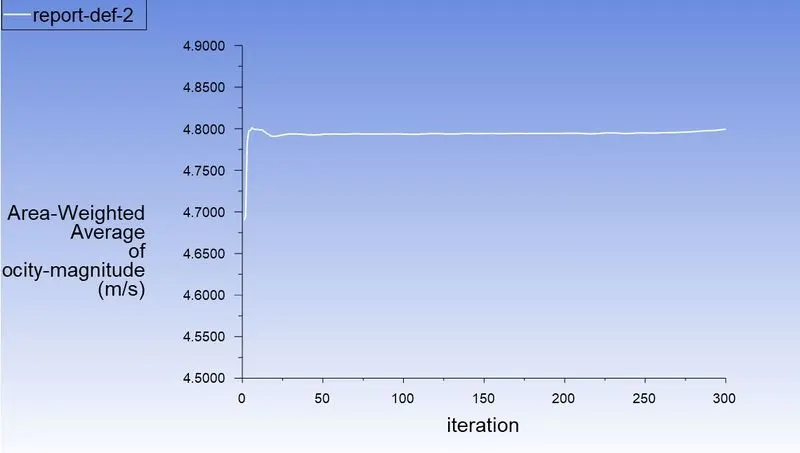
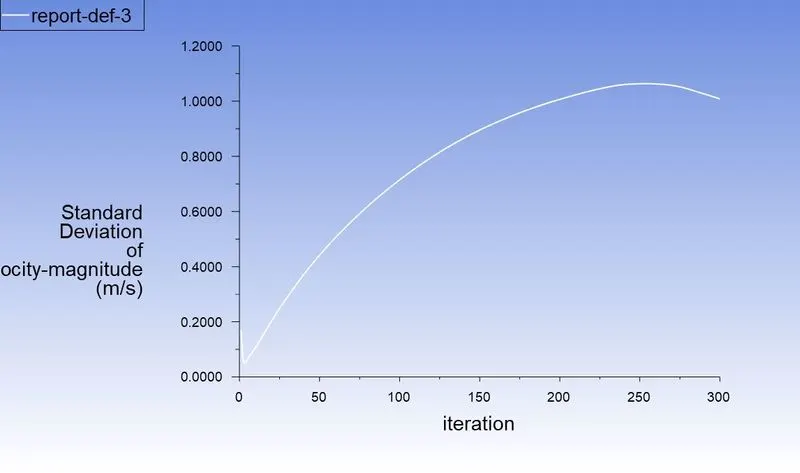
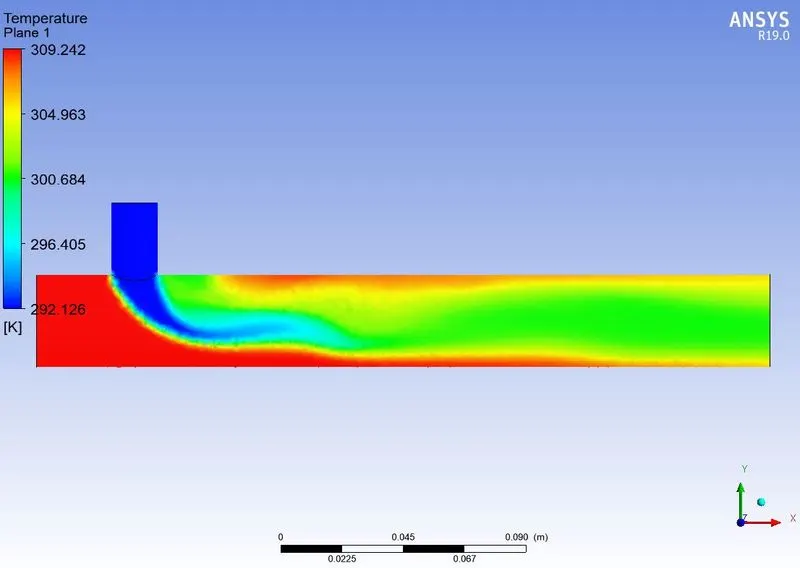
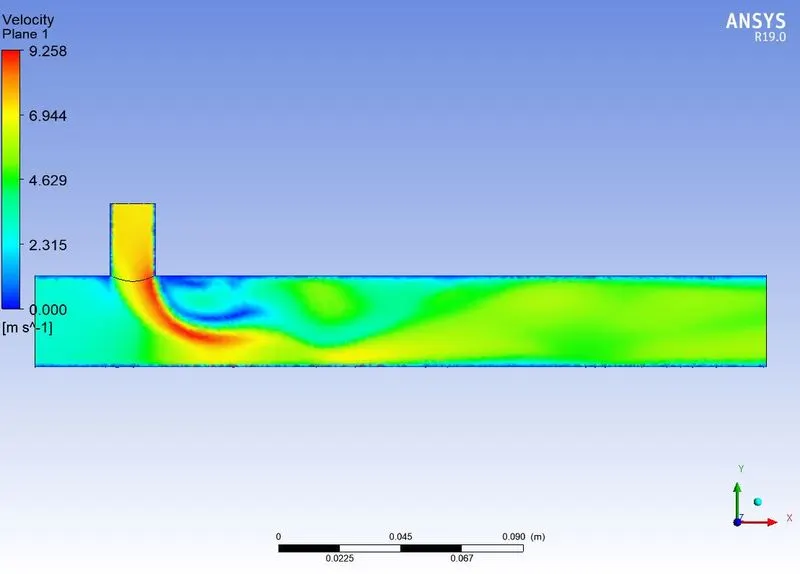
K-`omega`model shows better results as it works better near the boundary.
comparing the results of both the models
| ITEMS | SHORT PIPE | LONG PIPE |
| CELL COUNT | 195424 | 271367 |
| AVERAGE OUTLET TEMPERATURE | 302.65k-303.15k(29.5-30) | 302.65k-303.15k(29.5-30) |
| ITERATIONS FOR CONVERGENCE | 60 | 110 |
2. Analytical method
Diameter of pipe at hot inlet = 0.033876m
Diameter of pipe at cold outlet = 0.016962m
mass flow rate = density x area x velocity
density of air = 1.225 kg/m^3
area hot inlet = (3.14 x 0.033876^2)/4 = 0.00090085295016 m^2
area cold inlet = (3.14 x 0.016962^2)/4 = 0.00022585191354 m^2
mass flow rate hot = 0.003310634591838 kg/m^3
mass flow rate cold = 0.0019920138774228 kg/m^3
T_mixture = ((0.003310634591838 x 309.15)+(0.0019920138774228 x 292.15))/(0.003310634591838+0.0019920138774228)
T_mixture = 302.76k
CONCLUSION
1. Long tee can be used as at the ending better mixing is achieved, which is not available at the short tee.
2. K-`omega`model gives a better results than another model as this model is better near the walls.