Week 1- Mixing Tee
Aim :
Your job is to set up steady-state simulations to compare the mixing effectiveness when hot inlet temperature is 360C & the Cold inlet is at 190C.
Use the k-epsilon and k-omega SST model for the first case and based on your judgment use the more suitable model for further cases. Giving the reason for choosing a suitable model is compulsory.
- Case 1
- Short mixing tee with a hot inlet velocity of 3m/s.
- Momentum ratio of 2, 4.
- Case 2
- Long mixing tee with a hot inlet velocity of 3m/s.
- Momentum ratio of 2, 4.
Momentum ratio = velocity at cold inlet / velocity at hot inlet
In a table, compare the following values from the 2 cases.
- Cell count
- Average outlet temperature
- Number of iterations for convergence
Objectives :
- Velocity and temperature contour plots on the cut planes along and across the pipe.
- Velocity and temperature line plots along and across the length of the pipe.
- Perform Mesh independent study for any one case.
- Discuss the effect of length and momentum ratio on results.
For each simulation, you need to show the convergence plot
Theory :
Mixing tee: mixing tee is a flwo control device, in which it contain two inputs and one output, the main function of this mixing tee is mixing the two different flows with each other.
steps invalue in the mixing tee shown below:
- geometry
- meshing
- setup
- solution
- result
Formulas :

Analysing the mixing tee flow for short arm
- Case 1
- Short mixing tee with a hot inlet velocity of 3m/s.
- Momentum ratio of 2, 4.
- Short mixing tee with a hot inlet velocity of 3m/s.
- Momentum ratio of 4
- hot inlet temperature is 360C
- the Cold inlet is at 190C.
- cold inlet velocity of 6m/s.
1. Geometry :

- importing the geometry: we have to import the geometry into the ansys workbench
- Go to Ansys space claim and open the Mixing Tee short
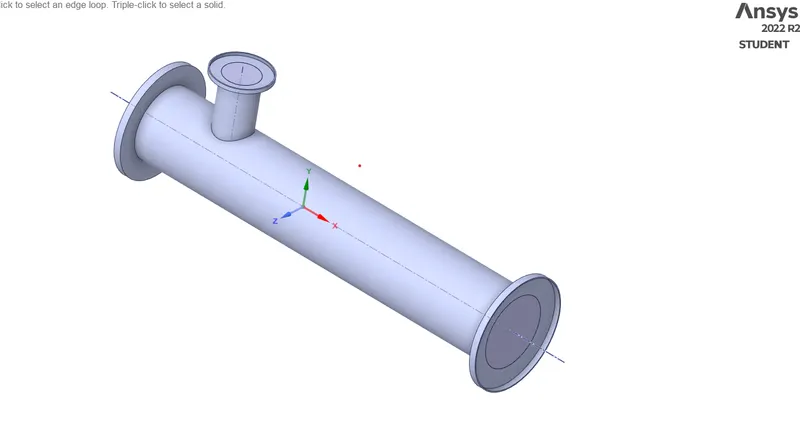
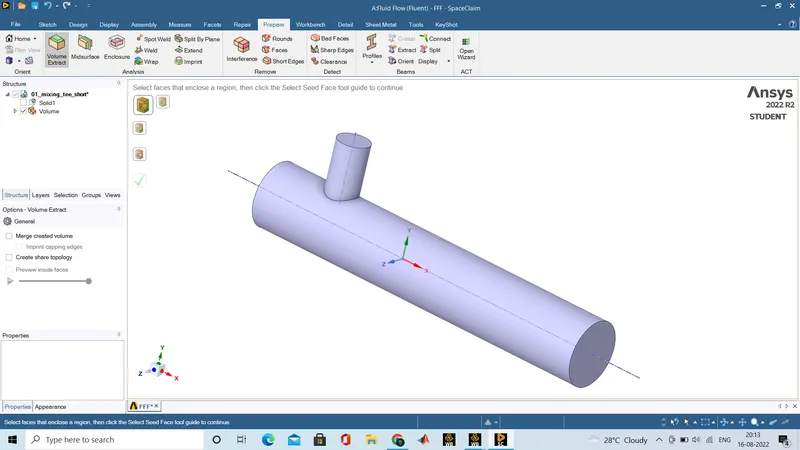
- Exctracting the volume
- supresing physics: this comand is used to hide the solid part of the model
2. Meshing
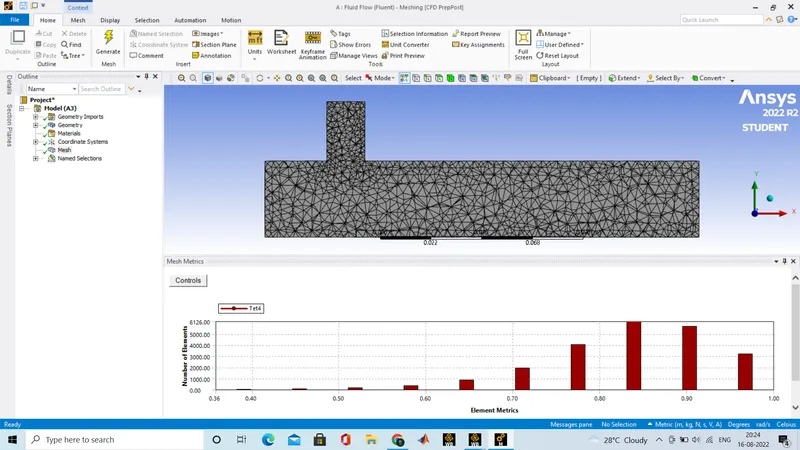
Meshing is nothing but the deviding the model into small peices and the distance between the points is 0.004.
number of node : 6262
number of elements:29149
afetr the complesion of meshing we have to give the names for each and every face
Element matrix:

3. setup:

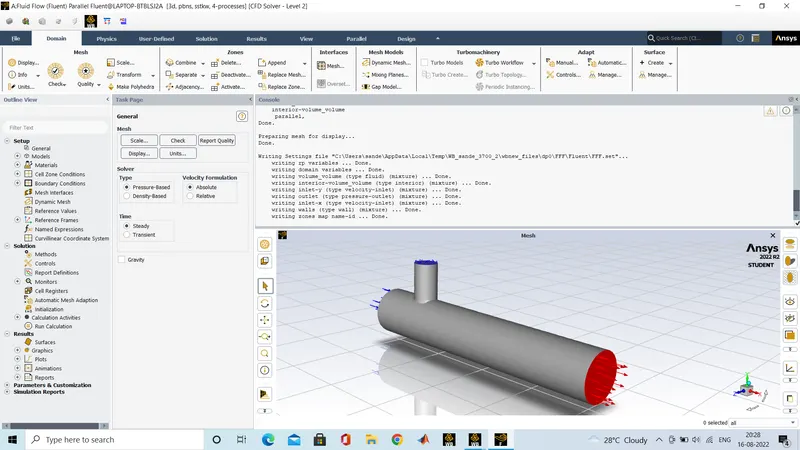
- Domain: 1) steday state
2) presure based solver
- materieal : 1) Air-fluid
2)alluminium
- model: k-epsilon>reliabel>standard wall function
- cell zone: air-fluid-valume
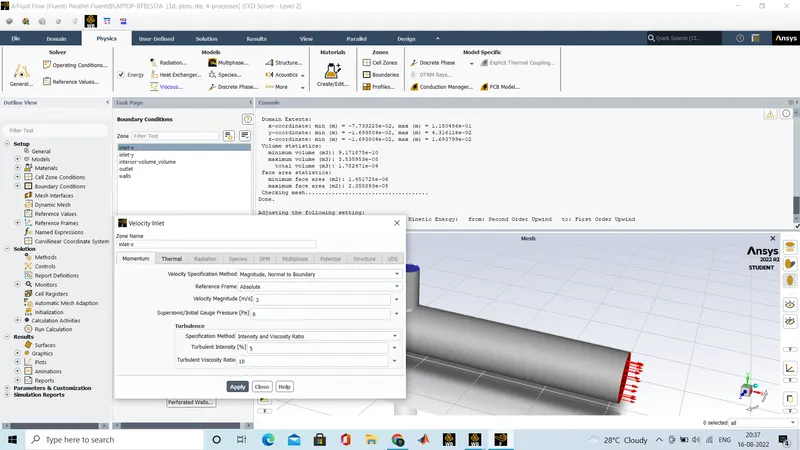
- boundry conditions: 1) hot inlet velocity of 3m/s.
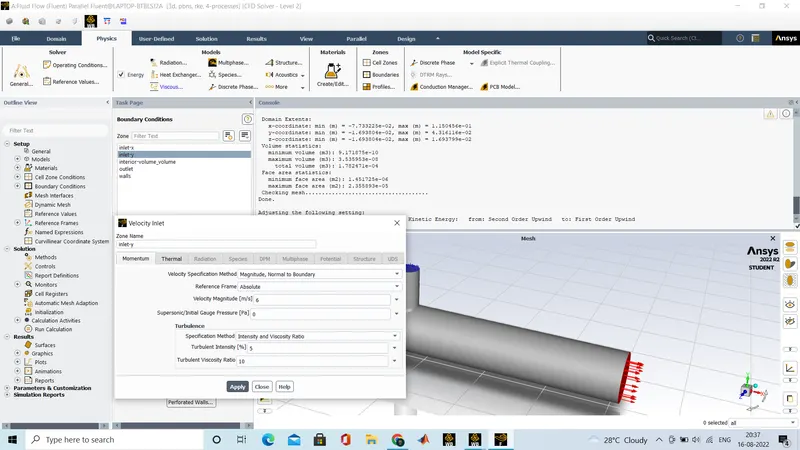
2)cold inlet velocity of 6m/s.
- initialing: 1)hybridinitializing
4. Solutions :
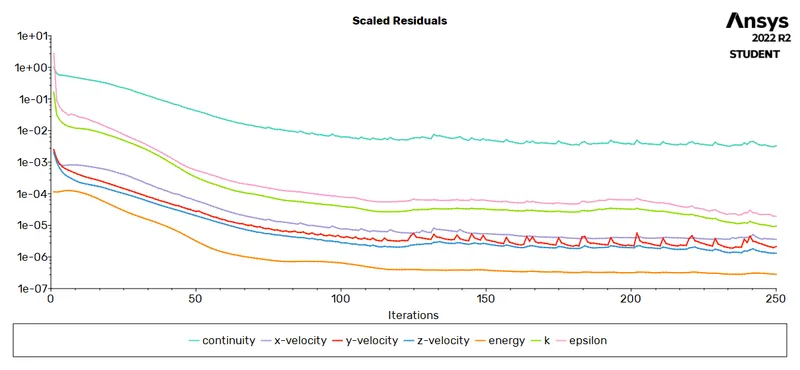
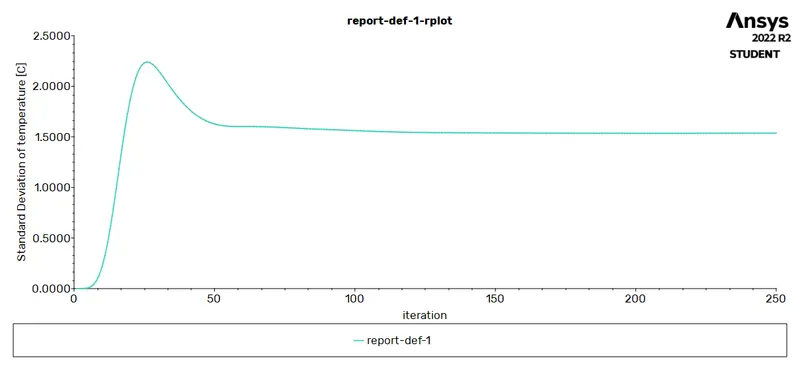
Residual: for 250 iterations

Residual plot :
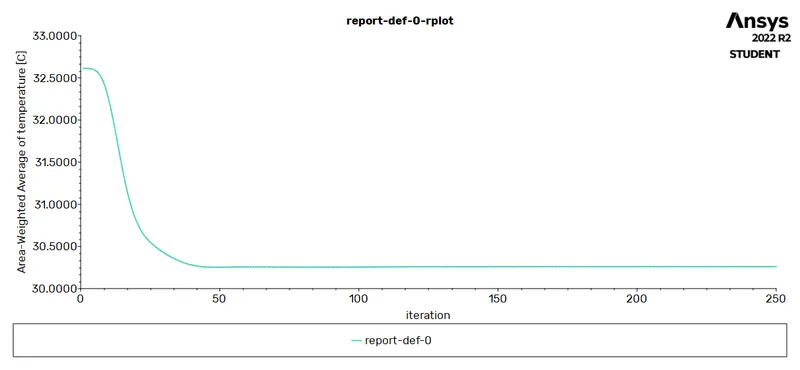
Area weighted average :
Standard deviation :
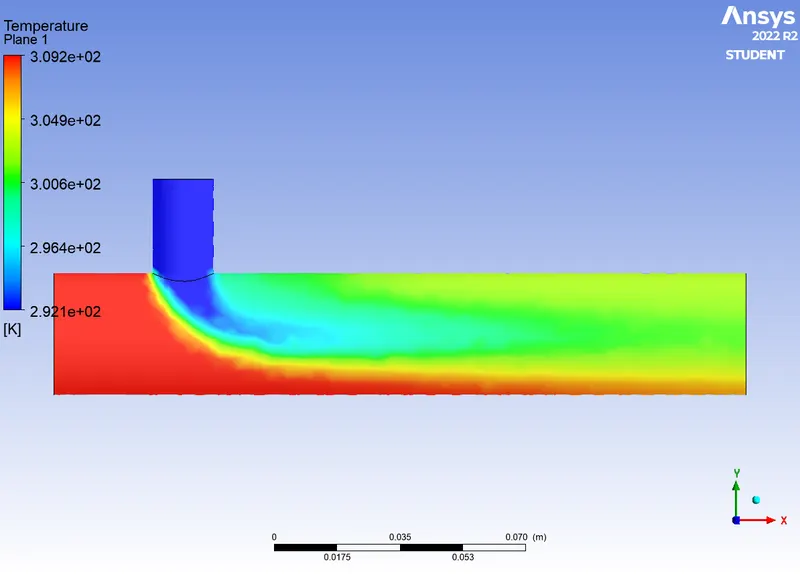
5. Results :

Temperature output :
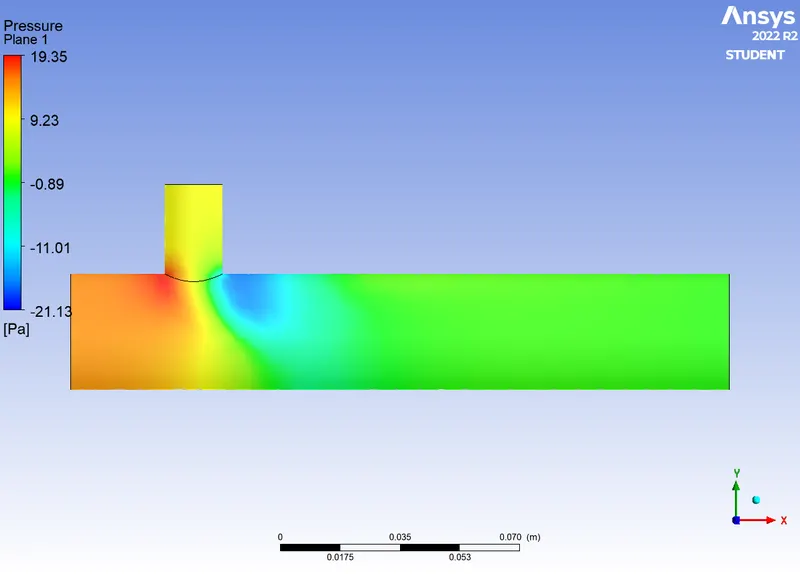
Pressure output :
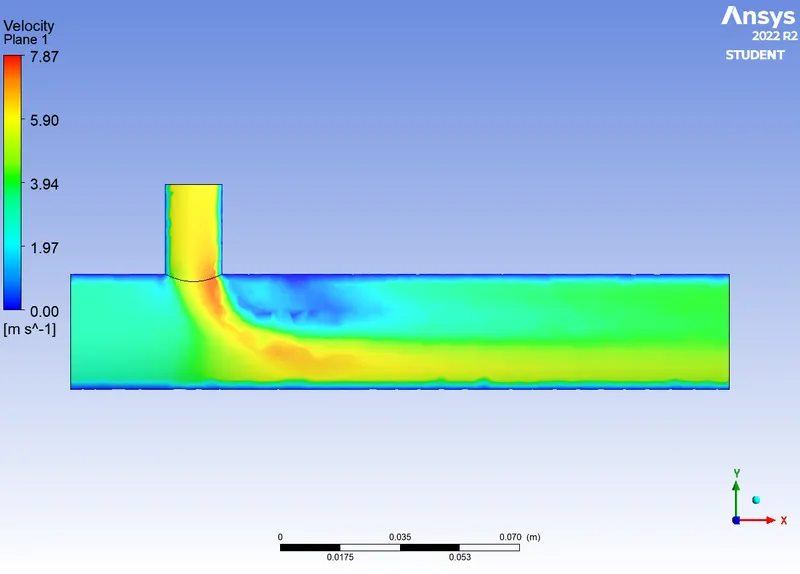
Velocity output :
Analysing the mixing tee flow for long arm
Case 2 :
- Short mixing tee with a hot inlet velocity of 3m/s.
- Momentum ratio of 4
- hot inlet temperature is 360C
- the Cold inlet is at 190C.
- cold inlet velocity of 6m/s.
1. Geometry :
- importing the geometry: we have to import the geometry into the ansys workbench
- Go to Ansys space claim and open the Mixing Tee Long
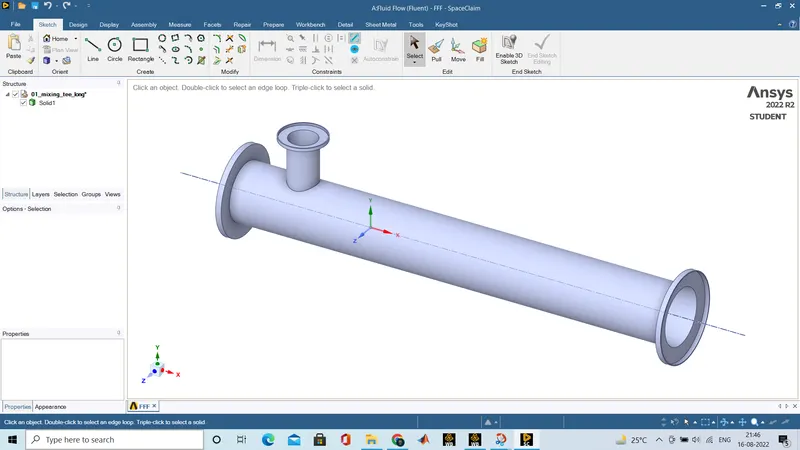
- Exctracting the volume
- supresing physics: this comand is used to hide the solid part of the model
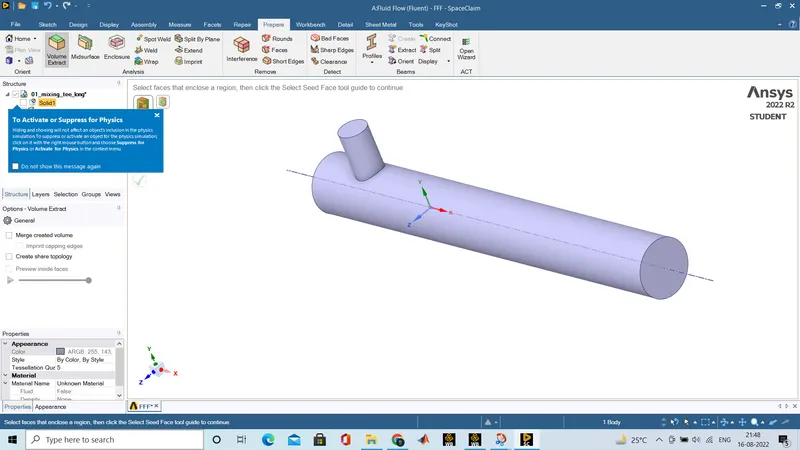
2. Meshing
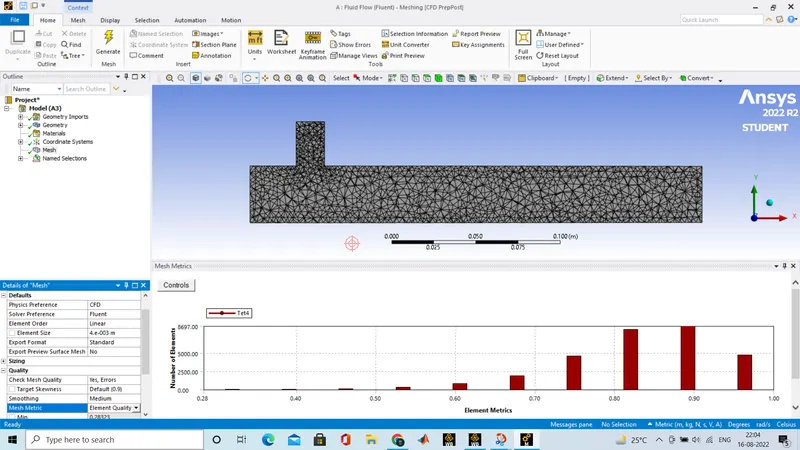
Meshing is nothing but the deviding the model into small peices and the distance between the points is 0.004.
number of node : 4801
number of elements:22296.
afetr the complesion of meshing we have to give the names for each and every face
Element matrix:
3. setup:
- Domain: 1) steday state
2) presure based solver
- materieal : 1) Air-fluid
2)alluminium
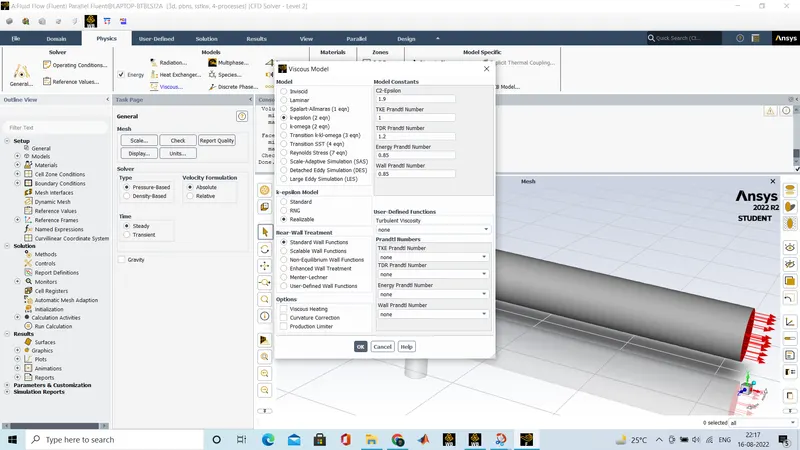
- model: k-epsilon>reliabel>standard wall function
- cell zone: air-fluid-valume
- boundry conditions: 1) hot inlet velocity of 3m/s.
2)cold inlet velocity of 6m/s.
- initialing: 1)hybridinitializing
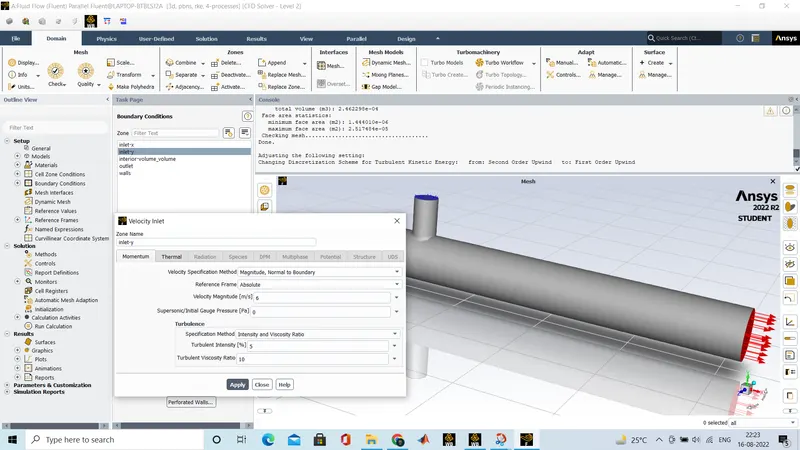
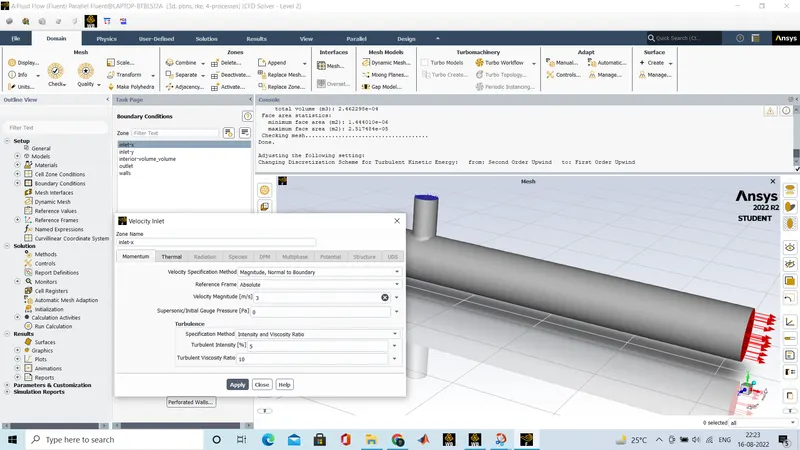
4. Solutions :
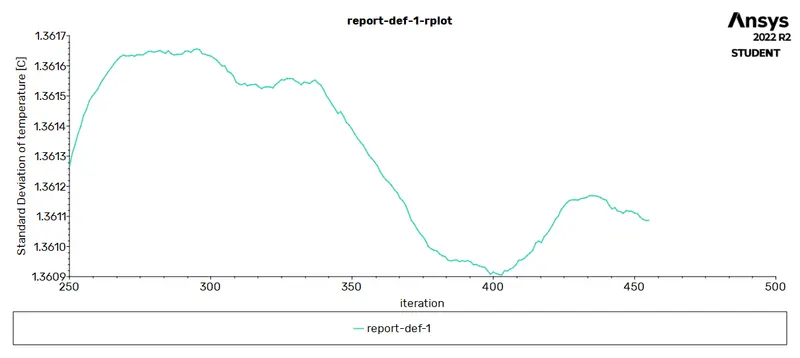
Residual: for 250 iterations
Residual plot :
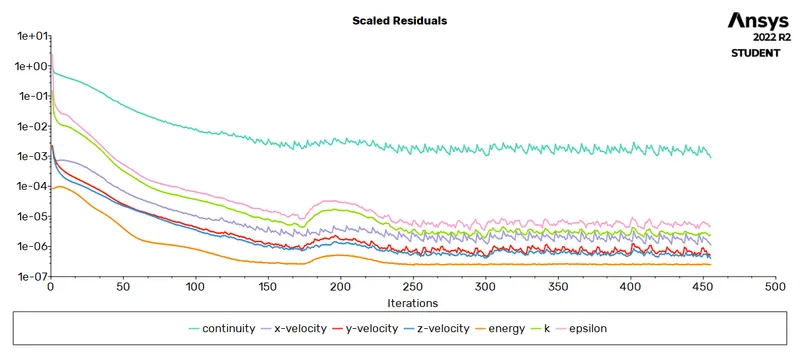
Area weighted average :
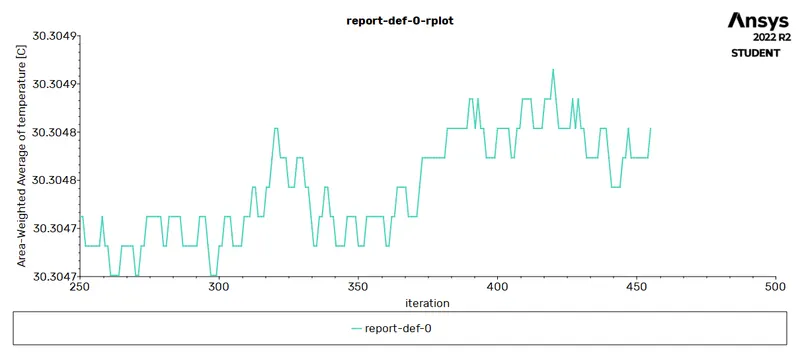
Standard deviation :
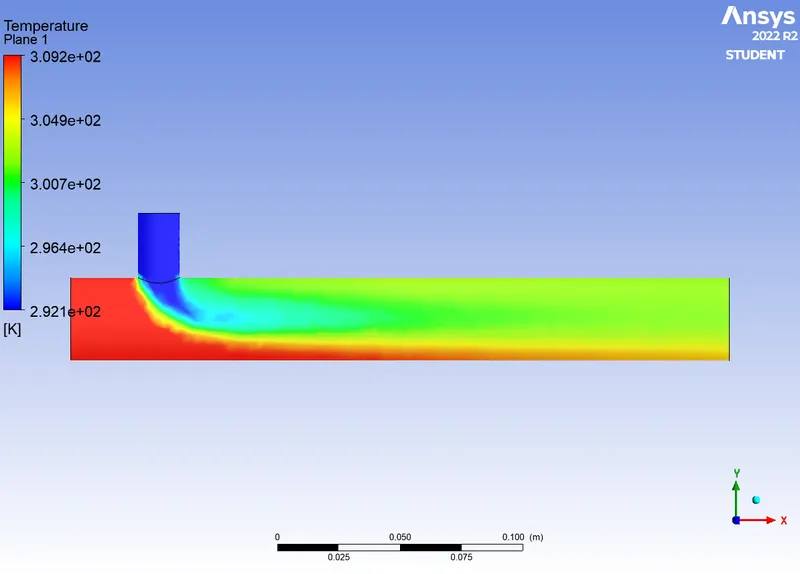
5. Results :
Temperature output:
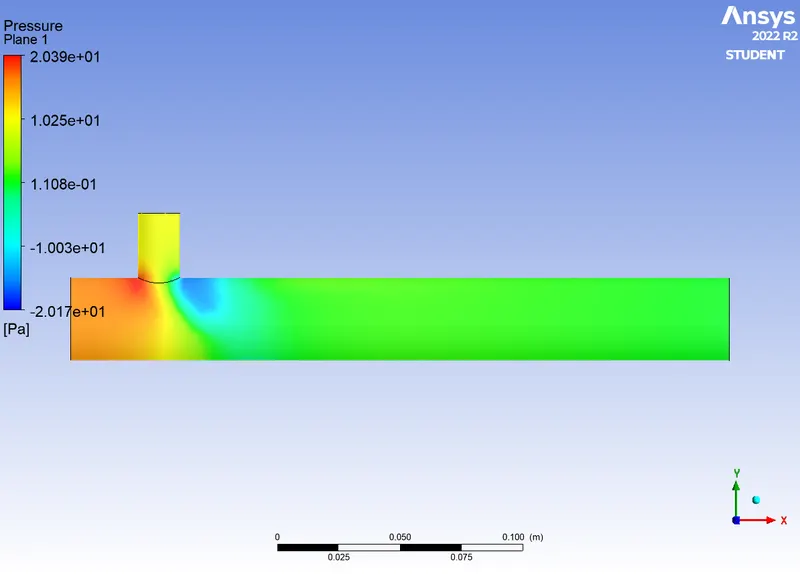
Pressure output :
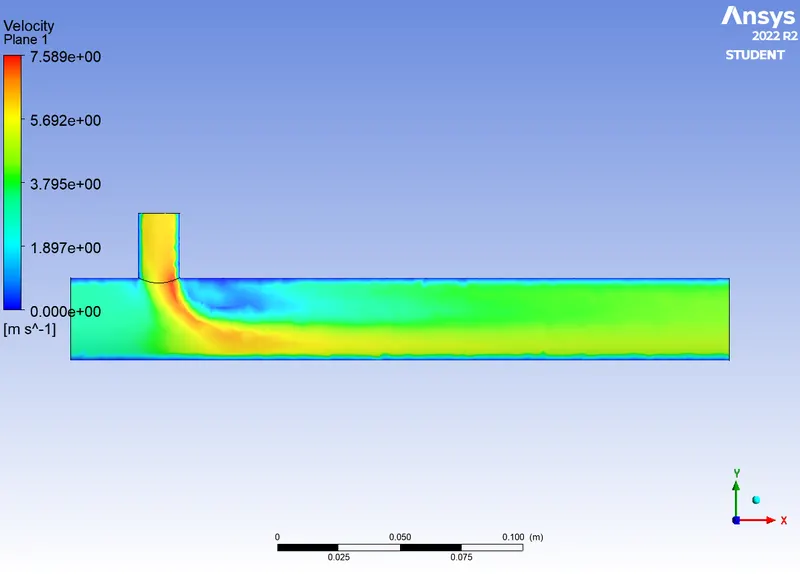
Velocity output :
CONCLUSION:
- Higher the momentum ratio, higher will be the mixing efficiency of Tee joint.
- Increasing the length of the pipe doesn’t serve the purpose of mixing efficiently. So, it is efficient to use short pipe.
AVERAGE OUTLET TEMPERATURE:
Irrespective of length of the mixing Tee, the average outlet temperature on both cases is quite same.
MOMENTUM RATIO:
- As momentum ratio increases, the velocity of cold inlet fluid increases and due to high relative velocity between the fluid it experiences higher turbulence and therefore the outlet fluid temperature decreases.
- For momentum ratio 4 the average outlet fluid temperature is 300k. From these we can say that there will be a drop in temperature if momentum ratio increases.
- In order to obtain better mixing the velocity of cold air is important. By increasing the cold fluid velocity, the outlet temperature gets reduced.
No OF ITERATIONS:
The longer Tee takes more time to converge than short Tee.