Week 1- Mixing Tee
Description:
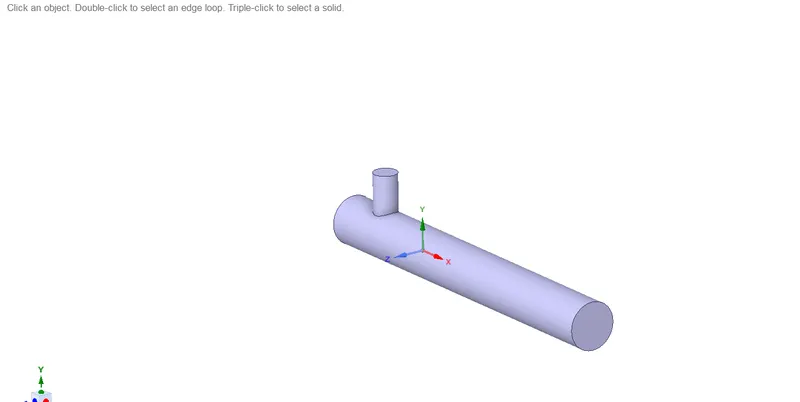
Mixing tee is a flow control devices.It mixes the two different fluid stream into a combined fluid stream.In has two inlets and one outlet.In this two inlets, one is located along the X axis and the other is located along the Y axis.The outlet is located along the X axis.
Formula:
momentum ratio = velocity at cold inlet/velocity at hot inlet.
Steps in analysis of Mixing Tee:
- Geometry
- Meshing
- Set up
- Solution
- Result
Case 1: Shorter Mixing Tee
- Velocity at hot inlet =3 m/s
- Temperature at hot inlet=25C
- Temperature at cold inlet=10C
- Momentum ratio=2
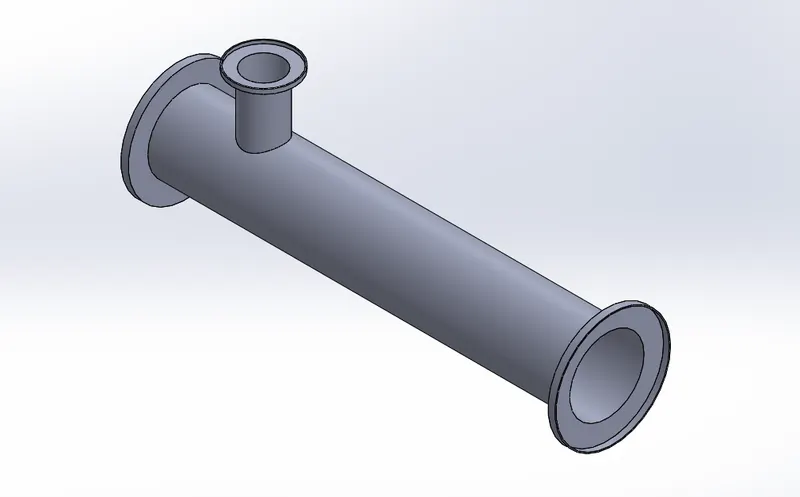
Geometry:
1.Importing the model.
2.Fluid volume extraction.
3.Suppress for physics.
1.Importing the model:
The first step in this case is importing the solid Tee model to the space claim.
2.Fluid volume extraction:
Volume extraction is defined as extracting the volume phase from the solid geometry. Here the fluid volume is extracted by using the volume extraction command.
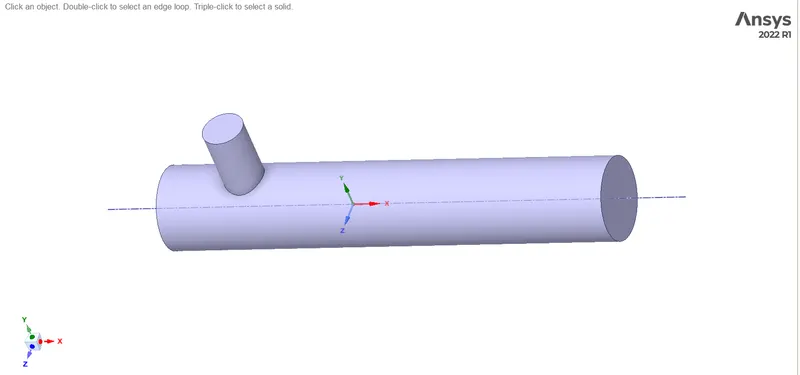
3.Suppress for physics:
Suppress for physics is a command it is used to deactivate the solid model.In this case we only requires the fluid volume so that the solid model is suppresed.
Meshing:
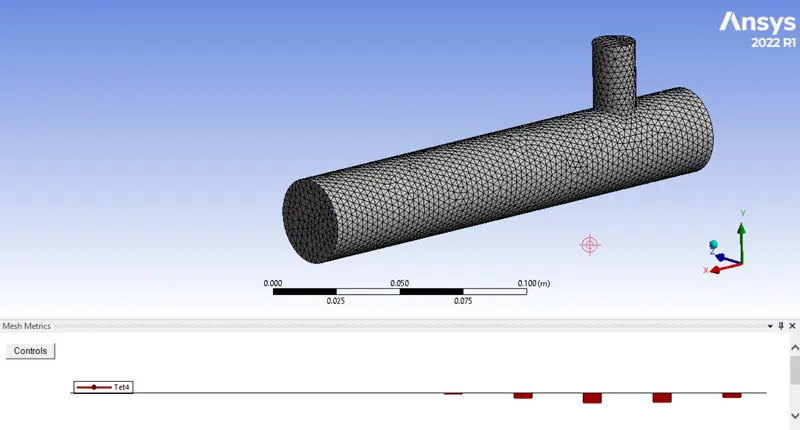
Meshing is the process of dividing the solid model into a small individual element.Here we are discretizing the solid model into a small element of size 0.003m.We obtained,
No of elements = 39393.
No of nodes = 8275.
After completion of meshing naming should be done. Proper naming should be given for all the faces and the quality of the each element is checked.
Set up:
This is the major step in analysis because here only we gave the values and conditions of the Tee model.This case runs under the following condition,
General :1.Steady state
2.Pressure based solver
Material :1.Fluid-Air
2.Solid-Aluminium
Model :1.K epsilon -standard K epsilon-standard wall function
Cell zone condition :Volume-Fluid-Air
Boundary condition:1.Inlet X- Velocity inlet-3m/s
2.Inlet Y- Velocity inlet-6m/s
Initialization :Hybrid initialization
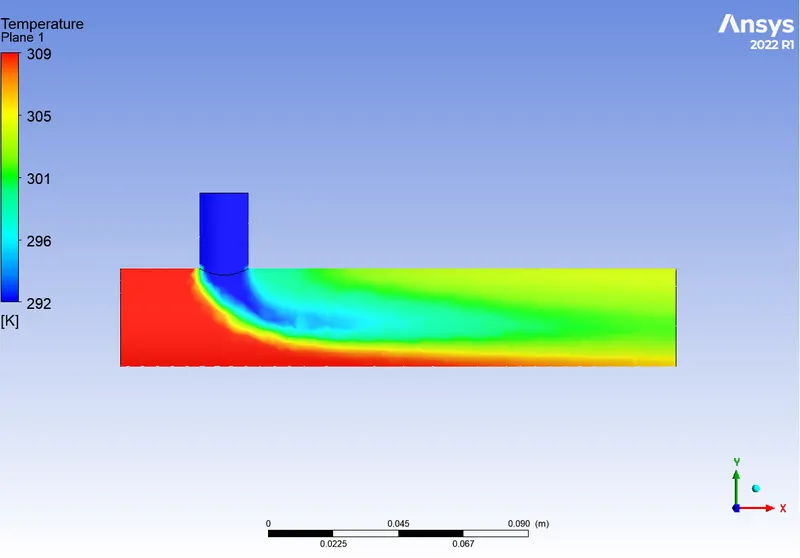
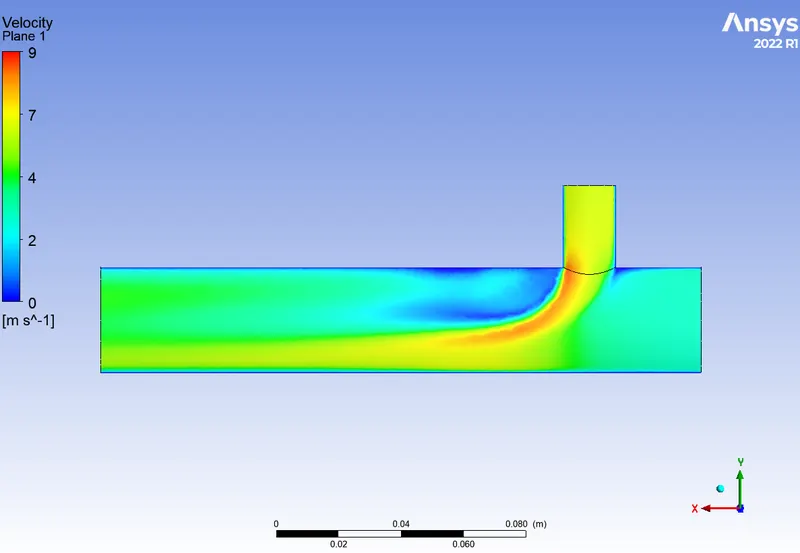
After intialization a plane has to be created normal to the Z axis. The temperature and velocity of the Tee is analysed in the plane and average temperature at the outlet is to be calculated.Finally the calculation is to be runned for 150 iterations.
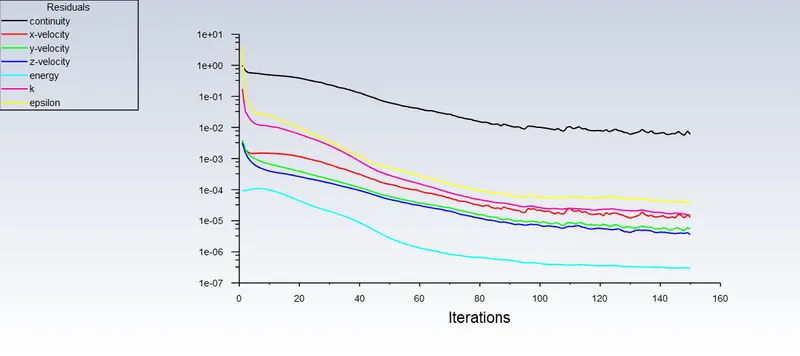
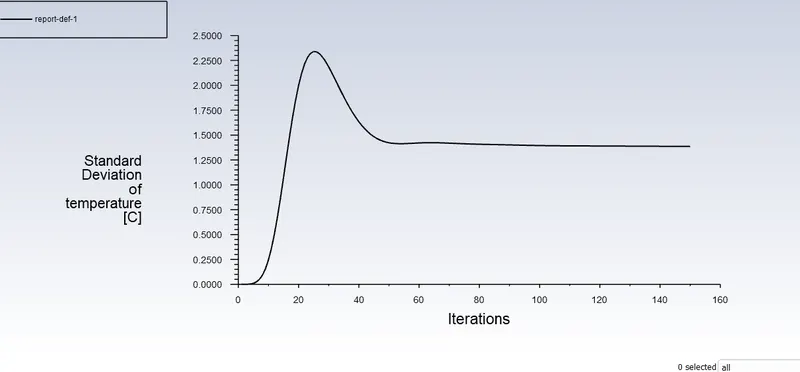
solution:- soluition is conveged of 150 iteration
plot for scalar residuals
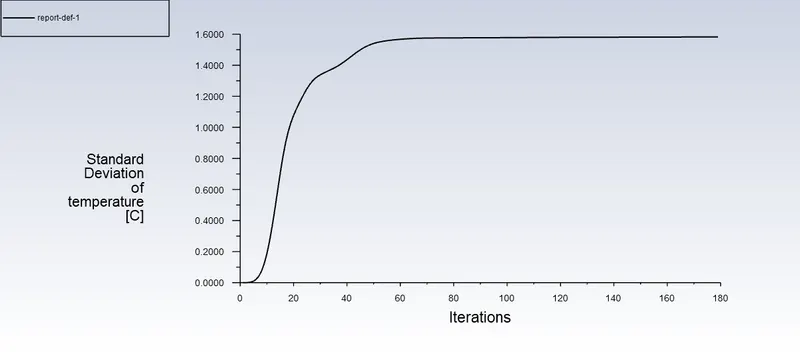
plot for standard diviation v/s iteration
Result:
Temperature Contour :
velocity Contour :
case 1 momentum ratio 4
General :1.Steady state
2.Pressure based solver
Material :1.Fluid-Air
2.Solid-Aluminium
Model :1.K epsilon -standard K epsilon-standard wall function
Cell zone condition :Volume-Fluid-Air
Boundary condition:1.Inlet X- Velocity inlet-3m/s
2.Inlet Y- Velocity inlet-12m/s
Initialization :Hybrid initialization
After intialization a plane has to be created normal to the Z axis. The temperature and velocity of the Tee is analysed in the plane and average temperature at the outlet is to be calculated.Finally the calculation is to be runned for 150 iterations.
solution:- soluition is conveged of 200 iteration
plot for scalar residuals
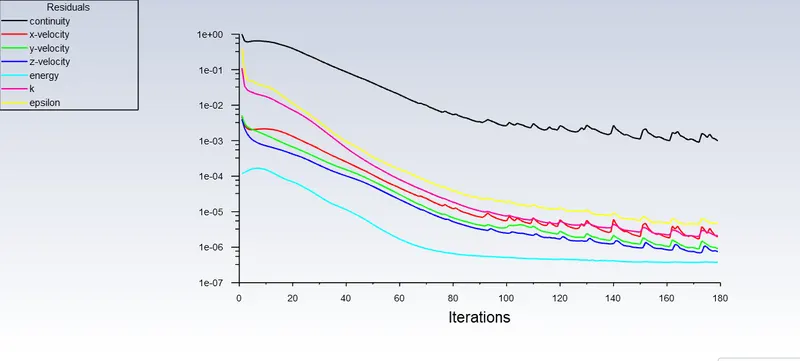
plot for standard diviation v/s iteration
Result:
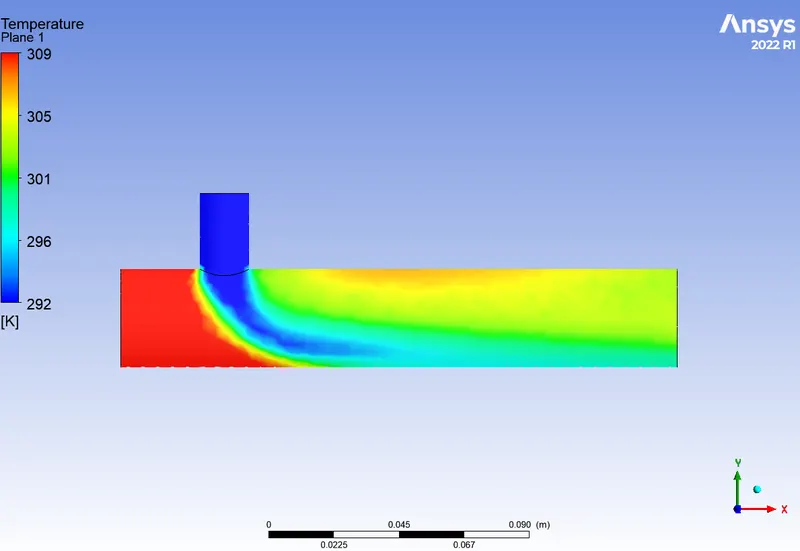
Temperature Contour :
Case 2: long Mixing Tee
- Velocity at hot inlet =3 m/s
- Temperature at hot inlet=25C
- Temperature at cold inlet=10C
- Momentum ratio=2
3.Suppress for physics:
Suppress for physics is a command it is used to deactivate the solid model.In this case we only requires the fluid volume so that the solid model is suppresed.
Meshing:
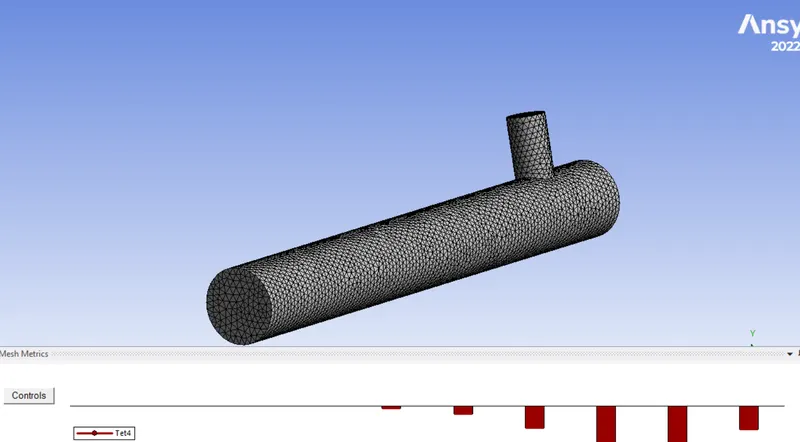
Meshing is the process of dividing the solid model into a small individual element.Here we are discretizing the solid model into a small element of size 0.003m.We obtained,
No of elements = 56670.
No of nodes = 11732.
After completion of meshing naming should be done. Proper naming should be given for all the faces and the quality of the each element is checked.
Set up:
This is the major step in analysis because here only we gave the values and conditions of the Tee model.This case runs under the following condition,
General :1.Steady state
2.Pressure based solver
Material :1.Fluid-Air
2.Solid-Aluminium
Model :1.K epsilon -standard K epsilon-standard wall function
Cell zone condition :Volume-Fluid-Air
Boundary condition:1.Inlet X- Velocity inlet-3m/s
2.Inlet Y- Velocity inlet-6m/s
Initialization :Hybrid initialization
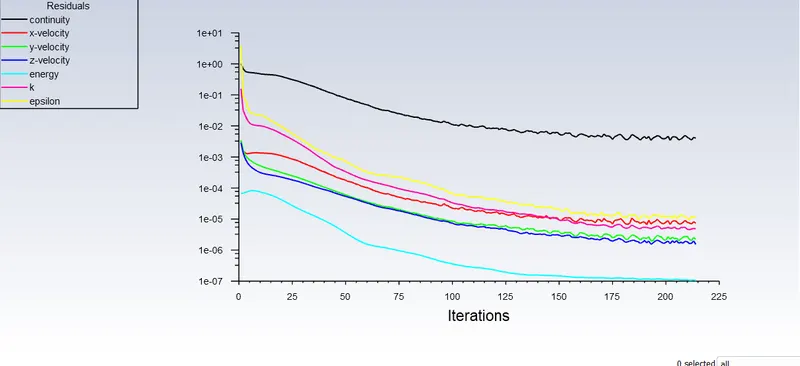
After intialization a plane has to be created normal to the Z axis. The temperature and velocity of the Tee is analysed in the plane and average temperature at the outlet is to be calculated.Finally the calculation is to be runned for 200 iterations.
solution:- soluition is conveged of 200 iteration
plot for scalar residuals
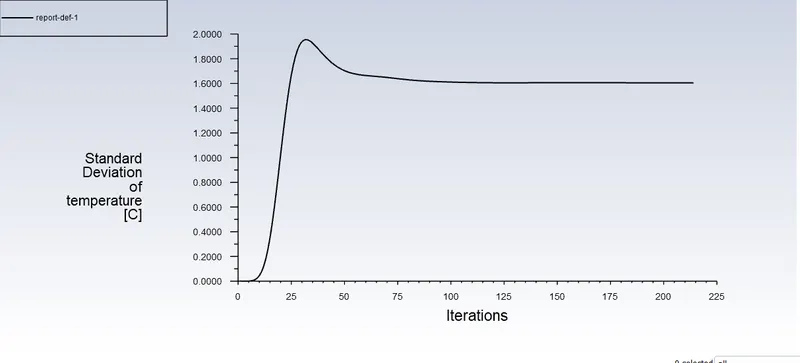
plot for standard diviation v/s iteration
Result:
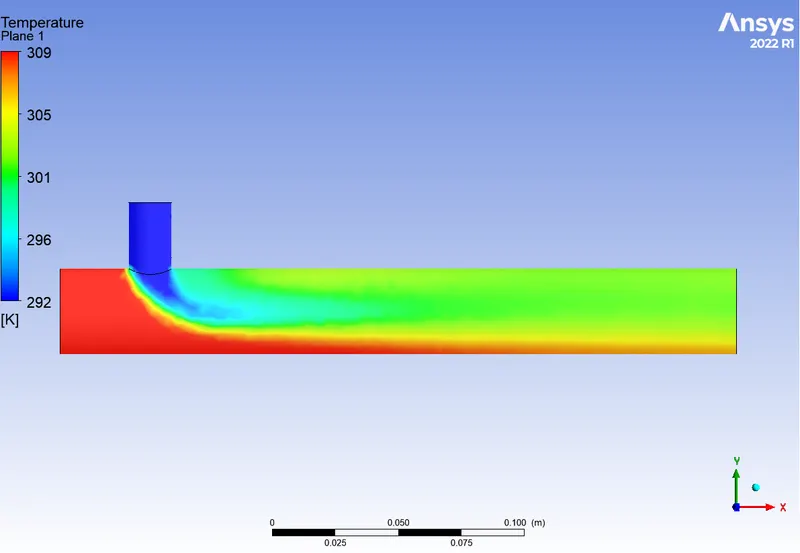
Temperature Contour :
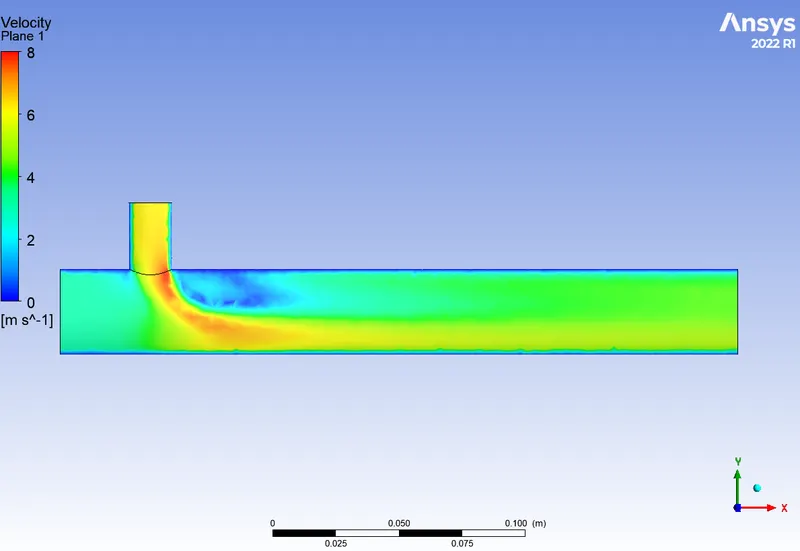
velocity Contour :
case 2 momentum ratio 4
General :1.Steady state
2.Pressure based solver
Material :1.Fluid-Air
2.Solid-Aluminium
Model :1.K epsilon -standard K epsilon-standard wall function
Cell zone condition :Volume-Fluid-Air
Boundary condition:1.Inlet X- Velocity inlet-3m/s
2.Inlet Y- Velocity inlet-12m/s
Initialization :Hybrid initialization
After intialization a plane has to be created normal to the Z axis. The temperature and velocity of the Tee is analysed in the plane and average temperature at the outlet is to be calculated.Finally the calculation is to be runned for 200 iterations.
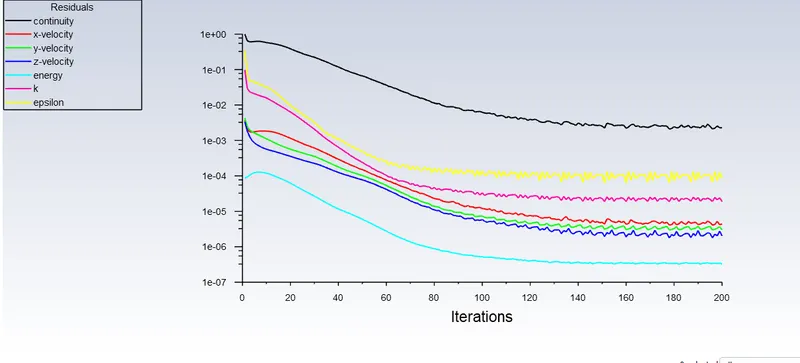
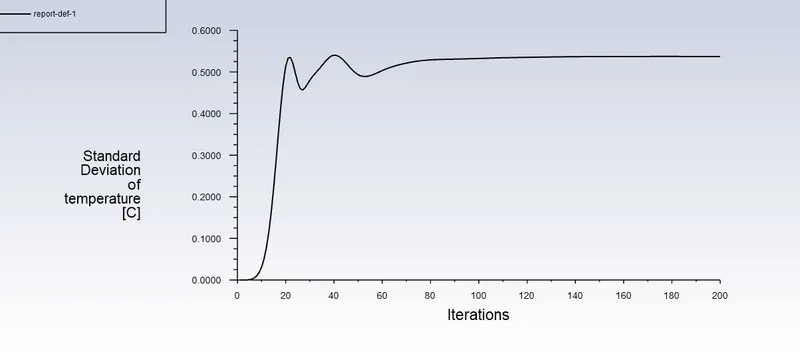
solution:- soluition is conveged of 200 iteration
plot for scalar residuals
plot for standard diviation v/s iteration
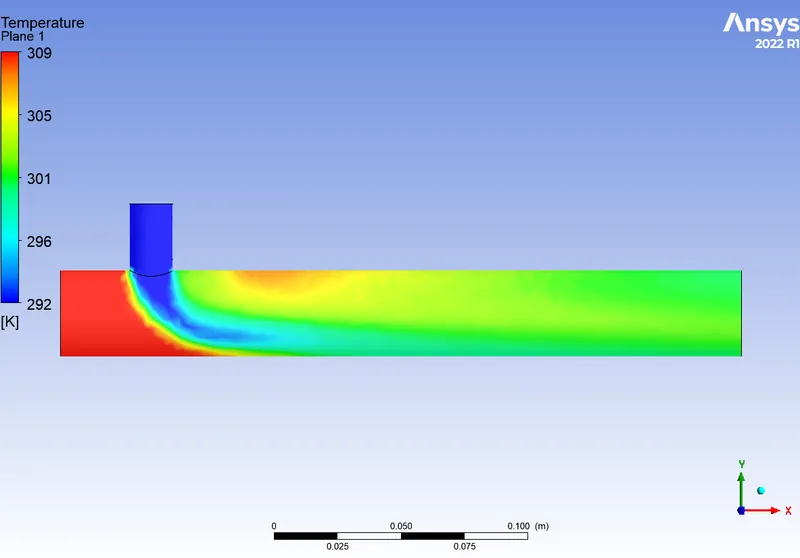
Temperature Contour :
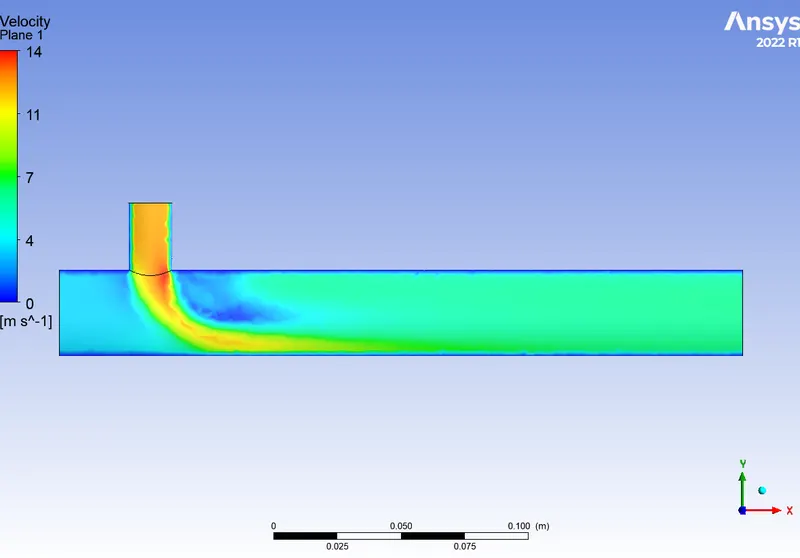
velocity Contour :
CONCLUSION:
- As seen in the Case-1 for momentum ratio 2 and Case-1 for momentum ratio 4 the temperature at the outlet drops down significantly due to high velocity of cold air from the inlet. This is possible due to the turbulent mixing at the tee joint between hot air and cold air because of the high velocity of cold air., which is not possible in case of low-velocity cold air.
- The temperature contour at the outlet for short tee cases shows that some of the high temperatures flow sips through without properly mixing with the flow. Whereas, in the temperature contour of long tee cases, the high temperatures flow thoroughly mixes with the rest of the flow.
- Therefore, we can recommend using the long tee and high-velocity inlet for application. This is because we have a low standard deviation in case of long tee compared to the short tee for both momentum ratios.