Week 1- Mixing Tee
Aim
To simulate the flow of air through mixing tee and understand the effect of length of pipe and momentum ratio of velocity for mixing of air by using two different types of pipe i.e. short pipe and long pipe.
About
In industrial process engineering, mixing is a unit operation that involves the manipulation of a heterogeneous physical system with the intent to make it more homogeneous. Mixing is performed to allow heat and/or mass transfer to occur between one or more streams, components or phases. Modern industrial processing almost always involves some form of mixing. Mixing tee is a type of mixing mechanism. Mixing Tees utilizes a specifically engineered internal geometry to efficiently mix two fluid streams into one combined stream. Mixing tees are widely used in the petrochemical, HVAC industry etc. in which two fluid streams with different physical and/or chemical properties mix together.
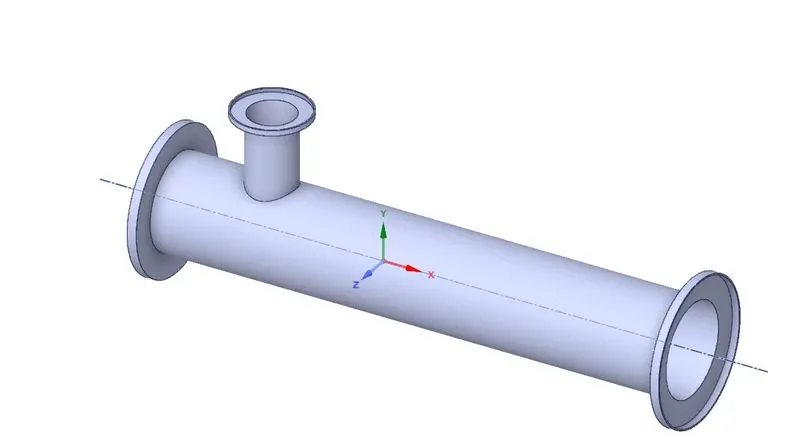
Hot air flowing in the main pipe is mixed with cold air flowing through a tee. The standard deviation of temperature is computed to quantify the degree of mixing. The velocity and temperature fields are also computed. The effects of the mesh size, turbulence model on results were examined.
For this, we have created two versions of the mixing tee. One of them is longer than the other.
It is set up as steady-state simulations to compare the mixing effectiveness when hot inlet temperature is 360C & the Cold inlet is at 190C.
Turbulence models
In fluid dynamics, turbulence or turbulent flow is fluid motion characterized by chaotic changes in pressure and flow velocity. It is in contrast to a laminar flow, which occurs when a fluid flows in parallel layers, with no disruption between those layers.
Turbulence is commonly observed in everyday phenomena such as surf, fast flowing rivers, billowing storm clouds, or smoke from a chimney, and most fluid flows occurring in nature or created in engineering applications are turbulent. Turbulence is caused by excessive kinetic energy in parts of a fluid flow, which overcomes the damping effect of the fluid's viscosity. For this reason turbulence is commonly realized in low viscosity fluids. In general terms, in turbulent flow, unsteady vortices appear of many sizes which interact with each other, consequently drag due to friction effects increases. This increases the energy needed to pump fluid through a pipe.
in general fluid flows turbulence is the norm and laminar flow is the exception. turbulence is a very complicated phenomenon, our understanding of which is very limited. thus when we try to model turbulence in a simulation there are various approaches that exist. it is on us to select a approach that works well with the physics of the problem.
T junction is formed when two pipes are jointed perpendicular to each other. It has wide range of applications from house hold plumbing to Air condition ducts in industries etc. As the flow considered is turbulent in this study Reynold average Navior Strokes equation is used. RANS is further divided into several models which can be chosen according to the problems. Among the several models in RANS K-epsilon and K-omega turbulence models are used in this study.
K epsilon is two equation RANS turbulence model, in this model we solve for two variables, turbulent kinetic energy k and turbulent dissipation of kinetic energy epsilon. This model uses wall functions to account for the fluid velocity in the viscous sublayer near the wall.
Main limitations for K-epsilon models are:
- No-slip walls.
- Adverse pressure gradients.
But varies models in K-epsilon models were developed to improve the performance of K-epsilon model. They are Realizable K-epsilon model, RNG K-epsilon model.
K-omega is another turbulence model where rate of dissipation of kinetic energy epsilon is replaced by omega. The main objective of this model is to account for near wall interactions more accurately than K-epsilon model.
Limitations for K-omega
- Difficulty of convergence compared to K-epsilon
- Sensitivity to initial conditions.
Due to these limitations K-omega SST model was developed. This model is an hybrid of K-omega and K-epsilon model. This model is used mainly in aeronautics area where freestream turbulence levels has to be addressed and it can also applied to the viscous affected region without further modification.
- Case 1
- Short mixing tee with a hot inlet velocity of 3m/s.
- Momentum ratio of 2, 4.
- Case 2
- Long mixing tee with a hot inlet velocity of 3m/s.
- Momentum ratio of 2, 4.
Momentum ratio is defined as the ratio of velocity at the cold inlet to the velocity at the hot inlet.
CASE setup-
CAD cleanup/Pre-processing- SpaceClaim.
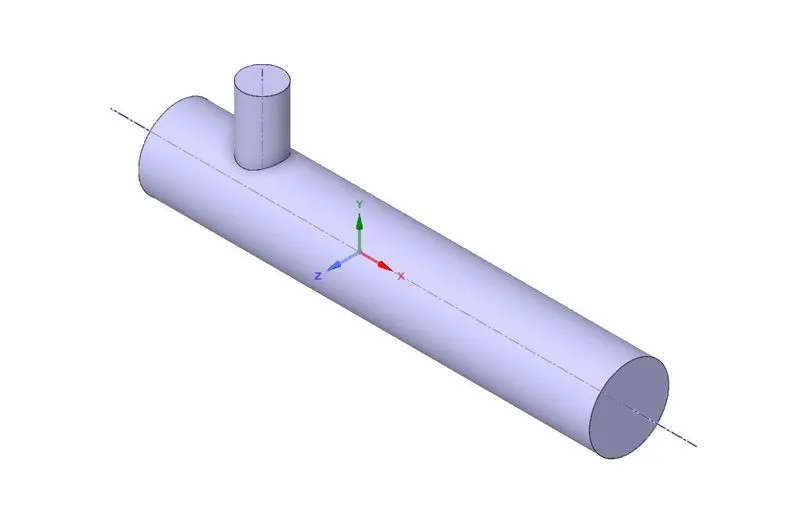
The CAD model is imported into the SpaceClaim to extract the flow volume field from the model. The extracted volume is shown below:
Mesh
The boundary names are applied in this section and a mesh is generated.
Setup
In this section, we apply different boundary conditions like inlet, outlet boundary conditions. Turbulence models are set up like K-epsilon or K-omega for solving the turbulent mixing of air. The number of iterations is set in this section.
CFD-Post
Post-processing is carried in this section in which different contours are setup to visualize the properties (such as Temperature, velocity etc.) for which simulation is run.
BASELINE SIMULATION-
For inlet velocity of 3m/s and momentum ratio of 2
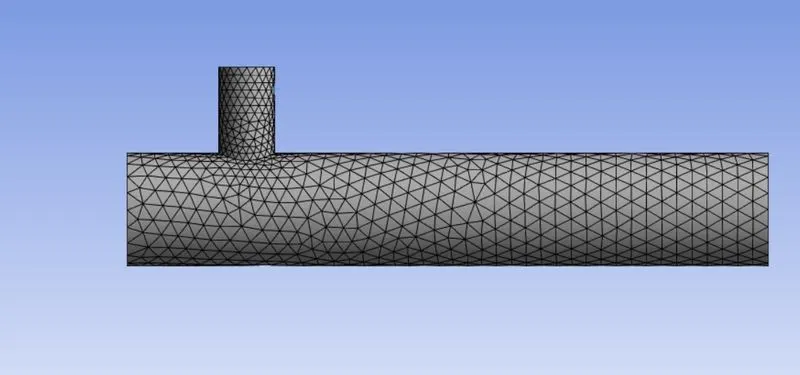
Default mesh- 0.010211 m
MESH:
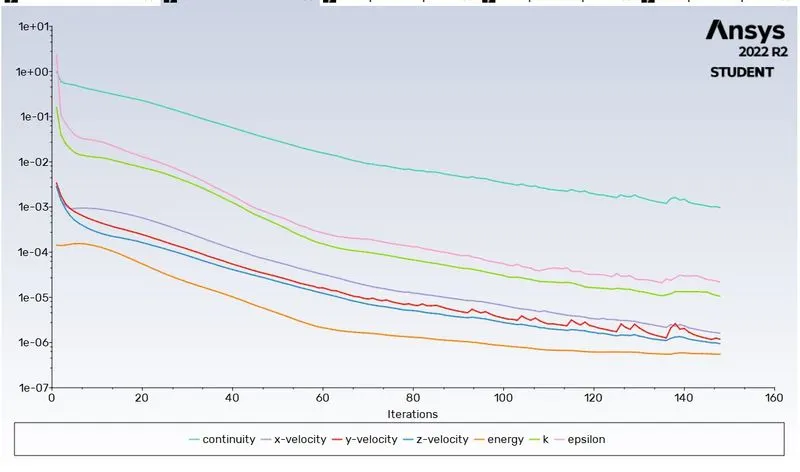
Scaled residuals
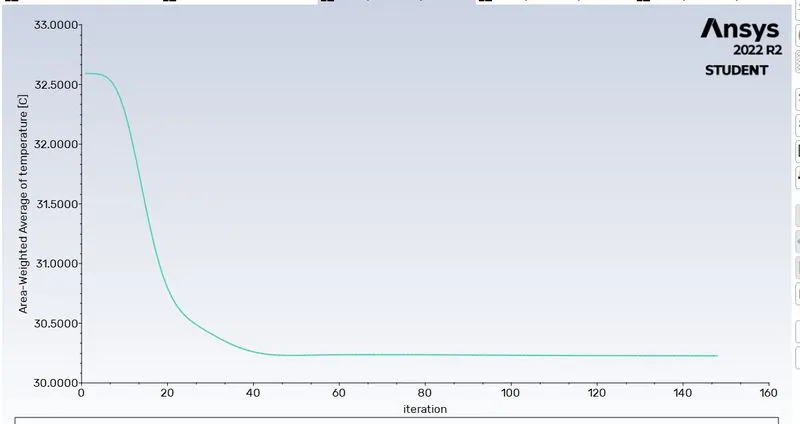
Area weighted average of temperature
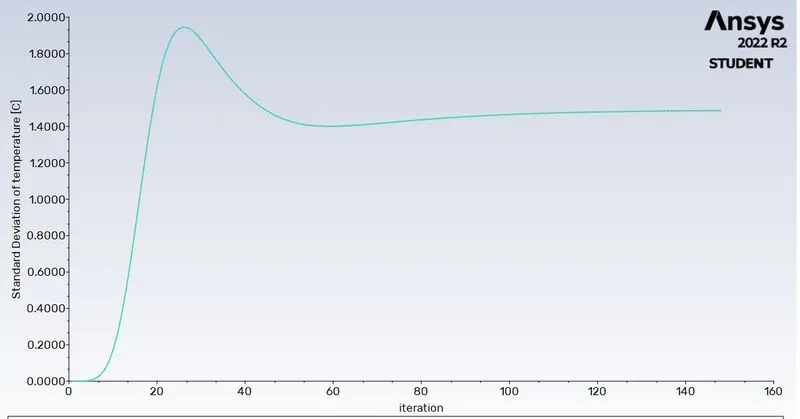
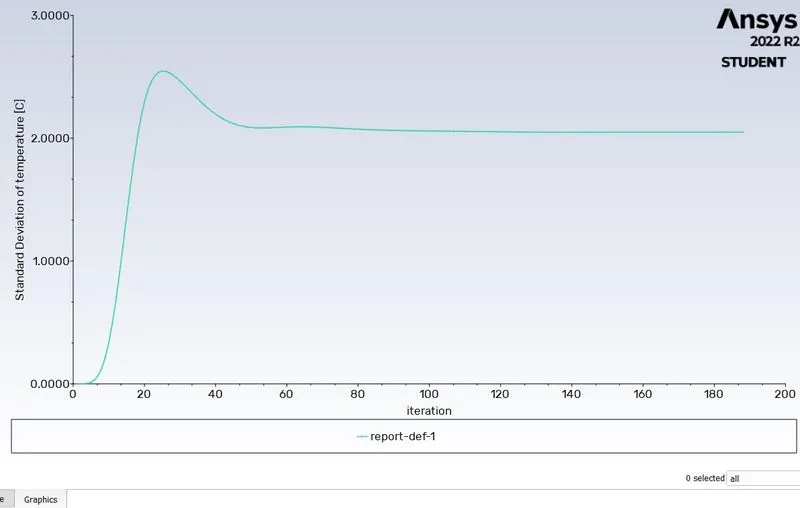
Standard deviation of temperature
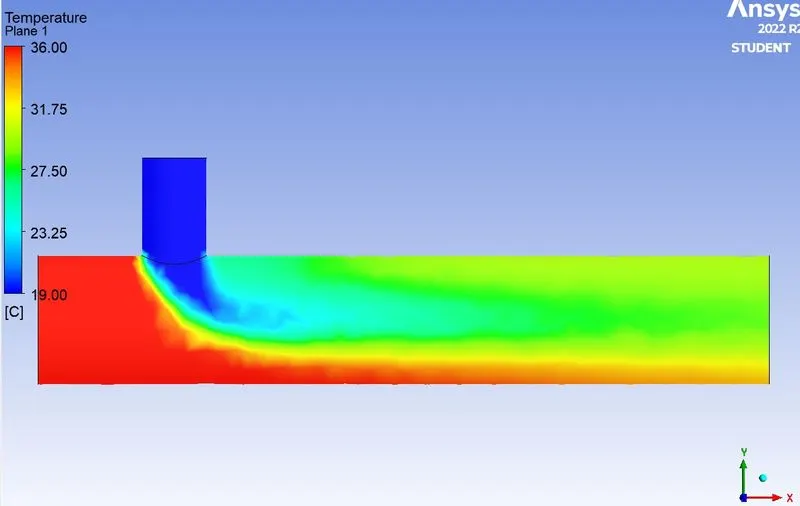
Temperature contour
Velocity contour
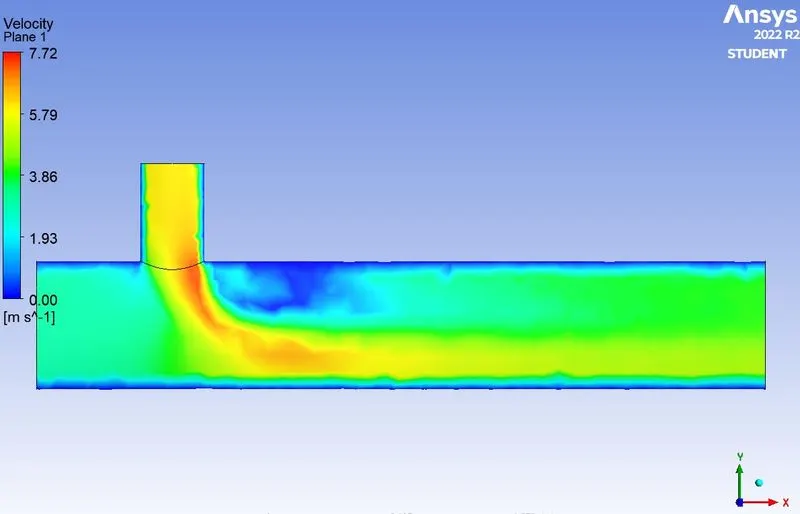
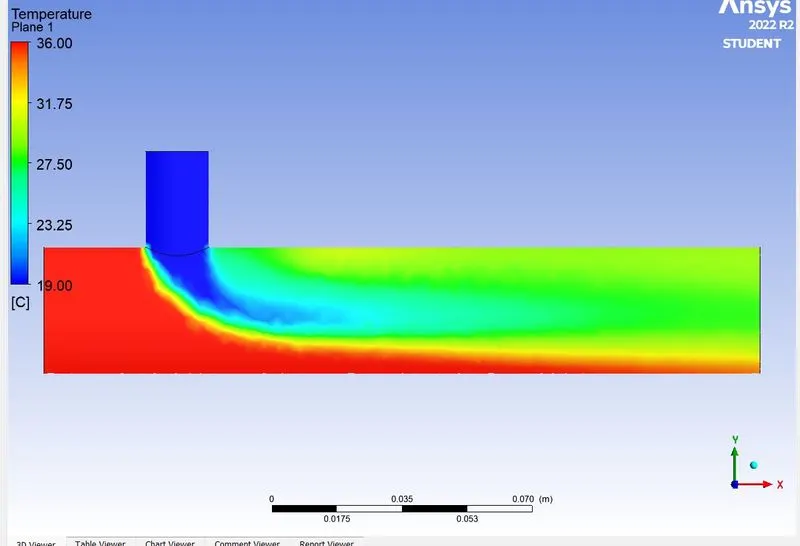
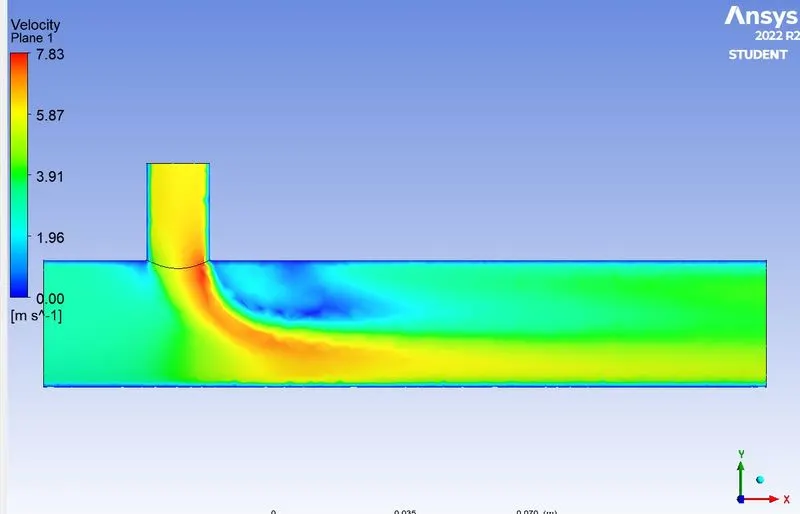
As seen from the above contour pictures, the flow field of air in velocity and temperature is diffused and not adequately picturised due to coarse mesh. The number of elements is 12,701 which is less to capture the physics properly. Therefore, a finer mesh is set up for further simulation.
CASE 1- SHORT TEE
a) For inlet velocity of 3m/s and momentum ratio of 2(K-epislon model)
Mesh size- 0.002 m
A mesh element metric that identifies the quality of mesh was employed and it can be seen that the elements of the lowest quality are minimal. Most of the elements have quality in the range of 0.7-1. Hence, the mesh is of acceptable quality.
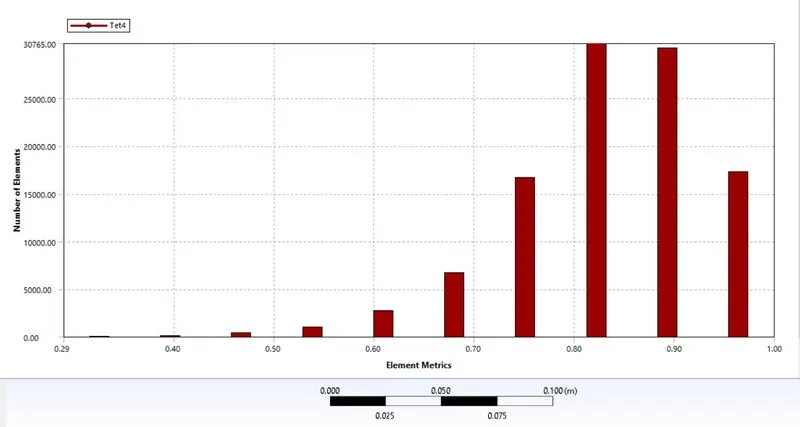
MESH- The number of elements is 1,05,817
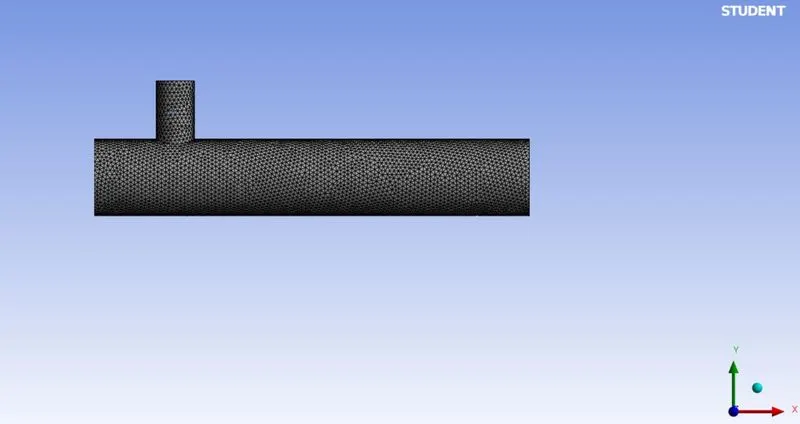
Residuals plot
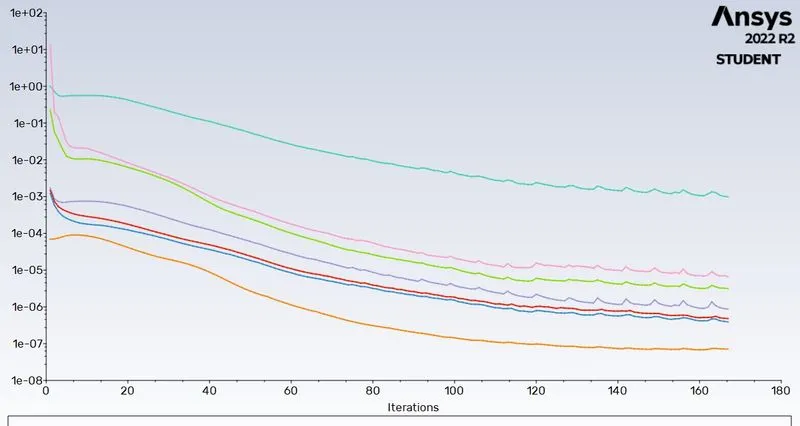
Standard deviation of temperature
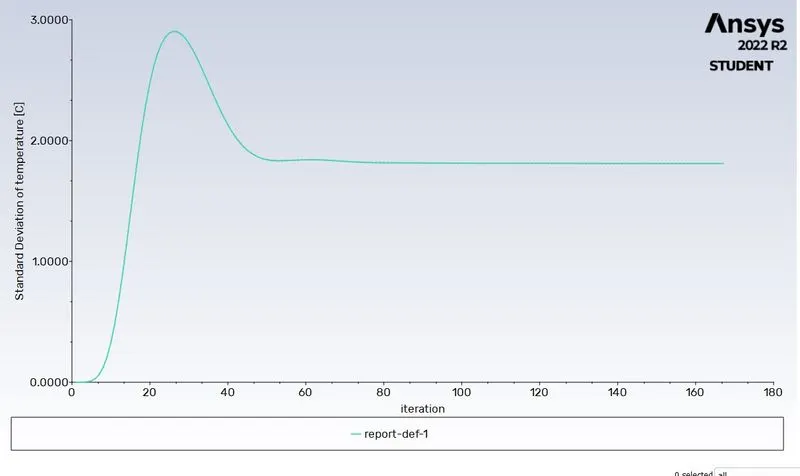
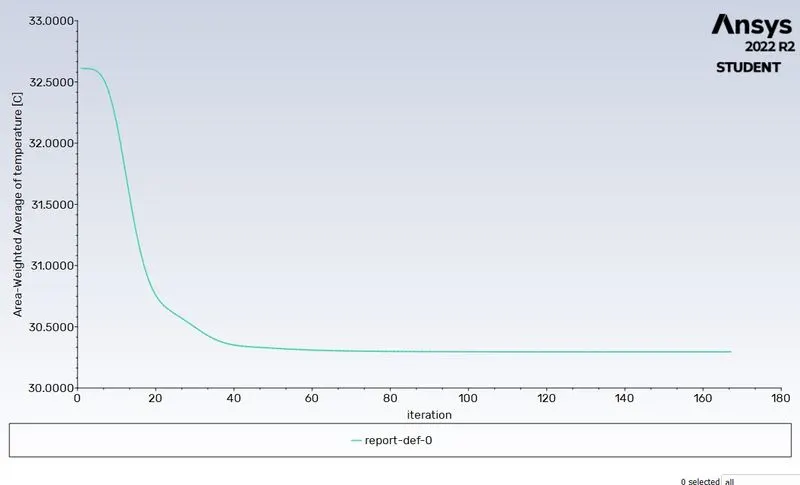
Area weighted average of temperature
Temperature contour
Velocity contour
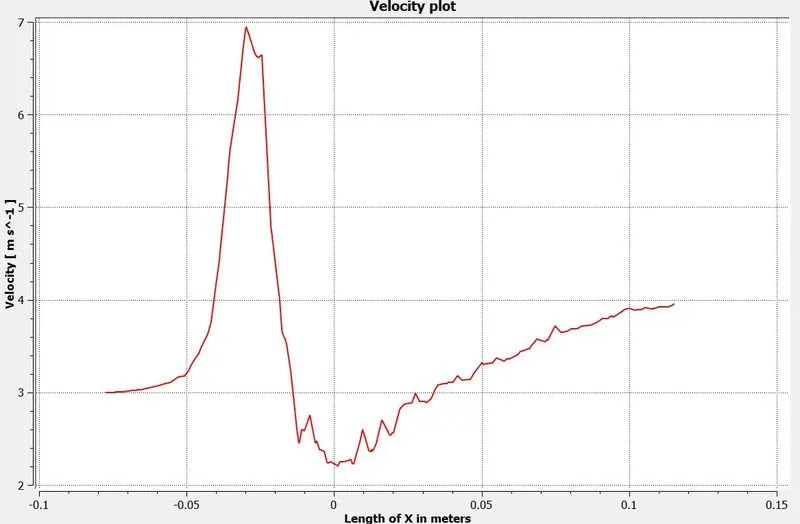
Velocity along the length of pipe
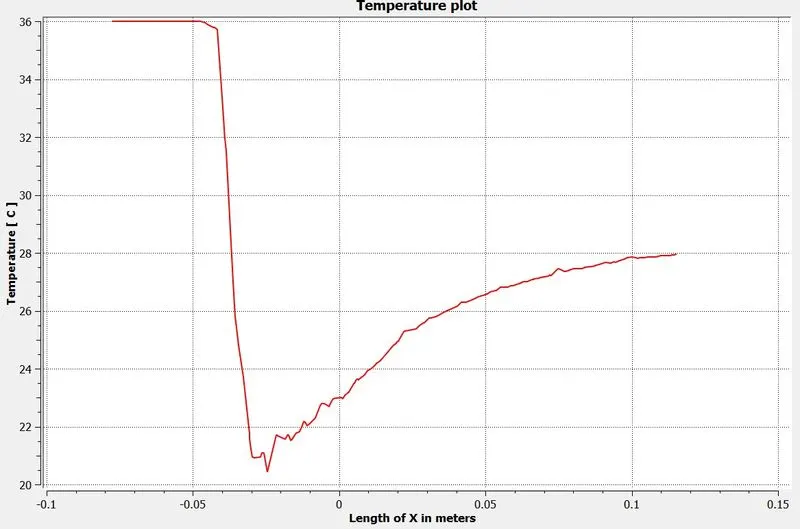
Temperature along the length of pipe
b) For inlet velocity of 3m/s and momentum ratio of 2(K-Omega model)
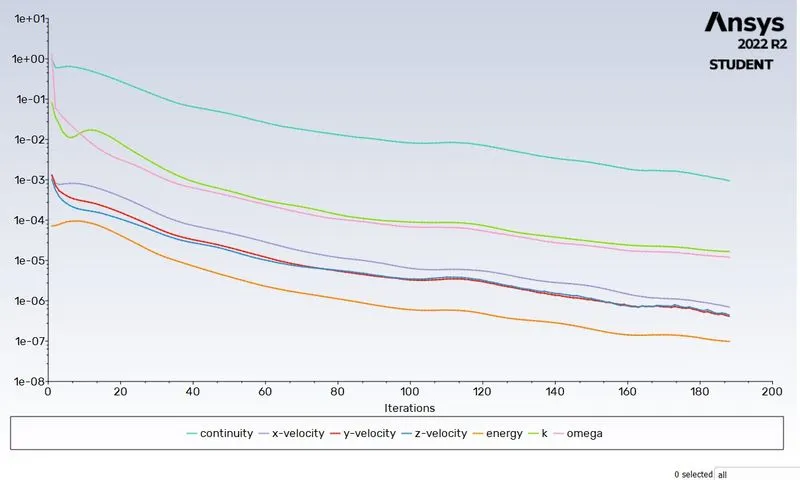
Residuals plot
 Standard deviation of temperature
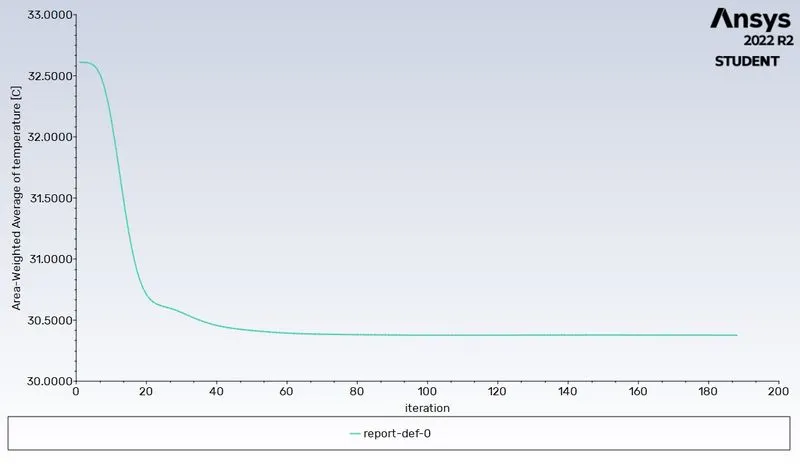
Area weighted average of temperature
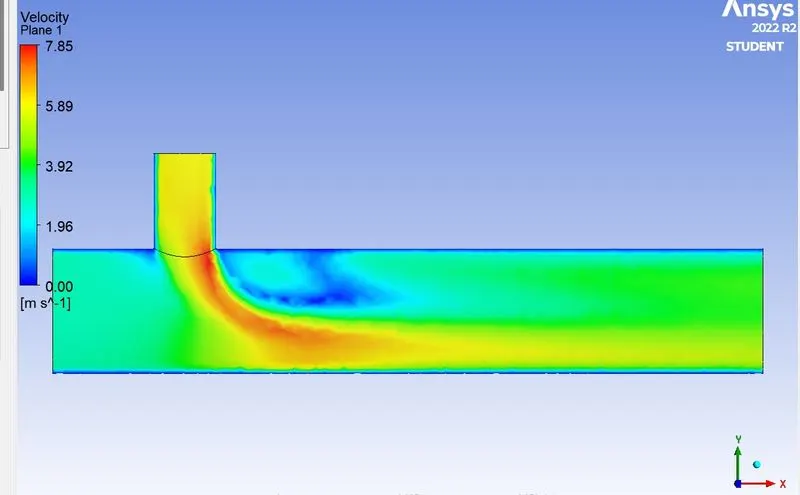
Velocity contour
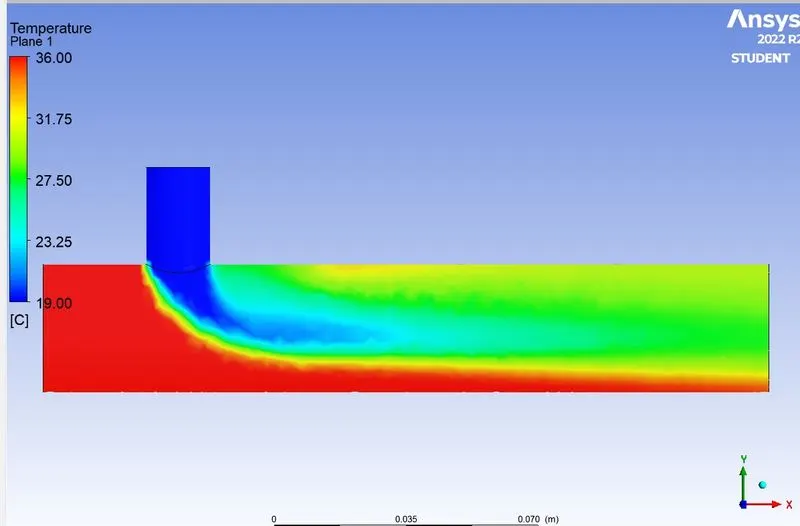
Temperature contour
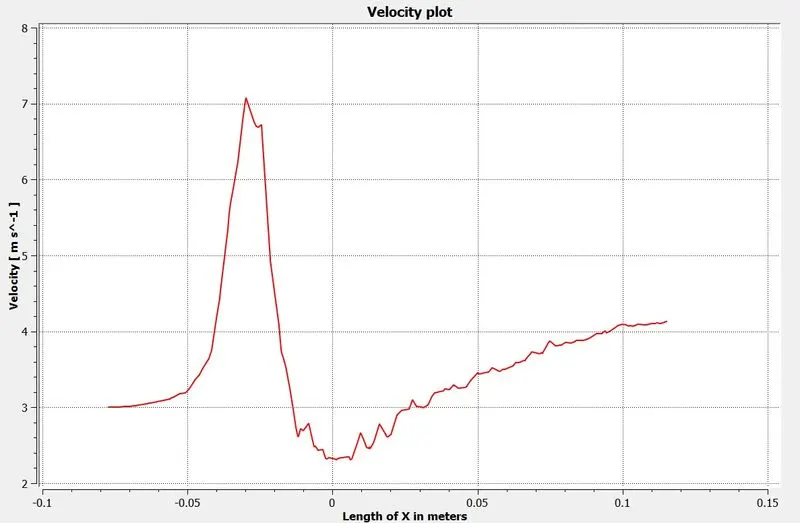
Velocity along the length of pipe
Temperature along the length of pipe
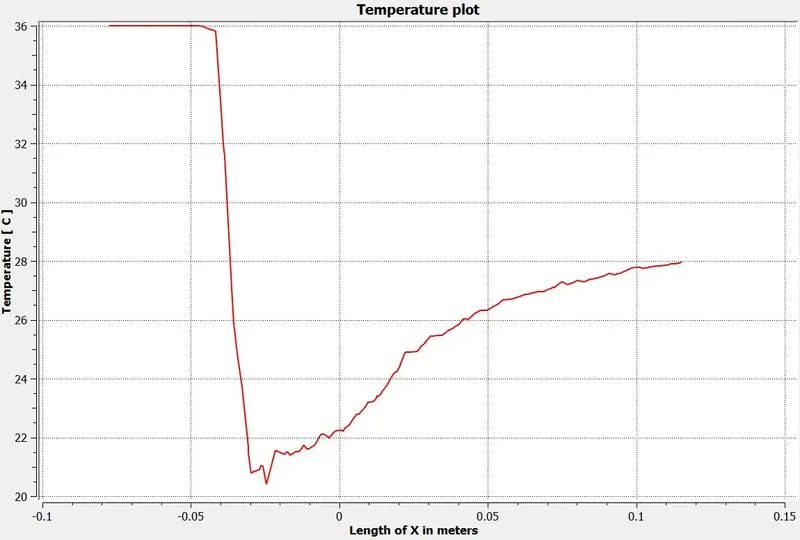
We will compare the average outlet temperature of both k-omega and K-epislon with analytically calculated outlet temperature,which is close one we will proceed with that model for further MR=4& short pipe and long pipes
| S.No | Type of model | No of iterations for converging | Average outlet tempearture in (C) |
| 1 | K-epislon,short pipe,Moment ratio=2 | 167 | 30.29572 |
| 2 | K-omega,short pipe,Moment ratio=2 | 188 | 30.37709 |
Therotical temperature at oulet
`m_1c_pT_1+m_2c_PT_2=m_3c_pT_3`
mass flow rate=`rho.A.V`
Because density and `c_p` constant if u simplying above equation
`A_1V_1T_1+A_2V_2T_2=A_3V_3T_3`
if u subtited in above equation we will get average outlet temperature=29.898C
From the above result K-epislon is closely matching with analytical results,so further cases we will use K-epislon model.
c) For inlet velocity of 3m/s and momentum ratio of 4(K-epislon model)
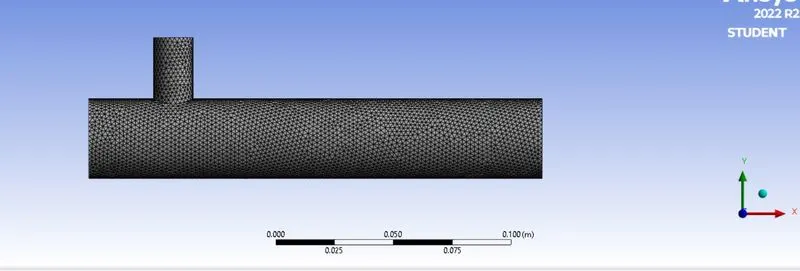
MESH- The number of elements is 1,05,817
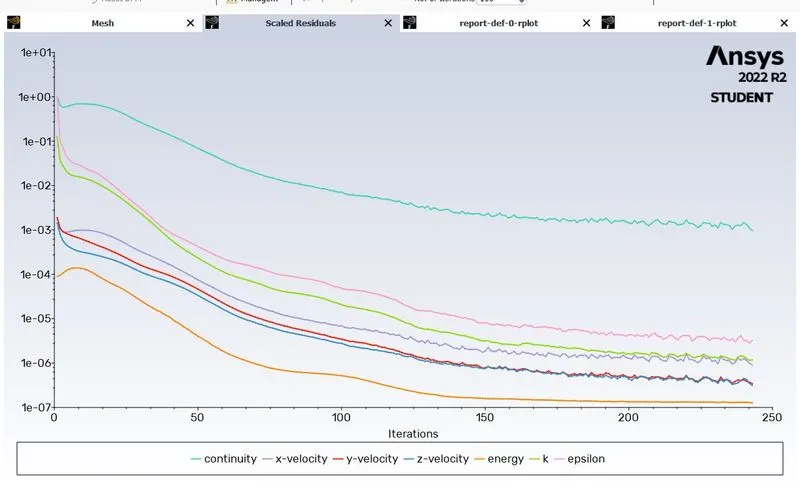
Residuals plot
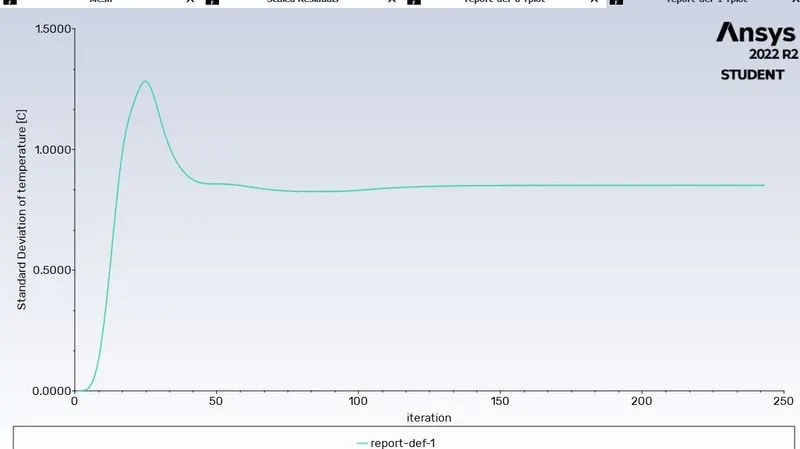
Standard deviation of temperature
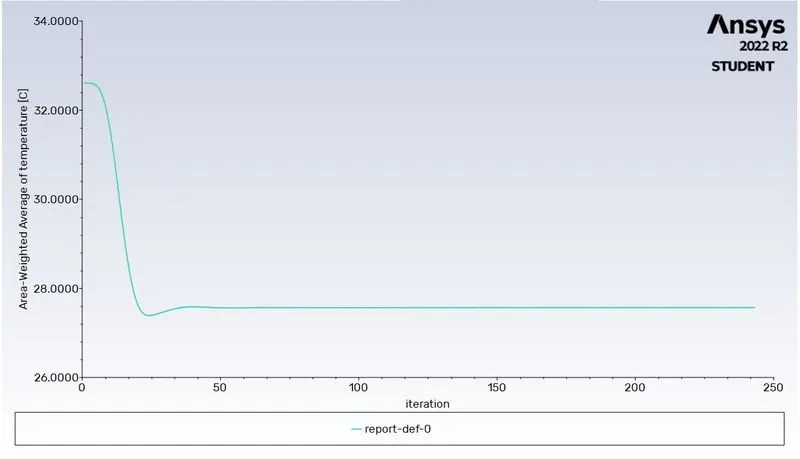
Area weighted average of temperature
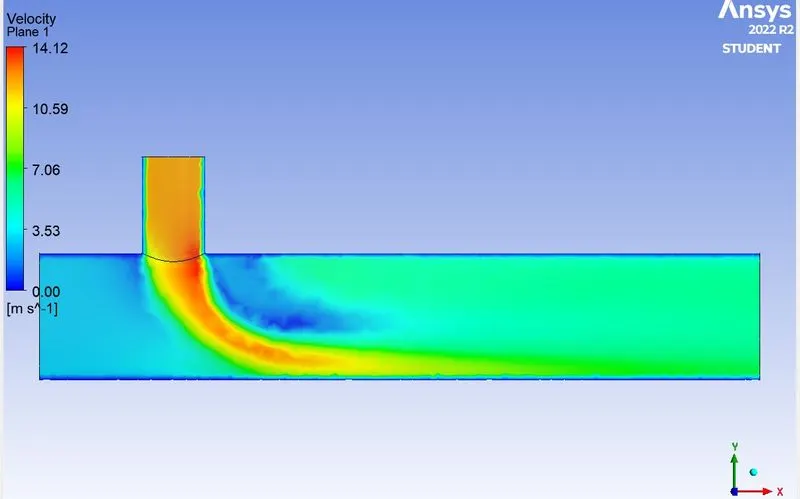
Velocity contour
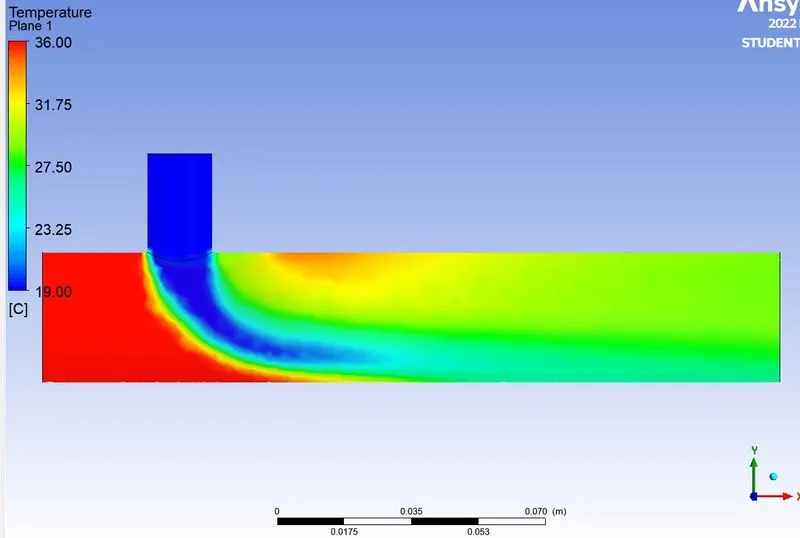
Temperature contour
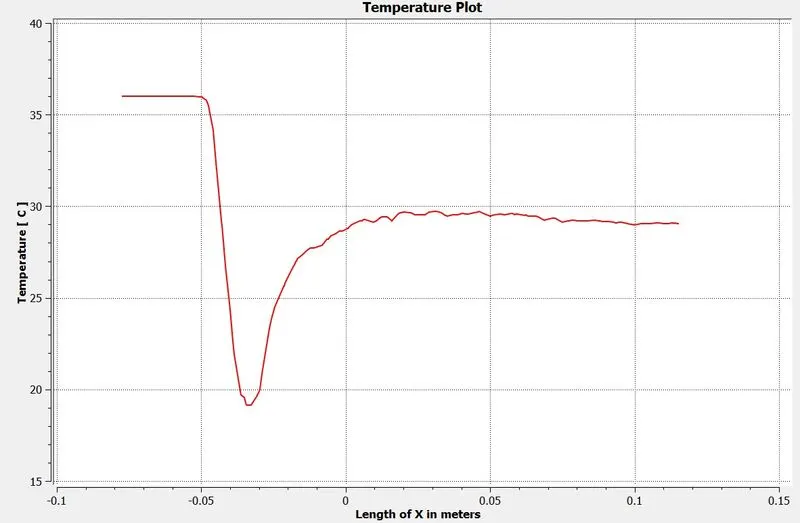
Temperature along the length of pipe
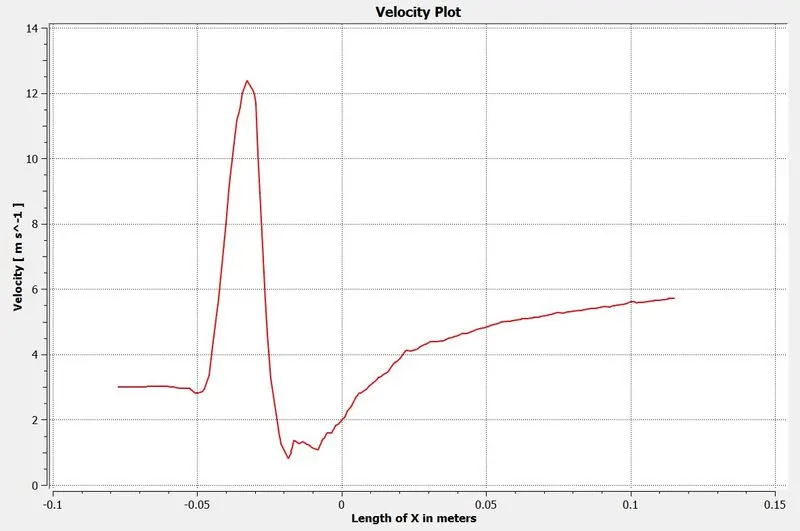
Velocity along the length of pipe
CASE 2- LONG TEE
a) For inlet velocity of 3m/s and momentum ratio of 2(k-epislon model)
Mesh size- 0.002 m
A mesh element metric that identifies the quality of mesh was employed and it can be seen that the elements of the lowest quality are minimal. Most of the elements have quality in the range of 0.7-1. Hence, the mesh is of acceptable quality.
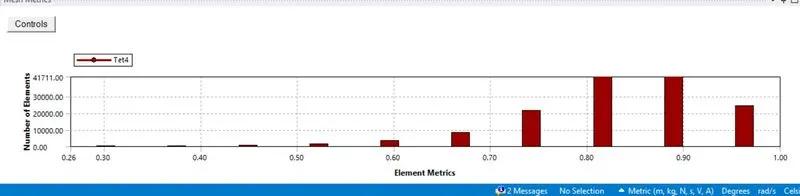
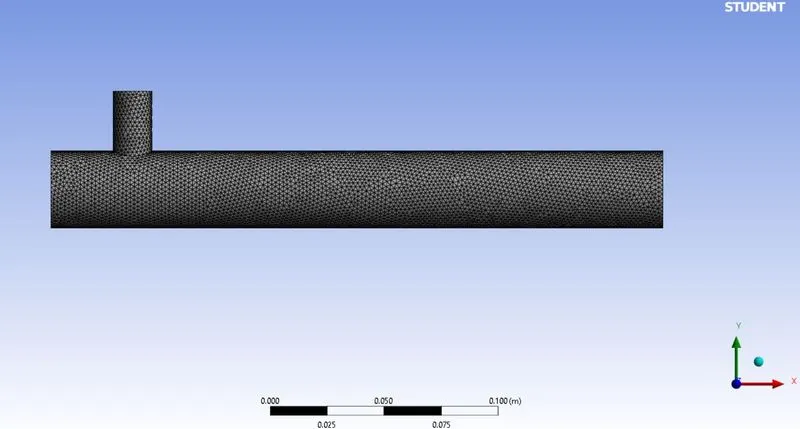
Mesh: The number of elements is around 1,40,990
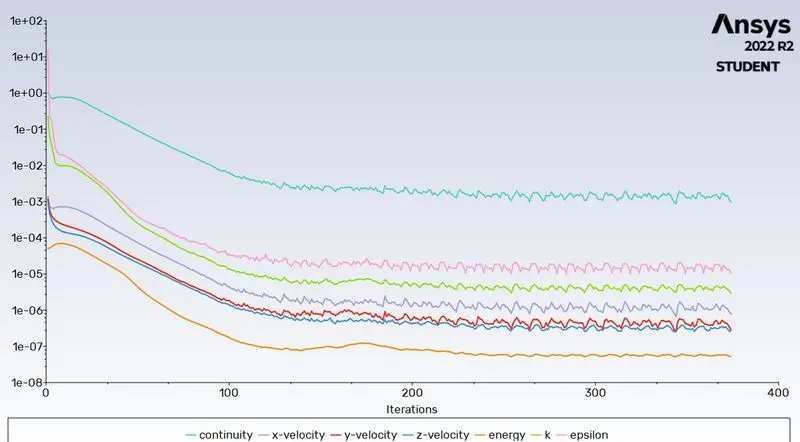
Residuals
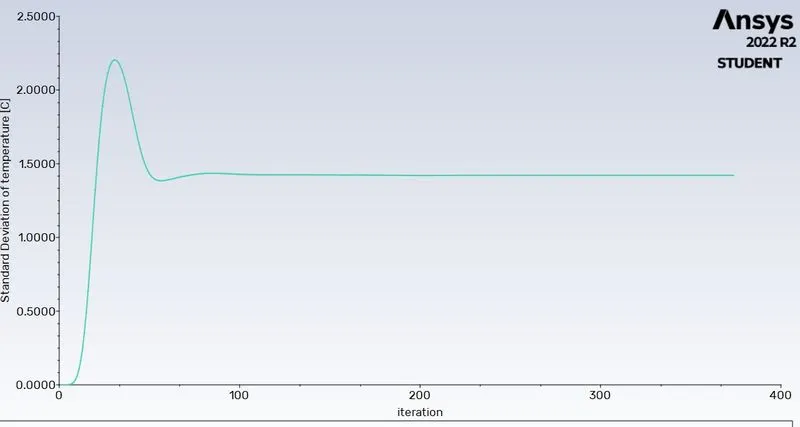
Standard deviation of temperature
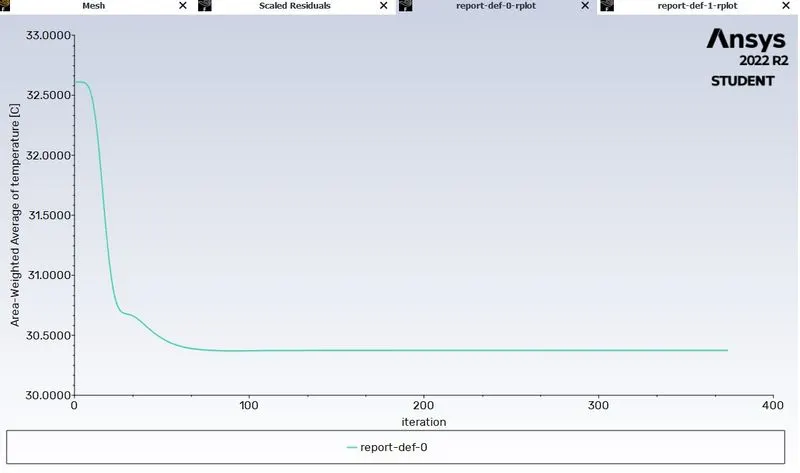
Area weighted average of temperature
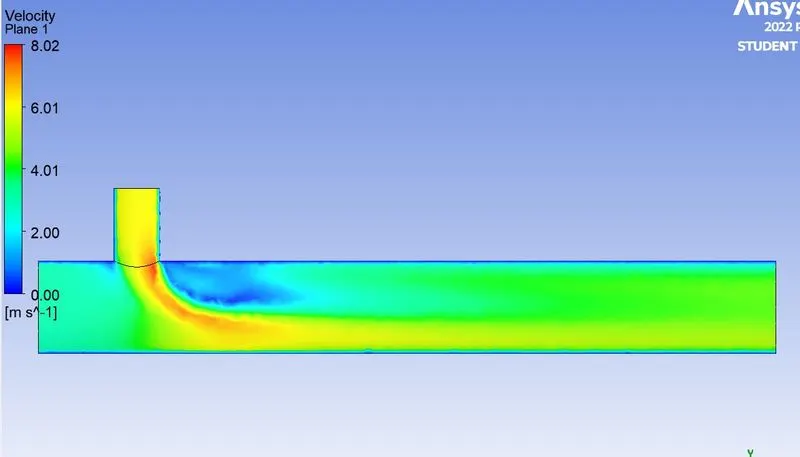
Velocity contour
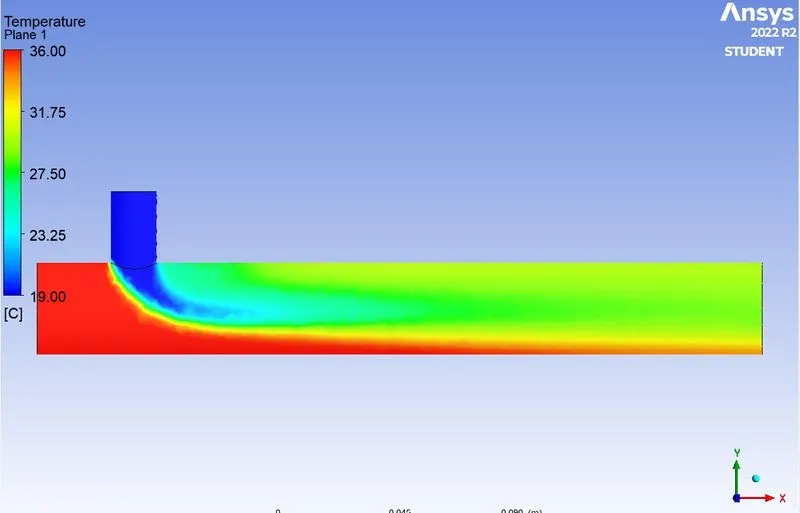
Temperature contour
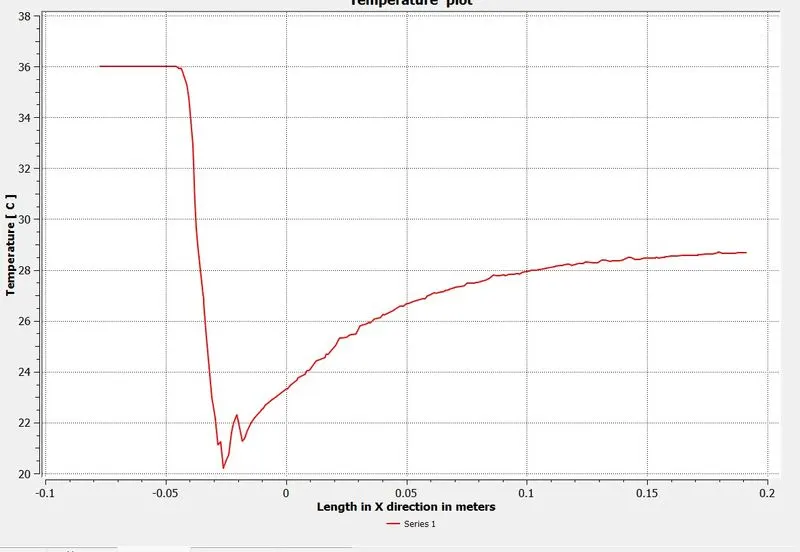
Temperature along the length of pipe
Velocity along the length of pipe
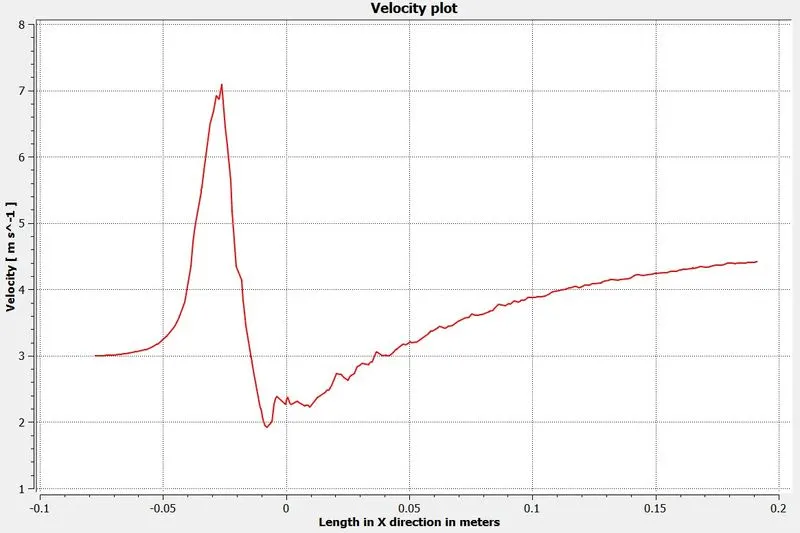
a) For inlet velocity of 3m/s and momentum ratio of 4(k-epislon model)
Mesh size- 0.002 m
Mesh- It is same as the above case,Number of cells=140990
Residual
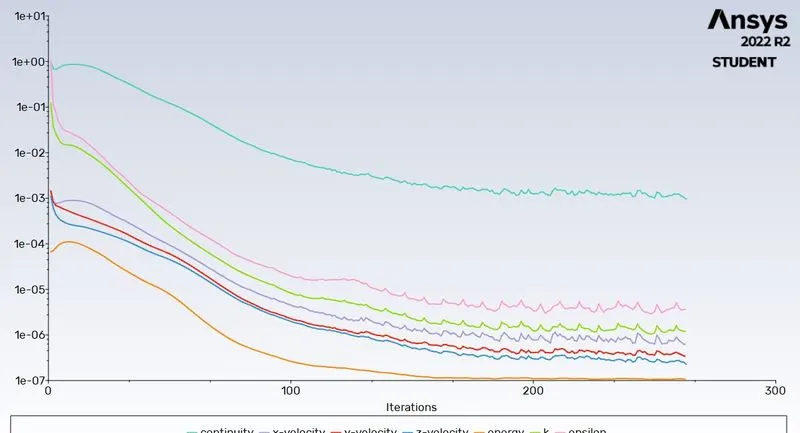
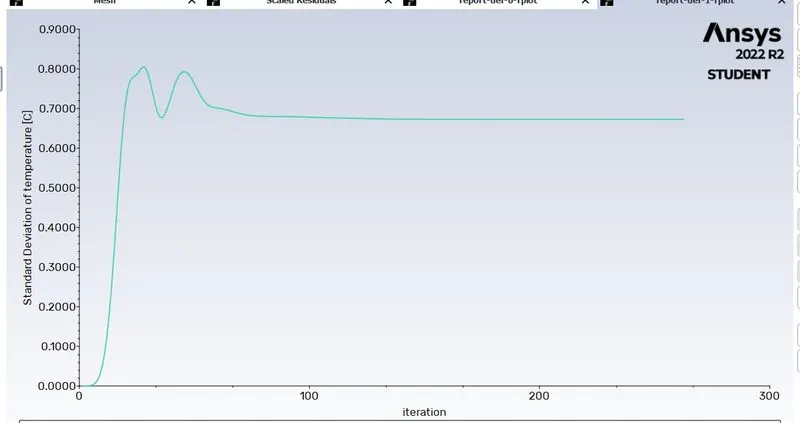
Standard deviation of temperature
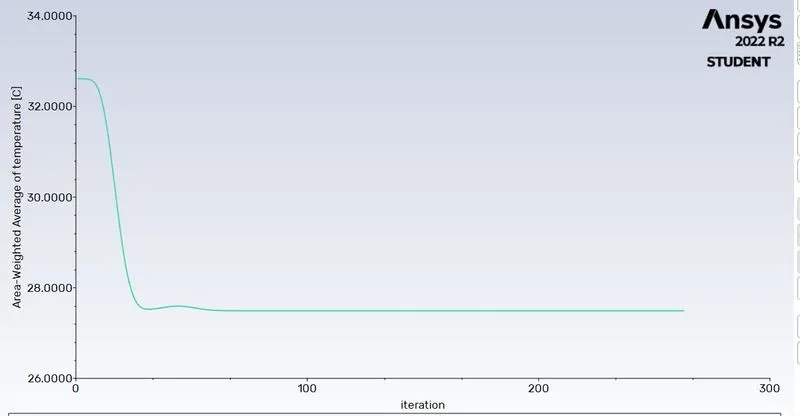
Area weighted average of temperature
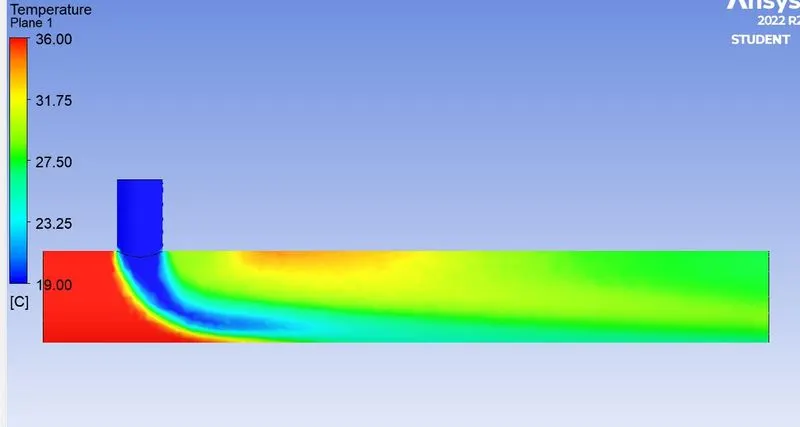
Temperature contour
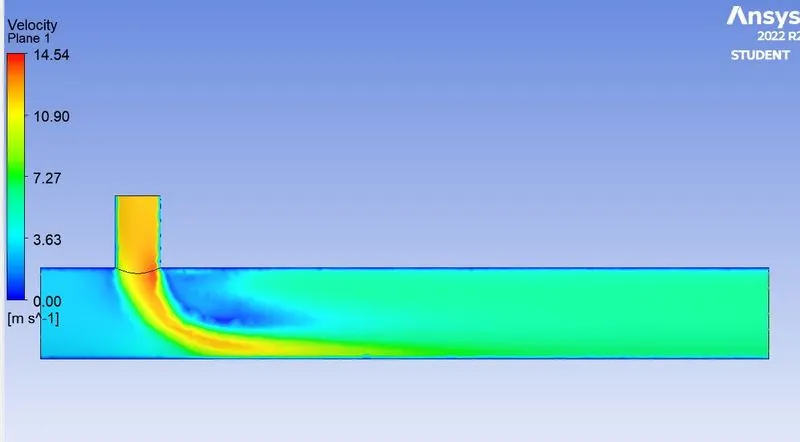
Velocity contour
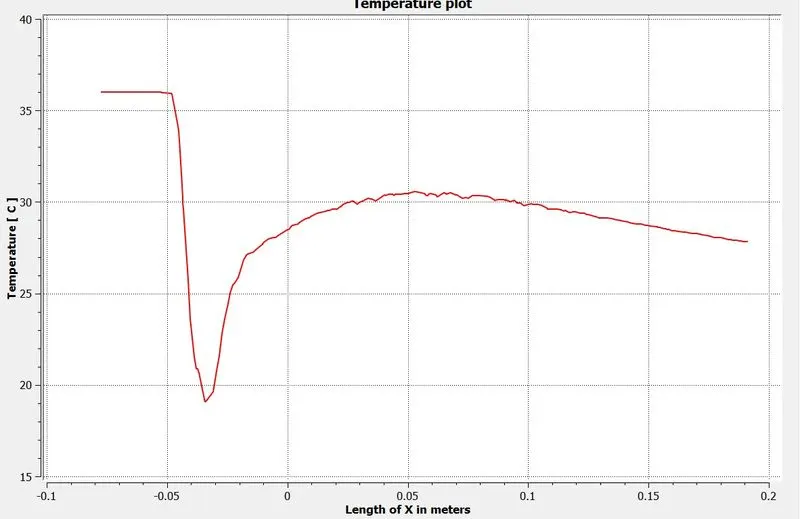
Temperature along the length of pipe
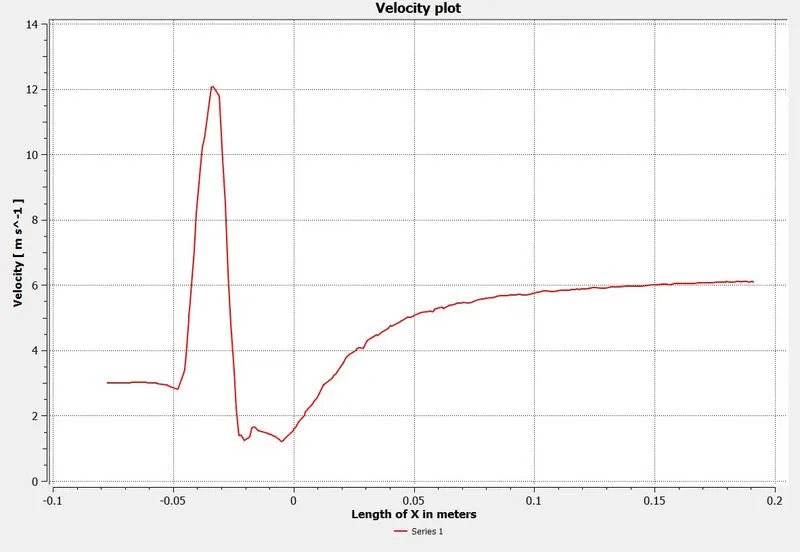
Velocity along the length of pipe
| S.No | Type of model | No of iterations for converging | Average outlet tempearture in (C) |
| 1 | K-epislon,short pipe,Moment ratio=2 | 167 | 30.29572 |
| 2 | K-epislon,short pipe,Moment ratio=4 | 243 | 27.56908 |
| 3 | K-epislon,long pipe,Moment ratio=2 | 374 | 30.374 |
| 4 | K-epislon,long pipe,Moment ratio=4 | 263 | 27.49176 |
Conclusions :
The resultant average temperature for both turbulence model Reliazable K -Epsilon & K omega SST looks similar, but for computing K omega SST takes more time and more number of iterations for convergence. Moreover, K epsilon predicts far from the boundary and K omega capture well near the wall also for the simulation we are dealing with the wall. Because of this reason for the remaining case, I choose K - Epsilon Turbulence model.
For both case momentum ratio of 4, the outlet temperature drops significantly this occurs because of very high cold velocity air. So this clearly shows higher the momentum ratio greater the efficiency of the tee.
We are getting an almost similar result for short tee & long tee for the momentum ratio of 4 from this we can get to know that the length of the pipe doesn't affect the efficiency of the pipe.
When it comes to standard deviation, the long tee gives very lower value compared to the short tee. Indeed, we can increase high inlet cold air velocity for the application so we can get pretty good mixing in nature for a short pipe instead of using the long pipe.
Overall, the short tee pipe gives a pretty good result, and also it saves material cost. Increasing the pipe length doesn't create any difference in the outlet temperature.