Week 1:- Introduction to BiW and Fixtures Challenge
BODY IN WHITE
BIW is commonly known as the body in white as the name suggests the component that is produced is being dipped in a pool of electrolyte inorder to resist the occurance of rusting and other events from occuring thereby prolonging the life of the component. As a result of dipping the component's colour will be changed into greyish white. Due to the change in colour of the component to white we call the process as Body In White.
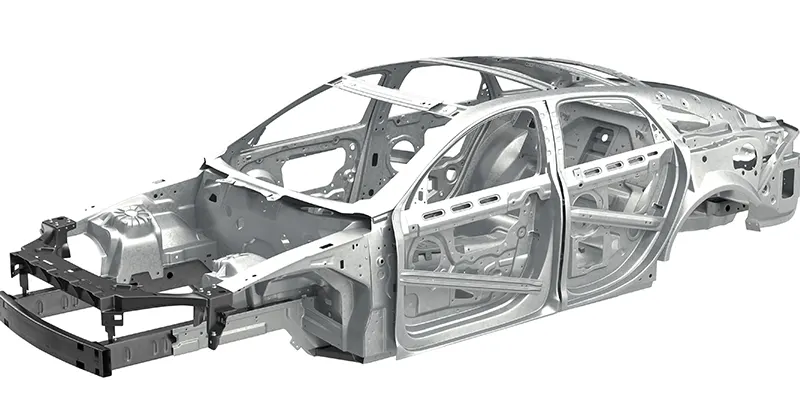
Parts in BIW
There are several parts in BIW. They are
- Body Sides
- Underbody
- Closures
- Roof
- Fender
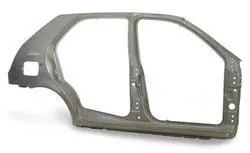
Body Sides :
Body sides are nothing but the side panels of the body of the car that has to be manufactured or get assembled in the next section of the assembly line. They are further classified into the body panel outer and the body panel inner. These outer and the inner panel are being fixed togather with the help of different processes and different tools.
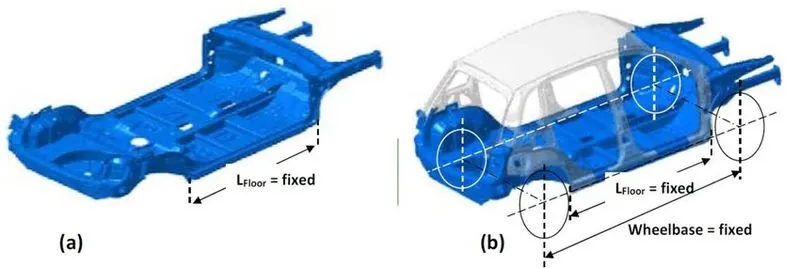
Under body :
As the name suggests the underbody is the part of the vehcile that is situated at the bottom of the vehicle. These comprises of the front underbody engine end panel, rear under body engine end panel and the main floor of the vehicle.
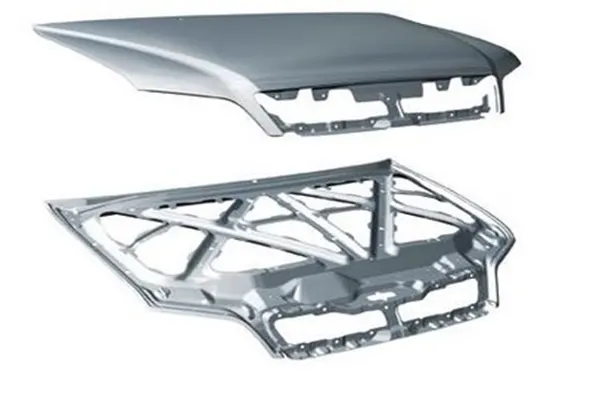
Closures :
The closures are nothinf but the parts the fit in the vehicle that closes or seals the vehhicle from the outer environment and protects the parts that are present inside the vehicles. The closures includes doors, fenders, hood and the deck lid.
Roof :
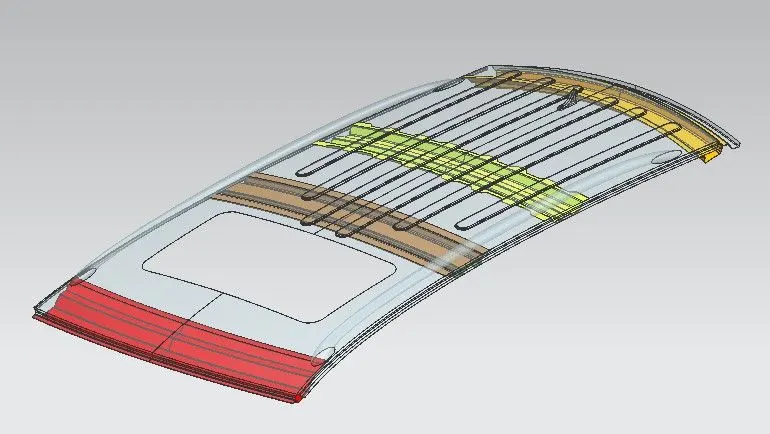
The roof id the top most part of the vehicle that covers the top part of the vehicle and the passengers especually from the sun, rain and cloudy conditions. In the northern countries, due to snowing the strength of the roof is also checked in order to withstand the weight of the snow that get accumulated on the roof. The BIW part of the roof cpnsists of two parts namely roof inner panel and the roof outer panel.
Fender :
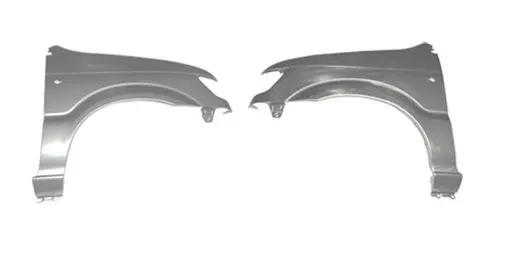
The fender is the part situated in the front part of the vehicle which is situated on the side of the hood panels and the engine. It prevents the dust, water and other foreign materials from entering nto the vehicle and hit the engine as it gets heated up very easily and the chances of rustiing in these parts are preferably high.
Nomenclature of BIW :
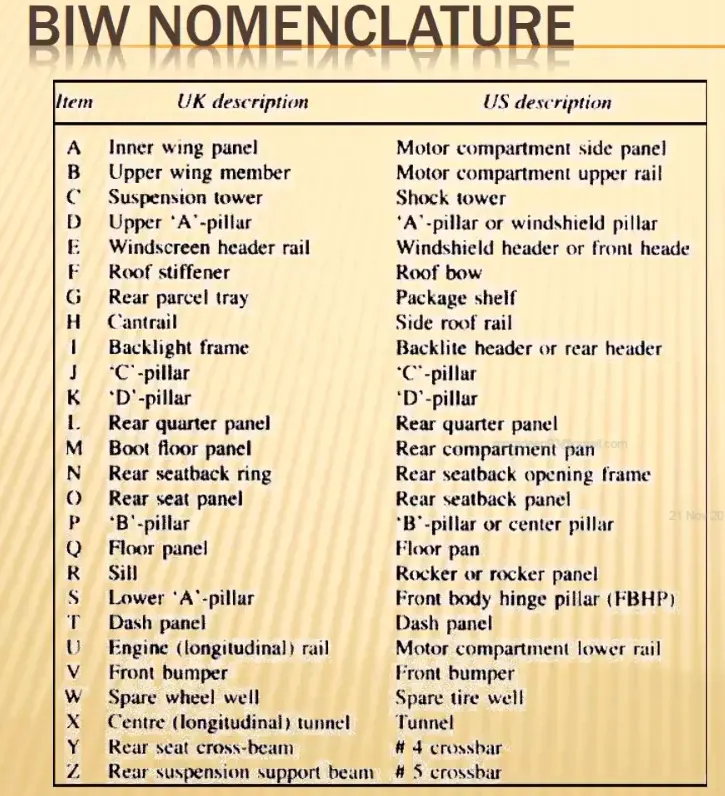
The nomenclature of BIW basically gives the parts that are present in the vehicle. There are different parts in the vehicle namely Apillar, B pillar, roof rail, hood, cant rail etc.
Fixtures and Types :
Fixtures is an important concept when it comes to manufacturing. The fixture provides the base for the components to sit on the die hen they get manufactured, they will bw folllowing the 3-2-1 pocedure while getting manufactured.
3-2-1 procedure is nothing but the arresting the translational and the rotstionsl degrees of freedom of the part to get the model completely fixed when they are placed in the dye.
There are three major steps involved in the fixtures. They are
Production Fixture - They are used for mass production.
Pre-production operating fixtures - these are like the trial versoin of production fixtures to get an idea about the cost and other manufacturing aspects.
Checking Fixtures - Inspection purpose of the tools
BIW Stations
There are also several tools for different types of fixture staions, they are
- Geo Fixture Tools
- Re-Spot Tools
- Check Tools
Geo Fixture Tool :
The geo fixture tool is a special kind of tool where the geometry of panels that are being welded toagther is defined accurately and precise. Forex:if we have panel hole size of 20mm,then the pin dia should be 19.85mm. It is a very precise fixture. These fixtures are moderately costlier setup than the other fixtures as the tolerance range of these setups are being higher.
Respot Tools :
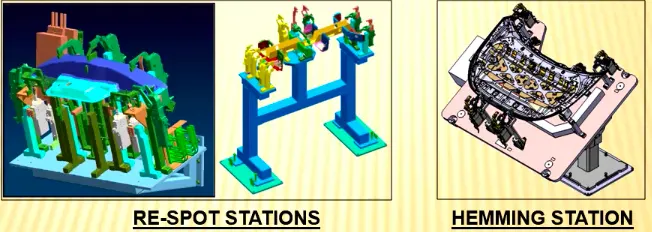
The reespot tool performs the sam eoperation as the geo tool whereas the difference lies in the tolerance range of the yeild that is produced.
This process also includes the joining or the marriage of two parts by two processes namely welding and hemming. those processes are carried out with respect to their styling faces.
Check tools :
The check tools are the tools that checks the tool's dimensional error if it lies within the limits using using different methods like check guages, Fix type, Automated type to check the dimensional property amd the quality of the tool that will be manufactured.
They also use the CMM ( Co-ordinate Measuring Machine ) to measure the product according to the CAD data that is being presented to it. If there is any deviation in the device the report generated will show the error, Then the product is taken to the geo tool for repairing or re manufacturing it. The only disadvantage with the check tools are they are costlier since they are automated and not manual.
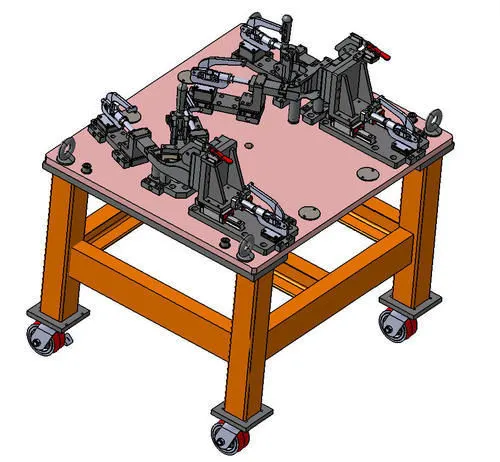
Check Guage unit
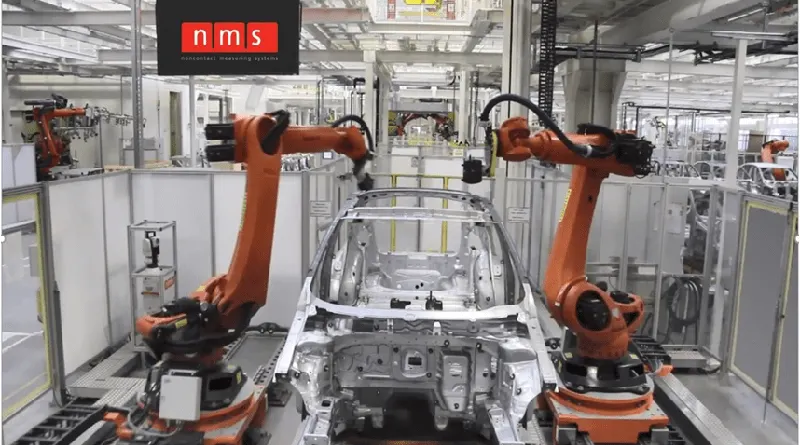
After these processes are done there comes the process called GRIPPING
A Gripper is nothing but a holding device that holds the part that has to be mountedd on the car. It is normally lesser in weight as it as to be attached in the end of thr robot's arm.
So, it is also known as the EOAT (End Of Arm Tooling).
Gripper has several types, They are
- Material Handling Gripper
- Process Gripper
- Combo Gripper
- Dual Gripper
The basic terminologies used in BIW Fixtures are
- Mylars / Fingers - they hold the workpeice.
- Principle Locating Pins (PLP) - Using pins to locate parts.
- Risers - To give height to the grippers and other parts.
- Rough Locators - To define the orientation for placing.
- Hardwares - They include nut, bolt, pins etc.
- Units - They include different units such as base unit, resting unit, clamping units etc.
- Number plate - They give out the number on each unit that are used in the process.
- Name plate - It gives the name of the assembly that we use in the process.
- Reed switches and sensors - They allow to find if the part is placed in the unit.
These are some of the basic tetrminologies that are used in Fixtures.