Hood design-Week 2
HOOD DESIGN :
- Hood is the outer cover that protects the engine compartment.
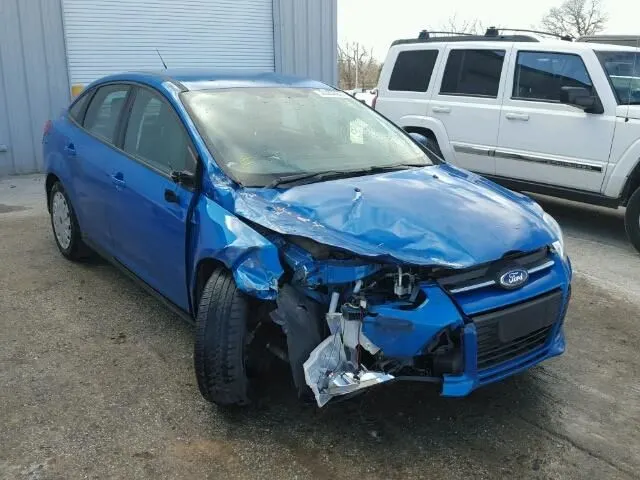
- Hood can also help in crashes. The hood is not the strongest part in a vehicle
- The front panel of the vehicle is very weak and while accident, it takes up most of the force and brake.
- The hood area is also called the crumble zone of the vehicle.
HOODS DURING ACCIDENTS :
When it comes to hood design there are two types of hood available for different types of cars.
They are
- In-laid hoods
- Wrap around hoods
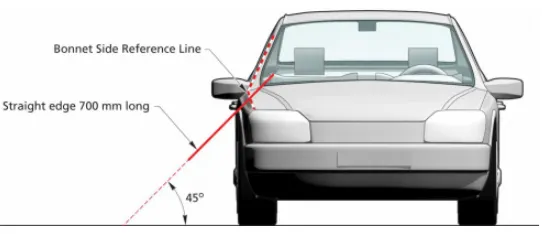
Before knowing what these hoods are, we have to know about the important reference called the side reference line.
A Side Reference Line is a line drawn from the ground at an angle of 45 Degrees.
Now back to In-laid hoods
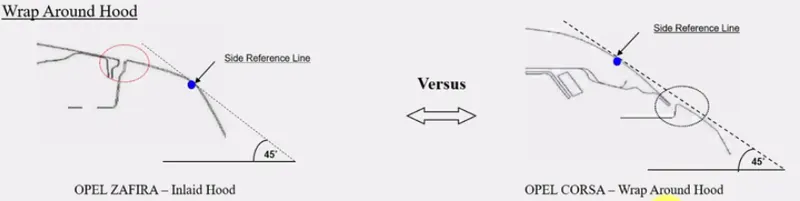
INLAID HOOD are the type of hood where the side reference line touches the fender of the vehicle.
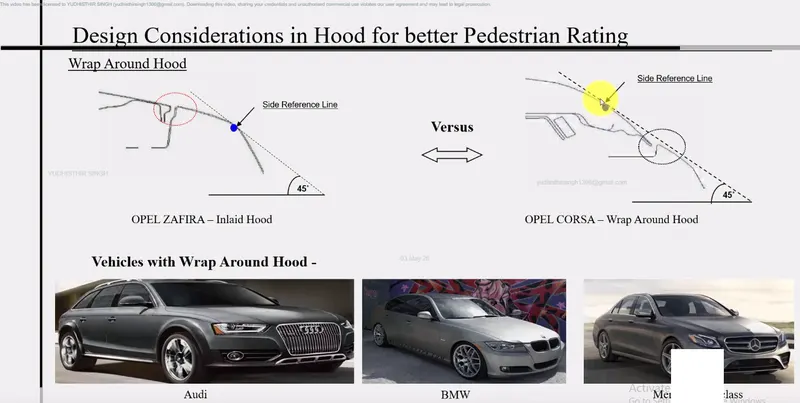
Wrap Around Hood
This type of hood is a hood where the side reference line touches the hood of the vehicle.
The safety of the pedastrians are also considered while designing the hood of the vehicle. The head impact is the major criteria to be considered while working on the hood design of the vehicle.
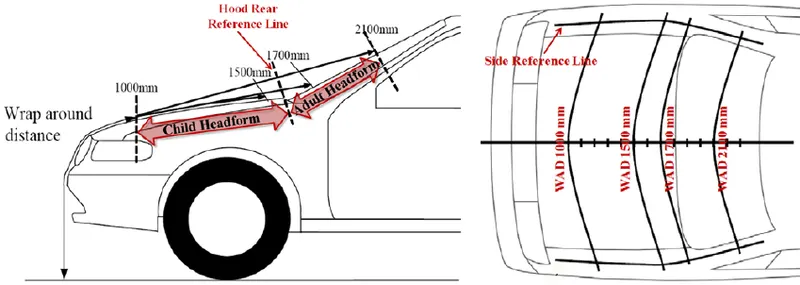
Child Head Impact Zone - 1000 WAD to 1500 WAD
Adult Head Impact Zone - 1500 WAD to 2100 WAD
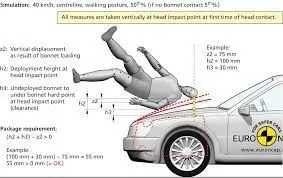
The Euro NCAP, known as the Europian New Car Assesment Program determines the rating of the vehicles in terms of their design aspects.
The EuroNCAP also determines the HOOD HEAD OPEN ANGLE of the vehicle. Different countries in the world will follow different standards for the best fit to their people.
For ex. people in USA are averaging at a height of 6ft. whereas the people in Japan are averaging at a height of 5.5ft , therefore the hood opening angle of the cars in Japan are lesser than the cars that are available for the people in the US. More about EuroNCAP can be seen at the website @SAFTEYWISSEN
The head impact zones are also considered while designing the hood. There comes a concept called Wrap Around Distance.
The Wrap Around Distance is the distance measured across the side reference point to the ground along the body of the car.
The safety standards are improving on a yearly basis.
For Ex. A car with 70 points gets a 5 start in 2012 and a car in 2020 gets 4 stars for 85 points.
The another Design criteria while designing the hood is the kind of stay being fixed on the hood.
There are two types of stays available for the hood to be held, they are
- Support Rod
- Gas stay
Support Rod :
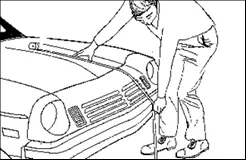
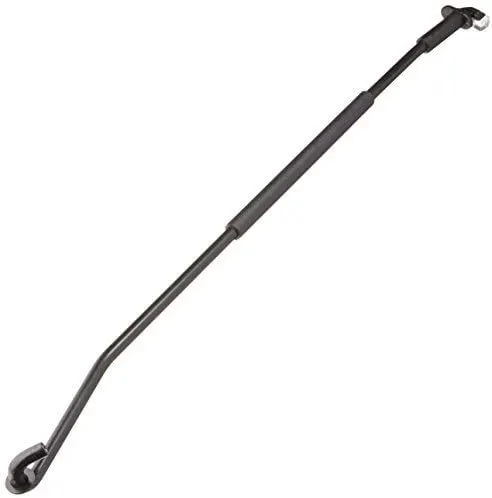
The support rod mechanism is a mechanical device where a rod is placed at the hood and there will be clamp present on the adjacent panel. The Rod goes and clamps into the clamp to held the hood in open condition. The rod provided in the system is not straight. The rod is bent at an angle where as the horizontal limits is fixed.
For ex.: An OEM uses the Horizontal distance between the horizontal ends of the clamp as 35mm.
Gas Stay :
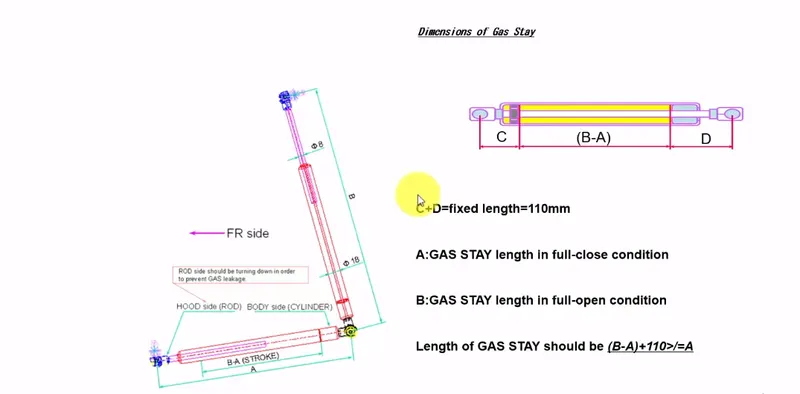
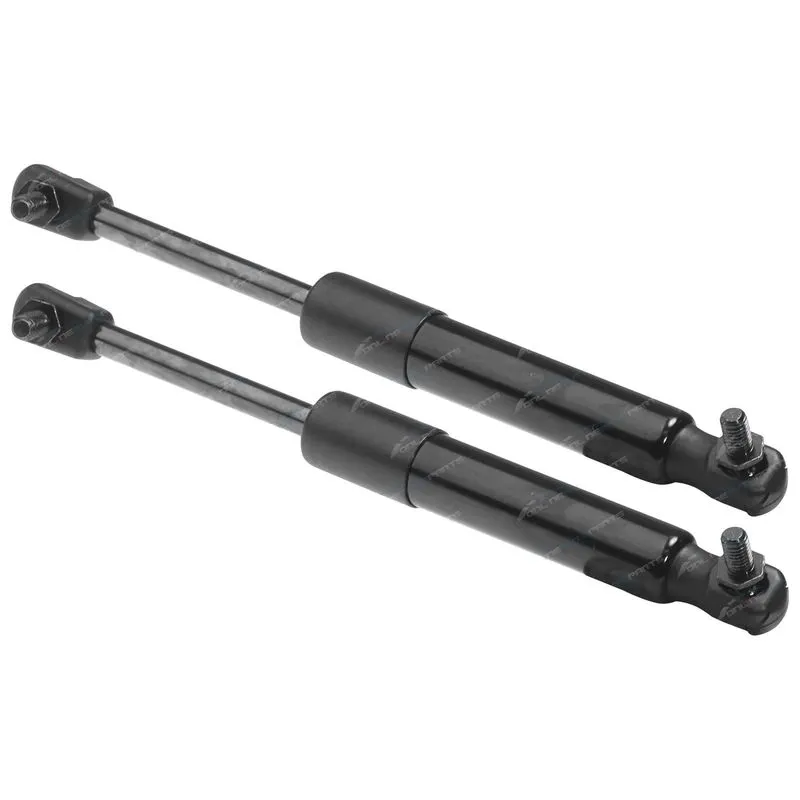
The gas stay is the pneumatic stay system where a slight input or mostly a switch activated sytem is used to provide inout such as open and clost the hood. These systems are commonly found in high end cars.
The calculations of the compression and extention of the stay are calculated as follows,
| Advantages | Disadvantages | |
| SUPPORT ROD |
Cheap Easy to replace Available for different designs of the vehicle |
Mechanical Input has to be given, unlike gas stay. |
| GAS STAY |
No input required Can hold heavier hood at ease |
Cost is higher. |
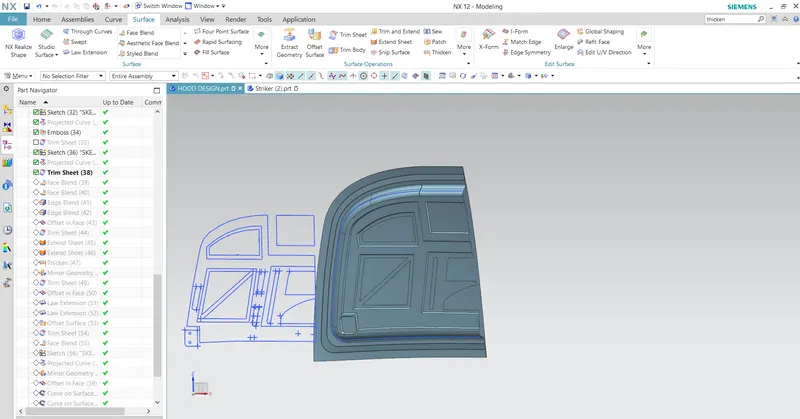
The hood is a class A surface so the inner and outer panel of the hood cannot be joined by welding or bolting. Therefore a special type of procedure is followed while designing a hood, They are
- Hemming
- Mastics
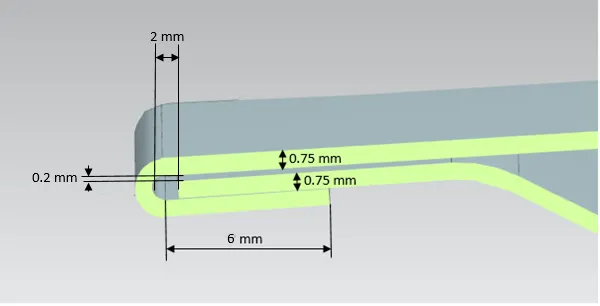
Hemming is a process of joining two sheets by bending two adjacent sheets into each other. The hemming flanges will have to be left clearances at about .2 mm between them.
MASTICATION
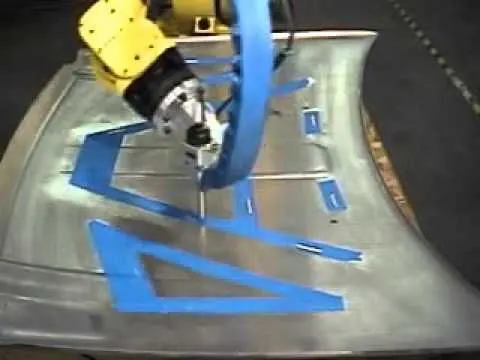
The mastication is the process if introducing mastics between the inner and the outer panel. The mastics is a adhesive material placed between the panels.
The mastics sealent is placed as a drop and then while heating it expands approx about 80mm.
The last important criteria while designing hood is the Master section.
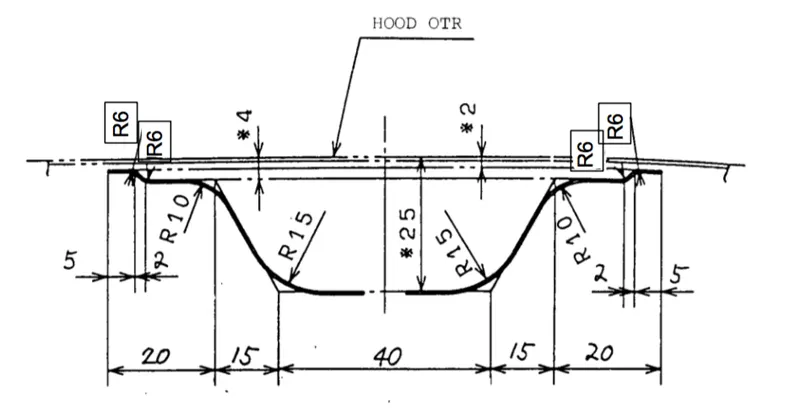
A master section is a reference section from the previous and successful vehicle's design parameter.
A master section is used in hood design beecause the engineers do not have to waste a lot of time for designing a new hood from scratch whereas they the incorporate the old hood's succesful design and make small modifications in design ro fit in their requirement.
Latch and Striker :
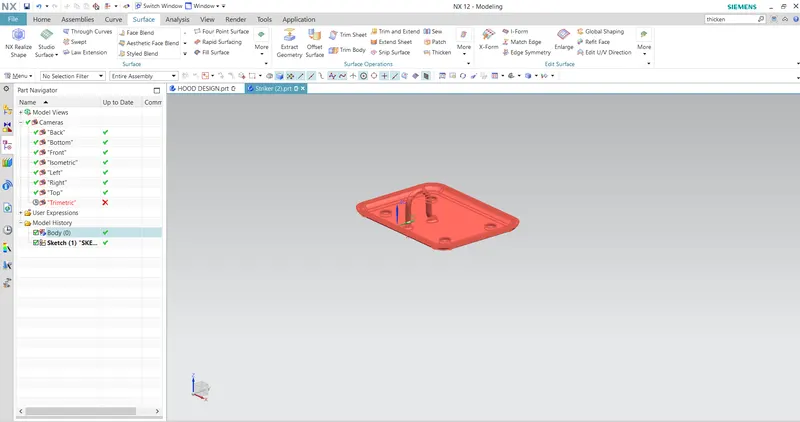
The Latch and striker are also two important components of the hood, when the hood uses Support rod to stay open.
The design of Latch will be like