Week 1:- Introduction to BiW and Fixtures Challenge
- What is BIW & define its parts?
BIW refers to the welded sheet metal components that form the vehicle's structure. On to the structure, all other components like the Engine, Chassis, Trims, etc. are attached. The car structure is made of Steel and Aluminum which are silvery white or dull gray. The structure's appearance made the name Body in White (BIW).
The BIW structure:
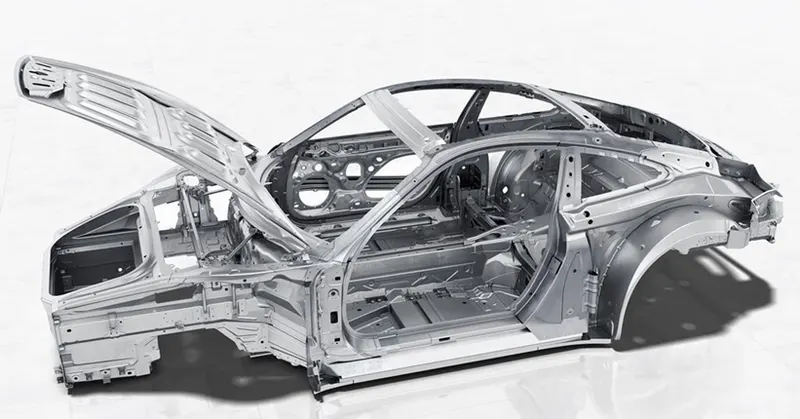
BIW parts:
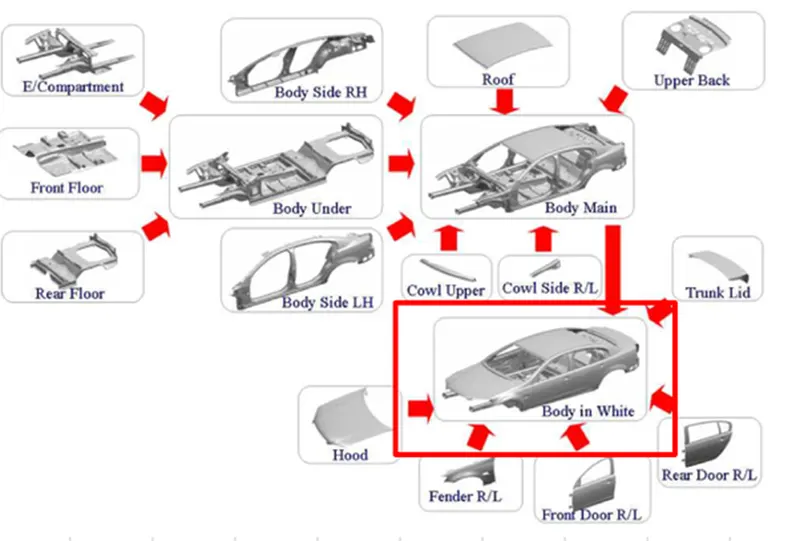
BIW can be categorized into many parts based on individual understanding. I believe below is the proper classification.
- Body side (Right and left side structures which usually start at the front wheel and end at the rear wheel).
- Rooftop. (Parts of BIW that are above the hip level of a person when standing next to the car).
- Underbody. (Parts of BIW that are below the hip level of a person when standing next to the car).
- Closures. (The parts which are mounted on the BIW structure using fasteners. Except this other BIW panels are welded together).
- What do you understand by BIW nomenclature?
The naming of every part of the BIW structure considering the importance. There are multiple parts in each BIW segment, and the specification of each element is called BIW nomenclature.
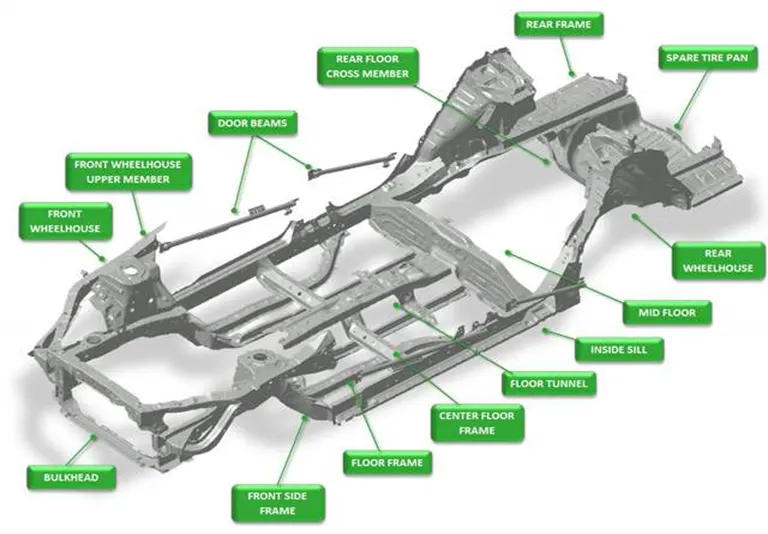
Let's consider the Underbody:
Underbody has Tunnel, Floor (front, center, Rear), Wheelhouses, Door beams, spare tire pan, sill, side frame, Bulkhead, etc. Considering the importance of each part from the structure and naming accordingly is called BIW underbody nomenclature. Similarly, applying the thumb rule to all other parts of BIW makes proper BIW nomenclature.
- What is a fixture & its types?
A fixture is a workpiece-holding device used in the production plant; it holds the workpiece firmly according to the required operation (mainly welding) by arresting all six degrees of freedom.
Welding fixtures are the most common fixtures used in production and these have a set of units to hold the BIW panel considering the weld points and motion of the weld gun.
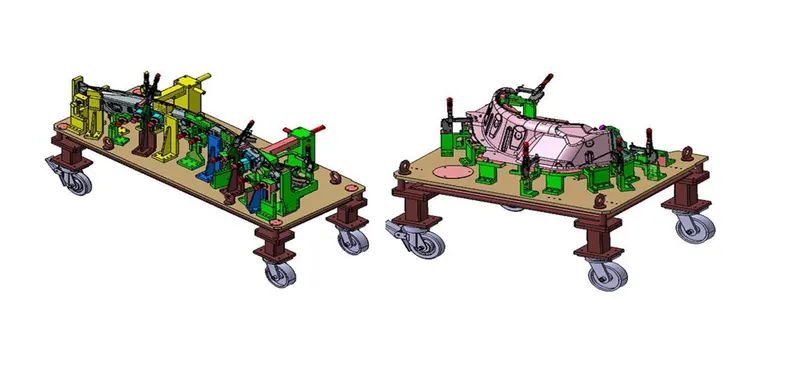
The fixture should consider the following points to have proper support for the panel and prevent distortions during the welding operation.
- proper placement of locating elements.
- Clamping must be tight.
- Clamping elements must be clear from the welding zone.
- Stable and rigid position of the fixture to withstand the welding stress and sudden impacts.
Fixtures are predominantly divided into three types based on the production process:
- Production Fixtures: - used for mass production.
- Pre-production operation Fixtures (PPO): - used to produce specimens to study feasibility.
- Checking Fixtures: - used for checking the geometric properties of the produced product.
- What is the basic principle of fixture design?
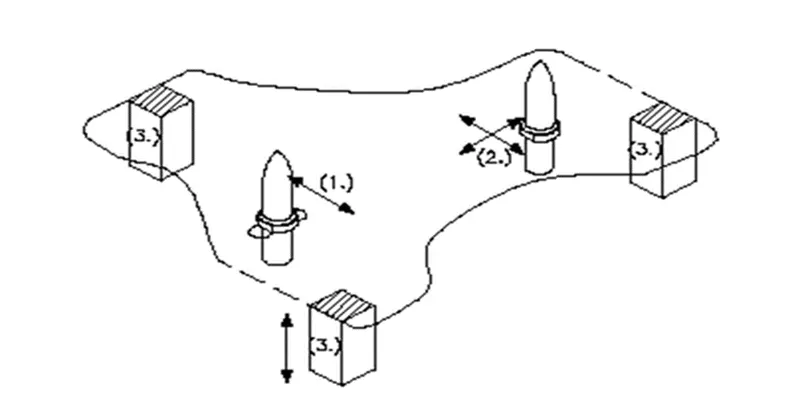
The primary function of the Fixture is to produce the BIW parts by preventing distortions. Distortions can be achieved by holding the panel firmly by eliminating all 12 degrees of freedom.
All 12 degrees of freedom are translation motion in the positive and negative directions, and rotational motion in clockwise and anticlockwise of the X, Y, and Z axes.
Using different types of tools on the fixtures, 3 degrees of freedom are arrested, and then 2 later 1. This is called the 3-2-1 principle.
- Elaborate on types of BIW Stations?
Assembly Line is the place where different BIW panels are joined together after collecting from specified zones. Each zone has a set of stations, Stations are divided into: -
- Tools.
- Checking Station.
- Grippers.
- Stands.
- Miscellaneous.
- Tools: - Tool is a fixture that has several units to hold the BIW panel. A few Tool types are,
- Geo tool: This fixture makes sure the geometry of the panels which are welded together is accurate with a general tolerance of -0.15
- Re-spot tool: Unachieved weld operations in the Geo tool are performed here with the tolerance -0.28
- Marriage tool: It is like hemming. Joining the inner and outer panels (car door). Sometimes welding.
- Framer tool etc.
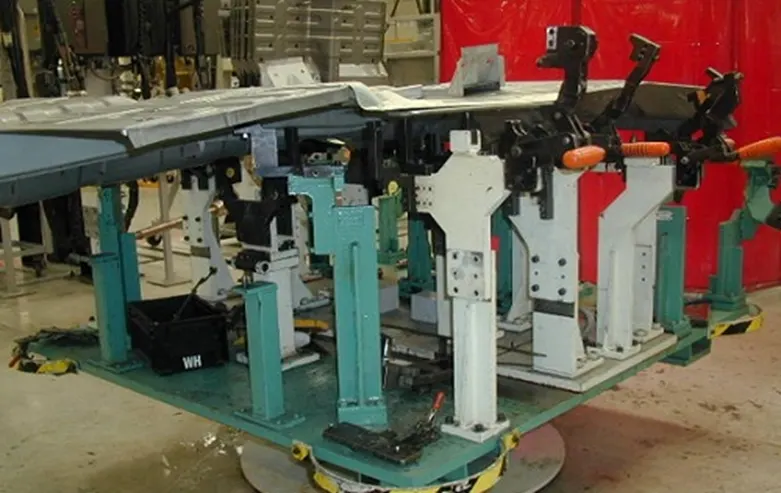
- Checking: - Fixture used to check the automotive parts and their assemblies, ensuring the coordinates, relative dimensions, and position as per tolerance.
Here workpiece is held, and various measuring gauges are introduced to ensure the dimensions and repeatability.
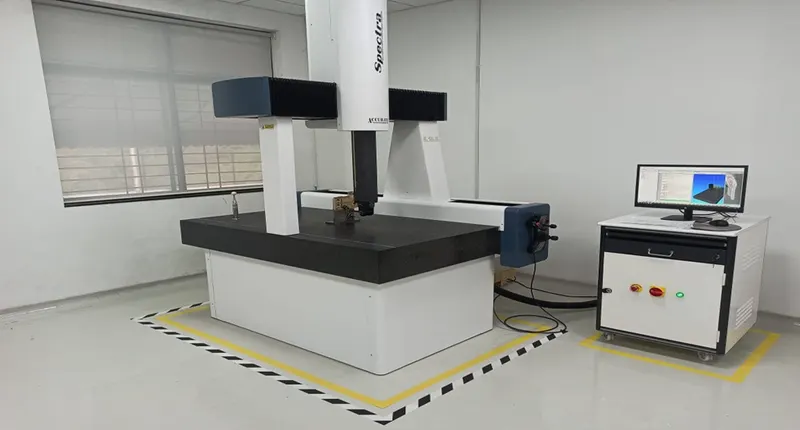
CMM is the most used machine to measure the coordinates of different panel points.
CMM machine.
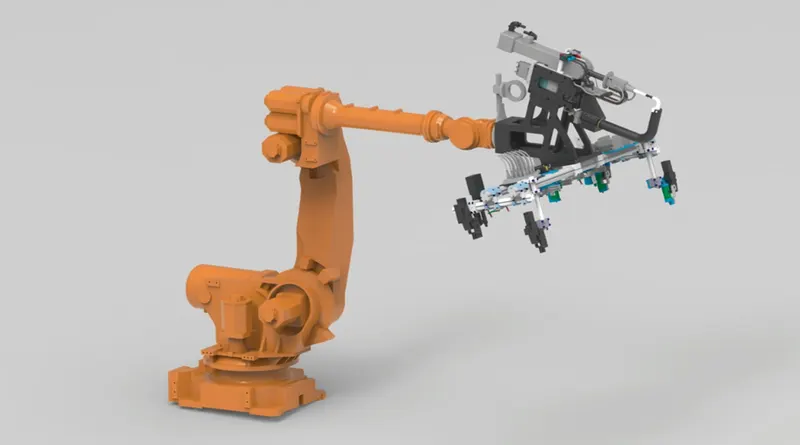
- Grippers: - Grippers are devices that hold car panels or EOAT.
- Material Handling Gripper,
- Process Gripper,
- Combo Gripper,
- Dual Gripper,
- Stands: -
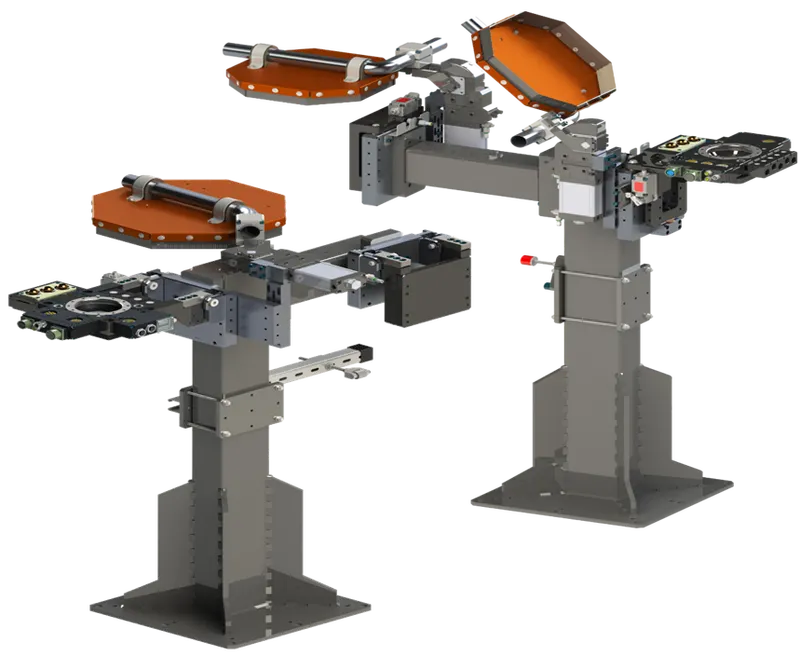
- Gluing stand/sealer,
- Docking stand,
- Date stamping stand,
- Miscellaneous: -
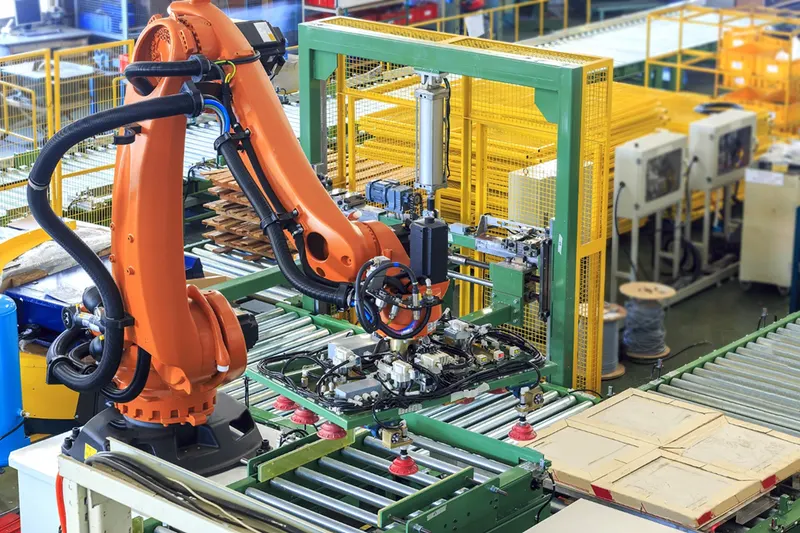
- Curing,
- Buffer stand,
- Racks,
- Pallets,
- Conveyors, etc.
- What are the basic terminologies used in the BIW fixture?
BIW fixture is a tool that holds the BIW components firmly by preventing distortions while joining (mostly welding) the panels.
BIW Fixture is usually installed on the Base unit which has a Base plate, Value box, Trunking channel, Floor plate, etc.
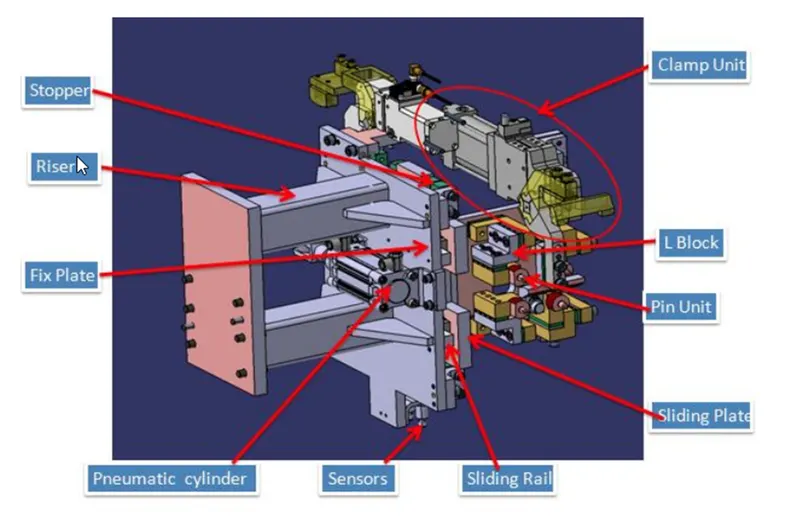
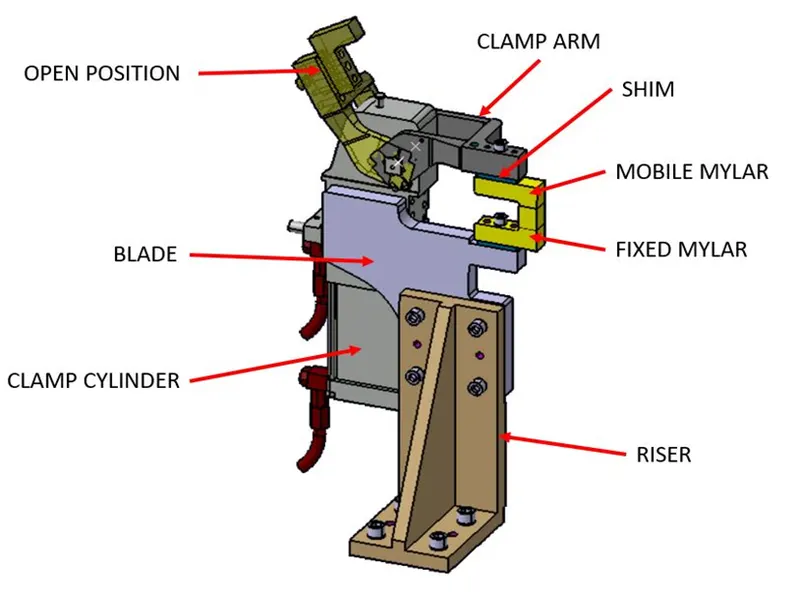
BIW fixture mechanism commonly built with Mylar, Pin, Blade, L Block, Pin Block, Riser, etc.
Mylar: Mylar is an L-shaped block that touches the panel and holds or clamps the panel. Mylars are designed in a Carline, mounted on a block or plate with shims. For Class-A surfaces Nylon mylars are used which reduces the possibility of scratches.
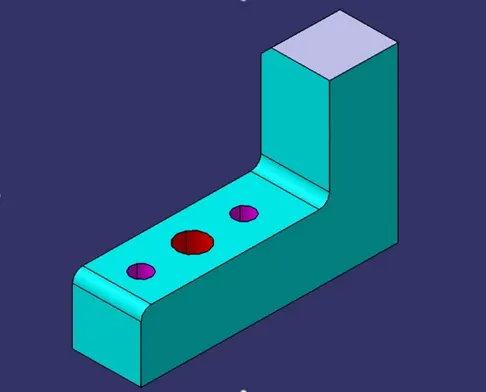
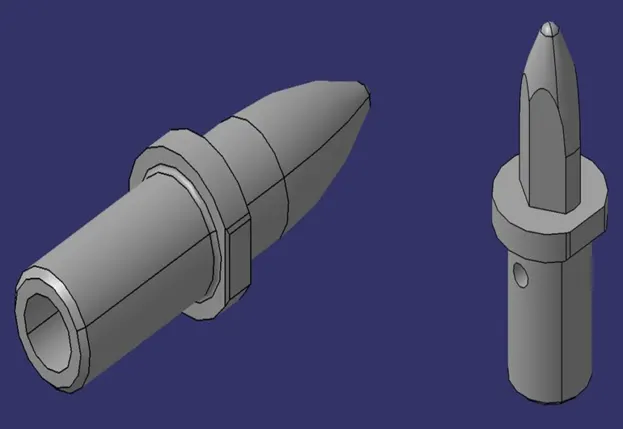
Pin: Pins are used next to mylars to lock the rotational motion of the panels.
Pins are of two types:
- Round Pin
- Dimond pin.
Based on the profile of the Hole (elongated hole or normal hole) pins are used to hold it.
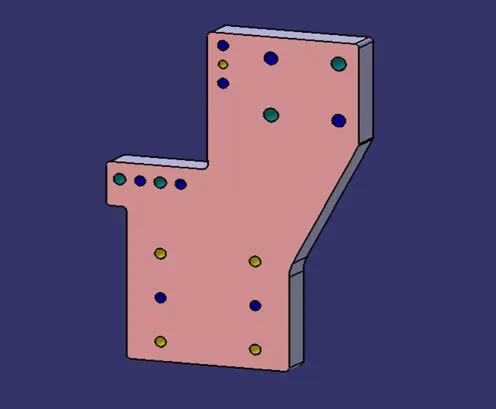
Blades: These connect Risers and the clamp cylinders. These play a vital role in building the unit. The design of blades depends on functionality but is usually compact.
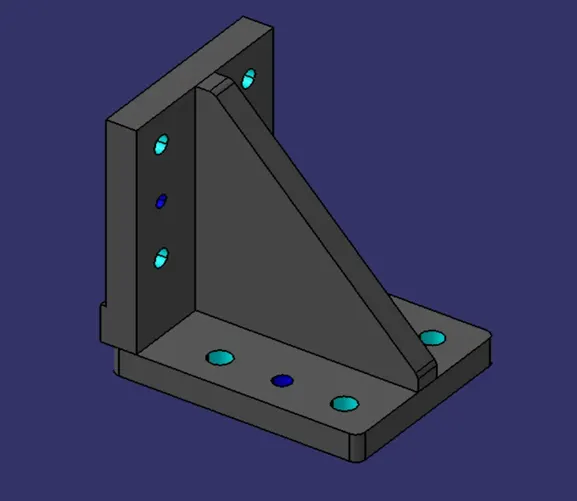
Riser: The riser is mounted on the base plate and holds a clamp or pin on it. The riser can be a standard or Manufactured part according to the profile. This can be sometimes a welded part.
The whole clamp unit with open and closed positions: