Week 1 Challenge
1. Truss type reasoning
Out of the two through type truss systems shown below, which is the most efficient in carrying gravity load? Reason it out.
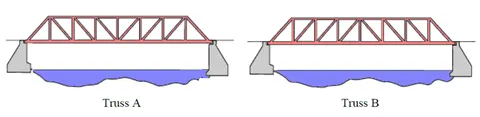
Ans. Truss A is more efficient in carrying ravity load. In Truss A we can see the top and bottom chrods are provided to keep the inclined members intact and transfer shear. In the centre we can see two M shaped inclined members which transfer axial force and gravity force.
2. Deflection shape & Bending Moment Drawing (Qualitative approach)
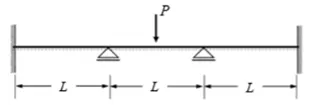
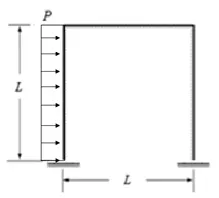
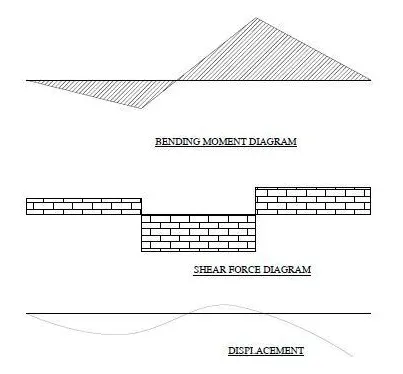
For the beam & Frame below draw deflected shape and bending moment drawing. (Qualitative approach). E & I are constants.
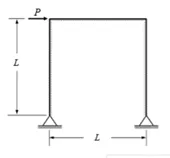
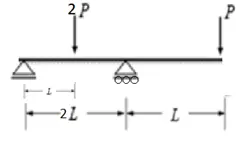
Ans a)
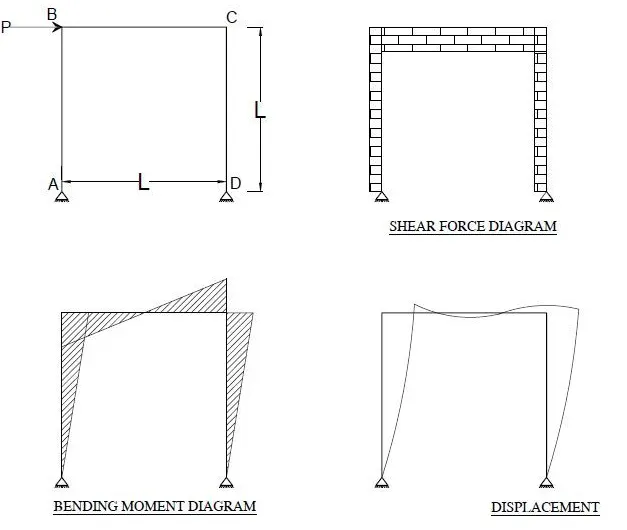
b)
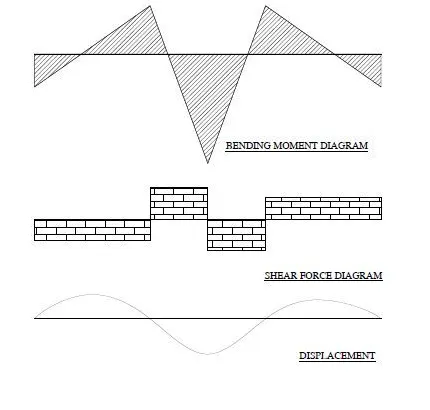
c)
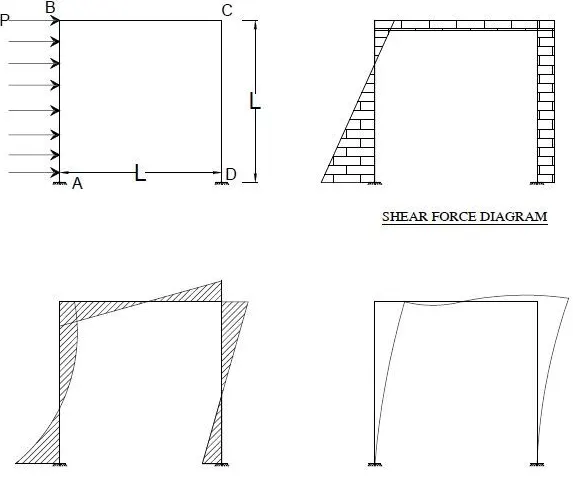
d)
3. Determine MOI, Weight, C/S area of sections below
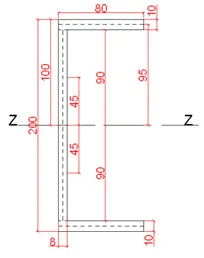
MOI along Iz=18341333.33 mm4
MOI along Iy=1843244.9123 mm4
Weight per meter=23.84 kg/m
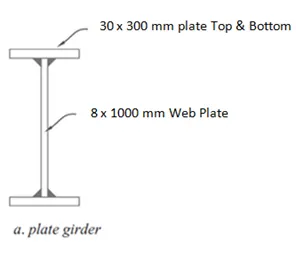
MOI along Iz=5442066666.667 mm4
MOI along Iy=135042666.6667 mm4
Weight per meter= 204.1 kg/m
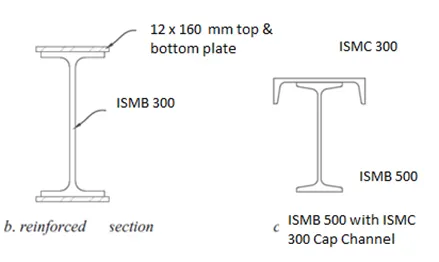
b) MOI along Iz=18540000 mm4
MOI along Iy=1420000 mm4
Weight per meter=74.34 kg/m
c) MOI along Iz=64180000 mm4
MOI along Iy=81630000 mm4
Weight per meter=74.34 kg/m
4. Load calculation problem
For the floor framing below, Calculate the load on interior beam, Exterior beam, Interior Girder and exterior girder having Floor Load of 10kN/m2
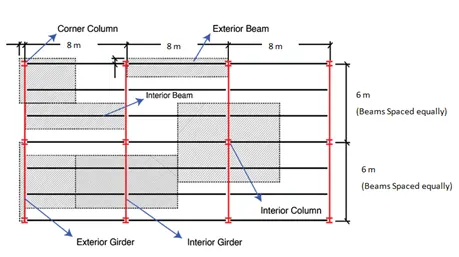
Ans. Floor load=10 KN/m^2
Tributary width of exterior girder= 0.5(0+8)=4m
Tributary width of interior girder= 0.5(8+8)=8m
Tributary width of exterior beam=0.5(0+2)=1m
Tributary width of interior beam=0.5(2+2)=2m
Load on beam=tributary widthxfloor load
Load on exterior girder=4x10=40 KN/m
Load on beam interior girder=8x10=80 KN/m
Load on beam exterior beam= 1x10=10 KN/m
Load on beam interior beam=2x10 KN/m
5. Expansion joint size determination for temperature stated problem
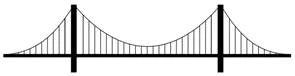
Assuming a bridge, made of steel, with an initial total length of 2000 m at -20 ºC, calculate the length difference at 40 ºC and its total length.
Coefficient of Thermal expansion of steel = 12x10-6/°C
Ans Change in length= coefficientof thermal expansionxoriginal lengthxchange in temperature
= 12x10^-6x2000x20
=0.48m