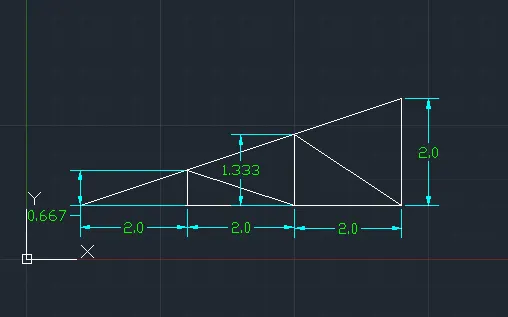
AutoCAD _Drafting images by Coordinate System methods _Week 1
AIM:
To Create the geometries from P1 to P2 using all the coordinates system methods.
APPARATUS:
Autocad software
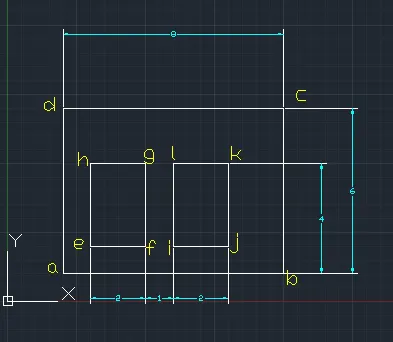
COORDINATES SYSTEMS :
- Absolute coordinates
- relative rectangular coordinates
- relative polar coordinates
- direct distance entry
PROCEDURE:
1)
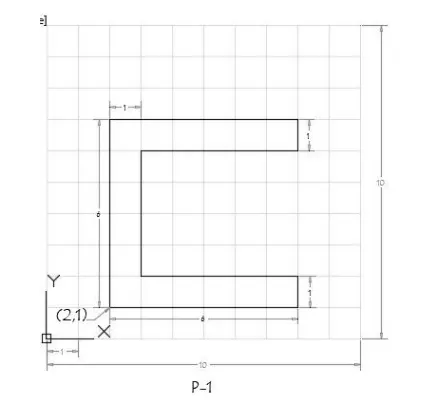
- open autocad
- QNEW command
- as decimal units are used (metric is selected )
- template = Acad.dwg
- use a wizard
- advanced setup
- units
- decimal ( precision 0.0)
- angle
- decimal degree
- angle measure
- east
- area = 10 x10
ABSOLUTE COORDINATE SYSTEM :
- line command
- 2,1 ( point a)
- 8,1 (point b)
- 8,2 (point c)
- 3,2 (point d )
- 3,6 ( point e)
- 8,6 ( point f)
- 8,7 (point g )
- 2,7 ( point h)
- close
RESULT:
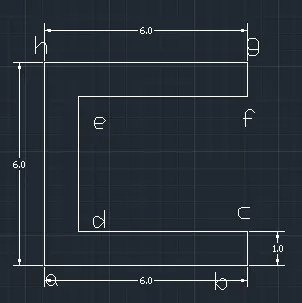
RELATIVE RECTANGULAR COORDINATES
- line comand
- 2,1 ( start point) (A)
- @6,0 ( dx = 6 units , dy=0 units ) (B)
- @0,1 ( dx = 0, dy=1 ) (C)
- @-5,0( dx=5,dy=0) (D)
- @0,4 ( dx=4, dy=0) (E)
- @5,0 ( dx=5, dy=0) (F)
- @0,1 ( dx=0 , dy=1 ) (G)
- @ -6,0 ( dx=6 , dy =0) (H)
- close
RESULT :
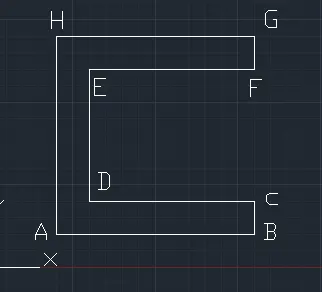
RELATIVE POLAR COORDINATES :
- line
- 2,1 ( start point ) (1)
- @6<0 ( towards east ) (2)
- @1<90 ( towards north ) (3)
- @5<180 ( towads west ) (4)
- @4<90 (5)
- @5<0 (6)
- @1<90 (7)
- @6<180 (8)
- @ 6<270 ( towards south ) (9) / close
RESULT :
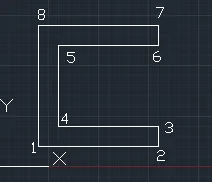
DIRECT DISTANCE ENTRY :
- LINE
- 6 (cursor facing east)
- 1 ( cursor facing upwards )
- 5 ( cursor facing west)
- 4 ( cursor facing upwards )
- 5 ( cursor facing east)
- 1( cursor facing upwards )
- 6 (cursor facing west )
- 6 ( cursor facing downwards ) /close option .
2)
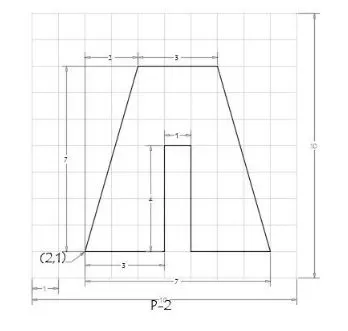
ABSOLUTE COORDINATES SYSTEM :
- LINE
- 2,1 (START POINT)
- 5,1 (b)
- 5,5 (c)
- 6,5 (d)
- 6,1 (e)
- 9,1 (f)
- 7,8 (g)
- 4,8 (h)
- close
RESULT:
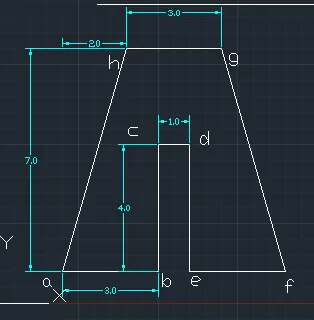
RELATIVE RECTANGULAR COORDNATE SYSTEM :
- LINE
- 2,1 ( starting point ) ( a)
- @3,0 ( dx=3, dy=0) (b)
- @0,4 ( dx=0 , dy =4 ) (c)
- @1,0 ( dx=1, dy=0) (d)
- @0,-4 ( dx=0 , dy=-4 ) (e)
- @3,0 ( dx=3 ,dy =0 ) (f)
- @-2,7 ( dx=1,dy=7) (g)
- @-3,0 (dx=3 ,dy=) (h)
- close
RESULT:
RELATIVE POLAR COORDINATES :
- LINE
- 2,1 ( START POINT ) (a)
- @3<0 (b)
- @4<90 (c)
- @1<90 (d)
- @4<270 (e)
- @3<0 ( f)
- @7<90 ( line 1)
- @2<180 ( line 2)
- now join end point of line 2 and starting point of line 1
- delete line 1 and line 2
- @3<180 (FROM g POINT )
- close
RESULT :
DIRECT DISTANCE ENTRY :
- LINE
- 3 ( a to b ) ( towards right)
- 4 (b to c ) ( upwards)
- 1 (c to d ) ( towards right )
- 4 (d to e) ( downwards )
- 3 ( e to f ) ( towards right )
- 7 ( f to # ) ( upwards )
- 2 ( # to g ) ( towards left)
- (join g to f )
- ( delete f to # and # to g line )
- line
- 3 (g to h ) ( towards left)
- close
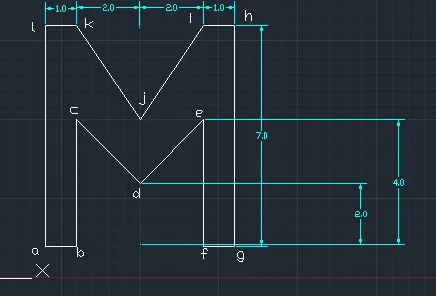
3)
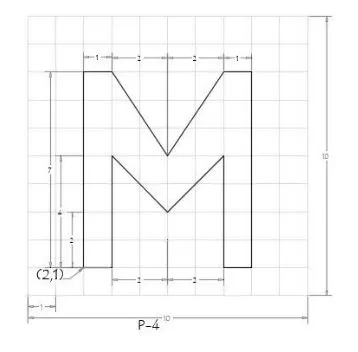
ABSOLUTE COORDINATES :
- LINE
- 2,1 (start point ) ,(a)
- 3,1 (b)
- 3,5 (c)
- 5,3 (d)
- 7,5 (e)
- 7,1 (f)
- 8,1 (g)
- 8,8 (h)
- 7,8 (i)
- 5,5 (j)
- 3,8 ( k )
- 2,8 (l)
- close
RELATIVE RECTANGULAR COORDINATES :
- LINE
- 2,1 ( starting point ) ,( a )
- @1,0 (b)
- @0,4 (c)
- @2,-2 (d)
- @2,2 (e)
- @0,-4 (f)
- @1,8 (g)
- @0,7 ( h)
- @-1,0 ( i )
- @-2,-3 (j)
- @-2,3 (k)
- @-1,0 (l)
- close
RELATIVE POLAR COORDINATES :
- LINE
- 2,1 (a)
- @1<0 (b)
- @4<90 (c)
- esc
- line
- @2<0 ( at point b)
- @2<90 ( to get point d from # )
- ( join point c to d )
- esc
- line
- @2<0 ( from # point , to get f point )
- @ 4<90 ( at point f to get e )
- (now join e to d )
- esc
- delete lines : b to # , # to d , # to f
- line
- now from point f
- @1<0 ( g)
- @7<90 (h)
- @1<180 (i)
- (from e take 2m to get g)
- join g to i using line
- esc
- line
- @7<90 ( from point a )
- @1<0 (l)
- join k to g using line
DIRECT DISTANCE ENTRY
- line
- 1 (a to b)
- 4 (b to c )
- join c to d
- 4 (f to e)
- join e to d
- 1 (f to g )
- 7 (g to h)
- 1 (h to 1)
- join i to j
- 7 (a to l)
- 1(l to k)
- join k to l
RESULT
4)
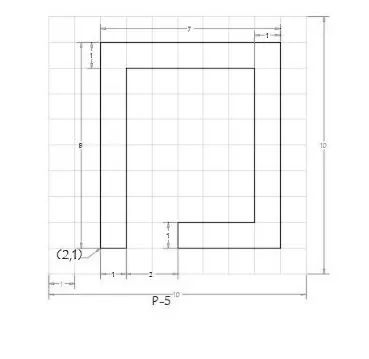
ABSOLUTE COORDINATE SYSTEM:
- LINE
- 2,1 (a)
- 3,1 (b)
- 3,8 (c)
- 8,8 (d)
- 8,2 (e)
- 5,2 (f)
- 5,1 (g)
- 9,1 (h)
- 9,9 (i)
- 2,9 (j)
- close
RELATIVE RECTANGULAR COORDINATE SYSTEM :
- LINE
- 2,1 (a)
- @1,0 (b)
- @0,7 (c)
- @5,0 (d)
- @0,-6 (e)
- @-3,0 (f)
- @0,-1 (g)
- @4,0 (h)
- @0,8 (i)
- @-7,0 (j)
- close
RELATIVE POLAR COORDINATE SYSTEM :
- LINE
- 2,1 (a)
- @1<0 (b)
- @7<90 (c)
- @5<0 (d)
- @6<270 (e)
- @3<180 (f)
- @1<270 (g)
- @4<0 (h)
- @8<90 (i)
- @7<180 (j)
- close
DIRECT DISTANCE ENTRY
- line
- 2,1 (start point )
- 1 (a to b)
- 7 (b to c)
- 5 (c to d)
- 6 ( d to e )
- 3 (e to f)
- 1 (f to g)
- 4 (g to h)
- 8(h to i)
- 7 (i to j)
- close
RESULT:
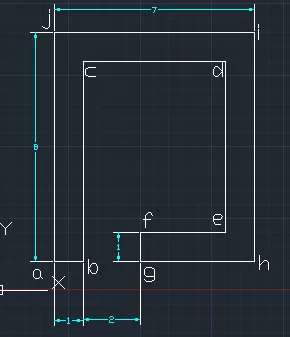
5)
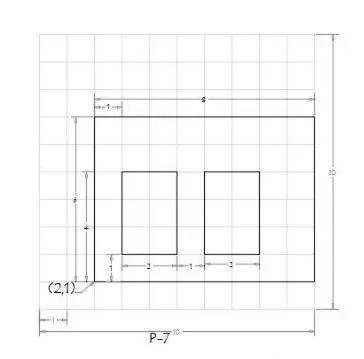
ABSOLUTE COORDINATE SYSTEM:
- LINE
- 2,1 (START POINT ) (a)
- 10,1 (b)
- 10,7 (c)
- 2,7 (d)
- close
- line
- 3,2 (e)
- 5,2 (f)
- 5,5 (g)
- 3,5 (h)
- close
- line
- 6,2 (i)
- 8,2 (j)
- 8,5 (k)
- 6,5 (l)
- close
RELATIVE RECTANGULAR COORDINATE SYSTEM :
- LINE
- 2,1 ( a)
- @ 8,0 (b)
- @ 0,6 (c)
- @ -8,0 (d)
- close
- line
- 3,2 ( start point ) ( e)
- @2,0 ( f)
- @0,3 (g)
- @-2,0 ( h)
- close
- line
- 6,2 ( start point ) (i)
- @2,0 (j)
- @ 0,3 (k)
- @@-2,0 (l)
- close
RELATIVE POLAR COORDINATE SYSTEM :
- line
- 2,1 (a)
- @8<0(b)
- @6<90 (c)
- @8<180 (d)
- close
- line
- 3,2 (start point ) ,(e)
- @2<0 (f)
- @3<90 (g)
- @2<180 (h)
- close
- line
- 6,2 (start point), (i)
- @2<0 (j)
- @3<90 (k)
- @ 2<180 (l)
- close
DIRECT DISTANCE ENTRY
- line
- 2,1 (start point ) (a)
- 8 (a to b)
- 6 (b to c)
- 8 (c to d )
- close
- line
- 3,2 (start point ) (e)
- 2 (e to f)
- 3 ( f to g )
- 2 (g to h)
- close
- line
- 6,2 (start point ) i
- 2 (i to j)
- 3 (j to k)
- 2 (k to l )
- close
RESULT:
6)
ABSOLUTE COORDINATE SYSTEM:
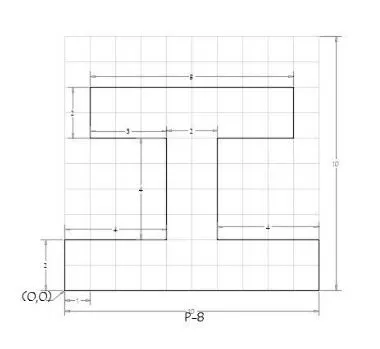
- line
- 0,0 (start point) (A)
- 10,0 (B)
- 10,2 (C)
- 6,2 (D)
- 6,6 (E)
- 9,6 (F)
- 9,8 (G)
- 1,8(H)
- 1,6 (I)
- 4,6 (J)
- 4,2 (k)
- 0,2 (L)
- close
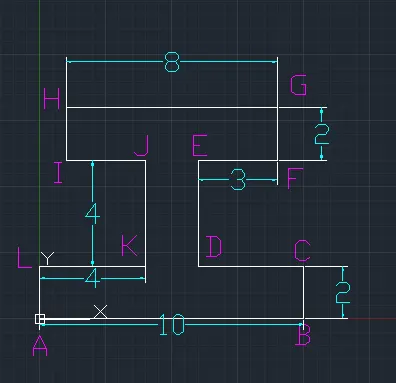
RELATIVE RECTANGULAR COORDINATE SYSTEM :
- LINE
- 0,0 START POINT (A)
- @10,0 (B)
- @0,2 (C)
- @-4,0 (D)
- @0,4 (E)
- @3,0 (F)
- @0,2 (G)
- @-8,0 (H)
- @0,-2 (I)
- @ 3,0 (J)
- @0,-4 (K)
- @-4,0 (L)
- CLOSE
RELATIVE POLAR COORDINATE SYSTEM :
- LINE
- 0,0 (A)
- @10<0 (B)
- @2<90 (C)
- @4<180 (D)
- @4<90 (E)
- @3<0 (F)
- @2<90 (G)
- @8<180 (H)
- @2<270 (I)
- @3<0 (J)
- @4<270 (K)
- @4<180 (L)
- CLOSE
DIRECT DISTANCE ENTRY
Its done by entering the distance and with the direction of the cursor .
RESULT:
7)
ABSOLUTE COORDINATE SYSTEM:
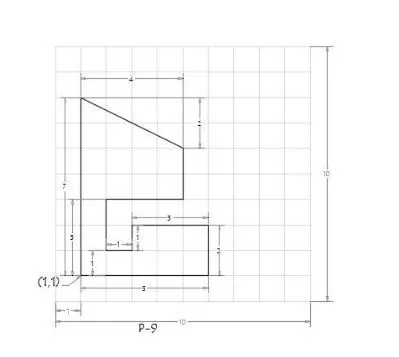
- line
- 1,1 (a)
- 6,1 (b)
- 6,3 (c)
- 3,3 (d)
- 3,2 (e)
- 2,2 (f)
- 2,4 (g)
- 5,4 (h)
- 5,6 (i)
- 1,8 (j)
- close
RELATIVE RECTANGULAR COORDINATE SYSTEM :
- LINE
- 1,1 (a)
- @5,0 (b)
- @0,2 (c)
- @ -3,0 (d)
- @0, -1 (e)
- @-1,0 (f)
- @ 0,2 (g)
- @ 3,0 (h)
- @ 0,2 (i)
- @ -4,2 (j)
- close
RELATIVE POLAR COORDINATE SYSTEM :
- line
- 1,1 (a)
- @5<0 (b)
- @2<90 (c)
- @3<180 (d)
- @1<270 (e)
- @1<180 (f)
- @2<90 (g)
- @3<0(h)
- @2 <90 (i)
- @4.5 <153 (J) or from i take @2<90 to get # . from # enter @4<180 to get point j . join j and i points using line . delete line i to # and # to j .
- CLOSE
DIRECT DISTANCE ENTRY
Its done by entering the distance and with the direction of the cursor .
RESULT:
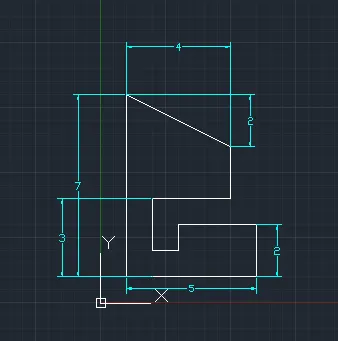
8)
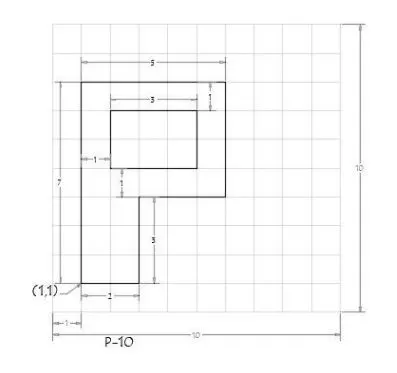
ABSOLUTE COORDINATE SYSTEM:
- line
- 1,1 (a)
- 3,1 (b)
- 3,4 (c)
- 6,4 (d)
- 6,8 (e)
- 1,8 (f)
- close
- line
- 2,5 (g)
- 5,5 (h)
- 5,7 (i)
- 2,7 (j)
- close
RELATIVE RECTANGULAR COORDINATE SYSTEM :
- line
- 1,1 (a)
- @2,0 (b)
- @0,3 (c)
- @3,0 (d)
- @0,4 (e)
- @-5,0 (f)
- close
- line
- 2,5 (g)
- @3,0 (h)
- @0,2 (i)
- @-3,0 (j)
- close
RELATIVE POLAR COORDINATE SYSTEM :
- line
- 1,1 (a)
- @2<0 (b)
- @3<90 (c)
- @3<0 (d)
- @4<90 (e)
- @5<180 (f)
- close
- line
- 2,5 (g)
- @3<0 (h)
- @2<90 (i)
- @3<180 (j)
- close
DIRECT DISTANCE ENTRY
Its done by entering the distance and with the direction of the cursor .
RESULT :
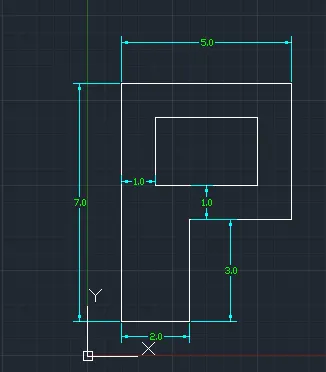
AIM:
TO Draw the profile and the trusses using any coordinate system methods.
SOFTWARE:
Autocad
line command , circle command are mostly used .
PROCEDURE:
- open autocad
- QNEW command
- as decimal units are used (metric is selected )
- template = Acad.dwg
- use a wizard
- advanced setup
- units
- decimal ( precision 0.0)
- angle
- decimal degree
- angle measure
- east
- area = 12 X 9
- UNITS
- decimal
- metric
1)
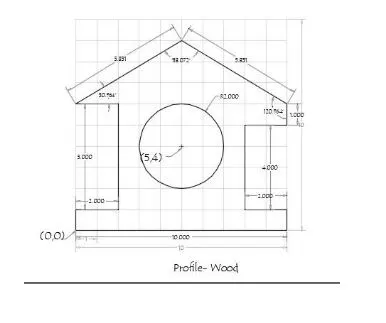
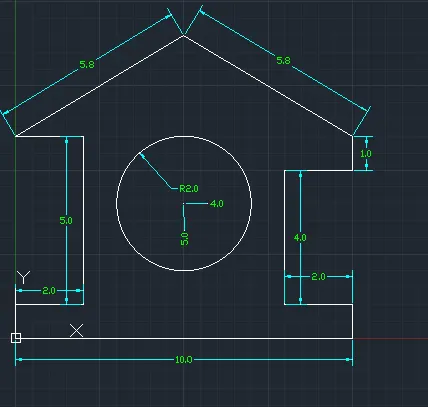
ABSOLUTE COORDINATE SYSTEM:
- LINE
- 0,0
- 10,0
- 10,1
- 8,1
- 8,5
- 10,5
- 10,6
- 5,9
- 0,6
- 2,6
- 2,1
- 0,1
- CLOSE
- circle
- centre radius ( click on it )
- 5,4
- radius = 2
RESULT:
2)
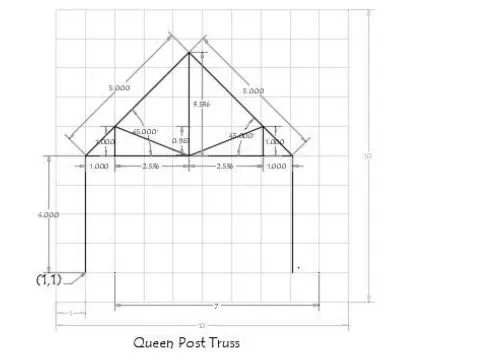
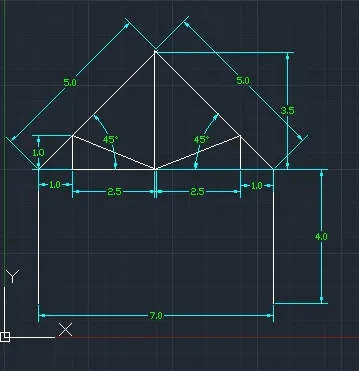
RELATIVE POLAR COORDINATE SYSTEM :
- LINE
- 1,1
- @4<90
- @7<0
- @4<270
- enter
- line
- 1,5
- @5<45
- enter
- line
- 8,5
- @5<45
- @3.5<270 - ( point q )
- enter
- line
- 1,5
- @1<0
- @1<90 - (point w)
- using line join point q and w
- enter
- line
- 8,5
- @1<180
- @1<90 - ( point z)
- using line join point z to w
- enter
RESULT :
3)
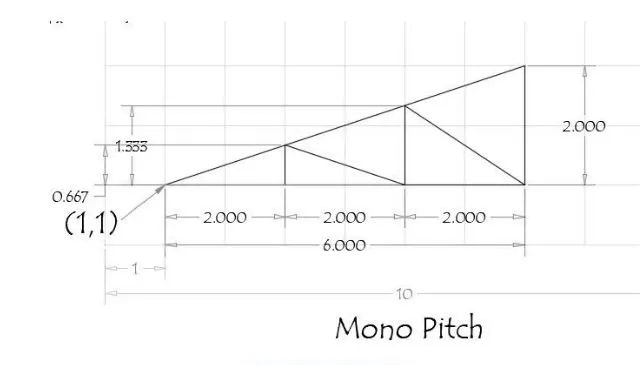
ABSOLUTE COORDINATE SYSTEM:
- Line
- 1,1
- 3,1
- 5,1
- 7,1
- 7,3
- close
- line
- 3,1
- 3,1.667
- 5,1
- 5,2.333
- 7,1
- enter
RESULT: