Underbody Coating
Underbody Coating
Underbody coating is a process used to protect the vehicle body from rust, corrosion, and damage due to moisture, water, road salt, gravel, sand, and other potentially damaging elements. Under-body coating can also provide a level of noise isolation from road noises. Underbody coating typically falls into two types, area coating, where large areas are protected, and joint sealing, where joints are sealed.
Underbody coating compounds fall into a number of categories, including water-, paraffin/wax-, petroleum-, rubber-, polyurethane-, and asphalt- based products. Each has strengths and weaknesses in terms of material cost, ease of application, durability and longevity, and other factors.
Underbody-coating compounds are typically applied at the factory using either ED (electro-deposit) dipping, or through spraying/injection in fully automated or semi-automated processes. The areas covered, compounds used, and thickness of application can vary widely by vehicle make, model, and market.
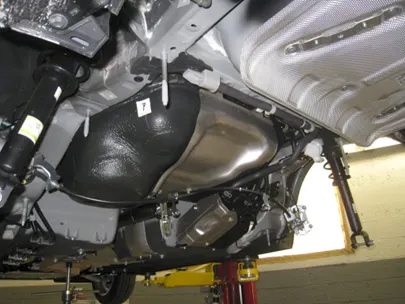
Undercoating for Mazda Miata MX-5