Underbody Coating
Underbody Coating
Underbody coatings are coating applied on the bottom side of vehicles to provide a layer of protection between the vehicle’s underside and damaging forces such as moisture, corrosion, stone chip damage, and weather resistance. It is often rubber-based dense cladding that is applied uniformly to the undercarriage of the automobile. It is normally sprayed or painted on the car.
Automotive underbody coatings are applied on different areas such as wheel arches, inside wing panels, and the undercarriage of the vehicle. They provide a barrier between the metal component and its outside environment; hence, protecting the vehicle from damage and improving its vehicle life. Automotive underbody coating provides the vehicles with properties like good adhesion, fast-drying, toughness, flexibility, and corrosion protection.
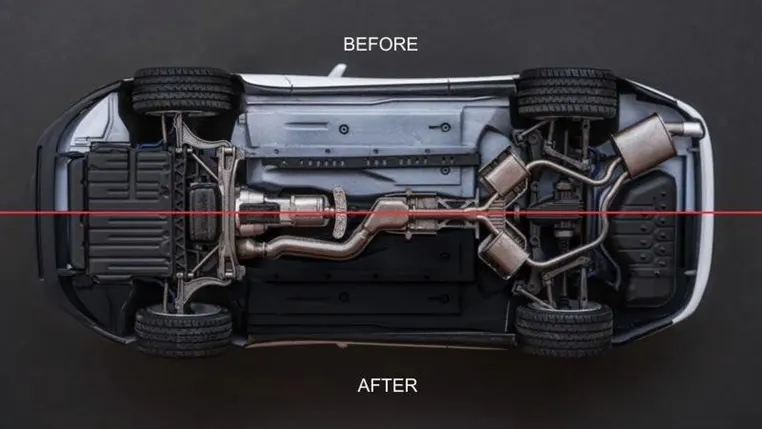
Fig 1 – Vehicle with Underbody coating
Underbody coating is segmented into different types –
- Rubberized Underbody Coating
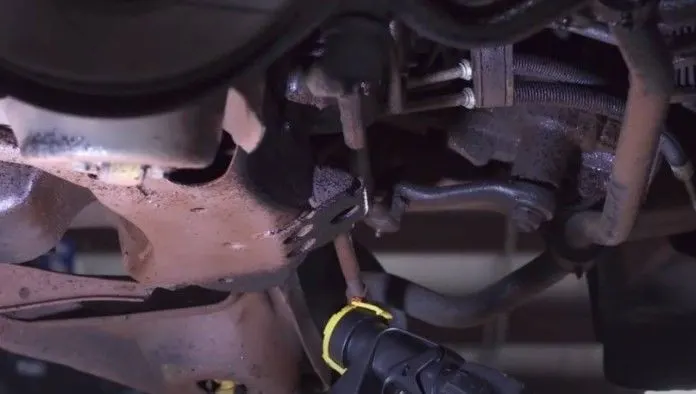
Rubberized coating is considered a good option, it preserves the underbody well and provides protection from salt, water, and other chemicals, and can also be easily applied.
- Wax Based Underbody Coating
The wax-based coating is a somewhat ephemeral undercoating that wears away in a few months but this type of coating provides the best protection against water and it is also the most affordable option out there.
- Asphalt Based Automotive Undercoating
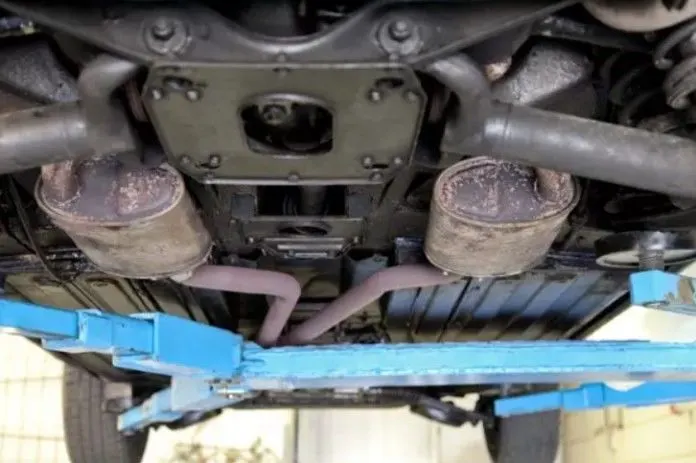
This type of undercoating is best suitable for lorries, trucks, and large vehicles as this coating provides a greater degree of protection as compared to rubber-based coatings. This coating contains a little amount of rubber in them for sound insulation. Apart from all the advantages the coating provides, the application of this coating on a vehicle is a time-consuming process.
- Polyurethane Underbody Coating
Polyurethane Underbody coating is usually used to close up slits and fractures on the underbody of the vehicle. They provide good protection against corrosion and also have the property to bond with the metal. Polyurethane coating can also be repainted.
Different methods used for coating are -
- Spray applied
- Brush applied
Underbody coating should have a low enough viscosity that it can be easily spray-applied.
As the main purpose of the coating is to provide the protection, the coating should have the desirable properties like resistance to oxygen, ozone, ultraviolet light, abrasion, and high temperature, have high cohesive strength, and adhere well to the underbody of the automobile to protect the underbody from the environment.
The coating should be recyclable to prevent its harmful effects on the environment.
Different types of underbody paints applied on the vehicle are -
- Resin-based
- Wax Based
- Bitumen Based
Among all three paints, Resin-based coating is more popular as they provide long-term protection from corrosion and stone fragments as well as better noise dampening effect, this coating has an advantage as it can also be painted over if required.
Market participants in underbody coating
Underbody coating is provided by various companies, few examples of market participants are mentioned below
- 3M
- AkzoNobel NV
- Henkel Corporation
- Sika AG
- Mallard Creek Polymers
- The Sherwin-Williams Company
- Henry Company
- PPG
- Covestro AG
- Daubert Chemical Company
Advantages of Undercoating
Rust Protection
Machine parts at the bottom of the car which directly come in contact with water and have no protection against humidity are prone to corrosion. underbody coating prevents the action of rust formation on these parts and keeps the corrosion at bay. Underbody coating is an outstanding option for people who reside in a snowy region.
Absorbs Noise
Noises occur as the vehicle is driven through the unpaved road because of contact of debris with the exposed metal as underbody coatings cover these metal parts and often contain rubber, they absorb all the unpleasant and irritating noise occurring due to the contact.
Reinforcement
If your car already has stock underbody coating, reinforcing it with another coating will add more benefits to the vehicle and will provide additional protection. Reinforcement will also improve the noise dampening ability of the vehicle.
Prolong Car’s Life
Underbody coating not only protects the vehicle from corrosion but also protects the engine and transmission. Less tear and wear in the machine parts prolong the life of the vehicle. Fewer dents and scratches also keep you worry-free.
Modern Automotive Coating Processes
Modern underbody coating –
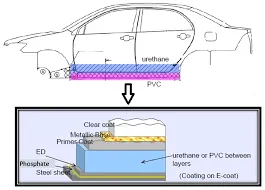
Fig. - Five layers of underbody coating
There are five main steps in the Modern automotive coating method. They include the following:
Pre-treatment: It is done to remove and cleans excess metal and to form an appropriate surface structure for enabling the bonding of a corrosion protection layer.
The next step is electrodeposition (ED) of the anti-corrosion or rust prevention layer.
Next Poly Vinyl Chloride (PVC) is applied for anti-corrosion, elimination of water leaks, and minimization of chipping and vibrational noise.
Then primer is applied to promote adhesion between the surface and the basecoat; it also imparts a smoother surface for subsequent layers and has anti-chipping properties.
At Last, the topcoats that include a basecoat and clearcoat are applied; they provide surface properties that are sought after color, appearance, gloss, smoothness, and weather resistance
The disadvantage of underbody coating –
High cost is the downside of Underbody coating. There is a also risk of damage during application causing premature failure of mechanical parts.
Conclusion –
Though Underbody coating is costly its advantages outweigh its disadvantages, providing the vehicle with various benefits like corrosion resistance, keeping it safe from further exposure to water, dirt, and other substances from the road, and increasing its durability in the long run.