Hood design-Week 2
Hood
The hood or bonnet is the cover over the engine of an automobile, which can be open and closed as per the requirement, for maintenance and repairs. It is usually hinged to the vehicle and open and closed with the help of a hood stay.
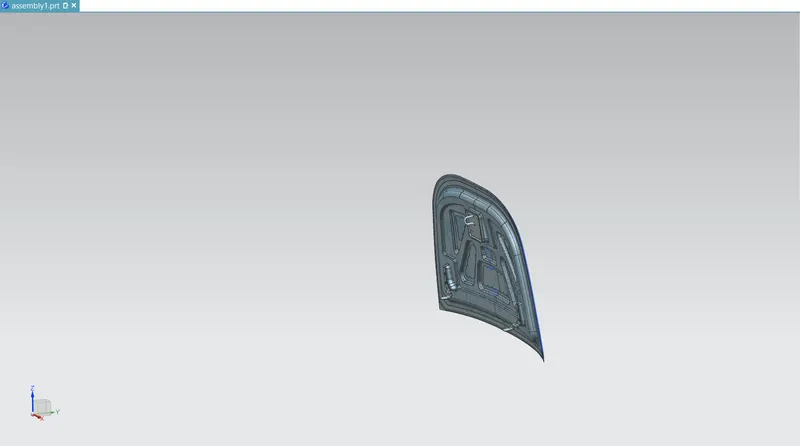
Hood Basically consists of Inner and outer panel, striker, hinge, and reinforcement.
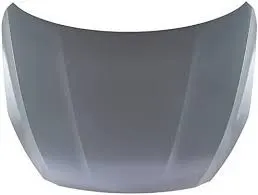
Outer panel –
It is the outermost part of the hood, used for providing the vehicle with styling and a luxurious look.
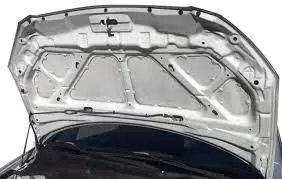
Inner panel –
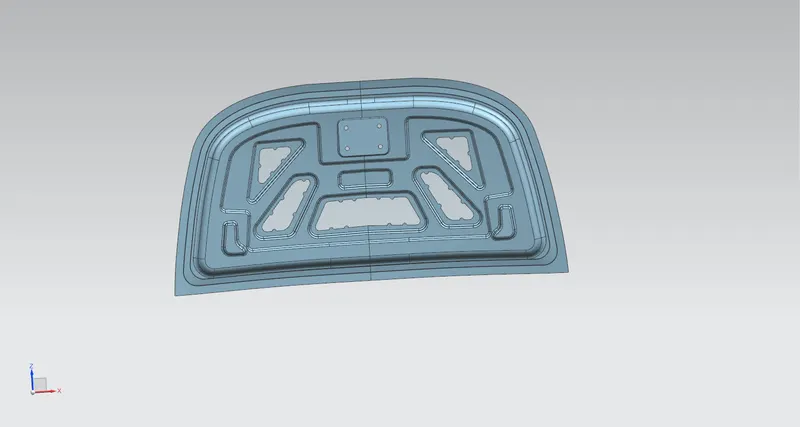
It is the part of the hood that Provides the hood with strength and stability, reinforcement, and all the connections to the hood are provided on its inner panel.
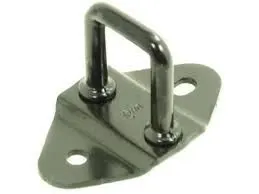
Striker –
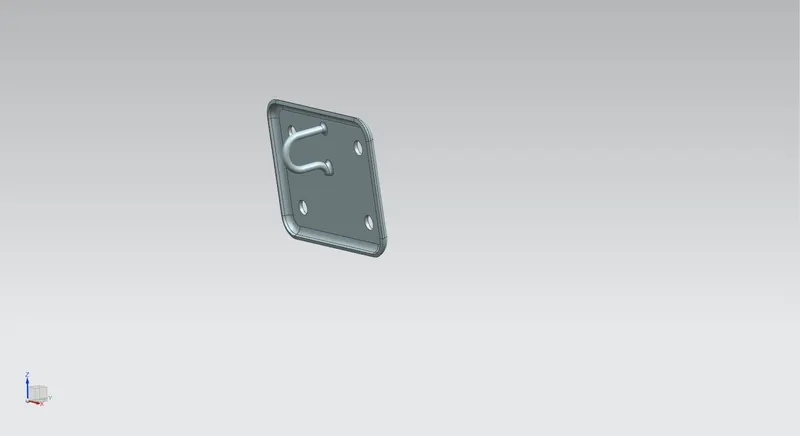
It is used for the locking mechanism of the hood, it is bolted to the underside of the hood at the front. It engages the hood latch when closed.
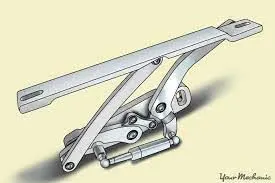
Hinge –
The Hood hinge is very pivotal for the opening and closing mechanism, It facilitates the process of opening and closing.
Reinforcement –
They are provided to the hood in order to reduce the impact in case of collision.
Embosses provided dissipates the energy in the outer direction so that the energy does not get transferred to the inner part of the vehicle
Material -
Hoods are made of the same material as the rest of the body, Different materials used are steel, aluminium, fiberglass, and carbon fiber.
Types of hood stay-
Support Rod –
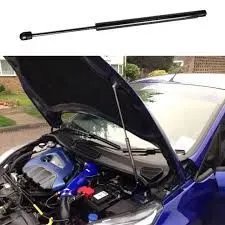
A support rod is nothing but a long rod with varying shapes used to keep the hood of the vehicle in an open position. to facilitate the maintenance and repairs.
Advantage –
- Cost-effective
- Simple
Disadvantage –
- It is not suitable to be gripped because of high temperature in case of overheating of engine.
Support rods are always placed in opposite side of the battery position, to avoid interference.
Support rods are provided with deflection of at most 35 mm to avoid wobbling as it has to support the weight of the complete hood.
Gas Stay –
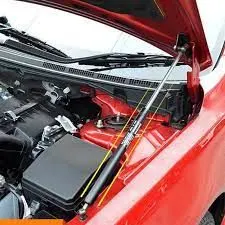
Gas star has similar purpose as that of support rod except that these are automated or open the hood automatically after applying initial force.
Advantages –
- Automatically operated
Disadvantages –
- Very costly
Design consideration for Hood
Opening angle –
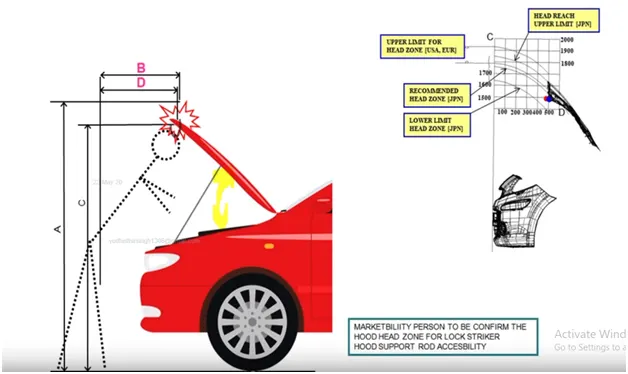
The first important criterion while designing a hood is the opening angle.
It Completely depends on the height of the person, and as the average height of the person varies from country to country the opening angle changes. This angle is controlled using the support rod or gas stay.
Pedestrian Safety –
While designing a hood, it is very important to pay attention to pedestrian safety requirements during a frontal crash.
Euro NCAP assessment is performed for this purpose. Which has developed various test specifications and rating systems for assessment of injuries on pedestrians during impact.
During crash analysis, Two test areas are created, the child’s head impact zone and adult head impact zone, these test areas are based on Wrap around distance (WAD).
Wrap around distance (WAD) – Distance from the ground to the head impact zone over the outer surface of the car.
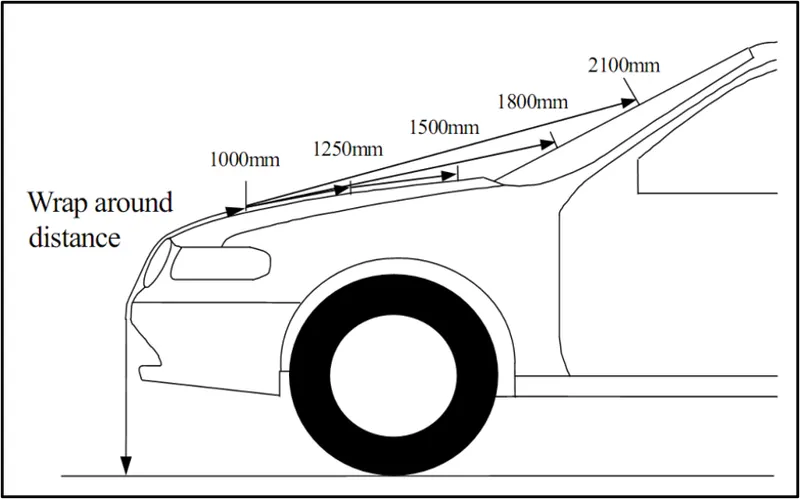
Chid head impact Zone is around 1000 to 1700mm and the adult impact Zone is between 1700mm to 2100mm. To avoid injuries this zone is made of less thickness and also no reinforcement is provided in these zones to reduce the impact during a collision.
Passenger safety –
It is also very important to consider the passenger’s safety, to ensure this hood is designed in such a way that during the frontal collision the force exerted gets dissipated and travels in the outside direction so that it has a less negative impact on occupants.
Manufacturing Process
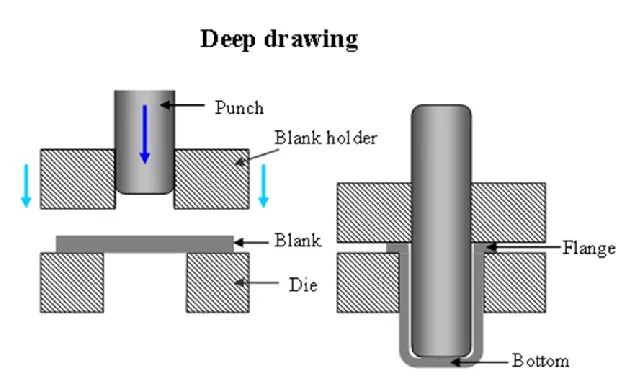
Deep Drawing
Deep Drawing is a metal forming process in which sheet metal blank is drawn into a forming die by the mechanical action of a punch. It is a shape transformation process with material retention. It is considered a deep drawing when the depth of the drawn part exceeds its diameter.
Hemming
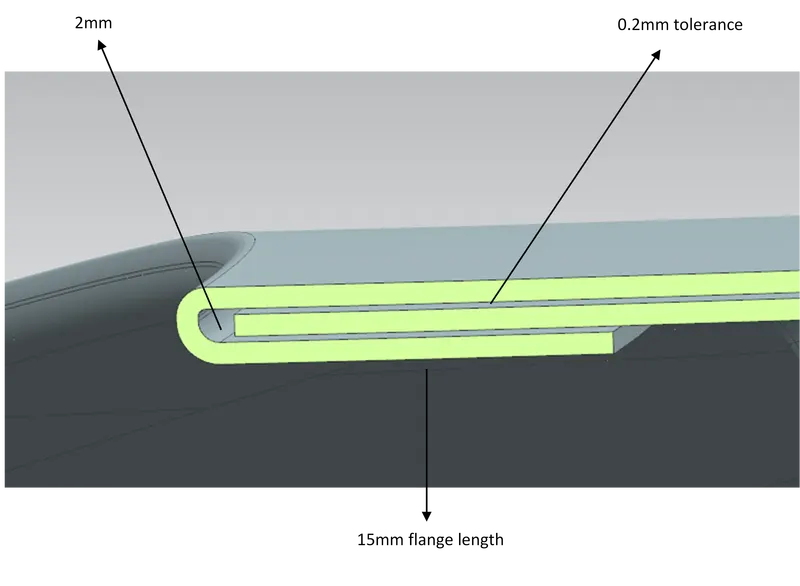
It is a forming operation in which the edges of the sheet are folded over another part in order to fit two parts together. Hemming operations are usually used to connect parts together and reinforce part edges.
Mastic Points
These are the points where the inner panel and outer panel of the hood are joined using mastic sealant. Both panels are held together using this sealant. Mastic sealants are nothing but a rubber-like elastic compound that is initially in paste form and gets hardened after heating.
Emboss
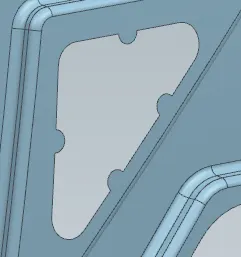
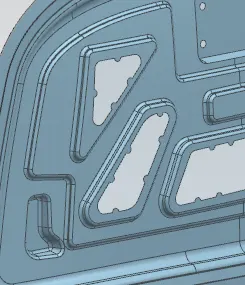
Emboss is usually done on sheet metal in order to increase rigidity and for obtaining the desired design pattern. It is done using the stamping process, where dies are pressed against the sheet metal to obtain the desired pattern.
There are no sharp corners in embossing to avoid manufacturing errors.
Latch Trajectory
This Trajectory is necessary for proper alignment of hinge and striker. It is drawn through the hinge axis to determine the correct position of the striker. The radius of the trajectory is the distance from the center of the striker to the center point of the hinge axis .
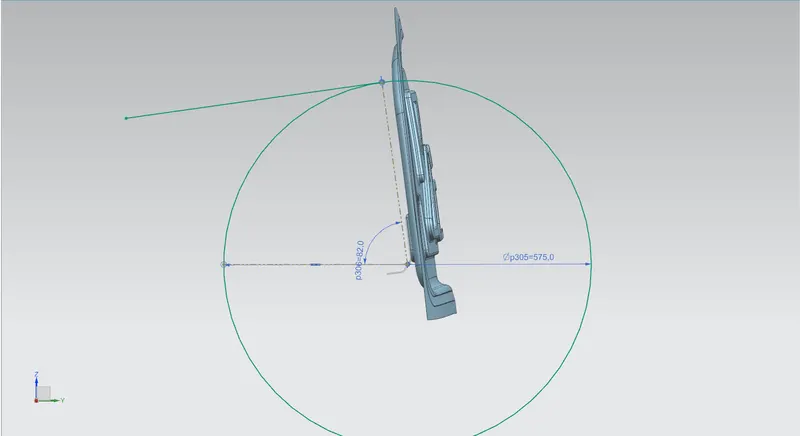
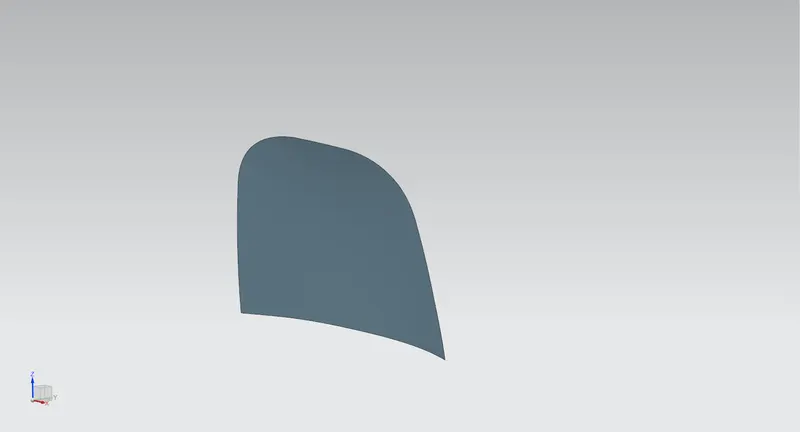
Hood Outer panel
Hood Inner Panel
Hinge assembly
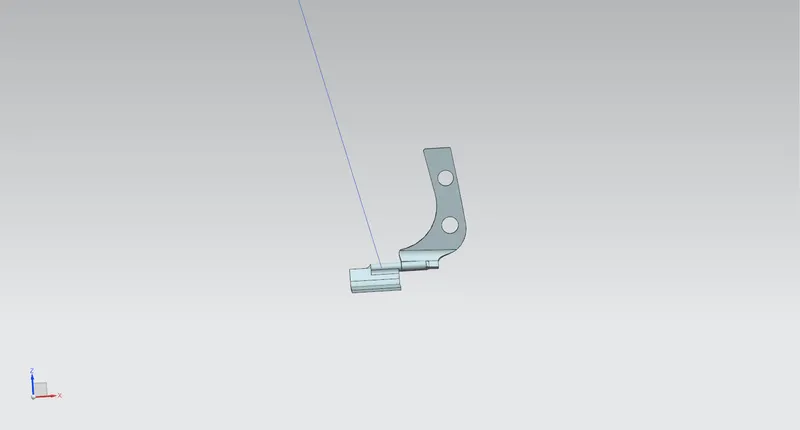
Striker
Final Assembly
Conclusion –
Thus, we have designed a hood that meets the design standards and satisfies all the safety, manufacturing, and Euro NCAP requirements.