Underbody Coating
UNDERBODY COATING
Underbody coating is the sprayed application of a wax or rubber-based composite onto the entire underside of the vehicle. It's designed to create a rust-proof layer between the underbody side of the vehicle and the water, ice, and salt of the road. Underbody coating provides a more comprehensive protective layer for your vehicle. There are various types of under coating is done. The below image shows the underbody coating.
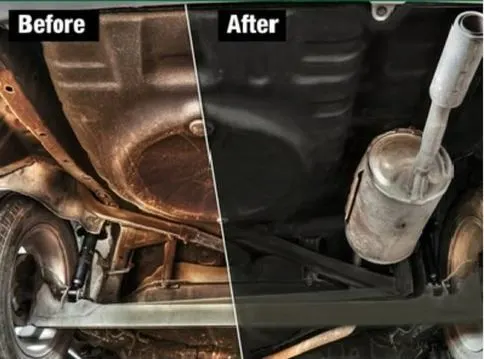
Types of underbody coating:
There are several types of underbody coating available. Some of them are
- Water-Based Undercoats
- Petroleum-Based Undercoats
- Asphalt-Based Undercoats
Water-Based Undercoats
Water-based vehicle underbody coating is most popular for the do-it-yourself procedure. You can get it in your automotive parts stores in aerosol formats. These underbody coatings are thin-set and take short time to dry. This coating can be done in automotive shops that offer underbody coating services at a reasonable rate. The disadvantage of water-based underbody coating is that it should be repeated frequently.
Petroleum-Based Undercoats
Petroleum-based underbody coating is made from oil and they have greater deflective abilities for road salts and grime. The petroleum base helps repel ice and water better than water-based undercoating. Petroleum-based underbody coating can be purchased in your professional vehicle servicing shops. This type of underbody coating also needs to be replaced once a year.
Asphalt-Based Undercoats
Asphalt-based underbody coating is the strongest undercoating available and it is used in military vehicles and on all-terrain. Asphalt-based underbody coating will last long and is the best option for vehicles that endure heavy road use. Asphalt-based underbody coating is the thickest coating and has the most damage-resistant properties. It can be bought from professional services shops and is the only type of underbody coating with a limited warranty. You can also buy the asphalt-based underbody coating while buying a new vehicle.
Purpose of underbody coating
- Undercoating helps to provide an additional layer of insulation and protection to the undercarriage of your vehicle.
- Manufacturers may apply car undercoating at the factory.
- The undercoating covers most of the car’s underside, including floorboards, frames, gas tanks, pans, wheel wells and mufflers, suspension parts, and exhaust pipes. But this can vary according to the maker of that car.
- Undercoating materials adhere to metal, even if it is painted. Most of them come in pressurized cans for easy spray-on application, while an even spread may be tough to achieve without professional applicators.
- Ingredients used in the manufacturing of undercoating include fiberglass, ceramics, rubber, asphalt, and silicone. Each has different properties in terms of heat resistance and retention, but all give protection against the elements and damage.
- Auto undercoating protects the undercarriage, a vehicle’s most vulnerable area. Unlike the visible portions of your vehicle, the undercarriage doesn’t get washed frequently but it absorbs most of the moisture, grime, salt, and other substances when you come in contact with them, as you drive.
- In addition to protecting your vehicle from elemental damage, good undercoating can also reduce engine noise, leaving you quieter than ever before.
- Even if you buy a new car with undercoating from the dealer, remember that undercoating wears off typically within some period. Worn, patchy car undercoating can get damaged when water and other elements then get trapped under the coat, further eroding metal.
Considerations for underbody coating
We need to consider the following things for an under body coating, they are
- Underbody coating will work best on the new vehicles that have not been exposed to road conditions.
- A used vehicle may already have residue on the bottom of the car or even have spots of rust and corrosion, at this time underbody coating will not help. In this case we need to remove the corrosion first to apply underbody coating, but this corrosion removal process can be expensive.