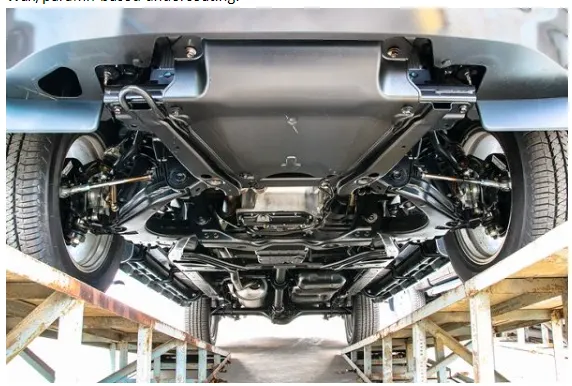
Underbody Coating
UNDERBODY COATING
Underseal(often called undercoating in the U.S) is a thick resillient coating applied to the underbody or chassis of an automobile to project against impact damage from small stones,which would rapidly paint,allowing rusting to begin.
The rate at which vehicles corrode is dependent upon:
- Local climate and use of ice-melting chemicals(salt) upon the roads
- Atmospheric pollution,such as acid rain or salt spray,which can cause paint damage.
- Quality,thickness,and composition of metal used,often an alloy of mild steel.
- Improper use of some dissimilar metals,which can accelerate the rusting of steel bodywork through electrolytic corrosion.
- Design of "rust traps(nooks and crannies that collect road dirt and water)
- Paricular process of rust proffing used.
- plastic/under-seal protection on the car undesired
- Exposure to salt water,which strips off the protective paint and also causes rust much quicker than ordinary rain water
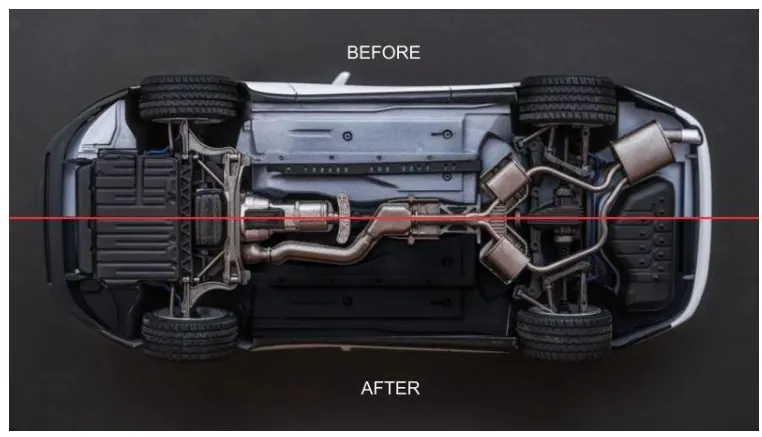
THE DIFFERENCE BETWEEN RUST PROTECTION AND UNDERCOATING
Undercoating and rust protection often go hand-in-hand,but they are actually two diifernt things.Rust protection generally goes inside your vehicle,while undercoating is used for protection outside of the vehicle, and there are a variety of coating avaliable.Depending on the level of damage and how much protection you want for your vehicle will determine which type of automative undercoating you choose.
HOW TO UNDERCOAT YOUR CAR:
You have a few options to select from while considering an undercoating for your vehicle.Obviously,if you are getting it done through an authorized dealer,then you would have no choice as they have their own preferences.
1.SPRAY:
The spray is the most coomon method used by dealers.The spray consist of a tar-like substance that is applied to the undercarriage.it function as a barrier for salt,moisture,and oxygen,which causes corrosion.
You can also purchase it as a DIy product,but the whole magic lies behind the method of application,so it's better to do the job with a dealer,especially if you have a new vehicle.
2.ELECTRONIC:
Removing the electrical current capacity of items underneath the vehicles is another method for applying to undercoat.A electric current circulates through the material.reducing the chances of rusting.
3.DRIP OIL SPRAY:
If you want to do it yourself,then drip oil sparay is the best option.This can be messy but incredibly effective at protecting the undercarriage.It covers every nook and corner of the chassis,forming a robust layer of protection.
Time is the factor where you have to show patience in this method.It takes a long time to dry.in some cases,it drips around 48 hours to a week.
3.DRIPlESS OIL SPRAY:
Coming to the last option,the dripless oil spray.This waxy substance is applied to the body and undercarriage,forming a strong protective layer.It doesn't take much time to dry;however,the layer can easily wear and tear than the other counter methods.
DIFFERENT TYPES OF VEHICLE UNDERCOATING:
Having undercoting professionally applied to your vehicle can be expensive,but fortunately,if your budjet is tight,you can do it yourself for a fraction of the price.Here are some of the various types of undercoatingb avaliable.
- Rubberized undercoating
- polyurethane undercoating
- Wax or paraffin-based undercoating
- Asphalt-Based undercoating
RUBBERIZED UNDERCOATING:
Rubberized vehicle undercoating is easy to apply and offer sound-cushioning as well as protection from dust,moisture,and dings or dents.
In addition to your undercarriage,rubberized undercoating is also safe to use on wheel wells and quarter panels,and dries to a soft rubbery finish that prevents further rust,damage, or moisture seeps.The coating can be painted over and,if necessary for bodywork, can be easily removed with an undercoating removal spray.
Overall,rubberized coating is generally the best option for protecting your vehicle's undercarriage,as it provides the simplest and best protective measures against rust and moisture.
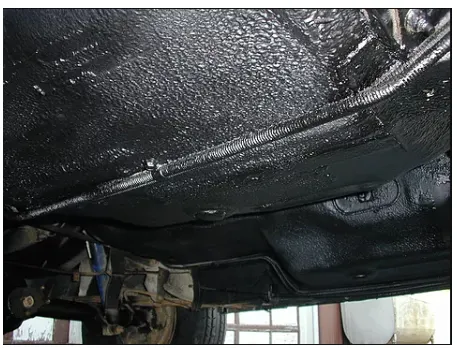
POLYURETHANE UNDERCOATING:
The other option for undercoating your vehicle is to use a polyurethane -based sealant.This type of vehicle undercoating is a liitle bit quicker and easier to apply.
Oftentimes,polyurethane undercoating will come in canisters ready to preload into an application gun.This type of sealent works by seeping into all cracks and seams,displacing salt and moisture and snoozing around rusty areas to bond with and protect unoxidized metal.It also sands quickely in case you'll need to perform bodywork and can be painted over.
On the flipside,this type of car undercoating generally requires a little bit more surface prep work before applying sanding and applying an etching primer to bare metals before using are generally recommended.
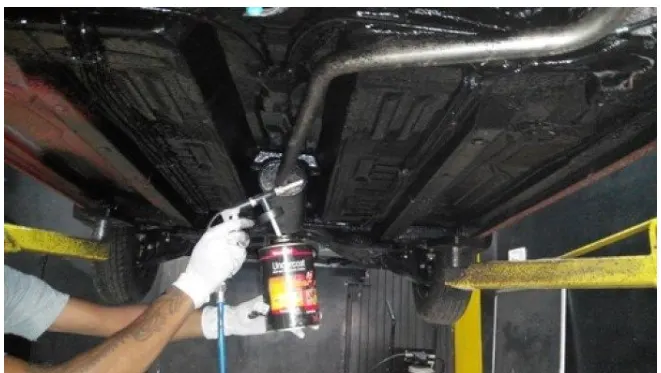
UNDERCOATING:
A paraffin-based undercoating will be the chepest and quickest option avaliable with which to protect the undercarriage of your vehicle.However,keep in mind that it will wear off quicker other types of undercoating and will need to be stripped and reapplied at least once every year.
Wax-based undercoating never truly harden.During application,they drip or flow into seams and cracks to provide protective properties.They are usually avaliable in a spray gun canister or in an aerosal can and ofter at least a base protection in moderately humid climates.
ASPHALT-BASED UNDERCOATING:
For standard vehicles, any of the aforementioned types of undercoating will provide sufficient protection.For large trucks and heavy machinery,asphalt-based undercoating provides a bit of extra durability against rocks,chips,and moisture.
Asphalt-based undercoating generally contains a little bit of rubberized material that sets up firmly and also helps soften noise.generally sold in five gallon containers,this type of undercoating also needs more cure time than the other three,and is not paintable,making it best to use only for undercarriages.
SIGNIFICANCE:
- Undercoating helps to provide an additional layer of insulation and protection to the undercarriage of your vehicle.
- Manufacturing may apply car undercoating at the factory.
- The undercoating covers most of the car's underside,including floor boards,frame,gas tank,pans,wheel wells and mufflers,suspension parts and exhaust pipes.This effect can be likened to black coating parking lot or road.
- Undercoatingb materials adhere to metal,even if it is painted.Most of them come in pressurized cans for easy spray-on application,while an even spread may be tough to achieve without professional applicators.
- Ingredients used in the manufacturing of undercoating include fiberglass,ceramics,rupper,asphalt ansd silicone.Each has different properties in terms of heat resistance and retention,but all gives protection against the elements and damage.
- In addition if you buy a new car with undercoating from the dealer,remember that undercoating wears off typically within a short period of 1 year.Worn, patchy car undercoating can get danaged when water and other elements then get trapped under the coat,further eroding metal.
BENIFITS OF UNDERCOATING:
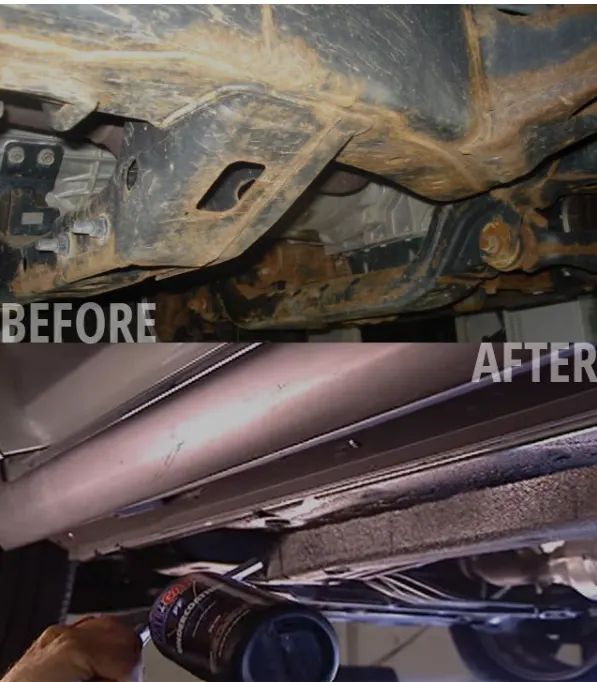
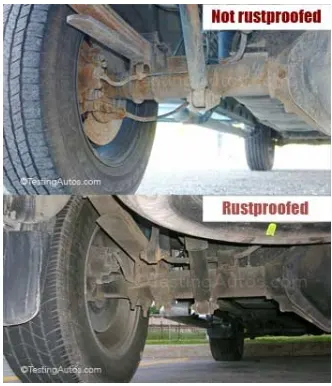
Most of the vehicles manufactured these days are rust proffed,especially in rainly and cold regions.When your car is exposed to saltwater and other coomon electrolytes, investing in an undercoating from an authorized dealer is a smart investment.It does cost a few hundred dollars,but it's worth it.it will keep your ride in good condition for five years.
1.IT EXTENDS THE LIFESPAN OF YOUR CAR:
The protection against rusting gives you the biggest advantage,which is the long-life of the vehicle.If undercoating is done the right way,then it will provide protection for up to 10 years.in some cases,the time span is more than ten years.In some cases,In some cases,the time span is more than ten years,which extends the lifespan of your vehicle.
2.NO MORE LOUD ROAD NOISE:
The undercoating serves as an extra layer of insulation,reducing the noise from penetrating inside components.Thus padding acts as a barrier between you and the source of the noise.If the road noise bothers you while driving your car,truck, or SUV,then applying to undercoat can help you.
2.DISADVANTAGES OF UNDERCOATING:
Nothing comes for free in this world.The same goes for undercoating.The undercoating or rustproofing spray is heavy in pockets.however,it is nothing when you compare it with the cost if replacing a vehicle after corrosion.
TIPS:
Use a rubberized undercoating for best results.A rubberized undercoating is more durable and seals better,protecting the metal from exposure to water.Other types of material are polyurethane,Asphalt and wax/paraffin-based undercoating.